

 By
By Introduction
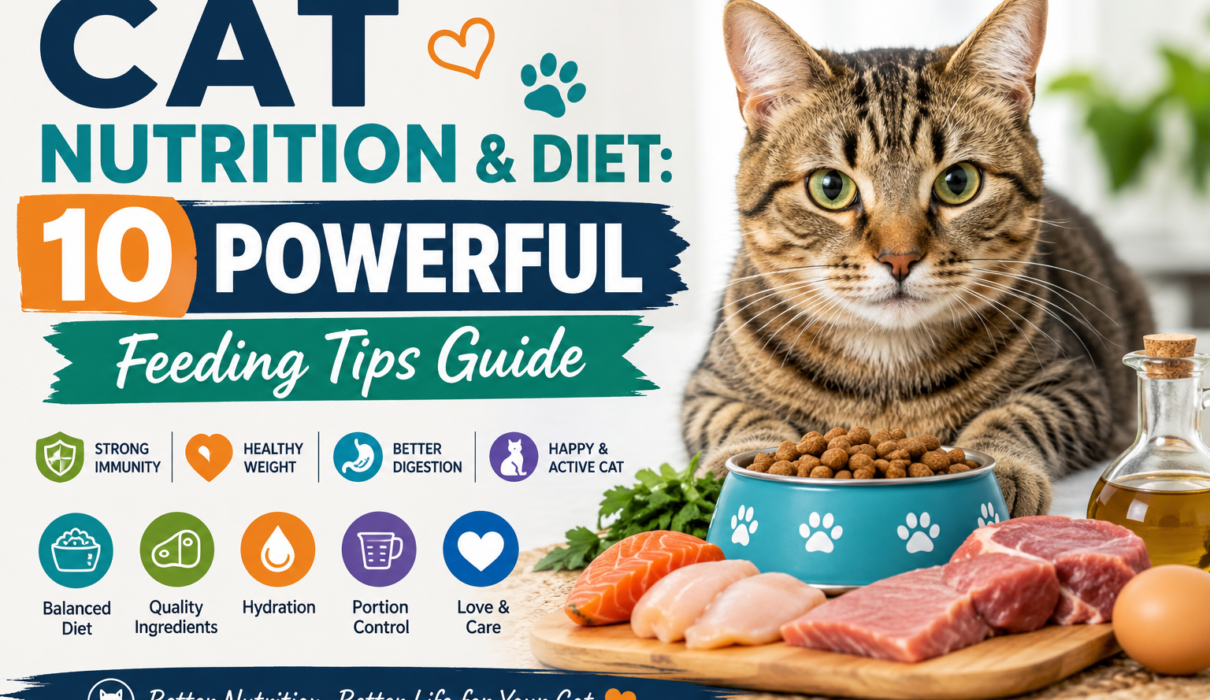
Providing the right food is one of the most important things you can do to support your cat’s health. A proper cat nutrition & diet plan can help maintain healthy body weight, strong muscles, good digestion, and steady energy levels. Cats have unique nutritional requirements because their bodies are designed to obtain many essential nutrients from animal-based foods.
However, choosing the right food is not always as simple as picking a package from the pet-food aisle. Age, activity level, body size, lifestyle, and individual health needs can all influence what a cat should eat.
In this first part of our cat feeding guide, we will cover the foundations of feline nutrition, how to choose a balanced diet, how to identify healthy cat food, and why hydration should be an important part of your cat’s daily routine.
1. Understand Your Cat’s Basic Nutritional Needs
Cats have nutritional needs that are different from those of humans and many other pets. They are obligate carnivores, meaning their bodies are adapted to obtain important nutrients from animal tissues.
Protein Is Essential
Protein plays an important role in maintaining muscles, tissues, organs, and other body functions. Cats generally require a diet that provides adequate high-quality protein.
When choosing cat food, look for a clearly identified animal-based protein source among the ingredients. Chicken, turkey, beef, fish, and other animal proteins can be found in many commercially prepared cat foods.
Fats Provide Energy
Dietary fats provide concentrated energy and also help cats absorb certain fat-soluble vitamins. Essential fatty acids can contribute to healthy skin and a shiny coat.
The goal is not simply to provide as much fat as possible. Instead, your cat needs an appropriate balance of nutrients based on its individual nutritional requirements.
Vitamins and Minerals Matter
Cats need specific vitamins and minerals to support normal body functions. Nutrients such as calcium, phosphorus, taurine, and certain vitamins play important roles in areas such as bones, muscles, vision, and overall health.
This is one reason a properly formulated commercial diet can be useful. A complete cat food is designed to provide the nutrients cats need in appropriate proportions.
Water Is a Nutrient Too
Hydration is sometimes overlooked when discussing pet nutrition, but water is essential. Cats should have access to fresh, clean drinking water every day.
Some cats naturally drink relatively little, which makes moisture-rich foods such as wet cat food a useful option for increasing dietary water intake.
2. Choose a Complete and Balanced Diet
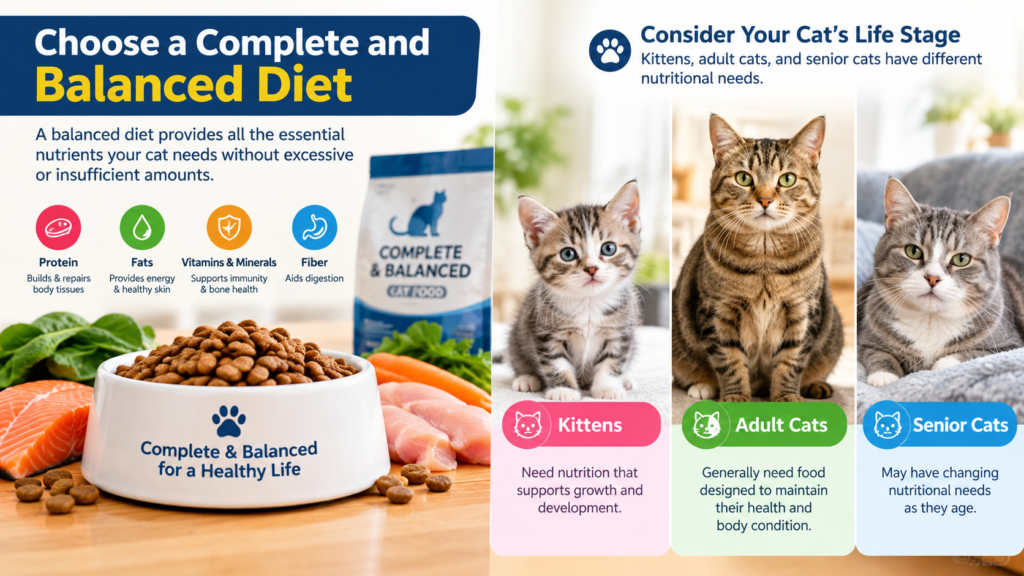
A balanced diet should provide the essential nutrients your cat needs without excessive or insufficient amounts of important components.
When selecting cat food, look for products that are labeled as complete and balanced for the appropriate life stage. This can help ensure that the food is intended to provide adequate nutrition when fed as directed.
Consider Your Cat’s Life Stage
Kittens, adult cats, and senior cats can have different nutritional needs.
- Kittens need nutrition that supports growth and development.
- Adult cats generally need food designed to maintain their health and body condition.
- Senior cats may have changing nutritional needs as they age.
Choosing food that matches your cat’s life stage is therefore an important part of a good cat nutrition & diet routine.
Avoid Creating an Unbalanced Homemade Diet
Some owners prefer preparing food at home, but simply combining meat and other ingredients does not necessarily create a nutritionally complete diet.
Certain nutrients may be missing or present in inappropriate amounts. If you want to feed a homemade diet regularly, it is best to discuss the plan with a veterinarian or qualified veterinary nutrition professional.
3. Select Healthy Cat Food Carefully
Finding healthy cat food requires looking beyond attractive packaging and advertising claims. The most important consideration is whether the food provides appropriate and complete nutrition for your cat.
Read the Label
Start by checking the nutritional information and intended life stage. Look for a food that is formulated as complete and balanced rather than relying on a product intended only as a treat or supplemental food.
The ingredient list can also help you understand what the food contains. However, ingredients should not be judged in isolation. A long ingredient list does not automatically mean a food is healthier, and a short list does not automatically make it inferior.
Wet Food vs. Dry Food
Both wet and dry cat foods can be appropriate when they are nutritionally complete and suitable for the cat.
Wet food generally contains more moisture, which can help increase water intake.
Dry food is convenient to store and serve and can be part of a healthy feeding routine when portions are appropriately controlled.
Some owners choose to combine wet and dry food. The best choice depends on the individual cat, its preferences, nutritional needs, and feeding routine.
Be Careful With Marketing Claims
Words such as “natural,” “premium,” or “holistic” may sound appealing, but they do not by themselves tell you whether a particular food is appropriate for your cat.
Focus on nutritional adequacy, appropriate ingredients, portion recommendations, and your cat’s individual needs rather than making a decision based solely on marketing language.
4. Follow an Appropriate Cat Feeding Guide
How much your cat eats is just as important as what your cat eats. Overfeeding can contribute to excessive weight gain, while inadequate food can prevent a cat from receiving enough energy and nutrients.
A reliable cat feeding guide should take several factors into account, including:
- Age
- Body weight
- Activity level
- Lifestyle
- Current body condition
- Calorie content of the food
- Individual health needs
Measure Portions
Rather than estimating portions by eye, use the feeding recommendations on the food packaging as a starting point. Measuring the food can make it easier to maintain consistent portions.
However, package recommendations are not perfect for every individual cat. Your cat may need adjustments depending on its body condition, activity, and other factors.
Monitor Body Condition
Regularly observe your cat’s body shape and weight. If your cat is gradually gaining or losing weight without an intentional change in feeding, the diet may need adjustment—or the change could indicate an underlying health issue.
For cats with significant weight problems or special nutritional needs, professional veterinary guidance can help establish an appropriate feeding plan.
5. Provide Fresh Water Every Day
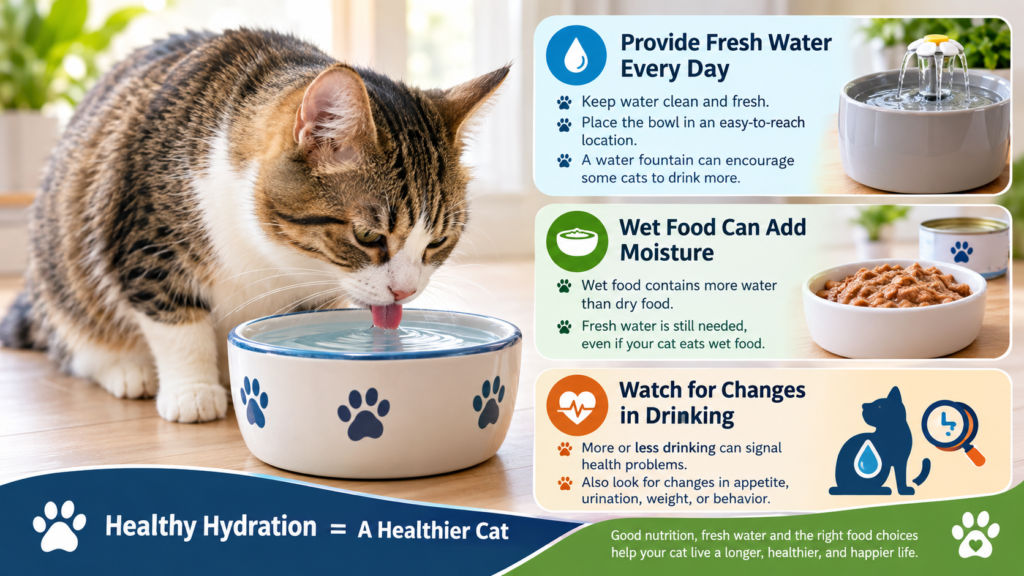
Water is an essential part of a healthy cat nutrition & diet. Your cat should have access to clean, fresh water throughout the day.
Place water in an area that is easy for your cat to access and keep the bowl clean. Some cats may prefer drinking from a fountain or another source of moving water.
Wet Food Can Add Moisture
Wet cat food contains substantially more water than dry food, so including it in a cat’s diet can increase overall moisture intake.
That does not mean cats eating wet food no longer need drinking water. Fresh water should still be available at all times.
Watch for Changes in Drinking
A noticeable increase or decrease in drinking can sometimes be associated with health problems. If your cat suddenly starts drinking much more or much less than usual, especially when accompanied by changes in appetite, urination, weight, or behavior, speak with a veterinarian.
6. Avoid Overfeeding and Excessive Treats
Even when you choose high-quality food, feeding too much can create problems. Excess calories can contribute to unhealthy weight gain, which may affect your cat’s mobility, energy, and overall well-being.
Portion control is therefore an important part of cat nutrition & diet. Follow the feeding recommendations for your cat’s food and adjust portions when necessary based on your cat’s body condition and activity level.
Keep Treats Moderate
Treats can be useful for training, bonding, or simply rewarding your cat. However, they should remain a small part of the overall diet.
Giving treats throughout the day without accounting for their calories can unintentionally increase your cat’s daily calorie intake.
Try these simple habits:
- Measure your cat’s regular meals instead of estimating portions.
- Keep treats small and occasional.
- Avoid giving treats every time your cat begs for food.
- Consider using a portion of your cat’s regular food as a reward.
- Reduce meal portions appropriately if treats are given regularly.
The goal is not to eliminate treats but to make sure they complement a balanced diet rather than replace it.
7. Adjust Nutrition for Your Cat’s Life Stage
Your cat’s nutritional requirements can change throughout its life. Feeding the same type and amount of food indefinitely may not be appropriate as your cat grows and ages.
Kitten Nutrition
Kittens are growing rapidly and need food formulated to support development. Kitten diets are generally designed to provide the energy and nutrients required during this important stage.
Young kittens also tend to need more frequent meals than adult cats. Follow feeding recommendations appropriate for your kitten’s age and size.
Adult Cat Nutrition
Once a cat reaches adulthood, its nutritional priorities generally shift toward maintaining a healthy body condition and supporting normal daily activity.
An appropriate adult cat food can provide the nutrients needed for maintenance when fed in suitable portions.
Activity levels matter as well. An active outdoor cat may have different calorie needs from a less active indoor cat.
Senior Cat Nutrition
As cats get older, their nutritional and health needs may change. Some senior cats become less active, while others may experience changes in appetite, weight, digestion, or other aspects of health.
Instead of automatically switching to a particular senior diet, consider your individual cat’s condition and discuss nutritional changes with a veterinarian when appropriate.
Regular health checks can help identify changes that may affect your cat’s feeding plan.
8. Be Careful When Changing Your Cat’s Food
Cats can be sensitive to sudden changes in their diet. Switching from one food to another too quickly may lead to digestive upset, including loose stools, vomiting, or reduced appetite.
For this reason, introduce a new food gradually whenever possible.
A Simple Food Transition
You can gradually increase the amount of new food while decreasing the amount of the old food over several days.
For example:
- Start with mostly the old food and a small amount of the new food.
- Gradually increase the proportion of new food.
- Continue monitoring your cat’s appetite and digestion.
- Complete the transition once your cat is comfortably eating the new food.
- Some cats may need a slower transition than others.
If your cat refuses food, develops persistent vomiting or diarrhea, or experiences another concerning reaction after a dietary change, contact a veterinarian.
9. Know Which Human Foods and Ingredients to Avoid
Cats should not be treated as miniature humans when it comes to food. Their nutritional requirements are different, and some foods that people commonly eat can be unsafe for cats.
Avoid casually sharing table scraps or allowing your cat to eat unfamiliar foods.
Foods That Can Be Dangerous
Some foods and ingredients can cause serious health problems in cats. Examples include:
- Onions and garlic
- Chocolate
- Alcohol
- Grapes and raisins
- Caffeinated products
- Certain artificial sweeteners or highly processed foods
- Cooked bones that can splinter
- Foods containing excessive salt or seasoning
This is not a complete list of potentially harmful foods, so it is important to check before giving your cat something unfamiliar.
Keep Human Food Occasional and Appropriate
Even foods that are not inherently toxic may be inappropriate if they are fatty, heavily seasoned, or nutritionally unbalanced.
The safest approach is to make nutritionally complete cat food the foundation of your cat’s balanced diet and avoid unnecessary table scraps.
If your cat accidentally consumes something potentially toxic, contact a veterinarian or an appropriate animal poison service promptly rather than waiting for symptoms to appear.
10. Monitor Your Cat’s Weight, Health, and Eating Habits
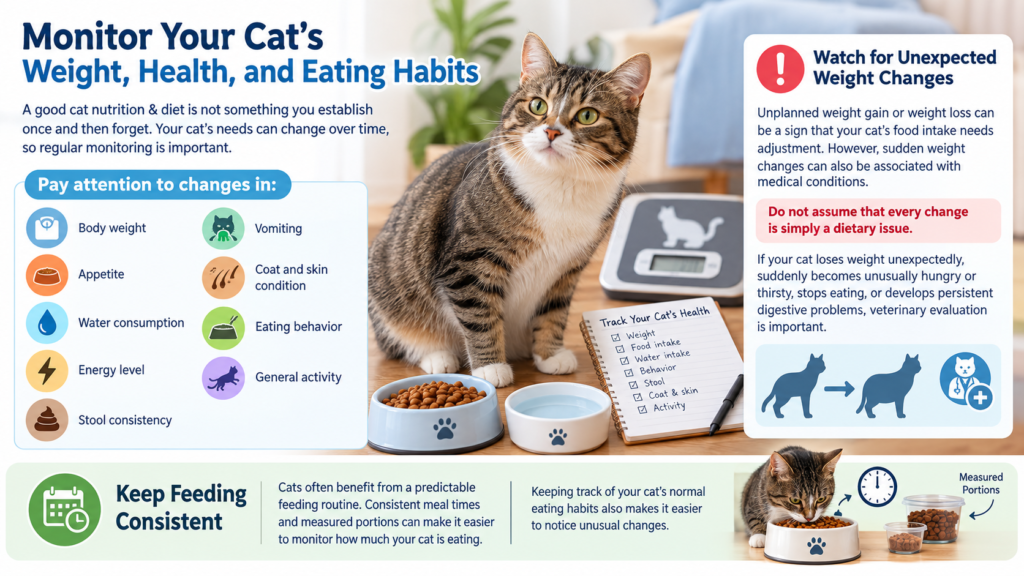
A good cat nutrition & diet is not something you establish once and then forget. Your cat’s needs can change over time, so regular monitoring is important.
Pay attention to changes in:
- Body weight
- Appetite
- Water consumption
- Energy level
- Stool consistency
- Vomiting
- Coat and skin condition
- Eating behavior
- General activity
Watch for Unexpected Weight Changes
Unplanned weight gain or weight loss can be a sign that your cat’s food intake needs adjustment. However, sudden weight changes can also be associated with medical conditions.
Do not assume that every change is simply a dietary issue.
If your cat loses weight unexpectedly, suddenly becomes unusually hungry or thirsty, stops eating, or develops persistent digestive problems, veterinary evaluation is important.
Keep Feeding Consistent
Cats often benefit from a predictable feeding routine. Consistent meal times and measured portions can make it easier to monitor how much your cat is eating.
Keeping track of your cat’s normal eating habits also makes it easier to notice unusual changes.
Common Cat Nutrition & Diet Mistakes to Avoid
Even well-intentioned cat owners can make feeding mistakes. Some of the most common include:
Giving Too Many Treats
Treats should not become a significant source of daily calories. Keep them limited and account for them when managing your cat’s overall food intake.
Ignoring Portion Sizes
A nutritious food can still contribute to weight gain when fed in excessive quantities. Measure meals and adjust portions based on your cat’s needs.
Choosing Food Based Only on Advertising
Packaging and marketing can be persuasive, but they should not be the only factors guiding your decision. Look for complete and balanced diet appropriate for your cat’s life stage.
Making Frequent Unnecessary Diet Changes
Constantly changing foods can make it difficult to identify what works well for your cat and may contribute to digestive upset.
Forgetting About Hydration
Food is only one part of feline nutrition. Make sure your cat has access to clean, fresh water every day.
Sharing Too Much Human Food
Human foods can add unnecessary calories and may contain ingredients that are unsafe for cats. Keep your cat’s main diet centered on appropriate feline nutrition.
Cat Nutrition & Diet: Quick Feeding Checklist
Use this checklist to build healthier feeding habits:
- ✔ Choose complete and balanced cat food.
- ✔ Select food appropriate for your cat’s life stage.
- ✔ Follow an appropriate cat feeding guide.
- ✔ Measure food portions.
- ✔ Provide fresh drinking water every day.
- ✔ Keep treats limited.
- ✔ Introduce new foods gradually.
- ✔ Avoid potentially toxic human foods.
- ✔ Monitor your cat’s weight and body condition.
- ✔ Pay attention to changes in appetite or digestion.
- ✔ Seek veterinary advice when your cat develops unexplained nutritional or health changes.
Conclusion
Good cat nutrition & diet is about more than simply filling a food bowl. Cats need appropriate amounts of essential nutrients, calories, moisture, and protein to support their everyday health.
A thoughtful feeding routine starts with choosing healthy cat food that provides complete and balanced nutrition. From there, portion control, appropriate treats, fresh water, life-stage nutrition, and gradual food transitions can help create better feeding habits.
Remember that every cat is an individual. Age, activity, body condition, lifestyle, and health can all influence nutritional requirements. Monitoring your cat regularly and seeking professional guidance when concerns arise can help you make informed decisions about pet nutrition.
By following this practical cat feeding guide, you can create a consistent feeding routine that supports your cat’s health and well-being throughout its life.