

 By
By Most Aggressive Cat Breeds Ranked by Temperament
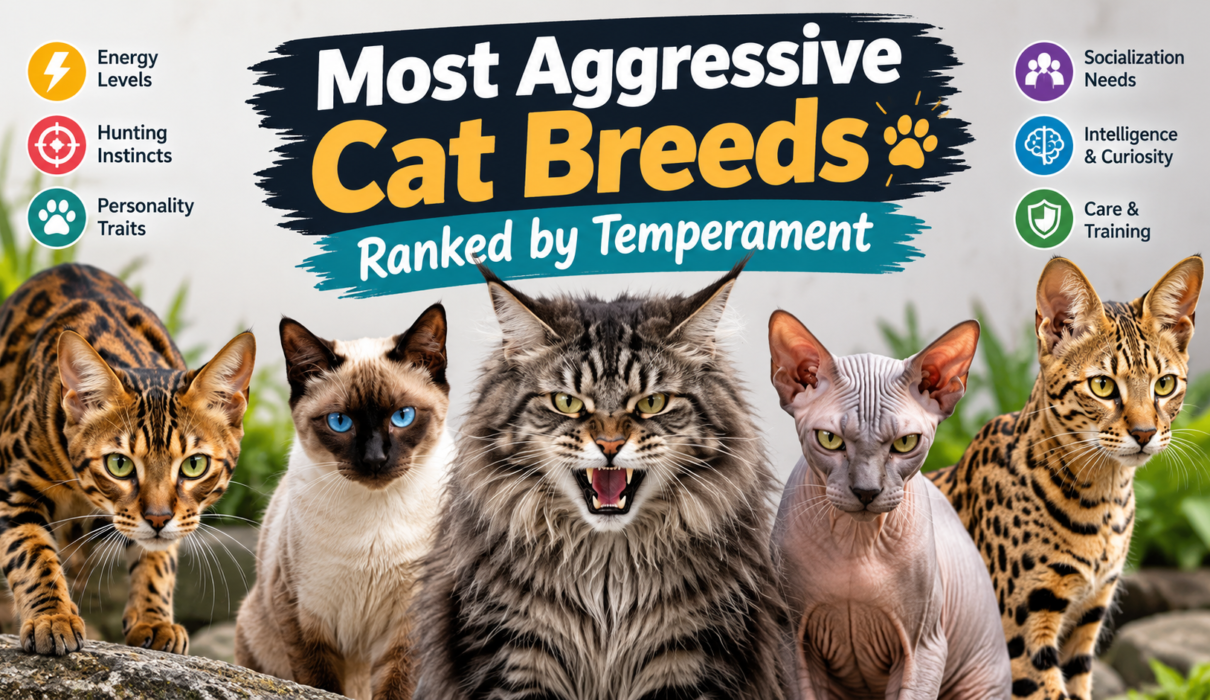
Cats are often described as affectionate, independent, and playful companions, but some breeds can display stronger hunting instincts, territorial behavior, or high energy than others. This does not mean that every cat from a particular breed will be aggressive.
The most aggressive cat breeds are better understood as breeds that may require more socialization, stimulation, experienced handling, or careful attention to their individual temperament. Genetics, early experiences, environment, health, and training can all influence how a cat behaves.
In this first part, we will look at several breeds that are often considered more energetic, independent, strong-willed, or challenging for inexperienced owners.
Understanding the Most Aggressive Cat Breeds
Before ranking cat breeds, it is important to understand what “aggressive” actually means. A cat that hisses, scratches, or bites is not necessarily naturally aggressive. Fear, stress, pain, frustration, overstimulation, and territorial concerns can all cause defensive behavior.
Some cats also have very strong hunting instincts and high energy levels. Their intense play may sometimes be mistaken for aggression.
Individual personality is extremely important. A well-socialized cat may be calm and affectionate, while another cat of the same breed may be more independent or reactive.
How the Most Aggressive Cat Breeds Are Ranked
There is no universal scientific ranking that identifies one breed as the most aggressive. Instead, temperament can be considered by looking at several characteristics.
These include:
Energy and activity level
Hunting instincts
Territorial behavior
Socialization requirements
Intelligence and curiosity
Sensitivity to changes
Need for daily interaction
Ability to live comfortably with other pets
Responsible ownership and early socialization can make a major difference in helping cats develop appropriate behavior.
Bengal – One of the Most Aggressive Cat Breeds
The Bengal is an athletic and highly active cat known for its beautiful spotted or marbled coat. Bengals are intelligent, curious, energetic, and often very interested in everything happening around them.
Because of their high activity level, Bengals may become frustrated when they do not receive enough exercise or mental stimulation. Interactive toys, climbing structures, puzzle feeders, and regular play can help keep them occupied.
Bengals are also commonly discussed among hybrid cat breeds because of their ancestry involving the Asian leopard cat and domestic cats.
Bengal Temperament
Bengals are not automatically aggressive. However, their intense energy and strong hunting instincts can make them challenging for owners who expect a quiet, low-maintenance cat.
They usually benefit from:
Daily interactive play
Climbing opportunities
Mental stimulation
Consistent routines
Early socialization
With appropriate care, many Bengals can become affectionate and engaging companions.
Savannah – A Powerful Hybrid Among the Most Aggressive Cat Breeds
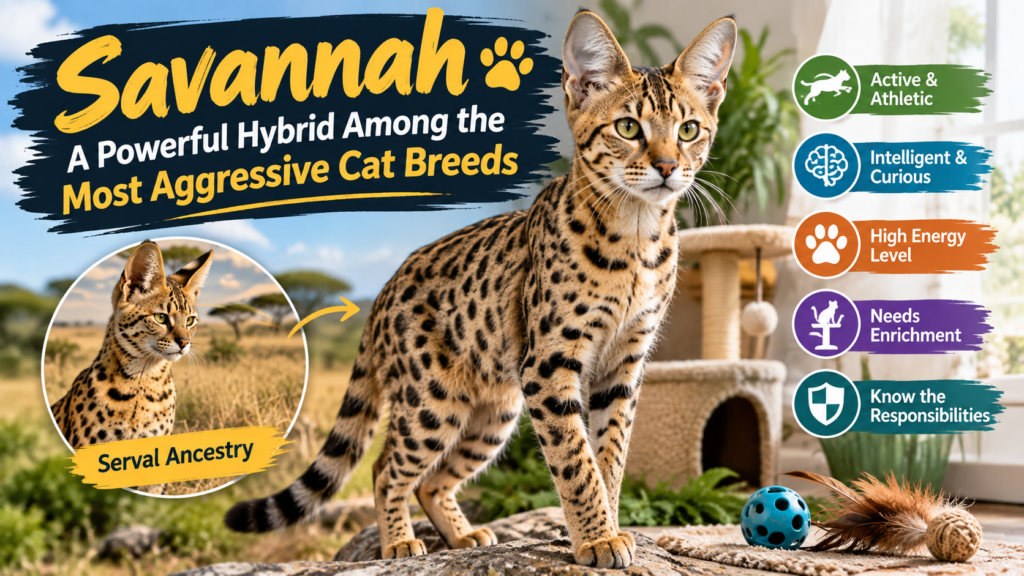
The Savannah is another highly active breed frequently discussed when people talk about energetic or challenging cats. Savannah cats have ancestry connected to the serval, an African wild cat, and their behavior can vary depending on generation and individual genetics.
They can be athletic, curious, intelligent, and highly energetic. Some may enjoy jumping, climbing, exploring, and interactive games.
Savannah Temperament
Savannah cats can require more attention and environmental enrichment than many traditional domestic breeds. Their wild ancestry may contribute to certain behavioral traits, although every Savannah is an individual.
Owners should provide safe spaces for climbing, exercise, play, and exploration.
It is also important to understand local regulations and the responsibilities associated with owning certain hybrid cat breeds.
Chausie – An Athletic and Energetic Cat
The Chausie is an unusual breed with ancestry connected to the jungle cat and domestic cats. It has an athletic body, long legs, and an active personality.
Chausies are generally intelligent and curious. They often need plenty of physical activity and mental stimulation to stay content.
Chausie Temperament
A Chausie that does not receive enough enrichment may become bored and develop unwanted behaviors. This is why the breed can be more suitable for experienced owners who understand the needs of highly active cats.
Daily activities can include:
Interactive toys
Puzzle feeders
Climbing structures
Supervised exploration
Training games
Their energetic behavior should not automatically be labeled as aggression.
Siamese – Vocal, Intelligent, and Strong-Willed
The Siamese is one of the best-known cat breeds in the world. These cats are highly social, intelligent, vocal, and often strongly attached to their owners.
Their strong personalities can sometimes be interpreted as demanding or aggressive, especially when they are bored or not receiving enough attention.
Siamese Temperament and Behavior
Siamese cats often enjoy human interaction and may follow their owners around the home. They can become frustrated if they are left alone for long periods without stimulation.
Their needs can include:
Interactive play
Social interaction
Puzzle toys
Climbing areas
Regular attention
Siamese cats can also be extremely playful, so some behaviors that look intense may simply be energetic play.
Sphynx – Active and Attention-Seeking
The Sphynx is famous for its hairless appearance, large ears, and expressive personality. These cats are often active, social, and highly interested in their human companions.
They typically enjoy being involved in household activities and may seek attention frequently.
Sphynx Temperament
Sphynx cats can become bored when they lack interaction and enrichment. Providing toys, climbing areas, and regular play sessions can help support positive behavior.
Their affectionate nature means they often enjoy spending considerable time with their owners.
Like other energetic cats, they should not be considered aggressive simply because they are active or demanding.
Scottish Fold – Understanding Individual Temperament
Scottish Folds are generally known for their sweet and social personalities. Their distinctive folded ears make them easily recognizable, although not every Scottish Fold has folded ears.
Their temperament can vary between individual cats. Some are playful and outgoing, while others may prefer a quieter lifestyle.
Scottish Fold Behavior
When choosing a Scottish Fold, owners should consider more than appearance. Responsible breeding and attention to health are important factors when selecting a kitten.
A calm environment, appropriate socialization, regular play, and positive interaction can help support healthy behavior.
It is also important to remember that breed characteristics do not guarantee a particular personality.
Maine Coon – Large but Usually Gentle
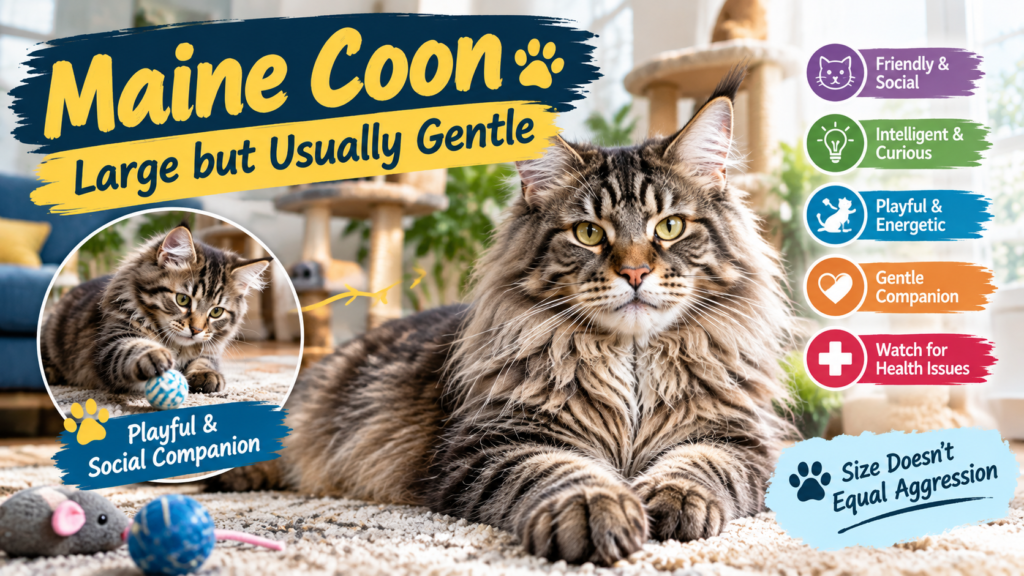
The Maine Coon is one of the largest domestic cat breeds, but its impressive size should not be confused with aggression.
Maine Coons are often described as friendly, social, intelligent, and playful. Their large bodies and powerful appearance can make them look intimidating, but many are gentle companions.
Maine Coon Temperament
Maine Coons can enjoy interactive games and family activities. Their playful behavior may be energetic, particularly when they are young.
Providing appropriate toys, scratching posts, climbing areas, and regular interaction can help them remain physically and mentally active.
Their example shows why physical size alone should never be used to determine whether a cat is aggressive.
What Makes a Cat Behave Aggressively?
Breed is only one possible factor. A cat’s behavior can be influenced by many circumstances.
Common causes of aggressive behavior include:
Fear or anxiety
Pain or illness
Lack of socialization
Territorial disputes
Overstimulation
Boredom
Competition with other pets
Sudden environmental changes
If a normally friendly cat suddenly becomes aggressive, a veterinary examination may be appropriate because pain or an underlying health problem can sometimes affect behavior.
Turkish Angora – An Intelligent and Active Cat
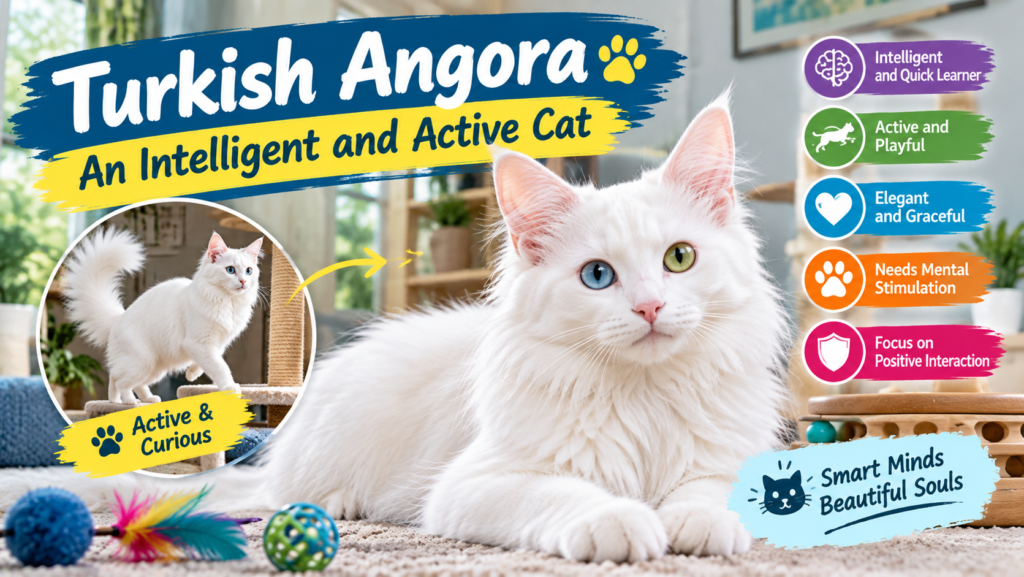
The Turkish Angora is an elegant breed known for its silky coat, athletic body, intelligence, and curiosity. These cats are often active and enjoy exploring their surroundings.
Although Turkish Angoras are not generally considered an aggressive breed, their intelligence and activity level can sometimes lead to demanding behavior when they do not receive enough stimulation.
Turkish Angora Temperament
Interactive toys, climbing areas, puzzle feeders, and regular play sessions can help keep an active Turkish Angora mentally engaged.
Owners should focus on positive interaction rather than punishment. Understanding a cat’s individual personality is more useful than assuming behavior based solely on breed.
Selective Breeding Cat Species and Feline Temperament
Selective breeding cat species and domestic breeds can provide an interesting look at how humans have influenced feline appearance and behavior over generations.
Breeders may select cats for particular physical characteristics, personality traits, or other desirable qualities. However, temperament is influenced by many genes and environmental factors, so breeding cannot guarantee that every kitten will behave in exactly the same way.
Responsible breeders should consider health and temperament rather than focusing only on appearance.
Genetics and Behavior
Genetics can influence activity levels, confidence, sensitivity, and certain behavioral tendencies. However, a cat’s experiences after birth are also extremely important.
Early handling, socialization, nutrition, environment, and interaction with people can all contribute to a kitten’s development.
Most Aggressive Cat Breeds vs. Most Playful Cat Breeds
Sometimes highly energetic cats are incorrectly described as aggressive when they are actually displaying normal play behavior.
The most playful cat breeds may chase toys, pounce, climb, stalk moving objects, and engage in energetic games. These behaviors can look intense but are often part of normal feline instincts.
Aggression vs. Playfulness
Healthy play usually involves relaxed body language and a willingness to stop or redirect attention.
Aggressive behavior may include:
Growling
Hissing
Flattened ears
Stiff body posture
Repeated biting
Defensive swatting
Persistent chasing with hostile body language
Understanding the difference can help owners respond appropriately.
Signs of Aggression in the Most Aggressive Cat Breeds
Cats communicate heavily through body language. Learning these signals can help owners recognize when a cat is uncomfortable before behavior escalates.
Common Warning Signs
Potential signs of fear or aggression include:
Ears pinned backward
Dilated pupils
Arched back
Raised fur
Rapid tail movement
Hissing or growling
Swatting
Biting
A cat may display one or several of these signs depending on the situation.
Owners should avoid forcing interaction when a cat is showing clear signs of stress.
Most Aggressive Cat Breeds and the Importance of Socialization
Early socialization can help kittens become comfortable with people, household sounds, handling, and other animals.
Owners should introduce new experiences gradually and positively. Punishment can increase fear and may make behavioral problems worse.
Positive reinforcement, appropriate play, and a predictable environment are generally better approaches.
Final Thoughts on the Most Aggressive Cat Breeds –
The most aggressive cat breeds are not necessarily dangerous cats. Many breeds described as energetic, strong-willed, territorial, or intense can become wonderful companions when their needs are understood.
Bengals, Savannahs, Chausies, Siamese, Sphynx, Scottish Folds, and Maine Coons all have different personalities and care requirements. Breed alone cannot predict whether an individual cat will be aggressive.
Understanding energy levels, social needs, genetics, environmental enrichment, and proper socialization is much more useful than judging a cat by its breed name alone.
Why Do the Most Aggressive Cat Breeds Become Aggressive?
Aggression can have many causes, and breed is only one possible factor.
Fear and Anxiety
A frightened cat may hiss, scratch, or bite because it feels threatened. Giving the cat space and reducing stressful triggers can help.
Territorial Behavior
Cats may become defensive when another animal enters their territory. Gradual introductions and separate resources can reduce competition.
Pain or Illness
Sudden aggression can sometimes be associated with pain or illness. If a cat’s behavior changes unexpectedly, a veterinarian should be consulted.
Boredom and Frustration
Active cats need physical exercise and mental stimulation. Without appropriate outlets, they may develop unwanted behaviors.
How to Manage Behavior in the Most Aggressive Cat Breeds
Managing challenging feline behavior begins with understanding the underlying cause.
Provide Daily Exercise
Interactive play can help cats use their energy in appropriate ways. Wand toys, balls, tunnels, and climbing structures can provide useful physical activity.
Use Mental Enrichment
Puzzle feeders, food games, training exercises, and rotating toys can help intelligent cats stay mentally stimulated.
Create Safe Spaces
Cats should have places where they can retreat when they feel stressed. Cat trees, shelves, beds, and quiet rooms can provide useful escape areas.
Use Positive Reinforcement
Rewarding desirable behavior can encourage cats to repeat it. Treats, praise, and play can be used to reinforce calm and appropriate interactions.
Avoid Physical Punishment
Punishment can increase fear and stress. It may also damage the relationship between the cat and owner.
Instead, redirect unwanted behavior toward an appropriate activity.
Are the Most Aggressive Cat Breeds Suitable for Families?
Not every energetic or strong-willed cat is suitable for every household. Families should consider the cat’s individual temperament, activity requirements, and socialization history.
Families With Children
Children should be taught how to interact respectfully with cats. Pulling tails, chasing cats, or disturbing them while eating or sleeping should be avoided.
Cats should always have access to a safe area where they can retreat.
First-Time Cat Owners
First-time owners may find highly active or demanding breeds more challenging. A calm and predictable domestic cat may be easier for someone who has never owned a cat before.
Multi-Pet Homes
Introducing cats to other pets should be done gradually. Each animal should have access to food, water, litter boxes, resting spaces, and hiding areas.
Choosing the Right Cat Breed for Your Lifestyle
Rather than choosing a cat based only on appearance or a reputation for being aggressive, consider whether its temperament matches your lifestyle.
Ask yourself:
How much time can I spend playing with my cat?
Do I want an active or relaxed companion?
Do I have other pets?
Is my home large enough for climbing and enrichment?
Do I have experience handling energetic cats?
Can I provide regular veterinary care?
These questions can help you choose a better match.
Hybrid Cat Breeds Require Special Consideration
Some hybrid cat breeds have ancestry involving wild cat species. Their behavior and needs can differ from those of traditional domestic breeds.
Savannah and Bengal cats, for example, are often discussed in this category because of their ancestry and energetic characteristics.
Potential owners should research the breed carefully and understand its exercise, enrichment, socialization, and legal requirements before bringing one home.
Responsible Breeding and Temperament
Responsible breeding should consider more than physical appearance. Health, temperament, genetic background, and appropriate socialization are important considerations.
Breeders should avoid intentionally producing cats with extreme behavioral traits simply because they appear unusual or desirable.
Good breeding practices aim to support healthy, stable, and well-adjusted cats.
Frequently Asked Questions About the Most Aggressive Cat Breeds
What is the most aggressive cat breed?
There is no universally accepted single “most aggressive” cat breed. Individual temperament varies considerably, and behavior is influenced by genetics, socialization, environment, health, and experience.
Are hybrid cat breeds more aggressive?
Some hybrid cat breeds may have higher activity levels or stronger hunting instincts because of their ancestry. However, this does not mean every hybrid cat is aggressive.
Can an aggressive cat become friendly?
Many cats with unwanted aggressive behavior can improve when the underlying cause is identified and addressed. Proper socialization, environmental enrichment, positive reinforcement, and veterinary guidance can help.
Which cats have strong hunting instincts?
Bengals, Savannahs, Chausies, and several other active breeds may display strong hunting or chase behaviors. Individual cats can vary significantly.
Are the most aggressive cat breeds suitable for children?
Some may be suitable for experienced families, while others may be challenging. The individual cat’s temperament, the children’s age, supervision, and the household environment should all be considered.
Which are the most playful cat breeds?
Several breeds are known for high activity and playful personalities, including Bengal, Siamese, Abyssinian, and some hybrid cat breeds. Playfulness should not automatically be confused with aggression.
Does selective breeding affect cat temperament?
Selective breeding can influence certain physical and behavioral traits, but it cannot perfectly predict an individual cat’s personality. Environment and early socialization also play major roles.
Final Thoughts on the Most Aggressive Cat Breeds
The term most aggressive cat breeds can make certain cats sound more dangerous than they actually are. In reality, feline aggression is complicated and can result from fear, stress, territorial behavior, pain, frustration, or inadequate socialization.
Active breeds may require more exercise and enrichment, while intelligent cats may need regular mental stimulation. Hybrid cat breeds can have additional considerations because of their ancestry and activity levels.
The best approach is to understand each cat as an individual. Responsible breeding, early socialization, proper veterinary care, enrichment, and positive training can all contribute to healthier relationships between cats and their owners.
Rather than asking only which breed is the most aggressive, prospective owners should ask which cat’s temperament, energy level, and care requirements are the best match for their lifestyle.
Conclusion: Understanding the Most Aggressive Cat Breeds
The most aggressive cat breeds are not necessarily dangerous or unfriendly. A cat’s behavior is influenced by many factors, including genetics, early socialization, environment, health, exercise, and individual personality.
Active breeds such as Bengals, Savannahs, and Chausies may require more physical and mental stimulation, while social breeds such as Siamese cats often need plenty of interaction and companionship. Some hybrid cat breeds may also have additional care and behavioral considerations because of their ancestry.
Responsible breeding, proper socialization, positive reinforcement, regular veterinary care, and a stimulating environment can help cats develop healthy behaviors.
Ultimately, choosing a cat should not be based only on a reputation for aggression. Understanding a breed’s temperament, energy level, and care requirements will help you find a companion that fits your lifestyle and create a happier relationship between you and your cat.