

 By
By Introduction
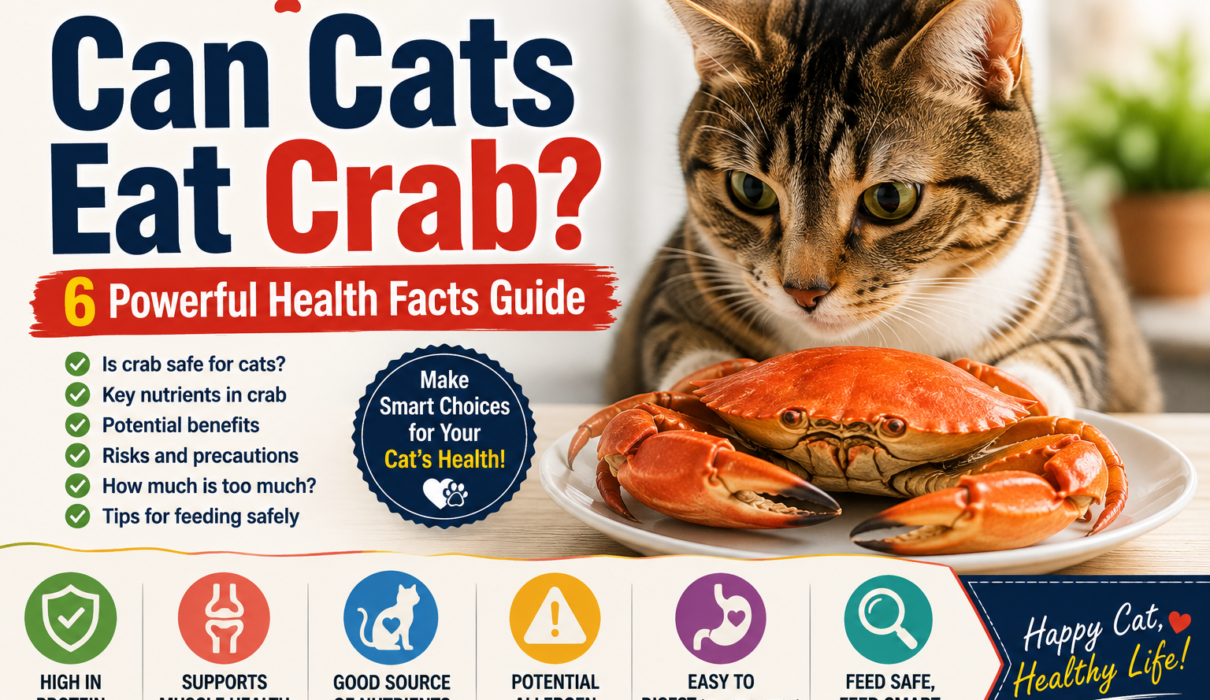
If you enjoy seafood, you may wonder whether your cat can enjoy some of it too. One common question among cat owners is, can cats eat crab? The short answer is yes, cats can generally eat a small amount of plain, fully cooked crab meat as an occasional treat.
Crab can provide protein and several important nutrients. However, the way crab is prepared matters. Crab covered in butter, sauces, salt, garlic, onion, or other seasonings is not a suitable choice for cats.
Before adding crab to your cat’s diet, it is important to understand both its potential benefits and the precautions involved. This guide explains how crab can fit into a cat’s diet and what you should know about seafood for cats.
Can Cats Eat Crab Safely?
So, can cats eat crab safely? In general, plain, properly cooked crab meat can be offered to a healthy cat in a small quantity. The crab should be thoroughly cooked and prepared without ingredients that may be harmful to cats.
Always remove the shell completely before giving crab to your cat. Crab shells can be hard and may create a choking or digestive hazard. You should also check the meat carefully for any remaining shell fragments.
Raw or undercooked crab is a less suitable choice because uncooked seafood can carry harmful microorganisms and may not be as safe as properly cooked food.
Preparation is especially important. Avoid giving your cat crab that has been prepared with:
- Garlic or onion
- Large amounts of salt
- Spicy seasonings
- Butter or rich sauces
- Fried coatings
- Other ingredients that are unsuitable for cats
If your cat has never eaten crab before, start with a very small amount. Introducing any new food gradually can make it easier to notice whether your cat experiences digestive problems or other signs of intolerance.
Crab Can Provide High-Quality Protein
One potential benefit of crab is its protein content. Cats are obligate carnivores, meaning their natural nutritional needs are strongly centered around nutrients found in animal-based foods.
Protein helps support important functions throughout a cat’s body. It contributes to the maintenance of muscles and other tissues and is an important part of a nutritionally complete feline diet.
Plain crab meat can therefore provide an additional source of animal protein when given occasionally. However, crab should not replace your cat’s normal complete and balanced food.
Commercial cat foods are formulated to provide the range of nutrients cats need in appropriate proportions. A small serving of crab can be an occasional treat, but it should remain a minor part of the overall diet.
Crab Contains Important Nutrients
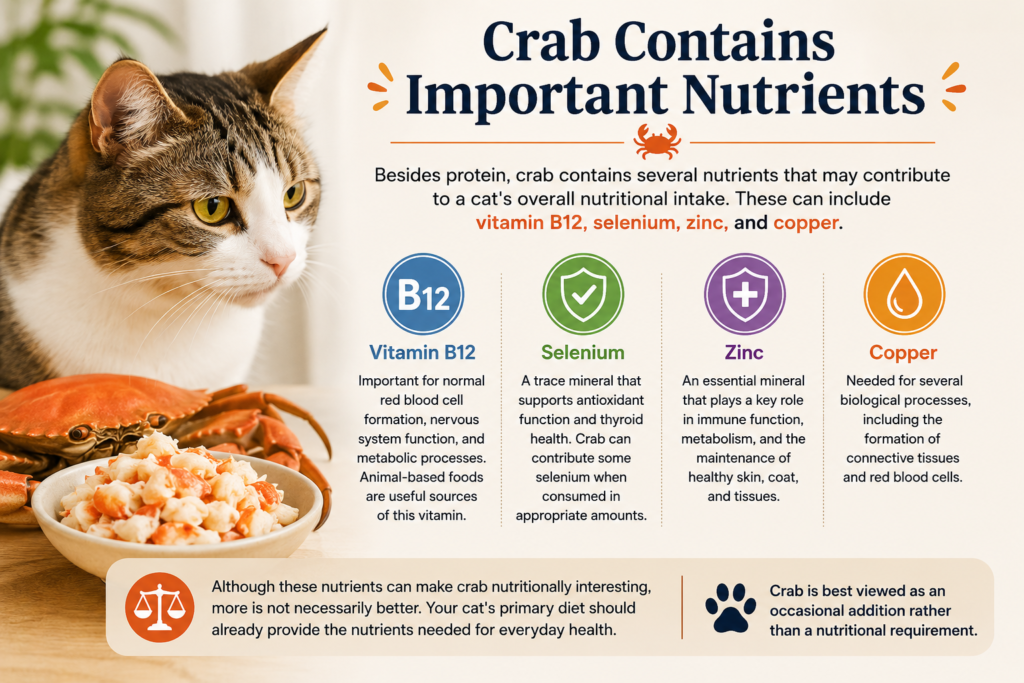
Besides protein, crab contains several nutrients that may contribute to a cat’s overall nutritional intake. These can include vitamin B12, selenium, zinc, and copper.
Vitamin B12
Vitamin B12 plays an important role in normal blood cell formation, nervous system function, and other metabolic processes. Animal-based foods can be useful sources of this vitamin.
Selenium
Selenium is a trace mineral involved in normal antioxidant and thyroid-related functions. Crab can contribute some selenium to the diet when consumed in appropriate amounts.
Zinc
Zinc is another essential mineral involved in normal immune function, metabolism, and maintenance of tissues.
Copper
Copper is needed for several normal biological processes, including the formation of connective tissues and red blood cells.
Although these nutrients can make crab nutritionally interesting, more is not necessarily better. Your cat’s primary diet should already provide the nutrients needed for everyday health. Crab is best viewed as an occasional addition rather than a nutritional requirement.
Seafood for Cats: Is Crab a Good Choice?
When discussing seafood for cats, crab can be one option when it is plain, fully cooked, and offered in moderation. Some cats may enjoy the taste and texture, making it an appealing occasional treat.
However, cats do not need seafood specifically to maintain a healthy diet. A complete and balanced cat food can provide the essential nutrients they require without adding crab or other seafood.
Another important consideration is your individual cat. Some cats may tolerate crab well, while others may develop digestive upset or show signs of food sensitivity after eating a new ingredient.
If you decide to offer crab, keep the portion small and observe your cat afterward. Avoid making seafood a major part of the diet simply because your cat enjoys it.
The safest approach is to think of plain crab as an occasional treat rather than a replacement for nutritionally complete cat food.
What to Remember Before Giving Your Cat Crab
If you are considering crab as a treat, keep these basic points in mind:
- Choose plain, fully cooked crab meat.
- Remove all shells and hard pieces.
- Avoid salt, garlic, onion, spices, and rich sauces.
- Give only a small amount.
- Introduce it gradually if your cat has never tried it.
- Keep complete and balanced cat food as the foundation of the diet.
- Understanding these basics can help you make a safer choice when considering crab or other seafood for cats.
What Are the Risks of Feeding Crab to Cats?
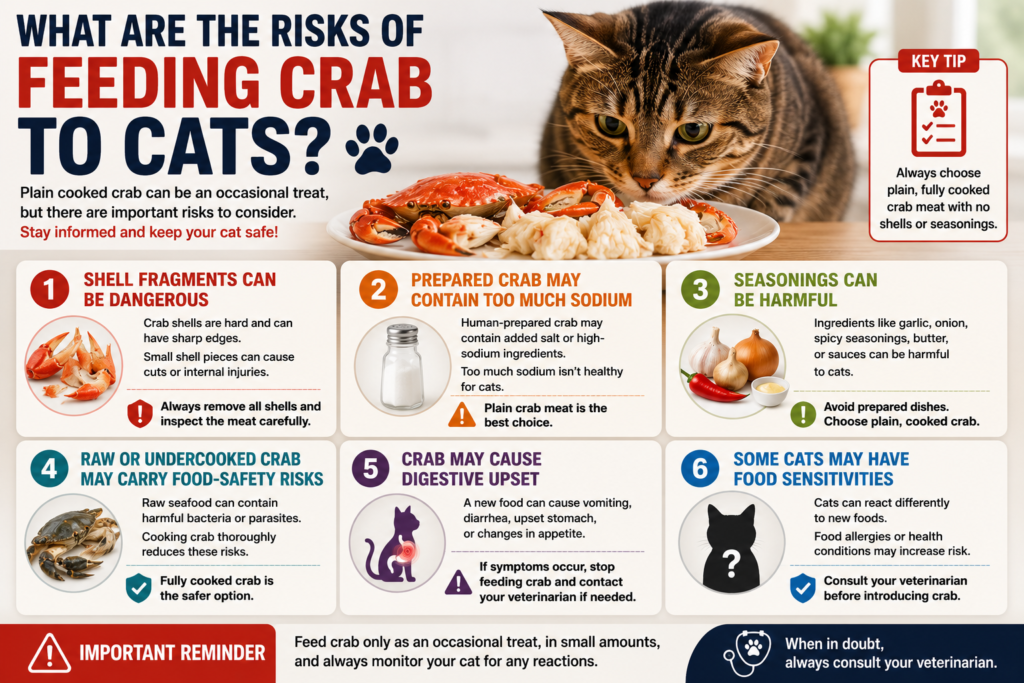
Although plain cooked crab can be an occasional treat, there are several things cat owners should consider before serving it. Knowing these risks can help you decide whether crab is appropriate for your cat.
Shell Fragments Can Be Dangerous
Crab shells are hard and can contain sharp edges. A cat should never be given crab with the shell still attached. Small pieces of shell can also remain hidden in the meat, so inspect the crab carefully before serving it.
Always remove the shell and any hard pieces completely.
Prepared Crab May Contain Too Much Sodium
Crab prepared for human meals may contain added salt or other high-sodium ingredients. Cats have different nutritional requirements from people, so heavily salted foods are not a good choice for them.
For this reason, plain crab meat is preferable to seasoned or processed crab dishes.
Seasonings Can Be Harmful
Many popular crab recipes include ingredients such as garlic, onion, spicy seasonings, butter, or sauces. Some of these ingredients can be harmful to cats.
If you want to offer crab, avoid prepared dishes and choose plain, cooked meat instead.
Raw or Undercooked Crab May Carry Food-Safety Risks
Raw seafood can contain harmful microorganisms. Cooking seafood properly reduces these food-safety concerns.
For cats, fully cooked crab is a safer choice than raw or undercooked crab.
Crab May Cause Digestive Upset
Introducing any unfamiliar food can cause digestive problems in some cats. A cat may experience an upset stomach, vomiting, diarrhea, or changes in appetite after eating a new food.
If your cat reacts poorly after trying crab, stop offering it and speak with a veterinarian if the symptoms are severe, persistent, or concerning.
Some Cats May Have Food Sensitivities
Individual cats can respond differently to new foods. While many cats may tolerate a small amount of crab, others may not.
If your cat has known food allergies, sensitivities, or a health condition requiring a specific diet, ask your veterinarian before introducing crab.
How to Serve Crab to Cats Safely
If you decide to give your cat crab, preparation is one of the most important factors. Follow these simple steps to make the treat more appropriate.
Choose Plain Cooked Crab
Use crab that has been thoroughly cooked without added seasonings. Avoid crab prepared with sauces, spices, garlic, onion, or large amounts of salt.
Remove the Shell Completely
Carefully remove all shell pieces before giving crab to your cat. Check the meat for small or hard fragments as well.
Start With a Small Amount
If your cat has never tried crab before, offer only a small amount. This gives you an opportunity to see how your cat responds to the new food.
Keep Crab as an Occasional Treat
Crab should not replace your cat’s regular complete and balanced food. Treats and additional foods should make up only a small part of the overall diet.
Watch Your Cat Afterward
Pay attention to your cat after introducing any new food. Changes such as digestive upset, unusual itching, or other concerning symptoms may indicate that the food does not agree with your cat.
If you notice a significant or persistent reaction, contact your veterinarian for appropriate advice.
Foods to Avoid When Giving Crab to Cats
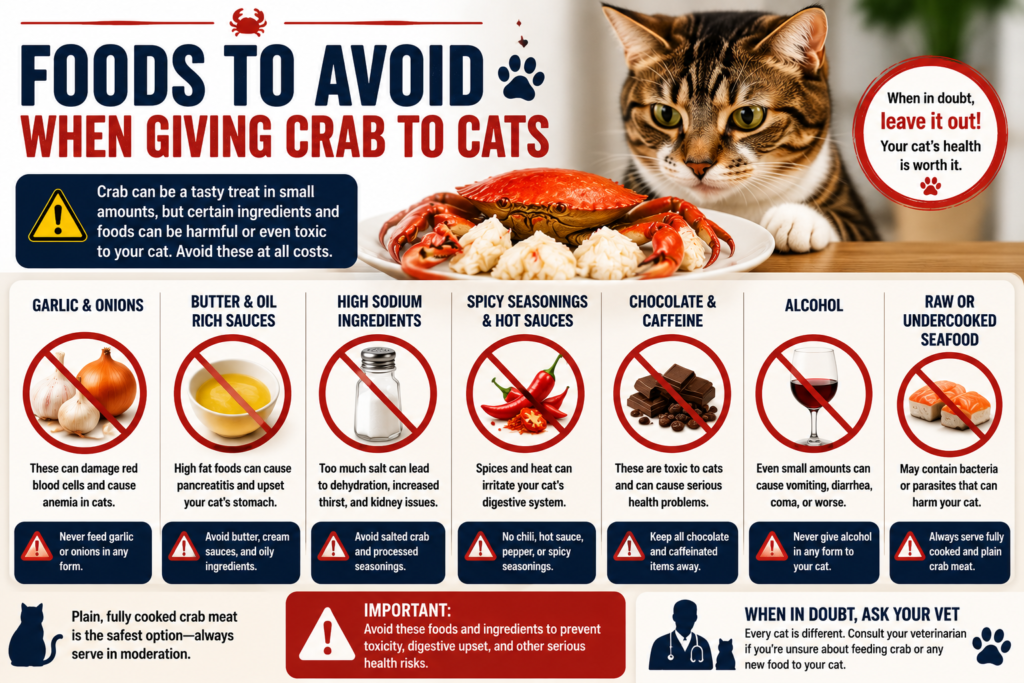
Not every crab dish is suitable for cats. Avoid giving your cat:
- Raw or undercooked crab
- Crab shells
- Heavily salted crab
- Fried crab
- Crab covered in sauces
- Crab prepared with garlic or onion
- Spicy or heavily seasoned crab
The safest option is simple: plain, fully cooked crab meat with the shell removed and no harmful seasonings.
Frequently Asked Questions
Can Cats Eat Crab?
Yes, healthy cats can generally eat a small amount of plain, fully cooked crab meat as an occasional treat. Remove the shell and avoid salt, garlic, onion, sauces, and other seasonings.
Can Cats Eat Cooked Crab?
Cats can generally have plain cooked crab in moderation. Fully cooked crab is a better choice than raw or undercooked crab because of food-safety concerns associated with uncooked seafood.
Can Cats Eat Raw Crab?
Raw crab is not recommended. Uncooked seafood can carry harmful microorganisms, so properly cooked crab is the safer option for an occasional treat.
Is Crab Good for Cats?
Plain crab can provide protein and nutrients such as vitamin B12 and selenium. However, cats do not need crab to maintain a healthy diet. Their primary food should remain complete and balanced cat food.
Can Kittens Eat Crab?
Kittens have specific nutritional needs because they are growing rapidly. Their main diet should consist of nutritionally complete kitten food. Before giving a kitten new foods such as crab, it is best to ask a veterinarian for guidance.
How Much Crab Can a Cat Eat?
There is no single portion that is appropriate for every cat. A small amount is generally more suitable than a large serving, especially when introducing crab for the first time. Treats should remain a limited part of the diet.
Conclusion
So, can cats eat crab? In general, a healthy cat can enjoy a small amount of plain, fully cooked crab as an occasional treat. Crab can provide protein and several nutrients, but it is not necessary for a cat’s everyday diet.
The biggest considerations are preparation and moderation. Remove all shells, avoid raw crab, and stay away from salt, garlic, onion, sauces, and heavy seasonings.
When it comes to seafood for cats, simple preparation is important. Keep your cat’s complete and balanced food as the foundation of the diet, and treat crab as an occasional extra rather than a replacement for regular meals.
2 Comments