

 By
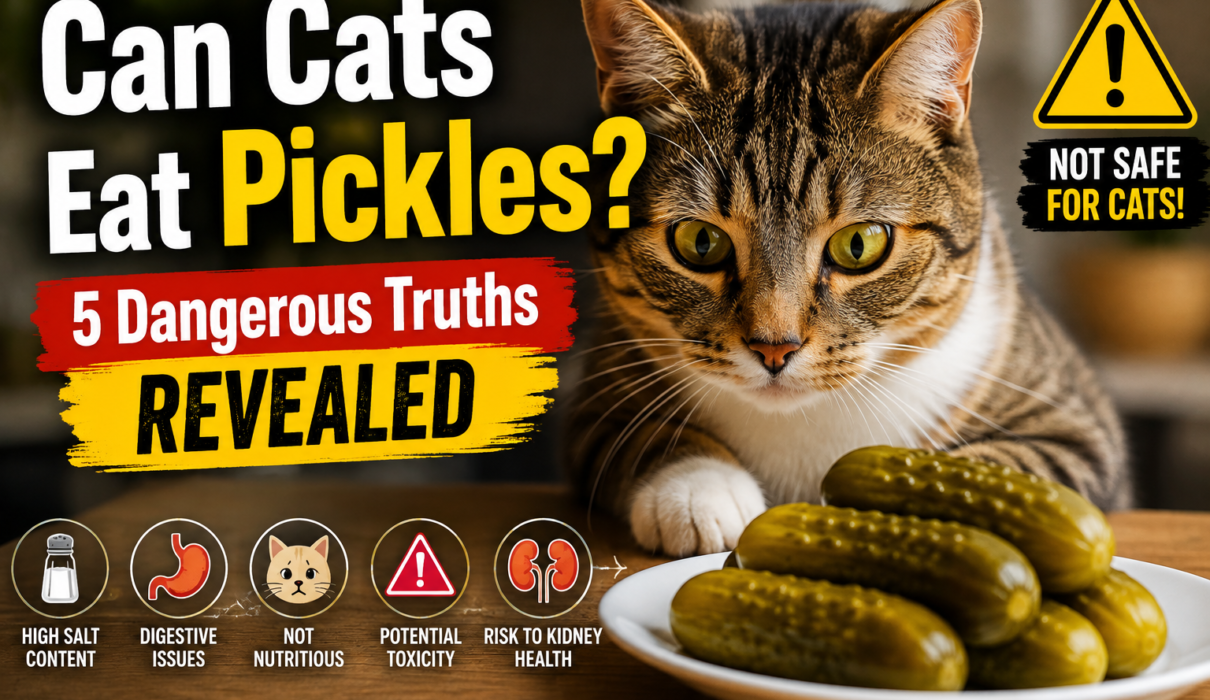
By If you are a cat owner, you probably know how quickly your furry friend can become interested in your food. One moment, you are enjoying a pickle with your meal, and the next, your cat is sniffing around your plate. This can leave you wondering, can cats eat pickles safely? While a tiny accidental taste may not always cause serious problems, pickles are not a good treat for cats. They can contain high amounts of salt, spices, vinegar, garlic, onions, and other ingredients that cats do not need.
Cats also have different nutritional requirements than humans. Their bodies are designed to get essential nutrients mainly from animal-based foods. Because of this, many human snacks can cause unnecessary digestive problems or contribute to other cat health issues. In this guide, we will uncover five important truths about pickles and explain what cat owners should know before sharing human food with their pets.
Can Cats Eat Pickles Safely?
So, can cats eat pickles without any problems? The safest answer is no. Pickles are not considered an appropriate food or treat for cats. Although cucumbers themselves can be safe for some cats in small amounts, the pickling process changes the situation completely.
Most pickles are soaked in a brine made with water, vinegar, salt, and various seasonings. Depending on the recipe, they may also contain garlic, onions, chili peppers, herbs, spices, sugar, and preservatives. These ingredients can make pickles appealing to people, but they offer little benefit to cats.
A small bite of a plain pickle may not automatically mean your cat will become seriously ill. However, intentionally feeding pickles is unnecessary and potentially risky for cat health issues. Cats do not need the flavors or nutrients found in pickles. There are much better cat-friendly treats available.
The biggest concern is often the ingredients surrounding the cucumber rather than the cucumber itself. This is why checking the label matters if your cat accidentally eats part of a pickle. A plain cucumber and a heavily seasoned pickle are very different foods.
Dangerous Truth #1: Pickles Can Contain Too Much Salt
One of the biggest reasons cats should avoid pickles is their high sodium content. Salt is used during the pickling process to help preserve the food and create its familiar flavor. Unfortunately, too much sodium can be harmful to cats.
Cats need some sodium as part of a balanced diet. However, their regular cat food already provides the amount they need. Adding salty human foods can give them unnecessary sodium without providing meaningful nutritional benefits.
Excessive salt consumption can cause increased thirst and urination. In more serious situations, too much sodium can lead to weakness, vomiting, diarrhea, tremors, or other concerning symptoms. The severity depends on factors such as the amount consumed and the cat’s size and overall health.
This is one reason salty snacks belong on the list of foods to avoid giving your cat. Pickles may look like a small vegetable snack, but their sodium content makes them very different from fresh vegetables.
If your cat only licked a tiny piece of pickle, there may be no serious reaction. Still, it is wise to prevent repeated exposure. Cats can develop dietary problems when they regularly consume foods that are not designed for them.
Dangerous Truth #2: Garlic and Onions Can Be Toxic to Cats
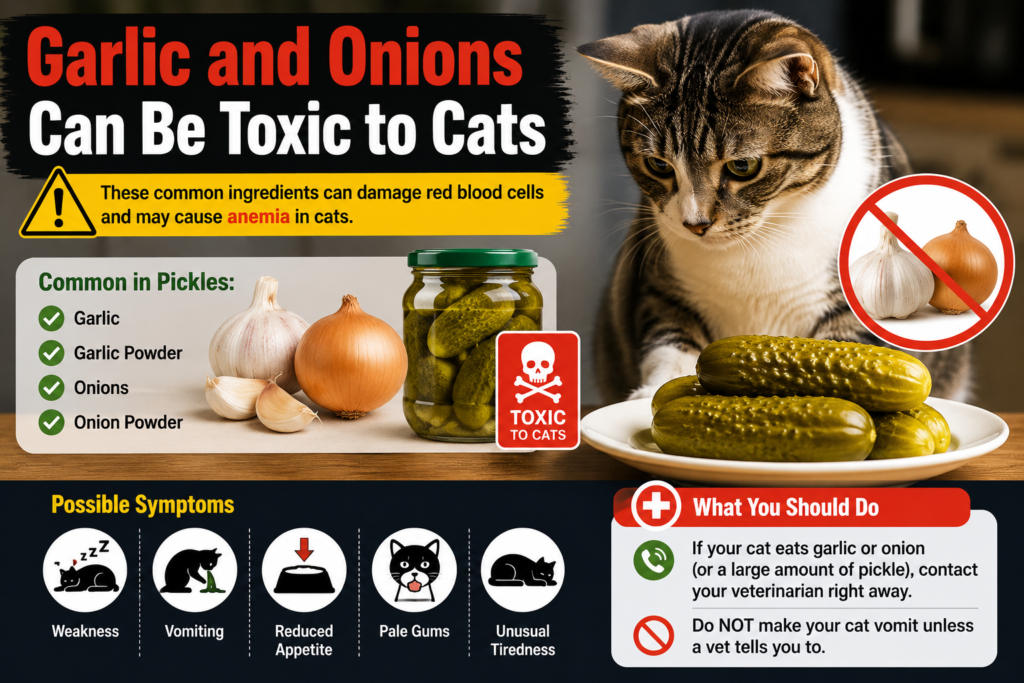
The next concern is much more serious. Some pickles contain garlic, onions, onion powder, garlic powder, or other ingredients from the same plant family. These ingredients can be dangerous for cats.
Garlic and onions are examples of toxic food for cats. They can damage red blood cells and may contribute to anemia. The risk depends on the amount consumed, the form of the ingredient, and the size of the cat.
This is particularly important because you cannot always tell what is inside a pickle just by looking at it. A pickle may appear to be nothing more than a cucumber, but its brine or seasoning could contain garlic or onion.
For this reason, never assume that every pickle has the same ingredients. If your cat accidentally eats a pickle, check the label if the packaging is available. Look specifically for garlic, onion, onion powder, garlic powder, and similar ingredients.
Signs of a problem may not always appear immediately. Depending on the ingredient and amount consumed, a cat may later develop symptoms such as weakness, vomiting, reduced appetite, pale gums, or unusual tiredness.
If you know your cat has eaten a significant amount of garlic or onion, contacting a veterinarian promptly is the safest choice. Do not try to make your cat vomit unless a veterinary professional specifically tells you to do so.
Dangerous Truth #3: Pickle Juice Can Be Even Worse
You may think that avoiding the actual pickle is enough, but pickle juice can also be a problem. The liquid surrounding pickles usually contains concentrated salt, vinegar, and seasonings.
Because pickle brine can contain a large amount of sodium, allowing your cat to drink it is not a good idea. If you are asking, can cats eat pickles, it is also important to know that pickle juice may contain many of the same ingredients found in toxic food for cats, including garlic, onion, chili, herbs, or artificial additives.
The strong acidity and unfamiliar ingredients may upset your cat’s stomach and contribute to various cat health issues. Your pet could experience digestive discomfort, vomiting, diarrhea, or changes in thirst after consuming too much pickle juice.
Another problem is that cats do not need pickle juice at all. Fresh drinking water is the appropriate choice for hydration. Giving your cat flavored human liquids can introduce unnecessary ingredients into its diet.
If your cat accidentally takes a small lick, do not panic. Remove the pickle juice and provide access to fresh water. Then monitor your cat for unusual symptoms. If your cat consumes a larger amount or the brine contains garlic or onion, seek professional veterinary guidance.
Dangerous Truth #4: Pickles Provide Little Nutritional Value
Another reason to avoid giving pickles to cats is simple: they offer very little nutritional benefit. If you are asking can cats eat pickles, it is important to consider whether the food provides any real value. Cats have unique dietary needs because they are obligate carnivores. Their bodies are designed to get essential nutrients primarily from animal-based foods.
A small piece of cucumber may provide some water and fiber, but turning cucumber into a pickle adds salt, vinegar, and seasonings. These additions do not make the food more nutritious for your cat and may contribute to cat health issues when consumed in excessive amounts.
Your cat gets much more value from a complete and balanced feline diet. Quality cat food is formulated to provide important nutrients such as protein, amino acids, vitamins, and minerals.
Giving human snacks too often can also encourage unhealthy eating habits. A cat that becomes accustomed to salty or strongly flavored foods may start ignoring its regular food.
This does not mean every human food is automatically dangerous. However, ingredients such as garlic and onion found in some pickles can be toxic food for cats. Some plain foods can be offered occasionally in small quantities, but pickles are unnecessary and provide no real nutritional advantage.
When choosing treats, focus on foods that support your cat’s nutritional needs instead of foods that simply look interesting to them. A balanced feline diet is a much better choice than salty, seasoned human snacks.
Dangerous Truth #5: Pickle Ingredients May Cause Cat Health Issues
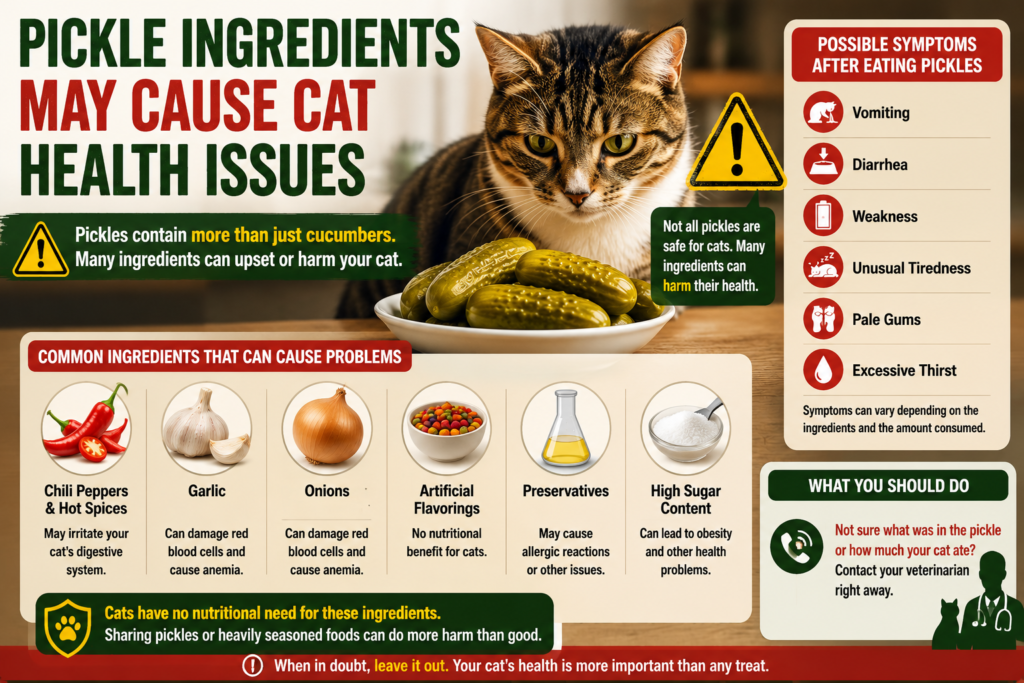
The cucumber is only one part of a pickle. Depending on the brand or recipe, pickles may contain several additional ingredients that can cause problems for cats.
Some varieties contain chili peppers, hot spices, garlic, onions, artificial flavorings, preservatives, or large amounts of sugar. Cats have no nutritional need for these ingredients.
Spicy ingredients may irritate your cat’s digestive system. A sensitive cat could experience stomach discomfort, vomiting, or diarrhea after eating heavily seasoned foods.
Garlic and onions deserve particular attention because they are more than simple stomach irritants. They can be harmful to cats and should be avoided.
These potential reactions are one reason pet owners should be careful about foods to avoid when sharing food from their own plates.
If your cat develops vomiting, diarrhea, weakness, unusual tiredness, pale gums, excessive thirst, or other concerning symptoms after eating a pickle, take the situation seriously. The risk depends on what the pickle contained and how much your cat consumed.
When you are unsure about the ingredients or the amount eaten, contacting a veterinarian is the safest option.
What Happens If a Cat Eats a Pickle?
Do not attempt to make your cat vomit at home unless a veterinarian specifically instructs you to do so. Some home remedies can create additional risks and may lead to further cat health issues.
If your cat eats pickles, especially if the pickle contained garlic or onions, it is important to understand that these ingredients can be toxic food for cats. If you are wondering, can cats eat pickles, the safest answer is generally no. If your cat consumed a large quantity or shows concerning symptoms, contact a veterinarian promptly.
When seeking veterinary advice, tell the veterinarian what your cat ate, approximately how much was consumed, and when it happened. This information can help the veterinarian assess potential risks and recommend the appropriate next steps.
Foods to Avoid Giving Cats
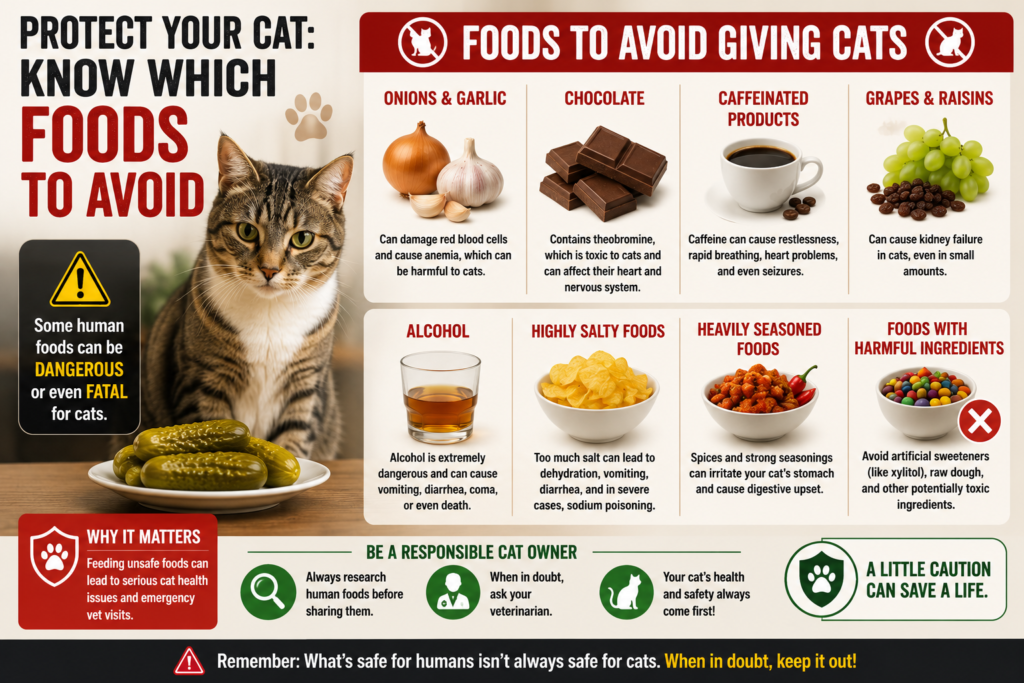
Pickles are not the only human food that deserves caution. Many everyday foods can cause serious problems for cats.
Onions and garlic should be avoided because they can be harmful to cats. Chocolate and caffeinated products are also inappropriate for feline diets. Grapes and raisins are another food group that pet owners should not intentionally give their cats.
Alcohol is particularly dangerous and should never be offered to a cat. Highly salty foods, heavily seasoned foods, and products containing potentially harmful ingredients should also stay away from your pet’s food bowl.
Knowing which foods are unsafe can help prevent unnecessary cat health issues. It is also important to remember that an ingredient that is harmless to humans is not necessarily safe for cats.
When introducing any human food, research it first or ask your veterinarian whether it is appropriate.
What Can Cats Eat Instead of Pickles?
If your cat loves begging for food while you eat, you do not necessarily have to ignore them completely. You can offer appropriate treats instead.
Plain, fully cooked chicken can be an occasional option for many cats, provided it contains no salt, onion, garlic, sauces, or seasonings. Plain cooked turkey can also work as a small occasional treat.
Commercial cat treats are another convenient choice. Look for treats designed specifically for cats and use them in moderation.
The most important rule is to keep treats small and avoid replacing your cat’s regular balanced diet with human foods.
Fresh water should always be available. There is no need to give pickle juice, salty broth, or other flavored liquids for hydration.
Frequently Asked Questions
Can cats eat pickles?
It is best not to give cats pickles. Pickles can contain high levels of salt and may include garlic, onions, spices, and other ingredients that are unsuitable or potentially harmful to cats.
Can cats eat pickle juice?
No. Pickle juice is not a suitable drink for cats because it can contain concentrated salt, vinegar, spices, garlic, onions, and other additives. Fresh water is a much better choice.
Can kittens eat pickles?
Kittens should not be given pickles. Young cats need appropriate nutrition to support healthy growth and development. Salty and seasoned human foods can provide unnecessary ingredients without useful nutrition.
What happens if a cat eats a pickle?
Eating a small amount may not always cause serious problems, but it depends on the ingredients and quantity consumed. Monitor your cat for vomiting, diarrhea, weakness, unusual thirst, or other concerning symptoms. Contact a veterinarian if your cat eats a large amount or the pickle contains garlic or onion.
What should I do if my cat ate a pickle?
Remove the remaining pickle and check its ingredients. Consider how much your cat ate and monitor for unusual symptoms. If it contained garlic or onions, your cat ate a large amount, or symptoms develop, contact a veterinarian for advice.
Are garlic pickles dangerous for cats?
They can be. Garlic is considered unsafe for cats, so garlic-containing pickles should not be given to them. If your cat has eaten a significant amount, seek veterinary guidance.
What human foods are safe for cats?
Some plain, cooked animal proteins can be suitable as occasional treats. Chicken or turkey should be unseasoned and served in small amounts. Always avoid ingredients such as garlic, onions, excessive salt, and sauces.
Conclusion: Should Cats Eat Pickles?
So, can cats eat pickles? The safest answer is that cats should not be intentionally fed pickles.
The biggest concerns are not necessarily the cucumber itself. The problem is everything commonly added during the pickling process. High salt levels, garlic, onions, spices, vinegar, and other ingredients can create unnecessary risks.
Pickles also provide little nutritional value for cats. Your pet is better served by a complete and balanced diet designed specifically for feline nutritional needs.
If your cat accidentally eats a tiny piece, there is no need to panic immediately. Remove the food, check the ingredients, and monitor your pet. However, larger amounts or potentially harmful ingredients deserve greater attention.
Understanding toxic food for cats and other foods to avoid is an important part of responsible pet ownership. When in doubt, speak with your veterinarian before giving your cat unfamiliar human foods.
Ultimately, your cat does not need pickles to enjoy a tasty treat. Stick with appropriate cat treats or small portions of plain, unseasoned cooked meat, and keep the pickle jar safely out of reach.