

 By
By Introduction
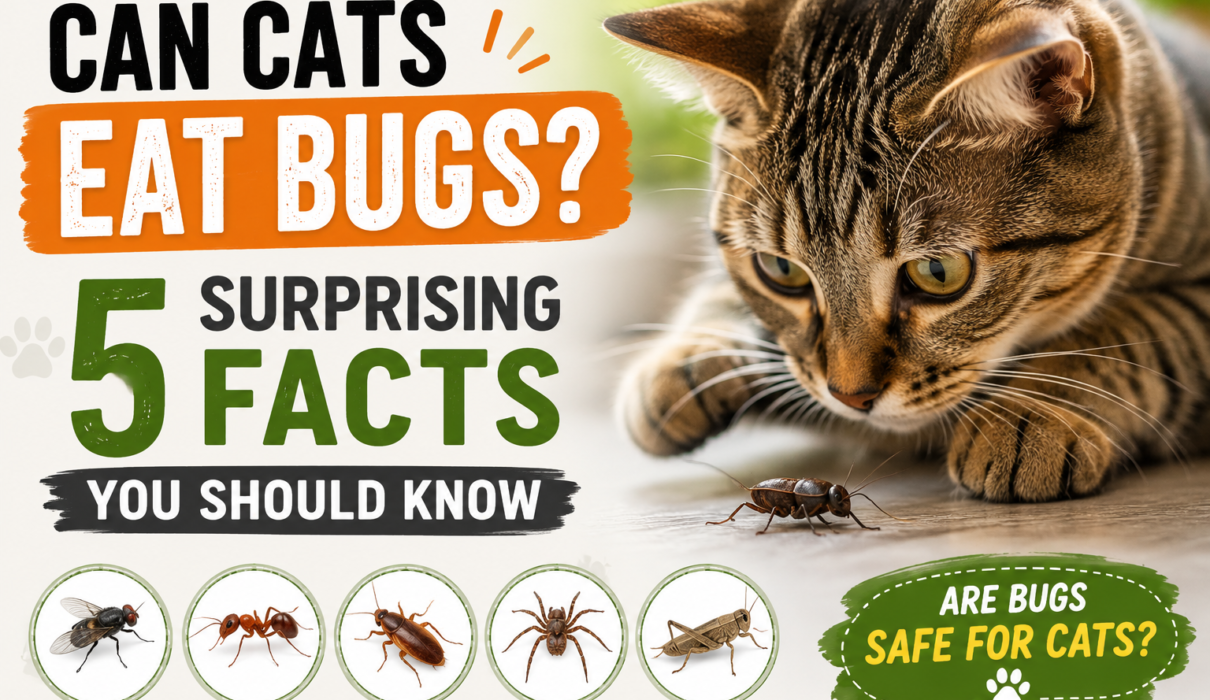
Cats are naturally curious animals, and many enjoy chasing anything that moves around them. A fly buzzing across the room, a moth near a window, or a small insect crawling across the floor can quickly attract a cat’s attention. Sometimes, after catching the bug, a cat may even eat it.
So, can cats eat bugs? In many cases, accidentally eating a small, ordinary insect may not cause a problem. However, not every bug is safe for cats. Some insects can bite, sting, irritate the mouth or stomach, or carry harmful substances such as pesticides.
Understanding why cats hunt insects and knowing which situations may be risky can help owners make better decisions about their pets’ safety.
Can Cats Eat Bugs?
Cats can sometimes eat insects as part of their normal cat eating habits. Their interest in bugs is closely connected to their natural tendency to watch, chase, pounce, and catch small moving creatures.
A cat does not necessarily need to be hungry before it starts hunting. The movement of an insect can trigger a cat’s hunting instinct, even shortly after the cat has eaten a full meal.
Occasionally eating a small, ordinary insect may not be a major concern. However, owners should be cautious because it is difficult to know whether an unfamiliar bug is harmless. Some insects can sting or bite, while others may have been exposed to insecticides or other chemicals.
For this reason, it is better not to intentionally feed unknown insects to cats. A complete and balanced cat food should remain the main source of nutrition.
5 Surprising Facts About Cats Eating Bugs
1. Eating Bugs Can Be Part of a Cat’s Natural Behavior
Chasing insects is often a normal part of feline natural behavior. Cats are predators by nature, and their bodies and senses are well suited for detecting and pursuing small moving objects.
Even a cat that lives entirely indoors may display these behaviors. You may see your cat watching an insect carefully, crouching down, suddenly running after it, or batting at it with its paws.
These actions are related to the same instincts cats use when they encounter potential prey. The fact that an indoor cat has regular meals does not automatically remove its desire to chase something that catches its attention.
Bug hunting can also provide mental stimulation. The unpredictable movement of an insect gives cats something interesting to watch and follow.
However, natural behavior does not mean every insect is safe to eat. Cats may attempt to catch things without knowing whether those creatures can harm them.
2. A Hunting Instinct Does Not Mean Every Bug Is Safe
A cat’s hunting instinct is powerful, but cats cannot identify every potential danger before they catch or eat something.
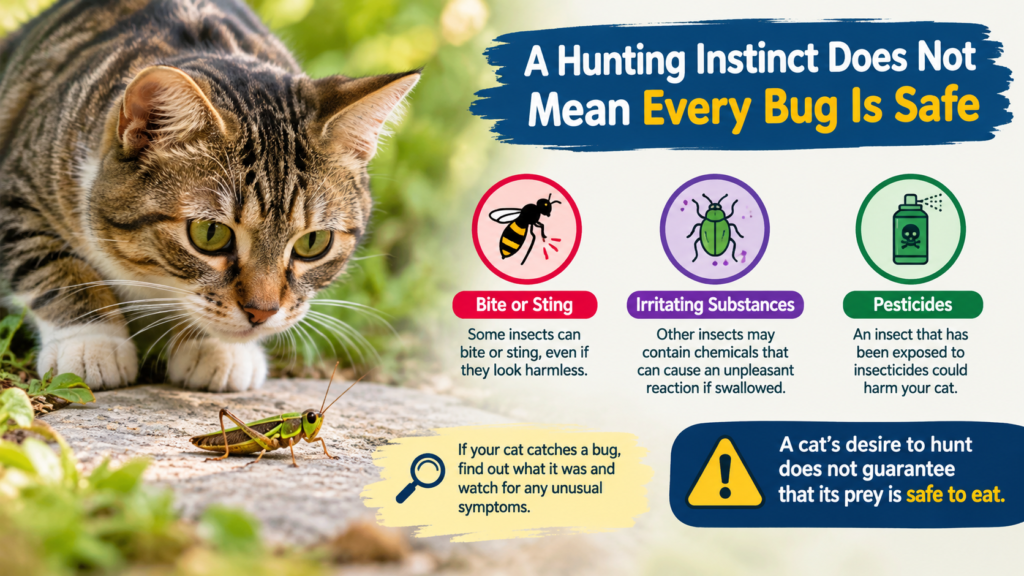
For example, an insect may look like an ordinary bug but have the ability to bite or sting. Other insects may contain irritating substances that can cause an unpleasant reaction if swallowed.
There is another important concern: pesticides. An insect that has come into contact with insecticides or other pest-control chemicals could potentially expose a cat to those substances.
This is why owners should avoid deliberately giving cats wild or unidentified insects as food. If a cat catches a bug on its own, the safest approach is to determine what the insect was and monitor the cat for unusual symptoms.
The key point is simple: a cat’s desire to hunt does not guarantee that its prey is safe to eat.
3. Some Common Insects May Be Harmless
Cats may encounter many different insects inside and around the home. Flies, moths, small beetles, and other ordinary insects can sometimes become targets during play or hunting.
If a cat catches and eats a small insect, it may simply pass through the digestive system without causing noticeable problems. This is one reason occasional insect eating may appear to have no effect on some cats.
However, reactions can vary between individual cats. A particular insect may also pose a different risk depending on whether it can bite, sting, or carry irritating substances.
Because of this, owners should not assume that every bug is harmless simply because their cat has eaten insects before without a problem.
When possible, keep the home free from insects that could pose a known risk and avoid using pest-control products in areas where cats can easily come into contact with them.
4. Some Bugs Can Be Dangerous for Cats
Although some insects may be relatively harmless, others can cause problems. Bugs that bite or sting can potentially cause pain, irritation, or swelling, particularly around the mouth and face.
Some insects can also contain irritating or toxic substances. In addition, insects that have been exposed to pesticides may present a separate chemical risk.
If your cat catches an unfamiliar bug, try to identify it without putting yourself at risk. If you know that the insect could be venomous, toxic, or chemically contaminated, contact a veterinarian for advice.
Watch for unusual signs such as excessive drooling, repeated vomiting, difficulty breathing, significant swelling, weakness, or unusual behavior. Serious or rapidly developing symptoms require prompt veterinary attention.
5. Indoor Cats Can Still Hunt Bugs
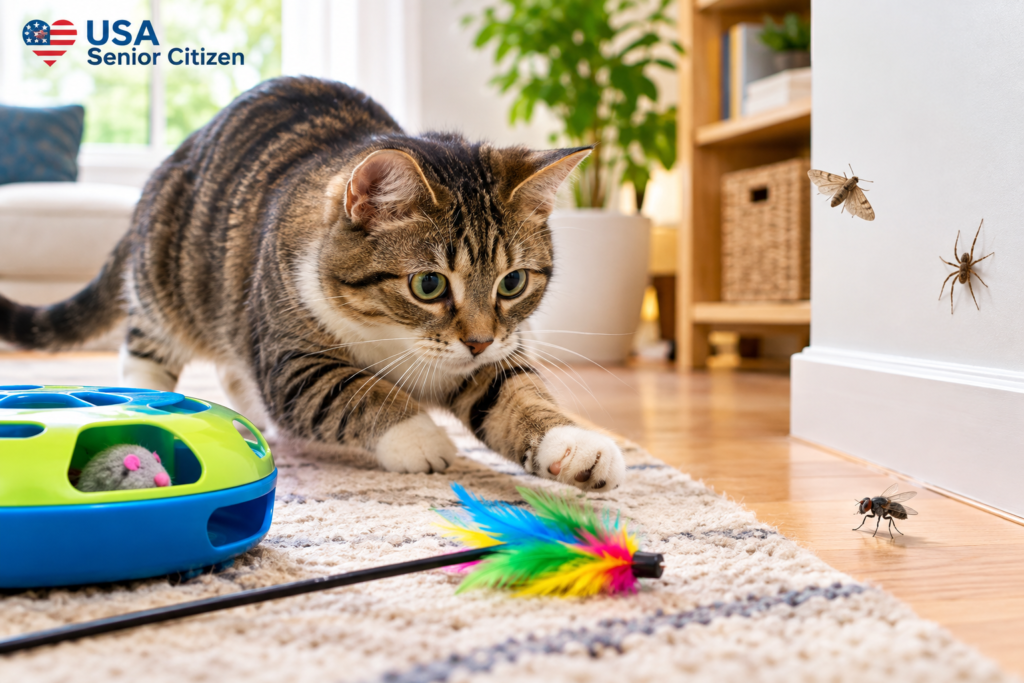
Living indoors does not eliminate a cat’s natural desire to hunt. Indoor cats may chase flies, moths, spiders, and other small creatures that enter the home.
This behavior is not necessarily a sign that your cat is hungry. Instead, it can simply reflect curiosity and the feline hunting instinct.
For indoor cats, chasing safe toys can provide a useful alternative to hunting real insects. Interactive toys that move unpredictably can encourage behaviors such as watching, chasing, and pouncing.
Providing regular play and environmental enrichment can help satisfy these natural behaviors while reducing the need for cats to interact with potentially unsafe insects.
Which Bugs Can Cats Eat Safely?
Cats may naturally chase and occasionally eat insects, but it is important to remember that not every bug is safe. Because many insects are difficult to identify, owners should avoid intentionally feeding wild or unknown bugs to cats.
Small, ordinary insects such as some flies, moths, and harmless beetles may not cause problems when accidentally eaten. However, individual cats can react differently, and the risk depends on the particular insect.
The biggest concerns are insects that can bite or sting, insects that may contain irritating substances, and insects that have been exposed to pesticides.
If you are unsure what type of insect your cat has eaten, do not assume it is safe simply because it looks harmless. When possible, identify the insect and monitor your cat for any unusual symptoms.
What Should You Do If Your Cat Eats a Bug?
If your cat catches and eats a small insect, there is usually no reason to panic. Start by determining what type of bug it was if you can do so safely.
If it appears to be an ordinary household insect and your cat is behaving normally, simply keep an eye on your pet. Make sure fresh water is available and continue with your cat’s normal feeding routine.
However, extra caution is needed if the insect could be poisonous, venomous, or capable of delivering a painful bite or sting. Exposure to pesticides is another important concern.
Contact a veterinarian if your cat develops unusual symptoms such as repeated vomiting, excessive drooling, significant swelling, weakness, difficulty breathing, or other concerning changes in behavior.
Do not give your cat medications or home remedies unless a veterinarian specifically recommends them.
How to Manage Bug-Eating Behavior
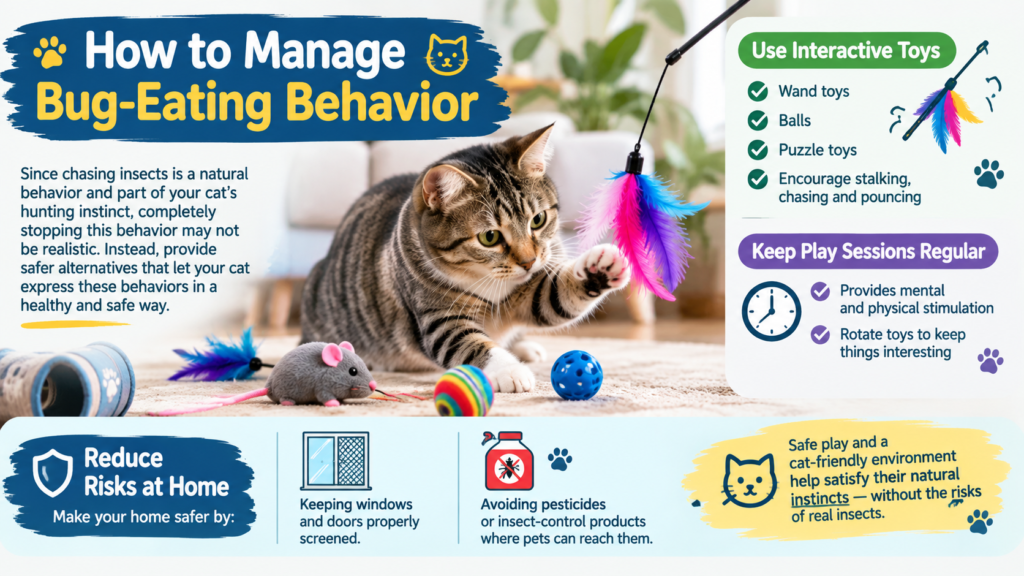
Because chasing insects is connected to a cat’s natural behavior and hunting instinct, completely eliminating the desire to chase moving creatures may not be realistic.
Instead, you can provide safer alternatives that allow your cat to express these behaviors.
Interactive toys can encourage cats to stalk, chase, pounce, and bat at moving objects. Wand toys, balls, and other appropriate cat toys can provide mental and physical stimulation without requiring your cat to hunt real insects.
Regular play sessions can also help keep indoor cats engaged. Rotating toys from time to time can make familiar activities more interesting.
It is also helpful to reduce opportunities for cats to encounter potentially dangerous bugs. Keep windows and doors appropriately screened and avoid leaving pesticides or insect-control products where pets can reach them.
Bugs and Cat Eating Habits
Eating an occasional insect does not necessarily mean that something is wrong with your cat’s diet. Bug hunting is often connected to cat eating habits, curiosity, and predatory behavior rather than hunger.
Cats are naturally inclined to investigate small moving creatures. An indoor cat with regular meals may still chase a fly across the room simply because its movement triggers the cat’s hunting response.
However, insects should not be considered a replacement for a complete and balanced cat diet. Cats need specific nutrients that should come primarily from appropriately formulated cat food.
The nutritional value of an individual insect can also vary considerably. Therefore, it is better to think of accidental insect eating as an occasional behavior rather than an important part of a cat’s nutrition.
Frequently Asked Questions
Can cats eat bugs?
Cats can sometimes eat small insects without experiencing problems, and occasional bug eating can be part of their natural hunting behavior. However, some insects can bite, sting, contain irritating substances, or have been exposed to pesticides. It is best not to intentionally feed unidentified bugs to cats.
Why do cats like eating insects?
Cats are natural hunters. Small, fast-moving insects can trigger their hunting instinct, encouraging them to watch, chase, catch, and sometimes eat them. This behavior can occur even when a cat is not hungry.
Are insects safe for cats?
Some insects may be relatively harmless, but others can pose risks. The safety depends on the species of insect and whether it has been exposed to chemicals. Owners should be cautious with unidentified bugs.
Can cats eat flies?
A cat may catch and eat a fly without developing any noticeable problems. However, flies can potentially come into contact with contaminated substances or chemicals. It is therefore better to prevent cats from regularly eating insects.
Can cats eat spiders?
Some spiders may not cause significant problems if accidentally eaten, but certain species can bite or pose other risks. If you are concerned about the type of spider your cat has eaten or your cat develops unusual symptoms, contact a veterinarian.
What bugs are poisonous to cats?
Certain insects can be harmful because they contain toxins or can deliver venom through a bite or sting. The exact risks depend on the species and location. If you suspect your cat has eaten or been stung by a dangerous insect, seek veterinary advice.
What should I do if my cat eats a bug?
If your cat eats a small insect and continues behaving normally, monitor it closely. Try to identify the insect if possible. If the bug may be toxic or your cat develops concerning symptoms, contact a veterinarian promptly.
Can indoor cats eat insects?
Indoor cats may occasionally catch insects that enter the home. This can be a normal expression of their hunting instinct. However, owners should prevent access to potentially dangerous insects and avoid exposing cats to pesticide-treated bugs.
Why does my cat hunt bugs when it is not hungry?
Hunting is not always driven by hunger. Cats have a strong predatory instinct, and the movement of an insect can naturally attract their attention. Chasing bugs can also provide mental stimulation and an opportunity to express normal hunting behaviors.
Conclusion
So, can cats eat bugs? Cats may occasionally catch and eat small insects, and this can be a normal part of their natural behavior and hunting instinct. However, that does not mean every bug is safe.
Some insects may be relatively harmless, while others can bite, sting, contain toxins, or expose cats to pesticides. For this reason, owners should avoid intentionally feeding unknown insects to their pets.
If your cat enjoys chasing bugs, provide safe interactive toys and other forms of enrichment that allow it to express its natural hunting behaviors. Most importantly, keep potentially dangerous insects and pest-control chemicals away from your cat.
Occasional insect eating can be part of normal cat eating habits, but insects should never replace a complete and balanced diet designed to meet your cat’s nutritional needs.