

 By
By Rex Cat Breeds Guide: Everything About Curly Coated Cats
Introduction
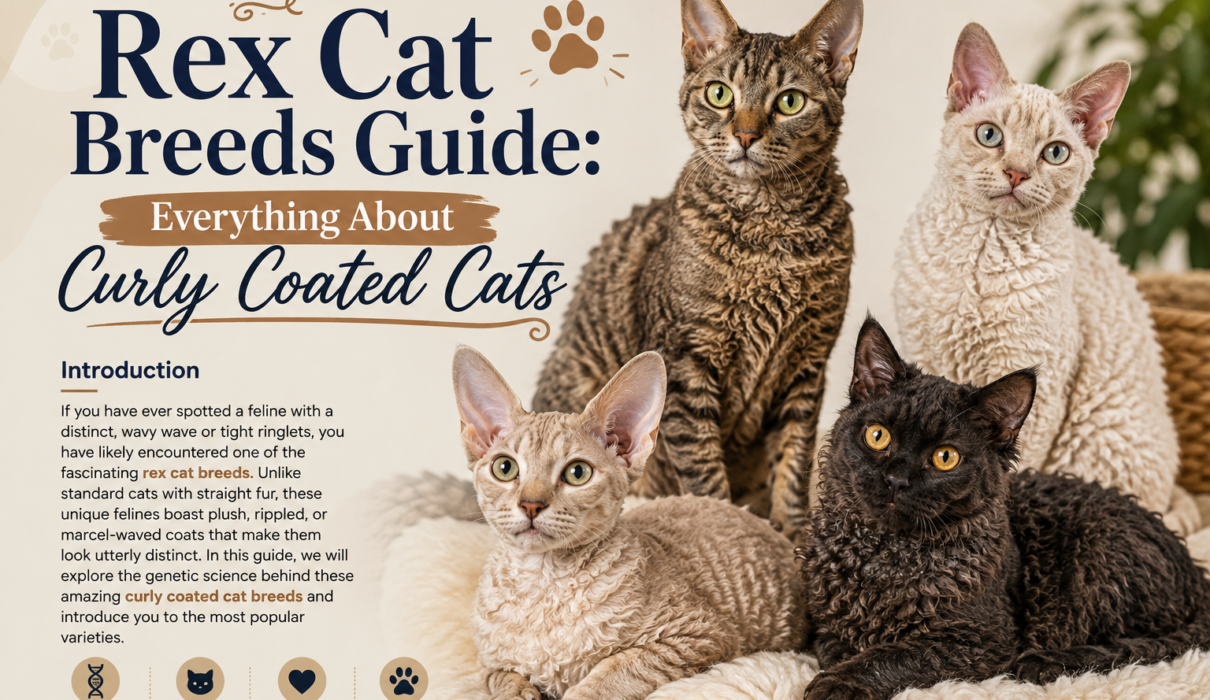
If you have ever spotted a feline with a distinct, wavy wave or tight ringlets, you have likely encountered one of the fascinating rex cat breeds. Unlike standard cats with straight fur, these unique felines boast plush, rippled, or marcel-waved coats that make them look utterly distinct. In this guide, we will explore the genetic science behind these amazing curly coated cat breeds and introduce you to the most popular varieties.
What Causes the Curly Coat?
The unique texture found in rex cat breeds is the result of a spontaneous, natural genetic mutation that alters the structure of the cat’s hair.
The Science of Curls: While a typical cat has three distinct types of hair (guard hairs, awn hairs, and down hairs), the mutation in Rex cats typically alters or reduces certain hair layers—most notably the harsh guard hairs.
The Result: Without stiff guard hairs weighing the coat down, the remaining softer undercoat or wavy hairs curl close to the body, creating that signature velvet-like wave or plush fleece feel.
Meet the Most Popular Rex Cat Breeds
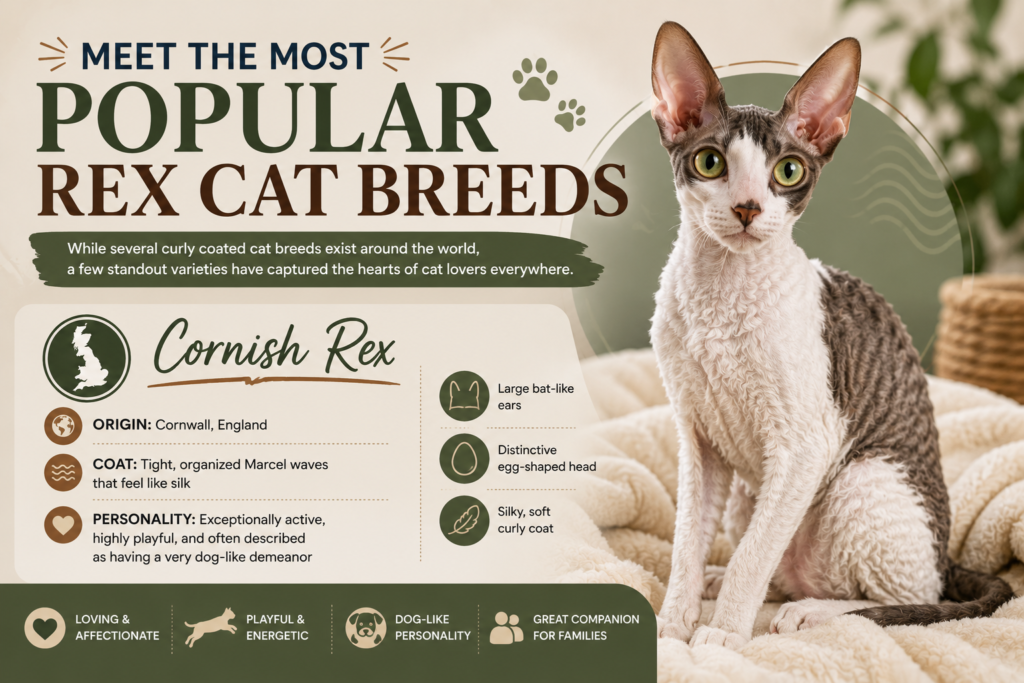
While several curly coated cat breeds exist around the world, a few standout varieties have captured the hearts of cat lovers everywhere.
Cornish Rex
Originating in Cornwall, England, the Cornish Rex is easily recognized by its slender, elegant body, large bat-like ears, and an egg-shaped head. Their coat features tight, organized Marcel waves that feel like silk. Personality-wise, Cornish Rex cats are exceptionally active, highly playful, and often described as having a very dog-like demeanor.
Devon Rex
Hailing from Devon, England, the Devon Rex is often called the “Pixie” or “Poodle cat” of the feline world. They feature a looser, rippled wave rather than the tight ridges of the Cornish Rex, along with massive, wide-set ears and huge eyes. Devon Rex cats are intensely mischievous, affectionate, and deeply people-oriented.
Selkirk Rex
Known affectionately as the “cat in sheep’s clothing,” the Selkirk Rex is the newest and most robust of the major rex cat breeds. Originating in Montana, they feature a thick, plush, and wonderfully messy curl that can come in both short-haired and long-haired varieties. Selkirk Rexes tend to be remarkably laid-back, patient, and cuddly.
Rare Curly Coated Cats
Beyond the big three, there are a few lesser-known curly coated cat breeds worth noting:
German Rex: One of the earliest known rex breeds, sharing a similar coat mutation to the Cornish Rex but with a slightly sturdier build.
Ural Rex: A rare breed originating from Russia with a dense, springy wave.
LaPerm: Though not technically a “Rex” by genetics, the LaPerm is a prominent curly coated breed famous for its loose, corkscrew curls.
Rex Cat Breeds Care Guide: Grooming & Lifestyle for Curly Coated Cats
Introduction
Continuing from our look at the origins and top varieties of rex cat breeds, this second part focuses on what it takes to live with, groom, and care for these unique felines. Because curly coated cats have different coat structures than standard cats, their daily needs are quite distinct.
Grooming and Care for Curly Coated Cat Breeds
While many people assume that low-shedding or short hair means zero maintenance, Rex cats actually require a specialized approach to grooming.
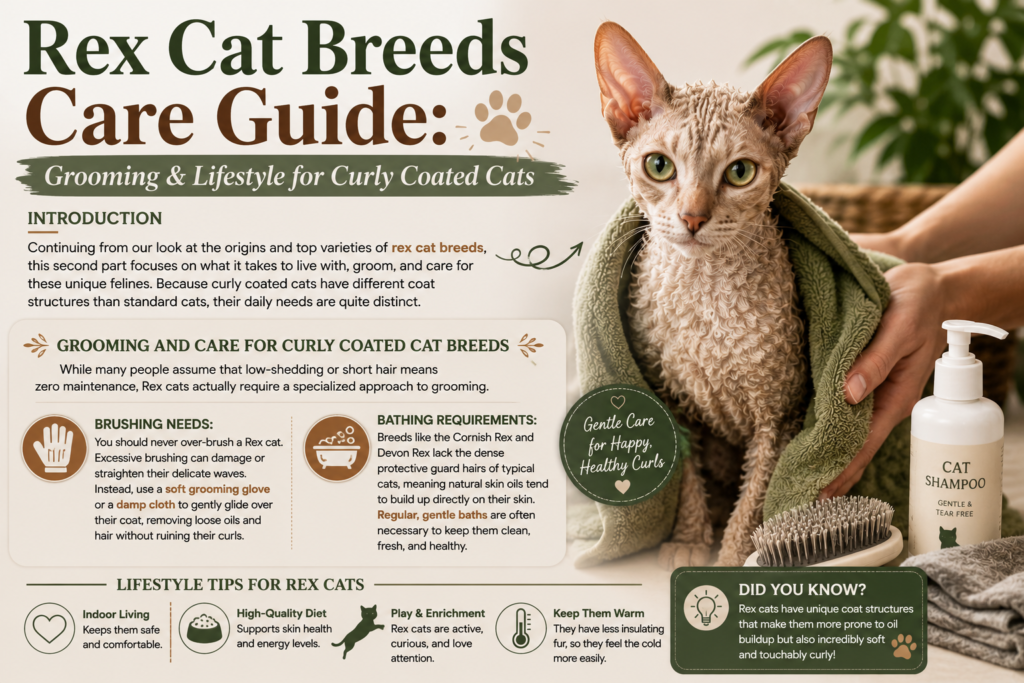
Brushing Needs: You should never over-brush a Rex cat. Excessive brushing can damage or straighten their delicate waves. Instead, use a soft grooming glove or a damp cloth to gently glide over their coat, removing loose oils and hair without ruining their curls.
Bathing Requirements: Breeds like the Cornish Rex and Devon Rex lack the dense protective guard hairs of typical cats, meaning natural skin oils tend to build up directly on their skin. Regular, gentle baths are often necessary to keep their skin healthy and prevent oil buildup.
Ear Cleaning: Because of their prominent, open ears and sparse coat coverage around the head, Rex cats are prone to accumulating earwax. Routine weekly checks and gentle cleanings are essential.
Are Rex Cats Hypoallergenic?
A common misconception is that curly coated cat breeds are entirely hypoallergenic.
Busting the Myth: No cat breed is 100% hypoallergenic. Cat allergies are primarily triggered by the Fel d 1 protein found in a cat’s saliva, skin oils, and dander, rather than the fur itself.
Why They Might Be Better for Sufferers: Because breeds like the Cornish and Devon Rex shed significantly less hair around the home, they tend to scatter fewer allergen-coated hairs onto furniture and carpets, making them a more manageable choice for people with mild allergies.
Is a Rex Cat Right for You?
Before welcoming a curly companion into your home, consider their lifestyle needs:
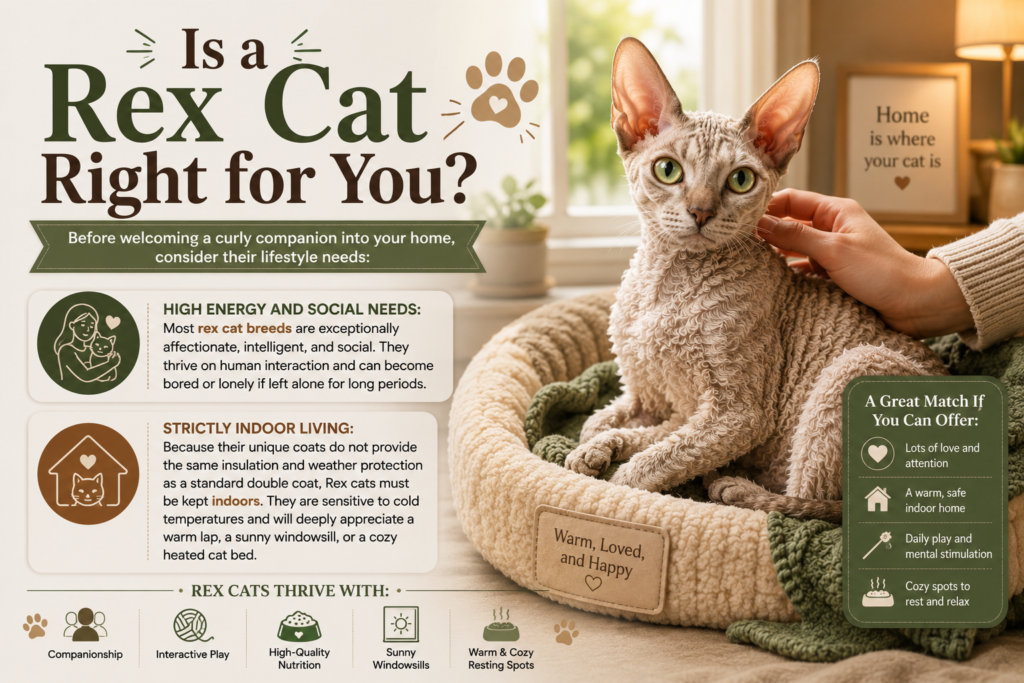
High Energy and Social Needs: Most rex cat breeds are exceptionally affectionate, intelligent, and social. They thrive on human interaction and can become bored or lonely if left alone for long periods.
Strictly Indoor Living: Because their unique coats do not provide the same insulation and weather protection as a standard double coat, Rex cats must be kept indoors. They are sensitive to cold temperatures and will deeply appreciate a warm lap, a sunny windowsill, or a cozy heated cat bed.
Conclusion
Owning one of the wonderful rex cat breeds is a rewarding experience for any cat lover willing to adapt to their unique care needs. From their mesmerizing waves to their affectionate, dog-like personalities, curly coated cats bring endless charm and warmth into a home.
Frequently Asked Questions (FAQs) About Rex Cat Breeds
Q: What makes rex cat breeds different from other cats?
A: Rex cat breeds are characterized by their unique, wavy, or curly fur. Unlike standard cats that have straight fur with three distinct layers of hair, the genetic mutation in Rex cats alters or reduces certain hair layers (such as harsh guard hairs), allowing the softer undercoat to form tight ripples or marcel waves.
Q: What are the most popular curly coated cat breeds?
A: The most well-known curly coated cat breeds include the Cornish Rex (known for its tight Marcel waves and slender body), the Devon Rex (famous for looser ripples and a pixie-like face), and the Selkirk Rex (recognized by its plush, thick, messy curls). Rare breeds like the German Rex, Ural Rex, and LaPerm also exist.
Q: Do curly coated cats require special grooming?
A: Yes. Because excessive brushing can damage or straighten their delicate waves, owners should avoid over-brushing. Instead, using a soft grooming glove or a damp cloth is recommended. Additionally, breeds like the Devon and Cornish Rex lack heavy guard hairs and can build up skin oils, meaning they often require regular, gentle baths and routine ear cleaning.
Q: Are rex cat breeds hypoallergenic?
A: No cat breed is 100% hypoallergenic. Allergies are triggered by the Fel d 1 protein found in cat saliva, skin oils, and dander rather than the fur itself. However, because curly coated cats shed significantly less hair around the home, they often scatter fewer allergen-coated hairs, making them more manageable for people with mild allergies.
Q: Can rex cats live outdoors?
A: No, Rex cats should be kept strictly indoors. Their unique coats do not provide the same insulation and weather protection as a standard cat’s double coat, making them sensitive to cold temperatures and outdoor elements
Read more
15 Best Non Shedding Cat Breeds for a Fur-Free Home