

 By
By Introduction
Chia seeds have become popular because they contain fiber, healthy fats, minerals, and other nutrients. While they are often included in human diets, cat owners may wonder whether these tiny seeds are also suitable for their pets.
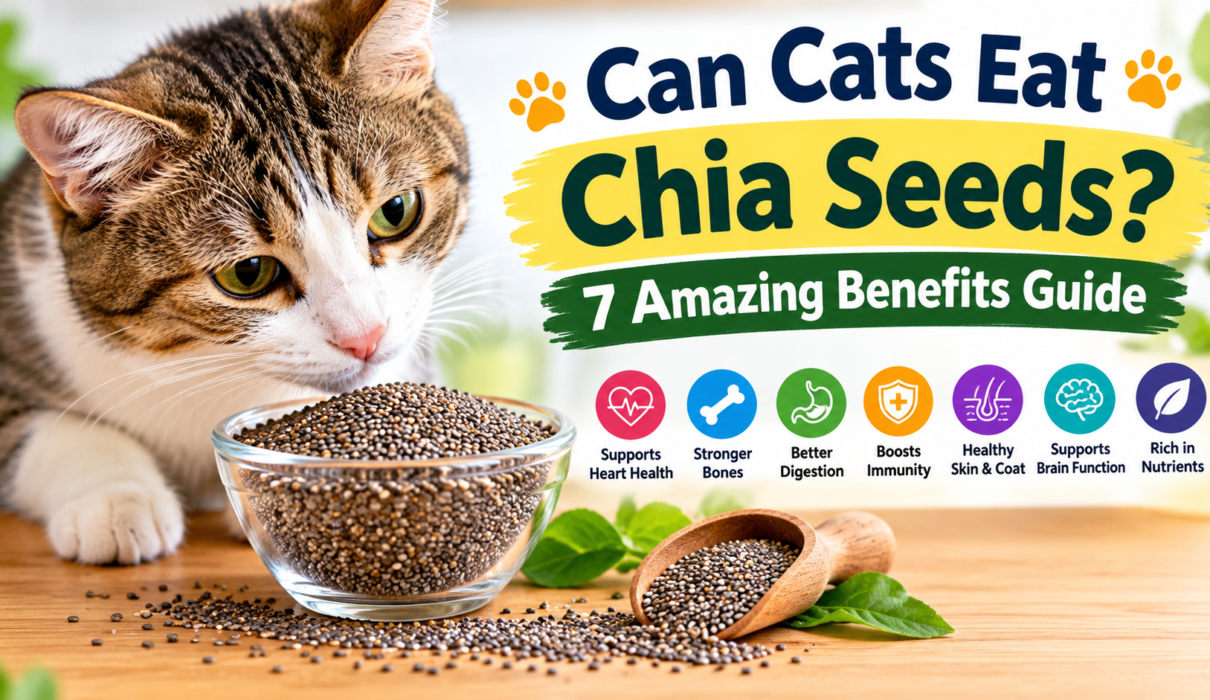
So, can cats eat chia seeds? In general, cats can consume small amounts of plain chia seeds when they are prepared appropriately. However, chia seeds should be considered an occasional addition rather than a replacement for a complete and balanced cat food.
Cats are obligate carnivores, which means their nutritional needs are different from ours. Their main diet should provide the animal-based nutrients they need for proper cat nutrition. Chia seeds may provide some additional nutrients and fiber for cats, but they should only complement a healthy diet.
Can Cats Eat Chia Seeds?
Yes, cats can generally eat small amounts of chia seeds. Plain chia seeds do not contain ingredients that are inherently toxic to cats, but that does not mean cats need them as a regular part of their diet.
If you decide to offer chia seeds, use a small amount and introduce them gradually. Soaking the seeds can make them easier to incorporate into food and helps prevent them from being consumed dry. They can be mixed into a cat’s normal meal rather than offered as a large standalone serving.
It is also important to choose plain chia seeds. Avoid products containing added sugar, salt, artificial flavors, spices, or other ingredients that may not be appropriate for cats.
A cat’s regular food should remain the foundation of its diet. Even though chia seeds are sometimes described as one of the superfoods for cats, they do not provide all the essential nutrients a cat needs.
7 Amazing Benefits of Chia Seeds for Cats
1. May Provide a Source of Fiber
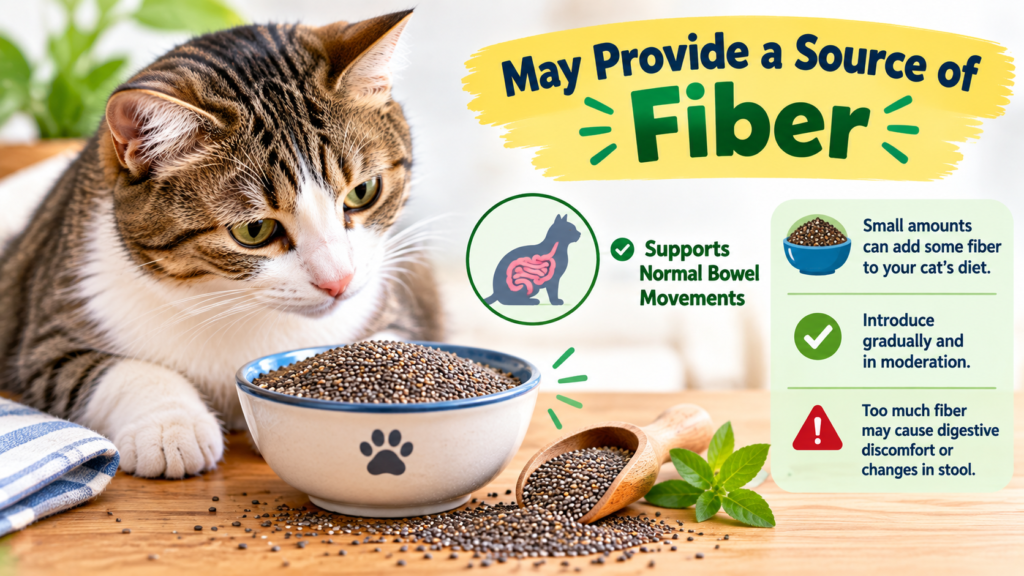
One potential benefit of chia seeds is their fiber content. Fiber can play a role in normal digestive function, although cats generally require much less fiber than humans.
Small amounts of chia seeds may add some fiber to a cat’s diet. This can be useful for supporting normal bowel movements as part of an otherwise balanced feeding routine.
However, more fiber is not necessarily better. Giving a cat too much chia seed may cause digestive discomfort or changes in stool. For this reason, chia seeds should always be introduced gradually and given in moderation.
2. May Support Healthy Digestion
Chia seeds absorb water and develop a gel-like texture when hydrated. Because of this property, they can add moisture and fiber to a meal when properly prepared.
For cats, maintaining normal digestion involves more than adding a single ingredient. Adequate hydration, appropriate food, and a balanced nutritional profile all matter.
If you give your cat chia seeds, consider soaking them first and mixing a small amount with their regular food. Always make sure your cat has access to fresh drinking water.
Chia seeds should not be viewed as a treatment for digestive problems. If a cat has persistent constipation, diarrhea, vomiting, or other digestive symptoms, a veterinarian can help determine the underlying cause.
3. Contains Omega-3 Fatty Acids
Chia seeds contain alpha-linolenic acid, a plant-based type of omega-3 fatty acid. Omega-3 fatty acids are important nutrients that have roles in normal body functions.
However, cats process nutrients differently from humans. The omega-3 fatty acids found in plant foods are not the same as the marine omega-3 fatty acids found in fish.
Therefore, chia seeds should not be considered a replacement for appropriate animal-based sources of nutrition or a properly formulated cat food. Their omega-3 content can simply be viewed as one small part of their overall nutritional profile.
4. Provides Useful Minerals
Chia seeds contain several minerals, including calcium, magnesium, phosphorus, and manganese. These nutrients contribute to various normal functions in the body.
For example, minerals are involved in processes related to bones, muscles, and metabolism. However, cats should obtain their essential nutrients primarily from a complete and balanced diet formulated specifically for their nutritional requirements.
Adding chia seeds does not automatically make a diet nutritionally complete. The overall food a cat eats is much more important than any individual ingredient.
5. May Support Overall Wellness
Chia seeds contain a combination of fiber, fats, protein, and minerals. In small quantities, these nutrients may contribute to the overall nutritional variety of a cat’s diet.
Still, it is important not to exaggerate the benefits. Chia seeds are not a cure for health conditions and should not be used as a substitute for veterinary care or properly formulated cat food.
A healthy diet for a cat should be based on its species-specific nutritional requirements. Chia seeds can be an optional addition, but they are not essential for maintaining good health.
6. Can Add Variety to Meals
Some cat owners like to introduce small amounts of safe ingredients to provide variety in their pets’ meals. Chia seeds can be one possible addition when used appropriately.
If your cat tolerates them, a very small amount can be mixed with its normal food. However, cats can have individual preferences and sensitivities, so not every cat will enjoy or tolerate every new ingredient.
When introducing chia seeds or any unfamiliar food, make the change gradually. Watch for changes in appetite, stool, or general behavior.
7. May Be an Occasional Superfood Addition
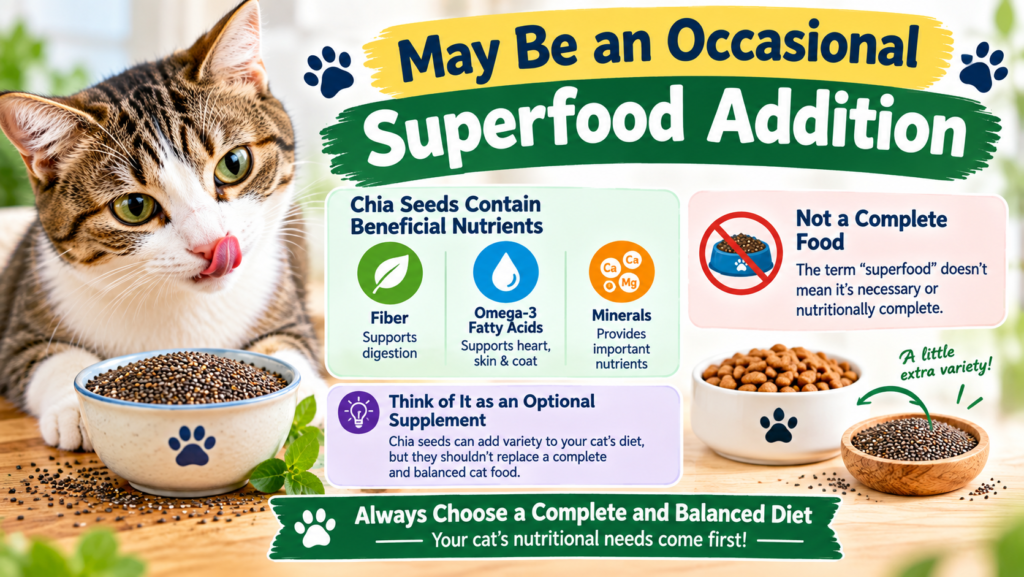
The term superfoods for cats is often used to describe foods that contain a variety of beneficial nutrients. Chia seeds may fit this description because they contain fiber, omega-3 fatty acids, and several minerals.
However, the term “superfood” does not mean that a food is necessary or nutritionally complete. Cats have specific dietary requirements, and those requirements cannot be met simply by adding one nutrient-rich ingredient.
Think of chia seeds as an optional supplement to variety rather than a core component of your cat’s diet. The priority should always be a complete and balanced food that meets your cat’s nutritional needs.
How to Give Chia Seeds to Cats Safely
If you want to introduce chia seeds into your cat’s diet, start with a very small amount. This gives you an opportunity to see how your cat responds before offering them again.
Soaking chia seeds in water can help them develop their characteristic gel-like texture. You can then mix a small amount into your cat’s regular food.
Keep these basic points in mind:
- Use plain chia seeds without added sugar, salt, spices, or flavorings.
- Start with a very small amount.
- Consider soaking the seeds before mixing them with food.
- Introduce them gradually rather than making a sudden dietary change.
- Make sure fresh water is available.
- Monitor your cat for any changes in digestion or appetite.
If your cat does not tolerate chia seeds, there is no need to force them into the diet. A complete and balanced cat food should provide the foundation of proper cat nutrition.
How Much Chia Seed Can Cats Eat?
There is no single serving size that is appropriate for every cat. The suitable amount can depend on the cat’s size, age, existing diet, and individual tolerance.
Because chia seeds contain a significant amount of fiber, giving too much can potentially cause digestive discomfort. A small amount is generally more appropriate than treating chia seeds as a regular food.
If you are considering giving chia seeds frequently, it is best to ask your veterinarian about an appropriate amount for your individual cat. This is especially important if your cat already follows a specialized diet.
Remember that the goal is not to add as many superfoods for cats as possible. The goal is to maintain a nutritionally complete and balanced diet.
Potential Risks and Side Effects
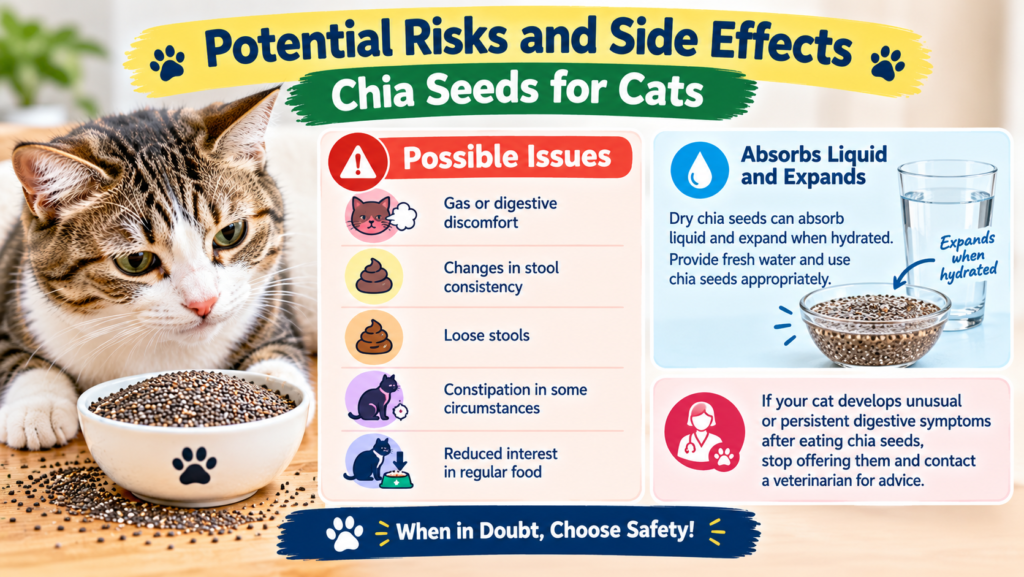
While chia seeds may be tolerated by some cats, they are not suitable for every cat. Introducing too much at once can cause digestive changes because of their fiber content.
Potential issues may include:
- Gas or digestive discomfort
- Changes in stool consistency
- Loose stools
- Constipation in some circumstances
- Reduced interest in regular food
Dry chia seeds also absorb liquid and expand when hydrated. For this reason, using them appropriately and providing access to fresh water is important.
If your cat develops unusual or persistent digestive symptoms after eating chia seeds, stop offering them and contact a veterinarian for advice.
Who Should Avoid Giving Chia Seeds to Cats?
Some cats may need extra caution with new foods. For example, cats with existing digestive problems or those following a veterinary-prescribed diet may not be good candidates for dietary additions without professional guidance.
Extra care may also be appropriate for:
- Cats with known food sensitivities
- Cats following therapeutic diets
- Cats with ongoing digestive problems
- Kittens with specific nutritional requirements
- Cats taking medications or receiving veterinary treatment
If you are unsure whether chia seeds fit into your cat’s feeding plan, a veterinarian can help you make a suitable decision.
Chia Seeds vs. Other Superfoods for Cats
Chia seeds are sometimes promoted as a nutrient-rich food, but they are only one possible dietary ingredient. Other foods may provide nutrients that are more relevant to a cat’s natural dietary requirements.
For example, properly prepared animal-based foods can provide high-quality protein and nutrients that cats need. Fish may also provide marine omega-3 fatty acids, while properly formulated commercial cat food is designed to provide a broader range of essential nutrients.
This is why the concept of superfoods for cats should be approached carefully. A food can contain useful nutrients without being necessary for a cat’s diet.
Rather than focusing on one ingredient, consider the overall nutritional quality of your cat’s food. A balanced healthy diet is much more important than adding individual foods simply because they are marketed as superfoods.
Frequently Asked Questions
Can cats eat chia seeds every day?
Cats generally do not need chia seeds every day. If you choose to offer them, they should be given in small amounts and should not replace complete and balanced cat food. Ask your veterinarian before making chia seeds a regular part of your cat’s diet.
Are chia seeds safe for kittens?
Kittens have specific nutritional requirements because they are growing rapidly. Their diet should primarily consist of food formulated for kittens. Before adding chia seeds or other supplemental foods, consult your veterinarian.
Can cats eat dry chia seeds?
It is better to avoid simply giving cats a large amount of dry chia seeds. Chia seeds absorb liquid and can expand when hydrated. If you decide to offer them, using a properly prepared, small amount mixed into food is a more sensible approach.
Should chia seeds be soaked before giving them to cats?
Soaking chia seeds allows them to absorb water and form a gel. This can make them easier to incorporate into food. Always use a small amount and ensure your cat has access to fresh water.
How much chia seed can I give my cat?
The appropriate amount depends on the individual cat. Since chia seeds are high in fiber, starting with a very small amount is sensible. For regular use, ask your veterinarian about an appropriate serving for your cat.
Can chia seeds help with constipation in cats?
Chia seeds contain fiber, but they should not be used as a home treatment for constipation without veterinary guidance. Constipation can have different causes, and persistent problems should be evaluated by a veterinarian.
Are chia seeds a good source of fiber for cats?
Chia seeds do contain fiber, so they can provide some dietary fiber. However, cats have different fiber requirements from humans, and too much fiber may cause digestive problems. A cat’s overall diet should determine its appropriate fiber intake.
Are chia seeds considered superfoods for cats?
Chia seeds are sometimes described as a superfood for cats because they contain several nutrients, including fiber, omega-3 fatty acids, and minerals. However, “superfood” is not a nutritional category, and chia seeds are not a substitute for complete cat food.
Conclusion
So, can cats eat chia seeds? In small amounts, plain and properly prepared chia seeds can be an occasional addition to some cats’ diets. They provide fiber, plant-based omega-3 fatty acids, minerals, and other nutrients.
However, chia seeds are not essential to a cat’s diet. Cats need species-appropriate nutrition from a complete and balanced food, with appropriate animal-based nutrients forming the foundation of their meals.
If you decide to introduce chia seeds, start slowly, use a small amount, and monitor your cat’s response. When in doubt, especially if your cat has dietary restrictions or health concerns, consult a veterinarian before adding chia seeds regularly.