

 By
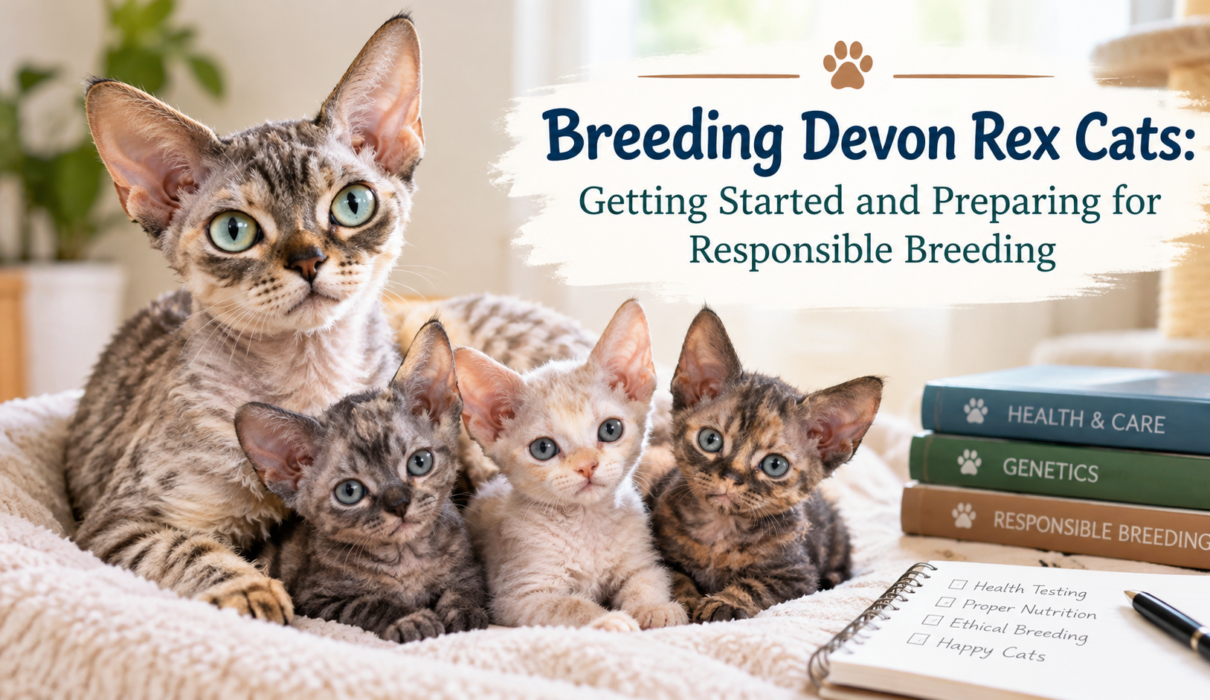
By Breeding Devon Rex Cats: Getting Started and Preparing for Responsible Breeding
Breeding Devon Rex cats can be an interesting and rewarding responsibility for people who have a deep understanding of the breed and a strong commitment to feline welfare. The Devon Rex is known for its distinctive appearance, large ears, playful personality, and soft curly coat. However, responsible breeding involves much more than simply pairing two cats.
Before starting a breeding program, it is important to understand the breed’s health, genetics, temperament, pedigree, and long-term care requirements. Responsible breeders focus on producing healthy, well-socialized kittens and work carefully to protect the future of the breed.
This guide explains the important first steps involved in breeding Devon Rex cats, including understanding the breed, selecting healthy breeding cats, considering health testing, learning about genetics, choosing compatible breeding pairs, and preparing for responsible breeding.
What You Should Know Before Breeding Devon Rex Cats
Before breeding Devon Rex cats, it is important to understand that breeding is a serious long-term responsibility. A responsible breeder must invest time, knowledge, money, and ongoing care into both the adult cats and their kittens.
Breeding cats requires careful planning. You may need regular veterinary support, suitable living space, accurate health and pedigree records, and enough time to monitor the cats. Breeders should also be prepared to provide proper care for kittens until they are ready for suitable new homes.
Responsible breeding should never focus only on producing kittens with a particular appearance. Health, temperament, genetic diversity, and animal welfare should always be important priorities.
Before starting, ask yourself:
Do you understand the Devon Rex breed?
Can you provide long-term care for breeding cats?
Do you have access to experienced veterinary support?
Are you prepared for unexpected expenses?
Do you understand responsible kitten socialization?
Can you carefully screen potential kitten owners?
A successful breeding program requires patience and continuous learning.
Understanding the Devon Rex Breed
The Devon Rex is one of the most recognizable rex cat breeds because of its unusual appearance and curly or wavy coat. These cats typically have large ears, expressive eyes, a slender body, and a playful personality.
Devon Rex cats are often described as active, intelligent, curious, and affectionate. They may enjoy spending time with people and can be highly interactive members of a household.
Their coat is one of their most famous features. The Devon Rex belongs to a group of curly coated cat breeds that have distinctive coat characteristics caused by genetic differences.
However, appearance should not be the only factor considered when selecting cats for breeding. A responsible breeder should understand the complete breed, including:
Physical structure
Temperament
Coat characteristics
Genetic background
Health history
Pedigree information
Learning about the breed standard and working with experienced breeders can also help new breeders better understand responsible breeding goals.
Choosing Healthy Cats for Breeding Devon Rex Cats
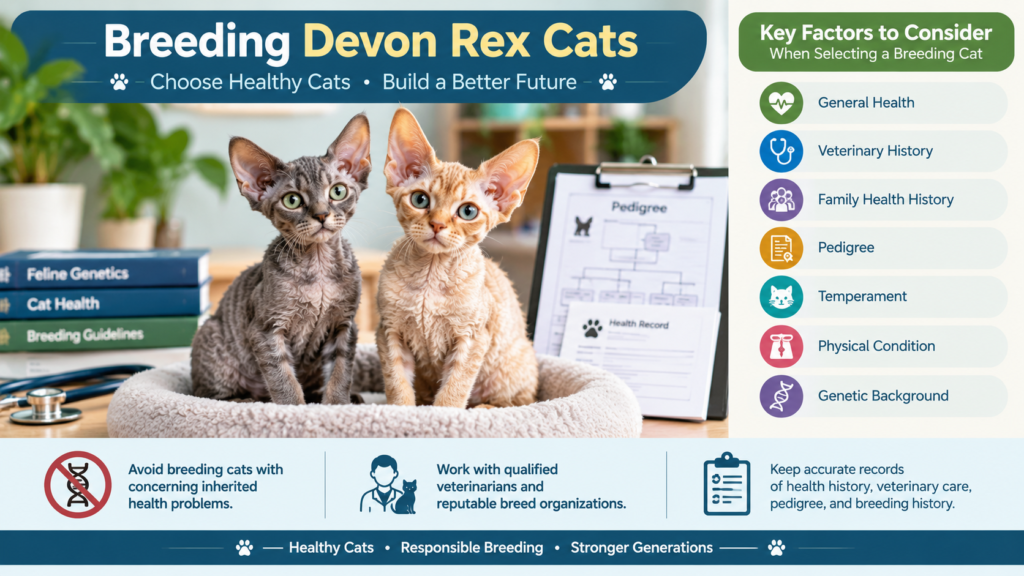
One of the most important parts of breeding Devon Rex cats is selecting healthy and suitable breeding cats.
A cat should not be selected for breeding based only on its curly coat, eye color, or physical appearance. Health and temperament are equally important.
Before selecting a breeding cat, breeders should carefully review the cat’s:
General health
Veterinary history
Family health history
Pedigree
Temperament
Physical condition
Genetic background
Cats with concerning inherited health problems should not be used irresponsibly in breeding programs. Working with qualified veterinary professionals and knowledgeable breed organizations can help breeders make more informed decisions.
Good record keeping is also extremely important. Breeders should maintain accurate information about each cat’s health history, veterinary care, pedigree, and breeding history.
Health Testing Before Breeding Devon Rex Cats
Health should always be a major priority when breeding Devon Rex cats.
Before including a cat in a breeding program, responsible breeders should seek veterinary guidance regarding appropriate health evaluations and testing. The specific tests needed may depend on the cat’s individual history, family background, location, and current veterinary recommendations.
Regular veterinary examinations can help identify health concerns that may affect breeding decisions.
Responsible breeders should consider:
General veterinary health examinations
Appropriate genetic testing
Review of family health history
Breed-specific health considerations
Vaccination planning
Parasite prevention and control
Health testing should not be viewed as a one-time task. Breeders should continue monitoring the health of their cats throughout their lives.
Keeping detailed health records can also help breeders make responsible decisions in the future.
Selecting the Right Breeding Pair
Selecting a suitable breeding pair requires more than choosing two Devon Rex cats that look attractive together.
A responsible breeder should consider several factors, including:
Health history
Genetic compatibility
Pedigree
Temperament
Physical characteristics
Breed standards
Genetic diversity
The goal should be to make thoughtful and responsible decisions that support the health and welfare of future kittens.
Temperament is especially important. Devon Rex cats are often known for being active and affectionate, and breeders should consider the personality and behavior of both cats.
Breeders should also avoid making decisions based only on popular physical traits. A beautiful appearance does not automatically mean a cat is suitable for breeding.
Careful planning and professional advice can help breeders make more responsible choices.
Understanding Genetics in Breeding Devon Rex Cats
A basic understanding of genetics is extremely valuable when breeding Devon Rex cats.
Genetics can influence many characteristics, including coat type, physical features, and inherited health risks. The distinctive Devon Rex coat is connected to genetic factors that give the breed its recognizable curly or wavy appearance.
However, genetics is more complex than simply selecting two cats with desirable physical traits.
Responsible breeders should learn about:
Coat inheritance
Pedigree relationships
Genetic diversity
Inherited health risks
Recessive and dominant traits
The importance of responsible breeding decisions
Understanding genetics can help breeders avoid making decisions based only on appearance.
The Devon Rex is one of several rex cat breeds, and different Rex breeds may have different genetic causes for their distinctive coat types. For this reason, breeders should avoid assuming that all curly coated cat breeds have identical genetics or breeding requirements.
When needed, professional veterinary and genetic guidance can help breeders better understand complex breeding decisions.
Preparing for Devon Rex Cat Mating
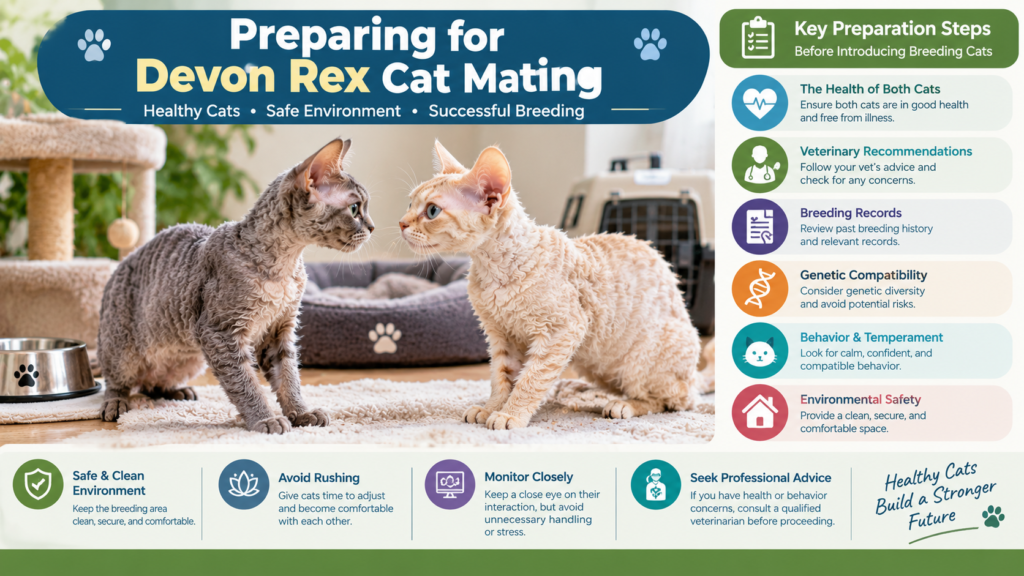
Proper preparation is another important part of breeding Devon Rex cats.
Before introducing breeding cats, both cats should be in good health and maintained in a safe, clean, and low-stress environment.
Breeders should avoid rushing introductions. Cats may need time to become comfortable with changes in their environment.
Before mating, responsible breeders should review:
The health of both cats
Veterinary recommendations
Breeding records
Genetic compatibility
The cats’ behavior and temperament
Environmental safety
The breeding environment should be clean, secure, and comfortable. Cats should be closely monitored, but unnecessary handling or stress should be avoided.
If a breeder has concerns about the health or behavior of either cat, it is best to seek advice from a qualified veterinarian before continuing.
Why Responsible Breeding Matters
Responsible breeding helps protect the health and welfare of both adult cats and future kittens.
The popularity of unusual-looking curly coated cat breeds can sometimes lead people to focus too heavily on appearance. However, responsible breeding should always place health, temperament, and welfare above trends.
Ethical breeders take responsibility for the cats they breed and for the kittens they produce. This includes careful planning, proper veterinary care, health record keeping, early kitten socialization, and responsible placement.
Learning from experienced breeders can also be valuable. Breeders of other pedigree cats, including an experienced Russian Blue cat breeder, may also provide useful examples of maintaining pedigrees, health records, responsible breeding standards, and careful kitten placement.
While every breed has different characteristics and breeding considerations, responsible breeding principles remain important across many pedigree cat breeds.
Conclusion: Preparing for Responsible Breeding Devon Rex Cats
Breeding Devon Rex cats requires knowledge, planning, patience, and a serious commitment to animal welfare. Before beginning a breeding program, it is important to understand the Devon Rex breed, select healthy cats, review pedigrees, consider appropriate health testing, learn about genetics, and carefully choose compatible breeding pairs.
The Devon Rex is one of the most distinctive rex cat breeds and is admired for its unusual appearance and curly coat. However, responsible breeders should always look beyond physical appearance and prioritize health, temperament, genetic diversity, and the long-term welfare of their cats.
Careful preparation provides the foundation for a responsible breeding progra
Pregnancy Care When Breeding Devon Rex Cats
Pregnancy is an important stage when breeding Devon Rex cats. Once pregnancy is confirmed, the queen should receive appropriate care and monitoring based on veterinary guidance.
The mother’s health should always be the main priority. Breeders should provide a clean, calm, and comfortable environment with suitable nutrition and regular access to fresh water.
During pregnancy, responsible breeders should pay attention to:
Changes in appetite
Body condition
General behavior
Activity level
Signs of illness or discomfort
Veterinary recommendations
Pregnant cats should not experience unnecessary stress. A quiet and familiar environment can help the queen remain comfortable.
Breeders should also avoid making sudden changes to the cat’s routine unless necessary. Any concerns about the queen’s health, behavior, appetite, or pregnancy should be discussed with a qualified veterinarian.
Regular observation and responsible veterinary care can help breeders identify potential concerns early.
Preparing for Devon Rex Kitten Birth
Preparing for the birth of kittens is an essential responsibility when breeding Devon Rex cats.
Before the expected birth, breeders should prepare a quiet, clean, warm, and secure nesting area. The mother should have access to a comfortable space where she can feel safe.
The nesting area should be located away from excessive noise, frequent disturbances, and other potential sources of stress.
Breeders should prepare for the kittens’ arrival by ensuring they have:
A clean nesting area
Fresh and comfortable bedding
A warm and quiet environment
Contact information for a veterinary professional
A plan for obtaining veterinary help if needed
Although breeders should monitor the queen, excessive interference can cause unnecessary stress. The mother should be allowed privacy while remaining under appropriate observation.
If there are concerns during labor or signs that the mother or kittens may be in distress, a qualified veterinarian should be contacted promptly.
Raising Healthy Devon Rex Kittens
Raising healthy kittens is one of the most important responsibilities involved in breeding Devon Rex cats.
During their early weeks, kittens depend heavily on their mother and require a safe, warm, and clean environment. Breeders should monitor their growth and general development while avoiding unnecessary disturbance.
Important areas of kitten care include:
Monitoring growth and development
Maintaining a clean environment
Providing appropriate warmth
Observing feeding behavior
Supporting early socialization
Following veterinary recommendations
Kittens should be monitored carefully to ensure they are developing normally. If a kitten appears weak, fails to gain weight, or shows signs of illness, veterinary advice should be sought.
Responsible breeders should maintain accurate records of each kitten’s development, health care, and important milestones.
The Importance of Early Kitten Socialization
Early socialization plays an important role in raising confident and well-adjusted Devon Rex kittens.
As kittens grow and become more active, they gradually begin exploring their environment and interacting with people and other appropriate animals.
Positive and gentle experiences can help kittens become comfortable with normal household activities.
Socialization may include carefully introducing kittens to:
Gentle human interaction
Normal household sounds
Safe toys and enrichment
Appropriate handling
Different safe environments within the home
Every kitten develops at its own pace. Socialization should always be gentle and appropriate for the kitten’s age and development.
Responsible breeders should avoid overwhelming kittens with too many stressful experiences. The goal is to provide positive, safe, and gradual exposure to everyday life.
Devon Rex Cats Compared With Other Rex Cat Breeds
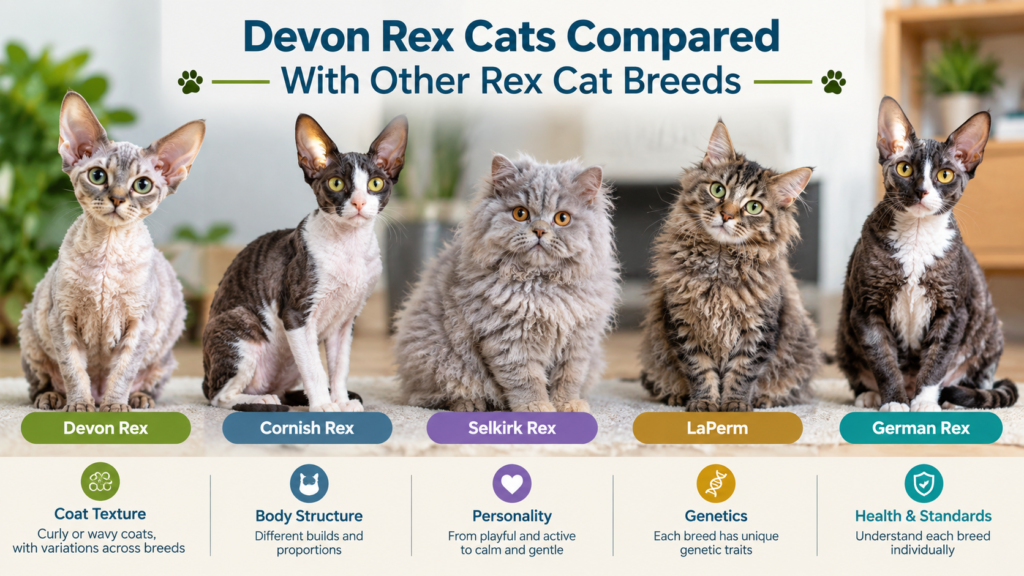
The Devon Rex belongs to a group commonly described as rex cat breeds because of its distinctive curly or wavy coat.
However, not all Rex breeds are identical. Different breeds can vary in body structure, coat texture, personality, and genetic background.
The Devon Rex is known for:
A soft curly or wavy coat
Large and distinctive ears
A slender body
An active personality
A playful and affectionate nature
Other rex cat breeds may have different coat textures and physical characteristics.
For breeders, understanding these differences is important. The genetics responsible for coat appearance may not be the same across every breed.
Responsible breeders should avoid making assumptions about breeding practices based only on similarities in appearance. Each breed should be understood individually, including its health considerations, genetics, and breed standards.
Devon Rex and Other Curly Coated Cat Breeds
The Devon Rex is one of the best-known curly coated cat breeds, but it is not the only breed with an unusual coat texture.
Curly and wavy coats can vary greatly between breeds. Some coats may feel soft and loose, while others may have a denser or more structured texture.
The appearance of the coat can also change as a kitten grows.
When breeding cats with unusual coat characteristics, responsible breeders should remember that appearance is only one part of the breeding decision.
Health, temperament, and genetic diversity should always remain priorities.
A breeder should never select cats only because they have the most dramatic curly coat. A healthy and well-balanced breeding program considers the overall welfare of the cats and the future kittens.
This responsible approach is important across all curly coated cat breeds.
Learning From Responsible Cat Breeders
Breeding cats successfully requires continuous learning.
New breeders can benefit from guidance provided by experienced and responsible breeders. Mentorship can help new breeders understand important areas such as record keeping, pedigree research, kitten socialization, and responsible placement.
Learning from experienced breeders can also help new breeders avoid common mistakes.
Responsible breeders often understand the importance of:
Accurate pedigree records
Long-term health monitoring
Responsible breeding decisions
Honest communication
Careful kitten placement
Ongoing support for kitten owners
Joining responsible breed communities and learning from experienced people can provide valuable knowledge.
What Can You Learn From a Russian Blue Cat Breeder?
An experienced Russian Blue cat breeder may provide useful insight into responsible pedigree breeding practices.
Although Russian Blue cats are very different from Devon Rex cats, responsible breeding principles can apply across many breeds.
A knowledgeable breeder may demonstrate the importance of:
Maintaining accurate pedigree information
Keeping detailed health records
Carefully selecting breeding cats
Providing proper kitten socialization
Screening potential kitten owners
Offering guidance to new owners
New Devon Rex breeders can learn from responsible breeding practices used across different pedigree breeds.
However, every breed has its own health concerns, genetic background, and breed-specific requirements. Breeders should always research the specific needs of the Devon Rex rather than directly copying breeding practices from another breed.
Common Mistakes to Avoid When Breeding Devon Rex Cats
Responsible breeders should be aware of common mistakes that can negatively affect cats and kittens.
Breeding Without Enough Knowledge
One of the biggest mistakes is starting a breeding program without understanding the breed, genetics, health considerations, and long-term responsibilities.
Breeders should take time to learn before making breeding decisions.
Focusing Only on Appearance
The unusual appearance of the Devon Rex can make its physical features very appealing. However, breeding decisions should never focus only on curly coats, eye color, or other visual traits.
Health and temperament are equally important.
Ignoring Health History
Family health history can provide valuable information when making responsible breeding decisions.
Breeders should maintain accurate records and seek appropriate veterinary guidance.
Poor Record Keeping
Missing or incomplete records can make it difficult to understand a cat’s breeding and health history.
Responsible breeders should maintain organized records for their cats and kittens.
Inadequate Kitten Socialization
Kittens need appropriate positive experiences as they develop.
A lack of careful socialization may make the transition to a new home more difficult.
Finding Homes Without Proper Screening
Not every potential buyer may be prepared for the responsibilities of owning a Devon Rex cat.
Responsible breeders should take time to communicate with potential owners and help ensure that the kitten is placed in a suitable home.
Finding Responsible Homes for Devon Rex Kittens
Finding a responsible home is an important final stage of breeding Devon Rex cats.
Breeders should remember that their responsibility does not necessarily end when a kitten leaves for a new home.
Potential owners should understand the general needs and personality of the Devon Rex breed.
Before placing a kitten, breeders may discuss:
The kitten’s personality and needs
Grooming and general care
Veterinary responsibilities
Diet and nutrition
Indoor safety
Time and attention requirements
Potential owners should also have the opportunity to ask questions.
Responsible breeders should provide accurate information about the kitten’s health care and background. Good communication can help new owners prepare for their new pet.
Careful screening can also help reduce the risk of kittens being placed in unsuitable environments.
Is Breeding Devon Rex Cats Right for You?
Before starting or continuing a breeding program, it is important to honestly consider whether breeding Devon Rex cats is the right responsibility for you.
Responsible breeding requires more than a love for cats.
You should consider:
The time commitment
Financial responsibility
Veterinary expenses
Suitable housing
Knowledge of feline health
Understanding of genetics
Ability to care for kittens
Long-term commitment to breeding cats
Unexpected situations can occur, and breeders must be prepared to respond responsibly.
Anyone considering breeding should spend time learning about the breed and seeking guidance from qualified professionals and experienced responsible breeders.
The welfare of the cats should always come before financial or commercial goals.
Frequently Asked Questions About Breeding Devon Rex Cats
Is Breeding Devon Rex Cats Difficult?
Breeding Devon Rex cats requires knowledge, planning, and long-term responsibility. A breeder should understand feline health, genetics, veterinary care, kitten development, and responsible placement before beginning a breeding program.
What Health Checks Should Be Considered Before Breeding Devon Rex Cats?
The appropriate health evaluations can depend on the individual cat, family history, and current veterinary recommendations. Responsible breeders should work with qualified veterinarians to determine suitable health examinations and testing.
How Are Devon Rex Cats Different From Other Rex Cat Breeds?
Devon Rex cats have a distinctive appearance, including their large ears, slender body, and curly or wavy coat. Other rex cat breeds may have different body types, coat textures, personalities, and genetic characteristics.
Are Devon Rex Cats Curly Coated Cat Breeds?
Yes. The Devon Rex is widely recognized as one of the best-known curly coated cat breeds because of its distinctive curly or wavy coat.
How Can I Become a Responsible Devon Rex Breeder?
A responsible breeder should spend time learning about the breed, feline genetics, health considerations, veterinary care, pedigree research, and kitten socialization. Working with experienced breeders and qualified professionals can also provide valuable guidance.
What Can I Learn From an Experienced Russian Blue Cat Breeder?
An experienced Russian Blue cat breeder can provide examples of responsible pedigree management, health record keeping, kitten socialization, and careful placement. However, Devon Rex breeders should always research the specific needs of their own breed.