


 By
By Cat Care After Neutering: 9 Powerful Healing Tips Guide
Introduction
Proper cat care after neutering is essential for helping your cat recover comfortably and safely after surgery. Neutering is a common veterinary procedure that prevents reproduction in male cats, while spaying is the corresponding procedure for female cats. Although these procedures are routine, cats still need rest, careful monitoring, and appropriate home care during recovery.
After surgery, your cat may feel sleepy, behave differently, or show a temporary reduction in appetite because of anesthesia and the stress of the procedure. Most cats recover well when owners follow their veterinarian’s instructions, prevent excessive activity, and monitor the surgical incision for signs of complications or cat care after neutering.
Understanding how to care for cat after neuter surgery can help you recognize normal recovery changes and identify symptoms that require veterinary attention. In this guide, Part 1 covers the recovery process, a comfortable recovery space, feeding and hydration, incision monitoring, and preventing licking or scratching.
Cat Care After Neutering: Understand the Recovery Process
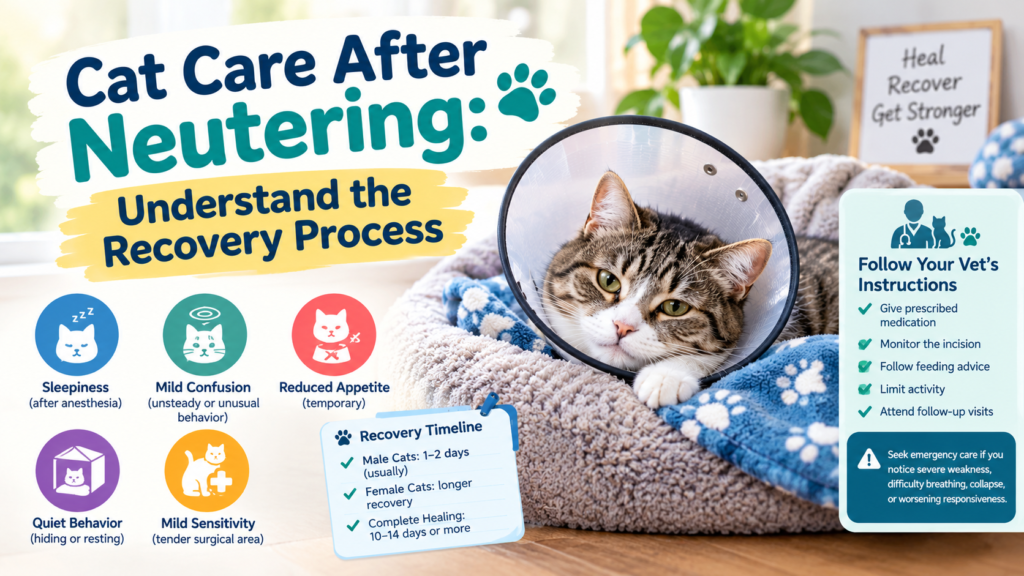
The first step in effective cat care after neutering is understanding what your cat may experience after surgery. Recovery varies depending on your cat’s age, health, procedure, and response to anesthesia.
What Happens During Neutering?
Neutering a male cat usually involves removing the testicles under anesthesia. Spaying a female cat generally involves surgery to remove the ovaries, usually with the uterus as well, depending on the procedure.
Both procedures require appropriate anesthesia and postoperative care. Your veterinarian will provide instructions based on the operation performed and your cat’s individual needs.
Common Changes After Surgery
During the first several hours after returning home, your cat may experience:
- Sleepiness: Anesthesia can make your cat tired or less active.
- Mild confusion: Your cat may appear unsteady or behave unusually while the anesthetic wears off.
- Reduced appetite: Some cats temporarily show less interest in food.
- Quiet behavior: Your cat may prefer hiding or resting in a familiar place.
- Mild sensitivity: The surgical area may be tender after the procedure.
These changes should generally improve as your cat recovers. However, severe weakness, difficulty breathing, collapse, or worsening responsiveness are not normal recovery signs and require emergency veterinary attention.
How Long Does Recovery Take?
Many male cats begin acting more like themselves within a day or two, although the surgical site still needs protection. Female cats may require a longer recovery because spaying generally involves abdominal surgery.
Complete healing can take around 10–14 days or longer, depending on the procedure and your cat’s condition. Your veterinarian should provide the appropriate activity restrictions and follow-up schedule.
Follow Your Veterinarian’s Instructions
Every cat has different recovery needs. Follow the discharge instructions about medications, feeding, wound monitoring, and activity restrictions.
Do not stop prescribed medication early, change the dose, or give additional medicines without veterinary approval.
Understanding the recovery process helps owners provide appropriate cat care after neutering without unnecessarily disturbing the healing surgical site.
Cat Care After Neutering: Create a Safe and Comfortable Recovery Space
A quiet recovery area helps your cat rest while the effects of anesthesia wear off. Preparing this space before bringing your cat home can make the first day easier for both you and your pet.
Choose a Quiet Resting Area
Select a clean, comfortable room away from loud noises, visitors, and busy household activity. Provide soft bedding and enough space for your cat to lie down comfortably.
Keep the room at a comfortable temperature and make sure your cat can rest without being disturbed by other animals.
Prevent Jumping and Climbing
Your cat may feel more energetic before the surgical site has fully healed. Jumping onto furniture, running up stairs, and climbing can put unnecessary strain on the incision.
For the period recommended by your veterinarian:
- Keep your cat in a secure, manageable area.
- Block access to high shelves and tall furniture.
- Prevent running and rough play.
- Avoid encouraging your cat to jump onto beds or sofas.
Do not assume that a cat is fully recovered simply because it appears active.
Keep Food, Water, and the Litter Tray Nearby
Place essential supplies within easy reach so your cat does not need to walk far or climb to reach them.
Use a clean litter tray that your cat can enter comfortably. Ask your veterinarian whether a temporary litter change is appropriate if dust or litter particles may contaminate the surgical site.
Separate Your Cat From Other Pets
Other pets may try to play with, groom, or chase a recovering cat. Young children may also unintentionally disturb the incision by handling the cat too roughly.
Provide a separate recovery area until your veterinarian says normal interaction can resume.
Keep Your Cat Indoors
Outdoor activity makes it harder to monitor your cat and increases the risk of contamination, excessive movement, and accidental injury or cat care after neutering.
Keep your cat indoors throughout the recommended recovery period.
Creating a comfortable space is one of the simplest ways to improve cat care after neutering and reduce avoidable complications.
How to Care for Cat After Neuter: Follow Feeding and Hydration Guidelines
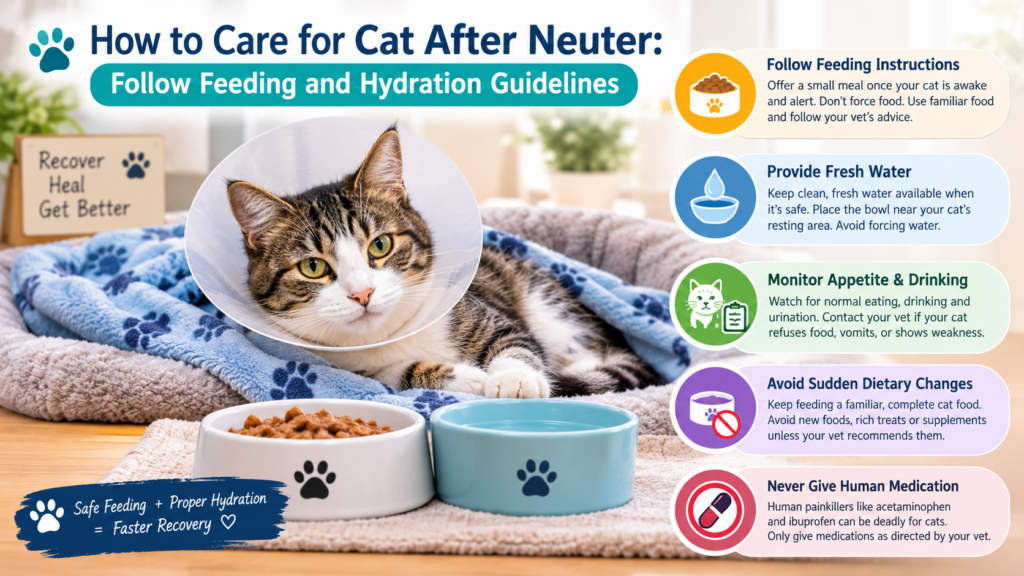
Food and water are important during recovery, but your cat’s stomach may be sensitive immediately after anesthesia. Knowing when and how to offer food can help prevent unnecessary discomfort.
Follow Postoperative Feeding Instructions
Your veterinarian may recommend offering a small meal once your cat is awake, alert, and able to swallow normally.
Do not force your cat to eat or drink while it is still heavily sedated or unsteady. Follow the clinic’s instructions if your cat has a medical condition or requires a special feeding schedule.
A small portion of familiar food may be easier to tolerate than a large meal. If your cat eats without vomiting, you can usually return to its normal feeding routine according to the veterinarian’s advice.
Provide Fresh Water
Keep fresh water available when your veterinarian says it is safe for your cat to drink normally.
Place the bowl close to the resting area so your cat can reach it easily. Avoid forcing water into your cat’s mouth, as this can create a risk of choking or aspiration.
Monitor Appetite and Drinking
During recovery, observe whether your cat begins eating, drinking, and urinating normally.
Contact your veterinarian if your cat refuses food beyond the period specified in the discharge instructions, especially if it approaches 24 hours without eating. Kittens, cats with existing health conditions, and cats showing other symptoms may need attention sooner.
Repeated vomiting, inability to keep water down, or marked weakness should also prompt veterinary advice.
Avoid Sudden Dietary Changes
Continue feeding a familiar, nutritionally complete cat food unless your veterinarian recommends otherwise. Introducing new foods, rich treats, or supplements during recovery may upset your cat’s stomach.
After recovery, your cat may need adjustments to its daily calorie intake because energy requirements can change after neutering. Discuss appropriate portions with your veterinarian.
Never Give Human Medication
Human painkillers such as acetaminophen (paracetamol) and ibuprofen can be extremely dangerous to cats. Never use these medicines or leftover medications without specific veterinary direction.
Safe feeding and hydration practices are an important part of post neuter care cat routines and help owners monitor overall recovery.
Cat Care After Neutering: Monitor the Surgical Incision
Checking the surgical site daily is one of the most important aspects of cat care after neutering. Regular observation helps you identify potential complications before they become more serious.
Check the Incision Gently
Inspect the surgical area once or twice daily, or as instructed by your veterinarian. Use good lighting and avoid pressing, rubbing, or pulling at the skin.
For female cats, the incision is commonly located on the abdomen or side, depending on the surgical technique. Male cats usually have small incisions in the scrotal area, which may not have visible external stitches.
Follow the specific instructions provided for your cat’s procedure.
What Can Be Normal?
Depending on the procedure, mild bruising, slight swelling, or a small amount of redness may occur initially. The incision should generally remain closed, and its appearance should improve rather than worsen.
Do not assume every change is normal. If you are unsure whether the appearance is expected, contact the veterinary clinic and provide a clear photograph if requested.
Warning Signs to Watch For
Contact your veterinarian if you notice:
- Increasing redness or swelling.
- Bleeding that continues or starts again.
- Pus or unusual discharge.
- An unpleasant smell from the surgical site.
- A wound that opens or separates.
- Increasing pain or sensitivity.
- A growing lump or significant bruising.
Heavy bleeding, an open abdominal incision, severe weakness, or other signs of serious illness require urgent veterinary assessment.
Keep the Incision Clean and Dry
Follow the veterinarian’s instructions for protecting the surgical site. In most cases, the incision should not be bathed or soaked during recovery.
Do not apply alcohol, hydrogen peroxide, antiseptic solutions, powders, or ointments unless specifically instructed by your veterinarian. These products may irritate tissue or interfere with healing.
Avoid removing scabs, pulling at stitches, or attempting to clean inside the incision.
Attend Follow-Up Appointments
Some cats have external stitches or staples that require removal, while others have absorbable sutures. Your veterinarian will tell you whether a follow-up examination is needed.
If the incision appears to be healing normally, continue monitoring it until your veterinarian confirms that normal activity can resume.
Careful incision monitoring helps make cat care after neutering safer and gives you an opportunity to respond promptly if a complication develops.
Post Neuter Care Cat: Prevent Licking, Biting, and Scratching
Cats naturally groom themselves, but licking or biting a surgical site can interfere with healing. Excessive attention to the incision may introduce bacteria, irritate the skin, or cause the wound to open.
Preventing this behavior is an essential part of post neuter care cat routines.
Why Licking Can Be Harmful
Your cat may lick the surgical area because it feels uncomfortable or unfamiliar. Even if the incision looks small, repeated licking can damage healing tissue and increase the risk of infection.
Cats may also chew at stitches or scratch near the incision, creating additional irritation.
Use a Recovery Collar When Recommended
A properly fitted Elizabethan collar, commonly called a cone, can prevent your cat from reaching the surgical site.
When using a recovery collar:
- Follow your veterinarian’s instructions about when it should be worn.
- Check that it fits securely without restricting breathing or swallowing.
- Make sure your cat can access food and water.
- Monitor your cat while it adjusts to the collar.
- Contact your veterinarian if the collar causes persistent distress or does not prevent access to the incision.
Do not remove the collar simply because your cat appears comfortable or the wound looks better. Wait until the veterinarian says protection is no longer necessary.
Consider a Protective Recovery Garment
Some female cats may benefit from a veterinarian-approved recovery suit after spaying. However, not every garment is appropriate for every incision, and the surgical site must remain clean and dry.
Ask your veterinarian before using clothing or other protective equipment. Check it regularly for moisture, rubbing, or irritation.
Keep Your Cat’s Nails and Environment in Mind
Avoid rough play and situations that encourage scratching or sudden movements. Provide a calm space where your cat can rest without becoming overly excited.
If your cat repeatedly tries to reach the incision despite wearing a collar, contact your veterinarian for advice.
When Can Protection Be Removed?
Protection is generally continued until the surgical site has healed sufficiently and your veterinarian confirms that it is safe to stop. This may coincide with the end of the recommended recovery period, often around 10–14 days, but individual instructions take priority.
Preventing licking and scratching helps protect the incision and supports a smoother recovery.
Care After Neutering a Male Cat: Manage Activity and Discomfort
Care after neutering a male cat involves providing rest, controlling activity, monitoring the surgical area, and following the veterinarian’s medication instructions. Male cats often recover relatively quickly after routine neutering, but their incision still needs protection.
Restrict Running, Jumping, and Rough Play
Your cat may start feeling energetic soon after surgery. However, appearing active does not necessarily mean the surgical site has fully healed.
During the recovery period recommended by your veterinarian:
- Keep your cat indoors.
- Prevent running, jumping, and climbing.
- Avoid rough play with other pets.
- Provide a quiet resting space.
- Keep food, water, and the litter tray within easy reach.
Many cats need restricted activity for approximately 7–14 days, but the appropriate period depends on the procedure and your veterinarian’s instructions.
Monitor the Surgical Area
Male cats generally have small incisions in the scrotal area. Some procedures leave no visible external stitches, but the site still requires monitoring.
Check for increasing redness, swelling, discharge, bleeding, or persistent licking. A small amount of initial swelling may occur, but worsening symptoms should not be ignored.
Contact your veterinarian if the area becomes increasingly painful or swollen, develops an unpleasant smell, or appears to open.
Follow Pain Medication Instructions
Your veterinarian may prescribe pain relief depending on your cat’s procedure and individual needs. Give medication exactly as directed.
Never give human painkillers, including ibuprofen or acetaminophen (paracetamol), unless a veterinarian has specifically instructed you to use a particular medication. These drugs can cause severe poisoning in cats.
If your cat appears uncomfortable despite prescribed medication, contact the veterinary clinic instead of increasing the dose yourself.
Watch Your Cat’s Behavior
Signs of discomfort may include hiding, reduced appetite, unusual aggression, a hunched posture, or reluctance to move.
Severe weakness, collapse, difficulty breathing, or uncontrolled bleeding requires emergency veterinary attention.
Good cat care after neutering means balancing rest with careful observation, even when your male cat appears to be recovering quickly.
After Care Cat Spay: Support a Female Cat’s Recovery
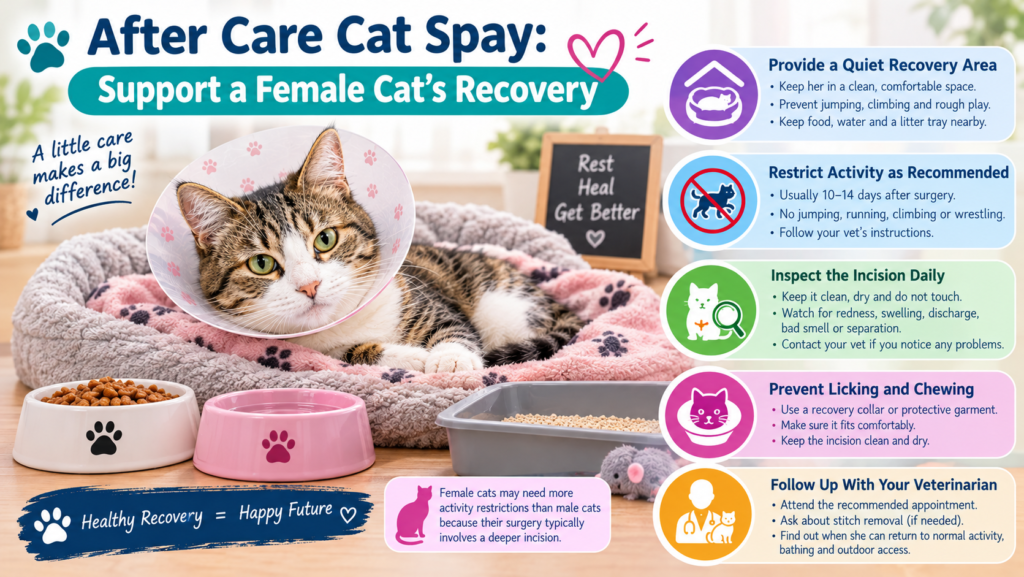
The after care cat spay process requires particular attention because spaying generally involves an abdominal or flank incision. Your female cat needs time for internal and external tissues to heal, even if the skin looks normal.
Provide a Quiet Recovery Area
Prepare a comfortable, clean space where your cat can rest without jumping onto furniture or climbing stairs. Keep other pets away if they are likely to encourage play or disturb her or cat care after neutering.
Place food, water, and a litter tray nearby so she can move around comfortably.
Restrict Activity as Recommended
Female cats should avoid strenuous activity for the period specified by their veterinarian, often around 10–14 days after routine surgery.
Prevent activities such as:
- Jumping onto high furniture.
- Running through the house.
- Climbing cat trees.
- Wrestling with other pets.
- Outdoor roaming.
Excessive movement can place strain on the incision and may interfere with healing. Follow your veterinarian’s instructions even if your cat seems energetic.
Inspect the Incision Daily
A spay incision should generally remain closed and gradually improve. Check the area in good lighting without touching or pressing it.
Contact your veterinarian if you notice increasing redness, swelling, discharge, persistent bleeding, a bad smell, or separation of the wound edges.
If the incision opens, do not attempt to close it at home. Protect the area from licking and seek urgent veterinary care.
Prevent Licking and Chewing
Female cats may try to groom the incision because it feels unfamiliar or irritated. Use a veterinarian-recommended recovery collar or protective garment when advised.
Check that any protective equipment fits comfortably and does not rub against the surgical site. Keep the incision clean and dry according to the discharge instructions.
Follow Up With Your Veterinarian
Some cats require a postoperative examination or removal of external stitches. Others have absorbable sutures that do not need removal.
Attend the recommended appointment and ask when your cat can safely return to normal activity, bathing, and outdoor access.
The right cat care after neutering approach recognizes that female cats may need more extensive activity restrictions than male cats because their surgery typically involves a deeper incision.
Cat Care After Neutering: Recognize Warning Signs and Complications
Recognizing complications early is one of the most important aspects of cat care after neutering. Although most cats recover without serious problems, postoperative symptoms should be monitored carefully.
Watch for Changes in the Incision
Contact your veterinarian promptly if you notice:
- Increasing redness or swelling.
- Pus or unusual discharge.
- An unpleasant smell from the wound.
- Persistent or renewed bleeding.
- A surgical incision that opens.
- Increasing tenderness or pain.
- A rapidly growing lump around the surgical area.
Do not apply home remedies or attempt to drain a swelling. A veterinarian needs to determine whether the problem is caused by normal healing, inflammation, infection, or another complication.
Monitor Eating and Drinking
Some cats eat less immediately after anesthesia, but their appetite should generally begin to improve.
Contact your veterinarian if your cat refuses food beyond the period specified in the discharge instructions, especially if it approaches 24 hours without eating. Seek advice sooner for kittens, cats with existing health conditions, or cats showing other concerning symptoms.
Repeated vomiting, inability to keep water down, or significant weakness also warrants prompt veterinary attention.
Recognize Severe Pain
Signs of significant discomfort may include persistent crying, a hunched posture, hiding, aggression when approached, or an unwillingness to move.
If prescribed pain medication does not appear to help, contact your veterinarian. Do not give extra medication or use human painkillers.
Know the Emergency Warning Signs
Some symptoms require immediate emergency veterinary care, including:
- Difficulty breathing.
- Collapse or loss of consciousness.
- Pale or white gums.
- Heavy or uncontrolled bleeding.
- Severe weakness or inability to stand.
- A visibly open abdominal incision with exposed tissue.
Do not wait for these symptoms to resolve on their own. Contact an emergency veterinary clinic immediately.
Keep Track of Recovery
A simple daily check can help you notice changes in appetite, activity, urination, and incision appearance. You can also record medication times according to your veterinarian’s instructions.
This makes it easier to explain changes to the clinic if you need assistance.
Remember that cat care after neutering is not only about preventing complications; it is also about recognizing when professional treatment is needed.
Cat Care After Neutering: Help Your Cat Return to Normal
Once your cat begins feeling better, the next step is returning to normal routines without placing unnecessary strain on the healing incision.
Gradually Resume Normal Activities
Follow your veterinarian’s guidance about when to allow running, jumping, climbing, and outdoor access.
Do not remove activity restrictions simply because your cat is behaving normally. Internal tissues may need additional time to heal or cat care after neutering.
When your veterinarian confirms that recovery is progressing well, gradually reintroduce ordinary play and movement.
Confirm That the Incision Has Healed
Before returning to unrestricted activity, check that the incision is closed and that there are no concerning signs of swelling, discharge, or pain.
Continue using a recovery collar or protective garment for as long as your veterinarian recommends.
If the incision does not appear to be healing as expected, arrange a follow-up examination before increasing activity.
Maintain a Healthy Weight
Neutering can change a cat’s energy requirements and may increase its tendency to gain weight. However, weight gain is not inevitable.
After recovery, ask your veterinarian whether your cat’s daily calorie intake needs adjustment. Measure food portions, limit excessive treats, and encourage regular age-appropriate play.
Do not put a recovering cat on a restrictive diet without veterinary guidance, especially if it is young or has another medical condition.
Continue Preventive Veterinary Care
Neutering is one part of a cat’s overall healthcare plan. Continue routine veterinary examinations, vaccinations, parasite prevention, and dental care as recommended.
Ask your veterinarian about any additional health checks appropriate for your cat’s age and lifestyle.
Support Your Cat Emotionally
Some cats become clingier or quieter after surgery. Provide a calm environment, gentle interaction, and opportunities to rest.
Avoid forcing handling or play if your cat seems uncomfortable. Allow your pet to approach you when ready.
With appropriate monitoring and gradual activity changes, cat care after neutering can support a smooth transition back to everyday life.
Frequently Asked Questions About Cat Care After Neutering
How long does a cat take to recover after neutering?
Many male cats begin acting normally within a day or two, while female cats may need a longer period of restricted activity. Complete healing often takes around 10–14 days, but recovery varies by procedure and individual health.
How to care for cat after neuter surgery at home?
Keep your cat indoors in a quiet space, follow feeding and medication instructions, prevent licking, and inspect the surgical site daily. Contact your veterinarian if symptoms worsen or recovery does not follow the expected course.
When can my cat eat after neutering?
Follow the veterinary clinic’s discharge instructions. Once your cat is awake and swallowing normally, a small portion of food may be appropriate if the veterinarian permits it. Do not force food or water.
Should my cat wear a cone after neutering?
A recovery collar may be recommended to prevent licking or chewing at the incision. Use it for the period advised by your veterinarian and ensure it fits safely.
Is swelling normal after a cat is neutered?
Mild swelling may occur, depending on the procedure, but increasing swelling, pain, redness, discharge, or a bad smell requires veterinary assessment. Contact the clinic if you are unsure whether the swelling is normal.
How long should a male cat rest after neutering?
Many male cats need restricted activity for approximately 7–14 days, although the correct period depends on the procedure and the veterinarian’s instructions. Do not allow unrestricted activity until advised.
How long does after care cat spay usually take?
Female cats commonly need around 10–14 days of restricted activity after routine spaying, although healing may take longer in some cases. Follow the clinic’s instructions and attend recommended rechecks or cat care after neutering.
When should I call a veterinarian after neutering?
Contact your veterinarian for worsening pain, repeated vomiting, prolonged refusal to eat, unusual discharge, increasing swelling, or an incision that opens. Seek emergency care for breathing difficulties, collapse, pale gums, or severe bleeding.
Conclusion: Cat Care After Neutering for a Safe Recovery
Effective cat care after neutering involves providing a comfortable resting area, restricting strenuous activity, monitoring the surgical incision, preventing licking, and following veterinary instructions for feeding and medication.
Male cats may recover more quickly after routine neutering, while female cats often require additional protection because spaying generally involves a deeper surgical incision. Both need careful observation until their veterinarian confirms that normal activity can resume.
Remember to contact your veterinarian if your cat’s appetite does not return as expected, the surgical site becomes increasingly swollen or painful, or any other concerning symptoms develop. Emergency signs such as collapse, difficulty breathing, and uncontrolled bleeding require immediate care.
With appropriate home care, timely veterinary support, and gradual return to normal routines, you can help your cat recover safely and comfortably after surgery or cat care after neutering.