

 By
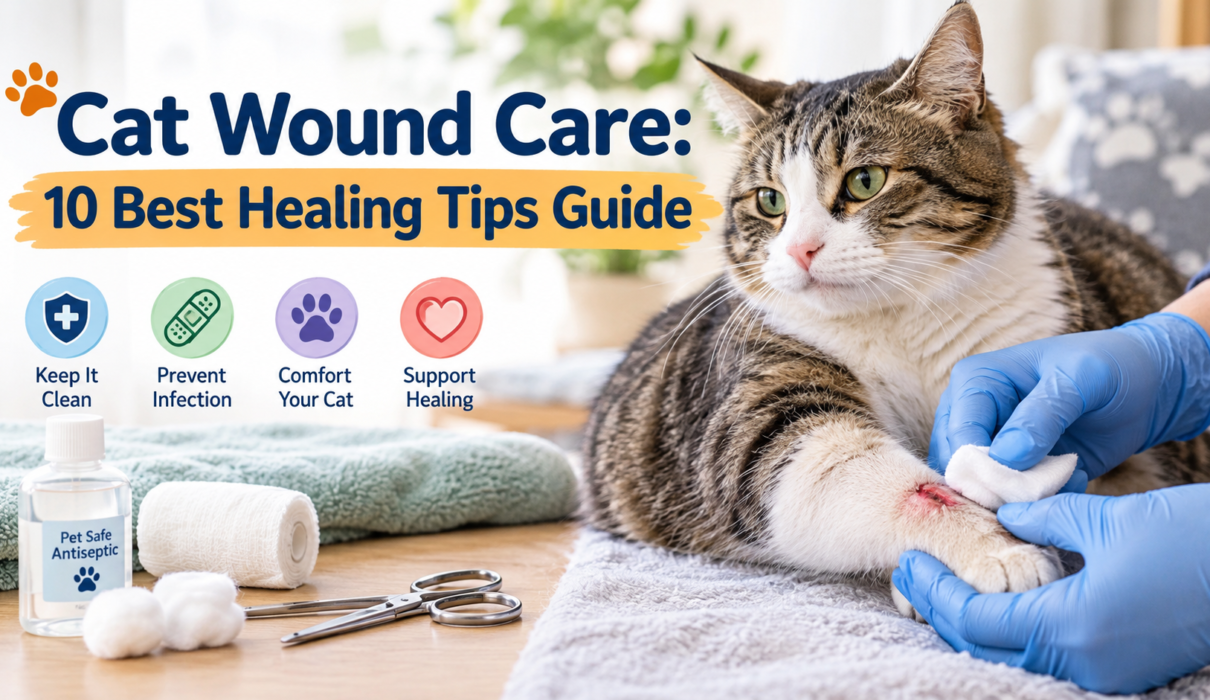
By Cat Wound Care: 10 Best Healing Tips Guide
Introduction
Cats are curious animals that love to explore their surroundings, climb furniture, play with toys, and sometimes interact with other animals. However, these activities can occasionally lead to scratches, cuts, bites, and other injuries. Providing proper cat wound care is essential for protecting your pet from infection, reducing discomfort, and supporting a healthy recovery.
Even a small wound can become a problem if bacteria enter the injured skin. Some wounds may appear minor on the surface while causing deeper tissue damage underneath. Therefore, cat owners should understand how to recognize injuries, clean minor wounds safely, control bleeding, and identify situations that require professional veterinary attention.
This guide explains five essential cat wound care tips to help you respond appropriately when your cat gets injured. You will also learn how to protect wounds from licking and scratching while keeping your cat comfortable during recovery.
Cat Wound Care: Understand the Most Common Cat Wounds
The first step in effective cat wound care is understanding the type of injury your cat has sustained. Different wounds require different levels of attention, and recognizing the problem early can help you make safer decisions.
Common Types of Cat Wounds
Cats can experience several types of injuries, including:
- Scratches: These may occur when cats climb rough surfaces, play with other pets, or accidentally scratch themselves.
- Cuts: Sharp objects, broken glass, metal edges, or damaged household items can cause cuts on a cat’s skin.
- Bite wounds: Cat fights can cause small punctures that trap bacteria beneath the skin.
- Paw injuries: Walking on sharp objects or rough surfaces may damage paw pads or claws.
- Skin abrasions: Rubbing against rough surfaces can scrape away the outer layer of skin.
- Abscesses: These pockets of infection may develop after bite wounds or other injuries.
How to Identify a Minor Wound
A minor wound may involve a small, shallow scratch with little bleeding. Your cat may continue walking, eating, and behaving normally. However, even apparently minor injuries should be monitored for redness, swelling, discharge, or increasing discomfort or cat wound care.
Bite wounds deserve particular attention because the skin opening can be tiny while the underlying injury is more serious. If your cat has been bitten by another animal, contact a veterinarian promptly, even if you cannot see a large wound.
When Is a Cat Wound Serious?
Seek urgent veterinary attention if your cat has a deep cut, a large or gaping wound, uncontrolled bleeding, a serious burn, severe pain, or difficulty walking. Wounds involving the eyes, chest, or abdomen also require urgent assessment.
If your cat is weak, collapses, has pale gums, or experiences difficulty breathing, seek emergency veterinary care immediately.
Understanding the injury is the foundation of safe cat wound care. When you are unsure how serious a wound is, it is safer to consult a veterinarian rather than attempt treatment at home.
Cat Wound Care: Recognize Signs of Infection
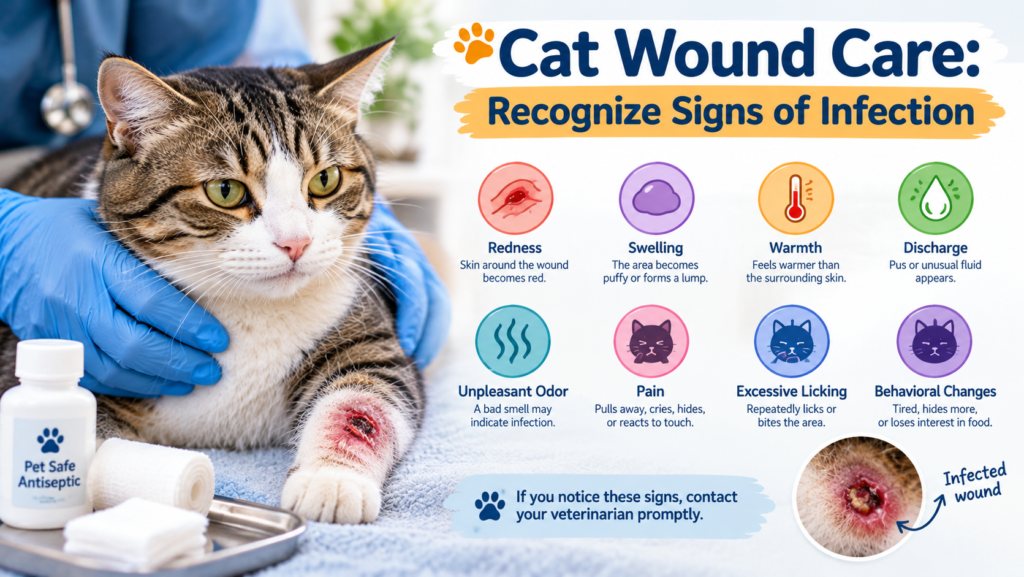
Infection is one of the main concerns when a cat gets injured. Bacteria can enter damaged skin, especially through bite wounds and punctures. Recognizing the warning signs early can help prevent complications.
Common Signs of an Infected Cat Wound
Watch your cat carefully for the following symptoms:
- Redness: The skin around the wound becomes increasingly red.
- Swelling: The injured area becomes puffy or develops a lump.
- Warmth: The skin around the injury feels warmer than the surrounding area.
- Discharge: Pus or unusual fluid appears around the wound.
- Unpleasant odor: A bad smell may indicate infection or damaged tissue.
- Pain: Your cat pulls away, cries, hides, or reacts when the injured area is approached.
- Excessive licking: Your cat repeatedly licks or bites the affected area.
- Behavioral changes: Your cat becomes unusually tired, hides more than usual, or loses interest in food.
Not every infected wound produces all these signs. Some cats may develop an abscess beneath the skin before the injury becomes obvious.
Why Cat Bite Wounds Need Special Attention
Cat teeth can create narrow punctures that close over quickly. Bacteria may become trapped underneath the skin, leading to swelling, pain, and abscess formation.
A cat that has recently fought with another animal may develop a painful lump several days later. The area may feel warm, and the cat may become less active or refuse food.
Contact a veterinarian promptly if you suspect a bite wound or notice signs of infection. Do not squeeze a lump, puncture an abscess, or attempt to drain it yourself.
How to Prevent Wound Complications
Keep your cat in a clean, comfortable environment and follow your veterinarian’s instructions for cleaning and medication. Check the wound regularly without repeatedly touching or disturbing it.
Never give human painkillers or leftover antibiotics to your cat unless a veterinarian specifically prescribes them. Some common human medications are highly toxic to cats.
Proper cat wound care includes monitoring the healing process, not simply cleaning the injury once. If the wound becomes more painful, swollen, or begins producing discharge, arrange veterinary assessment.
Cat Wound Care: Clean Minor Wounds Safely
Cleaning a minor surface wound can help remove dirt and debris. However, home cleaning is appropriate only for small, shallow injuries that do not require professional treatment.
If the wound is deep, gaping, caused by a bite, or contains an embedded object, contact a veterinarian instead of trying to manage it yourself.
Step 1: Keep Your Cat Calm
Choose a quiet area with good lighting. Speak gently to your cat and avoid sudden movements. An injured cat may become frightened or defensive because of pain.
If your cat struggles, cries, or attempts to bite, stop rather than forcing the procedure. Ask your veterinarian for advice on safe handling.
Step 2: Prepare Clean Supplies
You may need:
- Sterile saline wound wash or clean lukewarm water.
- Clean gauze pads.
- A clean towel.
- Disposable gloves, if available.
Wash your hands before handling the wound. Avoid using cotton materials that leave fibers behind.
Step 3: Gently Rinse the Wound
For a small, superficial wound, gently rinse the area with sterile saline or clean water to remove loose dirt. Do not scrub the injured skin or apply strong pressure.
If dirt is deeply embedded, the wound is painful, or the bleeding continues, seek veterinary help.
Step 4: Avoid Harmful Cleaning Products
Do not apply rubbing alcohol, hydrogen peroxide, essential oils, or harsh disinfectants to the wound unless your veterinarian specifically directs you to use a particular product. These substances can irritate or damage tissue and may slow healing.
Avoid human creams, antibiotic ointments, and powders unless approved by your veterinarian. Cats may lick these products and accidentally swallow them.
Step 5: Monitor the Wound
After cleaning a minor wound, observe it for changes. Increasing redness, swelling, discharge, pain, or a bad smell may indicate a complication.
Do not assume a wound is safe simply because it looks clean. Bite wounds and deeper injuries may require professional cleaning, pain relief, antibiotics when indicated, or other treatment.
Safe wound care for cats means knowing both what you can do at home and when to seek professional help.
Cat Wound Care: Stop Minor Bleeding Properly
Bleeding can be frightening, especially when it happens suddenly. Staying calm and applying appropriate first aid can help while you arrange veterinary care.
Apply Gentle, Steady Pressure
If your cat has a small, superficial wound that is bleeding:
- Use a clean gauze pad or clean cloth.
- Place it directly over the bleeding area.
- Apply gentle, steady pressure without repeatedly lifting the pad.
- Keep your cat as still and calm as possible.
- Seek veterinary advice if bleeding does not stop promptly.
If blood soaks through the gauze, place another pad over it rather than pulling the original pad away, as this may disturb a developing clot.
When Bleeding Requires Emergency Care
Seek emergency veterinary care for heavy bleeding, spurting blood, a deep or gaping wound, or bleeding that does not stop with continuous pressure. Do not delay emergency care to continue home treatment.
If your cat has a serious injury, weakness, collapse, pale gums, or difficulty breathing, treat the situation as an emergency.
What You Should Avoid
Do not pour powders, household remedies, alcohol, or other substances into the wound. Avoid tight wrapping that could restrict circulation.
Never remove a deeply embedded object yourself. If an object is lodged in the wound, leave it in place and seek urgent veterinary assistance.
Caring for Your Cat After Bleeding Stops
Even if the bleeding stops, the wound may still need professional examination. Punctures, deep cuts, and injuries caused by animal bites can become infected or involve underlying tissue.
Effective cat wound care focuses on controlling bleeding safely while recognizing when an injury is beyond basic first aid.
Cat Wound Care: Protect Injuries From Licking and Scratching
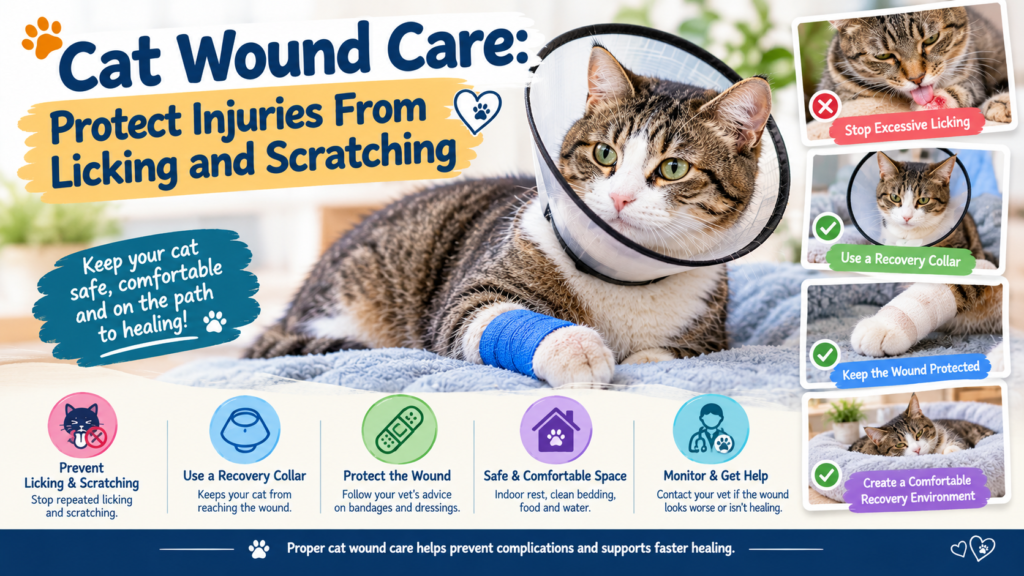
Cats naturally groom themselves, but licking an injured area can interfere with healing. Their tongues may irritate damaged skin, and repeated licking can introduce additional bacteria.
Protecting the wound is an important part of cat wound care, particularly when your cat keeps returning to the same area.
Why Cats Lick Their Wounds
Cats may lick an injury because it feels uncomfortable, itchy, or painful. Although grooming is a natural behavior, excessive licking can reopen a wound, increase inflammation, and delay recovery.
Repeated scratching can cause similar problems, especially when the wound is located around the head, neck, or ears.
Use a Veterinarian-Recommended Recovery Collar
A properly fitted recovery collar can prevent your cat from reaching certain wounds. Depending on the wound’s location and your cat’s needs, a veterinarian may recommend a traditional protective collar or another suitable recovery device.
Check that the collar fits safely and does not interfere with breathing, drinking, or swallowing. Follow your veterinarian’s instructions about when it should be worn.
Keep the Wound Protected
Follow professional advice about whether the wound should remain uncovered or be protected with a dressing. Not every wound benefits from a bandage, and incorrect bandaging can trap moisture, damage skin, or restrict circulation.
If your veterinarian applies a dressing, follow the instructions for keeping it clean and dry. Contact the clinic if it becomes wet, slips, smells unpleasant, or causes swelling.
Create a Comfortable Recovery Environment
Keep your cat indoors while the wound heals, when appropriate. Provide clean bedding, easy access to food and water, and a quiet resting place.
Check the injury daily as directed by your veterinarian. If your cat continues licking despite wearing a collar, or if the wound becomes more painful or swollen, ask for a follow-up examination.
Final Thoughts on Part 1
Proper cat wound care starts with understanding the injury, recognizing infection, cleaning minor wounds safely, controlling bleeding, and preventing excessive licking. These steps can help cat owners respond more confidently when an injury occurs.
However, home care is not a substitute for veterinary treatment when a wound is deep, caused by a bite, infected, or accompanied by serious symptoms. When in doubt, contact a veterinarian promptly.
In Part 2, we will cover cat paw care, nutrition for healing, infection prevention, preventive cat care tips, and knowing when to visit a cat care clinic west for professional treatment.
Cat Paw Care: Treat Paw Pads and Claw Injuries
Paws are essential for walking, climbing, jumping, and playing. Because cats use their paws throughout the day, injuries in this area can become irritated quickly. Proper cat paw care helps identify problems early and supports your cat’s comfort.
Inspect Your Cat’s Paws Regularly
Check your cat’s paws gently when they are relaxed. Look between the toes, around the paw pads, and near the claws.
Common paw problems include:
- Cuts and scratches on paw pads.
- Broken or torn claws.
- Swelling around the toes.
- Redness or irritation between the toes.
- Small pieces of debris stuck to the paw.
- Limping or reluctance to place weight on one foot.
If your cat suddenly starts limping, examine the paw only if it is safe to do so. Do not force the toes apart or pull out deeply embedded objects.
Clean Minor Paw Injuries Carefully
For a small, superficial injury, gently rinse the area with sterile saline or clean water. Avoid scrubbing sensitive tissue or applying unapproved antiseptics.
If bleeding continues, the paw pad is deeply cut, a claw is badly torn, or your cat cannot walk comfortably, contact a veterinarian promptly.
Paw wounds can reopen when a cat walks on dirty surfaces. Keep your cat indoors during recovery and provide a clean resting area. Ask your veterinarian whether a dressing is appropriate, especially because paw bandages can become tight or wet.
Protect Injured Paws During Recovery
Keep your cat’s litter tray clean and consider asking your veterinarian whether a temporary litter change is appropriate if the injury is near the ground and easily contaminated.
Check the paw regularly for swelling, discharge, unusual odor, or worsening pain. If your cat persistently chews the injured paw, a veterinarian may recommend a protective collar or another safe method to prevent further damage.
Consistent cat paw care is an important part of overall cat wound care because healthy paws allow your pet to move comfortably and return to normal activities.
Wound Care for Cats: Support Healing With Proper Nutrition
Nutrition plays an important role in tissue repair and recovery. When a cat has an injury, its body needs sufficient energy, protein, vitamins, minerals, and water to support normal healing processes.
Although food cannot replace medical treatment, a balanced diet can help support your cat while a wound heals.
Provide a Complete and Balanced Diet
Feed your cat a nutritionally complete diet appropriate for its age and health status. Cats require animal-based nutrients, including specific amino acids, to maintain normal body functions and repair tissues.
Avoid suddenly changing your cat’s diet unless there is a medical reason to do so. Stress and unfamiliar foods may reduce appetite, making it harder for an injured cat to consume enough calories.
Make Sure Your Cat Gets Enough Protein
Protein provides amino acids that help the body maintain and repair tissues. Cats need adequate dietary protein, but the correct amount depends on their individual needs and medical condition.
Do not automatically increase protein intake or give protein supplements because your cat has a wound. Cats with kidney disease or other health conditions may require individualized dietary recommendations from a veterinarian.
Keep Fresh Water Available
Hydration supports normal body functions and overall health. Place clean, fresh water somewhere your cat can easily reach without putting pressure on an injured paw or other affected area.
Some cats drink more readily from wide bowls or water fountains. Wet food may also contribute to daily water intake, depending on the diet.
Avoid Unapproved Supplements and Home Remedies
Never give your cat human nutritional supplements, herbal remedies, or medications without veterinary guidance. Certain ingredients can be harmful to cats, and excessive supplementation may create additional health problems.
If your cat stops eating, vomits repeatedly, becomes unusually weak, or seems increasingly unwell during recovery, contact your veterinarian.
Good nutrition supports wound care for cats, but deep wounds, infected injuries, and significant tissue damage still require appropriate veterinary treatment.
Cat Wound Care: Prevent Infection During Recovery
Preventing infection is one of the most important goals of cat wound care. A wound may initially look healthy but become irritated if it is repeatedly licked, contaminated, or handled incorrectly.
A simple and consistent recovery routine can help you recognize problems before they become more serious.
Follow Your Veterinarian’s Treatment Plan
If your veterinarian prescribes medication, give it exactly as directed. Complete prescribed antibiotic courses according to the veterinarian’s instructions, and never use leftover antibiotics from another pet.
Do not stop, increase, or change medication without discussing it with your veterinarian.
If your cat develops vomiting, facial swelling, difficulty breathing, or another concerning reaction after medication, seek veterinary advice immediately. Difficulty breathing or severe swelling requires emergency care.
Keep the Wound Clean as Directed
Some wounds need gentle cleaning, while others require specific dressings or should not be disturbed at home. Follow the treatment instructions provided for your cat’s particular injury.
Avoid excessive cleaning because repeated rubbing may irritate new tissue. Do not remove stitches, pull at scabs, or attempt to open a wound that appears swollen.
Monitor Changes Every Day
Observe the injury at regular intervals and look for:
- Increasing redness or swelling.
- New discharge or an unpleasant smell.
- Worsening pain or sensitivity.
- A wound that opens again.
- Changes in appetite or energy.
- Persistent licking or chewing.
A small amount of scabbing may occur during normal healing, but worsening symptoms should not be ignored.
Maintain a Clean Recovery Space
Provide clean bedding and a quiet indoor area where your cat can rest. Wash bedding when needed and keep food, water, and the litter tray accessible.
If your cat has a contagious condition or another medical problem, ask your veterinarian whether separation from other pets is necessary.
Attend Follow-Up Appointments
Some wounds need rechecks, dressing changes, drain removal, or stitch removal. Keep any recommended appointments, even if the wound appears to be improving.
Successful cat wound care depends on observing the healing process and responding quickly when something changes.
Preventive Cat Care Tips: Reduce the Risk of Future Injuries
Preventing injuries is often easier than treating them. Although accidents cannot always be avoided, practical preventive cat care tips can reduce many common risks inside and outside the home.
Keep Your Home Safe
Inspect your home for sharp objects, broken glass, exposed wires, and damaged furniture. Store cleaning chemicals, medicines, and other hazardous products securely.
Keep scissors, needles, and craft supplies away from areas where your cat plays or sleeps.
Reduce the Risk of Animal Fights
Bite wounds are a common cause of painful infections and abscesses. Keep cats indoors when possible, or provide a secure outdoor enclosure.
If you have multiple cats, provide separate food bowls, litter trays, resting areas, and escape routes to reduce competition and conflict.
Introduce unfamiliar animals gradually rather than forcing them to interact.
Maintain Regular Veterinary Care
Schedule routine veterinary examinations and follow vaccination recommendations appropriate to your cat’s lifestyle and location.
Vaccination against rabies and other diseases should be discussed with your veterinarian. Vaccination does not prevent every wound infection, but it is an important part of preventive healthcare.
Ask your veterinarian about parasite prevention, dental care, and other routine health needs.
Trim Claws Safely
Regular claw checks can help prevent overgrown claws from catching on fabric or curling into paw pads. Use suitable cat nail clippers and trim only the sharp tip, avoiding the sensitive pink area inside the claw.
If your cat resists handling or has unusually thick, damaged, or ingrown claws, ask a veterinary professional for assistance.
Inspect Your Cat After Outdoor Activities
If your cat spends time outdoors, check its body and paws for scratches, swelling, ticks, and other injuries when it returns home.
Pay particular attention after suspected fights or unusual behavior. Contact your veterinarian if you find a bite wound, deep puncture, or unexplained painful swelling.
Following these preventive cat care tips can help reduce injuries and make it easier to notice problems early.
Cat Wound Care: Know When to Visit a Cat Care Clinic West
Although minor surface wounds may sometimes be managed with basic first aid, many injuries require professional assessment. Knowing when to contact a veterinarian can protect your cat from unnecessary pain and complications.
If you are searching for a cat care clinic west, look for a veterinary practice that can assess wounds, provide pain relief when appropriate, and explain the follow-up care your cat needs.
Signs That Your Cat Needs Veterinary Attention
Contact a veterinarian promptly if your cat has:
- A bite wound from another cat or animal.
- A deep, gaping, or puncture wound.
- A painful lump or suspected abscess.
- A torn claw or deep paw-pad injury.
- Increasing redness, swelling, or discharge.
- A wound that is not improving or repeatedly reopens.
- Persistent limping or reluctance to move.
- Reduced appetite or unusual tiredness after an injury.
When Is It an Emergency?
Seek emergency veterinary care for uncontrolled bleeding, severe burns, major trauma, suspected internal injuries, collapse, pale gums, or breathing difficulties.
Do not delay emergency treatment while trying home remedies. If an object is embedded in a wound, do not pull it out yourself.
What Happens During a Veterinary Wound Examination?
Depending on the injury, a veterinarian may:
- Examine the wound and assess surrounding tissue.
- Clean the area using appropriate medical techniques.
- Determine whether pain relief is needed.
- Assess whether stitches, drainage, or additional treatment is necessary.
- Prescribe antibiotics when clinically indicated.
- Explain home care, dressing changes, and follow-up appointments.
Not every wound requires antibiotics or stitches. Treatment depends on the wound’s location, depth, age, contamination, and the cat’s overall condition.
How to Choose a Suitable Veterinary Clinic
When evaluating a cat care clinic west or another local veterinary practice, consider the following:
- Whether the clinic treats injured cats regularly.
- Whether urgent appointments are available.
- Whether staff explain treatment options clearly.
- Whether the clinic provides follow-up instructions.
- Whether emergency referrals are available when needed.
Ask about costs and expected treatment before non-emergency procedures whenever possible.
A reliable veterinary professional can help you make informed decisions about your cat’s injury and recovery. Remember that online advice is not a substitute for an examination when a wound may be serious.
Frequently Asked Questions About Cat Wound Care
How do you treat a minor wound on a cat?
For a small, superficial wound, gently rinse the area with sterile saline or clean water. Prevent excessive licking and monitor for infection. Contact a veterinarian for bite wounds, deep cuts, persistent bleeding, or worsening symptoms.
Can a cat’s wound heal naturally?
Some minor surface wounds heal without extensive treatment, but not every injury is safe to manage at home. Bite wounds and punctures can become infected beneath the skin. Veterinary advice is recommended whenever the wound’s depth or severity is uncertain.
What is the safest way to clean a cat wound?
Sterile saline or clean water is generally suitable for rinsing minor surface wounds. Avoid alcohol, hydrogen peroxide, and unapproved creams or disinfectants. Deep or contaminated wounds should be assessed by a veterinarian.
How can I tell if my cat’s wound is infected?
Possible warning signs include increasing swelling, redness, pain, warmth, pus, an unpleasant odor, reduced appetite, and unusual tiredness. Contact a veterinarian if these symptoms develop.
Should I cover my cat’s wound with a bandage?
Not all wounds need bandages. Incorrectly applied dressings can trap moisture or restrict circulation. Ask your veterinarian whether a dressing is appropriate and how it should be maintained.
How long does cat wound care take before healing?
Healing time varies according to wound depth, location, contamination, and the cat’s health. Minor surface injuries may improve relatively quickly, while deep wounds and infections may require longer treatment and follow-up visits.
When should I take my cat to a veterinarian?
Seek veterinary attention for bite wounds, deep cuts, suspected infection, significant paw injuries, persistent bleeding, or worsening symptoms. Major trauma, collapse, and breathing difficulties require emergency care.
Conclusion: Cat Wound Care for a Safe and Healthy Recovery
Consistent cat wound care helps protect your pet from infection, reduce discomfort, and support the healing process. By inspecting injuries carefully, cleaning minor wounds appropriately, preventing excessive licking, providing balanced nutrition, and monitoring changes, you can help your cat recover more safely.
Remember that good cat paw care and preventive cat care tips are equally important for reducing future injuries. Keep your cat’s environment safe, maintain regular veterinary checkups, and seek professional advice whenever a wound looks serious or fails to improve.
If your cat develops a deep wound, bite injury, abscess, uncontrolled bleeding, or other concerning symptoms, contact a veterinarian promptly. A qualified veterinary professional can recommend the right treatment for your cat’s individual needs.
With careful observation, a comfortable recovery environment, and timely veterinary support, you can give your cat the best opportunity for a healthy recovery.