

 By
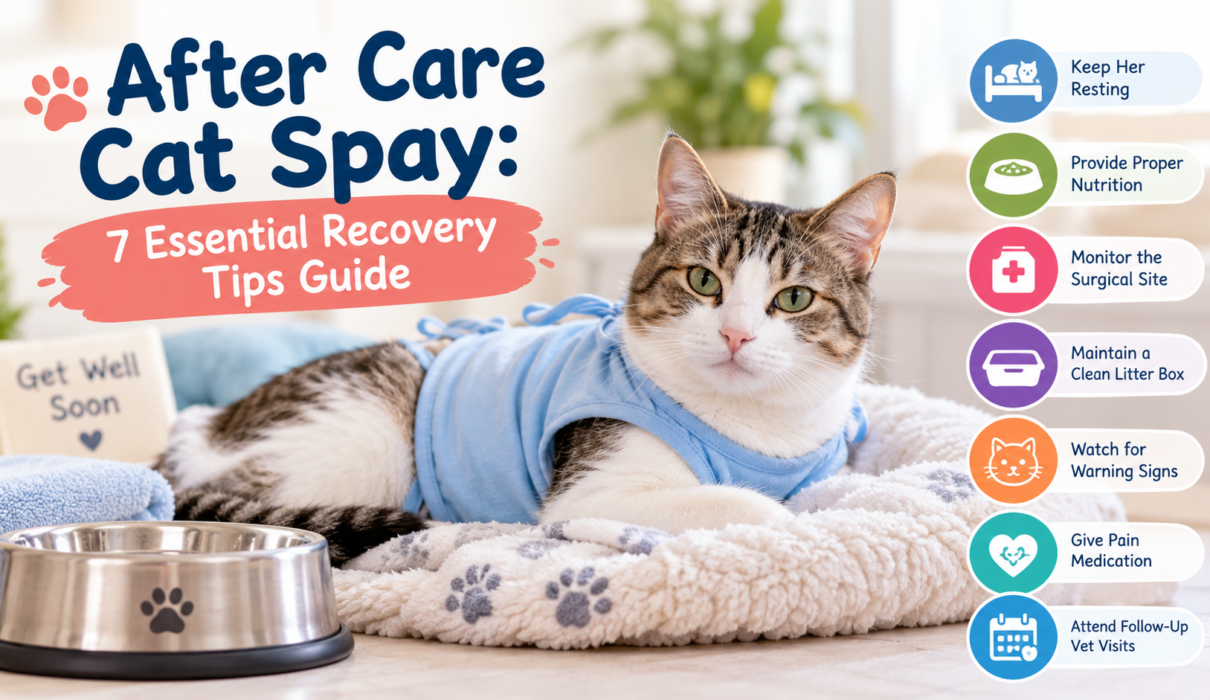
By After Care Cat Spay: 7 Essential Recovery Tips Guide
Introduction: Why After Care Cat Spay Matters
Proper after care cat spay is essential for helping your female cat recover safely after surgery. Spaying is a common veterinary procedure that prevents pregnancy and provides several long-term health benefits. However, your cat still needs rest, monitoring, and appropriate care while her body heals.
After surgery, some cats may feel sleepy, uncomfortable, or less interested in food because of anesthesia and the stress of the procedure. These effects are often temporary, but pet owners should monitor their cats closely and follow their veterinarian’s instructions.
Understanding how to care for a cat after spaying can help reduce the risk of complications and make recovery more comfortable. From preparing a quiet resting space to monitoring the incision and preventing excessive activity, every step plays an important role.
In this first part of our guide, we will cover four important recovery tips, including creating a safe environment, checking the surgical incision, managing pain, and restricting physical activity or after care cat spay.
After Care Cat Spay: Prepare a Safe Recovery Space
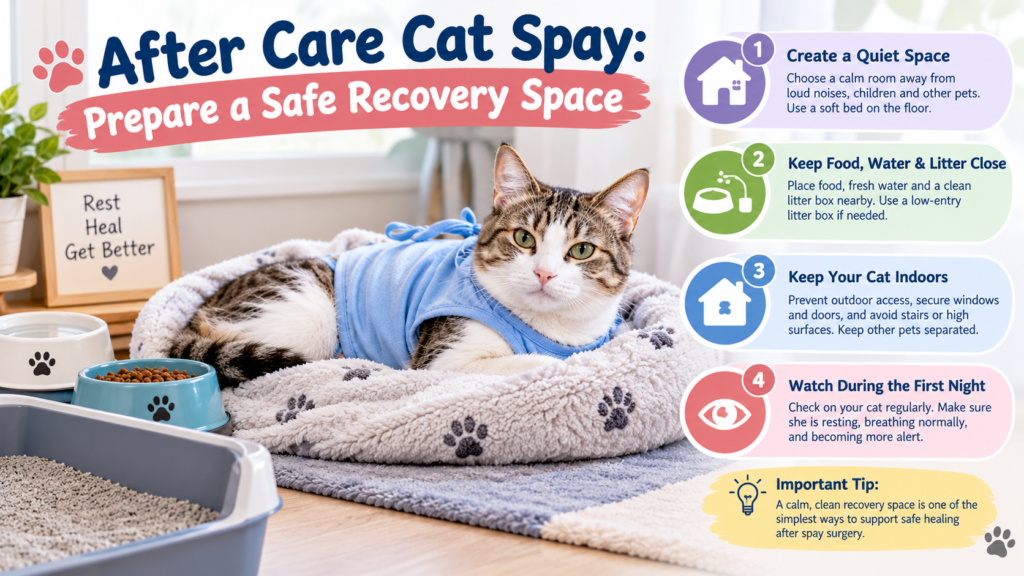
One of the first steps in after care cat spay is creating a comfortable environment where your cat can rest without interruptions. After anesthesia, cats may feel tired, confused, or unsteady on their feet. A safe recovery area helps prevent accidental injuries while allowing your cat to relax.
Choose a Quiet and Comfortable Room
Prepare a small, quiet room before bringing your cat home. Choose a space away from loud noises, children, and other pets. Place a clean blanket or soft bed on the floor so your cat can rest comfortably.
Avoid elevated sleeping areas, tall furniture, or places where your cat might attempt to jump. Because coordination may be temporarily affected after anesthesia, keeping everything at floor level is safer.
Provide Easy Access to Food, Water, and a Litter Box
Your cat should not need to walk far to reach essential supplies. Place fresh water, food, and a clean litter box nearby, while keeping the bedding area separate from the litter box.
Use a litter box with a low entrance if your cat has difficulty stepping over a high edge. Follow your veterinarian’s instructions about when to offer food and water after surgery.
Keep Your Cat Indoors
Even cats that usually spend time outdoors should remain indoors during recovery. Outdoor activity can expose the incision to dirt, bacteria, and unnecessary movement.
Keep windows and doors secure, and prevent access to stairs or high surfaces whenever possible. If your cat lives with other pets, supervise interactions or keep them separated until your veterinarian says normal activity can resume or after care cat spay.
Watch Your Cat During the First Night
Your cat may sleep more than usual after surgery. Check on her regularly and make sure she is resting comfortably, breathing normally, and becoming more alert as expected.
Contact your veterinarian if your cat is difficult to wake, becomes increasingly weak, has trouble breathing, or shows other concerning symptoms.
Important tip: A calm, clean recovery space is one of the simplest ways to support safe healing after spay surgery.
Care for Cat After Spay: Monitor the Surgical Incision
Another important part of care for cat after spay is checking the surgical incision every day. Spaying involves an incision that needs time to heal, and monitoring the area can help you recognize potential problems early or after care cat spay.
Check the Incision Daily
Look at the incision at least once daily, or as directed by your veterinarian. You may need to gently move your cat’s fur aside to see the area clearly. Handle your cat carefully and avoid pressing, pulling, or touching the incision unnecessarily.
A healing incision should generally remain closed and relatively clean. Mild redness or slight swelling may occur initially, but the area should not become progressively more inflamed or after care cat spay.
Watch for these warning signs:
- Increasing redness or swelling around the incision.
- Blood that continues to ooze or starts bleeding again.
- Yellow, green, or foul-smelling discharge.
- A gap or opening in the surgical wound.
- Increasing tenderness or signs of significant pain.
If you notice these changes, contact your veterinarian promptly. An open incision, substantial bleeding, or severe illness may require urgent veterinary attention.
Keep the Surgical Area Clean and Dry
During recovery, avoid bathing your cat unless your veterinarian specifically approves it. Moisture and contamination can interfere with healing.
Do not apply alcohol, hydrogen peroxide, essential oils, powders, or human skin creams to the incision unless your veterinarian instructs you to do so. These products may irritate the tissue or delay healing.
If the incision appears dirty, ask your veterinary clinic how to handle it rather than attempting to clean it aggressively.
Prevent Licking and Scratching
Cats naturally groom themselves, but licking or chewing the surgical site can damage healing tissue and introduce bacteria. Use a veterinarian-recommended recovery cone or surgical recovery suit if advised.
Check the protective device regularly to make sure it fits comfortably and does not interfere with eating, drinking, or breathing or after care cat spay.
Take Photos to Track Healing
Taking a daily photograph can help you compare the incision over time. Use similar lighting and angles so that changes are easier to recognize.
If you are unsure whether the incision looks normal, send the photograph to your veterinary clinic if they offer that service. A veterinarian can advise whether your cat needs an examination or after care cat spay.
Remember: Do not wait for the next routine appointment if the incision opens, bleeding continues, or swelling and discharge worsen.
How to Care for a Cat After Spaying: Manage Pain and Medication
Knowing how to care for a cat after spaying includes understanding pain management and medication safety. Although spaying is a routine procedure, it is still surgery, and your cat may experience discomfort during the first few days.
Follow Your Veterinarian’s Medication Instructions
Your veterinarian may prescribe pain relief or other medication depending on your cat’s condition. Give each medicine exactly as directed, including the correct dose, timing, and duration.
Never change the dose, stop prescribed treatment early, or give an additional medication without consulting the veterinary team.
If your cat spits out a dose, vomits after receiving medicine, or refuses medication, contact your veterinarian for advice. Do not automatically repeat a dose because doing so could result in an overdose or after care cat spay.
Never Give Human Painkillers
Human medications can be extremely dangerous for cats. Acetaminophen, also known as paracetamol, is highly toxic to cats, and some common anti-inflammatory medicines can cause serious kidney, stomach, or other organ damage.
Never give your cat human painkillers unless a veterinarian has specifically prescribed a medication and dose for that individual cat.
If your cat accidentally swallows human medication, seek emergency veterinary advice immediately. Do not wait for symptoms to appear.
Recognize Signs of Pain
Cats often hide discomfort, so changes in behavior may be the first indication that something is wrong.
Possible signs of pain include:
- Hiding more than usual or avoiding interaction.
- Hissing, growling, or reacting when handled.
- A hunched posture or reluctance to move.
- Reduced appetite or difficulty settling down.
- Excessive licking near the surgical site.
- Unusual restlessness or reduced grooming.
Some sleepiness and mild behavioral changes may occur after anesthesia. However, worsening pain, severe lethargy, or a failure to improve should be discussed with your veterinarian.
Support a Stress-Free Recovery
Speak softly, approach your cat calmly, and allow her to rest without unnecessary handling. Avoid forcing cuddles or picking her up repeatedly, especially if doing so puts pressure on her abdomen.
If you need to lift your cat, support her body gently and follow any handling instructions provided by your veterinarian.
Keep follow-up appointments even if your cat appears to be recovering well. Your veterinarian can assess the incision, review medication needs, and advise when normal routines can resume.
Key takeaway: Safe pain management means using veterinarian-approved medication, monitoring behavior, and seeking professional advice when recovery does not progress as expected.
Post Spay Care Cat: Control Activity and Prevent Jumping
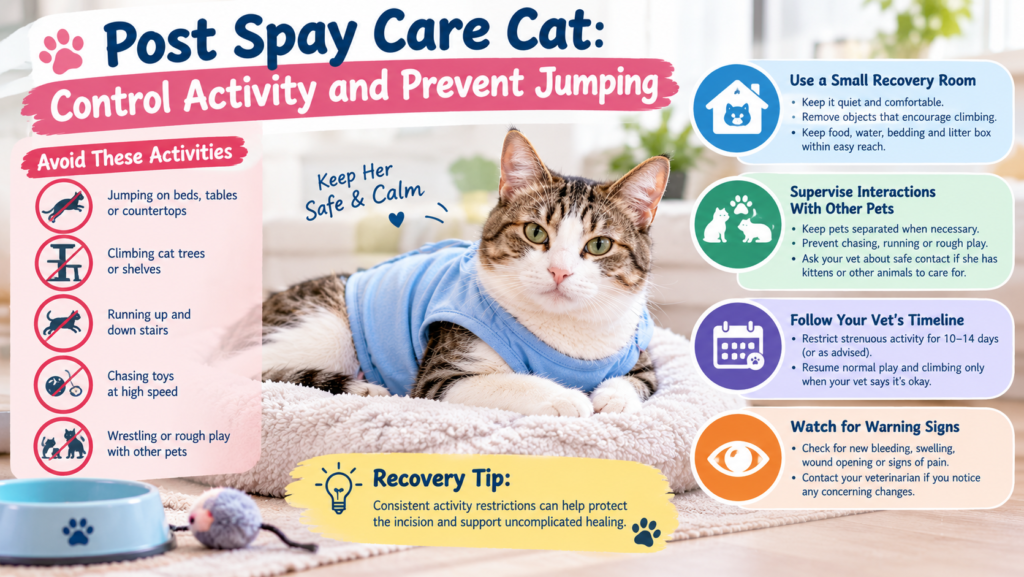
Restricting physical activity is another essential part of post spay care cat. Even if your cat seems energetic shortly after surgery, the incision and underlying tissues still need time to heal.
Running, jumping, climbing, and rough play may place stress on the surgical area and increase the risk of swelling or wound separation.
Limit Running and Jumping
For the recovery period, prevent activities such as:
- Jumping onto beds, tables, or countertops.
- Climbing cat trees or shelves.
- Running up and down stairs.
- Chasing toys at high speed.
- Wrestling or playing roughly with other pets.
Your veterinarian may recommend restricting strenuous activity for approximately 10–14 days, depending on the procedure and your cat’s individual recovery. Follow the specific timeline provided by your veterinary clinic .
Use a Small Recovery Room
A quiet bedroom or another secure, comfortable room can help limit excessive movement. Remove objects that encourage climbing, and keep food, water, bedding, and the litter box within easy reach or after care cat spay.
If your cat is especially active, ask your veterinarian how to manage her safely without causing unnecessary stress.
Do not use a small carrier as a long-term recovery space unless your veterinarian specifically recommends it for a particular situation.
Supervise Interactions With Other Pets
Other cats or dogs may encourage running, chasing, or rough play. Keep pets separated when necessary, especially if they are likely to disturb the recovering cat.
If your cat has kittens or other animals that depend on her, ask your veterinarian how to manage contact safely during recovery or after care cat spay.
Do Not Assume Your Cat Is Fully Healed
Some cats start acting normally within a day or two, but outward energy does not mean the surgical tissues have completely healed.
Continue following activity restrictions even if your cat appears comfortable. Resume normal play and climbing only when your veterinarian says it is appropriate.
If your cat jumps unexpectedly, do not panic. Calmly prevent further activity and check for new bleeding, swelling, wound opening, or signs of pain. Contact your veterinarian if you notice concerning changes.
Recovery tip: Consistent activity restrictions can help protect the incision and support uncomplicated healing.
After Care for Neutered Cat: Support Proper Feeding and Hydration
Providing appropriate food and fresh water is an important part of recovery after surgery. Although the phrase after care for neutered cat is often used for male cats, many basic recovery principles also apply to female cats after spaying. However, spaying involves abdominal surgery, so female cats may need specific activity restrictions and incision monitoring.
Your cat may have a reduced appetite or feel sleepy during the first day after surgery. Anesthesia, stress, and medication can temporarily affect eating habits. Following your veterinarian’s instructions can help your cat return to her normal routine safely.
Offer Small Meals After Surgery
When your cat is fully awake and your veterinarian says feeding is appropriate, offer a small portion of her usual food. A smaller meal may be easier to tolerate than a large meal immediately after anesthesia.
Avoid forcing your cat to eat. Let her approach the food at her own pace, and provide a quiet environment where she can eat without disturbance.
If your veterinarian recommends a special diet or a particular feeding schedule, follow that advice rather than introducing new foods during recovery.
Provide Fresh Water
Keep clean, fresh water available unless your veterinarian has given different instructions. Proper hydration supports normal body functions and helps your cat recover from the stress of surgery.
Place the water bowl somewhere easy to reach so your cat does not need to jump or climb. If your cat wears a recovery cone, check that she can comfortably reach her food and water bowls.
Monitor drinking habits and contact your veterinarian if your cat refuses water, repeatedly vomits, or appears increasingly weak.
Monitor Appetite and Digestive Symptoms
Some cats eat less than usual immediately after surgery, but appetite should gradually improve. Keep track of how much your cat eats and whether she passes urine and stool normally.
Contact your veterinarian if your cat refuses food for around 24 hours after surgery, or sooner if your discharge instructions specify a shorter period. Kittens, cats with existing health conditions, and cats showing other symptoms may need earlier assessment or after care cat spay.
Seek veterinary advice promptly if you notice repeated vomiting, significant abdominal discomfort, or unusual weakness.
Avoid Unnecessary Diet Changes
During recovery, continue your cat’s normal food unless the veterinarian recommends otherwise. Sudden dietary changes can cause digestive upset and make it harder to determine whether symptoms are related to surgery.
Once your cat has recovered, ask your veterinarian whether her calorie intake needs adjustment. Spayed cats may have different energy requirements, and maintaining a healthy weight is important for long-term health.
Key tip: Offer appropriate meals, maintain access to fresh water, and monitor appetite instead of assuming that every change after surgery is normal or after care cat spay.
After Care Cat Spay: Prevent Licking and Protect the Incision
Preventing licking and chewing is one of the most important steps in after care cat spay. Cats instinctively groom themselves, but licking a surgical wound can irritate the tissue, introduce bacteria, and interfere with healing.
Even a few minutes of persistent chewing may damage an incision or remove surgical glue or sutures. Taking preventive measures is safer than waiting until the wound becomes irritated.
Use a Veterinarian-Approved Recovery Cone
A protective cone, sometimes called an Elizabethan collar, helps prevent your cat from reaching the surgical area with her mouth.
Your veterinarian may recommend a cone that extends far enough beyond the nose to prevent licking. Check the fit regularly to make sure it is secure without being too tight.
Observe your cat while she eats, drinks, and moves around. If the cone prevents her from reaching her bowls or causes significant distress, ask your veterinarian about a suitable adjustment or alternative.
Do not remove the cone simply because your cat seems annoyed by it. Follow the veterinarian’s advice about when protection can safely stop.
Consider a Surgical Recovery Suit
Some cats tolerate a properly fitted recovery suit better than a cone. A suit may cover the incision and reduce access to the surgical area.
However, not every suit is appropriate for every cat or incision. Ask your veterinarian whether one is suitable for your cat, and make sure it does not rub the wound or become damp or dirty.
Check the incision as instructed. If the suit makes monitoring difficult, ask the veterinary clinic how to inspect the area safely.
Watch for Licking, Biting, or Scratching
Look for repeated attempts to reach the incision, chewing at the surrounding fur, or unusual attention to the surgical site.
If your cat manages to lick or bite the incision, gently prevent further access and inspect the area without pressing it. Contact your veterinarian if the wound looks damaged, becomes swollen, starts bleeding, or opens.
Do not apply bitter sprays, essential oils, creams, or other products near the incision unless your veterinarian specifically approves them.
Keep the Protective Equipment Clean
Follow the manufacturer’s cleaning instructions for recovery suits and your veterinarian’s recommendations for cones. Make sure protective equipment remains dry and does not interfere with normal breathing or movement.
If the equipment causes rubbing, skin irritation, or difficulty eating and drinking, seek veterinary advice rather than leaving the problem unaddressed.
Remember: Preventing licking is easier and safer than treating an incision that has become damaged or infected.
After Care Cat Spay: Recognize Warning Signs and Complications
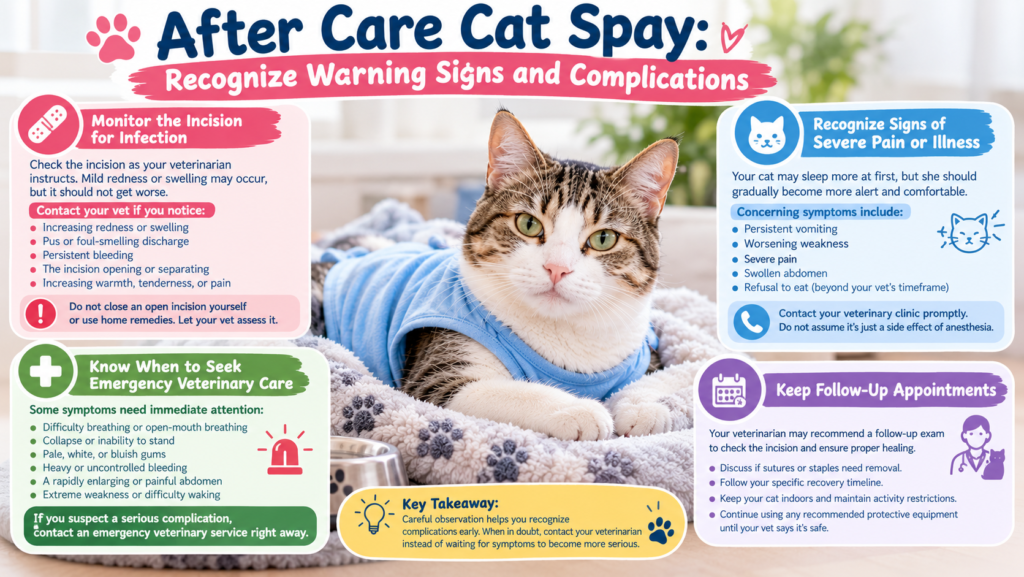
The final essential step is recognizing when your cat needs veterinary attention. Most cats recover without serious complications, but problems can occasionally occur. Understanding the difference between expected recovery changes and warning signs can help you act quickly.
Monitor the Incision for Infection
Check the incision according to your veterinarian’s instructions. Mild initial redness or swelling may occur, but the area should not become progressively worse.
Contact your veterinarian if you notice:
- Increasing redness or swelling.
- Pus or foul-smelling discharge.
- Persistent bleeding.
- The incision opening or separating.
- Increasing warmth, tenderness, or pain around the wound.
Do not attempt to close an open incision yourself or apply home remedies. A veterinarian should assess the wound and recommend appropriate treatment.
Recognize Signs of Severe Pain or Illness
Your cat may sleep more than usual during early recovery, but she should gradually become more alert and comfortable.
Concerning symptoms include persistent vomiting, worsening weakness, severe pain, a swollen abdomen, or a refusal to eat that continues beyond the period specified by your veterinarian.
Contact your veterinary clinic promptly if your cat is not improving as expected. Do not assume that every symptom is simply a side effect of anesthesia.
Know When to Seek Emergency Veterinary Care
Some symptoms require immediate attention. Seek emergency veterinary care if your cat experiences:
- Difficulty breathing or open-mouth breathing at rest.
- Collapse or inability to stand.
- Pale, white, or bluish gums.
- Heavy or uncontrolled bleeding.
- A rapidly enlarging or severely painful abdomen.
- Extreme weakness or difficulty waking.
Do not wait for these symptoms to disappear on their own. If you suspect a serious complication, contact an emergency veterinary service immediately.
Keep Follow-Up Appointments
Your veterinarian may recommend a follow-up examination to check the incision and confirm that healing is progressing normally. If external sutures or staples were used, the clinic will explain whether and when they need to be removed.
Follow the specific recovery timeline provided by your veterinarian. Do not assume that the incision is fully healed just because it looks better from the outside.
Keep your cat indoors, maintain activity restrictions, and continue using any recommended protective equipment until the veterinary team says these precautions are no longer necessary.
Key takeaway: Careful observation helps you recognize complications early. When in doubt, contact your veterinarian instead of waiting for symptoms to become more serious or after care cat spay.
Frequently Asked Questions About After Care Cat Spay
How long does a cat take to recover after spaying?
Many cats become more alert within a day after surgery, but complete recovery takes longer. Activity restrictions commonly continue for approximately 10–14 days, depending on the procedure and your veterinarian’s instructions.
Is it normal for a cat to sleep a lot after spaying?
Yes, increased sleepiness can occur during the first day after anesthesia. However, your cat should gradually become more alert. Difficulty waking, worsening weakness, or breathing problems require immediate veterinary attention.
When can my cat jump and play again after spaying?
Your veterinarian may recommend avoiding jumping, running, climbing, and rough play for around 10–14 days. The exact period depends on your cat’s recovery and the surgical procedure. Resume normal activities only when your veterinarian approves or after care cat spay.
Should my cat wear a cone after spay surgery?
A recovery cone is commonly recommended to prevent licking and chewing at the incision. Your veterinarian may suggest another suitable protective option, such as a recovery suit. Follow the clinic’s instructions about fit and duration.
What should I do if my cat licks her incision?
Prevent further licking using veterinarian-approved protection and inspect the incision gently. If the wound becomes redder, swollen, bloody, or open, contact your veterinarian promptly or after care cat spay.
When should I contact a veterinarian after spaying?
Contact your veterinarian if your cat has persistent vomiting, worsening pain, loss of appetite beyond the advised period, increasing incision swelling, discharge, or unusual weakness. Breathing difficulties, collapse, pale or bluish gums, and uncontrolled bleeding require emergency veterinary care.
Can I bathe my cat after spaying?
Avoid bathing your cat until the incision has healed and your veterinarian confirms that bathing is safe. Many clinics recommend keeping the surgical site dry for approximately 10–14 days, but the exact instructions may vary.
Conclusion: Follow the Right After Care Cat Spay Routine
Following a consistent after care cat spay routine can help your cat recover comfortably and reduce the risk of preventable complications. Proper feeding and hydration, protection against licking, and close monitoring for warning signs are all important parts of post-surgery care or after care cat spay.
Remember these essential practices:
- Offer food and water according to your veterinarian’s instructions.
- Use a suitable cone or recovery suit to protect the incision.
- Keep your cat indoors and restrict strenuous activity.
- Monitor the surgical site and your cat’s behavior daily.
- Seek veterinary attention if symptoms worsen or emergency warning signs appear.
Every cat heals at a different pace, so follow the instructions provided by your veterinary team rather than relying only on a general recovery timeline.
By combining the first four recovery tips from Part 1 with the final three tips in this guide, you can provide more complete care for your cat after spaying and help her return to her usual routine safely or after care cat spay.
Clarify the neutered-versus-spayed wordingAdd a brief Part 1 recap