

 By
By Signs of Kidney Disease in Cats: 7 Shocking Symptoms
Introduction
Kidney disease is a common health concern in cats, especially as they grow older. A cat’s kidneys play an essential role in filtering waste products from the blood, balancing fluids, regulating minerals, and maintaining overall health. When the kidneys stop working properly, harmful substances can build up in the body, leading to several health problems.
Recognizing the signs of kidney disease in cats early can help you seek veterinary care before the condition becomes more serious. Some symptoms develop gradually, while others may appear suddenly, particularly in cases of acute kidney injury. Because cats often hide signs of discomfort, even small changes in their daily habits deserve attention.
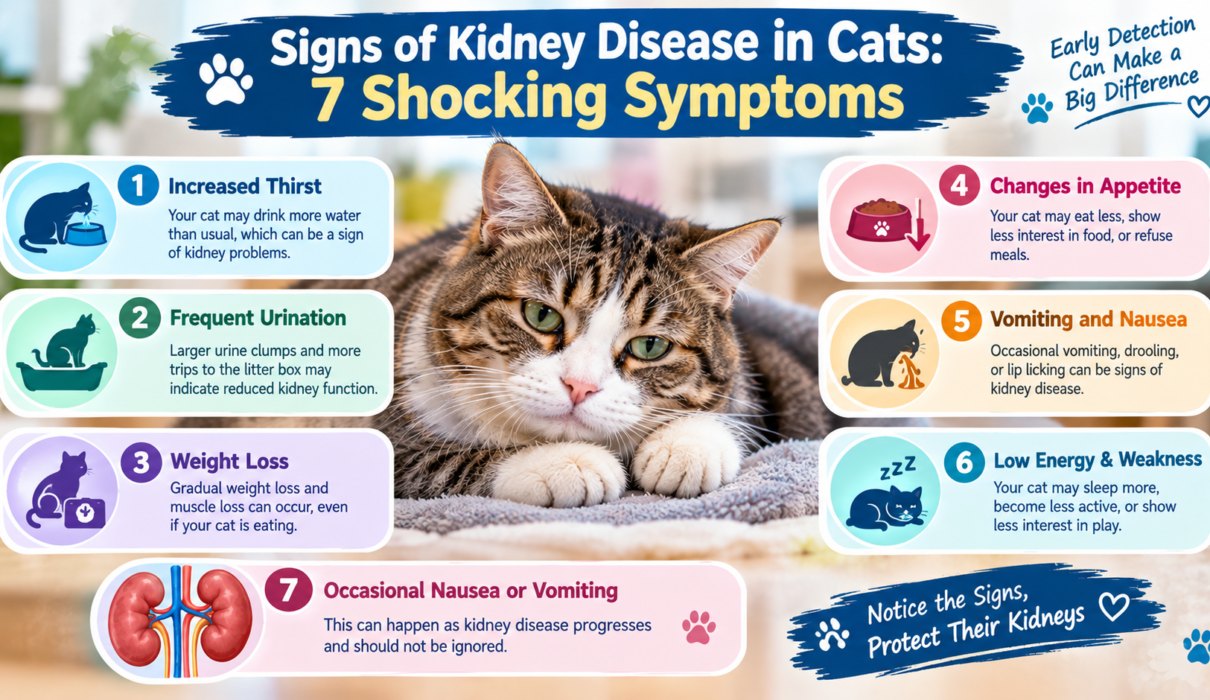
Common warning signs include increased thirst, frequent urination, reduced appetite, unexplained weight loss, vomiting, unusual tiredness, bad breath, and dehydration. These symptoms do not always mean your cat has kidney disease, but they should not be ignored.
In this guide, we will explore seven important symptoms, explain how they may affect your cat, and discuss when you should contact a veterinarian.
What Are the Signs of Kidney Disease in Cats?
Many cat owners wonder, what are signs of kidney disease in cats, particularly when their pets seem healthy otherwise. The answer depends on the severity and type of kidney problem. Chronic kidney disease often develops slowly, making its early symptoms difficult to recognize.
Healthy kidneys remove waste products through urine and help maintain the body’s fluid balance. When kidney function declines, cats may struggle to concentrate their urine. As a result, they may urinate more frequently and drink additional water to replace lost fluids .
Other symptoms may develop as waste products accumulate in the bloodstream. These can include nausea, vomiting, appetite changes, weight loss, weakness, and poor coat condition.
Common Early Warning Signs
Some of the earliest changes you may notice include:
- Drinking more water than usual.
- Urinating more frequently or producing larger amounts of urine.
- Losing interest in food.
- Gradually losing weight.
- Sleeping more or becoming less playful.
- Developing an unkempt coat.
- Experiencing occasional vomiting.
These symptoms can also occur with other medical conditions, including diabetes and thyroid disease. A veterinarian may recommend blood tests, urine tests, and other examinations to identify the underlying cause.
It is important to remember that cats with early kidney disease may show few obvious symptoms. Regular veterinary examinations are especially valuable for middle-aged and older cats or signs of kidney disease in cats.
Increased Thirst and Frequent Urination
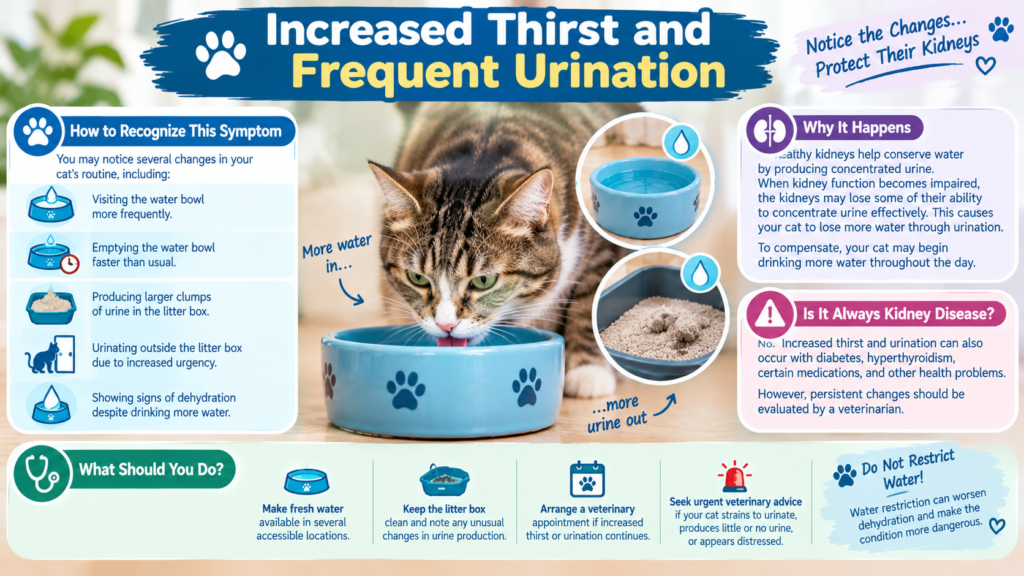
One of the most recognizable signs of kidney disease in cats is a noticeable change in drinking and urination habits.
Healthy kidneys help conserve water by producing concentrated urine. When kidney function becomes impaired, the kidneys may lose some of their ability to concentrate urine effectively. This causes the cat to lose more water through urination.
To compensate, your cat may begin drinking more water throughout the day.
How to Recognize This Symptom
You may notice several changes in your cat’s routine, including:
- Visiting the water bowl more frequently.
- Emptying the water bowl faster than usual.
- Producing larger clumps of urine in the litter box.
- Urinating outside the litter box because of increased urgency.
- Showing signs of dehydration despite drinking more water.
If you have multiple cats, identifying changes can be difficult. Consider observing your cat individually and keeping track of water consumption and litter box habits or signs of kidney disease in cats.
Is Increased Thirst Always a Sign of Kidney Disease?
No. Increased thirst and urination can also occur with diabetes, hyperthyroidism, certain medications, and other health problems or signs of kidney disease in cats.
However, persistent changes should be evaluated by a veterinarian. Do not restrict your cat’s access to water, even if it seems to be drinking excessively. Water restriction can worsen dehydration and potentially make the condition more dangerous.
What Should You Do?
Make fresh water available in several accessible locations. Keep the litter box clean and note any unusual changes in urine production.
Arrange a veterinary appointment if increased thirst or urination continues. Seek urgent veterinary advice if your cat repeatedly strains to urinate, produces little or no urine, or appears distressed. Inability to urinate can indicate a life-threatening emergency.
Loss of Appetite and Reduced Interest in Food
Another important symptom is a reduced appetite. Cats with kidney disease may become less interested in meals, eat smaller portions, or refuse their favorite foods.
As kidney function declines, waste products can accumulate in the bloodstream and contribute to nausea. Changes in hydration, electrolyte balance, and general well-being may also affect appetite or signs of kidney disease in cats.
Unfortunately, eating less can create additional problems. Cats need adequate nutrition to maintain muscle mass, energy, and normal body functions. Prolonged poor food intake can lead to weight loss and weakness.
Signs Your Cat May Be Losing Its Appetite
Watch for these changes:
- Leaving food unfinished.
- Refusing treats that were previously enjoyed.
- Sniffing food but walking away.
- Eating only a few bites at each meal.
- Showing signs of nausea, such as lip licking or excessive swallowing.
- Drooling or vomiting around mealtimes.
Some cats may approach their food eagerly but turn away after smelling it. This can happen when nausea makes eating uncomfortable.
How Can You Encourage Your Cat to Eat?
If your veterinarian has diagnosed kidney disease, ask whether a prescription renal diet is appropriate. These diets are formulated to support cats with impaired kidney function and are often adjusted for phosphorus and other nutrients.
You may be able to improve food acceptance by offering small, frequent meals or gently warming wet food to enhance its aroma. Introduce dietary changes gradually when possible and follow your veterinarian’s instructions.
Avoid forcing food into your cat’s mouth or giving human medications to stimulate appetite without veterinary guidance.
Important: Contact your veterinarian promptly if your cat refuses food or eats substantially less than usual. Cats that go without adequate food for an extended period can develop serious complications. Do not wait several days to seek advice, especially if vomiting, weakness, or dehydration is also present or signs of kidney disease in cats.
Unexplained Weight Loss and Muscle Weakness
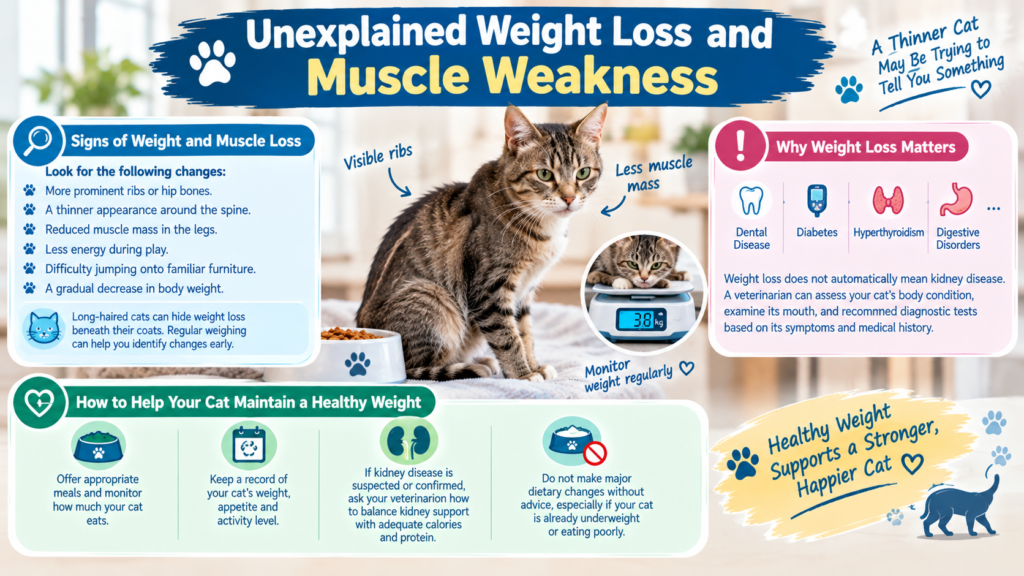
Unexplained weight loss is another possible sign of kidney disease in cats. You may notice that your cat looks thinner even though its feeding routine has not changed significantly.
Weight loss may occur because of reduced appetite, nausea, dehydration, and changes in the body’s ability to maintain normal nutrition. Over time, some cats also lose muscle mass, particularly along the back, shoulders, and hind legs.
These changes can be gradual, making them easy to overlook.
Signs of Weight and Muscle Loss
Look for the following changes:
- More prominent ribs or hip bones.
- A thinner appearance around the spine.
- Reduced muscle mass in the legs.
- Less energy during play.
- Difficulty jumping onto familiar furniture.
- A gradual decrease in body weight.
Long-haired cats can hide weight loss beneath their coats. Regular weighing can help you identify changes before they become obvious.
Why Weight Loss Matters
Weight loss does not automatically mean kidney disease. Dental disease, diabetes, hyperthyroidism, digestive disorders, and other medical conditions can also cause similar symptoms.
A veterinarian can assess your cat’s body condition, examine its mouth, and recommend diagnostic tests based on its symptoms and medical history or signs of kidney disease in cats.
How to Help Your Cat Maintain a Healthy Weight
Offer appropriate meals and monitor how much your cat actually eats. If kidney disease is suspected or confirmed, ask your veterinarian how to balance kidney support with adequate calorie and protein intake.
Do not make major dietary changes without advice, especially if your cat is already underweight or eating poorly.
Keeping a simple record of your cat’s weight, appetite, and activity level can help your veterinarian evaluate whether the condition is progressing.
Vomiting and Nausea
Vomiting can occur in cats with kidney disease, particularly when the condition becomes more advanced. Waste buildup, dehydration, and other metabolic changes may contribute to nausea and digestive discomfort.
However, occasional vomiting is not specific to kidney disease. Hairballs, dietary changes, parasites, and other illnesses can cause similar problems.
Symptoms to Watch For
Possible warning signs include:
- Vomiting repeatedly.
- Refusing meals after vomiting.
- Excessive lip licking or swallowing.
- Drooling more than usual.
- Hiding or appearing uncomfortable.
- Becoming weak or unusually inactive.
- Losing weight alongside digestive symptoms.
Some cats experience nausea without actually vomiting. They may simply approach their food, sniff it, and refuse to eat.
When Is Vomiting a Serious Concern?
Repeated vomiting can lead to dehydration, which may further complicate kidney problems. It is particularly concerning when combined with increased thirst, reduced urination, appetite loss, or weakness or signs of kidney disease in cats.
Seek urgent veterinary care if your cat cannot keep water down, vomits repeatedly, becomes severely lethargic, or shows signs of collapse.
How Is Vomiting Treated?
Treatment depends on the underlying cause. A veterinarian may recommend blood tests, urine testing, fluid therapy, dietary adjustments, or anti-nausea medication when appropriate.
Never give human anti-nausea medications or painkillers to your cat without veterinary approval. Some human medicines are toxic to cats.
If vomiting continues, a professional examination is more useful than trying several home remedies. Identifying the underlying problem can help prevent dehydration and ensure your cat receives suitable treatment.
Lethargy and Unusual Weakness
Lethargy is another important symptom that may appear in cats with kidney disease. You might notice that your cat sleeps more than usual, avoids playing, or no longer shows interest in activities it previously enjoyed.
Healthy kidneys remove waste products from the bloodstream and help maintain the body’s fluid and mineral balance. When kidney function declines, waste buildup, dehydration, anemia, and other complications may contribute to tiredness and weakness or signs of kidney disease in cats.
Although cats naturally sleep for many hours each day, a noticeable change in their usual energy level should not be ignored.
Common Signs of Lethargy in Cats
Watch for these behavioral changes:
- Sleeping more than usual and showing less interest in play.
- Moving slowly or appearing unusually tired.
- Avoiding stairs, jumping, or climbing.
- Hiding more frequently.
- Showing reduced interest in family members.
- Neglecting normal grooming habits.
- Appearing weak or reluctant to move.
Some cats become less active gradually, making it difficult for owners to recognize the problem immediately. Pay attention to changes in your cat’s normal routine rather than judging its behavior by sleep duration alone.
Why Does Kidney Disease Cause Weakness?
Kidney disease can affect several body functions. Dehydration may contribute to weakness, while chronic kidney disease can cause anemia because damaged kidneys may produce less erythropoietin, a hormone involved in red blood cell production.
Anemia reduces the blood’s ability to carry oxygen efficiently, potentially leaving your cat tired and less active.
However, lethargy can also result from infections, heart disease, diabetes, pain, and many other conditions. Veterinary testing is necessary to identify the cause or signs of kidney disease in cats.
How Can You Help Your Cat?
Provide a comfortable resting area with easy access to food, fresh water, and a clean litter box. Avoid forcing your cat to exercise when it seems weak.
Arrange a veterinary examination if unusual tiredness persists or occurs alongside other possible kidney disease symptoms. Sudden severe weakness, collapse, or difficulty breathing requires emergency veterinary care.
Bad Breath and Mouth Ulcers
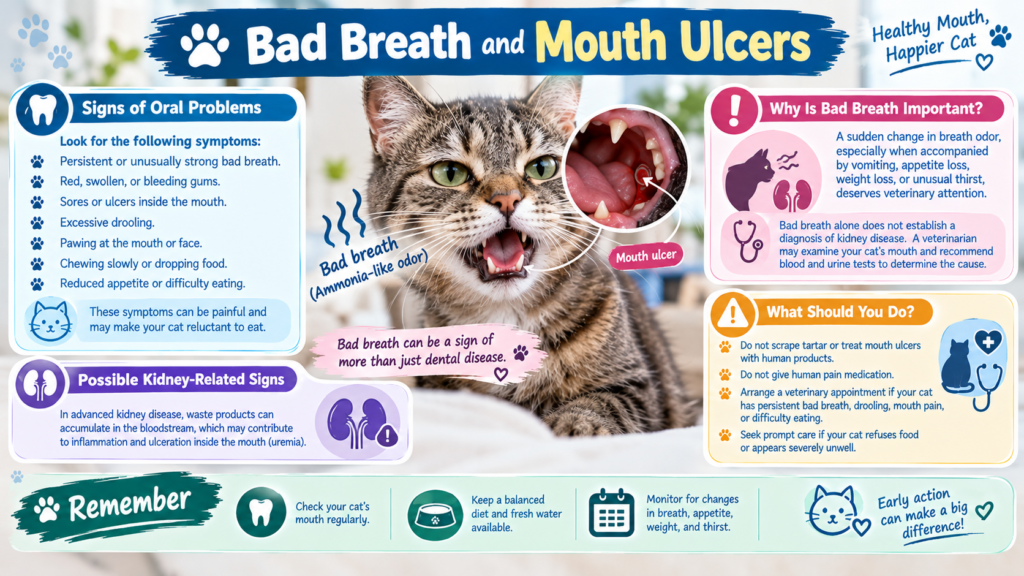
Bad breath is another possible warning sign of advanced kidney disease in cats. Although dental disease is a much more common cause of unpleasant breath, kidney problems can sometimes contribute to a distinctive chemical or ammonia-like odor or signs of kidney disease in cats.
When kidney function becomes severely impaired, waste products can accumulate in the bloodstream. In some cats, this can contribute to inflammation and ulceration inside the mouth, a condition associated with uremia.
Signs of Oral Problems
Look for the following symptoms:
- Persistent or unusually strong bad breath.
- Red, swollen, or bleeding gums.
- Sores or ulcers inside the mouth.
- Excessive drooling.
- Pawing at the mouth or face.
- Chewing slowly or dropping food.
- Reduced appetite or difficulty eating.
These symptoms can be painful and may make your cat reluctant to eat. Dental disease, infections, and other oral conditions can produce similar signs.
Why Is Bad Breath Important?
A sudden change in breath odor, especially when accompanied by vomiting, appetite loss, weight loss, or unusual thirst, deserves veterinary attention or signs of kidney disease in cats.
Bad breath alone does not establish a diagnosis of kidney disease. A veterinarian may examine your cat’s mouth and recommend blood and urine tests to determine whether kidney dysfunction or another problem is responsible.
What Should You Do?
Do not attempt to scrape away tartar, treat mouth ulcers with human products, or give human pain medication. Some medications and oral products can be dangerous for cats.
Arrange a veterinary appointment if your cat develops persistent bad breath, drooling, mouth pain, or difficulty eating. Seek prompt care if your cat refuses food or appears severely unwell.
Dehydration and Poor Coat Condition
Dehydration is a significant concern in cats with kidney disease. Damaged kidneys may produce larger amounts of dilute urine, causing the body to lose more water than usual. If your cat cannot replace those losses by drinking enough, dehydration may develop or signs of kidney disease in cats.
Poor coat condition can occur alongside dehydration and other effects of chronic illness. A cat that feels weak or unwell may groom less frequently, leaving its fur greasy, tangled, or unkempt.
Common Signs of Dehydration
Possible signs include:
- Dry or tacky gums.
- Reduced energy or unusual weakness.
- Decreased appetite.
- Sunken-looking eyes in more severe cases.
- Reduced grooming and a dull coat.
- Changes in body weight.
No single sign reliably confirms dehydration. Skin elasticity tests can also be misleading, especially in older or thin cats.
How Does Dehydration Affect Kidney Health?
Dehydration can worsen an existing kidney problem by reducing blood flow to the kidneys. It may also contribute to electrolyte disturbances and make your cat feel increasingly unwell or signs of kidney disease in cats.
A veterinarian can assess hydration, evaluate kidney function, and determine whether oral, subcutaneous, or intravenous fluids are appropriate.
Ways to Support Hydration at Home
You can support your cat by providing several sources of fresh water in quiet, accessible locations.
Helpful measures include:
- Cleaning and refilling water bowls regularly.
- Offering wet food if it is suitable for your cat.
- Placing water away from the litter box.
- Using a water fountain if your cat prefers running water.
- Monitoring drinking and urination habits.
If your cat follows a prescription kidney diet, consult your veterinarian before making substantial dietary changes.
Do not force water into your cat’s mouth or administer fluids under the skin unless your veterinarian has specifically instructed you how to do so.
Contact a veterinarian promptly if you suspect dehydration, particularly when your cat is vomiting, eating poorly, or producing unusual amounts of urine or signs of kidney disease in cats.
What Causes Kidney Disease in Cats?
Kidney disease occurs when the kidneys become damaged or lose their ability to perform normal functions. It can develop gradually over months or years, or it may occur suddenly because of an acute injury or signs of kidney disease in cats.
Chronic Kidney Disease
Chronic kidney disease is a long-term condition that is particularly common in older cats. Kidney tissue may become progressively damaged, reducing the organs’ ability to filter waste and regulate fluids.
The precise cause is not always identifiable. Age-related changes, inherited conditions, previous kidney injuries, and certain underlying diseases may contribute.
Acute Kidney Injury
Acute kidney injury develops over a relatively short period and may result from exposure to certain toxins, severe dehydration, infections, or other serious illnesses.
Some toxic substances, including lilies and certain human medications, can cause severe kidney damage in cats. Suspected toxin exposure should be treated as an emergency or signs of kidney disease in cats.
Other Possible Risk Factors
Factors associated with kidney problems include:
- Increasing age.
- Previous kidney damage or infections.
- Certain inherited kidney conditions.
- Urinary tract obstruction or other serious urinary problems.
- Exposure to kidney-toxic substances.
- Some systemic illnesses that affect kidney function.
Not every cat with these risk factors will develop kidney disease. Regular veterinary care can help identify problems earlier and support appropriate management.
How Do Veterinarians Diagnose Kidney Disease in Cats?
If your cat shows possible signs of kidney disease, a veterinarian will usually review its medical history, examine it, and recommend diagnostic tests based on its symptoms or signs of kidney disease in cats.
Symptoms alone cannot confirm kidney disease because many conditions produce similar changes.
Physical Examination
Your veterinarian may assess your cat’s body weight, muscle condition, hydration, mouth, and general health. Blood pressure may also be measured because high blood pressure can occur with kidney disease and may damage other organs.
Blood Tests
Blood testing can help evaluate kidney function and identify complications.
Common measurements include:
- Blood urea nitrogen (BUN).
- Symmetric dimethylarginine (SDMA), when appropriate.
- Electrolytes and phosphorus.
- Red blood cell levels to check for anemia.
Results must be interpreted alongside hydration, muscle mass, medical history, and other findings.
Urinalysis
Urine testing helps assess how well the kidneys concentrate urine. It can also identify protein in the urine, inflammation, and evidence of infection.
Additional tests, such as urine culture, ultrasound, or X-rays, may be recommended when the veterinarian suspects infection, structural abnormalities, or another underlying problem.
Why Early Diagnosis Matters
Kidney disease may be present before obvious symptoms appear. For this reason, routine examinations and appropriate laboratory testing are especially helpful for older cats and cats with known risk factors or signs of kidney disease in cats.
The diagnosis also helps determine the likely stage of disease and which treatment or monitoring plan is most suitable.
Treatment Options for Kidney Disease in Cats
There is no single treatment that works for every cat with kidney disease. Management depends on whether the problem is acute or chronic, how much kidney function remains, and whether complications are present.
Chronic kidney disease generally cannot be reversed, but appropriate treatment can often help manage symptoms and maintain quality of life. Some causes of acute kidney injury may be treatable, particularly when veterinary care begins quickly or signs of kidney disease in cats.
Prescription Kidney-Support Diets
Veterinary renal diets are commonly recommended for cats with chronic kidney disease. Depending on the formulation, they may contain controlled phosphorus, adjusted protein levels, and other nutrients intended to support kidney health.
Not every cat accepts a new diet immediately. Your veterinarian can suggest ways to introduce it gradually while ensuring your cat continues to eat enough or signs of kidney disease in cats.
Maintaining adequate calorie intake is essential, especially for cats that are losing weight.
Fluid Therapy
Cats with dehydration may need fluid therapy. Depending on the severity of dehydration and the cat’s condition, fluids may be given intravenously or by another veterinary-directed method.
Fluid therapy is not suitable in the same amount for every cat. Cats with heart disease or other medical problems may require particular care to avoid fluid overload.
Medications and Supportive Care
A veterinarian may prescribe medication to manage specific complications, such as:
- Nausea and vomiting.
- High blood pressure.
- Excessive protein loss through urine.
- Low potassium or other electrolyte abnormalities.
- Anemia in selected cases.
Treatment should be based on examination and test results. Never administer human medicines or supplements without veterinary approval.
Regular Monitoring
Follow-up appointments help your veterinarian monitor kidney values, hydration, body weight, blood pressure, appetite, and other health indicators or signs of kidney disease in cats.
Adjustments may be needed as the disease progresses. The aim is to reduce discomfort, manage complications, and preserve your cat’s quality of life for as long as possible.
How to Care for a Cat With Kidney Disease at Home
Home care is an important part of managing chronic kidney disease. Small adjustments to your cat’s environment and routine may help it remain comfortable .
Provide Fresh Water
Keep clean water available throughout the day. Some cats prefer wide, shallow bowls, while others enjoy fountains. Place water in locations your cat can reach easily.
Follow Veterinary Feeding Advice
Offer the diet recommended by your veterinarian. If your cat refuses its renal food, contact the clinic for alternatives rather than allowing it to go without adequate nutrition.
Monitor Daily Habits
Keep track of your cat’s:
- Appetite and food intake.
- Water consumption.
- Urination frequency.
- Body weight.
- Activity level.
- Vomiting episodes and other symptoms.
These observations can help identify changes that require a veterinary review.
Make Your Home Comfortable
Place bedding in a quiet, warm area. Use easily accessible litter boxes and avoid making your cat jump or climb unnecessarily if it is weak or has mobility problems.
Keep Veterinary Appointments
Routine blood and urine tests allow your veterinarian to monitor changes and adjust the treatment plan.
Although home care can improve comfort, it cannot replace veterinary diagnosis, medication, or fluid therapy when these are needed.
When Should You Take Your Cat to the Vet?
Knowing when to seek veterinary care is essential if you notice possible signs of kidney disease in cats.
Schedule a Veterinary Appointment
Arrange an examination if your cat develops persistent changes such as:
- Increased thirst or urination.
- Gradual weight loss.
- Reduced appetite.
- Repeated vomiting.
- Persistent bad breath.
- Reduced activity or poor coat condition.
Early assessment can help identify kidney disease and other treatable conditions.
Seek Urgent Veterinary Care
Contact a veterinarian urgently if your cat is repeatedly vomiting, cannot keep water down, stops eating, or appears significantly weak.
Seek emergency care immediately if your cat collapses, has difficulty breathing, cannot urinate, or may have swallowed a toxic substance such as a lily or human medication.
Do not wait for every symptom to appear before seeking help.
Frequently Asked Questions About Signs of Kidney Disease in Cats
What Are the First Signs of Kidney Disease in Cats?
Increased thirst and urination are common early signs of chronic kidney disease. Some cats may also develop gradual weight loss, reduced appetite, or changes in activity. Early disease may cause few noticeable symptoms, so veterinary testing is important or signs of kidney disease in cats.
Can Cats With Kidney Disease Still Drink and Eat Normally?
Yes. Some cats continue eating and drinking normally during the early stages. As kidney disease progresses, nausea, dehydration, and appetite loss may develop. A cat’s normal appetite does not rule out kidney disease.
How Can I Tell if My Cat’s Kidneys Are Failing?
Possible signs include excessive thirst, frequent urination, weight loss, vomiting, weakness, and reduced appetite. However, these symptoms cannot establish the diagnosis. Blood tests, urine testing, and a veterinary examination are needed to evaluate kidney function or signs of kidney disease in cats.
Can Kidney Disease in Cats Be Treated?
Yes. Treatment can help manage many cases of kidney disease, although chronic kidney disease generally cannot be cured. Renal diets, hydration support, medications, and regular monitoring may improve comfort and quality of life. Acute kidney injury sometimes improves with prompt treatment, depending on its cause and severity.
How Long Can a Cat Live With Kidney Disease?
Life expectancy varies considerably. Some cats with early chronic kidney disease live for years with appropriate monitoring and care, while advanced disease or severe acute kidney injury can have a much poorer outlook. Your veterinarian can provide a more individualized assessment based on test results and your cat’s overall health.
Is Increased Urination Always a Sign of Kidney Disease in Cats?
No. Increased urination can also occur with diabetes, hyperthyroidism, certain medications, and other medical conditions. Persistent changes should be evaluated by a veterinarian to determine the underlying cause
Conclusion: Recognizing Signs of Kidney Disease in Cats Early
Understanding the signs of kidney disease in cats helps you recognize changes that may otherwise go unnoticed. Increased thirst and urination, loss of appetite, weight loss, vomiting, lethargy, bad breath, and dehydration are important warning signs.
Although these symptoms do not always indicate kidney disease, persistent or worsening changes deserve veterinary attention. Early diagnosis, appropriate nutrition, hydration support, medication when needed, and regular monitoring can help many cats maintain a better quality of life or signs of kidney disease in cats.
Pay attention to your cat’s usual drinking, eating, grooming, and litter box habits. If something changes, do not wait for the condition to become severe before seeking advice
With timely veterinary care and a suitable management plan, you can help your cat remain as comfortable and healthy as possible.
1 Comment