

 By
By Stages of Kidney Disease in Cats: 4 Essential Guide
Introduction: Understanding the Stages of Kidney Disease in Cats
Kidney disease is a common health concern in cats, especially as they grow older. The kidneys play an essential role in removing waste products from the blood, balancing fluids, regulating electrolytes, and supporting several important body functions. When the kidneys become damaged, they may gradually lose their ability to perform these tasks effectively.
Understanding the stages of kidney disease in cats can help pet owners recognize possible warning signs and seek veterinary care at the right time. Chronic kidney disease (CKD) usually develops gradually, and some cats show very few symptoms during the early stages. As the condition progresses, cats may experience increased thirst, frequent urination, reduced appetite, vomiting, and weight loss.
Veterinarians commonly use the International Renal Interest Society (IRIS) staging system to classify chronic kidney disease into four stages. These stages help veterinarians evaluate kidney function and develop an appropriate treatment and monitoring plan for each cat or stages of kidney disease in cats.
Although chronic kidney disease generally cannot be reversed, early diagnosis and proper management may help slow its progression and maintain a cat’s quality of life. This guide explains the first two stages, including their symptoms, diagnosis, and treatment options or stages of kidney disease in cats .
What Are the Stages of Kidney Disease in Cats?
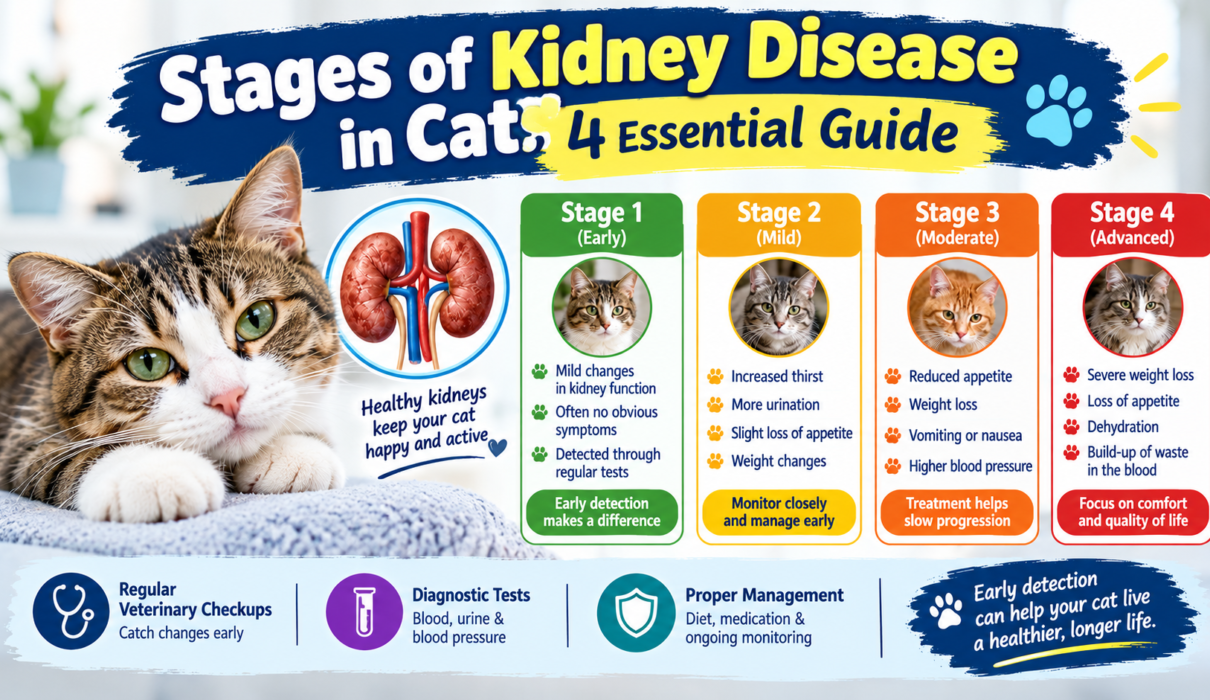
The stages of kidney disease in cats describe the severity of chronic kidney disease and help veterinarians determine how much kidney function may have been lost. The IRIS system classifies established chronic kidney disease into four stages, with Stage 1 generally representing the mildest disease and Stage 4 representing the most advanced.
Staging is based primarily on blood creatinine and/or SDMA measurements in a stable cat. Veterinarians also consider urine tests, blood pressure, protein in the urine, medical history, and other findings before deciding on a management plan or stages of kidney disease in cats or stages of kidney disease in cats.
Understanding the Four Stages
Early Kidney Disease
In Stage 1, kidney damage or another indicator of kidney disease may be present even though routine blood markers remain within their usual ranges. A cat may appear healthy and show no obvious symptoms. Additional tests may be necessary to identify the problem.
Mild Kidney Disease
Stage 2 generally involves mild loss of kidney function. Some cats begin drinking and urinating more than usual, although others may continue behaving normally. Veterinary monitoring and appropriate nutritional support become increasingly important or stages of kidney disease in cats or stages of kidney disease in cats.
Moderate Kidney Disease
In Stage 3, kidney function is more significantly reduced. Cats may develop noticeable symptoms such as poor appetite, weight loss, nausea, vomiting, dehydration, or weakness. Treatment focuses on kidney support and managing complications.
Severe Kidney Disease
Stage 4 is the most advanced stage of chronic kidney disease. Cats may experience significant illness, including severe appetite loss, vomiting, dehydration, weakness, and other complications. Veterinary treatment and quality-of-life assessment become particularly important or stages of kidney disease in cats.
Why Early Diagnosis Matters
Kidney disease can progress differently in individual cats. Some cats remain stable for a long time, while others experience faster deterioration. Regular veterinary examinations can help detect changes before severe symptoms appear.
Early diagnosis also allows veterinarians to identify complications, recommend appropriate food, monitor blood pressure, and address dehydration or other problems.
Remember that the stage alone does not predict exactly how long a cat will live. Overall health, age, other medical conditions, test results, and response to treatment all influence the outlook.
Stage 1 Kidney Disease in Cats: Early Warning Signs
Stage 1 is the earliest category in the IRIS chronic kidney disease staging system. At this point, a cat may have evidence of kidney damage even when routine blood tests do not show a significant increase in creatinine or stages of kidney disease in cats.
This can make early kidney disease difficult for owners to recognize. Many cats continue eating, playing, grooming, and interacting with their families as usual or stages of kidney disease in cats.
What Happens During Stage 1?
Healthy kidneys filter waste products from the bloodstream and help regulate water and mineral balance. When kidney tissue becomes damaged, these functions may begin to change.
However, the kidneys have considerable reserve capacity. A cat may maintain apparently normal blood test results despite early kidney abnormalities.
Veterinarians may suspect Stage 1 disease when they identify findings such as:
- Persistent abnormalities in urine concentration.
- Protein in the urine that is not explained by another condition.
- Structural changes in the kidneys detected through imaging.
- Certain persistent blood test abnormalities, including elevated SDMA in an appropriate clinical context.
- A known history of kidney injury or another condition affecting kidney function.
Not every abnormal test result confirms chronic kidney disease. Veterinarians may repeat tests or investigate other possible causes before making a diagnosis.
Early Warning Signs to Watch For
Cats with Stage 1 kidney disease often have no obvious symptoms. Nevertheless, owners should pay attention to subtle changes in their pet’s normal routine or stages of kidney disease in cats.
Possible changes include:
- Drinking slightly more water than usual.
- Urinating more frequently or producing larger amounts of urine.
- Gradual changes in body weight.
- Occasional changes in appetite.
- Reduced activity or changes in normal behavior.
These signs are not specific to kidney disease. Diabetes, thyroid disorders, urinary tract problems, and other conditions can cause similar changes.
If you notice persistent changes in your cat’s drinking, urination, appetite, or weight, arrange a veterinary examination rather than assuming kidney disease is the cause.
How Is Stage 1 Kidney Disease Diagnosed?
A veterinarian may recommend several tests to assess kidney health.
Blood tests: Creatinine and SDMA help assess kidney filtration, although results must be interpreted alongside the cat’s hydration, muscle mass, and overall health or stages of kidney disease in cats.
Urinalysis: A urine sample helps evaluate concentration, protein, and other abnormalities. Urine culture may be recommended when infection is suspected.
Blood pressure measurement: High blood pressure can accompany kidney disease and may also damage the kidneys and other organs.
Imaging: Ultrasound or other imaging may identify structural abnormalities, stones, or changes in kidney size.
Repeat testing: Persistent abnormalities are often more meaningful than a single result. Your veterinarian may recommend repeat blood and urine tests to establish whether the problem is ongoing.
Treatment and Management for Stage 1
There is no single treatment that is appropriate for every cat with Stage 1 kidney disease. Management depends on the underlying cause, test results, and the cat’s individual needs.
A veterinarian may recommend the following measures:
- Regular monitoring: Repeat blood tests, urinalysis, and blood pressure checks at intervals chosen for your cat.
- Fresh drinking water: Provide clean water in easily accessible locations.
- Appropriate nutrition: Feed a complete and balanced diet suited to your cat’s health and nutritional requirements.
- Treatment of underlying problems: Address infections, high blood pressure, urinary abnormalities, or other identified conditions.
- Avoiding unnecessary medications: Never give human medications or supplements without veterinary approval, because some products can harm the kidneys.
A prescription kidney diet is not automatically necessary for every cat in Stage 1. Your veterinarian can determine whether dietary changes are appropriate based on the complete clinical picture.
Can Stage 1 Kidney Disease Be Reversed?
The answer depends on the underlying problem. Chronic kidney damage is generally irreversible, but some abnormalities that resemble kidney disease may improve when an underlying cause is treated or stages of kidney disease in cats.
For example, dehydration can affect certain test results, while a treatable infection may contribute to kidney abnormalities. Your veterinarian can explain whether your cat has confirmed chronic disease, an acute problem, or another condition.
The most important goal is to identify the cause, monitor kidney function, and protect your cat’s health for as long as possible.
Stage Two Kidney Disease in Cats: Symptoms and Treatment
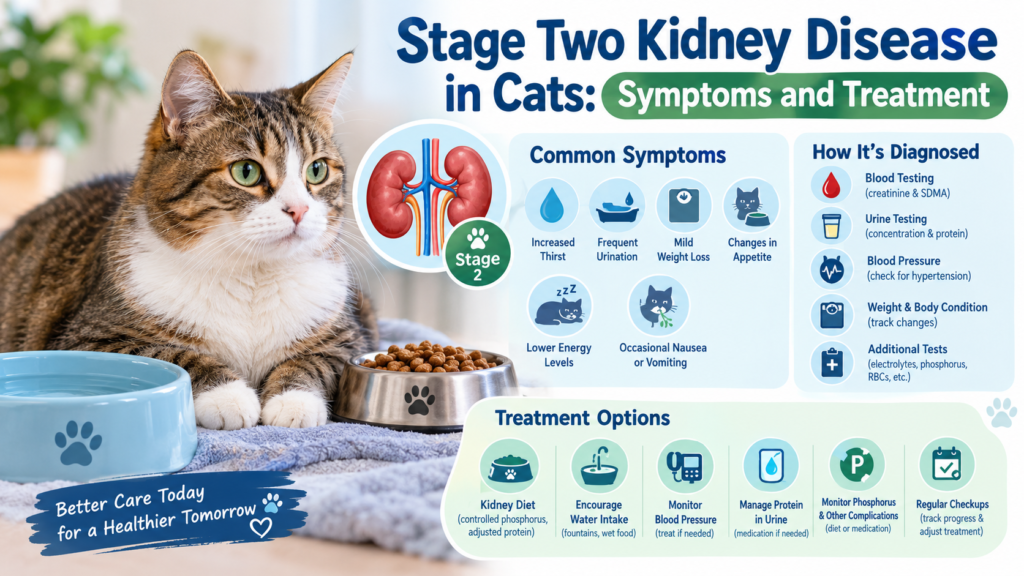
Stage two kidney disease in cats is generally associated with mild chronic kidney dysfunction. At this stage, the kidneys have lost some filtering capacity, but many cats continue to enjoy a good quality of life with appropriate veterinary care.
Some cats develop increased thirst and urination, while others show few noticeable changes. Routine monitoring is especially valuable because gradual changes may be difficult to recognize at home or stages of kidney disease in cats.
What Happens in Stage 2 Kidney Disease?
In the IRIS system, Stage 2 is generally associated with a creatinine concentration of approximately 1.6–2.8 mg/dL in cats, or an SDMA concentration of approximately 18–25 µg/dL when SDMA is used for staging.
These values are guidelines, not a diagnosis on their own. The veterinarian must confirm that kidney disease is present and that the cat is stable and appropriately hydrated. Creatinine and SDMA do not always agree, so the veterinarian may need to interpret both results and investigate further.
At this stage, the kidneys may struggle to concentrate urine effectively. This can cause a cat to lose more water through urination and compensate by drinking more.
Common Symptoms of Stage 2 Kidney Disease
The signs vary from cat to cat, but the following changes may occur.
Increased Thirst
Your cat may visit the water bowl more often or drink noticeably more water than before. Increased thirst is an important sign to discuss with your veterinarian, particularly when it occurs alongside frequent urination.
Frequent Urination
Cats with reduced kidney function may produce larger volumes of dilute urine. You might notice larger clumps in the litter box or find yourself cleaning it more frequently or stages of kidney disease in cats.
Mild Weight Loss
Some cats gradually lose weight because of changes in appetite, underlying illness, or altered metabolism. Weighing your cat regularly can help identify changes that might otherwise go unnoticed.
Changes in Appetite
Your cat may become less interested in food or eat smaller meals. Although appetite loss can have many causes, persistent changes deserve veterinary attention.
Lower Energy Levels
Some cats become less playful or sleep more than usual. These changes are not specific to kidney disease, but they may indicate that your cat is not feeling well.
Occasional Nausea or Vomiting
Some cats experience digestive symptoms as kidney disease progresses. Repeated vomiting, persistent nausea, or refusal to eat should not be dismissed as a normal part of aging.
How Is Stage 2 Kidney Disease Diagnosed?
Veterinarians use a combination of clinical findings and diagnostic tests to evaluate Stage 2 disease.
- Blood testing: Creatinine and SDMA help assess kidney filtration.
- Urine testing: Urine concentration and protein levels provide additional information about kidney function.
- Blood pressure: Measuring blood pressure helps identify hypertension that may require treatment.
- Weight and body condition: Tracking weight helps detect gradual nutritional decline.
- Additional tests: Depending on the results, the veterinarian may check electrolytes, phosphorus, red blood cell counts, or other indicators of complications.
Your veterinarian may repeat tests to confirm that the results are consistent. They will also investigate other conditions that could affect appetite, thirst, urination, or kidney-related measurements or stages of kidney disease in cats.
Treatment Options for Stage 2 Kidney Disease
The main goal is to preserve kidney function where possible, address complications, and maintain good nutrition and hydration.
Consider a Veterinary Kidney Diet
Therapeutic kidney diets are formulated to support cats with chronic kidney disease. They often contain controlled phosphorus, adjusted protein levels, and other nutritional modifications.
Research supports the use of appropriate therapeutic renal diets in many cats with established CKD. However, the best food depends on the cat’s stage, appetite, body condition, and other medical needs.
Introduce a new diet gradually and work with your veterinarian if your cat refuses it. Eating enough is important, and a cat should not be allowed to go without food while you try to change its diet or stages of kidney disease in cats.
Encourage Water Intake
Keep fresh water available throughout the home. Some cats prefer wide bowls, fountains, or water placed away from food and litter boxes.
Wet food can also contribute to daily water intake. Ask your veterinarian whether adding moisture to meals would be suitable for your cat.
Monitor Blood Pressure
High blood pressure can worsen kidney damage and affect organs such as the eyes and brain. If hypertension is diagnosed, your veterinarian may prescribe medication and recommend follow-up measurements.
Manage Protein in the Urine
Some cats with CKD lose excessive protein through their urine. Your veterinarian may recommend further testing and medication when appropriate.
Monitor Phosphorus and Other Complications
Blood phosphorus levels and other laboratory findings help guide treatment. Some cats need additional dietary adjustments or medication, depending on their results.
Schedule Regular Checkups
Follow-up appointments help your veterinarian assess whether kidney function is stable and whether the treatment plan needs to change. The timing depends on your cat’s condition, laboratory results, and response to care.
How to Care for a Cat With Stage 2 Kidney Disease at Home
Daily observation can help you notice changes before they become severe.
- Keep a consistent record of your cat’s appetite and water intake.
- Monitor litter box habits and the amount of urine produced.
- Weigh your cat regularly when possible.
- Offer meals in a quiet, comfortable area.
- Keep water bowls clean and accessible.
- Give prescribed medication exactly as directed.
- Avoid unapproved supplements, home remedies, and human medicines.
- Contact your veterinarian if your cat loses weight, vomits repeatedly, or stops eating.
What Is the Outlook for Stage 2 Kidney Disease?
Many cats with Stage 2 chronic kidney disease can maintain a good quality of life for a considerable period. However, survival time varies widely depending on the individual cat, underlying cause, complications, and response to treatment.
A Stage 2 diagnosis does not automatically mean that a cat is near the end of its life. Consistent veterinary monitoring and a suitable management plan can help identify problems early and support your cat’s comfort or stages of kidney disease in cats.
Stage 3 Kidney Disease Cats: Important Symptoms and Care
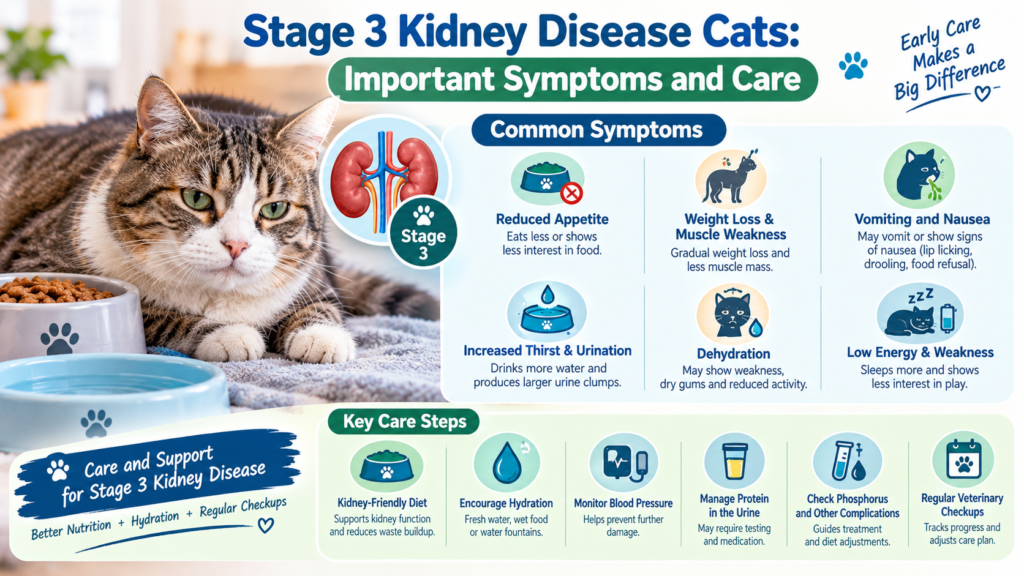
Stage 3 kidney disease cats refers to a moderate level of chronic kidney disease under the International Renal Interest Society (IRIS) staging system. At this stage, the kidneys have lost a significant amount of their filtering ability, and waste products may accumulate in the bloodstream. Cats may begin showing more noticeable symptoms, although the severity varies from one cat to another.
Understanding the stages of kidney disease in cats is important because Stage 3 often requires closer veterinary monitoring, nutritional support, and treatment for complications. With an individualized care plan, some cats can continue to enjoy a comfortable life.
Common Symptoms of Stage 3 Kidney Disease
As kidney function declines, several physical and behavioral changes may develop.
Reduced Appetite
A cat may eat smaller meals or lose interest in food. Waste products accumulating in the bloodstream can contribute to nausea and reduced appetite. Dental disease, other illnesses, and medication side effects may also affect eating.
Weight Loss and Muscle Weakness
Some cats gradually lose body weight and muscle mass. Reduced food intake and changes associated with chronic illness can contribute to this problem. Regular weight checks help owners and veterinarians recognize changes early or stages of kidney disease in cats.
Vomiting and Nausea
Cats with Stage 3 kidney disease may vomit occasionally or show signs of nausea, such as licking their lips, drooling, or approaching food and then refusing to eat. Persistent vomiting requires veterinary attention.
Increased Thirst and Urination
The kidneys may struggle to concentrate urine, causing a cat to lose more water. You may notice larger urine clumps in the litter box and more frequent trips to the water bowl.
Dehydration
Increased urine production, vomiting, and poor food intake can contribute to dehydration. Possible signs include weakness, reduced activity, and dry or tacky gums. A veterinarian should assess suspected dehydration rather than relying on home observations alone.
Low Energy and Weakness
Some cats become less active, sleep more, or show less interest in play. Anemia, dehydration, poor nutrition, and other complications may contribute to these changes or stages of kidney disease in cats.
How Is Stage 3 Kidney Disease Diagnosed?
Veterinarians assess kidney function using blood tests and other diagnostic information. Under the IRIS system, Stage 3 in cats is generally associated with a creatinine concentration of approximately 2.9–5.0 mg/dL or an SDMA concentration of approximately 26–38 µg/dL.
These ranges are used only after chronic kidney disease has been established and the cat is stable and appropriately hydrated. Creatinine and SDMA results may not always match, so veterinarians interpret them alongside the cat’s overall condition and other findings.
Additional tests may include:
- Urinalysis to assess urine concentration and protein.
- Blood pressure measurement.
- Blood tests for phosphorus, potassium, and other electrolytes.
- A complete blood count to check for anemia.
- Urine culture if a urinary infection is suspected.
- Imaging when structural kidney problems or other complications need investigation.
These examinations help the veterinarian identify treatable complications and develop an appropriate management plan.
Treatment Options for Stage 3 Kidney Disease
Treatment aims to maintain hydration and nutrition, manage complications, and preserve quality of life or stages of kidney disease in cats.
Veterinary Kidney Diet
A therapeutic renal diet may help reduce phosphorus intake and provide nutritional support suited to cats with CKD. These diets often contain adjusted protein levels and other nutritional modifications or stages of kidney disease in cats.
Your veterinarian can recommend a suitable food based on your cat’s laboratory results, body condition, appetite, and other medical needs. If your cat refuses a new diet, ask for alternatives instead of allowing it to go without food.
Managing Dehydration
Fresh water should always be available. Some cats may benefit from wet food or additional fluids prescribed by a veterinarian. Depending on the cat’s condition, a veterinarian may recommend fluids under the skin or intravenous fluids.
Fluid treatment must be individualized because excessive fluid administration can be harmful, particularly in cats with heart disease or other conditions or stages of kidney disease in cats.
Controlling Nausea and Vomiting
A veterinarian may prescribe anti-nausea medication or other treatment when needed. Persistent vomiting should not be managed with human medicines or unapproved home remedies.
Managing High Blood Pressure
Hypertension can worsen kidney damage and threaten vision and other organ functions. Blood pressure should be checked regularly, and medication may be prescribed if high blood pressure is confirmed.
Monitoring Phosphorus Levels
Elevated phosphorus may contribute to complications in cats with chronic kidney disease. A veterinarian may recommend dietary changes or a phosphorus-binding medication if appropriate.
Phosphorus binders must be used according to veterinary instructions and generally need to be given with food.
Treating Anemia and Other Complications
Some cats develop anemia or electrolyte disturbances as kidney disease progresses. Treatment depends on the cause and severity of the abnormality and may require additional medication or monitoring.
How to Improve Quality of Life in Stage 3
Owners can support their cats by keeping daily routines comfortable and predictable.
- Provide several accessible sources of clean water.
- Offer small, appealing meals if recommended by your veterinarian.
- Keep litter boxes clean and easy to enter.
- Provide warm, quiet resting places.
- Track appetite, body weight, vomiting, and activity.
- Give prescribed medication as directed.
- Attend scheduled veterinary appointments.
Contact your veterinarian promptly if your cat stops eating, vomits repeatedly, becomes markedly weak, or appears dehydrated. Difficulty breathing, collapse, or inability to pass urine requires emergency veterinary assessment.
Stage 4 Kidney Disease in Cats: Advanced Kidney Failure
Stage 4 is the most advanced category in the IRIS classification of chronic kidney disease. At this point, kidney function is severely reduced, and cats are at greater risk of complications associated with waste accumulation, dehydration, nutritional decline, and electrolyte abnormalities or stages of kidney disease in cats.
The stages of kidney disease in cats help veterinarians understand the severity of the condition, but the stage alone cannot predict exactly how a cat will feel or how long it will live. Each cat’s symptoms, laboratory results, other illnesses, and response to treatment must be considered.
Symptoms of Stage 4 Kidney Disease
Cats with advanced kidney disease may experience several serious symptoms.
Severe Appetite Loss
A cat may eat very little or refuse food because of nausea, weakness, oral discomfort, or other problems. Prolonged inadequate food intake can lead to significant weight and muscle loss or stages of kidney disease in cats.
Frequent Vomiting
Waste accumulation and other complications may contribute to nausea and vomiting. Repeated vomiting can worsen dehydration and requires prompt veterinary attention or stages of kidney disease in cats.
Significant Weight and Muscle Loss
Advanced illness can make it difficult for a cat to maintain body condition. Weight loss should be discussed with a veterinarian because nutritional support may improve comfort.
Marked Weakness and Fatigue
A cat may spend more time resting, stop playing, or struggle with normal activities. Anemia, dehydration, poor nutrition, and electrolyte disturbances may contribute.
Dehydration
Some cats lose large amounts of water through urine while taking in less fluid. Dehydration can worsen weakness and kidney-related abnormalities.
Changes in Behavior
A cat may hide, become less interactive, or show reduced interest in familiar activities. Such changes can indicate discomfort or illness and should be assessed.
How Is Stage 4 Diagnosed?
The IRIS system generally associates Stage 4 feline CKD with a creatinine concentration above 5.0 mg/dL or an SDMA concentration above 38 µg/dL.
These measurements must be interpreted in context, including hydration and clinical stability. A veterinarian may repeat tests and evaluate other findings before assigning a stage.
The assessment may include blood tests, urinalysis, blood pressure measurement, body-weight evaluation, and testing for complications. The goal is to understand both the severity of kidney disease and the problems that can be treated to improve comfort or stages of kidney disease in cats.
Treatment and Supportive Care for Stage 4
Although chronic kidney damage is usually irreversible, supportive treatment may help relieve symptoms and improve comfort.
Control Nausea and Vomiting
Veterinarians may prescribe medication to reduce nausea or vomiting. Treating these symptoms can help some cats eat more comfortably.
Support Hydration
Fluid therapy may be considered when dehydration is present. The appropriate type, amount, and frequency depend on the cat’s condition and other medical problems.
Maintain Nutrition
A suitable renal diet may be helpful, but maintaining adequate food intake is essential. If a cat refuses its prescribed diet, discuss alternative foods or additional nutritional support with your veterinarian.
Manage Blood Pressure and Other Complications
Medication may be required for hypertension, excess protein in the urine, anemia, or other abnormalities. Treatment should be guided by examination and laboratory results.
Discuss Palliative Care
When advanced disease causes ongoing discomfort despite treatment, palliative care can focus on symptom relief, emotional comfort, and the cat’s quality of life. Your veterinarian can help establish realistic treatment goals and explain available options or stages of kidney disease in cats.
When Should You Discuss Quality of Life?
Quality of life should be assessed throughout kidney disease, particularly when symptoms become difficult to control.
Consider keeping a daily record of:
- Appetite and ability to eat.
- Water intake and hydration.
- Vomiting or nausea.
- Mobility and personal grooming.
- Interest in family members and favorite activities.
- Signs of discomfort or distress.
- The number of comfortable days compared with difficult days.
If your cat is persistently distressed, cannot eat comfortably, or no longer enjoys normal activities, discuss the situation openly with your veterinarian. Euthanasia may become a compassionate option when suffering cannot be adequately relieved, but the decision should be based on the individual cat’s condition and quality of life rather than the stage number alone.
How Do Veterinarians Determine the Stages of Kidney Disease in Cats?
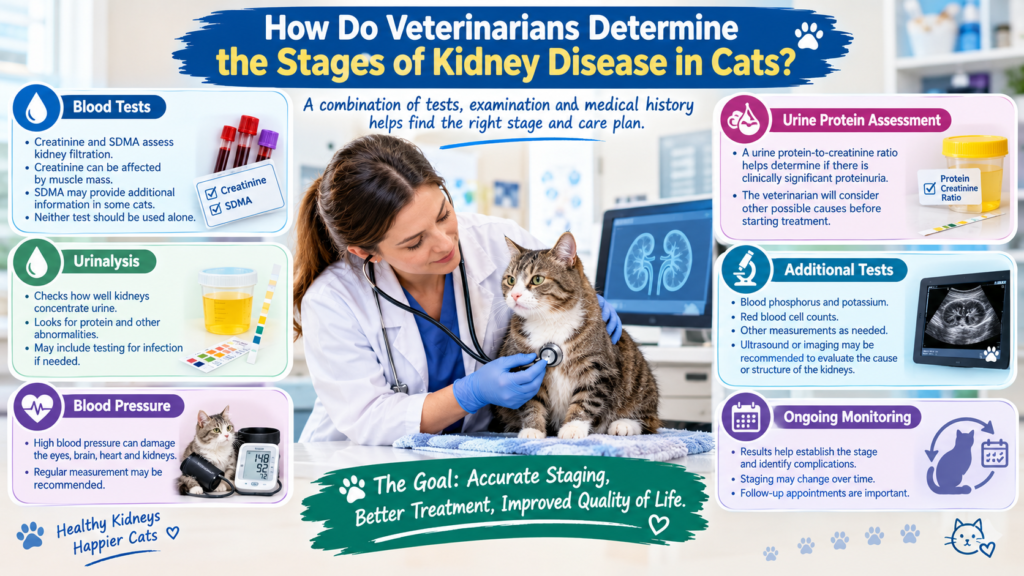
Accurate staging requires more than identifying symptoms. Veterinarians combine laboratory findings with a physical examination and the cat’s medical history or stages of kidney disease in cats.
Blood Tests
Creatinine and SDMA are commonly used to assess kidney filtration. Creatinine can be influenced by muscle mass, while SDMA may provide additional information in some cats. Neither test should be interpreted in isolation.
Urinalysis
Urine testing helps assess how well the kidneys concentrate urine and whether protein or other abnormalities are present. Additional testing may be needed to investigate a suspected infection.
Blood Pressure
High blood pressure is an important complication of CKD. It can damage the eyes, brain, heart, and kidneys, so regular measurement may be recommended or stages of kidney disease in cats.
Urine Protein Assessment
A urine protein-to-creatinine ratio may help determine whether a cat has clinically significant proteinuria. The veterinarian will consider other possible causes before deciding whether treatment is appropriate.
Additional Tests
Depending on the individual cat, the veterinarian may check blood phosphorus, potassium, red blood cell counts, and other measurements. Ultrasound or other imaging may be recommended when the cause or structure of the kidney problem needs further evaluation.
The results help establish the stage and identify complications that may need treatment. Staging may change over time, which is why follow-up appointments are important or stages of kidney disease in cats.
Treatment Options for Different Stages of Kidney Disease in Cats
Treatment depends on the stage, symptoms, underlying cause, and other health conditions.
Stage 1 and Stage 2
Early management may include regular monitoring, appropriate nutrition, access to fresh water, and treatment of identifiable problems such as hypertension or urinary abnormalities.
Stage 3
Cats may need closer monitoring, dietary management, treatment for nausea, and individualized support for hydration, blood pressure, phosphorus levels, or anemia.
Stage 4
Treatment often emphasizes controlling symptoms, addressing complications, maintaining nutrition when possible, and protecting quality of life. Some cats benefit from supportive care, while others may require a discussion about comfort-focused treatment or stages of kidney disease in cats.
Why Regular Veterinary Monitoring Matters
The needs of a cat with CKD can change over time. Repeat testing helps veterinarians determine whether the current treatment is working and whether adjustments are necessary.
Never start, stop, or change prescribed medication without veterinary guidance.
How to Help a Cat Live Comfortably With Kidney Disease
Home care plays an important role in supporting cats with chronic kidney disease.
Provide Fresh Water
Place clean water bowls in convenient locations. Some cats prefer fountains or wide bowls, while others drink more when water is kept away from food and litter boxes.
Follow a Suitable Feeding Plan
Ask your veterinarian which diet is appropriate for your cat. Offer food in a quiet location, and report persistent appetite changes or weight loss.
Keep the Litter Box Accessible
Cats with kidney disease may urinate more frequently. A clean litter box with easy access can make daily life more comfortable, especially for older cats with mobility problems.
Monitor Changes at Home
Track appetite, drinking, urination, body weight, activity, and vomiting. These observations can help your veterinarian identify changes between appointments or .
Reduce Stress
Maintain familiar routines, provide comfortable bedding, and allow your cat to rest in a quiet place. Gentle interaction and easy access to favorite resting areas may improve comfort.
Give Medication Correctly
Follow the prescribed schedule and ask your veterinarian about practical ways to administer medication if your cat resists it. Avoid human painkillers, herbal remedies, or supplements unless specifically approved for your cat.
When Should You Worry About Kidney Disease in Cats?
Some changes require urgent veterinary attention, regardless of the stage.
Seek prompt veterinary advice if your cat has:
- Repeated vomiting or persistent refusal to eat.
- Noticeable weight loss or worsening weakness.
- Signs of dehydration.
- Sudden changes in drinking or urination.
- Blood in the urine or painful urination.
Seek emergency veterinary care if your cat has difficulty breathing, collapses, becomes unresponsive, or repeatedly strains without producing urine. Inability to pass urine may indicate a life-threatening urinary obstruction rather than kidney disease alone.
Do not wait for a scheduled kidney checkup if your cat suddenly becomes seriously unwell.
Frequently Asked Questions About the Stages of Kidney Disease in Cats
What Are the Four Stages of Kidney Disease in Cats?
The four IRIS stages range from Stage 1, where kidney disease may be detectable despite relatively normal routine blood markers, to Stage 4, where kidney function is severely reduced. Veterinarians use blood tests and other findings to assign the stage or stages of kidney disease in cats.
How Long Can a Cat Live With Stage 2 Kidney Disease?
There is no single life expectancy for Stage 2 CKD. Some cats remain stable for a considerable period, while others progress more quickly. Age, other illnesses, laboratory results, and response to treatment all influence the outlook.
What Are the Symptoms of Stage 3 Kidney Disease in Cats?
Possible symptoms include reduced appetite, weight loss, vomiting, increased thirst, frequent urination, dehydration, and weakness. Some cats show fewer signs, so veterinary testing remains important.
Can Cats Recover From Chronic Kidney Disease?
Chronic kidney damage is generally irreversible, although appropriate management can help control complications and maintain quality of life. Acute kidney injury is a different condition and may sometimes improve with treatment, depending on its cause and severity or stages of kidney disease in cats.
What Is the Best Food for Cats With Kidney Disease?
A veterinary therapeutic renal diet is often recommended for cats with established CKD because it provides carefully adjusted phosphorus and other nutrients. Your veterinarian can help choose a suitable food, particularly if your cat has a poor appetite or another medical condition.
Does Kidney Disease Always Get Worse in Cats?
Not necessarily at the same rate. Chronic kidney disease is usually progressive, but some cats remain stable for long periods. Monitoring and individualized treatment may help manage the condition and address complications.
How Can I Tell if My Cat’s Kidney Disease Is Progressing?
Possible signs include increasing thirst and urination, weight loss, reduced appetite, vomiting, or lower activity levels. However, symptoms alone cannot confirm progression. Follow-up blood and urine tests help determine whether kidney function or complications have changed.
Is Stage 4 Kidney Disease Always Fatal Immediately?
No. Stage 4 is severe, but it does not provide an exact timeline for an individual cat. Prognosis depends on the cat’s overall condition, complications, and response to supportive care. Your veterinarian can help you understand treatment options and assess quality of life.
Conclusion: Managing the Stages of Kidney Disease in Cats
Understanding the stages of kidney disease in cats helps owners recognize the importance of early diagnosis, appropriate treatment, and continued veterinary monitoring. Stage 1 may cause few visible changes, Stage 2 often involves mild kidney dysfunction, Stage 3 can produce more noticeable symptoms, and Stage 4 represents advanced disease that may require intensive supportive care or stages of kidney disease in cats.
Every cat is different, and the stage alone cannot determine its prognosis. Blood and urine tests, blood pressure measurements, nutritional status, and overall comfort all contribute to treatment decisions or stages of kidney disease in cats.
If your cat has chronic kidney disease, work closely with your veterinarian to create a practical care plan. Monitor appetite, weight, hydration, and behavior at home, and seek prompt care when symptoms worsen. With thoughtful management and attention to quality of life, you can help your cat receive the care and comfort it needs.
Medical note: This article provides general educational information and does not replace a veterinary examination or individualized treatment advice or stages of kidney disease in cats.
Fix the title and heading grammar Reduce repetitive kidney disease sections
1 Comment