

 By
Stop Cats Jumping on Counters: 8 Smart Training Tips That Work
Introduction
Cats are naturally curious animals that enjoy climbing, exploring, and observing their surroundings from elevated places. Unfortunately, this behavior can become frustrating when your cat repeatedly jumps onto kitchen counters, dining tables, or food preparation surfaces. Counter-jumping can also create hygiene concerns when cats walk near food, dishes, and cooking equipment.
Learning how to train cats to stay off counters requires patience, consistency, and an understanding of why cats enjoy these spaces. Simply telling your cat to get down may not solve the problem because the counter might provide something rewarding, such as food smells, attention, or a comfortable place to observe the household.
The good news is that you can encourage better habits without frightening or punishing your pet. By removing tempting items, rewarding appropriate behavior, and providing attractive alternatives, you can help your cat learn which places are acceptable.
In this guide, we will explore the reasons cats jump on counters and explain practical techniques for changing this behavior. You will discover how positive reinforcement works, why alternative climbing areas matter, and how to establish consistent household rules.
Whether you have a playful kitten or an adult cat with an established counter-jumping habit, these strategies can help you create a cleaner and more comfortable home for everyone.
How to Train Cats to Stay Off Counters: Understand Why Cats Jump
Before you begin training, it is important to understand why your cat keeps jumping onto counters. Cats rarely choose elevated surfaces without a reason. These areas may offer food, security, entertainment, or a better view of their surroundings.
Understanding the motivation behind the behavior makes it easier to choose the right solution. Effective how to train cats to stay off counters methods focus on preventing unwanted rewards while giving your cat better ways to satisfy its natural instincts.
Why Cats Naturally Enjoy Elevated Places
Cats often prefer elevated spaces because height allows them to observe their environment. A kitchen counter may provide a clear view of people, other pets, windows, and nearby activities.
Height can also make cats feel secure. From an elevated position, they can watch what happens around them while maintaining some distance from household activity.
This instinct is not necessarily a sign of disobedience. Climbing is a normal feline behavior, so trying to eliminate it completely may lead to frustration.
Instead, provide acceptable climbing opportunities, such as a sturdy cat tree, a suitable shelf, or a secure window perch. Position these alternatives where your cat can comfortably observe the household without needing to jump onto food preparation surfaces.
Food Smells and Accessible Treats
Food is one of the most common reasons cats investigate kitchen counters. Even a small amount of leftover chicken, fish, butter, or another appealing ingredient can encourage repeated visits.
Cats have a strong sense of smell, and they may investigate counters even when you cannot see any food. Crumbs, dirty dishes, open containers, and uncovered rubbish can all attract attention.
If your cat occasionally discovers something tasty on the counter, it may learn that jumping up is worth trying again or how to train cats to stay off counters.
To reduce this motivation, store food securely, clean spills promptly, and avoid leaving meals unattended. Never leave ingredients or cooked food near a hot stove where a curious cat could be injured.
Removing food rewards is an essential part of how to train cats not to jump on counters. When the counter no longer provides an appealing reward, your cat has less reason to keep returning.
Attention-Seeking Behavior
Some cats jump onto counters because they know the behavior gets an immediate reaction. If you shout, chase your cat, or repeatedly pick it up, your pet may interpret the interaction as attention.
Even negative attention can sometimes reinforce an unwanted habit, particularly when a cat is bored or seeking interaction.
Instead of reacting dramatically, remain calm. If your cat jumps onto the counter, guide it toward an approved surface when safe and reward it for using that alternative.
You should also provide regular positive attention when your cat is resting appropriately, playing with toys, or using its cat tree.
This approach teaches your pet that desirable behavior is more likely to earn attention than counter-jumping.
Boredom and Lack of Enrichment
A cat without enough physical activity or mental stimulation may explore counters simply because they are interesting. Kitchen surfaces often contain new smells, objects, and opportunities to investigate.
Indoor cats especially benefit from activities that allow them to climb, scratch, chase toys, and explore their surroundings.
Try introducing short interactive play sessions throughout the day. Wand toys, puzzle feeders, scratching posts, and safe climbing structures can help keep your cat occupied.
Rotate toys occasionally to maintain interest, and provide opportunities for your cat to watch birds or observe outdoor activity through a secure window.
When your cat has suitable ways to stay active, counter-jumping may become less rewarding.
Look for Patterns in Your Cat’s Behavior
Observe when your cat usually jumps onto counters. Does it happen while you prepare meals, when everyone is asleep, or when your cat wants attention?
These patterns can help identify the cause.
For example:
- If your cat jumps up during meal preparation, food smells may be the main attraction.
- If it jumps up whenever you enter the kitchen, attention or curiosity may be involved.
- If it frequently explores counters at night, boredom or a lack of alternative activities may contribute.
- If it prefers one particular counter, that location may offer an appealing view or resting spot.
Once you understand the reason, you can make targeted changes instead of relying on repeated corrections.
How to Train Cats Not to Jump on Counters: Remove Temptations
One of the easiest ways to reduce counter-jumping is to make the surface less rewarding. Training works best when your cat is not repeatedly discovering food, interesting objects, or other attractions on the counter.
Learning how to train cats not to jump on counters involves changing the environment as well as teaching new behaviors.
Keep Food Out of Reach
Never leave food unattended on kitchen counters if your cat is likely to investigate it. Put leftovers in secure containers and store ingredients in cupboards or the refrigerator or how to train cats to stay off counters.
Pay special attention to meat, fish, dairy products, and other foods that may attract your pet. Some human foods are unsafe for cats, so preventing access is important for both training and health.
If you are preparing a meal, consider offering your cat a food puzzle or another suitable activity in a separate area.
Avoid giving your cat scraps directly from the counter. Even if the food is safe, doing so may teach your pet that approaching the counter leads to a reward.
Instead, offer appropriate treats in a designated location away from the kitchen work surface.
Clean Counters and Dirty Dishes
Cats may continue exploring a counter even after the main meal has been removed. Food residue and lingering smells can make the area interesting.
Wipe counters after preparing food, clean up crumbs, and wash dirty dishes promptly. Keep sponges, wrappers, and food packaging out of reach if they attract your cat.
Use cleaning products according to their labels and allow surfaces to dry before preparing food again. Keep potentially hazardous cleaning chemicals securely stored.
A clean counter is less likely to reward your cat’s curiosity. This makes it easier to establish a new habit of staying on the floor or using an approved perch.
Secure Rubbish Bins
An accessible rubbish bin can encourage cats to investigate kitchen areas. Food wrappers, discarded meat, and other waste may have strong smells that attract curious pets.
Choose a bin with a secure lid and keep it in a location your cat cannot easily open or overturn.
Dispose of food waste promptly, particularly when it contains ingredients that could be harmful to cats. Do not rely on a lightweight lid if your cat can push it aside.
Reducing access to rubbish removes another reason for your cat to explore nearby counters.
Remove Tempting Objects
Cats may jump onto counters to investigate moving objects, plants, packaging, or items that resemble toys.
Keep small objects, dangling strings, rubber bands, and other potentially dangerous items stored safely. Some plants and household products can also be toxic to cats, so check their safety before keeping them in accessible areas or how to train cats to stay off counters.
Avoid leaving objects on counters that your cat can knock down or play with. These discoveries can make the surface more interesting and encourage repeated visits.
A simple, uncluttered counter provides fewer opportunities for unwanted exploration.
Avoid Unsafe Deterrents
Do not use methods that could injure or frighten your cat. Sticky substances, unstable objects, sharp items, exposed electrical devices, and hot surfaces can create unnecessary risks.
Avoid placing anything on the counter that might fall onto your cat or cause a dangerous reaction when touched.
Instead, focus on prevention, reward-based training, and safe alternatives. These methods help change the environment without putting your pet at risk.
How to Train a Cat Not to Jump on Counters With Positive Reinforcement
Positive reinforcement means rewarding a behavior you want your cat to repeat. Rather than focusing only on correcting counter-jumping, teach your cat what to do instead.
When learning how to train a cat not to jump on counters, remember that your goal is not simply to remove your cat from the surface. You want to encourage a reliable alternative, such as staying on the floor or resting on a designated perch.
Reward Your Cat for Keeping All Four Paws on the Floor
Start by noticing when your cat is near the kitchen counter but remains on the floor. If your cat looks at the counter and chooses not to jump, offer a small treat or calm praise.
At first, reward even brief moments of appropriate behavior. Your cat does not need to remain in one place for a long time to begin learning or how to train cats to stay off counters.
Gradually reward longer periods of staying on the floor or choosing an alternative resting area.
Use treats in moderation and account for them in your cat’s daily food allowance. You can also use a favorite toy or another reward your cat enjoys.
The important point is to reward the behavior you want before your cat jumps onto the counter.
Introduce a Consistent Cue
You can teach a simple cue, such as “floor” or “down,” to help guide your cat away from an unwanted surface.
Choose one word and use it consistently. Say the cue calmly, encourage your cat toward the floor or an approved perch, and reward the desired movement.
Avoid shouting or repeating the word continuously. Your cat needs an opportunity to understand the cue and respond.
If your cat is already on the counter, you can encourage it to move to a safe alternative using a treat or toy. Reward your cat after it reaches the appropriate location.
Over time, consistent practice may help your cat respond more readily. However, a cue works best when it has been taught through repetition and positive reinforcement.
Teach Your Cat Where to Go Instead
Simply telling a cat to get down may not be enough if the counter offers something your pet wants. Teaching an alternative behavior gives your cat a clear choice.
For example, place a cat tree or sturdy perch near the area where your cat frequently jumps. Encourage your cat to use it, then reward the behavior.
You can also teach your cat to go to a specific mat or resting spot while you prepare meals. Begin practicing when the kitchen is quiet, then gradually introduce normal activities.
Reward your cat for staying in the approved location. If it leaves, calmly guide it back and reward another successful attempt.
This method works particularly well when the alternative provides something the counter previously offered, such as height, attention, or a view.
Avoid Chasing or Physically Forcing Your Cat
Chasing your cat around the kitchen may turn counter-jumping into an exciting game. It can also increase stress and make your pet more likely to avoid you.
Do not grab, shove, or frighten your cat. Instead, use a calm cue and encourage movement toward a safe surface.
If your cat is near a hot stove or another immediate hazard, prioritize safety and calmly move it away without risking injury to either of you.
Outside emergencies, focus on teaching the desired behavior before problems occur. Rewarding appropriate choices is generally more effective than reacting after every mistake.
Make Rewards Consistent
Everyone in your household should understand which behaviors earn rewards. If one person feeds the cat from the counter while another tries to prevent jumping, the cat may continue testing the rule.
Agree on a simple routine: keep counters clear, reward your cat for staying in approved areas, and avoid providing food or attention directly on the counter.
Consistency helps your cat recognize the pattern. Although progress may take time, regular practice makes the desired behavior easier to maintain.
Training Cats to Stay Off Counters: Create Better Alternatives
Cats need opportunities to climb, observe, rest, and explore. If your kitchen counter is one of the few elevated surfaces available, your cat may continue choosing it despite your efforts.
An important part of training cats to stay off counters is providing attractive alternatives that satisfy the same needs.
Provide a Sturdy Cat Tree
A cat tree gives your pet an approved place to climb, rest, and observe the household. Choose one with a stable base and platforms suitable for your cat’s size and mobility.
Position the tree in a location your cat enjoys. A place near a window or in a commonly used room may be more attractive than an isolated corner.
Encourage exploration with treats or toys, and reward your cat when it uses the tree independently.
If your cat is accustomed to jumping onto a particular counter, a nearby cat tree may offer a more appropriate way to reach a similar height. Make sure the tree cannot tip over when your cat climbs.
Install a Safe Window Perch
Many cats enjoy looking outside, watching birds, and observing activity around the home. A secure window perch can provide this stimulation without requiring access to kitchen counters.
Choose a product designed for your window type and follow the installation instructions carefully. Check that the perch is firmly attached and that the window itself is secure or Stop Cats Jumping on Counters.
Avoid placing the perch near dangerous gaps or windows that could allow your cat to escape.
If your cat enjoys watching outdoor activity, this alternative may become a preferred resting place. Reward your cat for using it, especially when it chooses the perch instead of a counter.
Make Approved Resting Places Comfortable
A climbing structure is more likely to be used when it offers something your cat enjoys. Add a comfortable resting surface, a suitable scratching area, or a favorite toy.
Some cats prefer enclosed spaces, while others like open platforms where they can watch household activity.
Observe your cat’s preferences and adjust the alternatives accordingly. You may need to try different locations before discovering which one your pet prefers.
Do not place food on a counter as a reward for staying off it. Instead, offer treats or meals in an appropriate feeding area.
Reward Your Cat for Using Alternatives
Whenever your cat chooses an approved perch, cat tree, or resting mat, reinforce the behavior with a small reward.
You can also encourage your cat to use the alternative before preparing food. This creates a predictable routine and gives your pet something appropriate to do.
If your cat jumps onto the counter, calmly redirect it and reward the alternative behavior. Avoid turning the process into a chase or a prolonged struggle.
Over time, your cat may begin choosing the approved space more often because it provides a comfortable place to climb and receive positive attention.
Match Alternatives to Your Cat’s Needs
Different cats prefer different environments. A young, energetic cat may enjoy a tall climbing tower, while an older cat may benefit from a low platform that is easier to reach.
For cats with limited mobility, provide stable surfaces and avoid requiring high jumps. If your cat suddenly stops climbing or seems uncomfortable when jumping, consult a veterinarian to check for possible pain or other health concerns.
The most effective alternative is one your cat can use safely and enjoys visiting regularly.
By combining suitable climbing spaces with positive reinforcement, you can support your cat’s natural behavior while keeping kitchen counters reserved for food preparation.
How to Train Cats to Stay Off Counters With Consistent Household Rules
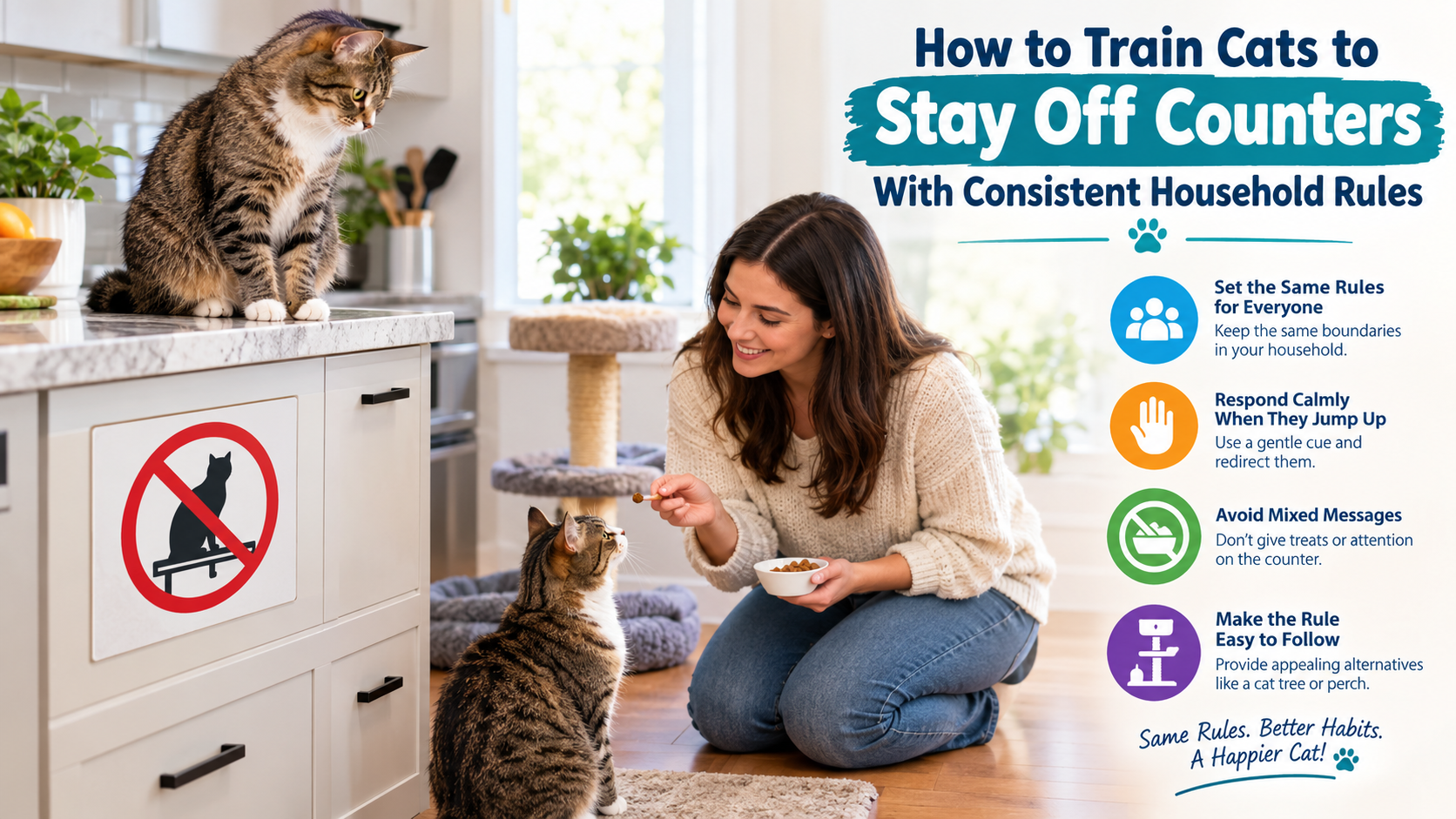
Consistency is one of the most important factors when teaching your cat where it is allowed to go. If your cat is discouraged from jumping onto kitchen counters one day but allowed to explore them the next, it may struggle to understand the rule.
Learning how to train cats to stay off counters requires everyone in the household to follow the same approach. Clear boundaries, calm redirection, and rewards for appropriate behavior can help your cat develop better habits over time.
Establish the Same Rules for Everyone
Start by deciding which surfaces are off-limits. If kitchen counters and dining tables are not permitted, make sure every family member follows the same rule.
Avoid allowing your cat onto the counter just because it looks cute or because you want to give it a treat. Even occasional rewards can encourage your cat to keep trying.
Instead, offer treats on the floor, on a designated mat, or near an approved cat tree. This teaches your cat where positive experiences are supposed to happen or Stop Cats Jumping on Counters.
If several people care for your cat, explain the training routine to everyone. Consistency makes it easier for your pet to recognize which behaviors earn rewards.
Respond Calmly When Your Cat Jumps Up
If you see your cat on the counter, remain calm. Avoid shouting, chasing, or making sudden movements that could frighten your pet.
Use a familiar cue, such as “down,” if you have taught your cat to respond to it. Otherwise, gently encourage your cat to move toward the floor or an approved perch.
Reward your cat after it reaches the appropriate location. This reinforces the behavior you want instead of making the interaction a frightening experience.
If your cat is near a hot stove, sharp utensil, or another immediate hazard, prioritize safety and move it away carefully.
Avoid Sending Mixed Messages
Cats learn through repeated experiences. If jumping onto the counter sometimes results in food, play, or attention, your cat may continue testing the boundary.
Never feed your cat directly from the counter or use the counter as a regular resting place if your goal is to keep it off that surface.
Instead, create a consistent feeding routine and provide comfortable alternatives. You can also reward your cat for remaining in a designated spot while you prepare meals.
Make the Rule Easy to Follow
Your cat should have an appealing alternative whenever you expect it to avoid a counter. A nearby cat tree, comfortable perch, or resting mat can make the rule easier to follow.
Practice the routine when the kitchen is quiet before introducing more distractions. Gradually reward your cat for staying in the approved location while you perform ordinary activities.
Consistency does not mean correcting your cat every few seconds. It means arranging the environment, rewarding the right behavior, and calmly repeating the same process.
Can I Still Train a Cat With Discipline? Use Humane Training Methods
Many owners wonder, can i still train a cat with discipline when their pet repeatedly ignores household rules. The answer is yes, but effective discipline should mean teaching and guiding behavior rather than frightening or hurting your cat.
Cats do not necessarily understand punishment in the way people expect. Harsh reactions may make them fearful without teaching them which alternative behavior is desirable.
Understand Discipline Versus Punishment
Humane discipline focuses on establishing clear expectations and rewarding appropriate behavior. Punishment attempts to stop behavior through unpleasant consequences.
For example, if your cat jumps onto the kitchen counter, you can calmly guide it toward a designated perch and reward it for using that space.
This teaches your cat what to do instead of simply making the unwanted behavior unpleasant.
When learning how to train a cat not to jump on counters, concentrate on prevention, redirection, and rewards. These techniques help your cat learn without damaging the trust between you.
Avoid Yelling, Hitting, and Frightening Deterrents
Shouting, hitting, chasing, and deliberately frightening your cat can increase stress and may cause it to avoid you.
Spraying water is also not a reliable long-term training strategy. Your cat may simply learn to avoid jumping when you are present rather than understanding that the counter is off-limits.
Avoid dangerous deterrents such as unstable objects, sharp items, hot surfaces, or electrical devices.
Instead, remove food temptations, provide suitable climbing alternatives, and reward your cat for choosing acceptable locations.
Redirect Unwanted Behavior
Redirection means guiding your cat toward an appropriate activity or location.
For example, if your cat begins preparing to jump onto a counter, you can encourage it to use a nearby cat tree or perch. Reward it when it chooses the alternative.
You can also provide interactive play or a puzzle feeder if your cat is looking for stimulation.
The key is timing. Redirecting your cat before it jumps may be easier than responding after it has already settled on the counter.
If your cat is already on the surface, remain calm and guide it away safely.
Reward the Behavior You Want
Positive reinforcement helps your cat understand which actions lead to good outcomes.
Reward your cat for:
- Staying on the floor near the kitchen.
- Using a designated cat tree or perch.
- Remaining on a resting mat while you prepare food.
- Responding to a familiar cue.
- Choosing an approved location independently.
Use small treats, praise, or play according to your cat’s preferences. As your cat becomes more consistent, you can vary the rewards while continuing to reinforce the desired behavior.
When to Seek Professional Help
If counter-jumping is accompanied by anxiety, aggression, destructive behavior, or other significant changes, consider speaking with a veterinarian.
A veterinarian can check for health issues that may affect behavior. A qualified feline behavior professional can also help you develop a suitable training plan when the problem persists despite consistent efforts.
How to Train Cats Not to Jump on Counters When You Are Away
Training does not stop when you leave home. Cats may continue exploring counters when nobody is present, particularly if food, interesting objects, or appealing views remain accessible.
Understanding how to train cats not to jump on counters while you are away involves combining the training you practice at home with sensible environmental management.
Remove Food and Other Temptations
Before leaving, clear food from kitchen counters and store ingredients securely. Wash or place dirty dishes where your cat cannot investigate them, and wipe away food residue.
Secure rubbish bins and keep potentially hazardous items out of reach.
These simple habits reduce the chance that your cat will discover a rewarding reason to jump onto the counter while you are gone or Stop Cats Jumping on Counters.
Remember that even a small food reward can encourage repeated behavior. Prevention is especially important when you cannot supervise your cat or Stop Cats Jumping on Counters.
Provide Safe Activities
Cats need mental and physical stimulation, even when their owners are away. Provide appropriate toys, scratching posts, comfortable resting places, and safe climbing structures.
Food puzzles can be useful for some cats, provided they are suitable for your pet and do not interfere with any prescribed feeding plan.
Rotate toys occasionally to maintain interest. If your cat enjoys looking outside, consider a secure window perch where it can observe outdoor activity.
These alternatives help reduce boredom and give your cat acceptable ways to explore.
Make Approved Areas More Attractive
Before leaving, encourage your cat to use its designated perch or cat tree. You can reward the behavior and provide a comfortable resting spot.
If your cat usually jumps onto a particular counter to watch you or observe the room, consider placing an approved perch nearby that offers a similar view or Stop Cats Jumping on Counters.
The alternative should be stable, comfortable, and easy for your cat to access.
Use Environmental Management Instead of Harmful Deterrents
Do not leave hazardous deterrents on counters while you are away. Unstable objects, sticky substances, exposed electrical devices, and anything that could fall may cause injury.
Instead, keep the surfaces clear and make alternative spaces available.
If you choose to use a commercial deterrent, ensure it is specifically designed for the intended environment and safe for cats. Never rely on a deterrent that could expose your pet to toxic substances or physical harm.
Understand That Training Takes Time
Your cat may continue jumping onto counters for a while, especially if the behavior has been rewarded in the past or Stop Cats Jumping on Counters.
Do not assume the training has failed because you cannot supervise every moment. Focus on reducing opportunities for unwanted behavior and rewarding appropriate choices when you are home.
With consistent management, your cat may gradually become more likely to use approved spaces.
Training Cats to Stay Off Counters: Build a Daily Routine
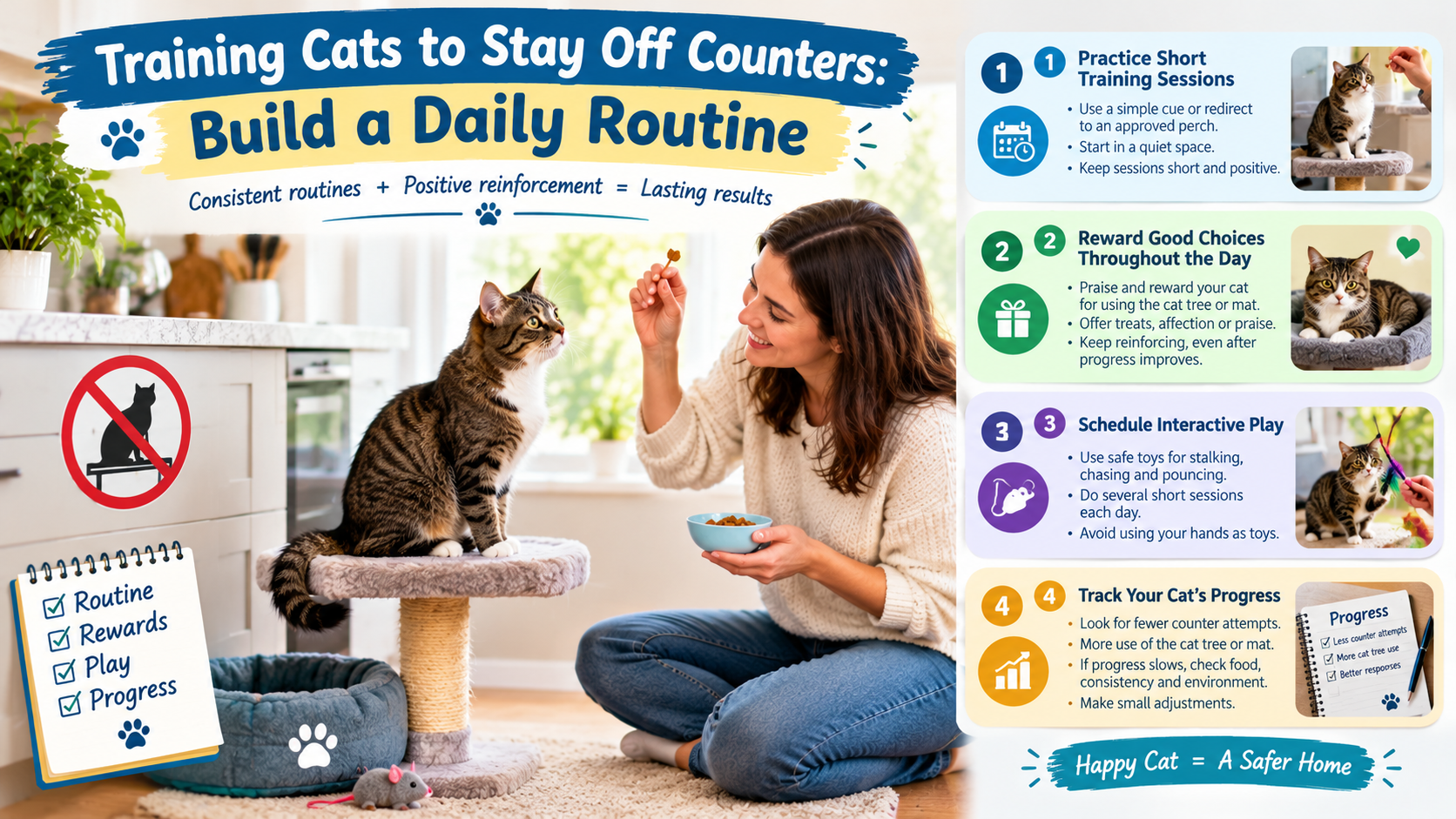
A simple daily routine can help reinforce the habits you want your cat to develop. Regular practice, suitable enrichment, and consistent rewards make it easier to maintain progress.
Successful training cats to stay off counters is not about constant correction. It is about building an environment where your cat can meet its needs without relying on kitchen counters.
Practice Short Training Sessions
Spend a few minutes each day practicing your chosen cue or encouraging your cat to use an approved perch or Stop Cats Jumping on Counters.
Begin in a quiet environment. Reward your cat for remaining on the floor or moving to the designated location.
Gradually introduce normal kitchen activities, such as preparing food or washing dishes. If your cat becomes distracted, return to an easier stage and practice again later.
Short sessions are usually more manageable than long, repetitive exercises.
Reward Good Choices Throughout the Day
Training opportunities occur naturally during everyday activities.
If your cat chooses its cat tree instead of jumping onto the counter, reward that choice. If it stays on its mat while you prepare a meal, offer praise or another suitable reward.
You do not need to provide a treat every time forever, but frequent reinforcement is helpful while the behavior is new or Stop Cats Jumping on Counters.
Continue offering occasional rewards after your cat improves so the alternative remains worthwhile.
Schedule Interactive Play
Play can help satisfy your cat’s natural hunting and chasing instincts. Use suitable toys that allow your cat to stalk, chase, and pounce safely.
Several short play sessions may be more engaging than one long session. Adjust the schedule to your cat’s age, energy level, and health.
Avoid using your hands as toys, and put away toys with strings or small detachable parts when they are not supervised.
A cat that has appropriate outlets for activity may be less motivated to explore counters out of boredom.
Track Your Cat’s Progress
Pay attention to changes in your cat’s behavior. You might notice fewer attempts to jump onto the counter, more frequent use of the cat tree, or better responses to a cue.
If progress slows, review the environment. Check whether food has been left accessible, household rules have become inconsistent, or the alternative resting area is no longer appealing.
Make small adjustments rather than changing every part of the routine at once.
Be Patient With Established Habits
A cat that has jumped onto counters for months or years may need additional time to learn a new routine.
Continue removing temptations, rewarding appropriate behavior, and providing alternatives. Avoid expecting perfect results immediately.
Consistency is more important than the number of corrections you make.
Common Mistakes to Avoid When Training Cats to Stay Off Counters
Even well-intentioned owners can make mistakes that slow progress. Avoiding these common problems can make training more effective.
Punishing Your Cat After the Fact
If you discover your cat on the counter after returning home, punishment will not teach it what it should have done earlier or Stop Cats Jumping on Counters.
Instead, prepare the environment before leaving and reinforce appropriate behavior when you are present.
Using Inconsistent Household Rules
If one family member permits counter access while another prevents it, your cat may continue trying.
Make sure everyone follows the same boundaries and uses the same cues.
Leaving Food Accessible
Food residue, leftovers, and dirty dishes can reward counter-jumping. Clean the surfaces regularly and store food securely.
Providing No Suitable Alternatives
Cats naturally seek elevated places. Without appropriate climbing areas, they may keep choosing counters or Stop Cats Jumping on Counters.
Provide stable cat trees, secure perches, and comfortable resting places that meet your cat’s needs.
Expecting Immediate Results
Changing a long-standing habit takes time. Reward small improvements and continue practicing consistently.
Using Unsafe Deterrents
Avoid anything that could injure, poison, trap, or frighten your cat. Choose prevention and reward-based training instead.
Frequently Asked Questions About How to Train Cats to Stay Off Counters
Can You Train an Older Cat to Stay Off Counters?
Yes. Adult and senior cats can learn new habits with patience, consistent boundaries, and positive reinforcement or Stop Cats Jumping on Counters.
Provide alternatives that match your cat’s mobility. If an older cat suddenly stops jumping or seems uncomfortable moving, consult a veterinarian to check for pain or another health problem.
How Long Does It Take to Train a Cat Not to Jump on Counters?
The timeline varies according to your cat’s personality, previous experiences, and environment.
Some cats may show improvement within a few weeks, while others may need longer. Consistent household rules, clean counters, and rewarding alternatives can help support progress.
How Do You Keep Cats Off Counters When You Are Not Home?
Remove food, clean surfaces, secure rubbish, and provide safe enrichment. A cat tree, window perch, or suitable toy can offer alternatives while you are away.
Avoid leaving dangerous deterrents on the counter. Environmental management is particularly important when you cannot supervise your cat.
Can I Still Train a Cat With Discipline?
Yes, but discipline should focus on teaching rather than punishment. Calm redirection, clear boundaries, and rewards for appropriate behavior are generally better choices than shouting or frightening your cat.
Should I Spray My Cat With Water to Stop Counter-Jumping?
Spraying water is not recommended as a primary training method. It can cause stress and may teach your cat to avoid jumping only when you are nearby.
A better approach is to remove temptations, reward appropriate behavior, and provide attractive alternative spaces.
Why Does My Cat Keep Jumping on Counters After Training?
Your cat may still find food smells, attention, or elevated views rewarding. Inconsistent rules or a lack of suitable alternatives can also contribute.
Review your routine, remove temptations, and continue rewarding the behavior you want. If the behavior changes suddenly or appears linked to distress, consult your veterinarian.
Conclusion: How to Train Cats to Stay Off Counters Successfully
Learning how to train cats to stay off counters takes patience, consistency, and an understanding of your cat’s natural instincts. Cats jump onto counters for several reasons, including curiosity, food smells, attention, and the desire to reach elevated spaces.
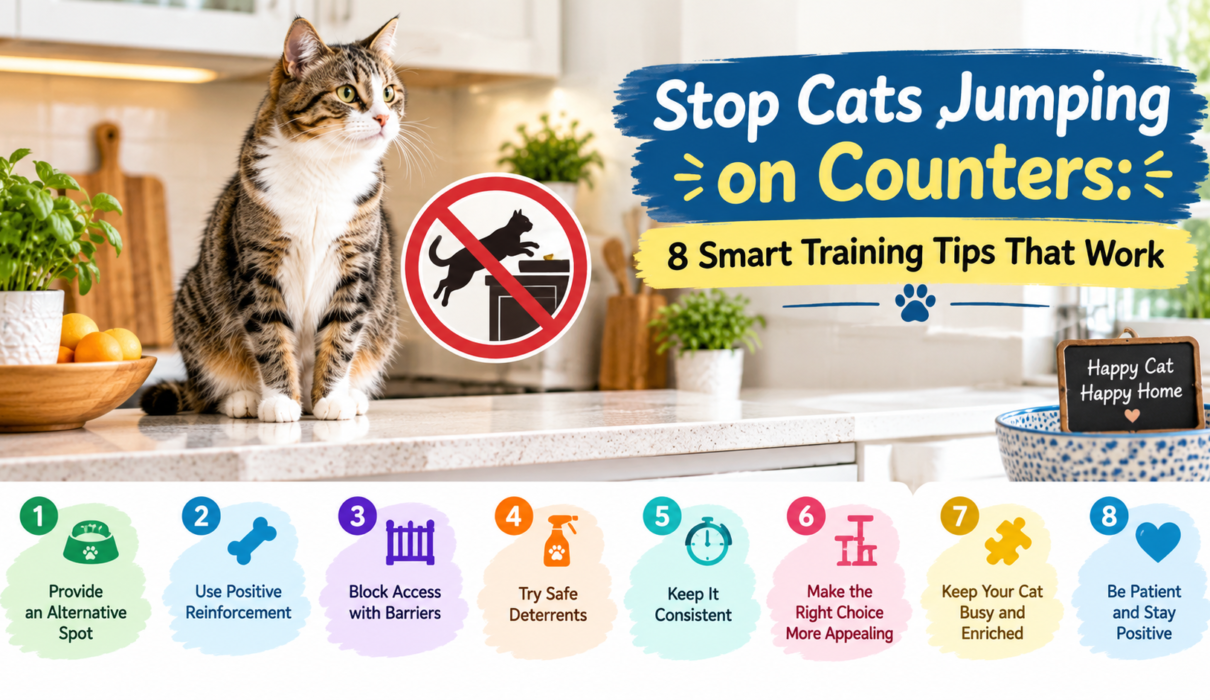
The eight smart training tips in this guide can help you address these motivations. Remove food temptations, reward appropriate behavior, teach clear cues, provide attractive alternatives, and establish consistent household rules or Stop Cats Jumping on Counters.
Remember that humane discipline means guiding your cat toward better choices rather than using fear or punishment. Keep counters clean, offer daily enrichment, and make approved resting places comfortable and accessible.
Most importantly, do not expect overnight results. If your cat has an established counter-jumping habit, continue practicing and adjust your approach when necessary.
With a safe environment and a consistent reward-based routine, you can encourage better habits while respecting your cat’s natural behavior and keeping your kitchen more hygienic or Stop Cats Jumping on Counters.