

 By
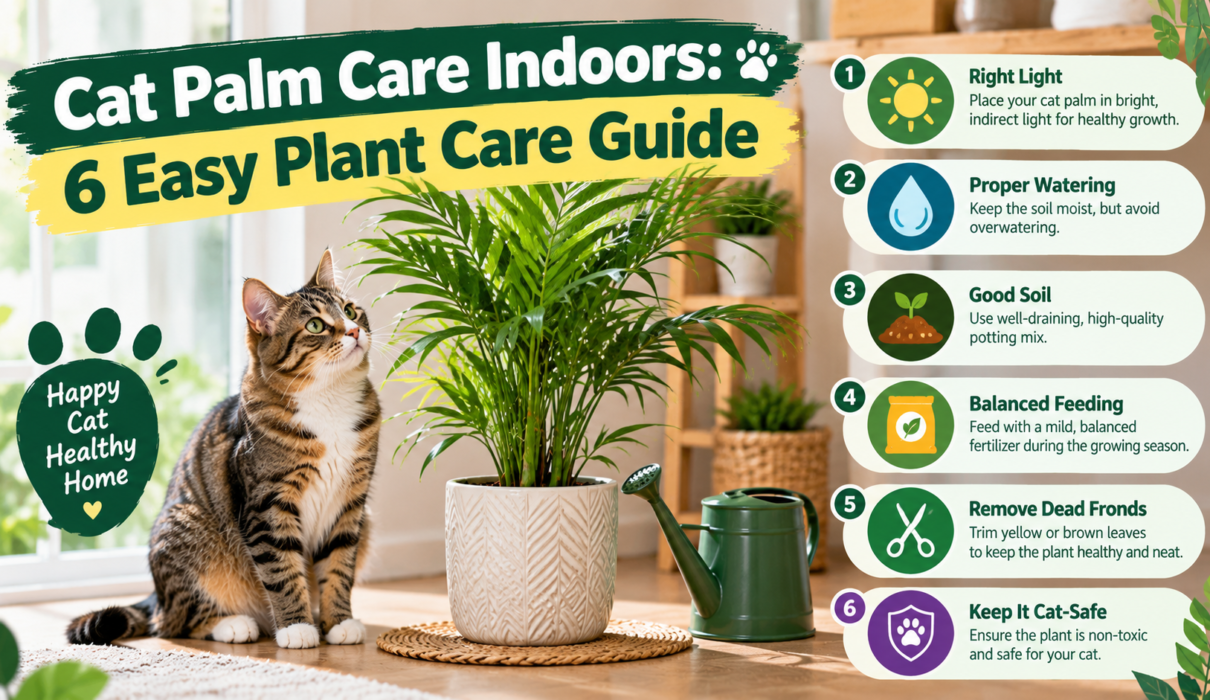
Cat Palm Care Indoors: 6 Easy Plant Care Guide
Growing a beautiful tropical plant indoors can make your home feel fresh, peaceful, and inviting. The cat palm is a popular houseplant known for its lush green fronds and elegant appearance. However, keeping this plant healthy requires the right balance of light, water, humidity, and soil. Learning cat palm care indoors can help you maintain vibrant foliage and encourage steady growth throughout the year or cat palm care indoors.
Cat palms (Chamaedorea cataractarum) are compact palms that can grow well in suitable indoor conditions. They generally prefer bright, indirect light, consistently moist but well-draining soil, and a warm environment. Although they are not considered especially difficult to grow, improper watering and unsuitable lighting can lead to yellow leaves, brown tips, and other common problems.
In this first part, we will explore four essential areas of cat palm care: choosing the right lighting, watering correctly, maintaining proper humidity and temperature, and selecting suitable soil and pots.
Cat Palm Care Indoors: Choose the Right Lighting
Lighting is one of the most important factors in successful cat palm care indoors. Although cat palms can tolerate some lower-light conditions, they generally grow better when they receive sufficient bright, indirect light. Providing the right lighting helps the plant maintain healthy green fronds and supports steady growth.
Best Lighting Conditions for Cat Palms
Cat palms naturally grow in tropical environments where surrounding vegetation can filter sunlight. For this reason, they usually perform well indoors near a bright window that does not expose their leaves to intense direct sunlight for long periods or cat palm care indoors.
Consider these lighting tips:
- Bright, indirect light: Place your cat palm near an east-facing window or a bright area where sunlight is filtered.
- Filtered sunlight: Use a sheer curtain if the plant sits near a window receiving strong sunlight.
- Consistent lighting: Keep the plant in a location with reasonably stable light conditions.
- Avoid dark corners: A room with very little natural light may slow growth and make it harder for the plant to remain healthy.
If your home does not receive enough natural light, a suitable grow light can provide additional illumination.
Can Cat Palms Grow in Low Light?
Cat palms may survive in lower light, but survival does not always mean optimal growth. In a dim location, the plant may produce fewer new fronds and grow more slowly.
Watch for the following signs that your plant may need more light:
- Very slow or limited new growth.
- Fronds that become less vigorous.
- Soil that remains wet for longer than usual because the plant uses water more slowly.
If you notice these changes, gradually move the plant to a brighter location. Avoid suddenly exposing it to strong direct sunlight, as the leaves may develop scorched or brown patches.
How to Protect Cat Palm Leaves From Direct Sunlight
Strong direct sunlight, especially through a hot window, can damage delicate foliage. Brown, dry patches on exposed leaves may indicate sun damage, although watering problems and low humidity can cause similar symptoms.
To protect your plant, use a light curtain or move it slightly away from the window. Check the leaves regularly and adjust the position if they appear stressed or cat palm care indoors.
Pro tip: When deciding where to place your cat palm, look for a spot that receives plenty of daylight without harsh midday sun. This simple adjustment can make a significant difference in long-term plant health.
Cat Palm Care Indoors: Water Your Plant Properly
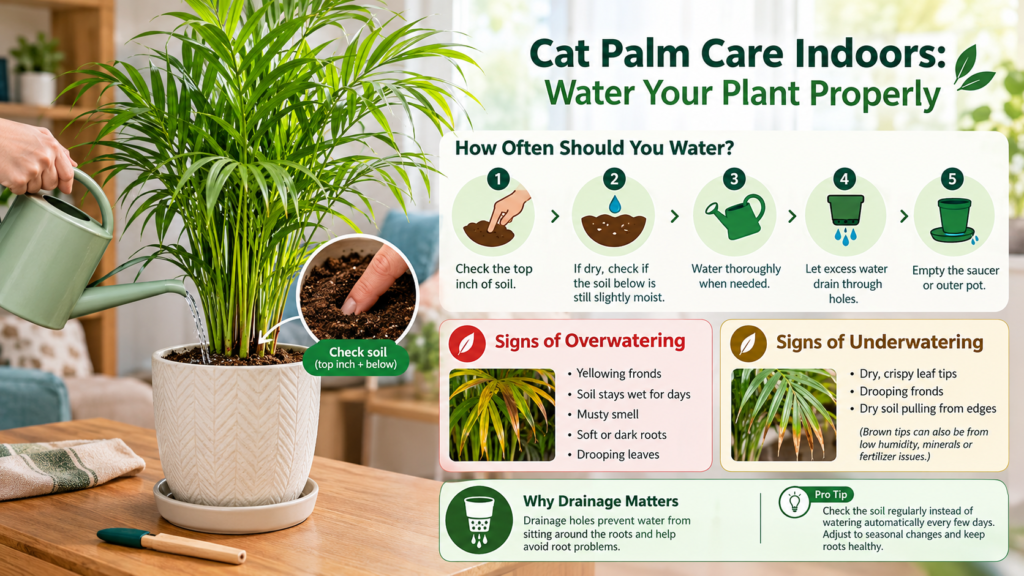
Correct watering is another essential part of cat palm care indoors. Cat palms prefer consistently moist soil, but their roots need oxygen and should not remain in waterlogged conditions. Both underwatering and overwatering can cause visible damage.
Instead of following a rigid watering schedule, learn to check the soil and understand how quickly it dries in your home.
How Often Should You Water a Cat Palm?
There is no single watering schedule that works for every cat palm. The frequency depends on factors such as room temperature, light levels, humidity, pot size, and the type of soil used.
A practical watering routine includes these steps:
- Check the top inch of soil with your finger.
- If the surface feels dry, check whether the soil just below it is still slightly moist.
- Water thoroughly when the upper layer has begun to dry and the plant needs moisture.
- Allow excess water to drain freely through the pot’s drainage holes.
- Empty the saucer or decorative outer pot so the roots do not sit in standing water.
Cat palms often need more frequent watering during active growth and warm weather. During cooler months, they may use less water, so always check the soil before watering again or cat palm care indoors.
Signs of Overwatering
Overwatering is a common cause of indoor plant problems. When the soil remains saturated for too long, roots may become damaged and struggle to absorb the water and nutrients the plant needs.
Common warning signs include:
- Yellowing fronds.
- Soil that stays wet for several days.
- A persistent musty smell from the potting mix.
- Soft or dark roots if root damage is examined during repotting.
- Drooping leaves despite wet soil.
If you suspect overwatering, check the drainage, allow excess moisture to escape, and adjust your watering routine. If the soil is severely waterlogged or the roots are rotting, the plant may need fresh, well-draining potting mix and removal of damaged roots or cat palm care indoors.
Signs of Underwatering
A cat palm that receives too little water may develop dry, crispy leaf tips, drooping fronds, or dry soil that pulls away from the pot’s edges.
To address underwatering, water the soil thoroughly and allow the excess to drain. If very dry potting mix repels water, water it slowly in stages to help the soil absorb moisture evenly.
Keep in mind that brown leaf tips can also result from low humidity, mineral buildup, or fertilizer problems. Check the overall growing conditions before assuming that watering is the only cause.
Why Drainage Matters
A pot with drainage holes helps prevent water from accumulating around the roots. Even when you use a high-quality potting mix, poor drainage can create conditions that encourage root problems.
Avoid leaving the plant in a decorative container filled with standing water. If you prefer a pot without visible drainage holes, keep the plant in a separate nursery pot with holes and remove it when watering so excess water can drain.
Pro tip: Check the soil regularly instead of watering automatically every few days. This approach makes it easier to adjust to seasonal changes and helps prevent both excessively dry soil and waterlogged roots or cat palm care indoors.
Cat Palm Care Indoors: Maintain Proper Humidity and Temperature
Humidity and temperature play important roles in cat palm indoor care. Because cat palms originate in tropical environments, they generally prefer warm conditions and moderate to high humidity. Indoor air that is too dry, particularly during winter or when air conditioning is running frequently, can contribute to brown leaf tips and dry foliage or cat palm care indoors.
Creating a stable environment helps your plant maintain its attractive green appearance.
What Temperature Is Best for a Cat Palm?
Cat palms generally prefer comfortable indoor temperatures rather than extreme heat or cold. A practical target is approximately 65–80°F (18–27°C), although the plant’s response will also depend on other growing conditions.
To maintain a suitable temperature:
- Keep the plant away from cold drafts near frequently opened doors.
- Avoid placing it directly beside heating vents.
- Protect it from cold windows during winter.
- Avoid sudden temperature changes whenever possible.
- Maintain a reasonably stable indoor environment throughout the year.
Cold exposure can stress tropical plants and may cause leaf damage. If you notice deterioration after a cold night or a sudden temperature change, move the plant to a more protected location and monitor its recovery.
How Much Humidity Does a Cat Palm Need?
Cat palms generally appreciate moderate to high humidity. They may struggle when indoor air becomes very dry, especially if the plant is also exposed to warm air from heating systems.
You can improve humidity in several ways.
Use a humidifier: A room humidifier is one of the most effective ways to raise humidity around your plant. It can be particularly helpful in dry indoor environments or cat palm care indoors.
Group compatible plants: Placing several plants together may create a slightly more humid microenvironment around their leaves.
Use a humidity monitor: A small digital hygrometer helps you understand your room’s conditions and decide whether additional humidity is needed.
Consider a pebble tray carefully: A shallow tray containing pebbles and water may provide a small local effect, but the pot must sit above the water rather than directly in it.
Misting the leaves is usually a temporary solution because the added moisture evaporates quickly. It is not a reliable substitute for maintaining suitable room humidity.
Why Are Cat Palm Leaf Tips Turning Brown?
Brown leaf tips can develop for several reasons, including:
- Low indoor humidity.
- Inconsistent watering.
- Accumulation of salts or minerals from water and fertilizer.
- Excessive fertilizer.
- Root damage caused by poor drainage.
Inspect the plant’s leaves, soil, and growing environment before choosing a solution. If the air is dry, increase humidity. If the soil is too wet, correct the drainage and watering routine.
You can trim fully brown leaf tips with clean scissors if desired. Follow the natural shape of the leaf rather than cutting into healthy green tissue.
Should You Keep a Cat Palm Near an Air Conditioner?
It is better to avoid placing a cat palm directly in the path of cold air from an air conditioner. Strong airflow can dry the leaves and cause sudden temperature changes or cat palm care indoors.
Choose a location with gentle air circulation rather than direct blasts from heating or cooling equipment. This small change can improve the plant’s growing conditions.
Pro tip: Check your home’s humidity during the driest part of the year. A humidifier and a stable indoor temperature can help prevent recurring leaf-tip problems.
Cat Palm Care Indoors: Use the Right Soil and Pot
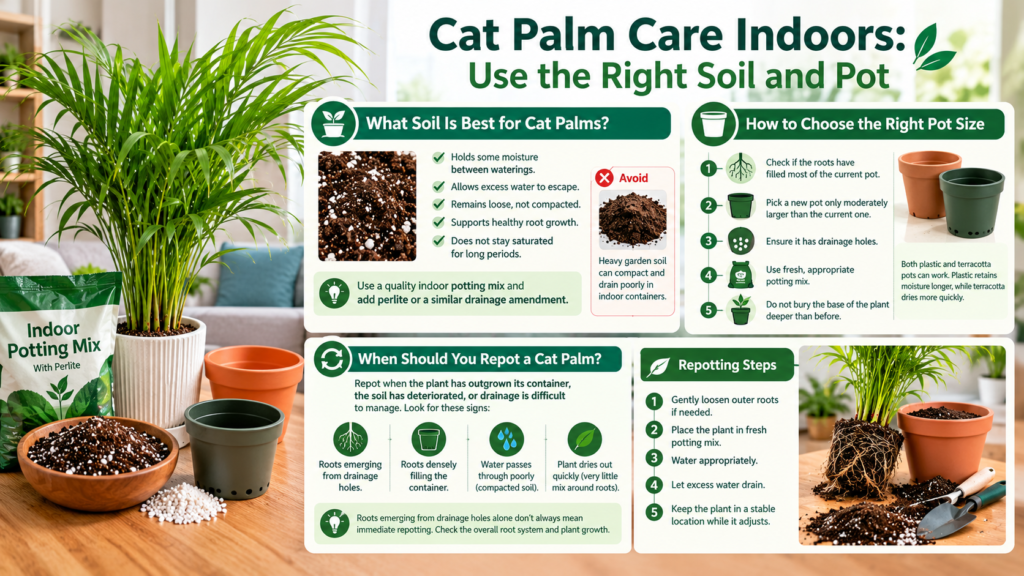
Choosing the right potting mix and container is another important part of learning how to care for a cat palm. The roots need access to moisture, nutrients, and oxygen. Soil that drains too slowly can keep the roots wet for too long, while an unsuitable mix may dry out too quickly.
A good growing medium should retain some moisture while allowing excess water to drain freely.
What Soil Is Best for Cat Palms?
A well-draining indoor potting mix is a suitable starting point for cat palm care. Choose a mix that holds enough moisture to support the roots without becoming compacted or waterlogged or cat palm care indoors.
You can use a quality indoor potting mix and improve its structure with an appropriate amount of perlite or another suitable drainage amendment. The exact ratio depends on the ingredients and how quickly the mix dries in your home.
Look for a mix that:
- Holds some moisture between waterings.
- Allows excess water to escape.
- Remains loose rather than becoming densely compacted.
- Supports healthy root growth.
- Does not remain saturated for long periods.
Avoid heavy garden soil in indoor containers because it may compact and drain poorly. A suitable commercial potting mix is often the simplest option for beginners or cat palm care indoors.
How to Choose the Right Pot Size
The pot should comfortably accommodate the root system without leaving a large amount of excess soil around it. A container that is much too large may retain more moisture than the plant can use, increasing the risk of overwatering.
When choosing a pot:
- Check whether the roots have filled most of the existing container.
- Select a new pot only moderately larger than the current one.
- Ensure it has drainage holes.
- Use fresh, appropriate potting mix.
- Avoid burying the base of the plant deeper than it was growing previously.
Both plastic and terracotta containers can work. Plastic pots tend to retain moisture longer, while terracotta usually dries more quickly. Choose based on your watering habits and indoor environment.
When Should You Repot a Cat Palm?
Cat palms do not need frequent repotting simply because a new season has arrived. Repot when the plant has outgrown its container, the potting mix has deteriorated, or drainage has become difficult to manage.
Possible signs that repotting may be necessary include:
- Roots emerging from the drainage holes.
- A root system densely filling the container.
- Water passing through poorly because the soil has become compacted.
- The plant drying out unusually quickly because very little potting mix remains around the roots.
Roots emerging from drainage holes alone do not always mean immediate repotting is necessary. Check the overall root system and the plant’s growth before deciding or cat palm care indoors.
When repotting, gently loosen the outer roots if needed and place the plant into fresh potting mix. Water appropriately afterward, let excess water drain, and keep the plant in a stable location while it adjusts.
How to Avoid Common Soil and Potting Mistakes
A few simple precautions can prevent many growing problems:
- Do not use a container without drainage unless you use an inner nursery pot with drainage.
- Avoid compacting the potting mix tightly around the roots.
- Do not routinely add water to the bottom of a decorative pot.
- Avoid repotting into a container that is far larger than the root system.
- Check the moisture level before watering after repotting.
Pro tip: If your cat palm repeatedly develops yellow leaves while the soil stays wet, examine both the pot’s drainage and the texture of the potting mix. Correcting these conditions may be more helpful than simply reducing watering without checking the roots or cat palm care indoors.
Cat Palm Care Indoors: Fertilize for Healthy Growth
Fertilizing is an important part of cat palm care because plants growing in containers have a limited supply of nutrients. Over time, watering can gradually remove nutrients from the potting mix, making occasional feeding helpful during active growth.
However, more fertilizer does not necessarily mean faster growth. Applying excessive fertilizer can damage roots, cause brown leaf tips, and contribute to salt buildup in the soil or cat palm care indoors.
Choose the Right Fertilizer for Cat Palms
A balanced liquid houseplant fertilizer is generally a practical choice for indoor cat palms. Choose a product suitable for foliage plants and follow the manufacturer’s instructions for dilution and application.
When selecting fertilizer, consider the following tips:
- Balanced nutrients: Choose a fertilizer that supplies nitrogen, phosphorus, and potassium, along with other nutrients when needed.
- Diluted application: If the product allows it, start with a conservative concentration rather than applying a strong solution.
- Healthy roots: Fertilize only when the plant is reasonably healthy and the soil is appropriately moist.
- Suitable products: Avoid applying lawn fertilizer or concentrated garden products directly to an indoor potted palm.
Nitrogen supports leafy growth, while other essential nutrients help maintain overall plant health. A balanced feeding approach is generally more useful than relying on excessive amounts of a single nutrient.
When Should You Fertilize a Cat Palm?
Cat palms generally benefit most from fertilizing during periods of active growth, often in spring and summer when light and temperatures are favorable.
During cooler months, growth may slow, reducing the plant’s need for additional nutrients. In that situation, reduce or pause fertilizing according to the plant’s growth and the fertilizer label.
A simple feeding schedule can look like this:
- Spring: Begin feeding when the plant shows active growth.
- Summer: Continue occasional feeding according to the product directions and the plant’s response.
- Autumn: Reduce feeding as growth slows.
- Winter: Usually avoid routine feeding if the plant is not actively growing.
Indoor conditions vary, so this schedule should be adjusted to the plant rather than followed rigidly.
Signs of Fertilizer Problems
Too much fertilizer can cause salt accumulation around the roots. This may result in brown leaf tips, leaf-edge damage, or declining plant health or cat palm care indoors.
Possible signs of fertilizer-related stress include:
- Brown or crispy leaf tips.
- White crust or deposits on the soil surface.
- Leaf damage following recent fertilization.
- Poor growth despite frequent feeding.
These symptoms can also result from watering problems, low humidity, or unsuitable water quality. Examine the full growing environment before deciding that fertilizer is responsible.
If you suspect overfertilization, stop feeding temporarily. If the pot has good drainage and the roots are healthy, flushing the potting mix with clean water may help remove excess soluble salts. Allow the pot to drain thoroughly afterward.
Pro tip: Healthy roots and appropriate watering are more important than frequent fertilizing. A cat palm growing in suitable conditions usually needs modest, consistent feeding rather than heavy applications.
Cat Palm Care Indoors: Prevent Pests and Common Plant Problems
Keeping your plant free from pests is another essential part of cat palm care indoors. Indoor palms can occasionally attract spider mites, mealybugs, and scale insects. These pests may damage leaves, weaken growth, and spread to nearby houseplants if left untreated.
Regular inspections can help you identify problems early and avoid more serious damage.
Common Pests That Affect Cat Palms
Spider mites
Spider mites are tiny pests that feed on plant tissue. They may cause small pale speckles, a dusty appearance, or fine webbing around leaves and stems or cat palm care indoors.
To manage them, isolate the affected plant when possible, rinse the foliage carefully, and inspect the undersides of the leaves. Use a product specifically labeled for spider mites on indoor ornamental plants if additional treatment is necessary.
Mealybugs
Mealybugs often appear as small, white, cotton-like clusters around leaf bases, stems, or other protected areas. They feed on plant sap and can weaken the plant over time.
Remove visible pests carefully and inspect nearby plants. If an infestation persists, use a suitable labeled treatment and follow all safety instructions.
Scale insects
Scale insects may look like small, immobile bumps attached to stems or leaves. Some produce sticky honeydew, which can attract ants or encourage dark sooty mold.
Inspect the plant closely, remove visible insects when practical, and repeat inspections because newly hatched pests may appear after the first treatment.
How to Prevent Indoor Palm Pests
Preventive care is often easier than treating a serious infestation. Follow these steps to reduce the risk of pest problems:
- Inspect new plants before bringing them into your home.
- Keep newly purchased plants separate from established houseplants for a short observation period.
- Examine the undersides of fronds and the areas where leaves meet stems.
- Remove dust and dead plant material regularly.
- Avoid allowing the plant to remain stressed from unsuitable watering or lighting.
- Check nearby plants if you discover pests on your cat palm.
When using insecticidal soap or another pest-control product, confirm that it is appropriate for indoor ornamental plants and follow the label carefully. Test a small area first if directed, and keep pets away during application and until the product is safe according to its instructions.
Why Are Cat Palm Leaves Turning Yellow?
Yellow leaves are a common concern among indoor plant owners. Although some older leaves naturally turn yellow as they age, widespread yellowing can indicate an environmental problem or cat palm care indoors.
Common causes include:
- Overwatering: Soil remains saturated, potentially damaging roots.
- Underwatering: Soil becomes excessively dry and the plant lacks sufficient moisture.
- Insufficient light: The plant may grow slowly and gradually lose healthy foliage.
- Nutrient problems: The plant may lack essential nutrients or suffer from fertilizer-related root damage.
- Natural aging: Older leaves may yellow as the plant replaces them with new growth.
Check the soil moisture first. If the potting mix is wet for an extended period, inspect drainage and consider whether the roots are healthy. If the soil is very dry, water thoroughly and allow the excess to drain.
Avoid removing every yellow leaf immediately. First identify and correct the underlying cause. You can then prune fully yellow or dead fronds using clean, sharp scissors.
How to Prevent Brown Leaf Tips
Brown leaf tips can develop when the plant experiences dry air, inconsistent watering, fertilizer buildup, or mineral accumulation from water.
To reduce the problem:
- Maintain appropriate humidity.
- Water consistently according to soil moisture.
- Avoid excessive fertilizer.
- Ensure that the pot drains properly.
- Consider water quality if brown tips persist despite otherwise suitable care.
Trim damaged tips if you prefer a neater appearance, but avoid cutting into healthy green tissue. Existing brown areas will not turn green again, so the goal is to prevent further damage.
Pro tip: Inspect your cat palm once a week, especially underneath the fronds. Early pest detection and prompt correction of growing problems can help protect the plant before significant damage occurs.
How to Care for a Cat Palm: A Simple Daily and Weekly Routine
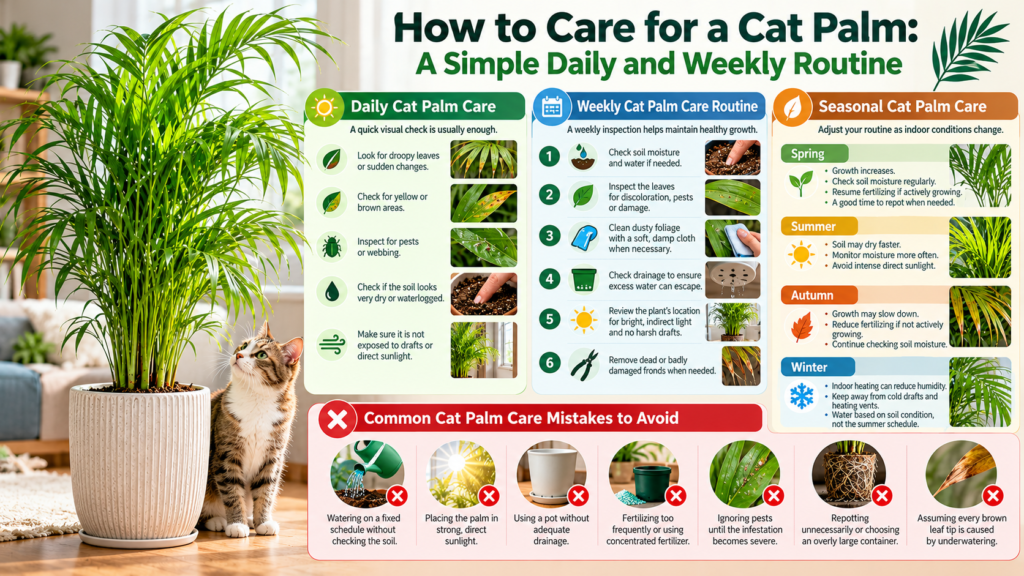
Understanding how to care for a cat palm becomes easier when you follow a simple maintenance routine. You do not need to perform every task daily. Instead, focus on checking the plant regularly and responding to its actual needs.
A consistent routine helps you notice changes in soil moisture, foliage color, and pest activity before they become serious problems.
Daily Cat Palm Care
Most cat palms do not require extensive daily attention. A quick visual check is usually enough.
During your daily check, look for:
- Leaves that appear unusually droopy.
- New yellow or brown areas.
- Signs of pests or webbing.
- Soil that appears excessively dry or waterlogged.
- Sudden changes caused by drafts or direct sunlight.
You generally do not need to water the plant every day. Frequent watering without checking the soil can increase the risk of root damage.
Weekly Cat Palm Care Routine
A weekly inspection is a practical way to maintain healthy growth.
Step 1: Check soil moisture. Feel the upper layer of the potting mix and determine whether watering is needed.
Step 2: Inspect the leaves. Look at both sides of the fronds for discoloration, pests, or damaged areas.
Step 3: Clean dusty foliage. Gently wipe dusty leaves with a soft, damp cloth when necessary. Handle the fronds carefully to avoid tearing them.
Step 4: Check drainage. Make sure water can escape freely and that the pot is not sitting in a pool of water.
Step 5: Review the plant’s location. Confirm that it receives suitable indirect light and is not exposed to strong drafts or harsh sunlight.
Step 6: Remove dead material. Prune fully dead or badly damaged fronds with clean tools when needed.
You do not have to complete every task every week. For example, pruning and cleaning are only necessary when the plant needs them.
Seasonal Cat Palm Care
Indoor growing conditions change throughout the year. Adjusting your routine to these changes can make a noticeable difference or cat palm care indoors.
Spring
As growth increases, check soil moisture regularly and resume appropriate fertilizing if the plant is actively growing. Spring can also be a suitable time to repot when necessary.
Summer
Warmer conditions and brighter light may cause the soil to dry faster. Monitor moisture more frequently, but avoid watering automatically. Protect the plant from intense direct sunlight.
Autumn
As daylight decreases, growth may slow. Reduce fertilizing if the plant is no longer actively growing and continue monitoring soil moisture.
Winter
Indoor heating can reduce humidity, while cooler conditions may slow water use. Keep the plant away from cold drafts and heating vents. Water according to the soil’s condition rather than the summer schedule or cat palm care indoors.
Common Cat Palm Care Mistakes to Avoid
Even well-intentioned plant owners sometimes make mistakes that affect growth. Avoid these common problems:
- Watering on a fixed schedule without checking the soil.
- Placing the palm in strong, direct sunlight.
- Using a pot without adequate drainage.
- Fertilizing too frequently or applying concentrated fertilizer.
- Ignoring pests until the infestation becomes severe.
- Repotting unnecessarily or choosing an excessively large container.
- Assuming every brown leaf tip is caused by underwatering.
The best approach is to observe the plant, identify the likely cause of a problem, and make gradual adjustments.
Is a Cat Palm Safe for Cats?
The true cat palm, Chamaedorea cataractarum, is generally listed as non-toxic to cats. However, common plant names can be confusing, so confirm the botanical identity before relying on this information.
Even non-toxic plants may cause mild stomach upset if a cat eats a large amount of foliage. Plant material can also present a choking risk, and fertilizers or pest-control products may be harmful if ingested.
Keep gardening chemicals out of reach and contact a veterinarian if your cat develops concerning symptoms after chewing on a plant or may have swallowed a treatment product.
Frequently Asked Questions About Cat Palm Care Indoors
How Often Should I Water a Cat Palm Indoors?
Water when the upper layer of soil has begun to dry and the plant needs moisture. The exact frequency depends on light, temperature, humidity, pot size, and soil composition. Always allow excess water to drain or cat palm care indoors.
Is a Cat Palm Easy to Care for Indoors?
Cat palms can grow successfully indoors when provided with suitable indirect light, consistently moist but well-draining soil, warm temperatures, and adequate humidity. They may need closer attention in very dry or poorly lit rooms.
Why Are My Cat Palm Leaves Turning Yellow?
Yellowing can result from overwatering, underwatering, insufficient light, nutrient problems, or natural aging. Check soil moisture and drainage first, then evaluate the plant’s lighting and fertilizing routine.
Does a Cat Palm Need Direct Sunlight?
Cat palms generally prefer bright, indirect light. Strong direct sunlight can scorch the leaves, so a bright location with filtered sunlight is usually a better choice.
Is a Cat Palm Safe for Cats?
The true cat palm is generally considered non-toxic to cats. Confirm the plant’s botanical identity, and prevent pets from chewing large amounts of foliage or accessing fertilizers and pesticides.
How Do I Increase Humidity for My Cat Palm?
A room humidifier is an effective option. Grouping plants together may also help create a slightly more humid environment. Misting provides only temporary moisture and is not a reliable replacement for suitable room humidity.
When Should I Repot My Cat Palm?
Repot when the roots have substantially filled the container, the potting mix has deteriorated, or drainage has become difficult to manage. Choose a container only moderately larger than the existing root system and make sure it has drainage holes or cat palm care indoors.
Conclusion: Cat Palm Care Indoors for Healthy Growth
Successful cat palm care indoors depends on maintaining suitable growing conditions and responding to your plant’s changing needs. Appropriate fertilizing supports healthy foliage, regular inspections help prevent pest infestations, and a simple maintenance routine makes it easier to identify problems early.
Remember these essential practices:
- Provide bright, indirect light.
- Water according to soil moisture rather than a fixed schedule.
- Maintain comfortable temperatures and suitable humidity.
- Use well-draining soil and a pot with drainage holes.
- Fertilize moderately during active growth.
- Inspect leaves regularly for pests and damage.
With consistent attention and a few simple habits, your cat palm can remain a beautiful addition to your indoor space. Start with the basics, observe how your plant responds, and adjust its care as needed to encourage healthy green foliage over time or cat palm care indoors.
Fix the title and section countReduce repeated care adviceAdd Part 1 continuity details
1 Comment