

 By
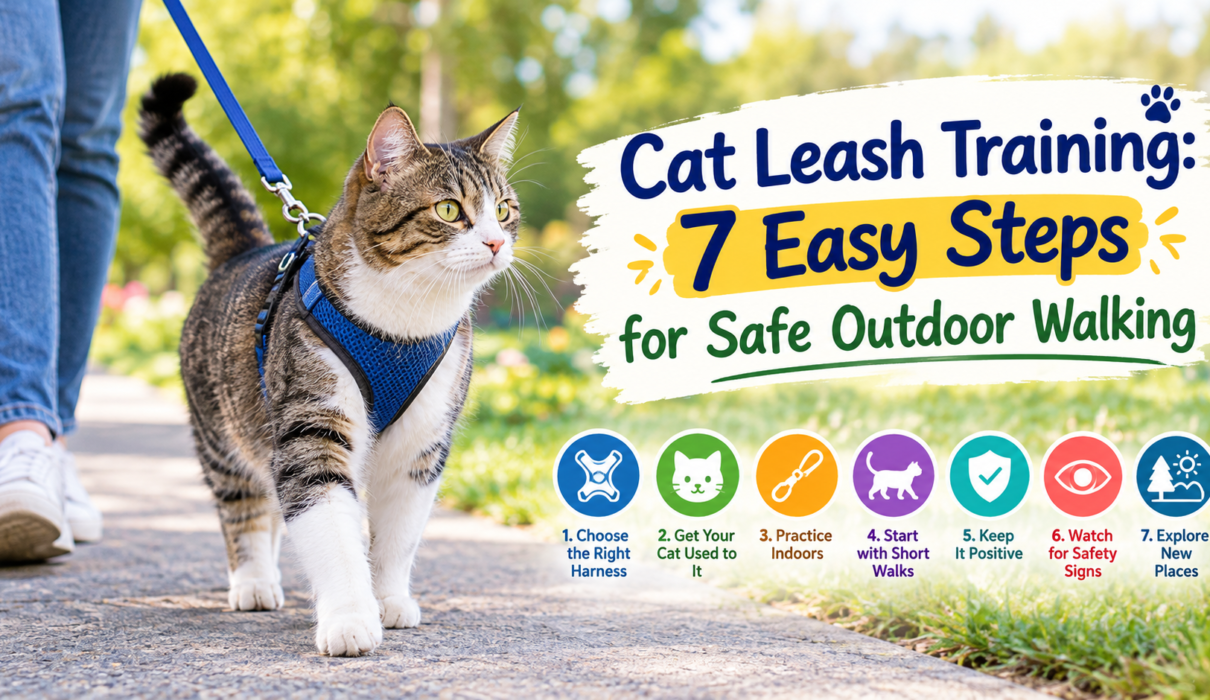
Cat Leash Training: 7 Easy Steps for Safe Outdoor Walking
Introduction: How to Leash Train a Cat for Safe Outdoor Walking
Taking your cat outdoors can provide fresh air, mental stimulation, and opportunities to explore new surroundings. However, allowing a cat to roam freely can expose it to traffic, unfamiliar animals, parasites, and other potential dangers. Learning how to leash train a cat is a practical way to introduce outdoor adventures while maintaining better control over your pet’s safety.
Cat leash training requires patience, consistency, and positive reinforcement. Unlike dogs, many cats need extra time to become comfortable wearing a harness and walking on a leash. Some cats may accept the equipment quickly, while others need several days or weeks of gradual practice.
The key is to make every training session comfortable and rewarding. Never force your cat to wear a harness or pull it along when it refuses to move. Instead, introduce each step slowly and allow your cat to build confidence at its own pace.
In this guide, you will learn how to leash train a cat through practical steps, from choosing the right equipment to attaching the leash safely indoors. You will also discover how harness training a cat can help make future outdoor experiences more enjoyable or Cat Leash Training.
How to Leash Train a Cat: Understand the Basics
Before purchasing a leash or harness, it is important to understand how cats respond to new experiences. Cats are naturally curious, but they also value familiar surroundings and may feel uncomfortable when something unfamiliar touches their bodies.
Successful leash training begins by understanding your cat’s personality and introducing new experiences gradually.
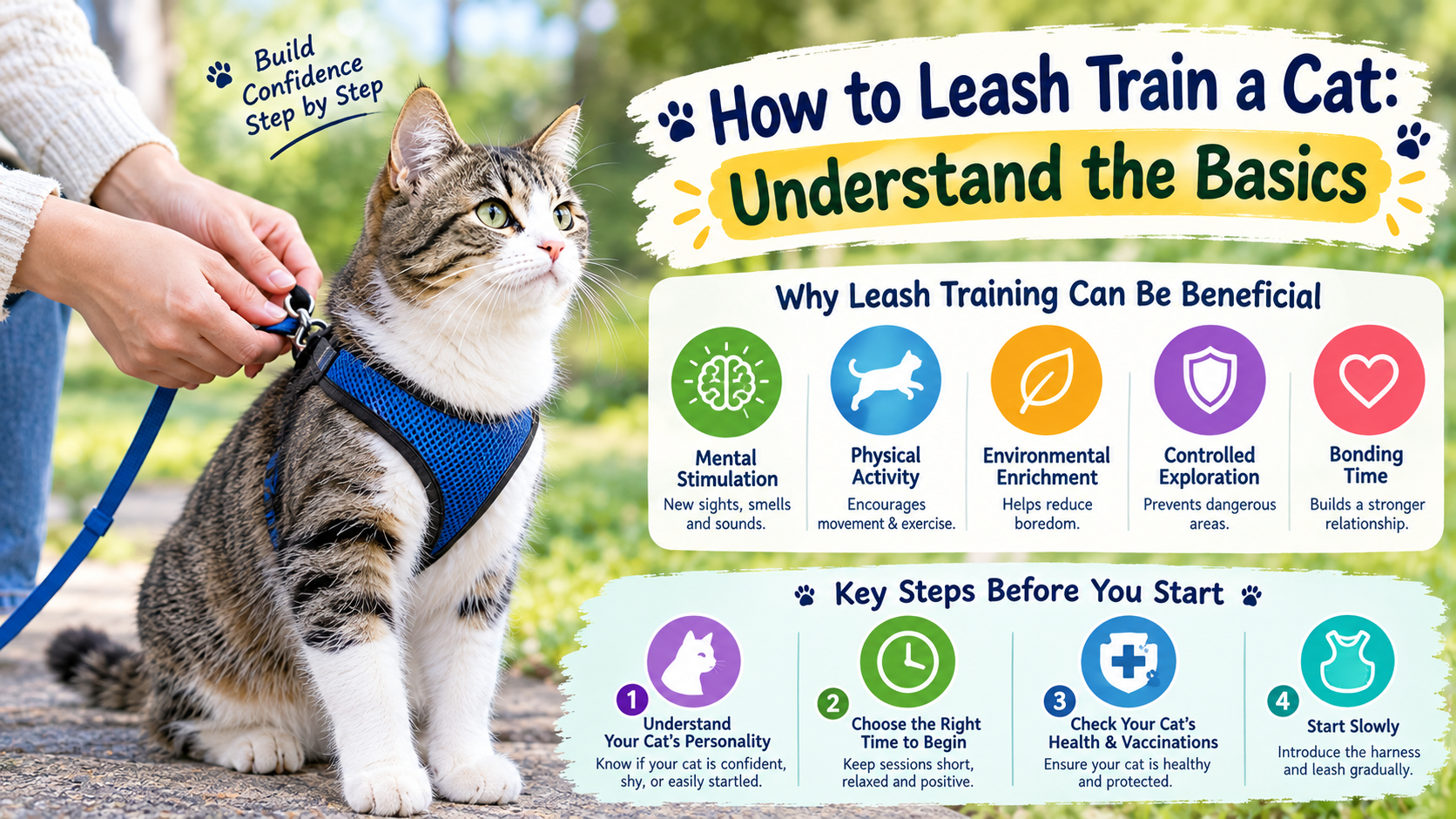
Understand Your Cat’s Personality
Some cats are confident and adventurous, while others are shy or easily startled. A confident cat may investigate a harness immediately, whereas a nervous cat may need more time to approach it.
Observe how your cat responds to unfamiliar objects, visitors, sounds, and changes in its environment. These behaviors can help you determine how slowly to introduce leash training.
If your cat becomes frightened easily, begin by placing the harness near its favorite resting area. Let your pet investigate the equipment without pressure or Cat Leash Training.
Understand the Benefits of Cat Leash Training
Learning how to leash train a cat can provide several potential benefits when outdoor exploration suits your pet.
- Mental stimulation: New smells, sights, and sounds provide opportunities for exploration.
- Physical activity: Supervised walking can encourage movement and exercise.
- Environmental enrichment: Safe outdoor experiences may help reduce boredom.
- Controlled exploration: A properly fitted harness and leash can help prevent your cat from wandering into dangerous areas.
- Bonding opportunities: Positive training sessions can strengthen your relationship with your pet.
However, leash walking is not essential for every cat. Indoor play, climbing structures, puzzle feeders, and window perches can also provide excellent enrichment.
Choose the Right Time to Begin
Start training when your cat is relaxed and comfortable at home. Avoid beginning immediately after a stressful event, during illness, or when your cat is already frightened.
Short sessions of approximately two to five minutes can be a useful starting point. Gradually increase the duration as your cat becomes more comfortable.
Keep treats, toys, and praise nearby so you can reward calm behavior. End each session positively rather than continuing until your cat becomes overwhelmed or Cat Leash Training.
Check Your Cat’s Health and Vaccination Needs
Before introducing outdoor walks, speak with your veterinarian about vaccinations, parasite prevention, identification, and any health concerns that might affect your cat’s ability to explore outside.
A microchip and a properly fitted identification collar can provide additional identification support, but neither replaces a secure harness and leash. Make sure your cat is healthy enough for the activity and that the planned outdoor environment is appropriate or Cat Leash Training.
Harness Training a Cat: Choose the Right Equipment
Choosing appropriate equipment is an essential part of harness training a cat. A comfortable, secure harness helps distribute pressure across the body and reduces the risk of your cat slipping free compared with attaching a leash directly to a collar.
Cats can escape from poorly fitted equipment surprisingly quickly, especially when startled. Therefore, never assume that a harness is secure simply because it looks comfortable.
Choose a Cat-Specific Harness
Look for a harness designed specifically for cats. Common options include vest-style harnesses, H-style harnesses, and other adjustable cat harness designs or Cat Leash Training.
Consider these features when selecting a harness:
- Secure fit: The harness should fit snugly without restricting breathing or movement.
- Adjustable straps: Adjustability helps accommodate your cat’s body shape.
- Comfortable material: Soft, lightweight material may help reduce irritation.
- Reliable fastenings: Buckles and attachment points should be secure and undamaged.
- Escape resistance: The design should reduce opportunities for your cat to back out of the harness.
Follow the manufacturer’s sizing instructions and measure your cat before purchasing. A harness that is too loose may allow escape, while one that is too tight can cause discomfort.
Measure Your Cat for the Correct Fit
Use a flexible measuring tape to measure your cat according to the manufacturer’s instructions, usually around the chest and sometimes the neck.
Check the sizing chart rather than relying only on your cat’s weight. Two cats of similar weight can have very different body shapes.
Once the harness arrives, introduce it gradually and check the fit before attaching a leash. You should be able to fit approximately one or two fingers beneath the relevant straps, provided the manufacturer’s instructions allow this. The harness should not press tightly against the throat, restrict the front legs, or rub the skin.
Recheck the fit as your cat grows or changes weight.
Select a Lightweight Cat Leash
Choose a lightweight leash designed for cats. A standard fixed-length leash is generally easier to manage during the early stages of training than a retractable leash, which can introduce additional tension and make control more difficult.
A leash should be long enough to allow comfortable movement while still giving you control in potentially unsafe situations. Avoid attaching a leash to a collar and using it to pull or restrain your cat.
Before every session, inspect the leash, clips, and harness for damage.
Why a Harness Is Safer Than a Collar
A collar is useful for identification when properly fitted, but it is not designed to support the pulling forces that may occur during leash walking. Pulling against a collar can put pressure on a cat’s neck and throat.
A properly fitted harness distributes pressure more broadly across the body. This makes it a more appropriate option for leash training or Cat Leash Training.
Remember that no harness is completely escape-proof. Always supervise your cat, use secure equipment, and avoid walking near busy roads or other hazards.
Cat Harness Training: Introduce the Harness Gradually
Training Cats to Stay Off Counters: Create Better Alternatives
Cats need opportunities to climb, observe, rest, and explore. If your kitchen counter is one of the few elevated surfaces available, your cat may continue choosing it despite your efforts.
An important part of training cats to stay off counters is providing attractive alternatives that satisfy the same needs.
Provide a Sturdy Cat Tree
A cat tree gives your pet an approved place to climb, rest, and observe the household. Choose one with a stable base and platforms suitable for your cat’s size and mobility.
Position the tree in a location your cat enjoys. A place near a window or in a commonly used room may be more attractive than an isolated corner.
Encourage exploration with treats or toys, and reward your cat when it uses the tree independently.
If your cat is accustomed to jumping onto a particular counter, a nearby cat tree may offer a more appropriate way to reach a similar height. Make sure the tree cannot tip over when your cat climbs.
Install a Safe Window Perch
Many cats enjoy looking outside, watching birds, and observing activity around the home. A secure window perch can provide this stimulation without requiring access to kitchen counters.
Choose a product designed for your window type and follow the installation instructions carefully. Check that the perch is firmly attached and that the window itself is secure.
Avoid placing the perch near dangerous gaps or windows that could allow your cat to escape.
If your cat enjoys watching outdoor activity, this alternative may become a preferred resting place. Reward your cat for using it, especially when it chooses the perch instead of a counter.
Make Approved Resting Places Comfortable
A climbing structure is more likely to be used when it offers something your cat enjoys. Add a comfortable resting surface, a suitable scratching area, or a favorite toy.
Some cats prefer enclosed spaces, while others like open platforms where they can watch household activity.
Observe your cat’s preferences and adjust the alternatives accordingly. You may need to try different locations before discovering which one your pet prefers.
Do not place food on a counter as a reward for staying off it. Instead, offer treats or meals in an appropriate feeding area.
After selecting the right equipment, the next step is helping your cat become comfortable with it. Effective cat harness training does not begin by immediately fastening the harness around your pet. Instead, start with brief, positive introductions.
Your goal is to help your cat associate the harness with calm experiences, treats, and rewards.
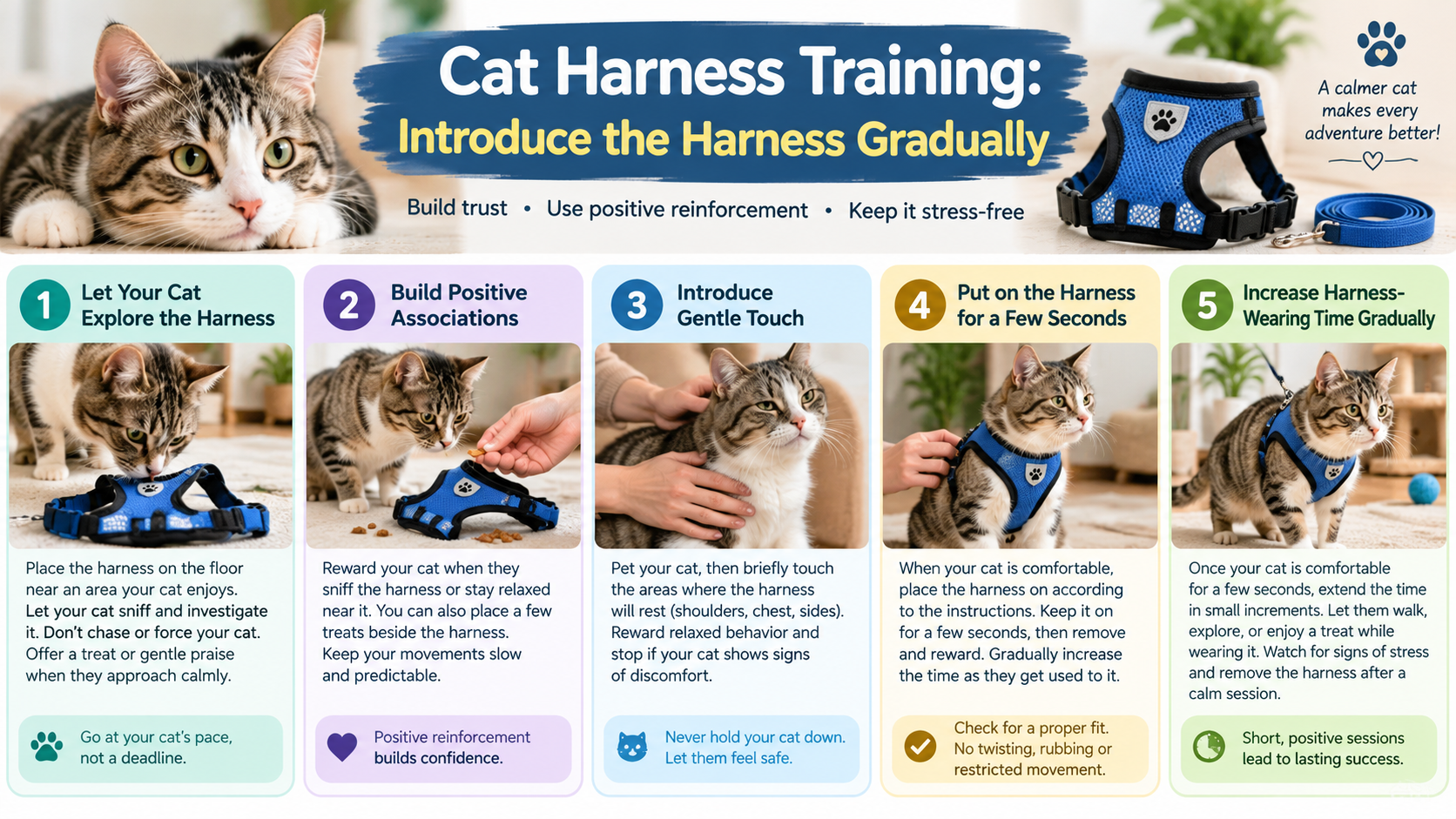
Step 1: Let Your Cat Explore the Harness
Place the harness on the floor near an area your cat already enjoys. Allow your pet to approach, sniff, and investigate it voluntarily.
Do not chase your cat with the harness or place it over its body without warning. These actions can create fear and make future training more difficult or Cat Leash Training.
When your cat approaches the harness calmly, offer a small treat or gentle praise. Repeat this process over several short sessions until the equipment becomes familiar.
Some cats may accept the harness quickly, while others may need several days. Follow your cat’s comfort level rather than a strict schedule or Cat Leash Training.
Step 2: Build Positive Associations
Once your cat is comfortable being near the harness, begin rewarding interactions with it.
For example, offer a treat when your cat sniffs the harness or remains relaxed while you hold it nearby. You can also place a few treats beside the harness to encourage voluntary investigation.
Keep your movements slow and predictable. If your cat moves away, allow it to do so without punishment.
Positive reinforcement is more effective than forcing a cat to tolerate equipment. The objective is to build confidence, not simply to get the harness onto your pet as quickly as possible.
Step 3: Introduce Gentle Touch
Before fastening the harness, help your cat become comfortable with brief touches around the shoulders, chest, and sides of the body.
Pet your cat in familiar ways, then briefly touch the areas where the harness will rest. Reward relaxed behavior and stop if your cat shows signs of discomfort.
Possible signs of stress include flattened ears, a tucked tail, repeated attempts to escape, growling, or sudden agitation. If these occur, return to an easier stage of training.
Never hold your cat down to complete this step.
Step 4: Put on the Harness for a Few Seconds
When your cat accepts the harness nearby and tolerates gentle handling, try placing it on the body according to the manufacturer’s instructions.
At first, you may only need to position the harness briefly before removing it and offering a reward. Gradually increase the time your cat wears it as long as your pet remains comfortable.
Check that the straps do not twist, rub, or restrict movement. Make sure the harness does not interfere with breathing or the natural movement of the front legs.
If your cat struggles intensely, stop and return to shorter introductions. Some cats need more practice before they are ready for this stage or Cat Leash Training.
Step 5: Increase Harness-Wearing Time Gradually
Once your cat tolerates the harness for a few seconds, extend the duration in small increments. Allow your pet to walk around a familiar room, investigate toys, or enjoy a treat while wearing it.
Watch how your cat moves. Some cats freeze, crouch, or roll over when first wearing a harness. These behaviors may indicate unfamiliarity or discomfort, so do not immediately assume that your cat is ready to walk.
Give your pet time to adjust. Remove the harness after a successful, calm session and continue practicing regularly.
Make Cat Harness Training a Positive Experience
The most important rule is to let your cat progress at its own pace. Keep sessions short, reward relaxed behavior, and avoid punishment or force.
If your cat repeatedly becomes distressed, take a break and restart at an easier stage. If the harness appears painful or your cat shows persistent discomfort, check the fit and consult your veterinarian if necessary.
Once your cat can comfortably wear the harness and move around indoors, you can progress to the next stage: attaching the leash safely inside your home.
How to Leash Train a Cat: Attach the Leash Indoors
After your cat becomes comfortable wearing its harness, introduce the leash in a familiar indoor environment. This stage teaches your pet that the leash is simply another part of the experience, rather than something to fear.
Do not rush outside immediately after the first successful harness session. Indoor practice gives you an opportunity to check the equipment and observe how your cat responds to the additional sensation.
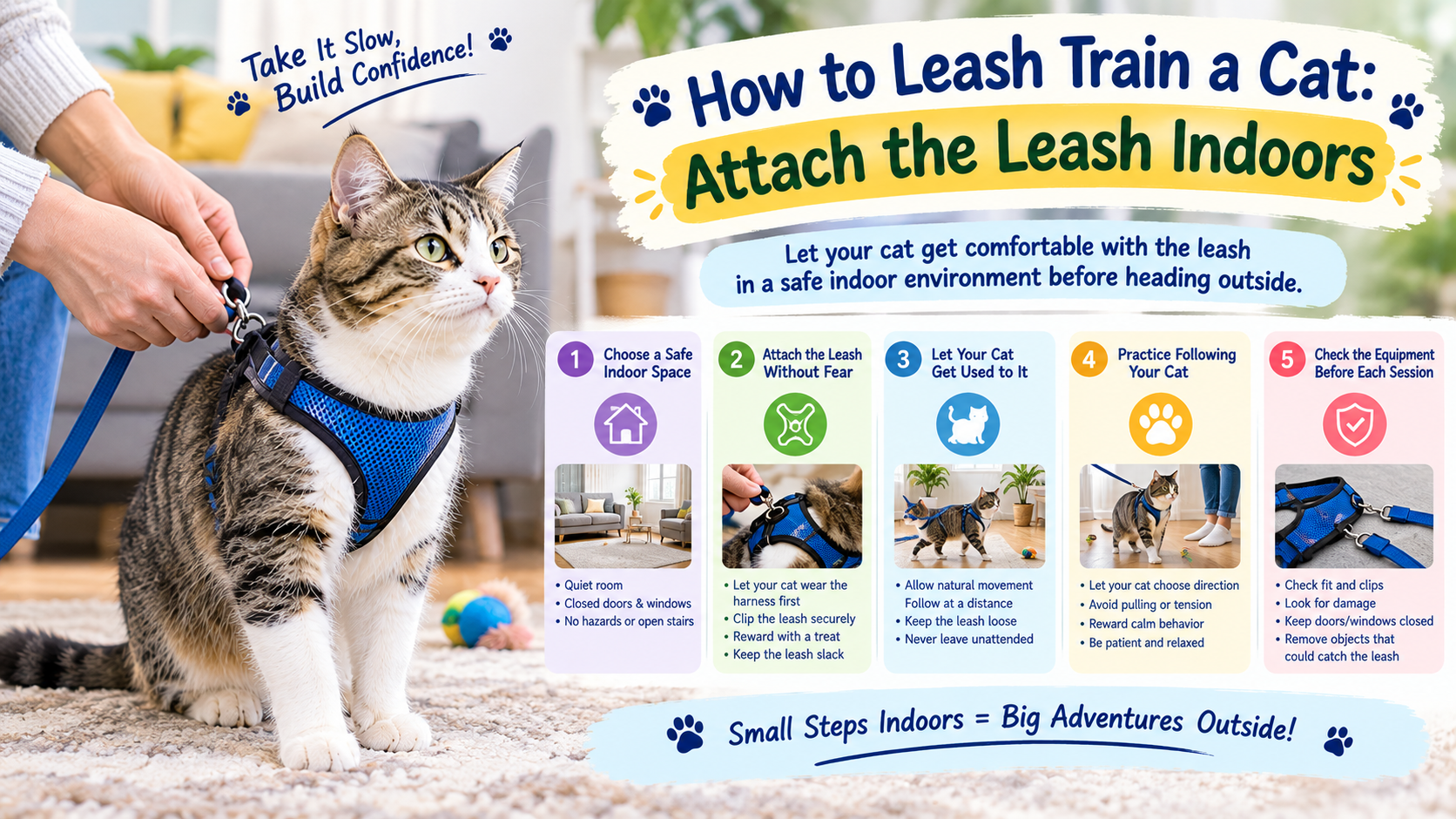
Attach the Leash Without Creating Fear
Choose a quiet room with closed exterior doors and windows. Make sure there are no open stairways or other hazards where the leash could become tangled.
Allow your cat to wear the harness comfortably before attaching the leash. Clip the leash onto the harness’s designated attachment point and reward your cat with a treat.
Keep the leash slack. Do not pull your cat toward you or use the leash to force movement.
Initially, you can hold the leash gently while allowing your cat to stand, sit, or walk around naturally under supervision.
Let Your Cat Get Used to the Leash
During the first sessions, allow your cat to move around a familiar room while you follow at a comfortable distance.
Keep the leash loose and avoid sudden movements. If your cat walks toward a toy or familiar resting spot, allow it to explore while you maintain control of the leash or Cat Leash Training.
Never leave your cat unattended while attached to a leash. The leash can become caught on furniture or other objects, potentially causing panic or injury.
If your cat freezes, crouches, or tries to escape, remain calm and avoid pulling. Give your pet time to relax, then end the session or return to an easier training step.
Practice Following Your Cat
At this stage, you do not need to make your cat walk beside you like a dog. Allow your cat to choose its direction in a safe indoor space while you follow without creating tension on the leash or Cat Leash Training.
Reward calm movement, voluntary exploration, and relaxed behavior. If your cat stops to investigate something, wait patiently rather than pulling it forward.
The purpose is to develop comfort with the harness-and-leash combination before introducing outdoor sights, sounds, and smells.
Check the Equipment Before Every Session
Before practicing, confirm that the harness remains properly fitted and the leash clip is securely attached. Inspect straps, buckles, stitching, and clips for damage.
Keep doors and windows closed, and remove objects that could catch the leash. Maintain direct supervision throughout the session.
If your cat repeatedly backs out of the harness, stop immediately and reassess the fit or design before continuing.
Know When Your Cat Is Ready for the Next Step
Your cat may be ready to progress when it can wear the harness comfortably, move naturally indoors, and tolerate the attached leash without persistent signs of distress or Cat Leash Training.
Look for relaxed body language, voluntary movement, and the ability to accept treats or engage with familiar surroundings.
If your cat remains frightened, continue practicing indoors instead of moving to an outdoor location. There is no need to meet a particular deadline.
End of Part 1: You have introduced the basics of how to leash train a cat, selected suitable equipment, practiced cat harness training, and attached the leash indoors. In Part 2, you will learn how to practice walking inside, introduce your cat to the outdoors safely, understand training collar alternatives, avoid common mistakes, and answer frequently asked questions.
Cat Training Harness: Practice Walking Inside Your Home
Once your cat is comfortable wearing a harness and having a leash attached, the next step is practicing movement indoors. A cat training harness helps your pet become familiar with controlled movement before experiencing outdoor distractions.
Remember that cats do not always walk in the same way as dogs. Your cat may stop frequently, investigate objects, or choose its own direction. The goal is to build confidence and encourage voluntary movement rather than forcing your cat to follow you or Cat Leash Training.
Encourage Your Cat to Move Naturally
Begin in a quiet room where your cat feels secure. Attach the leash to the harness and allow your pet to explore while you follow gently.
Use your cat’s favorite treats or toys to encourage movement. For example, place a treat a short distance away and allow your cat to approach it voluntarily.
Reward your cat whenever it takes a few relaxed steps. Gradually increase the distance as your pet becomes more confident.
Avoid pulling the leash when your cat stops. Pulling can frighten your pet and create a negative association with walking equipment.
Use Positive Reinforcement During Training
Positive reinforcement helps your cat associate leash walking with pleasant experiences. Reward behaviors such as walking forward, remaining relaxed, and responding comfortably to your presence.
You can use:
- Small, cat-safe treats.
- Gentle verbal praise.
- Favorite toys.
- Short play sessions after training.
Keep training sessions brief, particularly when your cat is learning something new. Five minutes may be enough at first, although some cats will benefit from even shorter sessions.
Finish while your cat is still comfortable. Consistent, positive practice is more useful than one long session that causes frustration.
Practice Changing Directions
After your cat begins walking comfortably, practice changing directions in a safe indoor space.
Move slowly and encourage your cat to follow you with a treat or toy. Keep the leash loose, and reward your pet for choosing to move toward you.
Do not expect your cat to walk in a straight line or remain beside you constantly. Allow time for sniffing and exploration while maintaining control of the leash.
If your cat becomes uncomfortable or refuses to move, pause and give it time to relax.
Build Confidence Before Going Outdoors
Before progressing outside, make sure your cat can wear the harness comfortably, move around indoors, and tolerate the leash without repeated attempts to escape.
Check the harness fit again and ensure the leash attachment is secure.
If your cat still freezes, crouches, or struggles, continue indoor practice. Some cats may need several weeks to feel comfortable, and others may never enjoy leash walking. Indoor enrichment is a perfectly suitable alternative.
How to Leash Train a Cat Outdoors for the First Time
The first outdoor experience is an important milestone in learning how to leash train a cat. Outdoor environments contain unfamiliar smells, moving objects, loud noises, and other animals. These experiences can be exciting for some cats and frightening for others or Cat Leash Training.
A gradual introduction helps reduce stress and allows you to assess whether your cat enjoys exploring outside.
Choose a Quiet and Secure Location
For the first session, choose a calm, enclosed area away from traffic, loose dogs, and crowds. A secure private garden or enclosed outdoor space may be appropriate if it is free of escape routes and hazards.
Avoid busy sidewalks, parking lots, and places where your cat could be startled by sudden noise.
Check the area for toxic plants, sharp objects, chemicals, and gaps in fences. Make sure your cat’s vaccinations and parasite prevention are up to date according to your veterinarian’s advice.
Carry Your Cat to the Starting Location if Appropriate
If your cat is comfortable being carried in a secure carrier, take it to the selected area inside the carrier. This can help avoid an uncontrolled dash through an open doorway.
Once you reach the safe location, open the carrier and allow your cat to come out voluntarily. Never drag your cat from the carrier or force it to begin walking.
Keep the leash attached to the harness, maintain a comfortable distance, and allow your pet to investigate at its own pace.
Keep the First Outdoor Session Short
Start with a few minutes in a quiet environment. Let your cat sniff the ground, observe its surroundings, and explore voluntarily.
Watch for signs of comfort, such as relaxed body posture, curiosity, and normal movement. Signs of stress may include flattened ears, a tucked tail, crouching, panting, frantic attempts to escape, or persistent vocalization.
If your cat appears frightened, do not pull it forward or insist on continuing. Return to the carrier or a familiar safe space when you can do so calmly and securely.
Panting, especially when accompanied by distress or difficulty breathing, should not be dismissed as ordinary training behavior. End the session and seek veterinary advice promptly if concerning symptoms occur.
Allow Your Cat to Set the Pace
Cats often prefer exploring in short bursts. Your pet may walk a few steps, stop to sniff, and then move in another direction.
Keep the leash slack whenever possible and avoid forcing your cat toward unfamiliar objects or people.
Reward calm behavior with treats if your cat is comfortable eating outdoors. If your pet ignores food, becomes tense, or tries to hide, the environment may be too overwhelming.
In that case, return to a quieter location or continue indoor practice for a while longer.
Gradually Increase Outdoor Exploration
When your cat handles short sessions comfortably, you can slowly increase the duration and variety of experiences.
For example, you might begin with a few minutes in an enclosed garden, then gradually explore a larger quiet area. Only progress when your cat remains relaxed at the current stage.
Always supervise your cat closely, keep the harness secure, and avoid areas where traffic or unfamiliar animals create significant risks.
Remember that a leash does not eliminate every outdoor danger. Your cat can still be startled, injured, or exposed to parasites, so careful location selection and preparation remain essential.
Training Collar for Cats: Understand Safety and Alternatives
When researching cat leash training, some owners consider using a training collar for cats. However, collars and harnesses serve different purposes, and choosing the right equipment is essential for preventing injuries and escapes.
For leash walking, a properly fitted cat-specific harness is generally the safer choice.
Why a Collar Is Not Suitable for Leash Walking
A regular collar places pressure around the neck when a cat pulls or resists. This pressure can injure the throat and neck, especially if the cat suddenly lunges or becomes frightened.
Cats can also slip out of collars when startled. Attaching a leash to a collar may therefore increase the risk of injury or escape.
Avoid using choke collars, prong collars, or shock collars to train a cat. These devices can cause pain, fear, and stress rather than helping your pet develop confidence.
Choose a Properly Fitted Harness Instead
A cat-specific harness distributes pressure across a broader area of the body rather than concentrating it around the neck.
Choose a harness that fits securely without restricting breathing or movement. Check the manufacturer’s instructions for fitting and adjustment, and inspect the equipment before each walk.
Even with a suitable harness, never jerk the leash or drag your cat. If your pet resists, stop and allow it to settle before deciding whether to continue.
Understand the Purpose of an Identification Collar
A lightweight identification collar can be useful for carrying your contact details, but it should not be used as the main attachment point for a walking leash or Cat Leash Training.
If you use a collar, choose one designed with an appropriate quick-release or breakaway feature and ensure it fits correctly. Follow the manufacturer’s fitting guidance.
Microchipping provides another layer of identification, particularly if your cat escapes. Keep the registration details current and do not rely on identification equipment as a substitute for secure handling.
Consider Alternatives to Outdoor Leash Walking
Not every cat enjoys being outdoors on a leash. If your cat shows persistent fear or discomfort, there are other ways to provide enrichment.
Consider these alternatives:
- Window perches: Give your cat a comfortable place to watch outdoor activity.
- Interactive toys: Encourage movement through short play sessions.
- Puzzle feeders: Provide mental stimulation through food-based activities.
- Cat trees and climbing shelves: Create opportunities for climbing and observation.
- Secure cat enclosures: A properly designed outdoor enclosure can allow supervised access without requiring leash walking.
Choose the option that best suits your cat’s temperament, physical abilities, and living environment.
Common Cat Leash Training Mistakes to Avoid
Even well-intentioned owners can make mistakes when learning how to leash train a cat. Recognizing these problems early can make the process safer and more comfortable for both you and your pet.
Mistake 1: Rushing the Training Process
One of the most common mistakes is expecting a cat to wear a harness and walk outside after only one or two introductions.
Cats need time to adjust to unfamiliar equipment. Rushing the process can create fear and make future sessions more difficult or Cat Leash Training.
How to avoid it: Introduce the harness gradually, practice indoors, and progress only when your cat is comfortable.
Mistake 2: Choosing the Wrong Harness Size
A loose harness may allow your cat to escape, while a tight harness can rub the skin or restrict movement.
How to avoid it: Measure your cat, follow the manufacturer’s sizing chart, and check the fit regularly. If your cat can back out of the harness, stop using it until you have corrected the problem.
Mistake 3: Pulling the Leash to Make Your Cat Walk
Cats may stop because they are investigating something, feeling uncertain, or becoming frightened. Pulling them forward can increase stress.
How to avoid it: Keep the leash loose and encourage movement using treats, toys, or patient waiting. Let your cat choose to move.
Mistake 4: Ignoring Signs of Fear
Flattened ears, a tucked tail, crouching, frantic escape attempts, and persistent distress can indicate that your cat is uncomfortable or Cat Leash Training.
How to avoid it: Stop the session, move to a calmer environment, and return to an easier training stage. Do not force your cat to remain in a frightening situation.
Mistake 5: Starting in a Busy Outdoor Area
Traffic, unfamiliar dogs, crowds, and loud noises can overwhelm a cat that has never explored outdoors on a leash.
How to avoid it: Begin in a quiet, secure location and introduce new environments gradually.
Mistake 6: Leaving Your Cat Unsupervised
A cat wearing a harness and attached leash can become tangled around furniture, plants, or other objects.
How to avoid it: Maintain direct supervision throughout every session. Remove the harness and leash after training and store them safely or Cat Leash Training.
Mistake 7: Using Punishment Instead of Rewards
Scolding, frightening, or physically forcing your cat can damage trust and create negative associations with the harness.
How to avoid it: Use positive reinforcement and reward voluntary, relaxed behavior. If progress slows, shorten sessions or return to a familiar step.
Frequently Asked Questions About How to Leash Train a Cat
Can You Leash-Train an Adult Cat?
Yes, many adult cats can learn to tolerate a harness and leash. Age alone does not determine whether training will succeed.
An adult cat’s personality, previous experiences, confidence, and comfort with handling can influence the process. Introduce the harness gradually and use positive reinforcement.
If your cat strongly dislikes wearing equipment or repeatedly shows distress, consider other forms of enrichment instead of forcing leash walking.
How Long Does Cat Leash Training Take?
The time required varies from cat to cat. Some cats become comfortable with a harness within days, while others may need several weeks or longer.
Progress depends on your cat’s temperament, the consistency of practice, and the difficulty of each new step.
Short, regular sessions are generally preferable to long sessions that overwhelm your pet. Move forward only when your cat is comfortable with the current stage or Cat Leash Training.
Is a Harness Safer Than a Collar for Walking a Cat?
Yes. A properly fitted cat harness is generally more suitable for leash walking because it distributes pressure across the body instead of the neck.
A collar may be useful for identification, but attaching a walking leash directly to it can cause injury if your cat pulls or suddenly lunges.
Always inspect the harness for damage and check that your cat cannot easily escape from it.
What Should You Do If Your Cat Freezes in a Harness?
Freezing or crouching can happen when a cat first wears a harness. Your cat may be unfamiliar with the sensation or may feel uncomfortable.
Do not drag your cat or pull the leash to make it move. Instead, give your pet time to settle, offer a treat if it is comfortable accepting one, and end the session if distress continues or Cat Leash Training.
Try shorter introductions and check that the harness fits correctly. If your cat consistently struggles or appears to be in pain, stop training and seek veterinary advice when appropriate.
Can Cats Go on Daily Leash Walks?
Some cats enjoy frequent leash walks, while others prefer shorter or less frequent outdoor experiences.
The right schedule depends on your cat’s health, confidence, temperament, weather conditions, and the safety of the location.
Begin with brief sessions and increase the duration gradually. Do not insist on daily walks if your cat appears stressed or prefers indoor activities.
What Is the Best Cat Training Harness for Beginners?
The best harness is one designed specifically for cats, sized correctly, comfortable, adjustable, and secure enough to reduce the chance of escape.
Vest-style and H-style harnesses are both options, but the best design depends on your cat’s body shape and how well the harness fits or Cat Leash Training.
Measure your cat before purchasing and follow the manufacturer’s fitting instructions. Test the harness indoors under supervision before attempting outdoor walks.
Should You Use a Retractable Leash for Cat Leash Training?
A standard fixed-length leash is often easier to control during the early stages of training. Retractable leashes can introduce changing tension and may make it harder to respond quickly if your cat becomes startled.
Choose lightweight equipment designed for safe handling, keep the leash under control, and never use it to pull your cat forward.
Conclusion: How to Leash Train a Cat for Safe Outdoor Adventures
Learning how to leash train a cat takes patience, consistency, and an understanding of your pet’s individual needs. The process begins with selecting a suitable harness, introducing it gradually, and allowing your cat to become comfortable with the leash indoors.
Once your cat moves confidently inside, you can introduce short outdoor sessions in quiet, secure locations. Use positive reinforcement, watch for signs of stress, and allow your pet to explore at its own pace.
Remember that a harness is generally safer than a collar for leash walking, but no equipment removes every risk. Keep your cat supervised, maintain secure equipment, and consult your veterinarian about health checks, vaccinations, and parasite prevention before regular outdoor activities or Cat Leash Training or Cat Leash Training.
Most importantly, recognize that leash walking is not right for every cat. If your pet enjoys exploring outdoors, gradual training can provide a rewarding experience. If your cat prefers staying inside, interactive play and environmental enrichment can still offer a happy, stimulating life.