

 By
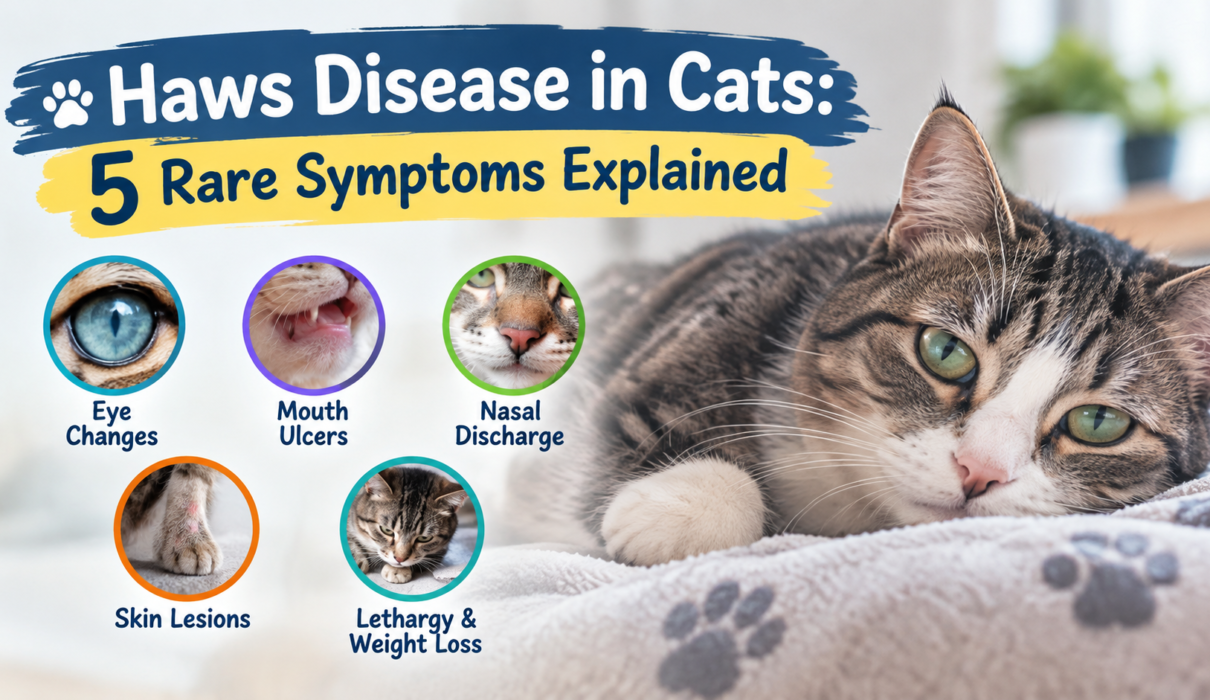
Haws Disease in Cats: 5 Rare Symptoms Explained
Haws Disease in Cats is an unusual condition that can make a cat’s third eyelids suddenly become more visible. The change can look alarming, especially when both eyes are affected. In many cases, however, the eye itself may not appear severely inflamed or painful.
Haws disease is often associated with an underlying health problem, particularly gastrointestinal issues. This means that an unusual eye appearance may sometimes be an important clue that something else is affecting your cat.
Understanding the symptoms can help cat owners recognize when a veterinary examination is necessary. In this first part, we will explain what Haws disease is, how it affects the third eyelid, and five unusual symptoms that may occur alongside it.
What Is Haws Disease in Cats?
Haws Disease in Cats refers to a condition in which the third eyelids, also called the nictitating membranes, become noticeably elevated or protrude across part of the eyes.
Cats have a third eyelid located in the inner corner of each eye. Under normal circumstances, it is mostly hidden and may only become briefly visible when a cat is sleepy, sick, or experiencing certain temporary conditions.
With Haws disease, the third eyelids can remain noticeably elevated. The change may occur in both eyes at the same time.
One important feature is that the eyes may not necessarily look severely red or painful. Instead, the most obvious sign can simply be that a pale or whitish membrane is covering part of the eye.
Haws disease is generally considered a sign associated with another problem rather than a disease that should be viewed completely on its own. Gastrointestinal disturbances, parasites, and other illnesses may be associated with this unusual eye appearance.
Because several different conditions can cause changes in a cat’s eyes, it is important not to assume that every visible third eyelid is Haws disease.
Haws Disease in Cats: Understanding the Third Eyelid
The third eyelid plays an important protective role in a cat’s eye. It helps protect the surface of the eye and can help spread moisture across the cornea.
Unlike the upper and lower eyelids, the third eyelid is located toward the inner corner of the eye. When a cat is healthy and alert, it is usually not very noticeable.
When the third eyelid becomes elevated, owners may suddenly notice a pale membrane extending over part of one or both eyes.
Why Does the Third Eyelid Become Visible?
There are several possible reasons a cat’s third eyelid may become visible. Illness, dehydration, eye irritation, neurological problems, and other conditions can affect the appearance of the eyes.
In Haws Disease in Cats, the elevation of the third eyelids may occur without the severe redness or obvious eye pain that can accompany some other eye disorders.
This is one reason Haws disease can be confusing for owners. The cat may appear relatively comfortable even though its eyes look different.
However, a visible third eyelid should not automatically be considered harmless. A veterinarian may need to determine whether the change is related to Haws disease or another medical condition.
Haws Disease in Cats: 5 Rare Symptoms to Watch For
Recognizing the symptoms associated with Haws Disease in Cats can help you decide when your cat needs professional attention.
The following five signs are especially important to understand.
Haws Disease in Cats Can Cause Protruding or Elevated Third Eyelids
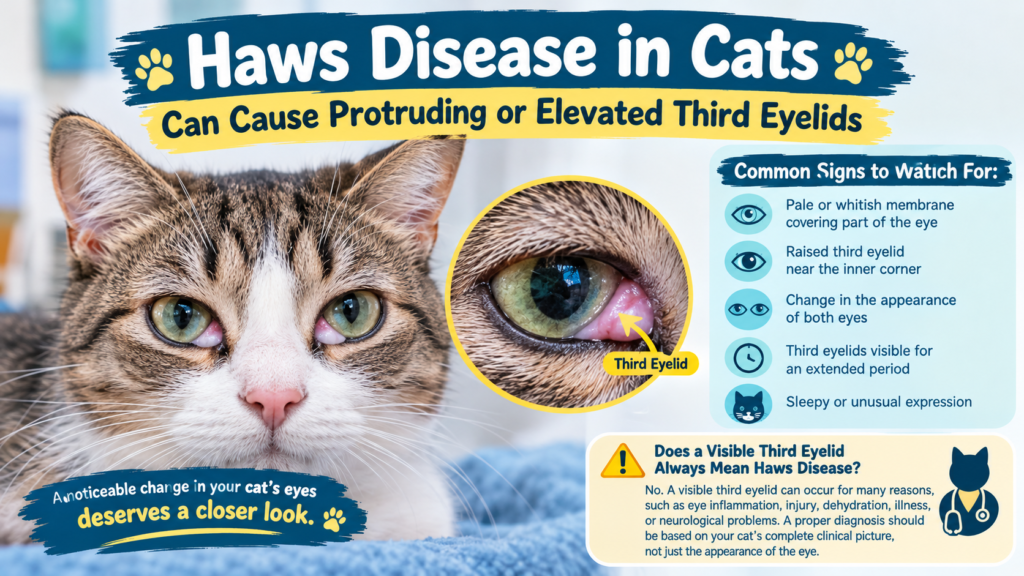
One of the most noticeable signs of Haws Disease in Cats is the elevation of the third eyelids.
Instead of remaining mostly hidden, the third eyelids may extend upward from the inner corners of the eyes and cover a noticeable portion of the eye surface.
The appearance can be especially obvious when your cat is awake and looking directly at you.
You may notice:
- A pale or whitish membrane covering part of the eye
- A raised third eyelid near the inner corner
- A change in the appearance of both eyes
- The third eyelids remaining visible for an extended period
- An unusual or sleepy-looking expression
The amount of the eye covered by the third eyelid can vary. Some cats may have only a small portion visible, while in other cases the membrane can become much more prominent.
If the change is sudden or persistent, it is a good idea to have your cat examined by a veterinarian.
Does a Visible Third Eyelid Always Mean Haws Disease?
No. A visible third eyelid can occur for many reasons.
For example, eye inflammation, injury, dehydration, illness, or neurological problems may also cause abnormal third-eyelid appearance.
This is why diagnosis should be based on your cat’s complete clinical picture rather than the appearance of the eye alone.
Haws Disease in Cats Can Affect Both Eyes
Another unusual feature of Haws Disease in Cats is that the third-eyelid changes may affect both eyes.
When both third eyelids become elevated at approximately the same time, the change may be more suggestive of a systemic or underlying problem rather than a simple injury affecting one eye.
For example, if your cat has:
- Elevated third eyelids in both eyes
- Diarrhea
- Reduced appetite
- Weight loss
- Vomiting
- Changes in normal activity
the veterinarian may consider whether an underlying illness is contributing to the eye changes.
Bilateral vs. One-Sided Eye Changes
A problem affecting only one eye can sometimes be associated with local issues such as an injury, foreign material, inflammation, or another eye disorder.
When both eyes show similar third-eyelid elevation, the veterinarian may look more closely at the cat’s overall health.
This does not mean that bilateral third-eyelid elevation automatically confirms Haws disease. Instead, it provides an important clue that should be evaluated alongside other symptoms.
Haws Disease in Cats May Occur Alongside Digestive Problems
Digestive problems are particularly important when discussing Haws Disease in Cats.
Some cats with Haws disease may also have gastrointestinal symptoms. These can include diarrhea, changes in stool consistency, vomiting, reduced appetite, or other digestive disturbances.
You might notice that your cat’s eyes look unusual at the same time that its litter-box habits change.
Possible digestive symptoms include:
- Loose or watery stools
- More frequent bowel movements
- Vomiting
- Reduced appetite
- Weight loss
- Abdominal discomfort
- Changes in normal energy levels
Not every cat with digestive disease will develop Haws disease, and not every cat with visible third eyelids has gastrointestinal disease.
However, when eye changes and digestive symptoms occur together, the combination is important information for your veterinarian.
Why Digestive Symptoms Matter
Cats can sometimes hide signs of illness. A cat may continue behaving normally even when a gastrointestinal problem is developing.
Changes in stool, appetite, body weight, and activity can therefore provide useful clues.
If your cat develops persistent diarrhea or vomiting along with a newly visible third eyelid, do not focus only on the eyes. Your veterinarian may want to investigate the cat’s overall health.
Haws Disease in Cats and End Stage Inflammatory Bowel Disease in Cats
Gastrointestinal disease is an important consideration when evaluating a cat with unusual third-eyelid elevation.
End Stage Inflammatory Bowel Disease in Cats is a term used to describe very advanced or severe intestinal disease. Inflammatory bowel disease, commonly called IBD, involves chronic inflammation within the gastrointestinal tract.
Cats with significant intestinal disease may experience symptoms such as:
- Chronic diarrhea
- Repeated vomiting
- Poor appetite
- Weight loss
- Reduced energy
- Changes in stool
- Difficulty maintaining a healthy body condition
However, it is important to understand that seeing a cat with Haws disease does not mean that the cat has end-stage IBD.
Haws disease can occur in association with gastrointestinal disturbances, but a veterinarian must determine what is actually causing the symptoms.
Can Haws Disease Mean My Cat Has End Stage IBD?
Not necessarily.
This is an important distinction because cat owners may become frightened after noticing prominent third eyelids and reading about serious intestinal disease.
A cat with Haws disease may have a relatively temporary gastrointestinal problem, parasites, or another underlying condition. The presence of third-eyelid elevation alone cannot establish the severity or cause of gastrointestinal disease.
If your cat also has chronic vomiting, persistent diarrhea, significant weight loss, or appetite changes, veterinary testing becomes especially important.
The veterinarian may recommend stool testing, blood work, imaging, or other diagnostic tests depending on the cat’s symptoms.
Haws Disease in Cats May Be Associated With Appetite or Weight Changes
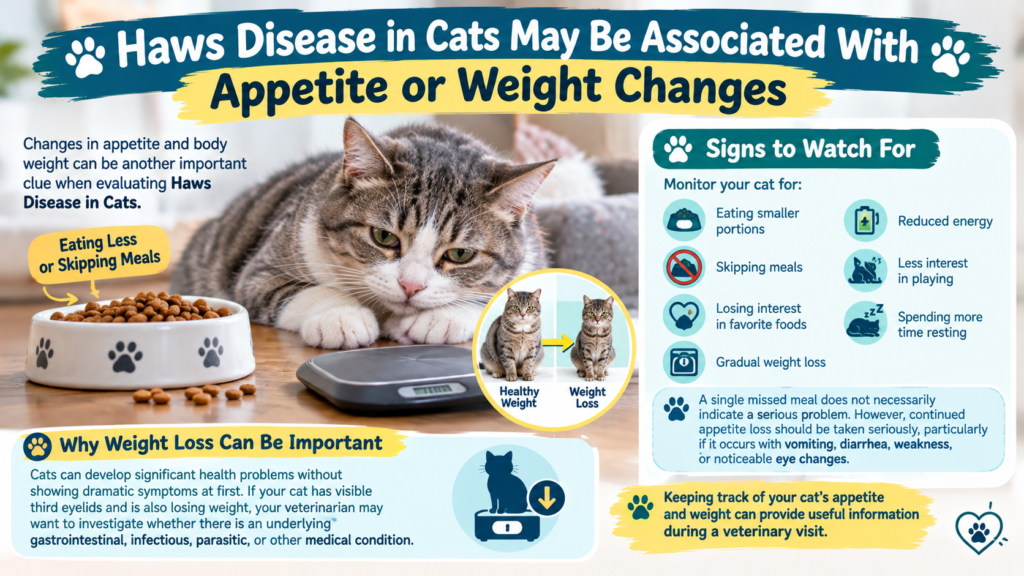
Changes in appetite and body weight can be another important clue when evaluating Haws Disease in Cats.
A cat that suddenly eats less may have many possible underlying problems. Gastrointestinal illness is one possibility, but dental disease, infections, pain, stress, and other medical conditions can also reduce appetite.
Weight loss is especially important when it happens gradually and continues over time.
Signs to Watch For
Monitor your cat for:
- Eating smaller portions
- Skipping meals
- Losing interest in favorite foods
- Gradual weight loss
- Reduced energy
- Less interest in playing
- Spending more time resting
A single missed meal does not necessarily indicate a serious problem. However, continued appetite loss should be taken seriously, particularly if it occurs together with vomiting, diarrhea, weakness, or noticeable eye changes.
Why Weight Loss Can Be Important
Cats can develop significant health problems without showing dramatic symptoms at first.
If your cat has visible third eyelids and is also losing weight, your veterinarian may want to investigate whether there is an underlying gastrointestinal, infectious, parasitic, or other medical condition.
Keeping track of your cat’s appetite and weight can therefore provide useful information during a veterinary visit.
Haws Disease in Cats Can Cause an Unusual Eye Appearance Without Typical Eye Pain
Another feature that may make Haws Disease in Cats difficult for owners to recognize is that the eye may look abnormal without showing the classic signs of severe eye pain.
For example, you may notice the third eyelid but not see obvious squinting or severe redness.
This can make some owners believe that the eye problem is not important.
However, an unusual eye appearance should still be evaluated if it persists.
Haws Disease vs. Painful Eye Conditions
Some eye problems can cause:
- Severe redness
- Squinting
- Frequent blinking
- Pawing at the eye
- Excessive tearing
- Thick discharge
- Swelling
- Cloudiness
- Obvious discomfort
These signs can indicate a different or more serious eye problem.
With suspected Haws disease, the primary visible change may instead be elevation of the third eyelids.
Still, cats do not always show obvious signs of pain, so the absence of squinting or vocalization does not guarantee that an eye problem is harmless.
When Should You Contact a Veterinarian?
Contact your veterinarian if your cat develops a persistent or sudden change in the appearance of its eyes.
Veterinary attention is particularly important if the third-eyelid change occurs with:
- Vomiting
- Persistent diarrhea
- Loss of appetite
- Weight loss
- Weakness
- Eye redness
- Eye discharge
- Squinting
- Vision changes
- Severe lethargy
Early evaluation can help identify the underlying problem and determine whether the eye changes are truly related to Haws disease.
Haws Disease in Cats vs. Cat Scratch Disease Eye
It is important to understand that Haws Disease in Cats and Cat Scratch Disease Eye are not the same condition.
Cat-scratch disease is associated with Bartonella bacteria. Cats can carry Bartonella, and in some circumstances the bacteria can be associated with illness in cats or eye-related disease in humans.
Eye problems caused by infection or inflammation can produce symptoms such as redness, discharge, swelling, squinting, or discomfort.
By contrast, suspected Haws disease is primarily recognized by elevation or protrusion of the third eyelids, often involving both eyes.
How Can They Look Different?
A cat with a visible third eyelid may not necessarily have an infectious eye disease.
Signs that may point toward another eye problem include:
- Significant redness
- Thick or unusual eye discharge
- Squinting
- Frequent blinking
- Pawing at the eye
- Swelling
- Cloudiness
- Obvious eye discomfort
- Changes in vision
These symptoms should not be ignored.
If your cat develops unusual eye changes, a veterinarian can determine whether the problem is related to Haws disease, an eye infection, injury, inflammation, or another medical condition.
Why Self-Diagnosis Can Be Risky
Several eye conditions can appear similar to an untrained observer.
For example, a third eyelid that suddenly becomes visible may be related to systemic illness, while redness or discharge may indicate a separate eye problem.
Instead of assuming the cause, it is safer to have persistent or concerning eye changes examined professionally.
What Causes Haws Disease in Cats?
The exact cause of Haws Disease in Cats is not always immediately obvious.
In many cases, veterinarians consider the cat’s overall health rather than looking only at the eyes.
Possible factors associated with third-eyelid elevation can include gastrointestinal disturbances, intestinal parasites, infections, and other illnesses.
Gastrointestinal Problems
Digestive disturbances are an important consideration.
A cat experiencing diarrhea, vomiting, appetite changes, or other gastrointestinal symptoms may also develop noticeable third eyelids.
The digestive problem may be temporary or may require further investigation if it continues.
Intestinal Parasites
Parasites can affect a cat’s digestive system and may contribute to illness.
Depending on the parasite, cats can develop diarrhea, weight loss, poor body condition, or changes in appetite.
A veterinarian may recommend fecal testing when gastrointestinal symptoms are present.
Infections and Other Illnesses
Infections and other systemic health problems can also cause cats to feel unwell and may be associated with changes in the appearance of the third eyelids.
This is why the veterinarian will usually consider the cat’s entire clinical history.
The presence of an elevated third eyelid by itself does not identify one specific disease.
How Veterinarians Diagnose Haws Disease in Cats
There is not always one single test that confirms Haws Disease in Cats.
Instead, veterinarians generally evaluate the cat’s eyes together with its general health and other symptoms.
Physical Examination
The veterinarian may begin by examining:
- The eyes
- Third eyelids
- Mouth and gums
- Skin and coat
- Body condition
- Hydration
- Temperature
- Abdomen
- Overall activity and behavior
The veterinarian may also ask when the eye changes started and whether they have become better or worse.
Medical History
Your cat’s recent history can provide valuable clues.
You may be asked about:
- Diarrhea
- Vomiting
- Appetite
- Weight changes
- Litter-box habits
- Recent medications
- Parasite prevention
- Changes in behavior
- Recent illnesses
- Possible exposure to other animals
Providing accurate information can help the veterinarian narrow down possible causes.
Fecal Testing
If digestive symptoms are present, fecal testing may be recommended to look for intestinal parasites or other abnormalities.
This can be especially useful when diarrhea occurs alongside visible third eyelids.
Blood Tests
Blood work may be recommended depending on your cat’s age, symptoms, and overall condition.
Blood tests can provide information about general health and may help identify signs that require further investigation.
Additional Testing
If the veterinarian suspects another underlying disease, additional diagnostic tests may be recommended.
These could include imaging or specialized testing based on the individual cat.
The goal is not simply to identify the visible eye change but to determine why it is happening.
Haws Disease in Cats: Treatment and Management
Treatment for Haws Disease in Cats depends largely on the underlying cause.
There is no single treatment that is appropriate for every cat with visible third eyelids.
If gastrointestinal disease is contributing to the problem, the veterinarian may focus on treating or managing the digestive condition.
If parasites are identified, appropriate veterinary parasite treatment may be recommended.
Treating the Underlying Problem
Depending on the diagnosis, management may involve:
- Treatment for intestinal parasites
- Dietary management
- Treatment of an identified infection
- Supportive care
- Management of gastrointestinal disease
- Fluid therapy when dehydration is present
- Additional medication when prescribed by a veterinarian
The appropriate approach depends on your cat’s diagnosis.
Do Not Give Human Medication
Cat owners should avoid giving human medications unless specifically instructed by a veterinarian.
Some medications that are safe for people can be dangerous or even toxic to cats.
If your cat is vomiting, has diarrhea, appears weak, or has unusual eye changes, contact a veterinary professional before trying home medication.
Haws Disease in Cats: When Does It Require Urgent Veterinary Care?
While the appearance of the third eyelids can be alarming, the urgency depends on the cat’s complete set of symptoms.
Haws Disease in Cats should receive prompt veterinary attention when it occurs with signs of significant illness.
Seek veterinary care if your cat develops:
- Severe or persistent vomiting
- Frequent or severe diarrhea
- Refusal to eat
- Significant weight loss
- Extreme weakness
- Dehydration
- Severe lethargy
- Eye swelling
- Severe eye redness
- Thick eye discharge
- Squinting or obvious pain
- Sudden vision changes
- A cloudy or damaged-looking eye
A cat that appears very sick should not be monitored at home for an extended period without professional advice.
Eye Pain Is Especially Important
If your cat is repeatedly squinting, rubbing its eye, keeping an eye closed, or reacting painfully when the face is touched, another eye condition may be present.
These symptoms deserve prompt examination because some eye problems can worsen quickly.
Haws Disease in Cats: Recovery and Prognosis
The recovery time for Haws Disease in Cats depends on the underlying cause.
If the third-eyelid elevation is associated with a temporary gastrointestinal disturbance, the eye appearance may improve as the cat recovers.
However, if an underlying illness continues, the third eyelids may remain visible until the primary problem is addressed.
What Should Cat Owners Monitor?
During recovery, keep an eye on:
- Appetite
- Water intake
- Body weight
- Stool consistency
- Vomiting
- Energy level
- Eye appearance
- Third-eyelid elevation
- General behavior
Keeping track of these changes can help you recognize whether your cat is improving.
When Should You Follow Up?
If the third eyelids remain elevated, become more noticeable, or are accompanied by new symptoms, contact your veterinarian.
A follow-up examination may be necessary if the original symptoms do not improve as expected.
Can Haws Disease in Cats Be Prevented?
There is not always a specific way to prevent Haws Disease in Cats, especially because it can be associated with different underlying conditions.
However, good general healthcare can help reduce the risk of some problems and make illnesses easier to identify early.
Helpful Preventive Measures
Consider:
- Regular veterinary checkups
- Appropriate parasite prevention
- A balanced diet
- Clean drinking water
- Good litter-box hygiene
- Monitoring appetite
- Monitoring body weight
- Watching stool changes
- Seeking veterinary care for persistent digestive symptoms
Regular observation is especially useful because cats often hide early signs of illness.
Final Thoughts on Haws Disease in Cats
Haws Disease in Cats can be surprising because the most noticeable symptom may simply be an elevated third eyelid. When both eyes are affected, especially alongside digestive symptoms, it can be an important clue that your cat is experiencing an underlying health problem.
The five symptoms discussed in this first part include elevated third eyelids, changes affecting both eyes, digestive problems, appetite or weight changes, and an unusual eye appearance without obvious severe pain.
Haws disease does not automatically mean that a cat has severe intestinal disease or End Stage Inflammatory Bowel Disease in Cats. Likewise, unusual eye symptoms should not automatically be assumed to be Cat Scratch Disease Eye or another specific condition.
A veterinarian can evaluate the complete combination of eye, digestive, and general health symptoms to determine the most likely cause.
In Part 2, we will cover the difference between Haws disease and Cat Scratch Disease Eye, possible causes, diagnosis, treatment, recovery, and when Haws disease requires urgent veterinary care.
Haws Disease in Cats: Frequently Asked Questions
What is Haws Disease in Cats?
Haws Disease in Cats is a condition characterized by elevation or protrusion of the third eyelids, often affecting both eyes. It may occur alongside an underlying illness, particularly gastrointestinal problems.
Is Haws Disease in Cats dangerous?
Haws disease itself may not always represent a life-threatening condition, but the underlying cause can sometimes require treatment. Persistent third-eyelid elevation should therefore be evaluated by a veterinarian.
What causes Haws Disease in Cats?
Possible associated factors include gastrointestinal disturbances, parasites, infections, and other systemic illnesses. A veterinarian must evaluate the cat’s individual symptoms to determine the likely cause.
Can Haws Disease in Cats be related to diarrhea?
Yes, Haws disease can occur alongside gastrointestinal problems such as diarrhea. When a cat develops both visible third eyelids and persistent diarrhea, veterinary evaluation can help determine the underlying problem.
Is Haws Disease connected to inflammatory bowel disease?
There can be an association between third-eyelid elevation and gastrointestinal disease, but visible third eyelids do not automatically mean that a cat has inflammatory bowel disease.
What is End Stage Inflammatory Bowel Disease in Cats?
End Stage Inflammatory Bowel Disease in Cats refers to severe or advanced intestinal disease. Cats with significant IBD may experience chronic digestive symptoms, poor appetite, weight loss, and reduced overall condition. A veterinarian must determine the severity and cause of a cat’s gastrointestinal disease.
What is Cat Scratch Disease Eye?
Cat Scratch Disease Eye refers to an eye-related manifestation associated with cat-scratch disease, which is linked to Bartonella bacteria. Eye symptoms can vary, and suspected eye infections or inflammation should be evaluated by a veterinarian or appropriate medical professional.
Can Haws Disease cause blindness?
Haws disease itself is not generally considered a direct cause of blindness. However, any cat experiencing sudden vision changes, severe eye inflammation, cloudiness, or obvious eye pain should receive prompt veterinary attention.
How long does Haws Disease in Cats last?
The duration can vary depending on the underlying cause. In some cats, the third eyelids may return toward normal as the associated illness resolves. Persistent symptoms should be discussed with a veterinarian.
When should I take my cat to the vet?
Take your cat to a veterinarian when third-eyelid changes persist, become worse, or occur with vomiting, diarrhea, appetite loss, weight loss, weakness, eye pain, redness, discharge, or vision changes.
Conclusion: Haws Disease in Cats Should Not Be Ignored
Haws Disease in Cats is an unusual condition that can be recognized by prominent or elevated third eyelids, often in both eyes. Although the appearance can be concerning, the most important question is why the change is occurring.
Digestive problems, parasites, infections, and other health issues may be associated with unusual third-eyelid elevation. This is why looking at your cat’s overall health is more useful than focusing on the eyes alone.
It is also important to distinguish Haws disease from other conditions such as Cat Scratch Disease Eye. Similarly, visible third eyelids do not automatically mean that your cat has End Stage Inflammatory Bowel Disease in Cats.
If your cat develops persistent third-eyelid elevation, especially alongside diarrhea, vomiting, appetite loss, weight loss, eye pain, redness, or weakness, veterinary evaluation is the safest approach.
Early attention can help identify the underlying problem and give your cat the best opportunity for appropriate treatment and recovery.
1 Comment