

 By
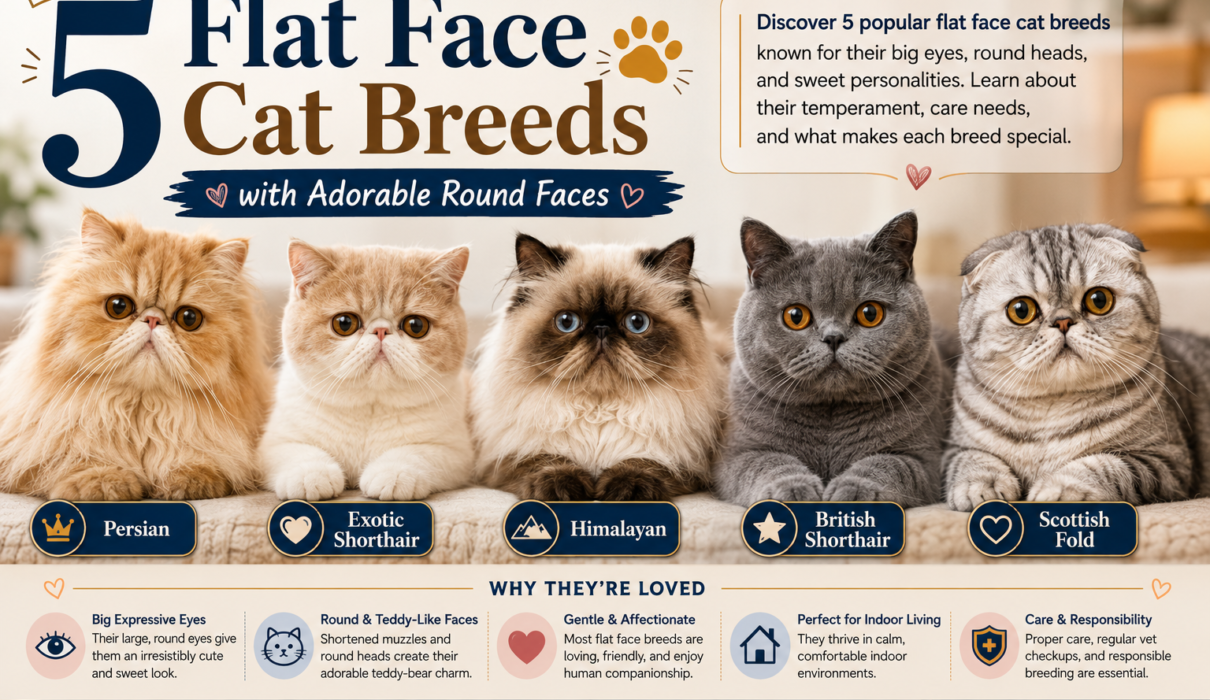
By 5 Flat Face Cat Breeds with Adorable Round Faces
If you love cats with big expressive eyes, rounded heads, and irresistibly cute faces, flatface cat breeds are sure to catch your attention. These distinctive cats are known for their shortened muzzles and unique facial structures, which give them an adorable, almost teddy-bear-like appearance.
From the luxurious Persian to the playful Exotic Shorthair, several breeds are famous for their flat or shortened faces. Many of these cats are also known for being gentle, affectionate, and well suited to indoor family life or flatface cat breeds.
In this first part of our guide, we’ll introduce five popular flat face cat breeds, explore their personalities and care requirements, and explain what prospective owners should know before bringing one home.
What Are Flatface Cat Breeds?
The term flatface cat breeds generally refers to cats with shortened facial bones and noticeably short muzzles. This facial structure is commonly associated with brachycephaly, a trait that can give cats their characteristic round heads, large-looking eyes, and compact facial appearance.
However, not every cat with a round face is truly flat-faced. Some breeds naturally have broad, rounded heads without having an extremely shortened muzzle.
These cats can be incredibly charming, but appearance should never be the only consideration when choosing a pet. Some cats with more extreme facial structures can be prone to breathing, dental, eye, and heat-related problems. Responsible breeding and regular veterinary care are therefore especially important.
Persian Cat
The Persian cat is arguably the most recognizable of all flat-faced cat breeds. With its luxurious coat, large expressive eyes, small nose, and rounded head, the Persian has been a favorite among cat lovers for generations.
Persians are available in numerous colors and patterns, and their long coats give them an elegant, glamorous appearance.
Personality
Despite their sophisticated appearance, Persian cats are generally gentle and affectionate companions. They often enjoy spending time with their owners and prefer a peaceful home environment over constant noise and activity.
They aren’t usually as energetic as some other breeds, making them appealing to people looking for a relaxed companion.
Their calm temperament is one reason Persians are often considered when people search for the calmest cat breeds.
Grooming Needs
A Persian’s beautiful long coat requires regular grooming. Daily brushing can help prevent tangles and mats, while regular facial cleaning may be necessary for cats that experience tear staining or flatface cat breeds.
Owners should also monitor their cat’s eyes, teeth, and breathing and schedule routine veterinary examinations.
Why Choose a Persian?
A Persian may be a good choice if you want:
- A calm and gentle companion
- A beautiful long-haired cat
- An affectionate indoor pet
- A cat that enjoys quiet environments
However, their grooming and potential health needs mean they require a committed owner.
Exotic Shorthair
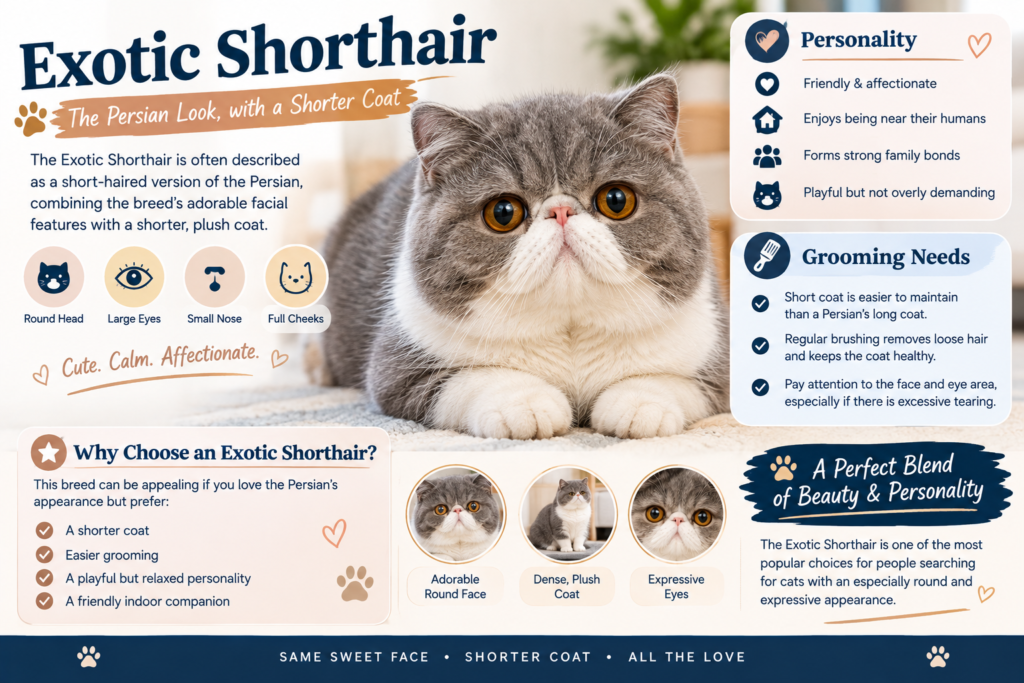
Often described as a short-haired version of the Persian, the Exotic Shorthair combines the adorable facial features of the Persian with a shorter, plush coat.
Their round heads, large eyes, small noses, and full cheeks give them an especially cute appearance. Their dense coat feels soft and plush, making them look like living stuffed animals.
Personality
Exotic Shorthairs are generally friendly, affectionate, and easygoing. They often enjoy sitting near their humans and can form strong bonds with their families.
While they can be playful, they typically aren’t constantly demanding attention. This makes them a good option for people who want an affectionate cat without an extremely high-energy personality.
Grooming Needs
Their short coat is easier to maintain than a Persian’s long coat, but regular brushing is still helpful. It can remove loose hair and keep the dense coat looking healthy.
Owners should also pay attention to the face and eye area, particularly if the cat experiences excessive tearing.
Why Choose an Exotic Shorthair?
This breed can be appealing if you love the Persian’s appearance but prefer:
- A shorter coat
- Easier grooming
- A playful but relaxed personality
- A friendly indoor companion
The Exotic Shorthair is one of the most popular choices for people searching for cats with an especially round and expressive appearance or flatface cat breeds.
Himalayan Cat
The Himalayan cat combines the luxurious appearance associated with Persian cats with the striking color-point pattern traditionally associated with Siamese cats.
They typically have a rounded head, short muzzle, large eyes, and a long, flowing coat. Their darker ears, face, legs, and tail contrast beautifully with their lighter body.
Personality
Himalayans are often affectionate, gentle, and people-oriented. They can enjoy spending time with their owners and may happily settle beside you for a quiet afternoon.
Although they can have playful moments, many prefer a comfortable indoor lifestyle rather than constant high-energy activity or flatface cat breeds.
This combination of affectionate behavior and a relaxed temperament makes them appealing to people looking for affectionate cat breeds that also enjoy peaceful surroundings.
Grooming Needs
Their long coat requires consistent grooming. Regular brushing helps prevent mats and removes loose hair.
Because of their facial structure, some Himalayan cats may also experience tear staining. Gentle cleaning around the eyes can help keep the area clean, but persistent discharge should be discussed with a veterinarian.
Why Choose a Himalayan?
A Himalayan may suit someone looking for:
- A beautiful color-point cat
- An affectionate companion
- A relatively relaxed indoor lifestyle
- A long-haired breed with a distinctive appearance
Their coat and potential facial-health concerns mean owners should be prepared for regular care.
British Shorthair
The British Shorthair is famous for its round cheeks, broad head, large eyes, and thick plush coat. Although it does not have the same extremely shortened facial structure as some Persian-type cats, its naturally rounded appearance makes it one of the most recognizable cat breeds with round faces.
Their famous “teddy bear” appearance is one of the main reasons they are so popular.
Personality
British Shorthairs are typically calm, easygoing, and independent. They often enjoy being around their families without constantly demanding to be carried or entertained or flatface cat breeds.
They can be affectionate while still appreciating their personal space.
Their relaxed temperament makes them a popular choice among people researching the calmest cat breeds.
Grooming Needs
Their short, dense coat is relatively straightforward to maintain. Weekly brushing can help remove loose hair and keep the coat looking healthy.
Like all cats, they benefit from regular dental care, veterinary checkups, appropriate nutrition, and opportunities for exercise.
Why Choose a British Shorthair?
This breed may be ideal if you’re looking for:
- A round-faced appearance
- A calm personality
- A plush short coat
- An affectionate but independent companion
- A cat suitable for quieter homes
The British Shorthair is particularly appealing to owners who love the look of round-faced cats but want a breed with a less extreme facial structure or flatface cat breeds.
Scottish Fold
The Scottish Fold is instantly recognizable because of its unusual folded ears. Combined with its rounded head, large eyes, and full cheeks, these features give the breed an exceptionally cute appearance.
Not every Scottish Fold has the same degree of facial roundness, but the breed is widely associated with a soft, rounded look.
Personality
Scottish Folds are often described as friendly, adaptable, and affectionate. Many enjoy spending time with their families and can adapt well to indoor environments.
They can be playful without being overwhelmingly energetic, making them attractive to households looking for a companionable cat.
Grooming Needs
Grooming depends on whether the individual cat has a short or long coat. Regular brushing helps reduce loose hair and prevents tangles.
Owners should also pay attention to the ears. Because of the folded-ear structure, gentle routine monitoring is important.
Important Health Consideration
The folded-ear trait is linked to a genetic cartilage abnormality that can also affect bones and joints. Anyone considering a Scottish Fold should research responsible breeding practices and discuss the breed’s potential health concerns with a veterinarian or flatface cat breeds.
A cat’s welfare should always come before selecting a particular appearance.
Why Choose a Scottish Fold?
People may be attracted to Scottish Folds because of their:
- Unique folded ears
- Round facial appearance
- Friendly temperament
- Adaptability to indoor life
- Affectionate nature
However, prospective owners should carefully consider the breed’s welfare and genetic health issues before choosing one.
Selkirk Rex
The Selkirk Rex stands out from other flatface cat breeds because of its unusual curly coat. Instead of having a completely smooth coat, this breed can have soft waves or loose curls that give it a distinctive, plush appearance.
Its rounded head, full cheeks, and expressive eyes add to its teddy-bear-like look.
Personality
Selkirk Rex cats are generally friendly, affectionate, and adaptable. Many enjoy being around their owners and can make wonderful companions for families.
They tend to have a playful side but can also be content relaxing beside their favorite people.
Their combination of a unique appearance and friendly temperament makes them particularly appealing to people searching for unusual cat breeds with round faces.
Grooming Needs
The curly coat needs regular attention, but excessive brushing can sometimes disrupt the natural curl pattern.
A gentle grooming routine is usually preferable. Owners should also monitor the ears and eyes and maintain regular dental care.
Is the Selkirk Rex Right for You?
Consider this breed if you want:
- A unique curly-coated cat
- An affectionate companion
- A playful but adaptable personality
- A distinctive rounded appearance
Burmese Cat
The Burmese cat has a compact, muscular body and a rounded head with large, expressive eyes. Although it isn’t as extremely flat-faced as a Persian, its rounded facial structure makes it an attractive option for people interested in cat breeds with round faces.
Its short, glossy coat is also relatively easy to maintain.
Personality
Burmese cats are known for being social, intelligent, and people-oriented. They often form strong bonds with their owners and enjoy participating in household activities.
Unlike some quieter breeds, Burmese cats can be quite energetic and playful. They appreciate interactive toys, climbing opportunities, and regular human attention.
This makes them a strong choice for people looking for affectionate cat breeds with an active personality.
Grooming Needs
Their short coat generally requires minimal grooming. A weekly brushing session can help remove loose hair while providing an opportunity for bonding.
Regular nail trimming, dental care, and veterinary checkups should also be part of their routine.
Is the Burmese Right for You?
The Burmese may be a good match if you want:
- A highly social cat
- An affectionate companion
- A playful and intelligent breed
- A short coat with simple grooming needs
However, they may not be ideal for people who are away from home for very long periods because they generally enjoy companionship.
British Longhair
The British Longhair combines the rounded facial appearance associated with the British Shorthair with a long, luxurious coat.
Its broad head, full cheeks, large eyes, and fluffy appearance give it a soft, cuddly look.
Personality
British Longhairs are generally known for their calm and easygoing nature. They can be affectionate without constantly demanding attention or flatface cat breeds.
They often enjoy relaxing around their families and can adapt well to quieter indoor households.
For people searching for the calmest cat breeds, the British Longhair can be an appealing option because of its typically relaxed temperament.
Grooming Needs
The long coat requires more maintenance than that of the British Shorthair.
Regular brushing helps prevent tangles and mats. During periods of heavier shedding, more frequent grooming may be necessary.
Owners should also keep an eye on weight because less-active cats can gain excess weight if their diet and exercise aren’t properly managed.
Is the British Longhair Right for You?
This breed can be suitable for people who want:
- A fluffy, rounded appearance
- A relaxed companion
- An indoor cat
- A gentle and affectionate personality
Be prepared, however, to invest time in regular coat care.
Munchkin Cat
The Munchkin cat is best known for its unusually short legs, but many individuals also have a rounded head and expressive eyes or flatface cat breeds.
Their distinctive body shape gives them a unique appearance that has made them popular among cat enthusiasts.
Personality
Munchkins are often playful, curious, and confident. Their short legs don’t necessarily prevent them from being active, and many enjoy chasing toys and exploring their surroundings.
They can also be affectionate with their families and enjoy interactive play.
Because they tend to be curious and social, they often benefit from plenty of toys, scratching posts, and safe areas to explore.
Grooming Needs
Munchkin grooming requirements depend on the individual cat’s coat length.
Short-haired cats generally need less brushing, while long-haired varieties require more frequent grooming.
Routine dental care, nail trimming, healthy nutrition, and veterinary examinations are important regardless of coat type.
Health and Responsible Breeding
The short-legged appearance comes from a genetic mutation affecting limb development. Prospective owners should research responsible breeding practices and discuss potential orthopedic concerns with a veterinarian.
The goal should always be to prioritize a cat’s health and quality of life rather than breeding for extreme physical characteristics.
Is the Munchkin Right for You?
A Munchkin may appeal to owners who want:
- A playful personality
- A highly distinctive appearance
- An interactive companion
- A cat that enjoys exploring and playing
Scottish Straight
The Scottish Straight is closely related to the Scottish Fold but has normally positioned ears rather than folded ears.
It retains many of the characteristics people love about Scottish cats, including a rounded head, large eyes, and full cheeks.
Personality
Scottish Straights are often described as friendly, adaptable, and affectionate. Many enjoy spending time with their families while still being comfortable entertaining themselves or flatface cat breeds.
Their generally moderate activity level can make them suitable for different types of households.
Grooming Needs
Scottish Straights can have short or long coats, so grooming requirements vary.
Short-haired cats typically need only occasional brushing, while long-haired individuals benefit from more frequent grooming.
As with any breed, regular veterinary care, dental hygiene, healthy nutrition, and appropriate exercise are essential.
Is the Scottish Straight Right for You?
This breed may be worth considering if you want:
- A rounded facial appearance
- A friendly companion
- A moderate activity level
- A cat without the characteristic folded ears of the Scottish Fold
Flat Face vs. Round Face: What’s the Difference?
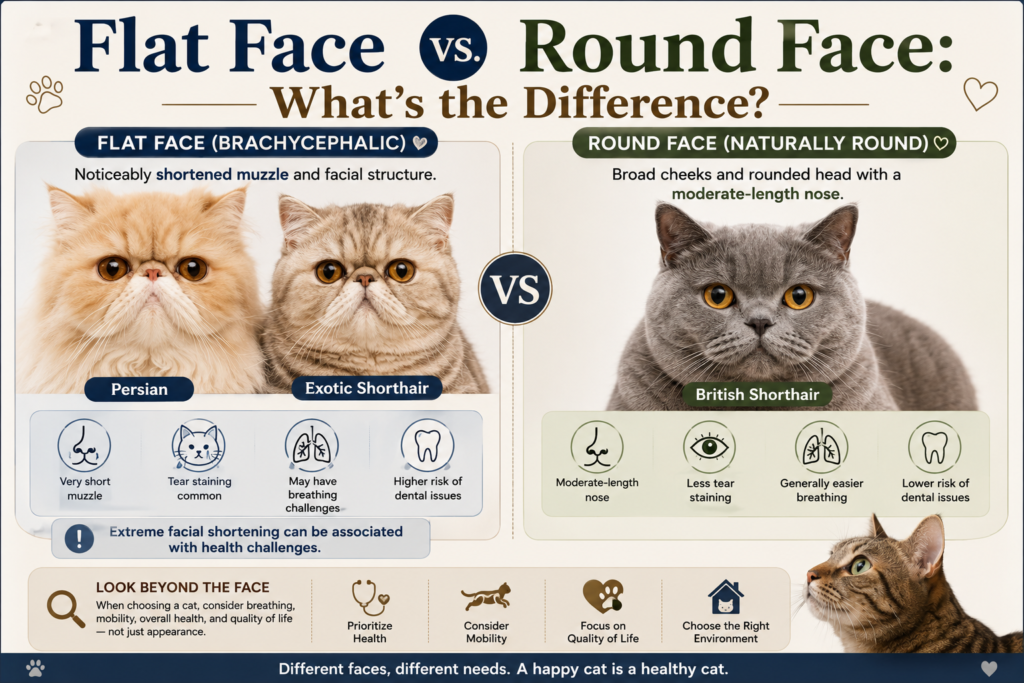
It’s easy to assume that every cat with a round face is a flat-faced cat, but that’s not necessarily true.
A truly flat-faced cat generally has a noticeably shortened muzzle and facial structure. A naturally round-faced cat may have broad cheeks and a rounded head while retaining a more moderate-length nose.
For example, the Persian and Exotic Shorthair have much more obvious shortened facial structures. In contrast, the British Shorthair is better known for its naturally broad head, full cheeks, and rounded appearance.
This distinction is important because extreme facial shortening can be associated with health challenges.
When choosing a cat, look beyond photographs and consider the animal’s breathing, mobility, overall health, and quality of life.
Are Flat-Faced Cats Affectionate?
Many popular flatface cat breeds are known for being affectionate and people-oriented, but personality ultimately depends on the individual cat.
Persians, Exotic Shorthairs, and Himalayans are often valued for their gentle companionship. British Shorthairs may be affectionate while remaining more independent, while Scottish Folds can be friendly and adaptable or flatface cat breeds.
If affection is important to you, look for a cat that:
- Enjoys human interaction
- Is comfortable being handled
- Shows relaxed body language
- Has been properly socialized
- Fits your household’s activity level
Rather than choosing a cat based solely on breed reputation, spend time observing the individual cat’s personality.
Health Considerations for Flatface Cat Breeds
The adorable appearance of some flat-faced cats comes from changes in their skull and facial structure. Unfortunately, more extreme facial shortening can sometimes create health challenges.
Potential concerns can include:
Breathing Problems
Some severely brachycephalic cats may have narrowed airways, making breathing more difficult, especially during exercise or hot weather.
Eye Problems
Large, prominent eyes can be more vulnerable to irritation or injury. Some cats may also experience excessive tearing.
Dental Problems
A shortened jaw can leave less room for teeth, potentially contributing to crowding and dental disease.
Heat Sensitivity
Cats with compromised airways may have more difficulty coping with heat. Keeping them in a cool, comfortable indoor environment is particularly important during hot weather.
Regular Veterinary Care
Routine veterinary examinations can help identify potential problems early. Maintaining a healthy weight is also important because excess weight can make breathing and mobility more difficult.
How to Choose the Right Flat-Faced Cat
If you’re considering one of these breeds, don’t focus on appearance alone. Think about your lifestyle and the amount of care you can realistically provide.
Ask yourself:
- Do I have enough time for grooming?
- Can I provide a safe indoor environment?
- Am I prepared for potential veterinary expenses?
- Do I want a highly social or more independent cat?
- Can I provide daily play and mental stimulation?
- Am I willing to prioritize health over extreme physical features?
For many prospective owners, a cat with a moderate facial structure may offer the rounded appearance they love while reducing some of the concerns associated with extremely shortened muzzles.
Final Thoughts
Flatface cat breeds are undeniably charming. Their round heads, expressive eyes, and distinctive facial features have made breeds such as the Persian, Exotic Shorthair, Himalayan, British Shorthair, and Scottish Fold extremely popular among cat lovers.
However, the cutest appearance isn’t always the healthiest one. When choosing a cat, temperament, grooming requirements, overall health, and responsible breeding should be just as important as appearance.
If you’re searching for cat breeds with round faces, consider both naturally rounded breeds and more strongly flat-faced varieties. And if a calm companion is your priority, several of these breeds may appeal to you as potential calmest cat breeds.
Most importantly, choose a cat whose physical structure supports a comfortable, healthy, and happy life.
Flat Face vs. Naturally Round-Faced Cats
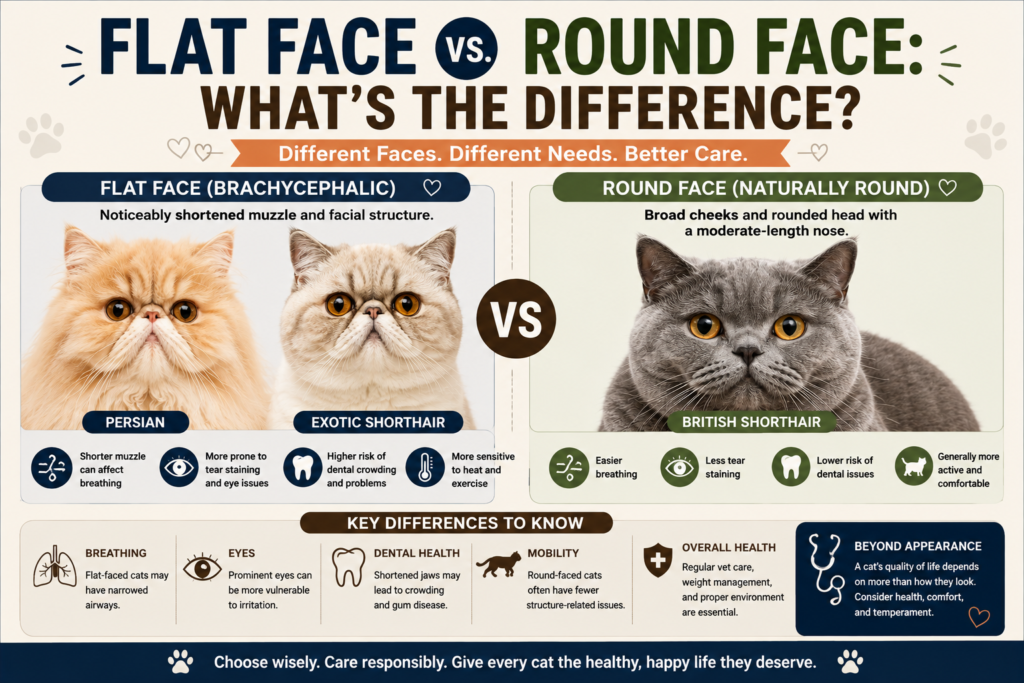
One of the biggest misconceptions about these breeds is that every cat with a round face is a flat-faced cat.
That’s not the case.
Some cats have a naturally broad skull, full cheeks, and large eyes without having a severely shortened muzzle. Others have a much more pronounced brachycephalic facial structure.
For example, Persian and Exotic Shorthair cats typically have more obvious shortened muzzles, while breeds such as the British Shorthair are famous primarily for their broad heads and rounded cheeks.
When choosing between flatface cat breeds, it’s worth looking closely at the cat’s overall facial structure rather than relying only on photographs.
How to Care for Flat-Faced and Round-Faced Cats
Regardless of breed, good care begins with understanding the individual cat’s needs.
Keep the Face Clean
Some flat-faced cats can experience tear staining or moisture around the eyes. Gentle cleaning with a suitable pet-safe method can help keep the area comfortable.
Persistent discharge, redness, swelling, or irritation should be checked by a veterinarian.
Maintain a Healthy Weight
A healthy body weight is particularly important for cats that may already have restricted airways.
Avoid excessive treats and provide an appropriate diet based on your cat’s age, size, and activity level.
Provide Indoor Comfort
Many cats with shortened facial structures can be sensitive to heat, particularly if breathing is already compromised.
Provide good ventilation, access to fresh water, shaded resting areas, and a comfortable indoor temperature.
Schedule Regular Veterinary Visits
Routine checkups allow potential breathing, dental, eye, skin, or weight problems to be identified early.
For breeds with known inherited conditions, regular monitoring becomes even more important.
Encourage Gentle Exercise
Even calm cats need activity. Interactive toys, scratching posts, food puzzles, and climbing structures can provide both physical exercise and mental stimulation or flatface cat breeds.
Which Flatface Cat Breed Is Right for You?
There isn’t one perfect breed for everyone. The right choice depends on your lifestyle, experience, available time, and expectations.
| What You’re Looking For | Breed to Consider |
| Curly coat and unique appearance | Selkirk Rex |
| Highly social and affectionate | Burmese |
| Calm and fluffy companion | British Longhair |
| Playful and unusual appearance | Munchkin |
| Friendly, rounded appearance | Scottish Straight |
If you’re specifically looking for the calmest cat breeds, the British Longhair may be worth considering.
If affection and social interaction are your priorities, the Burmese and Selkirk Rex can be attractive choices.
And if appearance is your main interest, all five breeds offer something distinctive or flatface cat breeds.
Are Flat-Faced Cats Good Family Pets?
Many can make excellent family companions, but individual temperament matters more than appearance.
Before bringing one home, consider:
-
How much time you spend at home
- Whether you have children or other pets
- How much grooming you’re comfortable doing
- Your ability to provide veterinary care
- The cat’s energy level
- Potential breed-specific health concerns
A well-socialized cat with a compatible temperament is usually a better match than simply choosing the breed with the cutest face.
Frequently Asked Questions
What is the most popular flat-faced cat breed?
The Persian is one of the most recognizable and popular flat-faced cat breeds. Its long coat, shortened muzzle, large eyes, and rounded head have made it an iconic breed.
Which flat-faced cat is the most affectionate?
Persians, Exotic Shorthairs, and Himalayans are often valued for their affectionate personalities. However, individual temperament varies, so it’s important to meet the cat before making a decision.
What are the calmest cat breeds with round faces?
British Shorthairs and British Longhairs are commonly associated with calm, relaxed personalities and naturally rounded facial features.
Do flat-faced cats have breathing problems?
Some cats with extremely shortened facial structures can experience airway problems. The severity varies between individuals. Responsible breeding and veterinary monitoring are important.
Are flat-faced cats high maintenance?
Some are. Long-haired breeds such as Persians and Himalayans require frequent grooming, while short-haired breeds may need less coat maintenance. Cats with more extreme facial structures can also require additional health monitoring.
Are all round-faced cats flat-faced?
No. Some breeds have naturally broad, rounded heads without having an extremely shortened muzzle. The British Shorthair is a good example of a breed known for its round facial appearance without the same degree of facial shortening seen in some Persian-type cats or flatface cat breeds.
Final Thoughts
The appeal of flatface cat breeds is easy to understand. Their large eyes, rounded heads, expressive faces, and distinctive personalities make them incredibly popular with cat lovers.
In this two-part guide, we’ve explored ten breeds and looked beyond their appearance to consider temperament, grooming, lifestyle, and health.
Whether you’re interested in a curly-coated Selkirk Rex, an affectionate Burmese, a fluffy British Longhair, a playful Munchkin, or a friendly Scottish Straight, remember that every cat is an individual.
If you’re searching for cat breeds with round faces, focus on more than just facial appearance. Consider the breed’s personality, grooming requirements, activity level, and potential health concerns.
And if your priority is finding one of the calmest cat breeds or the most affectionate cat breeds, choose a cat whose temperament and care needs genuinely fit your lifestyle.
The cutest cat is ultimately one that can live a healthy, comfortable, and happy life with you.