

 By
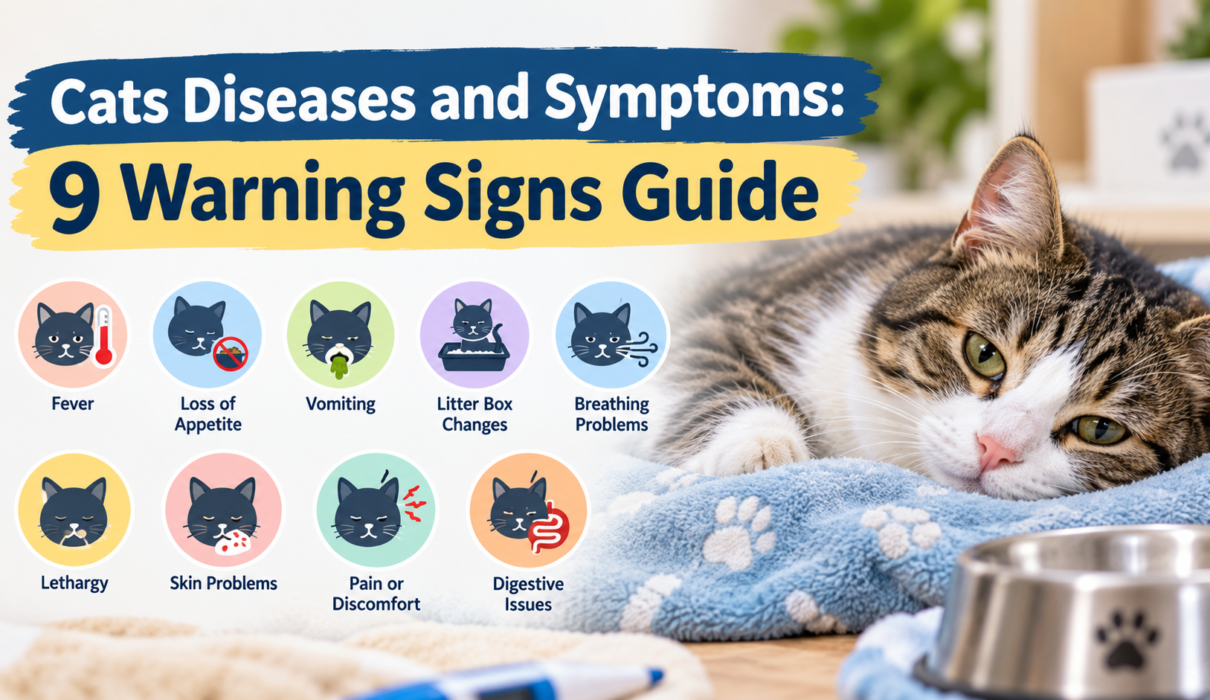
Cats Diseases and Symptoms: 9 Warning Signs Guide
Cats are good at hiding illness, which can make it difficult for owners to notice when something is wrong. A cat may continue eating, sleeping, or behaving normally even when an underlying health problem is developing. Understanding common cats diseases and symptoms can help you recognize warning signs early and seek veterinary care when necessary.
Some symptoms are mild and temporary, while others can indicate infections, parasites, organ problems, or other serious conditions. Changes in appetite, breathing, bathroom habits, energy levels, and appearance should never be ignored when they persist or become severe.
In this guide, we will discuss 9 common warning signs of cats diseases and symptoms, what they may mean, and when your cat should be examined by a veterinarian.
What Are Common Cats Diseases and Symptoms?
Cats can develop many different health conditions throughout their lives. Some problems are caused by viruses or bacteria, while others may result from parasites, injuries, allergies, nutritional problems, or internal diseases.
Common cats diseases and symptoms may include:
- Loss of appetite
- Vomiting or diarrhea
- Sneezing and coughing
- Difficulty breathing
- Extreme tiredness
- Weight loss
- Changes in drinking or urination
- Skin problems
- Fever
- Swollen areas or unusual lumps
- Changes in behavior
Not every symptom means your cat has a serious disease. However, sudden or persistent changes should be taken seriously.
Loss of Appetite Can Be a Warning Sign of Cats Diseases and Symptoms
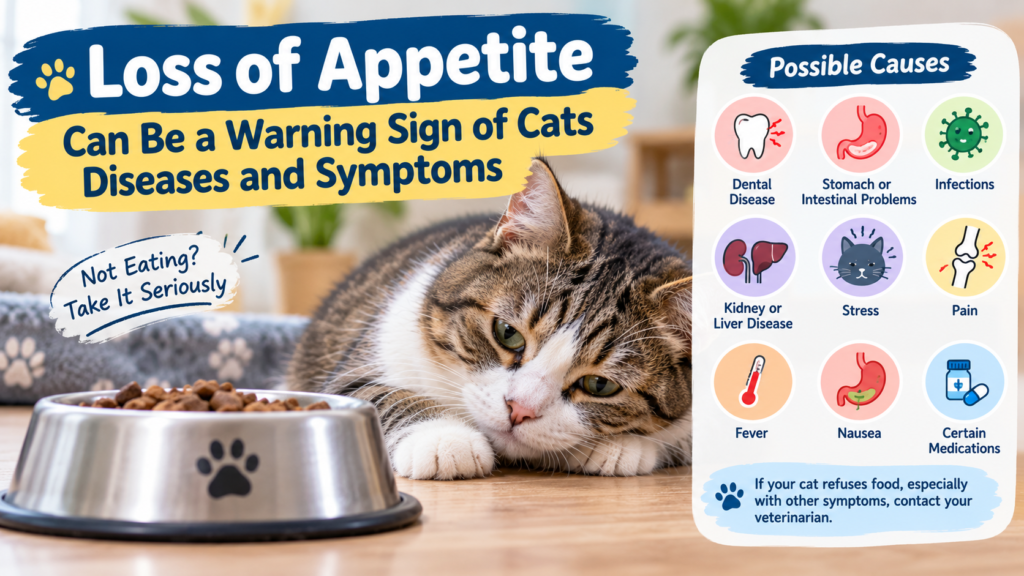
A sudden loss of appetite is one of the most noticeable changes in a sick cat. Cats may stop eating because of dental pain, stomach problems, infections, stress, nausea, or other underlying health conditions.
Some cats may eat less than normal rather than completely refusing food. You may also notice that your cat approaches the food bowl but walks away after smelling the food.
Possible causes include:
- Dental disease
- Stomach or intestinal problems
- Infections
- Kidney or liver disease
- Stress
- Pain
- Fever
- Nausea
- Certain medications
A temporary reduction in appetite may not always be an emergency, but cats should not go without food for extended periods. Cats that refuse food, especially if they are also weak, vomiting, or losing weight, should be evaluated by a veterinarian.
Loss of Appetite and Other Cats Diseases and Symptoms
Pay attention to additional signs occurring with appetite loss. For example, a cat that refuses food and hides may be experiencing pain or illness. A cat that refuses food while vomiting may have a digestive problem.
If your cat has not eaten normally and appears unwell, contacting your veterinarian is the safest approach.
Vomiting and Diarrhea as Cats Diseases and Symptoms
Occasional vomiting can happen in cats, especially when they eat too quickly or swallow hair. However, repeated vomiting is different and may indicate an underlying health problem.
Diarrhea can also occur after a sudden diet change, food intolerance, parasites, infections, or stress.
Watch for symptoms such as:
- Repeated vomiting
- Frequent diarrhea
- Blood in vomit or stool
- Black or tar-like stool
- Loss of appetite
- Weakness
- Dehydration
- Abdominal discomfort
- Weight loss
These signs can be especially concerning when several occur together.
When Vomiting Becomes a
Serious Cat Symptom
If your cat vomits repeatedly, cannot keep water down, becomes extremely weak, or has blood in the vomit, veterinary attention is important.
Do not give human medications to your cat unless a veterinarian specifically recommends them. Many medications that are safe for humans can be dangerous or toxic to cats.
Sneezing, Coughing, or Nasal Discharge
Sneezing occasionally may not be unusual, particularly if your cat has been exposed to dust or another mild irritant. Frequent sneezing, however, can be associated with respiratory disease.
You may notice:
- Frequent sneezing
- Coughing
- Runny nose
- Watery eyes
- Nasal congestion
- Reduced appetite
- Fever
- Low energy
Respiratory infections are relatively common in cats and can be caused by viruses or bacteria. Some cats may also develop symptoms because of allergies, irritants, foreign objects, or other conditions.
Cats Diseases and Symptoms That Affect Breathing
Respiratory symptoms should be monitored carefully. If a cat is struggling to breathe, breathing with its mouth open, or showing significant effort while breathing, this can be an emergency.
A veterinarian can determine whether the problem is a simple upper respiratory infection or something more serious affecting the lungs or airways.
Difficulty Breathing Is an Important Warning Sign
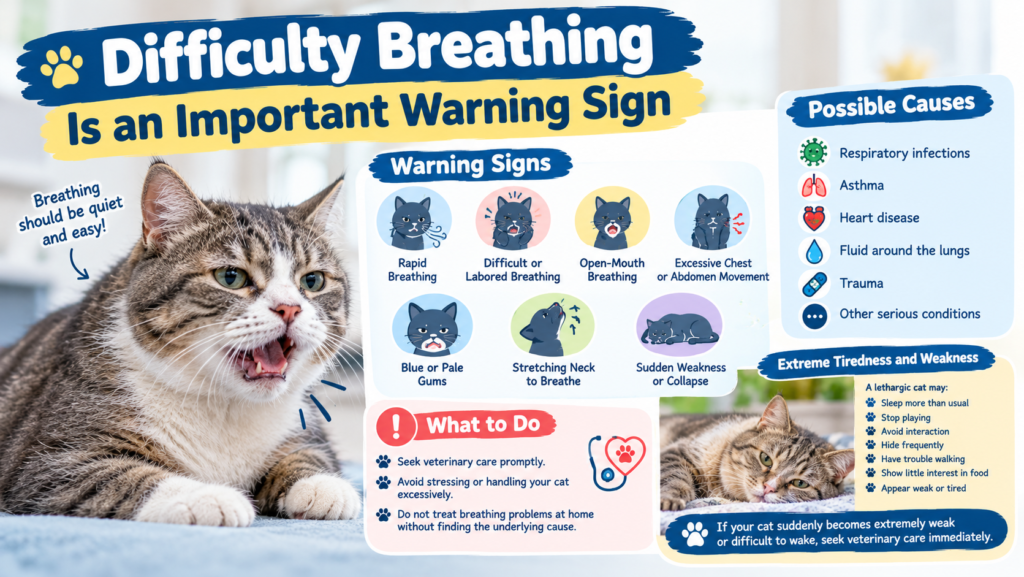
Breathing problems are among the symptoms that should never be ignored. A healthy cat should generally breathe quietly without obvious effort.
Warning signs may include:
- Rapid breathing
- Difficult or labored breathing
- Open-mouth breathing
- Excessive movement of the chest or abdomen
- Blue or pale gums
- Stretching the neck to breathe
- Sudden weakness or collapse
Possible causes include respiratory infections, asthma, heart disease, fluid around the lungs, trauma, or other serious conditions.
What to Do if Your Cat Has Breathing Problems
If your cat is struggling to breathe, seek veterinary care promptly. Avoid stressing or excessively handling the cat because stress can make breathing difficulties worse.
Breathing problems are not something that should be treated at home without determining the underlying cause.
Extreme Tiredness and Weakness
Cats naturally sleep a lot, so it can sometimes be difficult to tell when a cat is genuinely lethargic. The important difference is a noticeable change from your cat’s normal behavior.
A sick cat may:
- Sleep much more than usual
- Stop playing
- Avoid interaction
- Hide frequently
- Have difficulty walking
- Show little interest in food
- Appear weak or tired
Lethargy can occur with many different illnesses, including infections, anemia, dehydration, pain, organ disease, and other medical problems.
Cats Diseases and Symptoms Associated With Lethargy
When tiredness occurs together with another symptom, it may provide important information about your cat’s health.
For example, lethargy combined with vomiting, diarrhea, fever, breathing problems, or refusal to eat deserves greater attention than ordinary sleepiness.
If your cat suddenly becomes extremely weak or difficult to wake, seek veterinary care immediately.
Changes in Drinking and Urination as Cats Diseases and Symptoms
Changes in how much your cat drinks or urinates can sometimes be an important sign of an underlying health condition.
You may notice that your cat:
- Drinks much more water than usual
- Drinks very little
- Urinates more frequently
- Produces larger amounts of urine
- Strains in the litter box
- Visits the litter box repeatedly
- Produces very little urine
- Suddenly urinates outside the litter box
These changes can be associated with several conditions, including urinary tract problems, kidney disease, diabetes, dehydration, or other medical issues.
Excessive Thirst and Urination
If your cat suddenly begins drinking and urinating much more than normal, it should not be ignored. Kidney problems and diabetes are among the conditions that can cause increased thirst and urination or cats diseases and symptoms.
Older cats may be particularly vulnerable to certain chronic diseases, making regular veterinary checkups important.
Difficulty Urinating Is an Emergency
Straining in the litter box without producing urine can be particularly dangerous, especially in male cats. A urinary blockage can become life-threatening and requires urgent veterinary attention.
If your cat repeatedly enters the litter box, cries while trying to urinate, or produces little or no urine, contact a veterinarian immediately.
Skin, Coat, and Hair Changes Can Indicate Cats Diseases and Symptoms
A cat’s skin and coat can provide useful information about its overall health. Healthy cats generally maintain their coats through regular grooming.
Changes such as excessive scratching, hair loss, dandruff, sores, or greasy fur may indicate a problem.
Common warning signs include:
- Excessive scratching
- Frequent licking
- Bald patches
- Red or irritated skin
- Scabs
- Dandruff
- Skin sores
- Fleas or ticks
- Sudden changes in coat texture
- Excessive shedding
Possible causes include fleas, mites, allergies, fungal infections, parasites, skin infections, stress, or underlying medical conditions.
Excessive Grooming and Hair Loss
Cats often groom themselves, but excessive grooming can be a sign of itching, pain, allergies, parasites, or stress.
If your cat repeatedly licks or bites one specific area, examine the skin carefully. Redness, wounds, swelling, or missing fur may indicate an underlying problem.
A veterinarian can determine whether the cause is related to parasites, allergies, infection, pain, or another condition.
Weight Loss, Weight Gain, or Changes in Body Condition
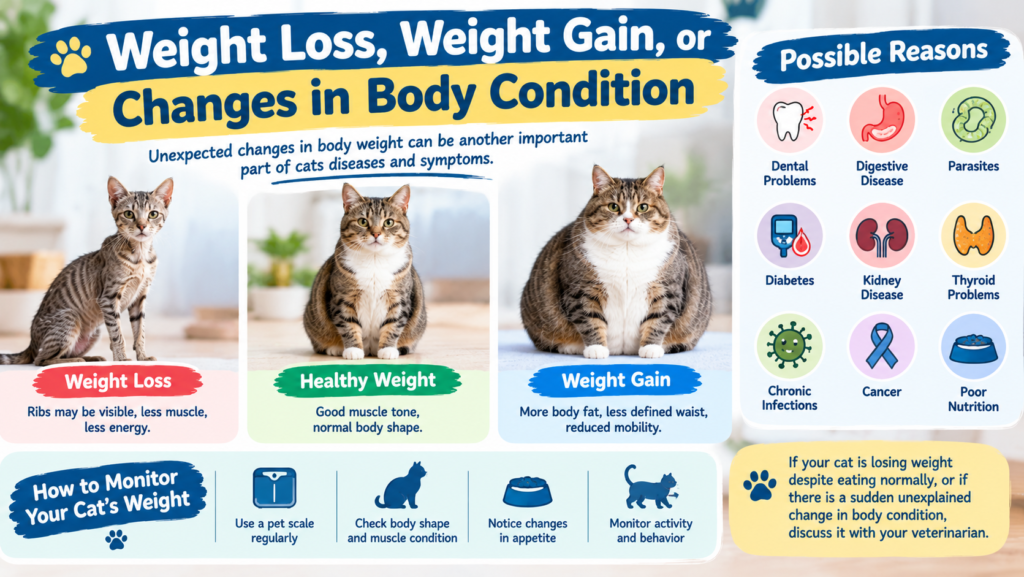
Unexpected changes in body weight can be another important part of cats diseases and symptoms.
Gradual weight changes can sometimes be difficult to notice, particularly if you do not weigh your cat regularly. However, noticeable weight loss or gain should be investigated.
Possible reasons for unexplained weight loss include:
- Dental problems
- Digestive disease
- Parasites
- Diabetes
- Kidney disease
- Thyroid problems
- Chronic infections
- Cancer
- Poor nutrition
Weight gain can also become a health concern. Obesity can increase the risk of several health problems and may make it more difficult for a cat to move comfortably.
How to Monitor Your Cat’s Weight
Regularly monitoring your cat’s weight can help you notice changes earlier. You can also pay attention to changes in body shape, appetite, activity, and muscle condition.
If your cat is losing weight despite eating normally, or if there is a sudden unexplained change in body condition, discuss it with your veterinarian.
Behavioral Changes, Hiding, and Unusual Behavior
Behavioral changes can sometimes be overlooked because they do not appear to be physical symptoms. However, cats may change their behavior when they are experiencing pain, stress, illness, or discomfort.
Warning signs may include:
- Hiding more than usual
- Becoming unusually aggressive
- Avoiding people
- Suddenly becoming very clingy
- Sleeping much more
- Losing interest in play
- Vocalizing more than usual
- Restlessness
- Changes in grooming
- Acting confused or disoriented
A normally social cat that suddenly hides may be trying to avoid interaction because it feels unwell.
Cats Diseases and Symptoms That Affect Behavior
Behavioral changes can occur with pain, neurological conditions, infections, hormonal problems, stress, and other medical issues.
Older cats may also develop age-related conditions that affect behavior and daily routines.
Do not assume that every behavioral change is simply a personality issue. If the change is sudden, severe, or persistent, veterinary evaluation may be appropriate.
Can Cats Catch Diseases From Mice?
Yes, cats can be exposed to certain diseases and parasites through mice and other rodents. Cats that hunt or eat mice may encounter bacteria, parasites, or other infectious organisms carried by rodents.
The risks can vary depending on the location, the health of the rodent, and what pathogens are present.
Potential concerns can include:
- Intestinal parasites
- Bacterial infections
- Toxoplasma exposure
- Certain rodent-associated infections
- Secondary parasite infestations
Outdoor cats and cats that regularly hunt rodents may have greater exposure.
How to Reduce the Risk From Mice
If your cat catches mice, avoid allowing it to eat wild rodents when possible. Regular parasite prevention recommended by your veterinarian can also help reduce certain risks.
If your cat becomes sick after hunting or eating a mouse, tell your veterinarian about the exposure. This information may help the veterinarian determine which diseases or parasites should be considered.
Cat Tick Disease and Possible Warning Signs
Ticks can transmit infections to cats, although the specific diseases and risks vary by geographic location. A cat exposed to ticks may not always show obvious symptoms immediately.
Possible signs of cat tick disease or a tick-borne infection may include:
- Fever
- Weakness
- Reduced appetite
- Lethargy
- Pale gums
- Swollen lymph nodes
- Joint discomfort
- Weight loss
- Changes in normal behavior
Some tick-borne diseases can cause serious illness, so tick prevention is an important part of protecting cats that spend time outdoors.
How to Check Your Cat for Ticks
After outdoor activity, carefully check your cat’s body for ticks. Pay particular attention to areas such as:
- Around the ears
- Under the collar
- Between the toes
- Around the neck
- Under the legs
- Near the tail
- Around the face
If you find a tick or your cat develops illness after tick exposure, contact your veterinarian for appropriate advice.
When Cats Diseases and Symptoms Need Veterinary Attention
Not every symptom requires an emergency visit, but certain signs should be taken seriously.
Contact a veterinarian if your cat has:
- Persistent vomiting or diarrhea
- Refusal to eat
- Significant weight loss
- Difficulty breathing
- Severe weakness
- Blood in vomit or stool
- High or persistent fever
- Sudden behavioral changes
- Difficulty walking
- Signs of severe pain
Early veterinary evaluation can make it easier to identify the underlying problem and begin appropriate treatment.
Final Thoughts on Cats Diseases and Symptoms
Understanding cats diseases and symptoms can help cat owners recognize changes before a condition becomes more serious. Loss of appetite, digestive problems, respiratory symptoms, weakness, and breathing difficulties can have many possible causes, so symptoms alone cannot provide a definite diagnosis.
Pay attention to what is normal for your cat and look for sudden or persistent changes. If your cat appears seriously ill, has difficulty breathing, refuses food, or develops multiple concerning symptoms, professional veterinary care is important.
In Part 2, we will cover the remaining warning signs, including changes in drinking and urination, skin and coat problems, fever, unusual lumps, behavioral changes, and other symptoms that may indicate disease.
Other Important Cats Diseases and Symptoms to Watch
The nine warning signs discussed in this guide cover many common changes, but cats can develop numerous other symptoms.
Other signs that deserve attention include:
Fever
A cat with an infection or inflammatory condition may develop a fever. Because it can be difficult to accurately determine a cat’s temperature at home, a veterinarian may need to perform an examination.
Pale or Abnormal Gums
Healthy gums are generally pink. Very pale, white, yellow, or bluish gums can indicate a potentially serious problem and should be evaluated promptly.
Swelling or Unusual Lumps
A new lump, swelling, or mass should be checked by a veterinarian, especially if it grows quickly, becomes painful, or changes in appearance.
Eye Problems
Squinting, redness, discharge, swelling, cloudy eyes, or sudden vision changes should not be ignored.
Mouth and Dental Problems
Bad breath, drooling, difficulty chewing, dropping food, or avoiding hard food may indicate dental disease or oral pain.
How Veterinarians Diagnose Cats Diseases and Symptoms
Symptoms alone usually cannot tell you exactly which disease your cat has. Many different conditions can produce similar signs.
During a veterinary examination, the veterinarian may evaluate:
- Body temperature
- Heart and breathing rate
- Weight
- Hydration
- Gums
- Eyes and ears
- Skin and coat
- Abdomen
- Heart and lungs
- Oral health
- Movement and behavior
Depending on the symptoms, additional tests may be recommended.
These can include:
- Blood tests
- Urine tests
- Stool testing
- X-rays
- Ultrasound
- Parasite testing
- Other diagnostic examinations
Testing helps identify the underlying cause rather than simply treating the visible symptom.
Can Cats Diseases and Symptoms Be Prevented?
Not every disease can be prevented, but many health risks can be reduced through good routine care.
Important preventive steps include:
- Schedule regular veterinary examinations.
- Keep vaccinations up to date as recommended.
- Use appropriate parasite prevention.
- Provide a balanced diet.
- Make clean drinking water available.
- Keep litter boxes clean.
- Maintain good dental care.
- Keep toxic substances away from cats.
- Monitor your cat’s weight.
- Reduce unnecessary exposure to dangerous outdoor environments.
- Check outdoor cats for ticks and parasites.
Preventive care is particularly important because cats can hide illness until a condition has progressed.
When Should You Take Your Cat to the Veterinarian?
Some symptoms can be monitored briefly, while others require immediate professional attention.
Seek urgent veterinary care if your cat:
- Has difficulty breathing
- Cannot urinate
- Collapses or becomes extremely weak
- Has severe bleeding
- Has repeated vomiting with severe weakness
- Has seizures
- Has blue, gray, or extremely pale gums
- Appears to be in severe pain
- Suddenly becomes unresponsive
For less urgent symptoms, make a veterinary appointment if the problem continues, repeatedly returns, or is accompanied by other changes.
How to Keep Track of Cats Diseases and Symptoms
Keeping a simple health record can make it easier to recognize changes in your cat.
Record information such as:
- Appetite
- Water consumption
- Urination
- Bowel movements
- Weight
- Activity level
- Vomiting episodes
- Medication
- Skin changes
- Unusual behavior
If your cat becomes sick, these observations can provide useful information to your veterinarian.
Final Thoughts on Cats Diseases and Symptoms
Recognizing cats diseases and symptoms early can help you respond to potential health problems before they become more serious. Changes in drinking, urination, weight, skin, coat, grooming, and behavior may all provide important clues.
Remember that symptoms do not always point to one specific disease. The same symptom can have several possible causes, which is why a proper veterinary examination is important when your cat’s condition is persistent, severe, or unusual.
Regular veterinary care, parasite prevention, good nutrition, dental care, and careful observation can all support your cat’s long-term health.
Most importantly, trust your observations. You know your cat’s normal habits better than anyone. If something suddenly seems different and your cat does not return to normal, contacting a veterinarian is the safest choice.
Fix the awkward focus-keyword headings
Conclusion
Understanding cats diseases and symptoms can help you recognize health problems early and give your cat the care it needs. Warning signs such as loss of appetite, vomiting, breathing problems, unusual tiredness, changes in drinking or urination, weight loss, skin problems, and behavioral changes should not be ignored.
Some symptoms may be minor, but others can indicate a serious medical condition that requires prompt veterinary attention. Cats can also be exposed to health risks from parasites, ticks, and rodents, so regular preventive care is important.
By monitoring your cat’s daily habits, providing proper nutrition, maintaining parasite prevention, and scheduling regular veterinary checkups, you can help protect your pet’s health. If your cat develops sudden, severe, or persistent symptoms, always consult a veterinarian for an accurate diagnosis and appropriate treatment.
1 Comment