

 By
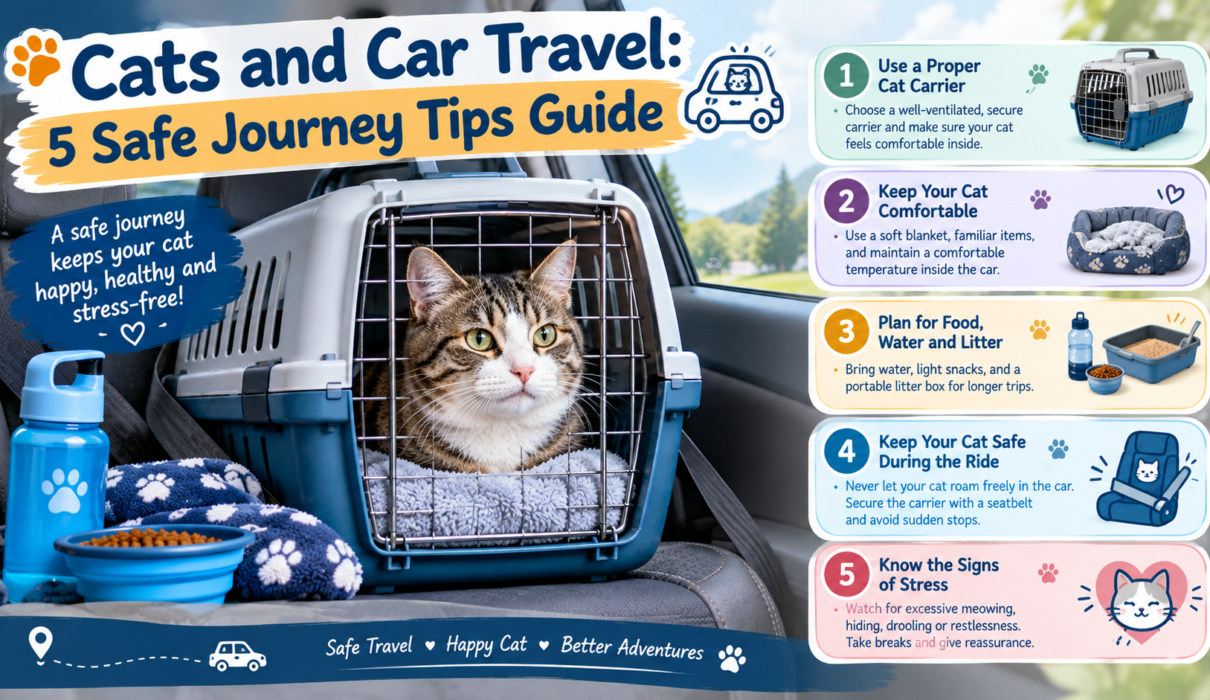
Cats and Car Travel: 5 Safe Journey Tips Guide
Introduction: Cats and Car Travel — A Complete Safety Guide
Cats and car travel can be challenging for pet owners, especially when their cats are unfamiliar with vehicles or become anxious during journeys. Unlike dogs, many cats prefer familiar surroundings and may feel uncomfortable when exposed to new smells, sounds, and movements. However, with proper preparation, a secure carrier, and a calm environment, you can make traveling safer and more comfortable for your feline companion.
Whether you are taking your cat to the veterinarian, moving to a new home, or planning a long-distance trip, understanding the basics of cats and car travel can help prevent unnecessary stress and potential injuries. Preparing your cat before departure is just as important as ensuring safety inside the vehicle.
Some cats experience motion sickness, excessive meowing, hiding, or drooling during car rides. Others may show signs of anxiety, such as restlessness or rapid breathing. Learning to recognize these behaviors helps you respond appropriately and determine when veterinary advice may be necessary.
In this first part of our guide, we will cover three essential topics: preparing your cat for a journey, choosing a safe carrier, and recognizing stress or unusual breathing during travel. These steps create a strong foundation for safe and responsible cat transportation.
Cats and Car Travel: Prepare Your Cat Before the Journey
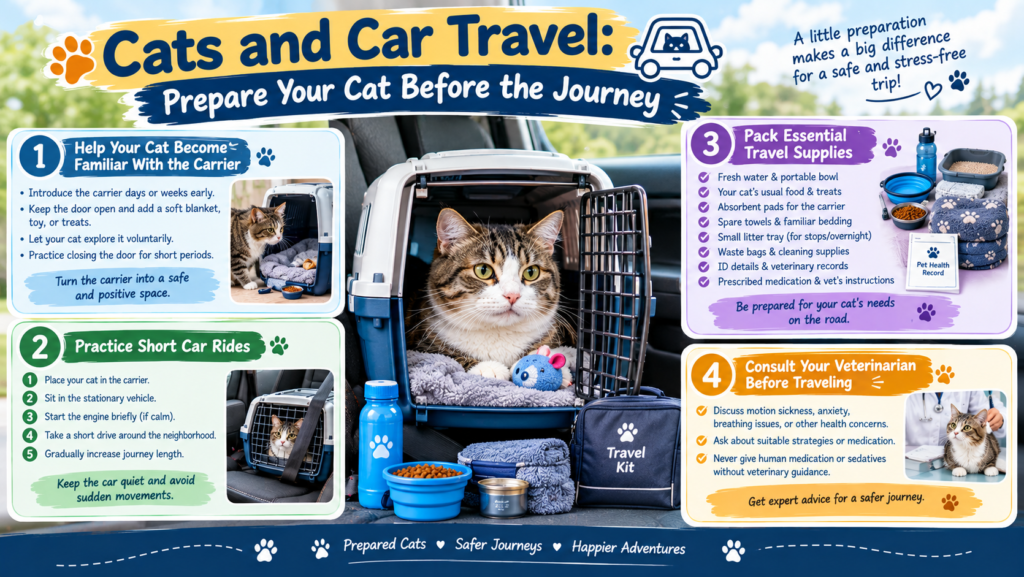
Preparation is one of the most important aspects of cats and car travel. A cat that has never entered a vehicle may become frightened by engine noise, unfamiliar movement, or being placed inside a carrier. Gradual introduction and positive experiences can help reduce this fear.
Help Your Cat Become Familiar With the Carrier
Start by introducing the carrier several days or weeks before your planned journey. Place it in a familiar room where your cat already feels comfortable.
Keep the carrier door open and add a soft blanket, a favorite toy, or a few treats inside. Allow your cat to explore it voluntarily instead of forcing it to enter.
Once your cat begins resting inside the carrier, practice briefly closing the door while remaining nearby. Gradually increase the time if your cat stays relaxed.
This process helps your cat associate the carrier with safety rather than an unfamiliar or frightening experience.
Practice Short Car Rides
Before attempting a long journey, allow your cat to become familiar with the vehicle.
Begin with these simple steps:
- Place your cat securely inside its carrier.
- Let your cat sit inside the stationary vehicle for a short period.
- Start the engine briefly if your cat remains calm.
- Take a short drive around the neighborhood.
- Gradually increase journey length as your cat becomes more comfortable.
Keep the car quiet and avoid sudden acceleration or unnecessary stops. If your cat becomes extremely distressed, return to a previous, more comfortable step rather than forcing longer rides.
Short practice sessions can make future journeys easier, although some cats will still need additional support.
Pack Essential Travel Supplies
A well-prepared travel kit helps you manage your cat’s needs during the journey.
Consider packing:
- Fresh drinking water and a portable water bowl.
- Your cat’s usual food and treats.
- Absorbent pads for the carrier.
- Spare towels and familiar bedding.
- A small litter tray for suitable stops or overnight accommodation.
- Waste bags and pet-safe cleaning supplies.
- Identification details and relevant veterinary records.
- Any prescribed medication and your veterinarian’s instructions.
For longer journeys, plan suitable opportunities to check your cat’s condition and offer water. Never open the carrier in an unsecured area where your cat could escape.
Consult Your Veterinarian Before Traveling
If your cat has a history of motion sickness, severe anxiety, breathing difficulties, or another health concern, speak with your veterinarian before traveling.
A veterinarian can recommend appropriate strategies and determine whether prescribed medication may be suitable. Never give human medication or sedatives to your cat without veterinary guidance.
With thoughtful preparation, traveling with a cat in car can become a more manageable experience for both you and your pet.
Cats and Car Travel: Choose a Safe Cat Carrier
A secure carrier is essential for safe cats and car travel. Even a normally calm cat can become frightened by traffic noise, sudden braking, or unfamiliar surroundings. Allowing a cat to move freely inside a vehicle increases the risk of distraction, injury, and escape.
Choose a Comfortable, Well-Ventilated Carrier
Select a carrier that provides enough space for your cat to stand naturally, turn around, and lie down comfortably. It should have reliable closures, adequate ventilation, and a sturdy structure.
Look for these features:
- Strong doors and secure latches.
- Good airflow on multiple sides.
- A stable base that supports your cat.
- An opening that allows safe placement and removal.
- A size appropriate for your cat’s body.
A removable top can be helpful when a frightened cat needs to be examined by a veterinarian. Soft-sided carriers may suit some trips, but their stability and compatibility with the vehicle’s restraint system should be considered carefully.
Secure the Carrier Inside the Vehicle
Always secure the carrier according to the vehicle manufacturer’s instructions and the carrier’s safety guidance. Use an appropriate seat-belt arrangement or another recommended restraint system.
Place the carrier where it can remain stable and cannot slide during turns or sudden stops. Avoid positioning it where an airbag could strike it during deployment.
Do not carry the cat on your lap or hold it in your arms while driving. Even a gentle cat may panic unexpectedly, creating a dangerous distraction.
If you need to check your cat, pull over at a safe location and park before doing so.
Never Let Your Cat Roam Freely
A loose cat can move beneath the pedals, climb onto the dashboard, obstruct the driver’s view, or attempt to escape through an open window or door.
Even if your cat appears relaxed, keep it inside a secured carrier throughout the journey. A cat’s behavior can change suddenly when it encounters loud noises or unfamiliar situations.
For extra comfort, line the carrier with a familiar blanket and use an absorbent pad underneath it. Avoid filling the carrier with loose objects that could shift during travel.
Maintain a Comfortable Environment
Cats can be sensitive to temperature changes, noise, and direct sunlight. Maintain a comfortable cabin temperature and ensure that the carrier receives adequate ventilation.
Keep music at a moderate volume and avoid sudden, loud sounds whenever possible. Never leave your cat alone in a parked car, even for a short period, because temperatures can rise or fall to dangerous levels.
These precautions help reduce the risks associated with traveling with a cat in car and allow you to focus on driving safely.
Cats and Car Travel: Recognize Stress and Cats Panting in Car
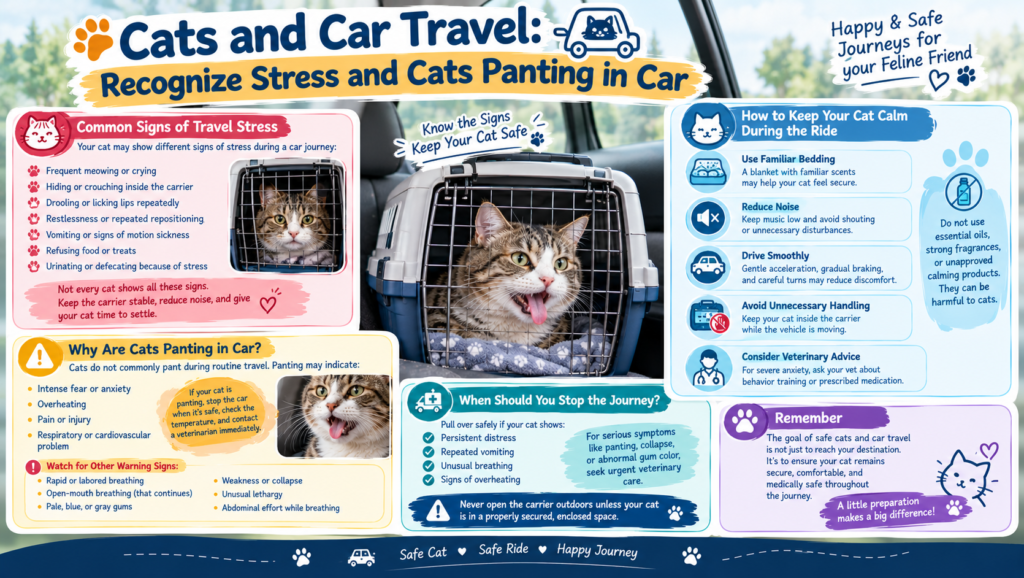
Stress is relatively common during feline travel, particularly when a cat has limited experience with vehicles. However, it is important to distinguish ordinary signs of nervousness from symptoms that may indicate a medical emergency.
Understanding cats and car travel includes knowing when your cat needs reassurance and when it needs immediate veterinary attention.
Common Signs of Travel Stress
Cats may communicate discomfort through changes in behavior. During a car journey, you might notice:
- Frequent meowing or crying.
- Hiding or crouching inside the carrier.
- Drooling or licking the lips repeatedly.
- Restlessness or repeated repositioning.
- Vomiting or signs of motion sickness.
- Refusing food or treats.
- Urinating or defecating because of stress.
Not every cat displays all these signs. Some become unusually quiet and remain still, while others vocalize throughout the journey.
Keep the carrier stable, reduce noise, and avoid repeatedly reaching inside to touch a frightened cat. Give your pet time to settle while monitoring its condition.
Why Are Cats Panting in Car?
Unlike dogs, cats do not commonly pant as a normal response to routine car travel. Cats panting in car may be experiencing intense fear, overheating, pain, or a respiratory or cardiovascular problem.
Occasional open-mouth breathing can occur during extreme stress, but it should not automatically be assumed to be harmless.
Watch for other warning signs, including:
- Rapid or labored breathing.
- Open-mouth breathing that continues after the stressful situation ends.
- Pale, blue, or gray gums.
- Weakness, collapse, or unusual lethargy.
- Obvious abdominal effort while breathing.
If your cat is panting or breathing with its mouth open, stop driving when it is safe to do so and assess the situation without unnecessarily handling or stressing the cat. Move the vehicle to a safe, comfortable temperature if overheating is possible, and contact a veterinarian immediately for guidance. Severe breathing difficulty, collapse, or abnormal gum color requires emergency veterinary care.
Do not wait for panting to disappear if your cat appears distressed. Cats can hide serious illness, and breathing problems need prompt attention.
How to Keep Your Cat Calm During the Ride
You can make the journey more comfortable by controlling the environment and respecting your cat’s limits.
Use familiar bedding: A blanket carrying familiar household scents may help some cats feel more secure.
Reduce noise: Keep music low and avoid shouting or unnecessary disturbances.
Drive smoothly: Gentle acceleration, gradual braking, and careful turns may help reduce discomfort and motion sickness.
Avoid unnecessary handling: Keep your cat inside the carrier rather than opening it to provide reassurance while the vehicle is moving.
Consider veterinary advice: If anxiety is severe, ask your veterinarian about behavior training or suitable prescribed medication before future journeys.
Do not use essential oils, strong fragrances, or unapproved calming products around your cat. Some substances can be harmful to cats.
When Should You Stop the Journey?
If your cat shows persistent distress, repeated vomiting, unusual breathing, or signs of overheating, pull over somewhere safe.
For mild anxiety, a quiet environment and a brief opportunity to settle may help. However, if your cat is panting, breathing abnormally, collapsing, or showing other serious symptoms, seek urgent veterinary assistance rather than continuing the trip.
Never open the carrier outdoors unless your cat is in a properly secured, enclosed space. A frightened cat may escape quickly, even if it normally stays close to you.
The goal of safe cats and car travel is not simply to reach your destination. It is to ensure your cat remains secure, comfortable, and medically safe throughout the journey.
Cats and Car Travel: Prevent Escapes and Keep Cats Off Car
Keeping your cat secure is one of the most important parts of cats and car travel. Cats can become frightened by traffic noise, unfamiliar people, or sudden movements. Even a calm cat may try to escape when a car door opens or when it is taken out of its carrier.
Whether you are traveling to the veterinarian, visiting family, or taking a long road trip, a few simple precautions can help protect your cat from traffic, injuries, and getting lost.
Prevent Your Cat From Escaping When Opening Car Doors
Cats may suddenly run away when they see an unfamiliar environment. Therefore, never open the carrier while standing beside a busy road, in a parking lot, or in an unsecured outdoor area.
Follow these safety practices:
- Keep your cat inside a securely closed carrier while entering or leaving the vehicle.
- Check that all carrier doors and latches are properly secured.
- Prepare your destination before removing your cat from the carrier.
- Use a fully enclosed room when your cat needs to come out.
- Keep car doors and windows closed whenever your cat is loose inside a stationary vehicle.
If you need to transfer your cat between carriers, choose a secure indoor location whenever possible. Never rely on your cat’s usual obedience because fear can cause unexpected behavior.
These precautions make traveling with a cat in car safer and reduce the possibility of an accidental escape.
How to Keep Cats Off Car Exteriors
Some cats enjoy climbing onto parked vehicles, sitting on warm hoods, or exploring underneath cars. This behavior can cause scratches to vehicle paint and may expose cats to dangerous situations.
If you want to understand how to keep cats off car surfaces, focus on humane prevention rather than punishment.
Try these methods:
- Park in a garage: An enclosed garage can reduce opportunities for neighborhood cats to climb onto your vehicle.
- Use a suitable car cover: A well-fitted cover may protect the paint from scratches, dirt, and paw marks.
- Remove attractants: Avoid leaving food scraps or other appealing items near your parking space.
- Provide alternative resting areas: A sheltered cat bed or suitable outdoor resting spot may encourage your cat to relax somewhere safer.
- Use humane deterrents: Choose cat-safe, non-injurious deterrents designed for the environment where the vehicle is parked.
Avoid chemicals, sharp objects, and methods that could frighten or injure cats. Never use a deterrent that could damage an animal’s paws or expose it to toxic substances.
Check Around Your Vehicle Before Driving
Cats sometimes hide beneath vehicles or inside wheel wells. In cold weather, some may seek shelter near warm engine components after a vehicle has been parked.
Before starting your car:
- Look beneath the vehicle.
- Check around the tires and wheel wells.
- Listen for unusual sounds near the engine compartment.
- Inspect accessible areas where an animal might be hiding.
If you suspect a cat is inside the engine compartment, do not start the engine. Investigate safely and seek assistance if the cat cannot be reached without risk.
Never Leave Your Cat Alone in a Parked Car
A parked vehicle can become dangerously hot or cold, even when the outside temperature seems comfortable. Leaving windows slightly open does not reliably prevent dangerous temperatures.
During cats and car travel, keep your cat with you or arrange for a responsible person to supervise it in a safe environment. If you need to stop for food, fuel, or other errands, plan ahead so your cat is not left unattended in the vehicle.
Cats and Car Travel: Keep Your Car Clean and Odor-Free
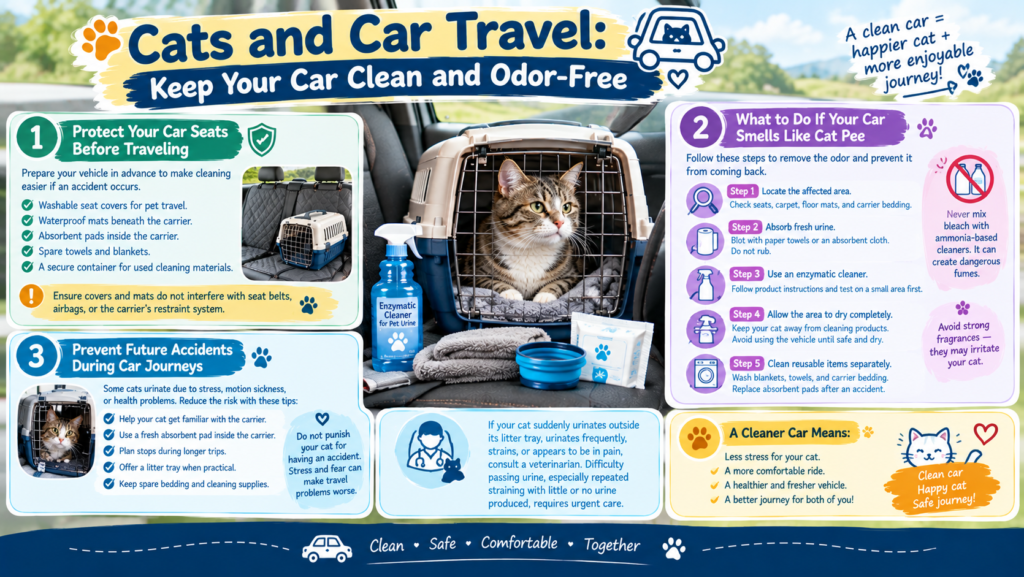
A clean vehicle makes traveling more comfortable for both cats and their owners. However, cats can sometimes experience stress-related accidents, motion sickness, or litter-related problems during a journey.
If your car smells like cat pee, the odor may remain even after the visible urine has dried. Proper cleaning before your next trip can help prevent lingering smells and make the vehicle more pleasant.
Protect Your Car Seats Before Traveling
Preparing your vehicle in advance makes cleaning easier if an accident occurs.
Consider using:
- Washable seat covers designed for pet travel.
- Waterproof mats beneath the carrier.
- Absorbent pads inside the carrier.
- Spare towels and blankets.
- A secure container for used cleaning materials.
Ensure that covers and mats do not interfere with seat belts, airbags, or the carrier’s restraint system.
Keep the carrier stable and properly secured at all times. A protective cover is useful, but it should never replace a suitable carrier or safety restraint.
What to Do If Your Car Smells Like Cat Pee
When your car smells like cat pee, the odor may come from a seat, carpet, floor mat, or the carrier itself. Cleaning the affected area promptly helps prevent the smell from becoming more difficult to remove.
Follow these steps:
Step 1: Locate the affected area.
Check the seat, carpet, floor mats, and carrier bedding. If necessary, use a clean cloth to identify damp areas.
Step 2: Absorb fresh urine.
Blot the affected area with paper towels or an absorbent cloth. Avoid rubbing, as this can spread urine deeper into the material.
Step 3: Use an appropriate enzymatic cleaner.
Choose a pet-urine cleaner suitable for the specific surface. Follow the product instructions and test it on a small, hidden area first.
Step 4: Allow the area to dry completely.
Provide ventilation while keeping your cat away from wet cleaning products. Avoid using the vehicle until the treated area is safe and dry according to the product instructions.
Step 5: Clean reusable items separately.
Wash removable blankets, towels, and carrier bedding according to their care instructions. Replace absorbent pads after an accident.
Never mix cleaning chemicals, particularly bleach with ammonia-containing products. This can create dangerous fumes. Avoid applying strong fragrances to mask urine odors, as they may irritate your cat.
If the smell persists, urine may have reached carpet padding or other materials that require more thorough cleaning.
Prevent Future Accidents During Car Journeys
Some cats urinate in the carrier because of stress, motion sickness, or an underlying health problem. Others may be uncomfortable because they have not had an appropriate opportunity to use a litter tray.
To reduce the likelihood of accidents:
- Help your cat become familiar with the carrier before departure.
- Use a fresh absorbent pad inside the carrier.
- Plan appropriate stops during longer trips.
- Offer access to a litter tray in a secure environment when practical.
- Keep spare bedding and cleaning supplies available.
Do not punish your cat for having an accident. Stress and fear can make travel problems worse.
If your cat suddenly begins urinating outside its litter tray, urinates frequently, strains, or appears to be in pain, consult a veterinarian. Difficulty passing urine, especially repeated straining with little or no urine produced, requires urgent veterinary attention.
Choose a Cat-Friendly Car Environment
A cat-friendly vehicle should be clean, quiet, and comfortably ventilated. Avoid smoke, strong air fresheners, and heavily scented cleaning products.
Regularly inspect the carrier for damaged latches, worn bedding, and areas that may retain odors. Keeping your vehicle clean helps make future cats and car travel experiences more pleasant.
Cats and Car Travel: Plan Breaks, Food, Water, and Long-Distance Trips
Long-distance journeys require more planning than short trips. Your cat may need opportunities to drink water, use a litter tray, and settle in a quiet environment.
Good preparation can reduce avoidable stress and help you respond quickly if a problem develops.
Plan Your Route Before Leaving
Before starting your journey, consider the length of the drive, expected traffic, weather conditions, and possible stopping locations.
Prepare a checklist that includes:
- Your destination and planned route.
- Contact details for veterinarians along the way.
- Food, water, and essential supplies.
- Your cat’s medical records and identification.
- A secure carrier and spare absorbent pads.
- Suitable overnight accommodation, if necessary.
If you are traveling across regions or national borders, check applicable animal transport and vaccination requirements well in advance.
Provide Water and Appropriate Feeding
Cats should have access to fresh water during longer journeys. Offer water when it is safe to do so, preferably while the vehicle is parked in a secure location.
Follow your veterinarian’s advice about feeding before departure. Large meals immediately before travel may worsen motion sickness in some cats, but prolonged fasting can also be inappropriate, especially for kittens or cats with certain health conditions.
Do not make major feeding changes simply because you are traveling. Maintain your cat’s usual diet whenever possible and bring enough food for the entire trip.
Make Breaks Safe and Comfortable
Unlike humans, cats do not necessarily benefit from being taken outside the car during every stop. Unfamiliar surroundings may increase stress and the risk of escape.
During breaks:
- Park in a safe location.
- Check your cat’s breathing and general condition.
- Offer water when appropriate.
- Ensure the carrier remains secure and ventilated.
- Keep the cat inside unless a safe, enclosed area is available.
Never open the carrier beside a busy road. If your cat needs a litter tray, choose a secure environment where escape is impossible.
Prepare for Overnight Stays
If your trip requires an overnight stop, confirm that the accommodation accepts cats before booking.
Prepare a quiet room with food, water, a litter tray, and familiar bedding. Keep doors and windows secure, and allow your cat time to adjust before exploring.
Bring your cat’s usual food and any prescribed medication. Maintaining familiar routines can help reduce anxiety in a new environment.
Know When to Postpone the Journey
If your cat is unwell, repeatedly vomiting, unusually weak, or experiencing breathing difficulties, contact a veterinarian before continuing with nonessential travel.
Cats with medical conditions may need special arrangements, additional monitoring, or treatment before a long journey.
During cats and car travel, safety should always take priority over reaching your destination on schedule.
Frequently Asked Questions About Cats and Car Travel
How Can I Make Cats and Car Travel Less Stressful?
Introduce your cat to the carrier gradually, practice short journeys, and keep the vehicle quiet. Use familiar bedding and ask your veterinarian for advice if your cat experiences severe anxiety or motion sickness.
Is Traveling With a Cat in Car Safe for Long Distances?
Yes, long-distance travel can be managed safely with appropriate preparation. Use a secure carrier, plan for water and litter needs, maintain a comfortable temperature, and monitor your cat’s condition throughout the journey.
Why Are Cats Panting in Car Journeys?
Cats may pant because of intense stress, overheating, pain, or an underlying medical problem. Open-mouth breathing is not something to dismiss as ordinary travel behavior. Contact a veterinarian promptly, particularly if the breathing is persistent or labored.
How Do I Keep My Cat From Escaping During a Car Trip?
Keep your cat inside a securely closed carrier whenever doors are open. Remove the cat only in a secure, enclosed environment, and never rely on an unsecured harness or your cat’s usual behavior to prevent escape.
What Should I Do if My Car Smells Like Cat Pee?
Locate the affected area, blot fresh urine, and use an enzymatic pet-urine cleaner that is suitable for the surface. Allow the area to dry thoroughly and avoid strong fragrances that merely mask the smell.
How Can I Keep Cats Off My Car?
Use a garage or suitable car cover, remove nearby food attractants, and consider humane deterrents. Check around and beneath the vehicle before starting the engine to ensure no cat is hiding nearby.
Conclusion: Cats and Car Travel for a Safer Journey
Safe cats and car travel depends on preparation, patience, and attention to your cat’s needs. A secure carrier, a comfortable environment, and a carefully planned route can help reduce stress and prevent accidents.
Remember to prevent escapes when opening doors, check around your vehicle before starting the engine, and clean accidents promptly if your car smells like cat pee. For longer journeys, plan ahead for food, water, litter needs, and overnight stays.
Most importantly, monitor your cat’s behavior and breathing throughout the trip. Persistent panting, open-mouth breathing, or other signs of respiratory distress require prompt veterinary attention or cats and car travel.
By following these practical tips, you can make traveling with a cat in car safer and more manageable while helping your feline companion feel as comfortable as possible.