

 By
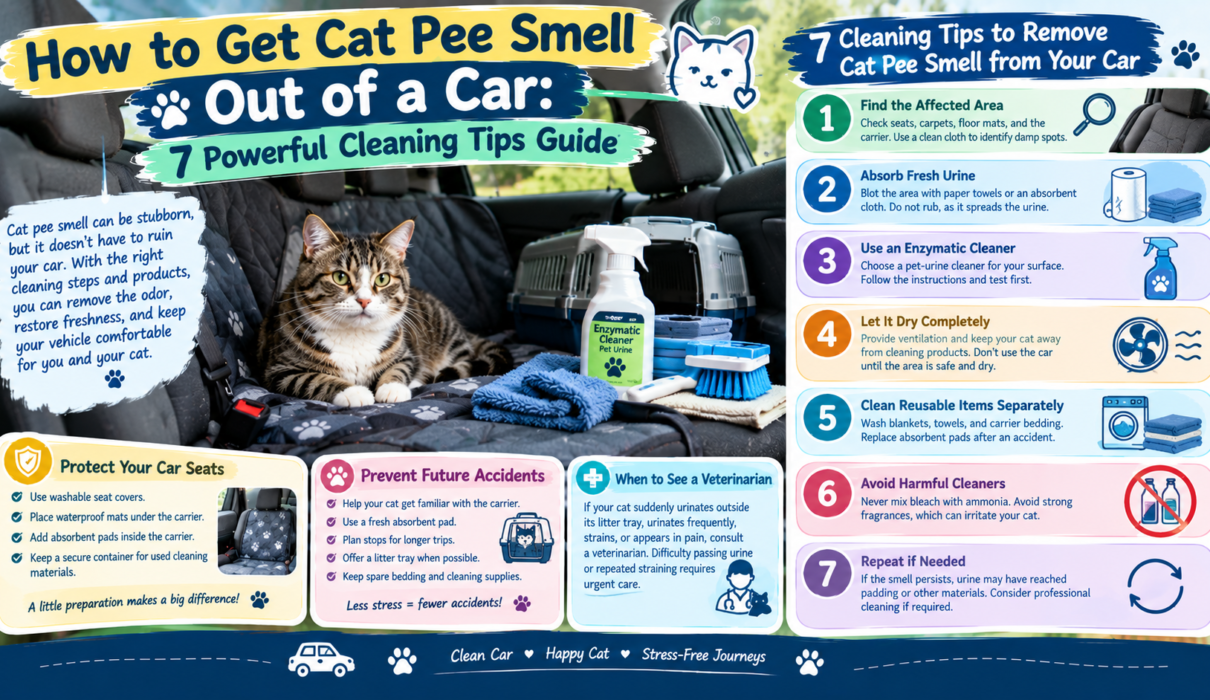
How to Get Cat Pee Smell Out of a Car: 7 Powerful Cleaning Tips Guide
Cat urine can create one of the most unpleasant odors inside a vehicle. Whether your cat has an accident on the car seat, floor mat, carpet, or carrier, the smell can linger long after the visible stain has disappeared. This happens because urine can soak into fabric, foam padding, and other materials, leaving residues that continue to produce a strong odor.
Learning how to get cat pee smell out of a car starts with finding the contaminated area, absorbing fresh urine, and using the right cleaning products. Simply spraying perfume or using a car air freshener may temporarily cover the smell without removing the source.
The good news is that you can often improve the situation with a few careful cleaning steps. In this first part, we will explain four effective methods: locating the odor, blotting fresh urine, using an enzyme cleaner, and cleaning car seats, carpets, and floor mats safely or how to get cat pee smell out of a car.
How to Get Cat Pee Smell Out of a Car: Find the Source of the Odor
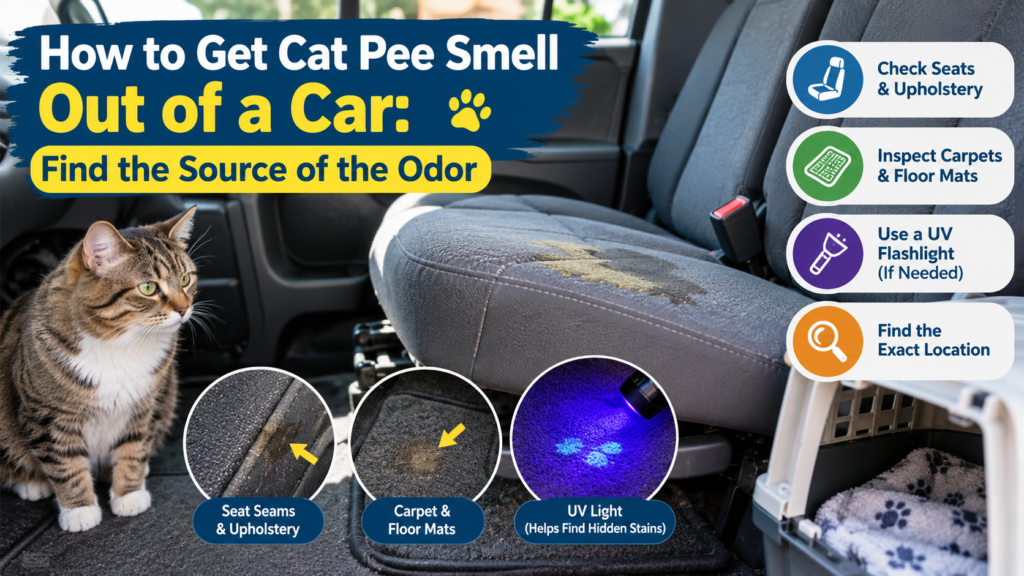
Before cleaning your vehicle, you need to identify exactly where the cat urine has soaked in. Sometimes the affected area is easy to spot, but dried urine may leave little visible evidence while still producing a noticeable smell or how to get cat pee smell out of a car.
If your car smells like cat pee, do not assume the odor is coming from the seat where your cat was sitting. Urine can spread into nearby carpet, floor mats, seat seams, and the padding underneath the upholstery.
Inspect Car Seats and Upholstery
Start by examining the areas where your cat was sitting or resting. Look carefully at fabric seats, leather upholstery, seat edges, and the spaces between cushions.
Check for the following signs:
- Yellowish or discolored patches on fabric.
- Damp or stiff areas on upholstery.
- A strong urine smell near seat seams.
- Stains around the base of the seat.
- Odors that become stronger when the vehicle warms up.
Some stains may be difficult to see, particularly on dark-colored upholstery. Use your sense of smell alongside a careful visual inspection to narrow down the affected area or how to get cat pee smell out of a car.
Check Carpets and Floor Mats
Carpets and floor mats can absorb considerable moisture. If urine reaches the carpet padding underneath, cleaning only the visible surface may not remove the entire odor or how to get cat pee smell out of a car.
Remove floor mats whenever possible and inspect both sides. Check the carpet underneath them, around the pedals, beneath the front seats, and near the rear seating area if your cat travels there.
If the urine has reached a removable mat, clean it separately according to its material and the cleaner’s instructions.
Use a UV Flashlight if Necessary
A UV flashlight can sometimes help identify suspected urine stains that are difficult to see in normal lighting. However, fluorescent marks are not proof of cat urine because other substances can also glow under ultraviolet light.
Use the flashlight as an optional inspection tool rather than relying on it alone. Confirm suspected areas by examining the material and checking for a characteristic odor or how to get cat pee smell out of a car.
Why Finding the Exact Location Matters
Treating only the obvious stain may leave urine behind in hidden areas. This can explain why an odor returns after the car has been cleaned.
If the smell seems strongest near the seat, inspect the surrounding carpet and seams as well. If the odor is concentrated near a carrier, check the carrier’s base and any blankets or towels used inside it.
Pro tip: Inspect your vehicle in a cool, well-ventilated area before cleaning. Identifying all affected surfaces first helps you avoid repeating the same cleaning process unnecessarily.
How to Get Cat Pee Smell Out of a Car: Blot Fresh Urine Immediately
If your cat has recently urinated in the car, act as quickly as possible. Fresh urine is generally easier to manage before it has soaked deeply into the upholstery or dried on the surface.
The goal is to absorb as much liquid as possible without spreading it into a larger area.
Step-by-Step Method for Blotting Cat Urine
Step 1: Gather your supplies.
You will need clean paper towels or an absorbent cloth, disposable gloves if desired, and a suitable cleaning product for the affected material or how to get cat pee smell out of a car.
Step 2: Absorb the liquid.
Place the paper towels or cloth over the wet area and press gently. Allow the material to absorb the urine before lifting it away.
Step 3: Repeat with clean towels.
Continue blotting until little or no additional moisture transfers to the towels. Use a fresh section of cloth or a new paper towel as needed.
Step 4: Avoid rubbing the stain.
Rubbing can spread urine over a wider area and push it farther into fabric or seat padding. Gentle blotting is usually the better approach.
Step 5: Prepare for appropriate cleaning.
Once you have absorbed the excess liquid, follow with a cleaner that is compatible with the surface and specifically suitable for pet urine.
What If Cat Urine Gets on the Floor Mats?
If the floor mats are removable, take them out of the car before cleaning them. This allows you to treat the affected surface without exposing nearby upholstery or vehicle components to unnecessary moisture.
For washable fabric mats, follow the manufacturer’s care instructions and the cleaner’s label. Rubber mats may be easier to rinse, but they should still be cleaned with a suitable product and dried completely before being returned to the vehicle.
Do not reinstall a damp mat, because trapped moisture can contribute to musty odors.
What If the Urine Gets on a Leather Seat?
Leather requires extra care because harsh cleaners and excessive moisture may damage its finish. Blot the urine gently with a clean cloth, then use a cleaner approved for the specific leather or automotive upholstery.
Avoid soaking the seams or allowing liquid to collect around seat controls. If the urine has entered perforated leather or the foam beneath the upholstery, professional cleaning may be necessary or how to get cat pee smell out of a car.
Common Mistakes to Avoid
When treating fresh urine, avoid these mistakes:
- Rubbing the stain aggressively.
- Pouring large amounts of water onto the seat.
- Using bleach or harsh household chemicals.
- Mixing different cleaning products.
- Applying a strongly scented spray before removing the urine.
- Ignoring liquid that has reached the carpet padding.
Never mix bleach with ammonia-containing products or other cleaners. Mixing cleaning chemicals can release dangerous fumes.
Pro tip: Keep a small pack of absorbent towels in your vehicle if you regularly travel with your cat. Quick blotting can reduce how much urine reaches the underlying materials.
How to Get Cat Pee Smell Out of a Car: Use an Enzyme Cleaner
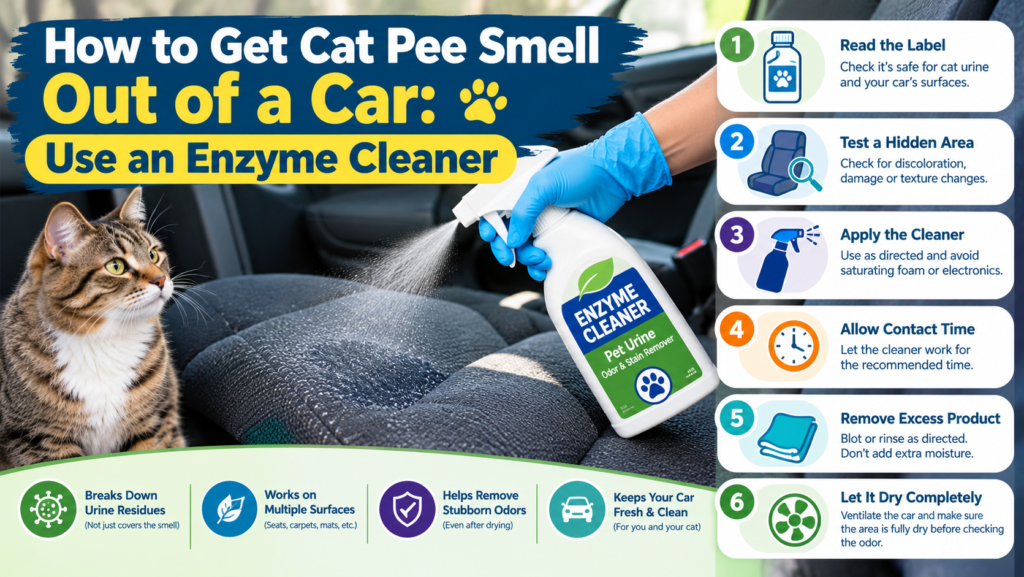
An enzyme-based pet urine cleaner is often one of the most useful products for treating persistent cat urine odors. These products are formulated to break down urine-related organic residues that ordinary surface cleaning may leave behind.
However, not every product is suitable for every automotive material. Always choose a product labeled for the affected surface and follow its directions carefully.
Why Enzyme Cleaners Help Remove Cat Urine Odor
Cat urine can leave residues in upholstery, carpet fibers, and padding. Even after the liquid has dried, these residues may continue to produce an unpleasant smell or how to get cat pee smell out of a car.
An appropriate enzyme-based cleaner helps break down components of the urine so the odor can be reduced at its source rather than merely covered with fragrance.
This is particularly useful when a car smells like cat pee even though the visible stain has already been wiped away.
How to Use an Enzyme Cleaner in Your Car
Follow these steps when the product is suitable for your vehicle’s interior.
Step 1: Read the product label.
Confirm that the cleaner is designed for cat urine and can be used on the affected material. Check whether it is suitable for automotive carpets, fabric seats, or other relevant surfaces or how to get cat pee smell out of a car.
Step 2: Test a hidden area.
Apply a small amount to an inconspicuous spot and wait as directed to check for discoloration, damage, or changes in texture.
Step 3: Apply the cleaner as instructed.
Treat the affected area according to the product label. Use enough product to reach the contaminated material when appropriate, but avoid saturating seat foam or nearby electrical components.
Step 4: Allow the recommended contact time.
Some cleaners require time to work before being blotted or removed. Follow the stated contact time rather than wiping the product away immediately.
Step 5: Remove excess product if directed.
Some products require blotting or rinsing, while others have different instructions. Follow the manufacturer’s directions and avoid adding unnecessary moisture.
Step 6: Allow the area to dry completely.
Ventilate the vehicle safely and make sure the treated material is dry before evaluating the remaining odor.
Can You Use an Enzyme Cleaner on Every Car Surface?
No. Some automotive materials are sensitive to moisture, detergents, or changes in pH. Leather, suede-like upholstery, delicate trim, and perforated seats may require specialized products or professional treatment.
Before applying a cleaner, check the vehicle manufacturer’s care recommendations and the product label. Never spray cleaning liquid directly into seat switches, electrical connectors, airbag components, or other sensitive equipment.
If urine has penetrated deep into seat foam or carpet padding, a surface application may not reach all the contaminated material. In these cases, a professional detailer may need to clean the affected area more thoroughly or how to get cat pee smell out of a car or how to get cat pee smell out of a car.
What If the Smell Returns After Using an Enzyme Cleaner?
A returning odor usually means that some residue may remain, the affected material was not treated sufficiently, or the area did not dry properly.
Inspect the original stain and nearby surfaces again. If the product label allows repeat treatment, follow its instructions. Avoid repeatedly applying different chemicals without understanding how they interact.
Pro tip: Enzyme cleaners are most effective when used according to their specific directions. More product is not always better, particularly when cleaning materials that can trap moisture.
How to Get Cat Pee Smell Out of a Car: Clean Seats, Carpets, and Floor Mats
Different car interior materials require different cleaning methods. Fabric seats can absorb liquid, carpet padding can retain urine, and leather finishes may be damaged by unsuitable cleaners or how to get cat pee smell out of a car.
Choosing the right approach helps remove odors while protecting your vehicle’s interior or how to get cat pee smell out of a car.
How to Clean Fabric Car Seats
Fabric seats can hold urine below the visible surface, so cleaning the outer fibers alone may not be enough.
Use this general process:
- Blot up any remaining moisture.
- Check the seat manufacturer’s cleaning guidance.
- Test a compatible pet urine cleaner on a hidden area.
- Apply the product as directed without excessively soaking the fabric.
- Blot away excess liquid when instructed.
- Allow the seat to dry fully with safe ventilation.
If the odor remains after the seat has dried, urine may have reached the foam underneath. Avoid repeatedly flooding the seat with cleaner, as excessive moisture can make the problem worse.
How to Clean Car Carpets
Car carpets can trap urine below their surface, especially when the liquid reaches the padding.
First, remove any floor mats and blot the affected carpet if it is still wet. Use a compatible enzyme cleaner according to its label, taking care not to soak nearby wiring or electrical components.
If you have a suitable wet-dry vacuum or upholstery extraction machine, it may help remove excess moisture when the equipment and cleaning product are appropriate for the material.
After treatment, allow the carpet to dry thoroughly. Check beneath the surface and around nearby trim for signs of remaining moisture or odor or how to get cat pee smell out of a car.
How to Clean Leather Car Seats
Leather should be treated more cautiously than many fabric surfaces.
- Blot fresh urine without rubbing.
- Use a leather-safe cleaner approved for automotive upholstery.
- Avoid household bleach, abrasive cleaners, and harsh solvents.
- Do not flood perforated leather or seat seams.
- Follow the manufacturer’s recommendations for conditioning, if applicable.
If urine has entered the seat padding, a surface cleaner may not be sufficient. A professional automotive detailer can assess whether deeper treatment is required.
How to Clean Removable Floor Mats
Removable mats are often easier to treat because you can clean them outside the vehicle.
For fabric mats, use a product suitable for their material and follow the care label. For rubber mats, use an appropriate cleaner and rinse only as permitted by the product instructions.
Make sure both sides of the mat are clean and completely dry before reinstalling it. Also inspect the carpet underneath because urine may have passed through the mat.
When Should You Choose Professional Car Detailing?
Professional cleaning may be worthwhile when:
- The urine has soaked deeply into seat foam.
- Carpet padding remains contaminated.
- The smell returns after careful treatment.
- The affected material is delicate or expensive.
- You cannot safely access the contaminated area.
A professional detailer may be able to treat areas that ordinary surface cleaning cannot reach. Explain that the odor comes from cat urine so the detailer can choose suitable products and methods.
Pro tip: Treat every affected material according to its own cleaning requirements. A method that works on rubber floor mats may not be safe for leather seats or delicate upholstery.
How to Get Cat Pee Smell Out of a Car: Dry the Interior Thoroughly
Drying your car’s interior is an essential step in removing persistent urine odors. Even after the urine has been cleaned, moisture trapped inside fabric seats, carpet padding, and floor mats can contribute to musty smells and make it difficult to determine whether the treatment has worked.
Proper drying also helps protect the interior materials from moisture-related damage.
Why Drying Matters After Cleaning Cat Urine
Automotive upholstery often contains multiple layers. For example, a fabric seat may have an outer covering, foam padding, and other materials underneath. Urine can penetrate these layers, and cleaning liquid may add further moisture.
If the area remains damp, the odor may seem to return as the temperature changes or the material dries unevenly.
To improve your results, make sure you remove excess liquid and allow the affected area to dry completely or how to get cat pee smell out of a car.
Best Ways to Dry Car Seats and Carpets
Follow these practical steps after cleaning:
Step 1: Remove excess moisture.
Use clean absorbent towels to blot the treated area. If appropriate for the material, a suitable wet-dry vacuum or upholstery extractor can help remove excess liquid.
Step 2: Improve ventilation.
Park in a safe, well-ventilated location and open the doors or windows when weather and security conditions allow.
Step 3: Use a fan if needed.
A household fan positioned safely outside the vehicle can help move air through the interior. Keep electrical equipment away from moisture and avoid placing it where it could be damaged.
Step 4: Remove damp floor mats.
Dry removable mats separately according to their material and care instructions. Check the carpet beneath them before reinstalling them or how to get cat pee smell out of a car.
Step 5: Check the affected area again.
Feel for remaining dampness and inspect the area after it has had enough time to dry. Thick carpet padding and seat foam may take considerably longer to dry than the surface fabric.
Can You Use Heat to Dry Cat Urine From a Car?
Avoid excessive heat when drying upholstery. High temperatures can damage some interior materials, affect adhesives, and potentially set certain stains.
Gentle airflow is generally a safer option. If you use any drying equipment, follow its safety instructions and the vehicle manufacturer’s guidance.
Do not leave a running vehicle unattended or use fuel-burning heaters in an enclosed space.
How to Know When the Interior Is Completely Dry
Look for these signs:
- The upholstery no longer feels damp.
- Floor mats are dry on both sides.
- No moisture remains around seat seams.
- The carpet does not feel wet beneath the surface.
- The area smells clean after drying and ventilation.
If the odor remains after everything is completely dry, additional cleaning may be needed rather than simply extending the drying time.
Pro tip: Never cover a damp seat with a protective cover or return a wet floor mat to the vehicle. Trapped moisture can prolong the drying process and contribute to unwanted odors or how to get cat pee smell out of a car.
How to Get Cat Pee Smell Out of a Car: Remove Lingering Odors Safely
Sometimes your car smells like cat pee even after the visible stain has disappeared. This can happen when urine remains in a hidden location or when the initial cleaning did not reach the contaminated material.
The most effective next step is to identify any remaining source instead of trying to cover it with perfume.
Recheck the Original Stain
Once the treated area has dried, inspect the original location and nearby surfaces.
Check:
- Seat seams and cushion edges.
- Carpet beneath removable floor mats.
- The underside of mats.
- The area around the cat carrier.
- Blankets or towels used during transportation.
- Nearby trim or other surfaces that may have been splashed.
Urine can spread farther than the visible stain, particularly on absorbent materials. Cleaning only the center of the stain may leave odor-producing residue around its edges.
Repeat Enzyme Treatment When Appropriate
If you suspect that urine remains, a second application of a compatible enzyme cleaner may help.
Before repeating treatment, review the product’s instructions. Some cleaners allow repeated applications, while others have specific requirements for drying, blotting, or rinsing.
Use the following approach:
- Confirm that the product is safe for the affected material.
- Reapply it according to the manufacturer’s instructions.
- Allow the recommended contact time.
- Remove excess product if directed.
- Dry the area thoroughly before reassessing the odor.
Avoid mixing an enzyme cleaner with bleach, ammonia, vinegar, or other cleaning chemicals. Mixing products can damage surfaces or create hazardous conditions, and incompatible products may interfere with cleaning.
Can Baking Soda Help Remove Cat Urine Smell?
Baking soda may help absorb some odors, but it does not reliably remove all urine residues trapped in upholstery or carpet padding or how to get cat pee smell out of a car.
If the material and manufacturer allow it, baking soda may be used as a supplementary deodorizing step on a suitable dry surface. Test carefully and remove the powder thoroughly afterward, especially from fabric and carpet.
Do not use baking soda as a substitute for removing the urine itself.
Does Vinegar Remove Cat Pee Smell From a Car?
Vinegar may help with some odors, but it is not a guaranteed solution for cat urine, especially when urine has penetrated deep into absorbent materials.
It may also be unsuitable for certain automotive finishes, leather, or other delicate surfaces. Check material compatibility before using it, and never mix vinegar with bleach or other cleaning products.
For persistent urine odor, an appropriate enzyme-based pet urine cleaner is often a more targeted option.
Should You Use a Cat Car Air Freshener?
A cat car air freshener can make your vehicle smell more pleasant, but fragrance usually masks an odor rather than eliminating the urine residue responsible for it.
If you want to use a cat car freshener, first make sure the affected surfaces have been cleaned and dried. Choose a mild product that does not produce overwhelming fragrances, and follow all safety instructions.
Strong fragrances and aerosol sprays may irritate people or pets. Never spray air freshener directly onto your cat, carrier bedding, or sensitive vehicle components or how to get cat pee smell out of a car.
When Should You Hire a Professional Detailer?
Professional automotive detailing may be necessary if:
- The smell persists after appropriate cleaning.
- Urine has soaked deeply into the seat foam.
- Carpet padding remains contaminated.
- The odor returns whenever the car becomes warm.
- The affected area is difficult to access safely.
Explain that the problem involves cat urine so the detailer can select a suitable treatment for the affected materials.
Pro tip: If the odor returns after the interior has dried, investigate the original contamination before applying more fragrance. A hidden urine source is often more important than the choice of deodorizer.
How to Get Cat Pee Smell Out of a Car: Prevent Future Odors
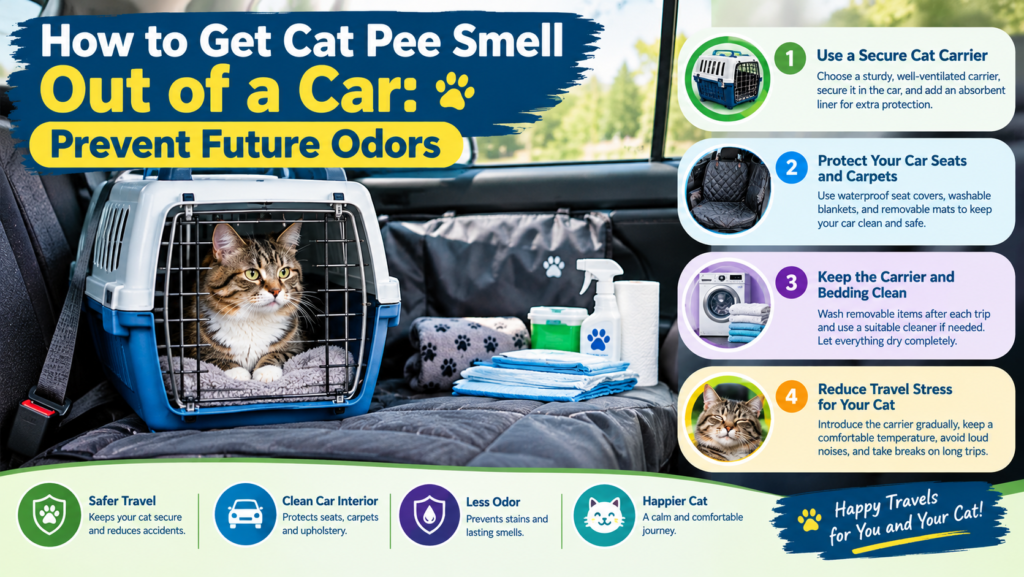
Preventing another accident can save you time and reduce the risk of persistent odors. Cats may urinate during travel because of stress, fear, motion-related discomfort, or a full bladder. A suitable carrier and a clean travel environment can help reduce the chances of accidents.
Use a Secure Cat Carrier
A sturdy, well-ventilated carrier is generally the safest way to transport your cat in a vehicle. Secure the carrier according to its design and the vehicle manufacturer’s recommendations.
For added protection, place an absorbent, washable liner inside the carrier. Keep a spare liner and cleaning supplies available for longer trips or how to get cat pee smell out of a car.
Never allow a cat to roam freely inside a moving vehicle, as this can distract the driver and place the animal at risk.
Protect Your Car Seats and Carpets
Washable and waterproof seat covers can help protect the vehicle’s upholstery from accidental spills and urine.
Consider these practical options:
- Waterproof seat covers designed for automotive use.
- Washable blankets for additional protection.
- Absorbent carrier liners.
- Removable floor mats that are easy to clean.
- A small supply of paper towels and disposable bags.
Choose covers that fit securely and do not interfere with seat belts, airbags, or other safety equipment.
Keep the Carrier and Bedding Clean
Urine odor can remain in a carrier, blanket, or towel even after the car interior has been cleaned.
After each trip, inspect the carrier and bedding. Wash removable items according to their care instructions and use a suitable cleaner if urine is present.
Allow all items to dry completely before placing them back inside the vehicle.
Reduce Travel Stress for Your Cat
Some cats become anxious during car journeys. A calm, familiar travel environment may help reduce stress-related problems.
Try the following:
- Introduce the carrier gradually before travel.
- Place familiar, clean bedding inside it.
- Keep the vehicle at a comfortable temperature.
- Avoid sudden movements and unnecessarily loud noises.
- Take breaks during long trips when appropriate, keeping your cat safely secured.
If your cat repeatedly urinates outside the litter box, appears uncomfortable while urinating, or suddenly develops new urinary problems, consult a veterinarian. Repeated accidents may have a medical cause rather than being solely a behavioral issue.
Use Air Fresheners Only After Cleaning
If you prefer a cat car freshener, use it only after removing the source of the urine odor.
A suitable product may help freshen the cabin, but avoid strong scents and products that are not intended for use around animals. Ensure that your cat is not exposed to concentrated sprays or fragrances during treatment.
You do not need an air freshener if the source has been removed and the interior smells clean. Proper cleaning, ventilation, and prevention are usually more important or how to get cat pee smell out of a car.
Pro tip: Before every trip, check that your cat’s carrier has a clean liner and that the vehicle’s protective covers are dry. These small habits can make future travel easier.
Frequently Asked Questions About How to Get Cat Pee Smell Out of a Car
How Long Does Cat Pee Smell Last in a Car?
The smell may disappear relatively quickly after fresh urine is cleaned, but it can persist for days or longer if urine remains in seat foam, carpet padding, or other absorbent materials. The duration depends on the amount of urine, the affected surfaces, and the cleaning method.
What Is the Best Cleaner for Cat Urine in a Car?
An enzyme-based pet urine cleaner labeled as suitable for the affected automotive material is often a good starting point. Always test it on a hidden area and follow the product directions.
Why Does My Car Still Smell Like Cat Pee After Cleaning?
The odor may remain because urine has soaked into hidden padding, the affected area was not fully treated, or the interior has not dried completely. Reinspect the area and consider professional detailing if the smell persists.
Can Vinegar Remove Cat Pee Smell From a Car?
Vinegar may help with some odors, but it may not completely remove cat urine residues. It can also be unsuitable for certain surfaces. A compatible enzyme cleaner is often a more targeted option for persistent urine odors or how to get cat pee smell out of a car.
Can I Use Baking Soda to Remove Cat Urine Odor?
Baking soda may help absorb some odors on suitable dry surfaces, but it does not reliably eliminate all urine residues. Clean the affected area first, and use baking soda only when it is appropriate for the material.
Will a Cat Car Air Freshener Eliminate Urine Odor?
A cat car air freshener generally masks or adds fragrance rather than removing urine residues. Clean and dry the contaminated surfaces before using any deodorizing product.
How Do I Get Cat Pee Smell Out of Car Seats?
Blot fresh urine, use a cleaner specifically suitable for the seat material, follow its instructions, and dry the area completely. If urine has entered the seat foam, professional cleaning may be required or how to get cat pee smell out of a car.
When Should I Hire a Professional Car Detailer?
Consider professional detailing if the odor remains after proper treatment, urine has soaked into deep padding, or the affected area is difficult to reach without damaging the interior.
Conclusion: How to Get Cat Pee Smell Out of a Car for Good
Learning how to get cat pee smell out of a car requires a combination of careful cleaning, thorough drying, and prevention. The key is to remove urine residues from the affected materials rather than relying on fragrances to hide the smell or how to get cat pee smell out of a car.
Remember these seven essential cleaning tips:
- Find the exact source of the odor.
- Blot fresh urine immediately.
- Use a compatible enzyme cleaner.
- Clean seats, carpets, and floor mats according to their materials.
- Dry the interior thoroughly.
- Recheck lingering odors and treat remaining contamination safely.
- Prevent future accidents with a secure carrier and washable protective covers.
With the right cleaning method and consistent prevention, you can make your vehicle more comfortable for yourself and your cat. If the odor persists despite careful treatment, professional automotive detailing may be the best way to address contamination deep inside the upholstery or carpet padding or how to get cat pee smell out of a car.