

 By
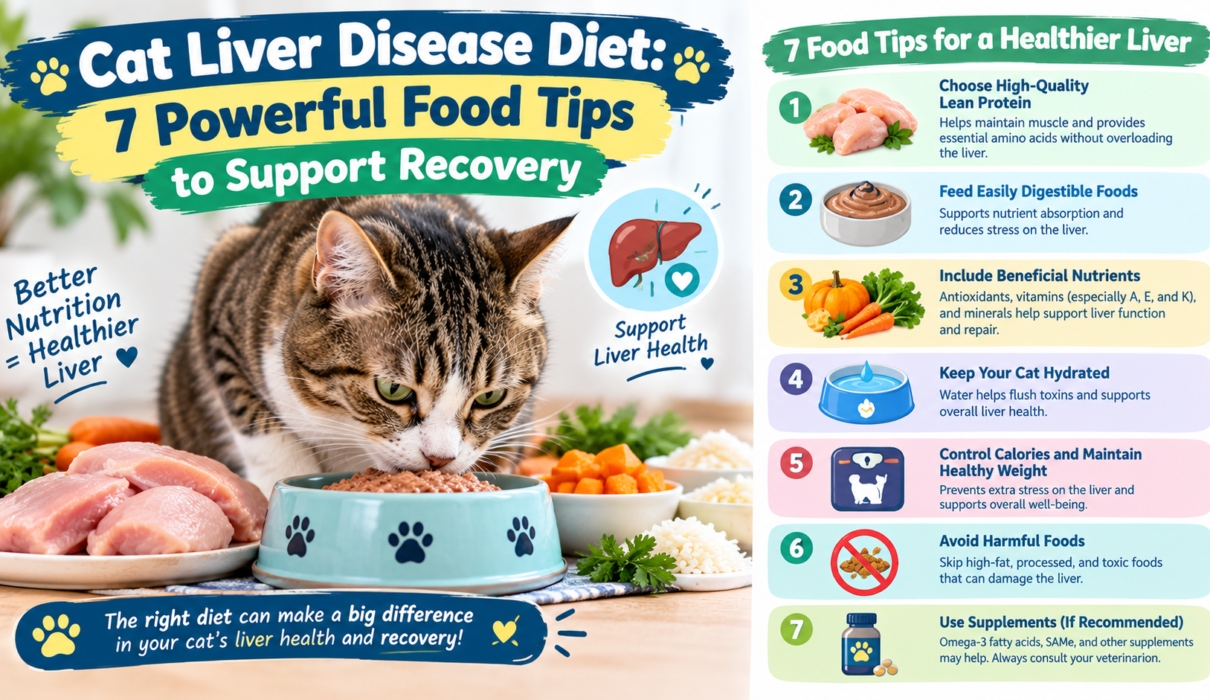
Cat Liver Disease Diet: 7 Powerful Food Tips to Support Recovery
Introduction: Understanding Cat Liver Disease Diet
A proper cat liver disease diet can play an important role in supporting a cat’s nutritional needs when liver problems develop. The liver performs several essential functions, including processing nutrients, storing energy, producing important proteins, and helping the body remove waste products. When the liver is not working properly, a cat may experience reduced appetite, vomiting, weight loss, weakness, or other health problems.
Choosing the right food is especially important because cats need sufficient calories and essential nutrients to maintain their strength. Some cats with liver disease require a carefully managed feeding plan, while others may benefit from a veterinary therapeutic diet designed for their specific condition.
However, there is no single food that works for every cat with liver disease. The best diet depends on the underlying diagnosis, the severity of the condition, the cat’s appetite, and any other medical problems.
In this guide, we will discuss seven practical food tips, explain how to choose suitable cat food for liver disease, and identify foods and supplements that should be avoided. These recommendations can help you understand your cat’s nutritional needs and work with your veterinarian to develop a safe feeding plan or cat liver disease diet.
What Is a Cat Liver Disease Diet and Why Is It Important?
A cat liver disease diet is a feeding plan designed to provide appropriate calories, protein, fats, vitamins, minerals, and other essential nutrients to a cat with a liver condition or cat liver disease diet.
The goal is not simply to feed foods believed to be healthy for the liver. Instead, the diet should meet the cat’s nutritional requirements while accounting for the specific disease and any complications affecting digestion or metabolism.
Understanding the Role of the Liver in Cats
The liver is one of the most important organs in a cat’s body. It supports several processes that help maintain normal health.
Its functions include:
- Processing nutrients absorbed from food.
- Helping regulate energy storage and use.
- Producing important proteins.
- Supporting the metabolism of fats and carbohydrates.
- Producing bile, which helps the body digest and absorb fats.
- Processing medications and other substances.
- Helping the body manage waste products.
When liver function is affected, these processes may become less efficient. Some cats develop digestive problems or reduced appetite, while others experience changes in weight, energy levels, or nutrient metabolism.
The effects vary depending on the type and severity of liver disease or cat liver disease diet.
Why Nutrition Matters for Cats With Liver Disease
Cats with liver disease may eat less than usual because of nausea, discomfort, weakness, or changes in appetite. When food intake decreases, the body may begin using stored energy and muscle tissue to meet its needs.
This can become particularly concerning in cats that are already losing weight or have a condition that increases their nutritional requirements or cat liver disease diet.
Adequate nutrition helps support:
- Maintenance of muscle mass.
- Normal body weight and energy levels.
- Tissue repair and recovery.
- Essential metabolic functions.
- Overall strength during veterinary treatment.
A suitable diet cannot cure every liver condition, but it can be an important part of the overall treatment plan.
Common Liver Conditions in Cats
Several conditions may affect a cat’s liver, and each can have different nutritional requirements.
Hepatic lipidosis: Also called fatty liver disease, this condition involves excessive fat accumulation in liver cells. It commonly develops when a cat eats too little, particularly if the cat is overweight. Prompt veterinary treatment and nutritional support are essential.
Cholangitis: This is an inflammatory condition involving the bile ducts and sometimes surrounding liver tissue. Treatment depends on the underlying cause and the cat’s overall health.
Other liver disorders: Infections, toxins, certain medications, tumors, and other diseases can affect liver function. Some cats also have additional medical problems that influence which diet is appropriate.
Because these conditions are different, a diet recommended for one cat may not be suitable for another.
Cat Liver Disease Diet: 7 Powerful Food Tips to Support Recovery
The following seven tips can help you understand how nutrition may support a cat with liver disease. Always discuss significant feeding changes with your veterinarian, especially if your cat is eating poorly or has recently received a diagnosis.
Choose the Right Cat Food for Liver Disease
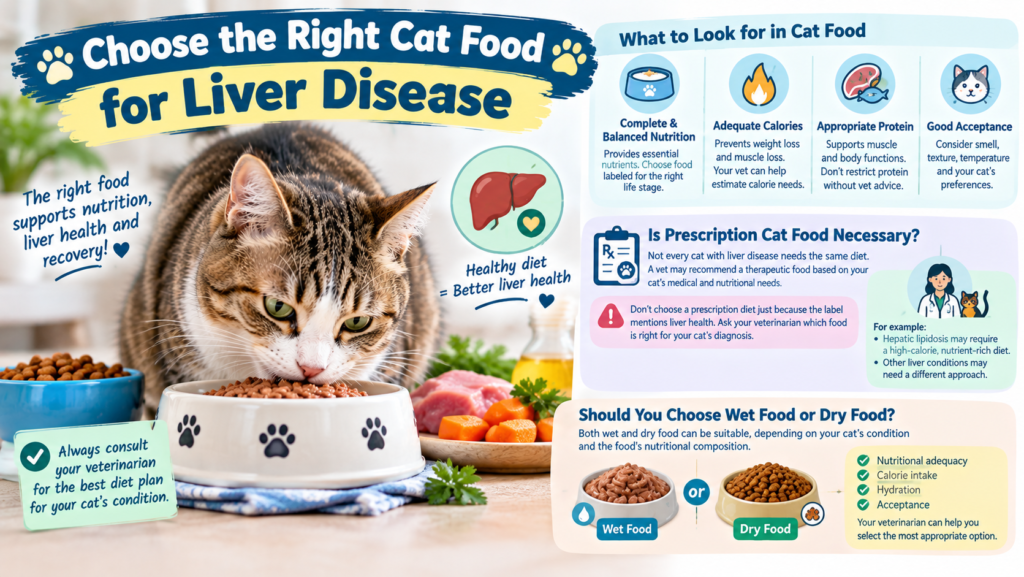
Selecting suitable cat food for liver disease is one of the most important parts of a feeding plan. The ideal food should provide complete and balanced nutrition while meeting the needs of the individual cat.
Some cats may benefit from a veterinary therapeutic diet, while others may need a different feeding approach based on their diagnosis and appetite.
What to Look for in Cat Food
When choosing food for a cat with liver disease, consider the following factors:
Complete and balanced nutrition: The food should provide the essential nutrients cats require. A food labeled as complete and balanced for the appropriate life stage is generally preferable to an unbalanced homemade mixture.
Adequate calories: Cats that eat too little may lose weight and muscle. Your veterinarian can help estimate your cat’s calorie requirements and determine whether a more energy-dense food is appropriate.
Appropriate protein: Cats need dietary protein to maintain muscle and support normal body functions. Protein requirements depend on the individual diagnosis, so protein should not be restricted without veterinary advice.
Good acceptance: A nutritionally appropriate food is only useful if your cat actually eats it. Smell, texture, temperature, and individual preferences may influence whether a cat accepts a meal.
Is Prescription Cat Food Necessary?
Not every cat with liver disease needs the same prescription diet. A veterinarian may recommend a therapeutic food when it matches the cat’s medical and nutritional needs or cat liver disease diet.
For example, a cat requiring nutritional support for hepatic lipidosis may need a carefully calculated feeding plan that ensures adequate calories and nutrients. Another cat with a different liver condition may need a different approach.
Do not choose a prescription diet solely because its label mentions liver health. Ask your veterinarian which food is appropriate for your cat’s diagnosis .
Should You Choose Wet Food or Dry Food?
Both wet and dry food can be suitable, depending on the cat’s condition and the food’s nutritional composition.
Wet food may be useful for cats that prefer its texture or need additional moisture in their diet. Some cats prefer dry food and may eat it more readily or cat liver disease diet.
The most important considerations are nutritional adequacy, calorie intake, hydration, and acceptance. Your veterinarian can help you select the most appropriate option.
Provide Enough High-Quality Protein When Appropriate
Protein is essential for cats because it supplies amino acids needed to maintain muscle, repair tissues, and support normal bodily functions.
A cat with liver disease may already be losing muscle because of reduced food intake or changes in metabolism. Providing adequate protein can therefore be important.
However, protein needs vary with the underlying condition. Certain complications, such as hepatic encephalopathy, may require a veterinarian to adjust the amount or type of protein. Restricting protein unnecessarily can worsen muscle loss and malnutrition or cat liver disease diet.
Why Protein Matters in a Cat Liver Disease Diet
Adequate dietary protein helps support:
- Muscle maintenance.
- Tissue repair.
- Normal immune function.
- Essential metabolic processes.
- Overall nutritional status.
Cats are obligate carnivores, which means they have specific nutritional requirements that must be met through an appropriately formulated diet.
Which Protein Sources Are Appropriate?
Complete commercial cat foods can provide suitable protein and essential amino acids in carefully balanced amounts.
Depending on the cat’s needs, the veterinarian may recommend a particular therapeutic diet or another complete feline food.
Do not assume that feeding plain chicken, fish, or another single protein source will meet all of your cat’s nutritional needs. These foods alone generally do not provide the complete balance of vitamins, minerals, amino acids, and other nutrients required for long-term feeding or cat liver disease diet.
Should Protein Be Restricted in Cats With Liver Disease?
No, not automatically.
Although some cats with specific liver complications may need individualized protein management, many cats require adequate protein to maintain their strength and body condition.
Excessive restriction may contribute to muscle wasting and poor nutritional status. Your veterinarian should determine whether any adjustment is needed based on the diagnosis, symptoms, and test results.
Important: Never reduce your cat’s protein intake simply because you have heard that protein is difficult for the liver to process.
Feed Small, Frequent Meals
Some cats with liver disease experience nausea, reduced appetite, or difficulty eating their usual portions. Offering smaller meals more frequently may help certain cats consume enough food throughout the day or cat liver disease diet.
This approach can be particularly useful when a cat is willing to eat but becomes reluctant after a few bites.
How Frequent Feeding May Help
Smaller meals may:
- Make portions seem less overwhelming.
- Allow a cat to eat according to its appetite.
- Help owners monitor how much food is consumed.
- Make it easier to offer fresh food several times daily.
However, frequent feeding does not replace the need to provide sufficient total calories. Your veterinarian can help determine the appropriate daily food amount and schedule.
How to Create a Feeding Schedule
Start by following your veterinarian’s recommended daily food quantity.
Depending on your cat’s condition and appetite, you may be advised to divide the daily amount into several smaller meals.
For example, some cats may tolerate four small meals better than one or two large meals. The ideal schedule depends on the cat’s nutritional requirements, household routine, and any prescribed feeding plan or cat liver disease diet.
Keep a record of the food offered and the amount actually eaten. This information can help your veterinarian identify whether your cat is receiving adequate nutrition.
Ways to Encourage Your Cat to Eat
If your veterinarian has confirmed that a particular food is appropriate, you can try a few gentle strategies:
- Offer fresh food in a quiet location.
- Serve wet food slightly warmed to room temperature or mildly warm, never hot.
- Use a clean, shallow bowl if your cat prefers it.
- Offer small portions instead of leaving a large amount uneaten.
- Keep food and water away from the litter box.
Avoid making repeated, abrupt diet changes without veterinary guidance. Too many unfamiliar foods can make it difficult to monitor intake and determine which food your cat tolerates.
What If Your Cat Refuses Food?
A cat with liver disease that refuses food needs prompt veterinary attention. Do not assume the problem will resolve by trying different flavors.
Prolonged inadequate food intake can be dangerous for cats and may contribute to hepatic lipidosis. Contact your veterinarian the same day if your cat stops eating or consumes much less than usual.
If nutritional support is required, your veterinarian may recommend medication for nausea, appetite support when appropriate, or assisted feeding. Do not force-feed your cat unless a veterinary professional has specifically instructed you how to do so safely.
Maintain Adequate Calories and a Healthy Body Weight
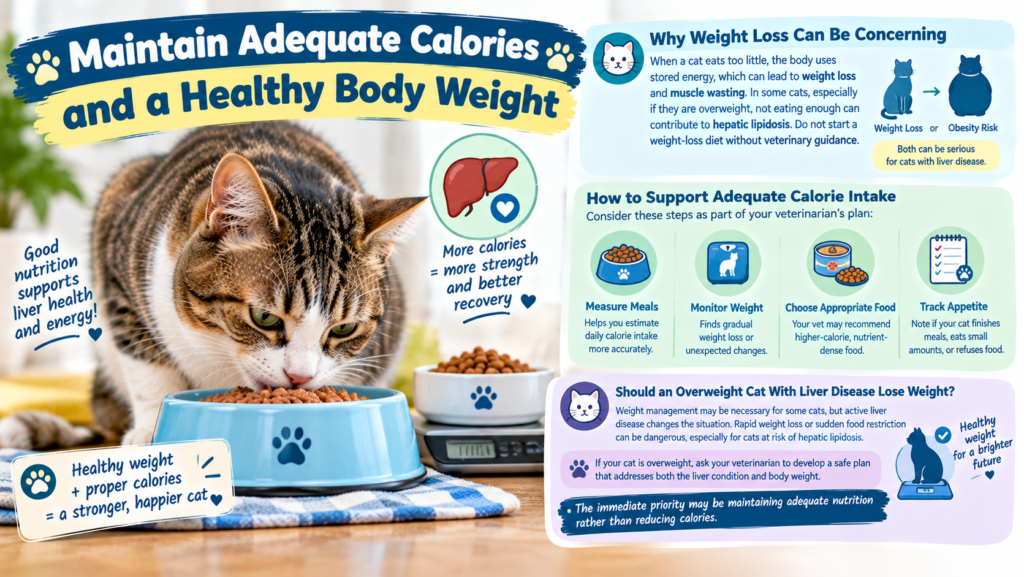
Calories provide the energy a cat needs to maintain normal body functions and body weight. Cats with liver disease may require special attention to calorie intake because nausea, reduced appetite, and illness can interfere with eating.
Providing enough calories is particularly important for cats that have lost weight or muscle.
Why Weight Loss Can Be Concerning
When a cat consumes too little food, the body uses stored energy to meet its needs. Over time, inadequate intake may cause weight loss and muscle wasting or cat liver disease diet.
In some cats, especially those that are overweight and suddenly stop eating, inadequate food intake can contribute to hepatic lipidosis.
This is one reason why a cat with liver disease should not be placed on a weight-loss diet without veterinary guidance.
How to Support Adequate Calorie Intake
Consider these steps as part of your veterinarian’s plan:
Measure meals: Measuring the food offered helps you estimate daily calorie intake more accurately.
Monitor weight: Regular weighing can help identify gradual weight loss or unexpected changes.
Choose appropriate food: Your veterinarian may recommend a food with a suitable calorie density to help meet your cat’s needs.
Track appetite: Record whether your cat finishes meals, eats only small amounts, or refuses food.
Should an Overweight Cat With Liver Disease Lose Weight?
Weight management may be necessary for some cats, but active liver disease changes the situation.
Rapid weight loss or sudden food restriction can be dangerous, particularly for cats at risk of hepatic lipidosis. If your cat is overweight, ask your veterinarian to develop a safe plan that addresses both the liver condition and body weight.
The immediate priority may be maintaining adequate nutrition rather than reducing calories.
Support Hydration With Suitable Food and Fresh Water
Hydration is an important part of general feline health. Cats with liver disease may become dehydrated if they eat and drink less than usual or experience vomiting.
Although water does not cure liver disease, providing access to fresh water and appropriate food can help support normal hydration.
Can Wet Food Help Hydration?
Wet cat food generally contains more moisture than dry food. It may help increase water intake through meals, especially for cats that prefer wet food.
However, wet food is not automatically the best choice for every cat with liver disease. Nutritional composition and food acceptance remain important considerations.
If your cat eats dry food more reliably, ask your veterinarian whether it can remain part of the feeding plan.
Simple Ways to Encourage Water Intake
You can support hydration by:
- Providing fresh, clean water every day.
- Placing water bowls in accessible, quiet locations.
- Offering more than one water bowl around the home.
- Cleaning bowls regularly.
- Considering a pet water fountain if your cat prefers moving water.
- Asking your veterinarian whether adding water to food is appropriate.
Do not force water into your cat’s mouth, as this may cause choking or aspiration.
Signs of Possible Dehydration
Watch for reduced drinking, weakness, lethargy, vomiting, or a noticeable decline in overall condition.
Dehydration cannot always be assessed reliably at home. If your cat seems weak, cannot keep water down, or is eating and drinking very little, seek veterinary advice promptly or cat liver disease diet.
Your veterinarian can determine whether fluids or additional treatment are needed.
Avoid Unsafe Foods, Unnecessary Supplements, and Unapproved Remedies
When caring for a cat with liver disease, avoiding harmful substances is just as important as choosing suitable food.
The liver processes many substances that enter the body. Some foods, medications, plants, and supplements can be toxic to cats or may complicate treatment.
Foods That Must Be Avoided
Onions and garlic: These can damage red blood cells in cats and may cause serious illness.
Chocolate: Chocolate contains substances that are toxic to cats. The risk depends on the type and amount consumed.
Alcohol: Alcohol can cause dangerous poisoning and should never be given to cats.
Raw or undercooked meat and eggs: These can expose cats to harmful bacteria or parasites. Raw diets may also create nutritional imbalances if they are not properly formulated.
Spoiled food: Food that has been stored improperly may contain harmful microorganisms or toxins.
If your cat eats a potentially toxic substance, contact a veterinarian or animal poison service promptly. Do not wait for symptoms to develop.
Are Supplements Good for Cats With Liver Disease?
Some supplements may be useful in specific cases, but they are not appropriate for every cat.
Products marketed for liver support may contain ingredients that interact with medications or be unsuitable for a particular diagnosis. Their safety and effectiveness depend on the ingredients, dose, and individual animal.
Do not give your cat human vitamin supplements, herbal remedies, or liver-support products without discussing them with your veterinarian.
What About Milk, Treats, and Table Scraps?
Milk is not necessary for most adult cats, and many cats do not digest lactose well.
Treats and table scraps should not replace a nutritionally complete diet. Large amounts may reduce appetite for the cat’s regular food or unbalance the overall diet or cat liver disease diet.
If your cat is eating poorly, ask your veterinarian whether a particular treat or food topper is appropriate before introducing it.
Never Give Human Medications Without Veterinary Advice
Some human medications can be highly toxic to cats. Acetaminophen, for example, can cause life-threatening poisoning.
Even medicines that are commonly used in people may be unsafe for cats or may require carefully adjusted veterinary dosing or cat liver disease diet.
Only give medications and supplements that have been approved for your cat by a veterinary professional.
Follow a Veterinarian-Guided Feeding and Monitoring Plan
The final and most important tip is to make your cat’s diet part of a complete veterinary treatment plan.
Liver disease has many possible causes, and nutritional requirements can differ considerably. A feeding strategy that works for a cat with hepatic lipidosis may not be appropriate for another cat with a different liver condition.
What Should a Feeding Plan Include?
A veterinarian-guided plan may cover:
- The type of food that best matches the diagnosis.
- Daily calorie and nutritional requirements.
- Appropriate protein intake.
- Meal frequency and feeding methods.
- Hydration needs.
- Whether nutritional supplements are necessary.
- Monitoring and follow-up appointments.
Your veterinarian may also recommend blood tests or other investigations to assess the condition and monitor progress.
Keep a Daily Food and Symptom Record
A simple record can help you notice changes early.
Track the following information:
| What to monitor | Why it matters |
| Food offered and eaten | Helps estimate calorie intake |
| Body weight | Identifies weight loss or gain |
| Water intake | Helps identify changes in drinking |
| Vomiting or diarrhea | May indicate worsening illness or another problem |
| Energy and behavior | Helps monitor general condition |
| Medication given | Supports consistent treatment |
You do not need to measure every detail perfectly. Even a brief daily record can be useful when discussing your cat’s progress with the veterinarian.
When Should the Diet Be Changed?
Diet changes should be based on the cat’s response, nutritional status, and veterinary findings.
If your cat is not eating the recommended food, is losing weight, or develops new symptoms, contact your veterinarian rather than repeatedly switching diets on your own.
Some cats require adjustments to the food texture, calorie density, or feeding method. Others may need treatment for nausea or assisted nutritional support or cat liver disease diet.
Signs That Need Prompt Veterinary Attention
Seek veterinary advice promptly if your cat develops:
- Refusal to eat or a substantial reduction in food intake.
- Repeated vomiting.
- Significant weakness or lethargy.
- Continued weight loss.
- Yellowing of the eyes, gums, or skin.
- Sudden changes in behavior or coordination.
Yellowing of the eyes or gums, severe weakness, or neurological changes can indicate a serious problem and require urgent assessment.
Treatment for Cat Liver Disease: How Diet Supports Recovery
A proper Cat Liver Disease Diet is an important part of supporting a cat during recovery. However, diet alone cannot treat every liver condition. The right treatment depends on the underlying cause, the severity of the disease, and your cat’s overall health.
The liver performs many essential functions, including processing nutrients, producing important proteins, and helping remove waste products from the body. When the liver is not working properly, cats may need a combination of veterinary treatment, nutritional support, hydration, and regular monitoring.
Visit a Veterinarian for an Accurate Diagnosis
If your cat shows signs of liver disease, consult a veterinarian as soon as possible. Symptoms such as vomiting, yellow eyes, reduced appetite, weight loss, and unusual tiredness can occur with several different health conditions.
Your veterinarian may recommend blood tests, imaging such as an ultrasound, or other diagnostic procedures to identify the cause. These results help determine which foods, medications, and nutritional supplements may be appropriate.
Follow the Recommended Treatment Plan
Treatment for cat liver disease depends on the diagnosis. Some cats may require medication, fluid therapy, treatment for infection or inflammation, or management of another underlying condition.
Never give your cat human medications or herbal remedies without veterinary approval. Some substances that are safe for people can be dangerous to cats, particularly those with liver problems or cat liver disease diet.
Combine Veterinary Care With Proper Nutrition
A suitable Cat Liver Disease Diet helps provide the calories and nutrients your cat needs during recovery. Your veterinarian may recommend a therapeutic diet or a carefully selected commercial cat food based on your pet’s condition.
Avoid making major dietary changes without guidance. Cats with different liver disorders may need different nutritional approaches, so one feeding plan is not suitable for every cat.
Nutritional Support for Cats With Liver Disease
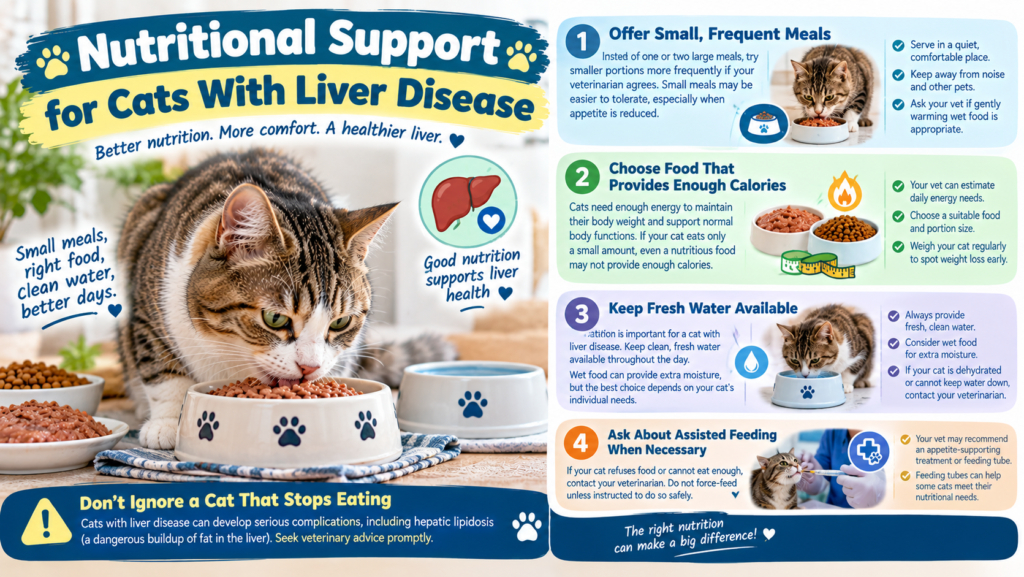
Cats with liver disease may eat less than usual because of nausea, discomfort, or changes in their appetite. Poor food intake can lead to weight loss and additional complications, making nutritional support especially important or cat liver disease diet.
Offer Small, Frequent Meals
Instead of giving one or two large meals, try offering smaller portions more frequently if your veterinarian agrees. Small meals may be easier for some cats to tolerate, especially when their appetite is reduced.
Serve food in a quiet, comfortable place away from noise and other pets. You can also ask your veterinarian whether gently warming wet food is appropriate to make its aroma more appealing.
Choose Food That Provides Enough Calories
Cats need enough energy to maintain their body weight and support normal body functions. If your cat eats only a small amount, even a nutritious food may not provide enough calories.
Your veterinarian can help estimate your cat’s daily energy needs and recommend suitable portions. Weighing your cat regularly can help identify unwanted weight loss before it becomes severe.
Keep Fresh Water Available
Hydration is an important part of caring for a cat with liver disease. Keep clean, fresh water available throughout the day.
Wet cat food can provide additional moisture, although the best food choice depends on your cat’s individual needs. If your cat is dehydrated or cannot keep water down, veterinary treatment may be necessary or cat liver disease diet.
Ask About Assisted Feeding When Necessary
If your cat refuses food or cannot eat enough, contact your veterinarian promptly. Do not force-feed your cat unless a veterinarian has specifically instructed you how to do it safely.
In some cases, a veterinarian may recommend an appetite-supporting treatment or a feeding tube to provide adequate nutrition. Feeding tubes can be helpful for certain cats that cannot meet their nutritional needs by eating voluntarily.
Cats that stop eating can develop serious complications, including hepatic lipidosis, a potentially life-threatening accumulation of fat in the liver. Do not wait several days for a cat with liver disease to start eating again without veterinary advice.
Common Types of Cat Liver Disease and Their Dietary Needs
Different liver conditions can affect cats in different ways. Understanding the diagnosis helps you work with your veterinarian to choose an appropriate feeding plan or cat liver disease diet.
Hepatic Lipidosis
Hepatic lipidosis, also called fatty liver disease, occurs when excessive fat accumulates in the liver. It is often associated with a period of inadequate food intake, particularly in overweight cats.
A key part of treatment is restoring adequate nutrition under veterinary supervision. The veterinarian may recommend a calorie-dense, nutritionally complete diet and, in some cases, feeding-tube support.
Do not try to treat suspected hepatic lipidosis by changing food at home alone. Prompt veterinary care is essential.
Cholangitis and Other Inflammatory Liver Conditions
Cholangitis involves inflammation of the bile ducts and may occur alongside other digestive or pancreatic problems. Treatment varies according to the cause and may involve medications and supportive care.
A suitable Cat Liver Disease Diet can help maintain nutritional intake, but food choices should be based on the veterinarian’s diagnosis and recommendations.
Liver Problems Associated With Other Diseases
Some cats develop liver abnormalities because of another illness, infection, toxin exposure, or a problem affecting bile flow. In these cases, treating the underlying cause is an important part of care.
Your veterinarian may recommend a specific diet, adjustments to nutrient intake, or additional monitoring. Do not assume that every cat with abnormal liver tests needs the same food or a protein-restricted diet.
Warning Signs That Your Cat’s Diet or Treatment Needs Review
Even when you are following a recommended feeding plan, your cat’s condition may change. Watch for symptoms that suggest your pet needs veterinary reassessment or cat liver disease diet.
Persistent Loss of Appetite
If your cat eats much less than usual or refuses food, contact your veterinarian promptly. This is particularly important when liver disease has already been diagnosed.
Do not rely on treats, milk, or table scraps to replace a balanced diet. These foods may not provide the nutrients your cat needs.
Unexplained Weight Loss
Weight loss can indicate that your cat is not consuming enough calories or that the underlying disease is progressing. Record your cat’s weight and note any changes in eating habits.
Your veterinarian may adjust the amount of food, recommend a different therapeutic diet, or investigate other causes of weight loss or cat liver disease diet.
Vomiting, Yellow Skin, or Severe Weakness
Repeated vomiting, yellowing of the eyes or gums, marked weakness, or a swollen abdomen require prompt veterinary assessment. Collapse, breathing difficulty, seizures, or severe disorientation are emergencies.
Do not attempt to manage these symptoms by changing your cat’s food alone or cat liver disease diet.
No Improvement During Recovery
If your cat continues to lose weight, vomits frequently, or seems increasingly tired despite following the treatment plan, arrange a veterinary review. The diagnosis, medications, hydration, or nutritional plan may need to be reassessed.
Cat Food for Liver Disease: What Should Cats Eat?
Choosing appropriate cat food for liver disease depends on the underlying condition, nutritional requirements, appetite, and overall health of the cat.
There is no universal liver-friendly food that can treat every feline liver disorder. Instead, the aim is to provide a complete and balanced diet that supports the cat while the underlying problem is evaluated and treated.
Features of Suitable Cat Food
In general, a suitable food should provide:
- Adequate calories to maintain nutritional status.
- Essential amino acids and appropriate protein.
- Necessary fatty acids.
- Vitamins and minerals in balanced amounts.
- Good digestibility and acceptance.
Your veterinarian may recommend a specific therapeutic diet when the formulation matches your cat’s needs.
Wet Food Versus Dry Food
Wet food may provide additional moisture and can be appealing to some cats. Dry food may be more acceptable to others.
Neither form is automatically best for every liver condition. Choose based on nutritional suitability, food intake, hydration, and veterinary recommendations.
Is Homemade Food Suitable?
A homemade diet may appear attractive when a cat refuses commercial food, but ordinary home recipes often lack essential nutrients or contain inappropriate proportions of ingredients.
For long-term feeding, a homemade diet should be formulated by a veterinarian with appropriate nutrition expertise. This is particularly important for cats with liver disease, whose nutritional needs may be complicated.
If your cat refuses its usual food, contact your veterinarian before relying on chicken, fish, broth, or other individual foods as the main diet.
Foods to Avoid in a Cat Liver Disease Diet
A safe cat liver disease diet should exclude toxic foods and avoid unnecessary ingredients that could interfere with balanced nutrition or cat liver disease diet.
Toxic Human Foods
Never intentionally feed cats onions, garlic, chocolate, or alcohol. These substances can cause serious health problems.
Raw or Undercooked Animal Products
Raw meat, raw eggs, and unpasteurized products may contain harmful organisms. They can also create nutritional risks if used in an unbalanced diet.
Excessive Treats and Table Scraps
Treats should remain a small part of the overall diet unless a veterinarian advises otherwise. Large quantities may displace nutritionally complete food.
Unapproved Supplements
Avoid giving liver-support supplements, herbal mixtures, or human vitamins without veterinary guidance. A product being labeled natural does not guarantee that it is safe for cats.
Abrupt Dietary Changes
Suddenly replacing a cat’s regular food may reduce food acceptance and make it harder to monitor nutritional intake. Make changes gradually when appropriate, unless your veterinarian gives different instructions.
For a cat that is already refusing food, do not delay veterinary care while experimenting with alternative diets.
Frequently Asked Questions About Cat Liver Disease Diet
What Is the Best Cat Liver Disease Diet?
There is no single best diet for every cat with liver disease. The right choice depends on the diagnosis, appetite, weight, and other health conditions. Your veterinarian may recommend a complete commercial food or a veterinary therapeutic diet.
Is Wet Food Better for Cats With Liver Disease?
Wet food can provide additional moisture and may be more appealing to some cats. However, wet food is not automatically better for every liver condition. The most appropriate choice is a nutritionally complete food that your cat can eat in sufficient amounts and that meets the veterinarian’s recommendations or cat liver disease diet.
Should Protein Be Restricted in a Cat Liver Disease Diet?
Not necessarily. Cats need adequate protein to maintain muscle and body functions. Protein restriction may be appropriate in selected cases, such as certain cats with hepatic encephalopathy, but it should only be done under veterinary supervision.
Do not reduce protein on your own simply because your cat has liver disease.
Can Cats With Liver Disease Eat Chicken?
Plain, fully cooked chicken without bones, seasoning, onion, or garlic may be suitable as a small occasional addition for some cats. However, chicken alone is not a complete and balanced diet and should not replace the food recommended by your veterinarian.
Ask your veterinarian before introducing new foods, especially if your cat has a complicated medical condition.
How Long Does a Cat Need a Liver Disease Diet?
The length of time depends on the cause and severity of the disease and how well your cat responds to treatment. Some cats may need temporary nutritional adjustments, while others may require long-term dietary management.
Your veterinarian can advise when to continue, change, or discontinue a therapeutic diet.
What Foods Should Cats With Liver Disease Avoid?
Avoid toxic foods such as onions, garlic, chocolate, and alcohol. Do not give your cat human medications, unapproved supplements, or unbalanced homemade diets.
High-fat table scraps and heavily seasoned foods are also poor choices. Ask your veterinarian before using any special diet or supplement.
When Should I Contact a Veterinarian About My Cat’s Appetite?
Contact your veterinarian promptly if your cat with liver disease eats substantially less than usual or refuses food. Seek urgent advice if your cat is not eating, is repeatedly vomiting, or is becoming weak. Cats can deteriorate quickly when they do not receive enough nutrition or cat liver disease diet.
Conclusion: Choosing the Right Cat Liver Disease Diet
A suitable Cat Liver Disease Diet can play an important role in supporting nutrition, maintaining body weight, and helping cats recover alongside appropriate veterinary treatment. The best approach includes providing complete and balanced food, encouraging adequate food intake, maintaining hydration, and monitoring changes in appetite and weight.
Remember that liver disease has many possible causes, and nutritional needs differ from cat to cat. Avoid restricting protein, using supplements, or making major diet changes without professional guidance.
If your cat stops eating, develops yellow eyes or gums, vomits repeatedly, or becomes unusually weak, seek veterinary care promptly. Working closely with your veterinarian gives your cat the best chance of receiving the right treatment and nutritional support or cat liver disease diet.