

 By
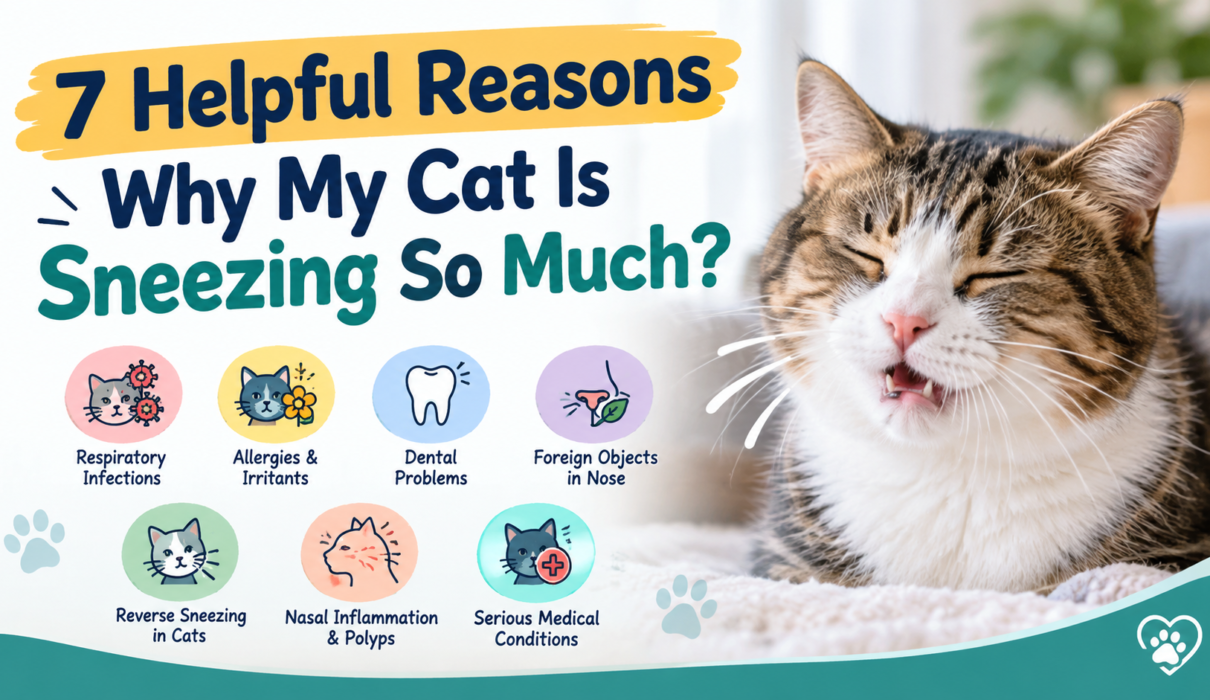
7 Helpful Reasons Why My Cat Is Sneezing So Much?
If you are wondering, Why My Cat Is Sneezing So Much?, you are not alone. Cats may sneeze occasionally for harmless reasons, such as dust or a small irritation in the nose. However, frequent or repeated sneezing can sometimes point to an underlying health problem.
A cat that sneezes repeatedly may also have other symptoms, including a runny nose, watery eyes, nasal congestion, coughing, reduced appetite, or low energy. Paying attention to these additional signs can help you understand whether your cat simply has temporary irritation or needs veterinary attention.
There are several possible reasons for frequent cat sneezing. In this first part, we will discuss five common causes, including respiratory infections, allergies, foreign objects, dental problems, and Reverse Sneezing in Cats.
Upper Respiratory Infection
One of the most common reasons a cat may sneeze frequently is an upper respiratory infection. These infections can affect the nose, throat, sinuses, and other parts of the upper respiratory tract Reverse Sneezing in Cats.
Viruses are common causes of respiratory infections in cats, although bacterial infections can also occur. Cats living in shelters, boarding facilities, rescue environments, or multi-cat households may have a greater chance of being exposed to infectious organisms or Reverse Sneezing in Cats.
A respiratory infection may cause symptoms such as:
- Frequent sneezing
- Runny nose
- Nasal congestion
- Watery eyes
- Eye discharge
- Coughing
- Reduced appetite
- Low energy
- Noisy breathing
Some cats may develop only mild symptoms, while others can become noticeably unwell.
Stress can also make respiratory symptoms worse in some cats. Changes in the household, travel, introduction of another animal, or other stressful events may contribute to flare-ups in cats that have previously experienced certain respiratory infections.
When Is a Respiratory Infection a Concern?
Occasional sneezing does not necessarily mean your cat has an infection. However, repeated sneezing combined with thick nasal discharge, eye discharge, fever, appetite loss, or lethargy should not be ignored.
If your cat has difficulty breathing, becomes extremely weak, or stops eating, contact a veterinarian promptly.
Allergies and Environmental Irritants
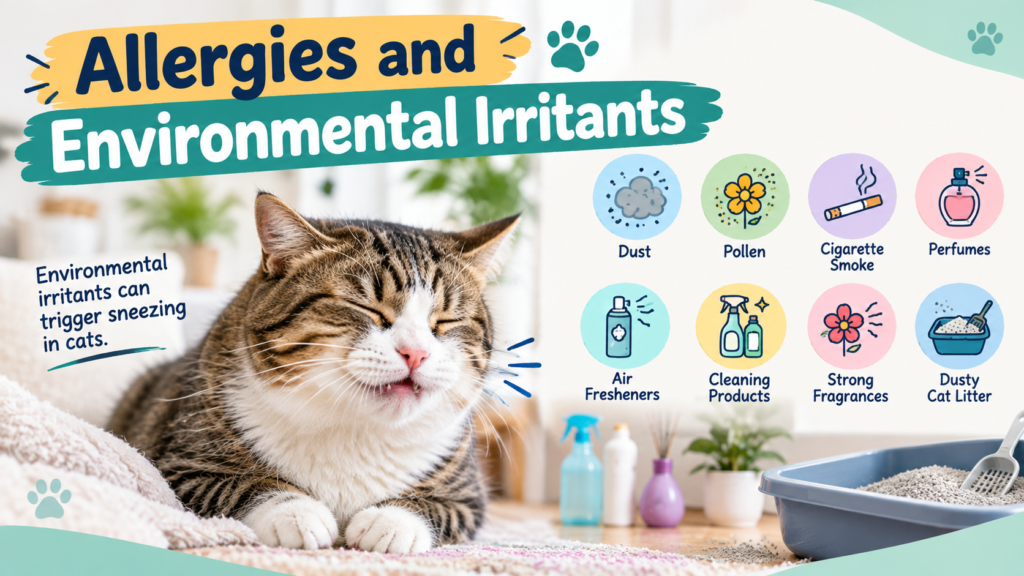
Another possible explanation for frequent sneezing is exposure to something irritating in the environment. Cats can react to airborne particles, strong smells, and other substances that irritate the sensitive tissues inside their noses.
Possible irritants include:
- Dust
- Pollen
- Cigarette smoke
- Perfumes
- Air fresheners
- Cleaning products
- Strong fragrances
- Dusty cat litter
If your cat tends to sneeze after you clean the house, change its litter, use an air freshener, or expose it to a strong fragrance, an environmental irritant may be contributing to the problem.
Some cats may also develop watery eyes or clear nasal discharge when exposed to irritating substances.
How Can You Identify an Environmental Trigger?
Pay attention to when the sneezing occurs. For example, if your cat starts sneezing shortly after a particular cleaning product is used, that may provide a useful clue.
You can reduce exposure by keeping your cat away from strong fragrances, smoke, and dusty areas. Choosing a low-dust litter and keeping the living environment clean may also help.
However, persistent sneezing should not automatically be blamed on allergies. Cats can develop infections and other medical conditions that produce similar symptoms.
A Foreign Object May Be Stuck in the Nose
Sometimes a cat may sneeze repeatedly because something has entered or become lodged in its nasal passage.
Small pieces of grass, plant material, dust, or other particles can irritate the nose. This may cause sudden and frequent sneezing, particularly if the object remains in place or Reverse Sneezing in Cats.
Signs that may suggest a foreign object include:
- Sudden onset of sneezing
- Repeated sneezing
- Pawing at the nose
- Nasal irritation
- Discharge from one nostril
- Bloody nasal discharge
- Difficulty breathing through the nose
A cat with a foreign object may appear uncomfortable and may repeatedly rub or scratch its face.
Should You Remove the Object Yourself?
You should not attempt to forcefully remove an object that appears to be deep inside your cat’s nose. Trying to remove it without proper equipment could push the object farther inside or injure delicate tissues.
If you suspect that something is stuck in your cat’s nose, a veterinarian can examine the nasal passage and determine the safest way to address the problem.
In some cases, additional examination or imaging may be needed to identify the source of persistent sneezing.
Dental Problems In Cat
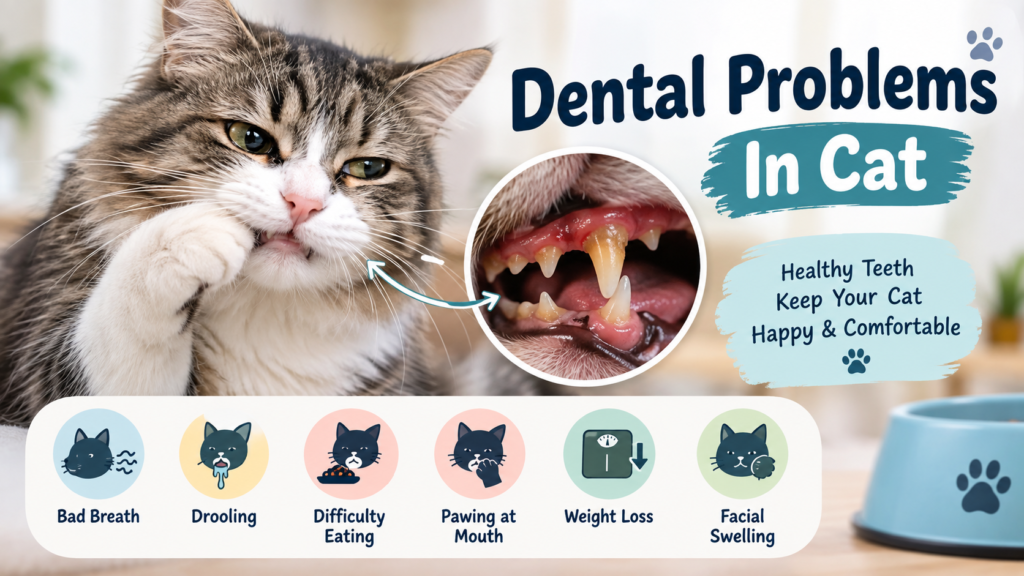
Dental disease may not be the first thing that comes to mind when you ask, Why My Cat Is Sneezing So Much? However, Dental Problems In Cat can sometimes be associated with nasal symptoms because the mouth and nasal passages are closely connected.
Dental disease can cause inflammation or infection around the teeth and surrounding tissues. Problems involving tooth roots may also affect nearby areas and contribute to nasal irritation.
Possible dental conditions include:
- Periodontal disease
- Infected teeth
- Tooth-root problems
- Dental abscesses
- Oral inflammation
- Severe tartar buildup
A cat with dental disease may show other signs in addition to sneezing.
These can include:
- Bad breath
- Drooling
- Difficulty eating
- Dropping food
- Pawing at the mouth
- Reduced appetite
- Weight loss
- Facial swelling
Some cats continue eating despite painful dental disease, so the absence of obvious eating problems does not always mean the mouth is healthy.
Why Is a Dental Examination Important?
If sneezing occurs together with bad breath, drooling, mouth discomfort, or difficulty eating, your veterinarian may examine your cat’s mouth and teeth carefully or Reverse Sneezing in Cats.
Dental problems can become painful and may worsen if left untreated. A veterinary examination can help determine whether dental disease is contributing to the respiratory or nasal symptoms or Reverse Sneezing in Cats.
Reverse Sneezing in Cats
Reverse Sneezing in Cats is different from ordinary sneezing. During a normal sneeze, air is generally forced outward through the nose. During a reverse-sneezing episode, a cat rapidly draws air inward through the nose.
A reverse-sneezing episode may look surprising because the cat may suddenly make repeated snorting, choking, or inhaling sounds.
Possible triggers can include:
- Nasal irritation
- Dust
- Allergens
- Strong smells
- Excitement
- Irritation around the nose or throat
Because reverse sneezing can look unusual, some owners may mistake it for choking or another serious respiratory problem.
What Does Reverse Sneezing Look Like?
During an episode, a cat may:
- Extend its neck
- Make repeated snorting sounds
- Rapidly inhale through the nose
- Appear startled
- Remain still for several seconds
- Return to normal after the episode
Occasional brief episodes may not indicate a serious problem. However, repeated or prolonged episodes should be discussed with a veterinarian, especially if your cat also has nasal discharge, coughing, weakness, or breathing difficulty.
If you are unsure whether your cat is sneezing normally or experiencing reverse sneezing, recording a short video can be useful. Showing the video to your veterinarian may help them understand what you observed at home.
Nasal Inflammation, Polyps, or Other Nasal Problems
Chronic inflammation inside the nose can be another reason a cat continues to sneeze. Instead of a short episode that disappears within a day or two, some cats develop ongoing nasal irritation that causes repeated sneezing.
Several conditions can affect the nasal passages, including chronic inflammation, fungal infections, nasal polyps, and abnormal growths or Reverse Sneezing in Cats.
A cat with a chronic nasal problem may show:
- Frequent or persistent sneezing
- Nasal congestion
- Runny nose
- Thick nasal discharge
- Discharge from one or both nostrils
- Blood from the nose
- Noisy breathing
- Reduced appetite
- Facial discomfort
The type of nasal discharge can sometimes provide useful information, although it cannot diagnose the problem by itself.
Clear discharge may occur with irritation or some respiratory conditions, while thicker discharge may occur with infection or inflammation or Reverse Sneezing in Cats.
Can Nasal Polyps Cause Sneezing?
Nasal polyps are abnormal tissue growths that can interfere with normal airflow through the nose. Depending on their location and size, they may cause sneezing, congestion, noisy breathing, or nasal discharge or Reverse Sneezing in Cats.
If sneezing continues for weeks or repeatedly returns, your veterinarian may need to investigate beyond common environmental causes.
What About Fungal Infections?
Some cats can develop fungal infections that affect the nasal passages. These infections may cause chronic nasal discharge, sneezing, congestion, or swelling around the nose and face.
A fungal infection is not something that should be treated with random medications at home. The appropriate treatment depends on the specific cause and may require diagnostic testing.
When Should Nasal Problems Be Investigated?
Persistent sneezing should receive veterinary attention when it is accompanied by:
- Bloody nasal discharge
- Facial swelling
- Difficulty breathing
- Significant nasal congestion
- Weight loss
- Loss of appetite
- Severe lethargy
- Sneezing mainly from one side
These symptoms may indicate that your cat needs a more detailed examination.
Serious Medical Conditions or Chronic Respiratory Problems
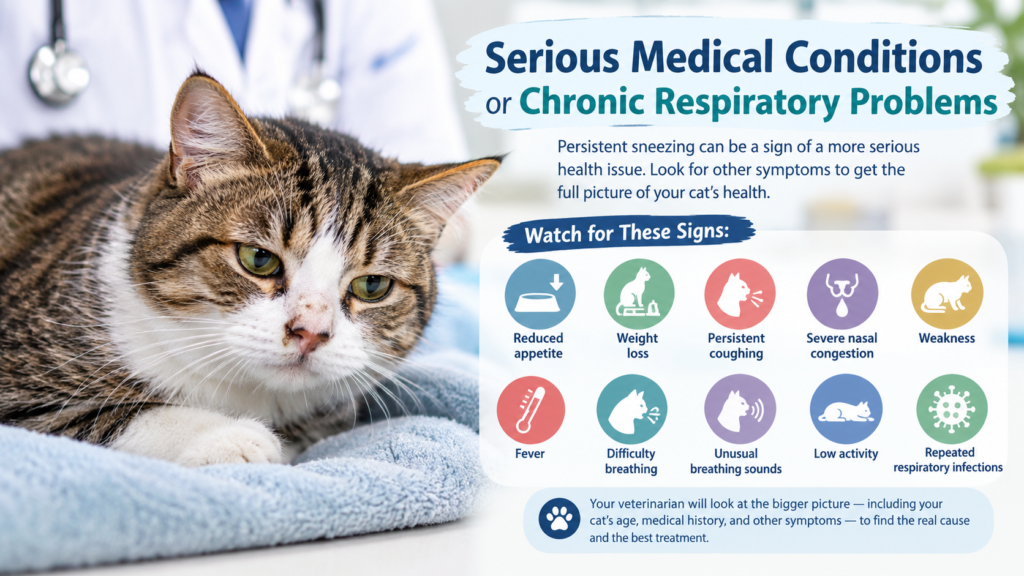
Another possible reason for frequent sneezing is a chronic or more serious respiratory problem.
Not every case of sneezing is caused by a dangerous illness. However, persistent symptoms combined with changes in your cat’s overall health should not be ignored.
For example, a cat that sneezes occasionally but continues to eat, drink, play, and behave normally may be less concerning than a cat that sneezes constantly while losing weight and becoming weak.
Pay attention to changes such as:
- Reduced appetite
- Weight loss
- Persistent coughing
- Severe nasal congestion
- Weakness
- Fever
- Difficulty breathing
- Unusual breathing sounds
- Low activity
- Repeated respiratory infections
The overall pattern is important.
Why Do Other Symptoms Matter?
Sneezing by itself does not always tell you what is happening. Your veterinarian will consider your cat’s age, medical history, duration of symptoms, physical examination, and other signs or Reverse Sneezing in Cats.
For example, frequent sneezing combined with dental symptoms may make a mouth or tooth problem more important to investigate. Sneezing with thick discharge may point toward inflammation or infection. Sneezing with breathing difficulty may require more urgent evaluation.
This is why it is better to look at your cat’s complete health picture instead of focusing only on the sneezing.
When Should You Be Concerned About Cat Sneezing?
Not every sneeze means that your cat is sick. Cats can sneeze because of temporary irritation from dust or other particles.
However, frequent sneezing deserves more attention when it occurs with additional symptoms.
Watch for:
- Persistent sneezing
- Thick nasal discharge
- Watery or infected-looking eyes
- Coughing
- Loss of appetite
- Weight loss
- Low energy
- Fever
- Bad breath
- Drooling
- Facial swelling
- Difficulty breathing
- Blood from the nose
The combination of symptoms can provide important clues about the possible cause.
For example, sneezing with watery eyes may occur with respiratory irritation or infection, while sneezing combined with bad breath and difficulty eating may point toward a dental problem.
When Should You Contact a Veterinarian?
You should contact a veterinarian if your cat’s sneezing continues, becomes more frequent, or occurs with other concerning symptoms or Reverse Sneezing in Cats.
Veterinary evaluation is particularly important if your cat:
- Stops eating
- Becomes unusually weak
- Has persistent nasal discharge
- Has blood coming from the nose
- Develops facial swelling
- Has significant dental symptoms
- Experiences repeated breathing problems
Difficulty breathing or open-mouth breathing should be treated as an urgent concern.
How to Tell Why My Cat Is Sneezing So Much?
If you are trying to understand Why My Cat Is Sneezing So Much?, observing the symptoms that occur before, during, and after sneezing can be helpful.
The following table provides general clues:
| What You Notice | Possible Cause |
| Sneezing with watery eyes | Respiratory infection or irritation |
| Sneezing with thick nasal discharge | Infection or inflammation |
| Sneezing with bad breath | Dental disease |
| Sneezing with drooling | Oral problem or another medical condition |
| Sudden repeated sneezing | Foreign object or nasal irritation |
| Snorting and rapid inward breaths | Reverse sneezing |
| Sneezing after cleaning | Environmental irritant |
| Sneezing with weight loss | Underlying health problem |
| Sneezing with facial swelling | Dental or nasal problem |
| Sneezing with breathing difficulty | Potentially urgent respiratory problem |
These signs are useful clues, but they should not be used as a substitute for a veterinary diagnosis.
Two cats can have similar symptoms while having completely different underlying conditions.
When Should I Take My Cat to the Veterinarian?
You should consider contacting a veterinarian when your cat’s sneezing does not improve or becomes increasingly frequent.
A veterinary examination is especially important if sneezing occurs with other symptoms.
Contact your veterinarian if your cat has:
- Sneezing that continues for several days
- Frequent or worsening sneezing
- Persistent nasal discharge
- Eye discharge
- Loss of appetite
- Weight loss
- Low energy
- Coughing
- Bad breath
- Drooling
- Facial swelling
- Blood from the nose
- Difficulty eating
Cats can sometimes hide signs of illness, so a noticeable change in normal behavior deserves attention.
When Is Cat Sneezing an Emergency?
Some symptoms require more urgent veterinary attention.
Seek veterinary help promptly if your cat has:
- Difficulty breathing
- Open-mouth breathing
- Severe weakness
- Significant respiratory distress
- Blue, gray, or very pale gums
- Sudden collapse
Breathing problems should never be ignored. If your cat appears unable to breathe comfortably, do not wait to see whether the sneezing stops on its own.
What Will the Veterinarian Check?
When you take your cat to a veterinarian for frequent sneezing, the veterinarian will first ask questions about the symptoms and your cat’s medical history.
Useful information may include:
- When the sneezing started
- How frequently it happens
- Whether the symptoms are getting worse
- Whether nasal discharge is present
- Whether the eyes are watery or have discharge
- Whether your cat is eating normally
- Any recent weight loss
- Any coughing
- Recent travel or stressful events
- Exposure to other cats
- Recent medications
- Possible exposure to chemicals or plants
A physical examination may include checking your cat’s:
- Nose
- Mouth
- Teeth
- Gums
- Eyes
- Throat
- Face
- Temperature
- Heart
- Breathing
- Overall body condition
Dental Examination
Because Dental Problems In Cat can sometimes contribute to nasal symptoms, the veterinarian may pay particular attention to your cat’s mouth.
They may look for:
- Tartar
- Gingivitis
- Broken teeth
- Infected teeth
- Oral inflammation
- Tooth-root problems
- Swelling
- Other abnormalities
If dental disease is suspected, additional dental evaluation may be recommended.
Blood Tests and Other Diagnostic Tests
Depending on the symptoms, your veterinarian may recommend blood tests or other diagnostic procedures.
Blood work can provide information about your cat’s general health and may help identify signs of infection, inflammation, or other underlying problems or Reverse Sneezing in Cats.
If a nasal problem, foreign object, dental condition, or other internal abnormality is suspected, imaging may also be recommended.
Possible diagnostic tools can include:
- X-rays
- Dental X-rays
- Other imaging
- Nasal examination
- Additional laboratory testing
The exact tests depend on what the veterinarian finds during the initial examination.
What Can I Do at Home for a Sneezing Cat?
If your cat has mild sneezing and is otherwise acting normally, there are several simple steps you can take to reduce potential environmental irritation.
Keep the Environment Clean
Dust can irritate the nasal passages. Regularly clean your cat’s sleeping area and reduce excessive dust in the home.
Avoid Strong Fragrances
Try to keep your cat away from:
- Cigarette smoke
- Perfumes
- Air fresheners
- Strong cleaning products
- Scented sprays
Consider Low-Dust Cat Litter
Some types of litter can create dust when cats dig or cover their waste. If you notice sneezing around the litter box, switching to a low-dust option may help reduce irritation.
Provide Fresh Water
Make sure your cat has access to clean, fresh water. Good hydration supports normal health while your cat is recovering from minor illness or irritation or Reverse Sneezing in Cats.
Encourage Normal Eating
Appetite changes are important to monitor. If your cat refuses food or eats significantly less than normal, contact your veterinarian.
Reduce Stress
Stress can affect cats in many ways. Give your cat a quiet, comfortable place to rest and avoid unnecessary changes while it is unwell.
Do Not Give Human Medication
Never give your cat human cold medicine, allergy medication, pain medication, or other drugs unless a veterinarian specifically tells you to do so.
Some medications that are safe for people can be dangerous or even life-threatening to cats.
Frequently Asked Questions
Why is my cat sneezing so much but not sick?
Occasional sneezing can happen because of dust, mild nasal irritation, strong fragrances, or other environmental triggers. However, a cat that sneezes frequently for an extended period may have an underlying respiratory, dental, nasal, or other medical problem or Reverse Sneezing in Cats.
If the sneezing continues or additional symptoms appear, contact a veterinarian.
Is frequent sneezing normal in cats?
Occasional sneezing can be normal, but frequent or repeated sneezing should be monitored.
If your cat is sneezing repeatedly every day, has nasal discharge, loses appetite, or develops other symptoms, veterinary evaluation may be appropriate.
Can Dental Problems In Cat cause sneezing?
Yes, some Dental Problems In Cat may be associated with nasal symptoms because the teeth and nasal passages are located close to each other.
Dental disease can also cause bad breath, drooling, difficulty eating, mouth pain, and facial swelling.
What is Reverse Sneezing in Cats?
Reverse Sneezing in Cats involves rapid inward breaths through the nose rather than the forceful outward expulsion of air seen with an ordinary sneeze.
Episodes can look and sound unusual. If they happen repeatedly or occur with other respiratory symptoms, discuss them with a veterinarian.
When is cat sneezing an emergency?
Sneezing becomes more concerning when it occurs with difficulty breathing, open-mouth breathing, severe weakness, collapse, or significant respiratory distress or Reverse Sneezing in Cats.
These symptoms require prompt veterinary attention.
Should I give my cat medicine for sneezing?
Do not give your cat medication without veterinary guidance. The correct treatment depends on the cause of the sneezing.
A respiratory infection, allergy, dental disease, foreign object, and nasal condition may all require different approaches.
Conclusion
So, Why My Cat Is Sneezing So Much? The answer can vary considerably from one cat to another.
In Part 1, we discussed upper respiratory infections, environmental irritants, foreign objects, Dental Problems In Cat, and Reverse Sneezing in Cats.
In Part 2, we covered additional possibilities such as chronic nasal inflammation, nasal polyps, fungal infections, and other respiratory or medical conditions.
The most important thing is to look at the complete picture. Occasional sneezing in an otherwise healthy cat may not be serious, but persistent sneezing combined with nasal discharge, appetite loss, weight loss, facial swelling, weakness, or breathing problems deserves veterinary attention.
By observing your cat’s symptoms and providing your veterinarian with accurate information, you can help make it easier to identify the underlying cause and determine the appropriate treatment.
1 Comment