

 By
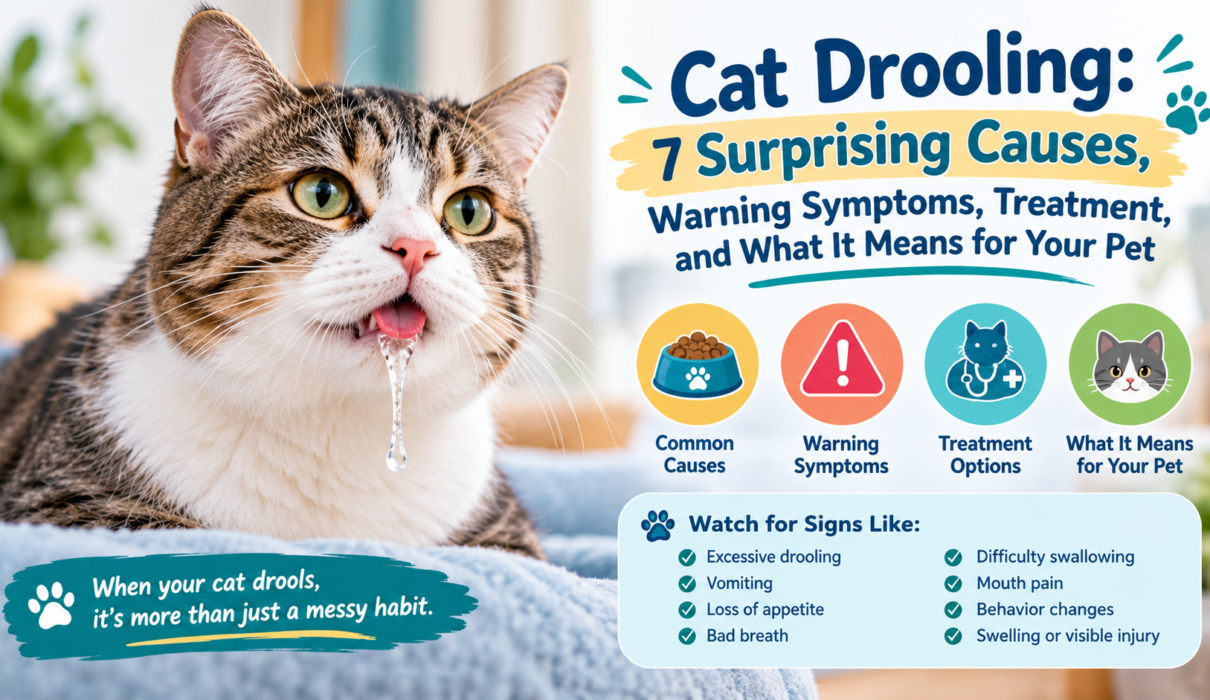
Cat Drooling: 7 Surprising Causes, Warning Symptoms, Treatment, and What It Means for Your Pet
Introduction: Understanding Cat Drooling
Cat Drooling can sometimes be completely harmless, but in other situations, it may be a sign that something is wrong with your cat. A small amount of saliva may appear when a cat is relaxed, sleeping, or enjoying something pleasant. However, sudden, excessive, or persistent drooling should not be ignored.
Cats are generally good at hiding pain and illness. This means that unusual drooling may be one of the first visible signs that your pet is experiencing a dental problem, nausea, mouth irritation, poisoning, or another health issue.
If you notice your cat suddenly producing a lot of saliva, it is important to look for other symptoms. Changes in appetite, bad breath, pawing at the mouth, vomiting, weakness, difficulty swallowing, or breathing problems can provide important clues about the underlying cause.
In this first part, we will explain 7 common and surprising causes of Cat Drooling, warning symptoms to watch for, and situations in which drooling may require immediate veterinary attention.
What Is Cat Drooling and Why Does It Happen?
Cat drooling occurs when saliva comes out of your cat’s mouth more than usual. Saliva is normally produced to keep the mouth moist and help with eating and swallowing. Most healthy cats swallow their saliva without you noticing it.
Some cats may drool occasionally when they are extremely relaxed. For example, a cat may drool while sleeping or receiving affectionate attention. Certain cats may also drool when they smell or taste something unusual.
However, excessive Cat Drooling can indicate irritation, pain, nausea, or disease. The amount of saliva, how suddenly it started, and whether other symptoms are present can all help determine whether the problem is serious.
Pay attention to whether the drooling is:
- Sudden or gradual
- Occasional or continuous
- Clear, thick, bloody, or unusual in appearance
- Associated with bad breath
- Accompanied by difficulty eating
- Associated with vomiting or diarrhea
- Accompanied by unusual behavior
- Happening alongside breathing problems
If your cat normally does not drool and suddenly begins producing excessive saliva, it is worth taking the change seriously.
Why Is My Cat Drooling Suddenly?
If you are wondering, “Why is my cat drooling suddenly?”, there are several possible explanations. Some causes are relatively minor, while others require urgent veterinary treatment.
Sudden drooling can occur because of something irritating inside the mouth. A cat may also drool after tasting something unpleasant or becoming nauseated. More serious causes include poisoning, dental disease, foreign objects, severe oral pain, and certain medical conditions.
Look at your cat’s overall behavior. A cat that is drooling but otherwise eating, drinking, playing, and behaving normally may have a less serious cause. In contrast, drooling combined with weakness, vomiting, difficulty breathing, seizures, or an inability to eat should be treated as a warning sign.
Never assume that sudden heavy drooling will disappear on its own, especially if you cannot identify an obvious harmless reason.
7 Surprising Causes of Cat Drooling
There are many reasons a cat may drool. Below are seven important causes that cat owners should understand.
Dental Disease and Oral Problems
Dental disease is one of the most common reasons for abnormal Cat Drooling. Cats can develop plaque, tartar, gingivitis, periodontal disease, damaged teeth, and other painful mouth conditions.
When the gums or teeth hurt, a cat may produce more saliva than normal. Some cats also begin pawing at their mouth or avoiding hard food.
Other signs of dental disease may include:
- Bad breath
- Red or swollen gums
- Yellow or brown buildup on teeth
- Difficulty chewing
- Dropping food while eating
- Reduced appetite
- Pawing at the mouth
- Weight loss
- Increased drooling
Dental problems can become progressively worse if left untreated. Cats may continue eating despite significant oral pain, so a change in eating behavior should be taken seriously.
Mouth ulcers, injuries, infections, and inflammation can also cause excessive saliva. If you notice drooling along with mouth pain or an unpleasant odor, a veterinary dental examination may be necessary.
Nausea, Stomach Problems, or Motion Sickness
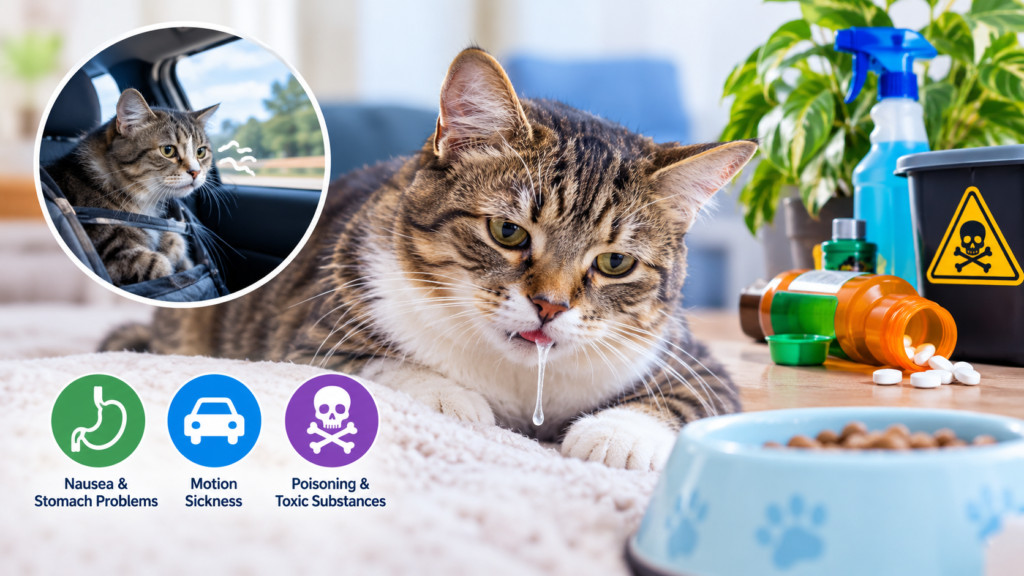
Nausea is another possible cause of Cat Drooling. When cats feel sick to their stomach, their bodies may produce extra saliva before vomiting.
A nauseated cat may drool and show other signs such as:
- Lip licking
- Repeated swallowing
- Refusing food
- Vomiting
- Hiding
- Restlessness
- Excessive swallowing
Some cats also drool during car rides because of motion sickness or anxiety.
If drooling occurs shortly before vomiting and then stops, nausea may be involved. However, repeated vomiting and persistent drooling can indicate an underlying digestive or medical problem.
If your cat refuses food, becomes weak, or continues vomiting, contact a veterinarian rather than relying on home treatment.
Poisoning or Toxic Substances
Poisoning can cause sudden and sometimes severe Cat Drooling. Cats may accidentally lick or eat substances that are toxic to them.
Potential dangers around the home include certain:
- Household cleaning products
- Insecticides
- Human medications
- Toxic plants
- Chemicals
- Certain foods
- Automotive products
A poisoned cat may drool heavily and develop additional symptoms such as vomiting, diarrhea, weakness, tremors, confusion, difficulty breathing, or seizures.
If you suspect your cat has swallowed or contacted a poisonous substance, do not wait for symptoms to become severe. Contact a veterinarian or emergency veterinary service immediately.
Do not give your cat human medication or attempt to make your cat vomit unless a veterinarian specifically tells you to do so.
Foreign Objects Stuck in the Mouth or Throat
Cats are naturally curious and may chew or play with objects that can become stuck in their mouth or throat. Grass, pieces of toys, bones, string, or other objects may cause irritation.
A foreign object can result in:
- Sudden drooling
- Gagging
- Pawing at the mouth
- Difficulty swallowing
- Repeated swallowing
- Refusal to eat
- Coughing
- Restlessness
String is particularly concerning because it can become caught around the tongue or extend farther into the digestive tract.
If you see an object in your cat’s mouth, do not automatically pull it out. Pulling on an object such as string could cause additional internal injury.
If your cat is choking, struggling to breathe, or appears severely distressed, seek emergency veterinary care immediately.
Stress, Fear, or Anxiety
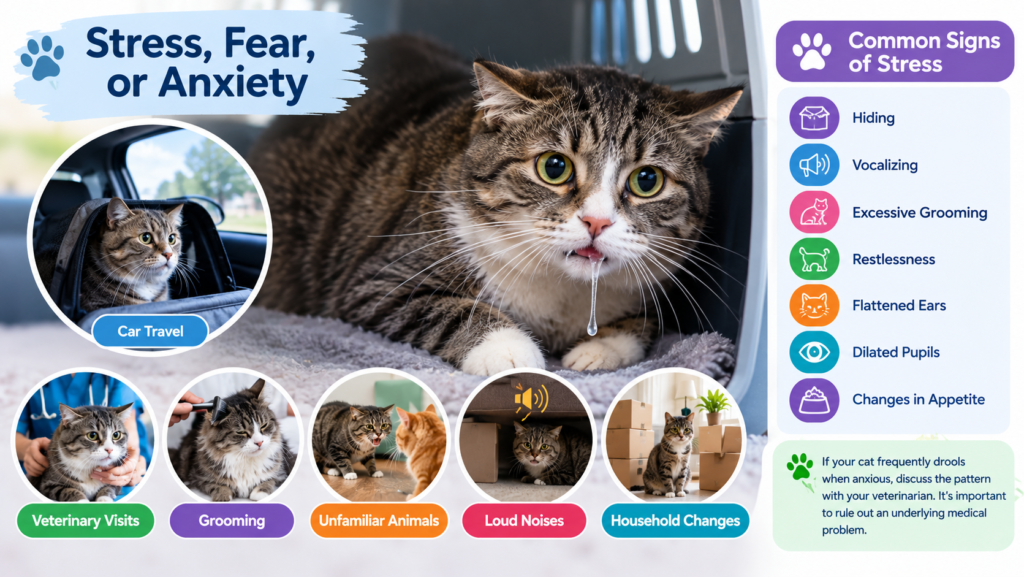
Not every case of Cat Drooling is caused by a physical illness. Stress and fear can also trigger excessive saliva production in some cats.
A nervous cat may drool during:
- Car travel
- Veterinary visits
- Grooming
- Exposure to unfamiliar animals
- Loud noises
- Major household changes
- Other stressful situations
Stress-related drooling may occur temporarily and stop once the stressful event is over.
Other signs of stress can include hiding, vocalizing, excessive grooming, restlessness, flattened ears, dilated pupils, or changes in appetite.
If your cat frequently drools whenever it becomes anxious, discuss the pattern with your veterinarian. It is still important to make sure an underlying medical problem is not being mistaken for anxiety.
Respiratory or Other Illnesses
Some infections and illnesses can contribute to excessive Cat Drooling, particularly when they cause mouth irritation, difficulty swallowing, fever, or general discomfort.
A cat with a respiratory illness may also have:
- Sneezing
- Nasal discharge
- Watery eyes
- Coughing
- Reduced appetite
- Fever
- Tiredness
When a cat cannot breathe comfortably through its nose, eating and swallowing may also become difficult.
Drooling combined with breathing difficulty is especially concerning. Cats can deteriorate quickly when they are struggling to breathe.
If your cat is breathing with its mouth open, appears unable to catch its breath, or has blue, gray, or very pale gums, seek emergency veterinary care immediately.
Serious Medical Conditions
In some cases, Cat Drooling can be associated with more serious health problems. These may include severe infections, neurological disorders, significant oral disease, or growths and tumors in the mouth.
Serious conditions may cause additional symptoms such as:
- Persistent drooling
- Difficulty eating
- Weight loss
- Severe bad breath
- Blood in saliva
- Changes in behavior
- Weakness
- Trouble swallowing
- Facial swelling
- Persistent vomiting
A cat with ongoing unexplained drooling should be examined by a veterinarian. Finding the cause early can make treatment easier and may prevent the underlying condition from becoming more severe.
Diagnosis for Cat Drooling: What Will the Veterinarian Check?
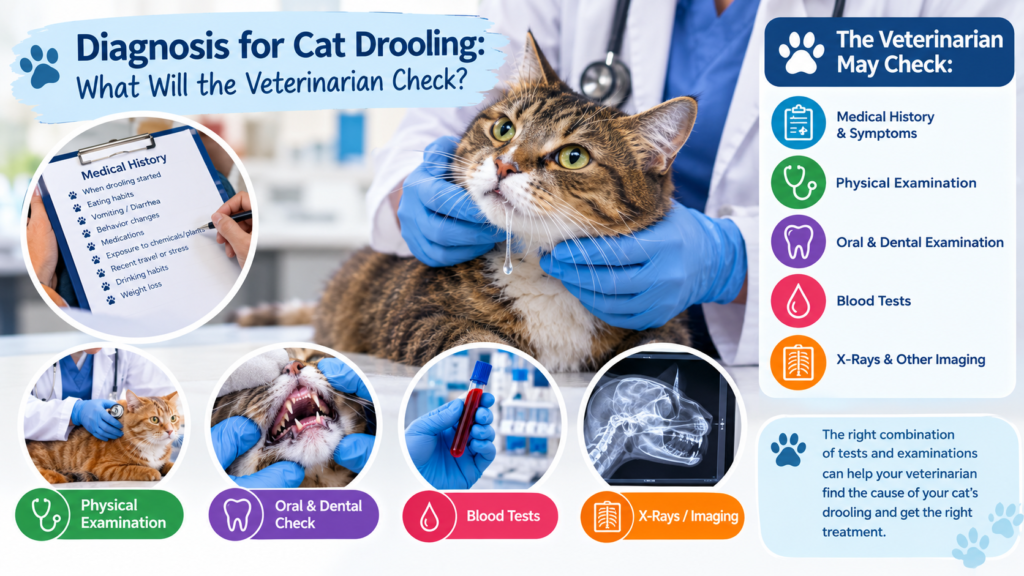
When you take your cat to a veterinarian because of Cat Drooling, the veterinarian will first try to determine why the excessive saliva is occurring.
There is no single test that diagnoses every case of drooling. Instead, the veterinarian may use your cat’s medical history, physical examination, oral examination, and diagnostic tests to identify the underlying problem.
Medical History and Symptoms
Your veterinarian may ask when the drooling started and whether it is getting worse.
Useful information may include:
- When you first noticed the drooling
- Whether the drooling is occasional or continuous
- Whether your cat is eating normally
- Any vomiting or diarrhea
- Changes in behavior
- Recent medications
- Possible exposure to chemicals or plants
- Recent travel or stressful events
- Changes in drinking habits
- Any weight loss
Providing accurate information can help the veterinarian narrow down possible causes.
Physical Examination
A complete physical examination can help identify signs of illness.
The veterinarian may check your cat’s:
- Mouth
- Teeth
- Gums
- Tongue
- Throat
- Face
- Abdomen
- Temperature
- Heart and breathing
- Overall body condition
The veterinarian may also look for swelling, wounds, infections, or other abnormalities.
Oral and Dental Examination
Because dental disease is a common cause of Cat Drooling, the mouth will usually receive special attention.
The veterinarian may look for:
- Gingivitis
- Tartar
- Broken teeth
- Infected teeth
- Mouth ulcers
- Oral inflammation
- Foreign objects
- Abnormal growths
Some cats become uncomfortable or resistant when their mouths are examined because oral problems can be painful.
Blood Tests
Depending on your cat’s symptoms, blood tests may be recommended.
Blood work can provide information about your cat’s general health and may help identify signs of infection, inflammation, organ problems, or other underlying conditions.
Blood tests are especially useful when drooling occurs with weakness, vomiting, appetite loss, weight loss, or other systemic symptoms.
X-Rays and Other Imaging
In some cases, imaging may be necessary to investigate the cause of Cat Drooling.
X-rays or other imaging techniques may help identify:
- Dental problems
- Foreign objects
- Abnormal growths
- Problems affecting the throat or digestive tract
- Other internal abnormalities
The exact tests will depend on your cat’s symptoms and physical examination.
Treatment for Cat Drooling: How Is It Treated?
The appropriate Treatment for Cat Drooling depends entirely on the underlying cause.
Drooling itself is usually a symptom rather than a disease. Therefore, treating the condition responsible for the excessive saliva is generally the most important step.
Treatment for Dental Disease
If dental disease is responsible for Cat Drooling, your veterinarian may recommend professional dental cleaning or other dental treatment.
Depending on the condition, treatment may involve:
- Professional teeth cleaning
- Treatment of infected gums
- Dental procedures
- Extraction of severely damaged teeth
- Medication when appropriate
- At-home dental care
Regular dental care can also help reduce the risk of future oral problems.
Treatment for Mouth Infections or Ulcers
Mouth infections and ulcers can be painful and may cause excessive saliva.
Treatment may depend on the cause and can include appropriate veterinary medications, pain management, nutritional support, and treatment of the underlying infection or irritation.
Do not give your cat human painkillers unless specifically instructed by a veterinarian. Some human medications can be extremely dangerous for cats.
Removing Foreign Objects
If a foreign object is causing Cat Drooling, a veterinarian may need to remove it.
Objects such as grass, pieces of toys, or other material can become lodged in the mouth or throat.
Never forcefully pull an object from your cat’s mouth, particularly if it is string-like or appears to extend farther into the throat.
Treatment for Nausea or Digestive Problems
When nausea or a digestive problem causes drooling, treatment will focus on the underlying condition.
Depending on the diagnosis, your veterinarian may recommend dietary changes, supportive care, fluids, or medications that are appropriate for cats.
If vomiting continues, your cat becomes dehydrated, or your cat refuses food, veterinary evaluation is important.
Treatment for Poisoning
Poisoning is a medical emergency and requires professional veterinary guidance.
Treatment depends on:
- The substance involved
- Amount of exposure
- Time since exposure
- Your cat’s symptoms
- Your cat’s overall health
A veterinarian may provide supportive treatment or other specific interventions depending on the toxin.
Never try to treat suspected poisoning with household remedies unless a veterinary professional specifically instructs you to do so.
Treatment for Serious Underlying Diseases
If Cat Drooling is caused by a more serious medical condition, treatment will depend on the specific diagnosis.
Your veterinarian may recommend medications, procedures, dietary support, surgery, or other treatments depending on the problem.
The sooner the underlying condition is identified, the sooner an appropriate treatment plan can begin.
How to Help a Cat With Cat Drooling at Home
Home care can be helpful for comfort and monitoring, but it should not replace veterinary treatment when the cause of Cat Drooling is unknown or serious.
Here are some practical steps you can take.
Provide Fresh Water
Make sure your cat has access to clean, fresh water.
If your cat is losing fluids through vomiting or diarrhea, dehydration can become a concern. A cat that refuses water or appears dehydrated should be evaluated by a veterinarian.
Keep Your Cat Comfortable
Stress can sometimes make drooling worse.
Give your cat a quiet, comfortable place where it can rest without excessive noise or disturbance.
Avoid unnecessary handling if your cat appears frightened or painful.
Remove Potential Toxins
Check your home for substances that your cat may have licked or swallowed.
Keep potentially dangerous products, medications, cleaning supplies, chemicals, and toxic plants safely away from pets.
Monitor Food and Water Intake
Keep track of whether your cat is eating and drinking normally.
A sudden loss of appetite can provide an important clue about the severity of the underlying problem.
If your cat refuses food for an extended period or appears unable to eat because of mouth pain, contact your veterinarian.
Do Not Give Human Medication
One of the most important rules of caring for a cat with Cat Drooling is to avoid giving human medication without veterinary advice.
Some medications that are commonly used by people can be toxic to cats.
Always ask a veterinarian before giving your cat any medication or supplement.
How to Prevent Cat Drooling
Not every cause of Cat Drooling can be prevented, but good everyday care can reduce the risk of several common problems.
Maintain Good Dental Care
Dental health is an important part of preventing oral disease.
Ask your veterinarian about appropriate dental care for your cat, including tooth brushing, dental products, and professional examinations.
Schedule Routine Veterinary Checkups
Regular veterinary examinations can help identify dental disease and other health problems before they become severe.
Routine checkups are particularly important for older cats.
Keep Toxic Substances Away
Store chemicals, medications, cleaning products, and other potentially dangerous substances where your cat cannot reach them.
Research plants before bringing them into a home with cats.
Choose Safe Toys
Avoid toys with small pieces that can easily break off or be swallowed.
String, ribbons, and similar objects should be used carefully and should not be left where a cat can chew on them unsupervised.
Monitor Changes in Behavior
You know your cat’s normal behavior better than anyone.
Pay attention to changes in:
- Eating
- Drinking
- Grooming
- Sleeping
- Activity
- Vocalization
- Breathing
- Bathroom habits
Early recognition of unusual behavior can help you seek veterinary care sooner.
Warning Symptoms to Watch With Cat Drooling
The presence of other symptoms can help determine how urgent the situation may be.
Watch your cat carefully if you notice Cat Drooling together with any of the following signs.
Excessive or Continuous Drooling
A few drops of saliva may not always be concerning, but continuous or heavy drooling is more unusual. If your cat’s chin, chest, or bedding becomes repeatedly wet with saliva, investigate the cause.
Blood in the Saliva
Blood may indicate an injury, dental disease, mouth ulcer, infection, or another oral problem. Blood-tinged saliva should be evaluated by a veterinarian.
Bad Breath
Persistent bad breath can be associated with dental disease or other oral conditions. When it occurs alongside drooling, it deserves veterinary attention.
Difficulty Eating or Swallowing
A cat that approaches food but struggles to chew or swallow may have pain or an obstruction affecting the mouth or throat.
Pawing at the Mouth
Repeatedly rubbing or pawing at the mouth can indicate oral pain, a foreign object, an injury, or irritation.
Vomiting or Diarrhea
Drooling combined with vomiting or diarrhea may indicate nausea, gastrointestinal illness, poisoning, or another health problem.
Lethargy or Weakness
If your cat becomes unusually tired, weak, withdrawn, or unwilling to move while drooling, the situation may be more serious.
Trouble Breathing
Breathing problems are an emergency. Never wait for excessive drooling to resolve if your cat is struggling to breathe.
Swelling Around the Mouth or Face
Facial swelling can occur because of infection, an allergic reaction, an abscess, or another medical condition.
Loss of Appetite
A cat that stops eating because of mouth pain or illness can become dehydrated and develop additional health complications.
When Is Cat Drooling an Emergency?
Not every episode of drooling requires an emergency visit, but certain situations should be treated as urgent.
Seek immediate veterinary care if Cat Drooling occurs with:
- Difficulty breathing
- Choking
- Severe weakness or collapse
- Seizures
- Suspected poisoning
- Severe mouth bleeding
- Inability to swallow
- Severe facial swelling
- Extreme pain
- Repeated vomiting with weakness
- Sudden neurological changes
If poisoning is suspected, bring the product packaging or a photo of the suspected substance to the veterinarian if it can be done safely.
Do not attempt potentially dangerous home remedies. Cats can react differently to substances and medications than humans, and some commonly suggested treatments can make poisoning or choking more dangerous.
What Should You Do If Your Cat Starts Drooling?
If your cat suddenly begins drooling, remain calm and observe the situation.
First, check whether your cat is breathing normally. Then look for obvious signs of mouth injury, swelling, blood, vomiting, or unusual behavior. If your cat allows it safely, you can briefly look at the front of the mouth, but do not force the mouth open or put your fingers deep inside.
Think about what happened before the drooling started. Your cat may have eaten something unusual, traveled in a car, experienced a stressful event, or played with a new toy.
If the drooling is severe, persistent, or accompanied by other warning symptoms, contact a veterinarian promptly.
Cat Drooling in Kittens vs. Adult Cats
The causes of Cat Drooling can vary depending on a cat’s age.
Cat Drooling in Kittens
Kittens may drool for different reasons than adult cats.
Teething can sometimes cause mild mouth discomfort and increased saliva. However, excessive drooling should not automatically be blamed on teething.
Kittens are also naturally curious and may chew objects they should not eat. This increases the risk of foreign objects or exposure to harmful substances.
If a kitten is drooling heavily, refusing food, vomiting, or acting weak, contact a veterinarian.
Cat Drooling in Adult Cats
Adult cats may develop dental disease, mouth injuries, digestive problems, stress-related drooling, or other medical conditions.
Sudden changes in an adult cat’s drooling pattern deserve attention, particularly when other symptoms are present.
Cat Drooling in Senior Cats
Older cats may be more likely to develop dental disease and certain chronic health conditions.
Persistent drooling in a senior cat should be evaluated rather than assumed to be a normal part of aging.
Frequently Asked Questions About Cat Drooling
Why Is My Cat Drooling Suddenly?
If you are asking, “Why is my cat drooling suddenly?”, possible causes include dental disease, nausea, stress, mouth irritation, foreign objects, poisoning, and other medical conditions.
If the drooling is severe or accompanied by vomiting, weakness, breathing problems, or difficulty eating, contact a veterinarian promptly.
Is Cat Drooling Normal in Cats?
Occasional mild drooling can occur in some cats, especially when they are relaxed or stressed.
However, frequent, excessive, or sudden Cat Drooling is not something that should automatically be considered normal.
Why Is My Cat Drooling but Acting Normally?
Some cats may drool temporarily while relaxed, sleeping, traveling, or experiencing mild stress.
Even when your cat appears normal, monitor the drooling. If it continues, becomes excessive, or returns frequently, discuss it with your veterinarian.
Can Dental Disease Cause Cat Drooling?
Yes. Dental disease is an important cause of excessive drooling in cats.
Gum inflammation, infected teeth, oral pain, and other dental problems can increase saliva production and make swallowing uncomfortable.
Can Stress Cause Cat Drooling?
Yes. Fear, anxiety, car travel, and stressful situations can cause temporary drooling in some cats.
If the drooling only happens during stressful situations and stops afterward, stress may be involved. However, recurring or severe drooling should still be discussed with a veterinarian.
Is Excessive Cat Drooling a Sign of Poisoning?
It can be. Some toxic substances can cause sudden and severe drooling.
If you think your cat has been exposed to a toxin, seek veterinary advice immediately rather than waiting for additional symptoms.
When Should I Take My Cat to the Veterinarian for Cat Drooling?
You should contact a veterinarian when drooling is persistent, excessive, unexplained, or accompanied by other symptoms.
Seek emergency care if your cat has difficulty breathing, seizures, severe weakness, choking, suspected poisoning, or severe bleeding.
How Is the Cause of Cat Drooling Diagnosed?
Diagnosis for Cat Drooling may involve a physical examination, oral and dental examination, medical history, blood tests, X-rays, or other diagnostic tests.
The exact approach depends on your cat’s symptoms and suspected underlying condition.
What Is the Treatment for Cat Drooling?
Treatment for Cat Drooling depends on the cause.
Dental disease may require dental treatment, while nausea may require appropriate veterinary medication or supportive care. Foreign objects may need to be removed, while poisoning requires urgent professional treatment.
Can Cat Drooling Be Prevented?
Some causes can be reduced through regular dental care, routine veterinary examinations, safe toys, proper nutrition, and keeping toxic substances away from your cat.
However, not every cause of Cat Drooling can be prevented.
Conclusion: Understanding Cat Drooling and Keeping Your Cat Safe
Cat Drooling can range from a harmless temporary response to a warning sign of a significant health problem.
Dental disease, nausea, poisoning, foreign objects, stress, infections, and serious medical conditions can all cause excessive saliva. The most important factor is whether the drooling is new, persistent, severe, or accompanied by other symptoms.
If you are wondering, “Why is my cat drooling suddenly?”, carefully observe your cat and look for additional warning signs. When the cause is unclear or symptoms are severe, veterinary evaluation is the safest choice.
Proper Diagnosis for Cat Drooling can help identify the underlying problem, while the right Treatment for Cat Drooling can address the cause and help your cat return to normal.
Regular dental care, routine veterinary checkups, a safe home environment, and close observation of your cat’s behavior can all contribute to better health and early detection of problems.
1 Comment