

 By
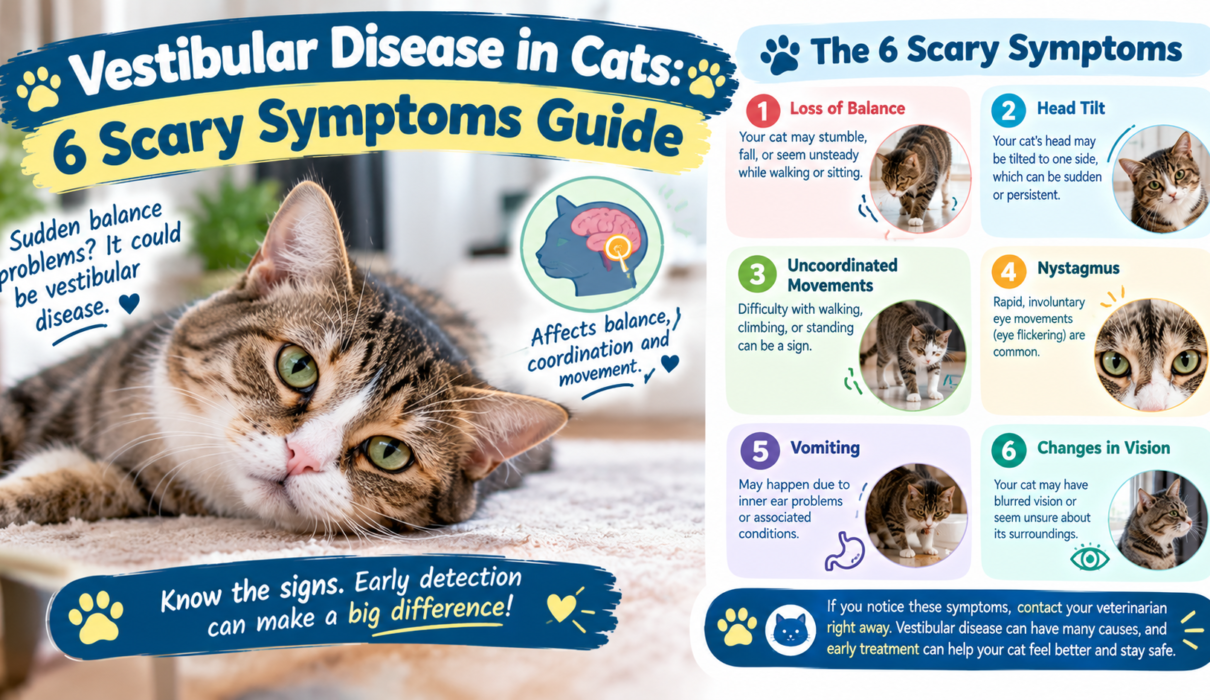
Vestibular Disease in Cats: 6 Scary Symptoms Guide
Introduction to Vestibular Disease in Cats
Have you ever noticed your cat suddenly tilting its head, walking in circles, or struggling to maintain balance? These unusual behaviors can be frightening for any cat owner. One possible cause is vestibular disease in cats, a condition that affects the body’s balance system and makes normal movements difficult.
The vestibular system helps cats maintain balance, coordinate their movements, and understand their body’s position. When this system does not work correctly, a cat may stumble, fall over, develop unusual eye movements, or appear dizzy and confused.
Some cases of feline vestibular disease develop suddenly, even in cats that seemed perfectly healthy the day before. The good news is that certain cats improve significantly with supportive care, especially when the condition is idiopathic, meaning that no specific cause can be identified. However, similar symptoms can also occur with ear infections, injuries, and serious neurological disorders.
It is important to arrange a veterinary examination whenever your cat develops sudden balance problems. A veterinarian can determine whether the symptoms are related to vestibular disease or another medical condition that requires treatment.
In this guide, we will explain the causes, six important symptoms, and diagnostic process for vestibular disease in cats. Part 2 will cover treatment options, safe home care, recovery, and frequently asked questions.
What Is Vestibular Disease in Cats and What Causes It?
Vestibular disease in cats is a condition that affects the vestibular system, which plays a major role in balance and coordination. This system includes structures in the inner ear and pathways in the brain that help control posture, head position, and eye movements.
When the vestibular system becomes disrupted, a cat may have difficulty walking straight, standing normally, or keeping its head level. Some cats also experience nausea because the balance disturbance affects how their brains process movement.
Vestibular disease describes a group of signs rather than one specific disease. Finding the underlying cause is important because treatment and recovery depend on the problem responsible for the symptoms.
Understanding the Vestibular System in Cats
The vestibular system helps your cat know whether its head is upright, tilted, or moving. It also works with the eyes, muscles, and nervous system to maintain stability.
For example, a healthy cat can jump onto furniture, walk along narrow surfaces, and turn quickly without losing its balance. The vestibular system helps coordinate these movements.
When the system is affected, your cat may suddenly seem clumsy or unable to control its movements. Its eyes may move rapidly from side to side, and it may lean or fall toward one direction.
These symptoms can look alarming, but their severity does not always reveal the underlying cause. A veterinary examination is necessary to assess your cat’s condition properly.
Peripheral Vestibular Disease in Cats
Peripheral vestibular disease affects structures involved in balance within the inner ear or the vestibular nerve connecting the inner ear to the brain.
Possible causes include:
- Inner-ear infections: Inflammation or infection can interfere with the structures responsible for balance.
- Middle-ear disease: Problems affecting the middle ear may extend to nearby balance structures.
- Inflammation: Certain inflammatory conditions can affect the inner ear or vestibular nerve.
- Injury: Trauma may damage structures involved in balance.
- Idiopathic vestibular disease: In some cats, the cause cannot be identified despite veterinary assessment.
Cats with peripheral vestibular disease may show a head tilt, loss of balance, falling, and unusual eye movements. Some also experience nausea and vomiting.
The exact symptoms depend on the underlying problem, so it is important not to assume that every head tilt is caused by an ear infection or vestibular disease in cats.
Central Vestibular Disease in Cats
Central vestibular disease involves areas of the brain that help control balance and coordination.
Possible causes include inflammation, infections affecting the nervous system, certain tumors, vascular problems, and other neurological disorders.
Central vestibular disease can sometimes cause additional signs, such as weakness, changes in alertness, unusual limb movements, or other neurological abnormalities.
These cases may require more extensive testing to identify the cause. A veterinarian may recommend blood tests, advanced imaging, or other investigations depending on the examination findings.
Important: Sudden balance problems should never automatically be diagnosed as harmless vestibular disease at home. Some serious neurological conditions can produce similar symptoms and require urgent treatment.
Idiopathic Vestibular Disease in Cats
Idiopathic vestibular disease means that no clear underlying cause is identified. It is often associated with a sudden onset of balance-related symptoms.
An affected cat may develop a head tilt, stumble, fall, or show rapid eye movements within a short period. The symptoms can be dramatic, even when the cat does not have a life-threatening condition.
Many cats with idiopathic vestibular disease begin improving over several days, although recovery may take longer and some cats retain a mild head tilt.
However, idiopathic vestibular disease is a diagnosis made after considering other possible causes. Veterinary assessment is important before assuming that your cat has this form of the condition.
Vestibular Disease in Cats: 6 Scary Symptoms to Watch For
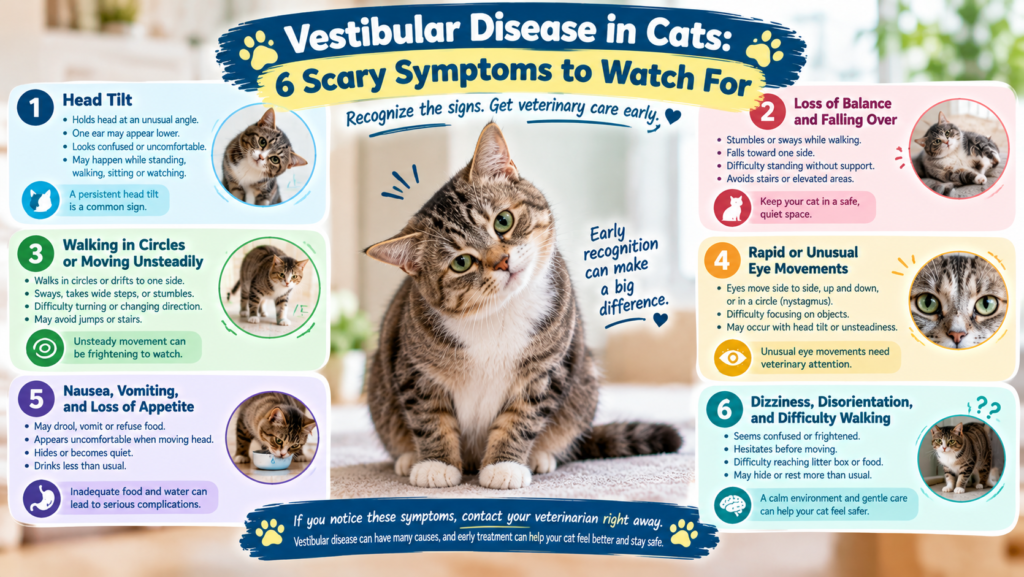
Recognizing the signs of vestibular disease in cats can help you seek veterinary care quickly. The symptoms often involve balance, head position, eye movements, and coordination.
Some signs may appear together, while others are more noticeable individually. The following six symptoms are especially important to recognize.
Head Tilt in a Cat With Vestibular Disease
One of the most recognizable signs of vestibular disease is a persistent head tilt. Your cat may hold its head at an unusual angle, with one ear appearing lower than the other.
This can make your cat look confused or uncomfortable. The head tilt may be noticeable while the cat is standing, walking, sitting, or watching something.
Other possible signs include:
- Holding the head at an unusual angle.
- Leaning toward one side while standing.
- Struggling to walk in a straight line.
- Having difficulty jumping onto familiar surfaces.
- Showing other balance-related symptoms.
A head tilt can occur with peripheral or central vestibular problems, but it may also have other causes. Ear disease, pain, and neurological conditions can produce similar changes.
Do not try to straighten your cat’s head or manipulate its neck. Instead, keep your cat in a safe area and arrange a veterinary examination.
If the head tilt develops suddenly, especially alongside falling, weakness, or unusual eye movements, seek prompt veterinary attention.
Loss of Balance and Falling Over
Loss of balance is another common sign of vestibular disease in cats. Your pet may struggle to stand upright, stumble while walking, or repeatedly fall toward one side.
A cat that previously moved confidently around the home may suddenly find it difficult to cross a room. It might also hesitate before standing or appear unable to judge the position of nearby objects.
You may notice:
- Stumbling or swaying while walking.
- Falling toward one side.
- Difficulty standing without support.
- Avoiding jumps or stairs.
- Struggling to reach food, water, or the litter box.
These problems can increase the risk of injuries, particularly if your cat tries to climb onto furniture or access elevated areas.
To reduce this risk, keep your cat in a quiet room with a comfortable bed on the floor. Place food, water, and a low-sided litter tray nearby. Block access to stairs, balconies, and high furniture.
Never force a cat with severe balance problems to walk or exercise. If your cat cannot stand or walk safely, seek urgent veterinary care.
Walking in Circles or Moving Unsteadily
A cat with vestibular disease may walk in circles, drift toward one side, or struggle to move in a straight line. This behavior occurs because the systems responsible for balance and movement are not coordinating normally.
Some cats repeatedly turn in one direction. Others may walk with a wide stance, sway from side to side, or appear unsure where to place their paws.
You may notice your cat:
- Walking in circles repeatedly.
- Veering toward one side.
- Taking unsteady or exaggerated steps.
- Having difficulty turning around.
- Losing balance when attempting to change direction.
These signs can be frightening, especially when they appear suddenly. However, circling is not specific to vestibular disease and can also occur with other neurological problems.
If your cat starts walking in circles unexpectedly, arrange a veterinary assessment rather than waiting to see whether the behavior disappears.
A short video of the symptoms may help your veterinarian understand what happens at home, provided you can record it without delaying care or putting your cat at risk.
Rapid or Unusual Eye Movements
Another possible symptom of vestibular disease is nystagmus, which refers to involuntary, repetitive eye movements.
Your cat’s eyes may move rapidly from side to side, up and down, or in a rotational pattern. These movements may be especially noticeable when your cat tries to focus on an object.
Other signs may include:
- Rapid eye movements while the head remains still.
- Difficulty focusing on nearby objects.
- A combination of eye movements and head tilting.
- Unsteadiness or nausea occurring at the same time.
Nystagmus can provide useful information during a veterinary examination, but its pattern alone cannot confirm the exact cause of the problem.
If you notice unusual eye movements along with sudden loss of balance, contact your veterinarian promptly. Seek emergency care if the symptoms occur with collapse, seizures, severe weakness, reduced consciousness, or other rapidly worsening signs.
Avoid shining bright lights into your cat’s eyes or trying to examine them forcefully. Keep your cat comfortable while arranging professional assessment.
Nausea, Vomiting, and Loss of Appetite
Vestibular disturbances can affect the way the brain processes movement, sometimes producing nausea similar to motion sickness in people.
A cat with vestibular disease may drool, vomit, refuse food, or appear uncomfortable when moving its head. Some cats may approach their food bowl but turn away because they feel nauseated or cannot maintain a comfortable position.
Possible warning signs include:
- Reduced interest in food.
- Drooling or repeated swallowing.
- Vomiting.
- Hiding or appearing unusually quiet.
- Drinking less than usual.
These symptoms matter because inadequate food and water intake can lead to dehydration and additional health problems.
Offer food and water in easily accessible bowls at floor level. Do not force-feed your cat or syringe water into its mouth unless your veterinarian has specifically instructed you how to do so safely. A cat with poor coordination may struggle to swallow normally, creating a risk of aspiration or vestibular disease in cats.
If vomiting continues, your cat cannot keep water down, or it refuses food, contact your veterinarian promptly. Cats that stop eating can develop serious complications, particularly if they are already unwell.
Dizziness, Disorientation, and Difficulty Walking
A cat with vestibular disease may appear dizzy, disoriented, or unusually frightened by its surroundings. It might hesitate before moving, remain in one place, or seem unable to navigate familiar areas.
Because the balance system helps the brain understand body position and movement, disruption can make normal activities difficult.
You may observe:
- Hesitation when standing or walking.
- Confusion while moving around familiar rooms.
- Difficulty reaching the litter box.
- Avoidance of normal activities.
- Increased dependence on a quiet, secure environment.
Some cats become anxious because they cannot move as confidently as usual. Others spend more time resting or hiding.
Provide a calm environment and keep essential resources nearby. If your cat needs help changing position, handle it gently and avoid sudden movements.
However, severe disorientation may indicate a serious neurological problem. If your cat becomes unresponsive, has a seizure, collapses, cannot stand, or develops rapidly worsening symptoms, seek emergency veterinary care.
How Is Vestibular Disease in Cats Diagnosed?
Diagnosing vestibular disease involves evaluating your cat’s symptoms and investigating possible underlying causes. Because several conditions can affect balance, a veterinarian must distinguish between ear-related problems, idiopathic vestibular disease, and disorders involving the brain.
Physical and Neurological Examination
Your veterinarian will ask when the symptoms began, whether they appeared suddenly, and whether your cat has experienced similar problems before.
The examination may include checking your cat’s posture, walking pattern, head position, eye movements, reflexes, and general neurological function.
These findings help the veterinarian determine whether the symptoms appear more consistent with a peripheral or central vestibular problem.
Ear Examination
An examination of the ears may help identify inflammation, discharge, or other signs of ear disease.
If an infection or another ear problem is suspected, additional testing may be recommended. The appropriate treatment depends on the location and cause of the problem.
Do not put ear drops, oils, or cleaning solutions into your cat’s ears unless your veterinarian has recommended them. Some products can be harmful if the eardrum is damaged.
Blood Tests and Additional Diagnostic Tests
Blood tests may help assess your cat’s overall health and identify problems that could contribute to the symptoms.
Depending on the examination, your veterinarian may recommend additional tests, such as ear samples, imaging, or other investigations.
Cats with suspected central vestibular disease or unexplained neurological signs may need advanced imaging, including MRI or CT, to investigate possible abnormalities.
Why Accurate Diagnosis Matters
The treatment and prognosis for vestibular disease in cats depend on the underlying cause.
Some cats improve with supportive care, while others need medication, treatment for an infection, or management of a neurological disorder.
A correct diagnosis helps avoid inappropriate home treatments and provides a clearer understanding of what to expect during recovery.
Treatment for Vestibular Disease in Cats
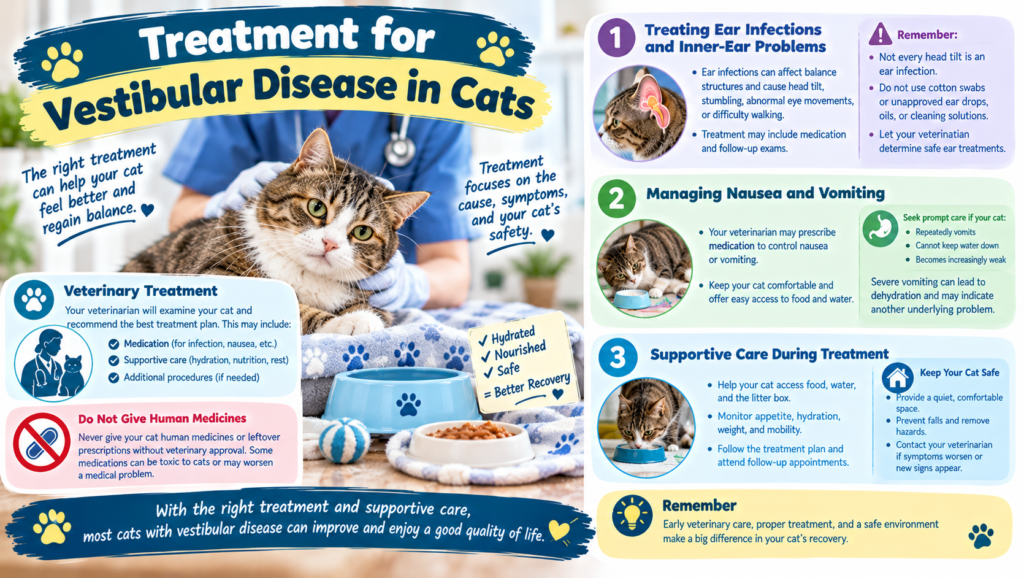
The treatment for vestibular disease in cats depends on what is causing the balance problems. Some cats experience idiopathic vestibular disease, which means that no specific cause can be identified. Others develop similar symptoms because of an ear infection, inflammation, injury, or a neurological condition.
Although some cats begin improving within a few days, veterinary assessment is important before deciding that the condition is harmless. Treatment focuses on addressing the underlying cause, controlling uncomfortable symptoms, and helping the cat remain hydrated, nourished, and safe.
Veterinary Treatment for Vestibular Disease in Cats
A veterinarian will examine your cat and determine which treatments are appropriate. Depending on the diagnosis, treatment may include medication, supportive care, or additional procedures.
For example, an ear infection may require specific medication, while another underlying condition may need a different treatment approach. Cats experiencing nausea or vomiting may also benefit from veterinarian-prescribed medication.
Never give your cat human medicines or leftover prescriptions without veterinary approval. Some medications can be toxic to cats or may worsen an existing medical problem.
Treating Ear Infections and Inner-Ear Problems
Ear infections can affect the structures responsible for balance. When an infection involves the middle or inner ear, a cat may develop a head tilt, stumbling, abnormal eye movements, or difficulty walking.
If your veterinarian identifies an infection, treatment will depend on its cause and severity. This may involve appropriate medication and follow-up examinations to check the response.
Do not assume that every cat with a head tilt has an ear infection. Other conditions can produce similar signs, and the wrong treatment may delay proper care.
Avoid inserting cotton swabs or applying unapproved ear drops, oils, or cleaning solutions. Your veterinarian should determine which ear treatments are safe.
Managing Nausea and Vomiting
A cat with vestibular disease may feel nauseated because its balance system is not working normally. This can lead to drooling, vomiting, and reduced appetite.
Your veterinarian may prescribe medication to control nausea or vomiting when appropriate. Keeping your cat comfortable and offering easy access to water and food can also help or vestibular disease in cats.
If your cat repeatedly vomits, cannot keep water down, or becomes increasingly weak, seek prompt veterinary care. Severe vomiting can lead to dehydration and may indicate another underlying problem.
Supportive Care During Treatment
Supportive care is an important part of helping a cat recover. Cats that struggle to walk may need assistance accessing food, water, and the litter box.
Your veterinarian may recommend monitoring your cat’s appetite, hydration, weight, and ability to move safely. Some cats need additional nutritional support if they cannot eat enough on their own.
Follow the treatment plan carefully and attend recommended follow-up appointments. If your cat’s symptoms worsen or new signs appear, contact your veterinarian rather than waiting for the next scheduled visit.
Home Remedy for Vestibular Disease in Cats: 6 Safe Care Tips
Many owners search for a home remedy for vestibular disease in cats because seeing a pet stumble or fall can be frightening. However, there is no proven home remedy that cures every form of vestibular disease.
Home care should support your cat’s comfort and safety while you follow veterinary advice. It should never replace an examination, especially when symptoms begin suddenly.
Create a Quiet and Comfortable Recovery Area
Choose a quiet room where your cat can rest without being disturbed by loud noises, children, or other pets.
Provide a comfortable bed on the floor and ensure the room has enough space for your cat to change position without bumping into furniture.
A calm environment can help reduce stress while your cat adjusts to its balance difficulties. Avoid unnecessary handling, and let your pet rest whenever it needs to.
Keep Food, Water, and the Litter Box Nearby
A cat with vestibular disease may struggle to walk across a room or reach familiar resources. Place food, water, and a litter box close to its resting area.
Choose stable bowls that are easy to access. A low-sided litter tray may be helpful if your cat has difficulty stepping over the edge.
Check regularly to see whether your cat is eating, drinking, and using the litter box. If your cat cannot reach these resources safely, ask your veterinarian for advice.
Prevent Falls and Other Injuries
Balance problems can make everyday activities dangerous. A cat that normally jumps onto furniture may fall because it cannot coordinate its movements.
To reduce the risk of injury:
- Block access to stairs and balconies.
- Keep your cat away from open windows and elevated surfaces.
- Remove clutter from walking areas.
- Provide bedding on the floor.
- Supervise movement when necessary.
- Keep your cat indoors during recovery.
Do not encourage your cat to climb, jump, or exercise to improve balance. Allow activity only as your cat can safely tolerate it, following your veterinarian’s guidance.
Support Eating and Drinking Safely
Some cats with vestibular disease have difficulty positioning their heads or may feel too nauseated to eat. Offer their usual food in a quiet area and keep water within easy reach.
You may ask your veterinarian whether slightly warming wet food could make it more appealing. Do not introduce major dietary changes or supplements without professional advice.
Never force food or water into your cat’s mouth. If your cat is unable to swallow normally or has poor coordination, forced feeding may cause choking or aspiration.
If your cat refuses food, eats much less than usual, or cannot keep water down, contact your veterinarian promptly.
Avoid Unsafe Home Remedies
Natural products are not automatically safe for cats. Essential oils, herbal preparations, human medications, and unapproved supplements may cause harm or interact with prescribed treatments.
Do not attempt to treat an ear infection with vinegar, oils, alcohol, or other household substances. These products may irritate the ear or cause additional injury or vestibular disease in cats.
The safest home approach is to provide a secure environment, maintain access to food and water, monitor symptoms, and follow your veterinarian’s recommendations.
Know When Home Care Is Not Enough
Home care is appropriate only as part of a veterinary-guided plan. It is not enough when a cat develops severe or worsening symptoms.
Seek emergency veterinary care if your cat collapses, has seizures, becomes unresponsive, cannot stand, or develops severe disorientation. Sudden neurological symptoms can have causes other than vestibular disease.
Promptly contact your veterinarian if your cat repeatedly vomits, refuses food, appears dehydrated, or shows no improvement as expected.
How to Care for a Cat With Vestibular Disease
Caring for a cat with vestibular disease requires patience, careful observation, and a safe home environment. Your cat may temporarily need help with activities that were previously easy, including walking, eating, and reaching the litter box.
Help Your Cat Move Safely
Keep your cat in a small, comfortable area until it can move around more confidently. If your veterinarian advises you to assist with movement, handle your cat gently and support its body without pulling its legs or forcing its head into a particular position.
Avoid carrying your cat unnecessarily if it becomes distressed during handling. If you need to move it, use a secure carrier with soft bedding.
Monitor Eating, Drinking, and Bathroom Habits
Write down how much your cat eats and drinks, whether it vomits, and how often it uses the litter box.
These observations can help you notice changes that might otherwise be missed. Reduced food intake is especially important because prolonged inadequate nutrition can lead to serious complications in cats.
If your cat stops eating or drinking, contact your veterinarian rather than waiting several days for the symptoms to resolve.
Keep Your Cat Clean and Comfortable
Some cats may struggle to groom themselves while their balance is affected. If necessary, gently clean dirty fur with a soft, damp cloth and dry the area afterward.
Do not bathe a cat that is very unsteady unless your veterinarian advises it. Bathing may increase stress and the risk of slipping or falling or vestibular disease in cats.
Change soiled bedding promptly and provide a warm, comfortable place to rest.
Record Changes in Symptoms
Monitoring your cat’s progress can help your veterinarian assess recovery. Note changes in head position, walking ability, eye movements, appetite, and alertness.
If possible, record a short video of unusual movements when doing so is safe. A video can help the veterinarian compare symptoms over time.
Contact your veterinarian if symptoms suddenly worsen, new neurological signs appear, or your cat does not improve as expected.
Recovery From Vestibular Disease in Cats: How Long Does It Take?
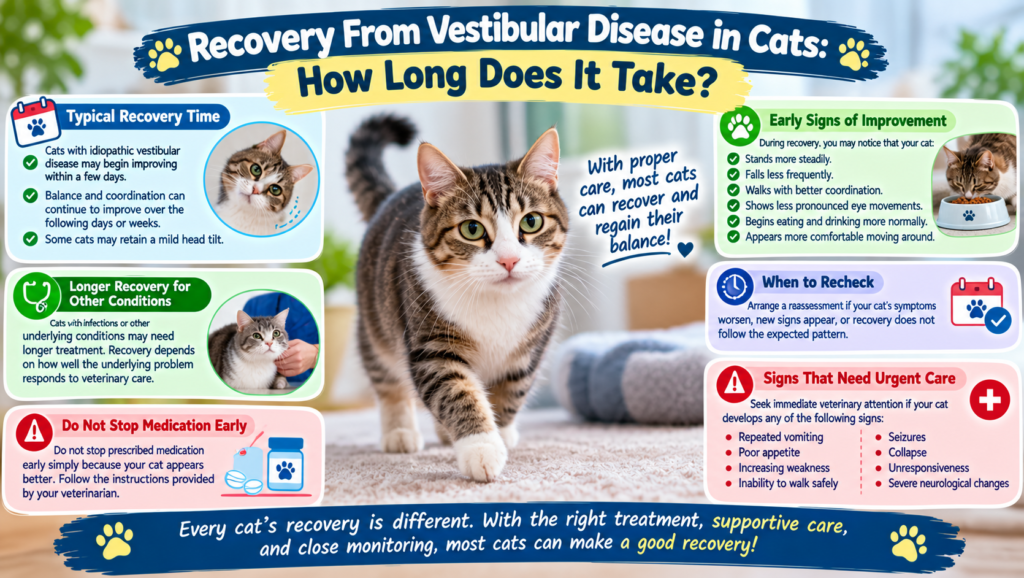
Recovery from vestibular disease in cats varies depending on the underlying cause, the severity of the symptoms, and the cat’s overall health or vestibular disease in cats.
Cats with idiopathic vestibular disease may begin improving within a few days. Balance and coordination can continue to improve over the following days or weeks, although some cats retain a mild head tilt.
Cats with infections or other underlying conditions may need longer treatment. Their recovery depends on how well the underlying problem responds to veterinary care.
Early Signs of Improvement
During recovery, you may notice that your cat:
- Stands more steadily.
- Falls less frequently.
- Walks with better coordination.
- Shows less pronounced eye movements.
- Begins eating and drinking more normally.
- Appears more comfortable moving around.
Improvement may not occur at the same rate for every symptom. A cat may regain the ability to walk before its head tilt disappears completely.
Why Some Cats Need More Time to Recover
The recovery period can be longer when vestibular symptoms are associated with an ongoing ear infection, inflammation, or neurological condition.
Older cats and cats with additional medical problems may also require closer monitoring. Your veterinarian can explain what recovery is likely to look like based on the diagnosis.
Do not stop prescribed medication early simply because your cat appears better. Follow the instructions provided by your veterinarian.
Signs That Your Cat Needs Another Veterinary Examination
Arrange a reassessment if your cat’s symptoms worsen, new signs appear, or recovery does not follow the expected pattern.
Repeated vomiting, poor appetite, increasing weakness, or an inability to walk safely should not be ignored.
If your cat develops seizures, collapses, becomes unresponsive, or experiences severe neurological changes, seek emergency veterinary care immediately.
When Is Vestibular Disease in Cats an Emergency?
Some signs associated with vestibular disease require immediate veterinary attention because they may indicate a serious underlying condition.
Sudden Inability to Stand or Walk
A cat that suddenly cannot stand or walk needs urgent assessment. Severe balance problems can cause injuries and may be associated with conditions that require immediate treatment.
Keep your cat away from stairs and elevated surfaces while arranging veterinary care.
Seizures, Collapse, or Reduced Consciousness
Seizures, collapse, unresponsiveness, or a sudden reduction in awareness are emergency signs.
Do not put your hands in your cat’s mouth during a seizure. Keep nearby objects away if possible and seek emergency veterinary assistance.
Repeated Vomiting or Inability to Drink
Repeated vomiting can lead to dehydration, especially when a cat already has difficulty moving or eating.
If your cat cannot keep water down, appears very weak, or shows signs of dehydration, contact a veterinarian urgently.
Suspected Poisoning or Head Injury
Exposure to toxins or a head injury may cause balance problems that resemble vestibular disease.
If you suspect poisoning or trauma, seek emergency veterinary care. Do not wait to see whether the symptoms improve, and do not attempt to induce vomiting unless a veterinarian specifically instructs you to do so.
Frequently Asked Questions About Vestibular Disease in Cats
Can Vestibular Disease in Cats Go Away on Its Own?
Some cats with idiopathic vestibular disease improve significantly over time, sometimes beginning within a few days. However, similar symptoms can result from infections, injuries, or neurological conditions.
A veterinary examination is important to identify the cause and determine whether treatment is needed. Do not assume sudden balance problems will resolve without care.
Is Vestibular Disease in Cats Painful?
Vestibular disease itself primarily affects balance and coordination, but the experience can be distressing and may cause nausea. An underlying ear infection or another condition may also cause pain.
If your cat cries, avoids being touched, or appears uncomfortable, inform your veterinarian. Never give human painkillers unless specifically directed by a veterinarian.
Can a Cat With Vestibular Disease Eat Normally?
Some cats continue eating normally, while others lose their appetite because of nausea, dizziness, or difficulty positioning their heads.
Keep food and water accessible and monitor intake carefully. If your cat refuses food or eats substantially less than usual, contact your veterinarian promptly.
Is Vestibular Disease in Cats Contagious?
Vestibular syndrome itself is not contagious. However, the underlying cause matters. Certain infections may require specific precautions, so follow your veterinarian’s recommendations if an infectious condition is diagnosed.
What Is the Best Home Remedy for Vestibular Disease in Cats?
There is no single home remedy that cures every form of vestibular disease. The safest supportive measures include providing a quiet recovery area, preventing falls, keeping food and water nearby, and following veterinary instructions.
Avoid essential oils, human medications, and unapproved ear treatments. Veterinary care is important because some causes require specific treatment.
Can Vestibular Disease in Cats Return?
Recurrence depends on the underlying cause. Some cats experience a single episode, while others may develop repeated symptoms associated with an ongoing or recurring condition.
If your cat develops another head tilt, unusual eye movements, or balance problems, arrange a veterinary examination rather than assuming the cause is the same as before.
Conclusion: Vestibular Disease in Cats and the Road to Recovery
Vestibular disease in cats can be frightening because it may suddenly affect balance, coordination, eye movements, and the ability to walk. However, recovery varies, and some cats with idiopathic vestibular disease improve significantly with time and supportive care.
The most important steps are to seek veterinary assessment, identify the underlying cause, follow the recommended treatment plan, and make your home safe for recovery.
If you are caring for a cat with vestibular disease, provide a quiet resting area, keep food and water nearby, prevent falls, and monitor eating, drinking, and movement. Avoid unproven home remedies and contact your veterinarian if symptoms worsen or your cat refuses food.
With appropriate veterinary care and careful support at home, many cats can regain much of their balance and return to a comfortable routine. Always seek urgent care for severe or sudden neurological symptoms rather than relying on home treatment alone.