

 By
By Introduction:
A balanced diet is one of the most important factors in maintaining a cat’s overall health and quality of life. Cats require a specific combination of proteins, fats, vitamins, minerals, and other nutrients to stay active and healthy. While sodium is an essential mineral that supports important body functions, excessive amounts may create nutritional concerns, especially for cats with certain health needs. This is why many pet owners are becoming more interested in low sodium cat food options.
Sodium helps regulate fluid balance, nerve function, and muscle activity in cats. However, maintaining the right balance is important because too much salt may place extra stress on certain body systems. Choosing food with controlled sodium levels can be a helpful step toward supporting long-term wellness, particularly for cats that need specialized nutrition.
Nutrition plays a major role in supporting heart health cats and maintaining proper body function. As cats grow older, their dietary needs may change, making a carefully planned senior cat diet more important. Many owners look for healthy cat food options that provide complete nutrition while avoiding unnecessary ingredients, including excessive sodium.
A low salt diet may support certain cats when recommended as part of a complete feeding plan. However, reducing sodium alone does not guarantee better health. The best approach is choosing balanced food that provides all essential nutrients while meeting the individual needs of each cat.
What Is Low Sodium Cat Food and Why Do Cats Need It?
Low sodium cat food is specially formulated cat food that contains reduced sodium levels compared to standard cat food products. It is designed to help control sodium intake while still providing important nutrients that cats need for daily health. These formulas may be considered for cats that require additional dietary support or for owners who want more control over their pet’s nutrition.
Sodium itself is not harmful to cats when consumed in appropriate amounts. In fact, cats need sodium to support normal biological processes. It helps maintain proper hydration levels, supports nerve communication, and assists with muscle movement. The concern occurs when sodium intake becomes higher than necessary over time.
A carefully balanced diet focuses on providing the right amount of sodium rather than completely removing it. Cats still need essential minerals to support their bodies. Therefore, a quality healthy cat food formula should contain balanced nutrition, including high-quality protein, essential fats, vitamins, and minerals.
For some older cats, managing nutrition becomes especially important. A senior cat diet often focuses on supporting aging organs, maintaining healthy body weight, and providing easily digestible nutrients. Since older cats may experience changes in their metabolism and activity levels, choosing appropriate food can help support their changing needs.
A low salt diet may also be considered for cats with specific health concerns. However, pet owners should avoid making major dietary changes without professional guidance. Every cat is different, and nutritional requirements can vary depending on age, health condition, lifestyle, and activity level.
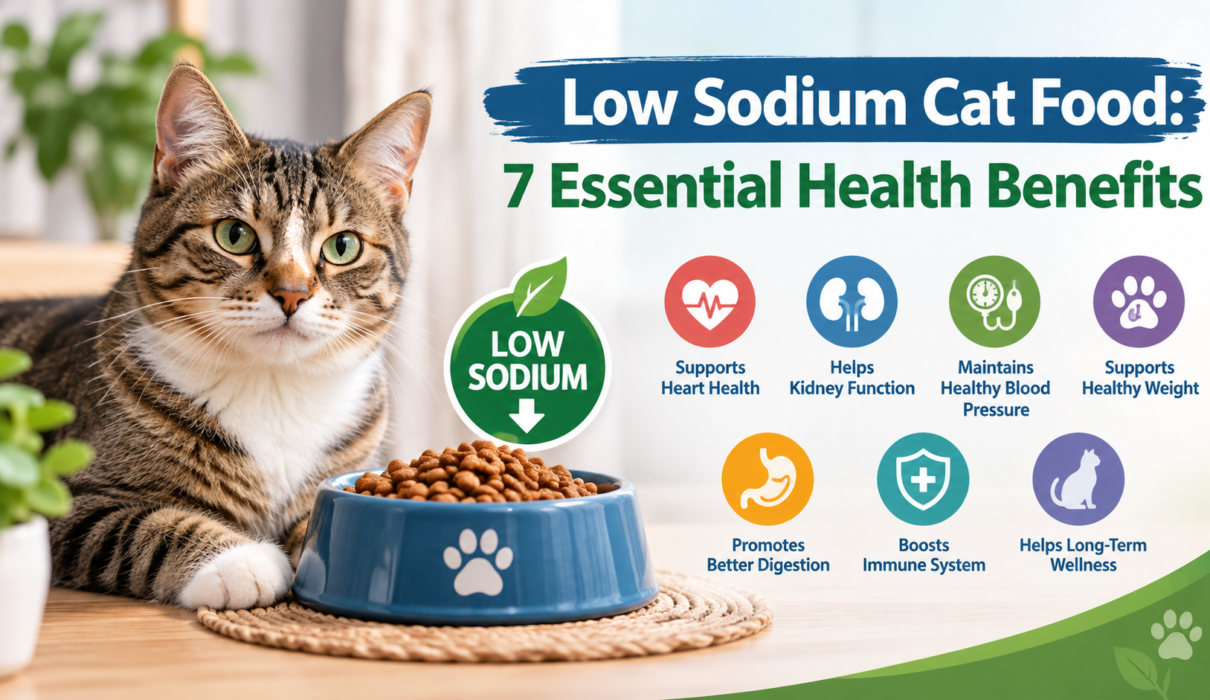
7 Essential Health Benefits of Low Sodium Cat Food
1. Supports Better Heart Health in Cats
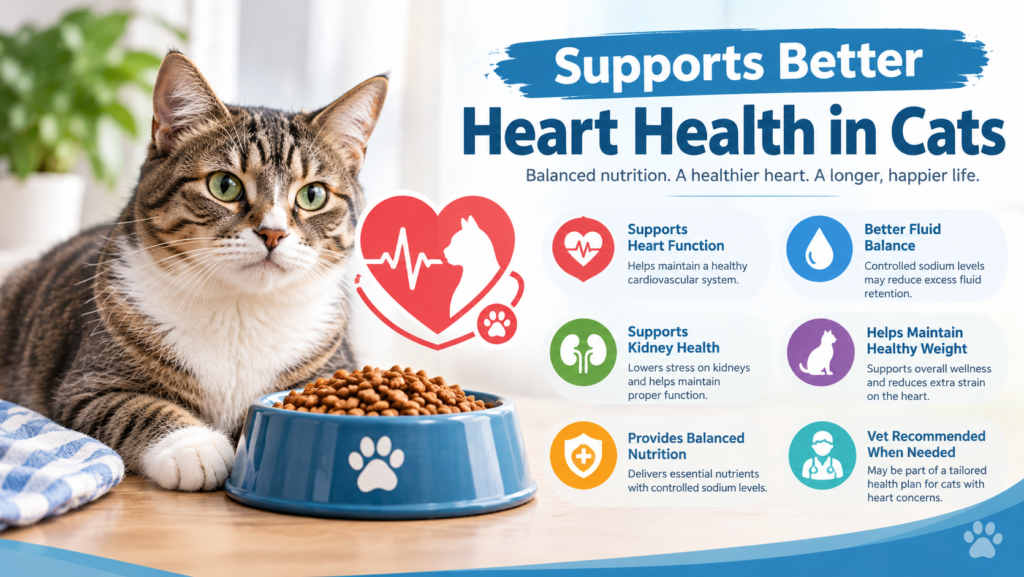
One of the key reasons some owners consider low sodium cat food is its potential role in supporting cardiovascular wellness. The heart requires proper nutrition to function effectively, and maintaining balanced mineral levels can contribute to overall health.
Excess sodium may influence how the body manages fluids, which can affect cardiovascular function. By choosing food with controlled sodium levels, owners may help reduce unnecessary dietary stress and provide better nutritional balance for their cats.
Good heart health cats depends on many factors, including genetics, exercise, body weight, hydration, and diet quality. A balanced feeding routine that includes appropriate sodium levels can be an important part of maintaining overall wellness.
Cats with specific heart-related concerns may require specially designed nutrition plans. In these situations, a veterinarian may recommend dietary adjustments based on the cat’s individual condition. A reduced sodium formula may be one part of a broader health management approach.
For senior cats, heart-supportive nutrition can become even more valuable. As cats age, their bodies may need additional nutritional attention, making a carefully planned senior cat diet an important factor in maintaining comfort and daily health.
2. Helps Maintain Healthy Blood Pressure Levels
Balanced sodium intake may also support healthy blood pressure levels in cats. Sodium affects fluid balance in the body, and maintaining appropriate levels helps support normal circulation and body functions.
A low salt diet can help limit unnecessary sodium consumption while still allowing cats to receive essential nutrients. This approach focuses on creating nutritional balance rather than removing important minerals completely.
Choosing low sodium cat food does not mean choosing food with fewer nutrients. A high-quality formula should still provide enough protein, energy, vitamins, and minerals to support a cat’s daily needs.
Maintaining healthy blood pressure is also connected to other lifestyle factors. Regular activity, proper hydration, healthy body weight, and quality nutrition all work together to support feline wellness.
Pet owners should always check food labels carefully when selecting cat meals. Looking at ingredient quality and nutritional information can help ensure that the chosen food supports a cat’s overall health rather than focusing only on sodium levels.
3. Supports Kidney Health and Proper Hydration
The kidneys play an essential role in removing waste, balancing fluids, and maintaining overall body function. As cats age, kidney support often becomes a greater focus, which is why nutrition is an important part of feline care.
Balanced sodium levels may help support proper fluid management in some cats. This is one reason why a carefully planned senior cat diet may consider sodium levels along with hydration and ingredient quality.
Hydration is especially important for cats because many cats naturally drink less water than other animals. Moisture-rich foods, such as certain wet food formulas, can help increase water intake and support better hydration.
While low sodium cat food may be beneficial for some cats, it should always be selected based on individual needs. Cats with kidney concerns or other health conditions may require specific dietary recommendations from a veterinarian.
Providing healthy cat food with balanced ingredients, proper moisture, and suitable nutrients can support a cat’s overall wellness throughout different life stages. A thoughtful feeding routine can help cats maintain better health and comfort as they age.
4. Promotes a Healthier Senior Cat Diet
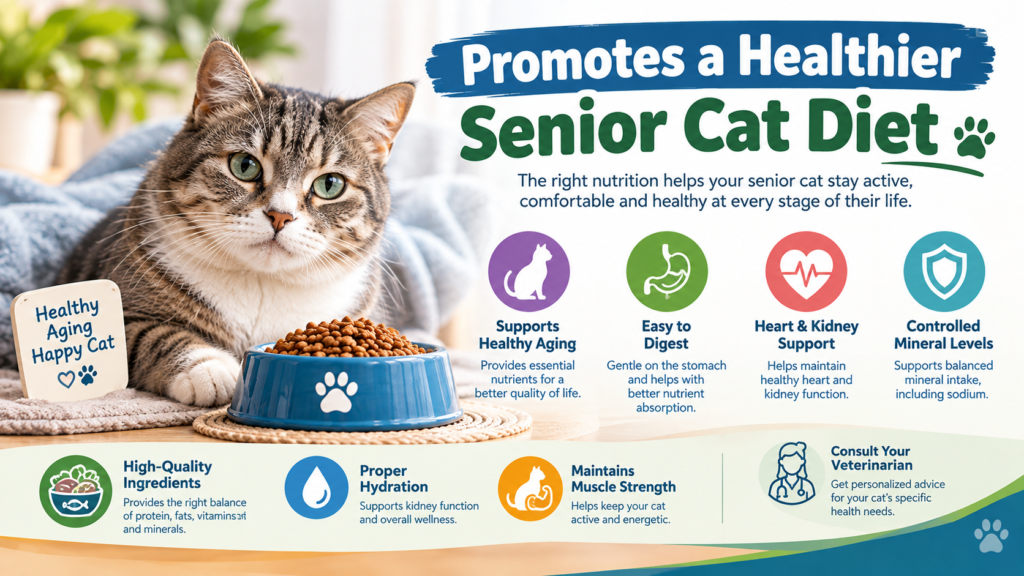
As cats get older, their nutritional needs often change. Senior cats may become less active, experience changes in metabolism, or require more careful management of their overall diet. Providing a balanced senior cat diet can help support their changing bodies and maintain a better quality of life.
Older cats may benefit from food that focuses on high-quality ingredients, proper hydration, and controlled mineral levels. Low sodium cat food can be a suitable option for some senior cats because it helps owners manage sodium intake while still providing essential nutrients.
Aging can affect different body systems, including the heart, kidneys, and digestive system. This is why choosing healthy cat food designed for a cat’s life stage is important. Senior cats often need meals that are easy to digest and contain the right balance of proteins, fats, vitamins, and minerals.
A good senior diet should not only focus on reducing sodium but also on providing complete nutrition. Cats still need enough protein to maintain muscle strength and energy. A balanced approach helps ensure that older cats receive the nutrients they need while supporting their overall wellness.
Before switching an older cat to a reduced sodium formula, owners should consider their cat’s individual health condition. Some cats may benefit from dietary changes, while others may not require lower sodium levels. Consulting a veterinarian can help determine the best nutritional plan.
5. Helps Reduce Excessive Salt Intake
Cats require small amounts of sodium for normal body functions, but unnecessary excess salt can create nutritional concerns. Many pet owners choose low sodium cat food because it provides better control over their cat’s sodium consumption.
Commercial cat foods are usually formulated to meet feline nutritional requirements, but some treats, table scraps, and human foods may contain higher levels of salt. Feeding cats salty foods regularly can increase their overall sodium intake and may affect their long-term health.
A low salt diet focuses on providing appropriate nutrition without adding unnecessary sodium. This does not mean removing all minerals from a cat’s meals. Instead, it means choosing foods that maintain a healthier balance.
Reading ingredient labels is an important step when selecting cat food. Pet owners should look for formulas that contain quality protein sources, essential nutrients, and ingredients suitable for their cat’s age and health needs.
Choosing healthy cat food with controlled sodium levels can help owners create a more balanced feeding routine. Along with proper portion sizes and regular veterinary checkups, a carefully selected diet can support better feline wellness.
6. Supports Overall Wellness and Energy Levels
A cat’s daily energy, activity, and overall comfort are strongly connected to nutrition. A balanced diet provides the fuel cats need for movement, play, immune function, and maintaining healthy body systems.
Low sodium cat food can support overall wellness when combined with high-quality ingredients and complete nutrition. While sodium control is important for some cats, it should always be part of a larger nutritional plan that includes protein, healthy fats, vitamins, and minerals.
Cats are naturally dependent on animal-based proteins, which provide essential amino acids needed for muscle health and energy. Therefore, choosing food that balances sodium levels with proper protein content is important for maintaining strength and vitality.
A healthy cat food option should support more than one area of health. It should help maintain digestion, energy levels, immune function, and a healthy body condition. Sodium management is only one part of creating a complete and nutritious feeding routine.
Hydration, exercise, and regular meals also contribute to a cat’s overall wellness. When combined with proper nutrition, these habits can help cats stay active and comfortable throughout their lives.
7. Provides a Balanced Option for Cats With Special Dietary Needs
Some cats may require special dietary attention because of age, health conditions, or specific nutritional recommendations. For these cats, choosing the right food can play an important role in maintaining comfort and supporting overall health.
Low sodium cat food may be considered for cats that need controlled sodium intake as part of their nutritional management. It can provide a balanced option while still delivering important nutrients required for daily function.
Cats with special dietary needs often require individualized care. Factors such as age, weight, activity level, and medical history can influence which type of food is most appropriate. A diet that works well for one cat may not be suitable for another.
A customized feeding plan may include a combination of quality protein, proper hydration, controlled minerals, and other essential nutrients. This approach helps ensure that cats receive complete nutrition rather than focusing on only one ingredient.
Before making major changes to a cat’s diet, owners should consult a veterinarian. Professional guidance can help identify the best food choices and ensure that dietary adjustments support the cat’s specific health requirements.
How to Choose the Best Low Sodium Cat Food
Selecting the right low sodium cat food requires more than simply checking sodium levels. A good cat food formula should provide complete and balanced nutrition while meeting your cat’s individual needs.
When choosing a suitable option, consider the following factors:
- Look for high-quality protein sources that support muscle health and energy.
- Check ingredient labels to understand the nutritional value of the food.
- Consider wet food options because they can provide additional moisture.
- Choose food appropriate for your cat’s age, weight, and activity level.
- Avoid products with unnecessary additives or excessive salt content.
A senior cat diet may require different nutritional choices compared to a diet for younger cats. Similarly, cats with specific health concerns may need specialized formulas recommended by professionals.
The best healthy cat food provides a balance of essential nutrients rather than focusing on one factor alone. Sodium levels are important, but protein quality, hydration, calories, and overall ingredient quality also play major roles.
Low Sodium Cat Food vs Regular Cat Food
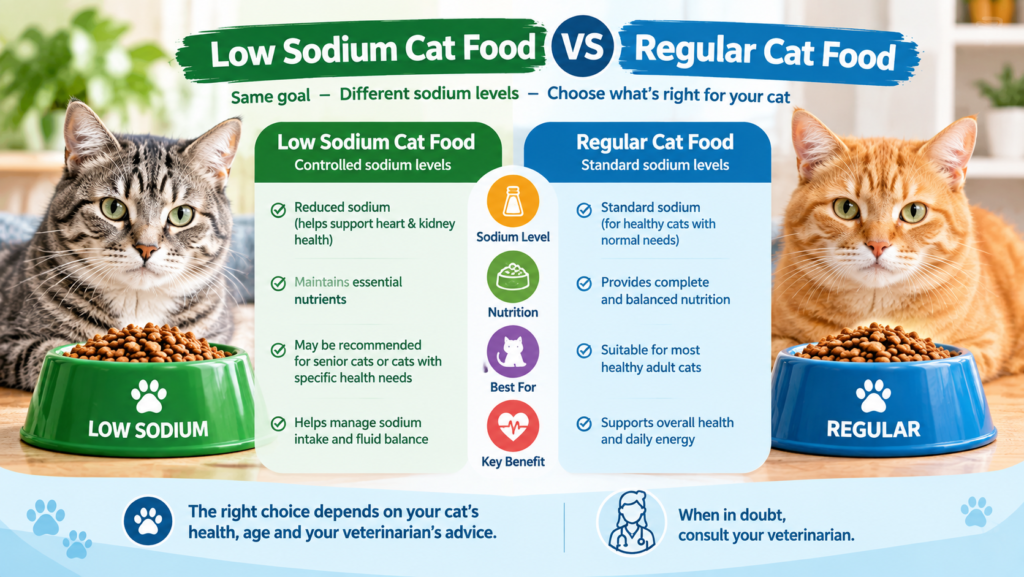
The main difference between low sodium cat food and regular cat food is the amount of sodium included in the formula. Reduced sodium options are designed to provide controlled levels while maintaining essential nutrition.
Regular cat food is usually formulated for healthy cats with standard nutritional requirements. However, some cats may need more careful sodium management due to age or specific health considerations.
A low salt diet may be helpful for certain cats, but it is not automatically better for every pet. Healthy cats without special dietary needs may be perfectly suited to regular balanced cat food.
The goal is always to provide the right nutrition for the individual cat. Choosing between regular and low sodium formulas should depend on factors such as health status, age, and veterinary recommendations.
Common Mistakes When Feeding Low Sodium Cat Food
One common mistake is focusing only on sodium levels while ignoring overall nutrition. A food with lower sodium is not automatically healthy if it lacks important nutrients.
Another mistake is changing a cat’s diet too quickly. Sudden food changes may cause digestive problems, so new diets should be introduced gradually over several days.
Some owners also assume that all older cats automatically need a low sodium diet. While some senior cats may benefit from controlled sodium intake, nutritional needs vary from one cat to another.
Ignoring professional advice can also create problems. Cats with specific health concerns may require carefully designed diets, and making changes without guidance may not provide the expected benefits.
FAQs About Low Sodium Cat Food
Is low sodium cat food better for all cats?
No, low sodium cat food is not necessary for every cat. Healthy cats may do well on regular balanced food, while some cats may benefit from reduced sodium formulas based on their needs.
Do senior cats need low sodium cat food?
Some senior cats may benefit from controlled sodium intake, but dietary needs depend on their health, age, and individual condition.
Can low sodium cat food improve heart health in cats?
A balanced diet with controlled sodium levels may support cardiovascular wellness, but cats with heart conditions should follow veterinary recommendations.
How do I know if my cat needs a low salt diet?
The best way to determine this is by discussing your cat’s health, age, and nutritional needs with a veterinarian.
What ingredients should I look for in healthy cat food?
Look for high-quality protein, essential nutrients, appropriate calories, and ingredients that support your cat’s overall health.
Conclusion:
Low sodium cat food can be a beneficial option for cats that need better sodium control as part of a balanced nutritional plan. From supporting heart health cats to helping create a suitable senior cat diet, controlled sodium intake can play an important role in feline wellness.
However, sodium is only one part of a cat’s overall nutrition. The best results come from choosing healthy cat food that provides complete nutrients, proper hydration, and high-quality ingredients.
Every cat has unique needs, so diet choices should always be based on age, lifestyle, and health condition. With the right approach, a balanced low salt diet can help support a healthier and more comfortable life for cats.