

 By
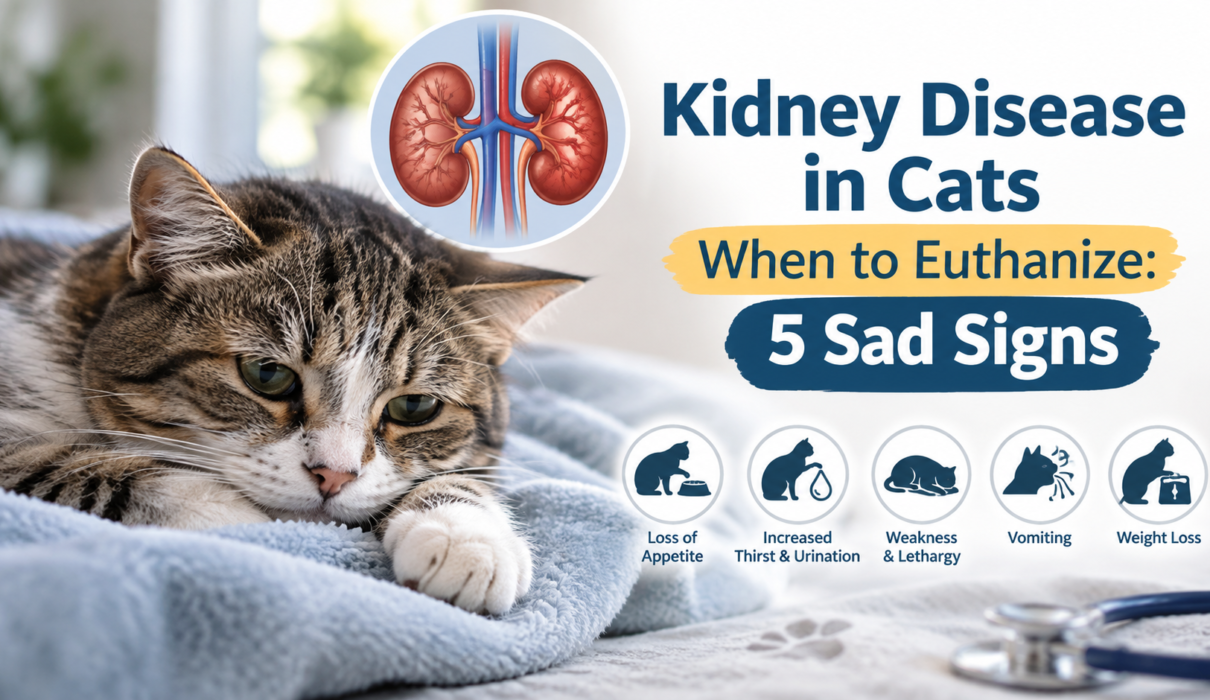
Kidney Disease in Cats When to Euthanize: 5 Sad Signs
Introduction: Understanding Kidney Disease in Cats When to Euthanize
Learning that your beloved cat has chronic kidney disease (CKD) can be heartbreaking. Cats are important members of our families, and watching them become weak, lose their appetite, or struggle with everyday activities can be emotionally overwhelming. One of the most difficult questions owners may eventually face is kidney disease in cats when to euthanize.
Chronic kidney disease occurs when a cat’s kidneys gradually lose their ability to perform essential functions. Healthy kidneys help remove waste products from the blood, regulate fluid balance, and maintain important minerals. As kidney function declines, waste products may accumulate, and cats can develop symptoms such as increased thirst, frequent urination, nausea, vomiting, reduced appetite, and weight loss or kidney disease in cats when to euthanize.
However, a diagnosis of kidney disease does not automatically mean that euthanasia is necessary. Many cats live comfortably for a considerable period with appropriate veterinary care, nutritional support, medication, and regular monitoring.
The decision to consider euthanasia depends on several factors, including your cat’s comfort, response to treatment, ability to eat and drink, mobility, and enjoyment of daily activities or kidney disease in cats when to euthanize.
In this guide, we will explain five concerning signs that may indicate a declining quality of life, discuss when veterinary help may improve comfort, and explore how to approach this difficult decision with compassion or kidney disease in cats when to euthanize.
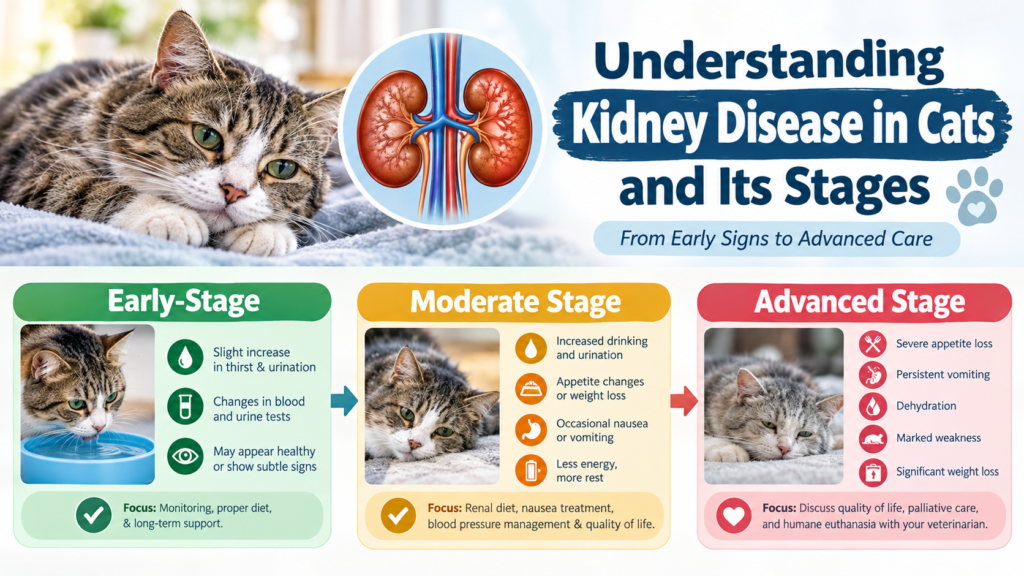
Understanding Kidney Disease in Cats and Its Stages
Before deciding when to euthanize a cat with kidney disease, it is important to understand how the condition progresses and how it affects your cat’s daily life or kidney disease in cats when to euthanize.
Chronic kidney disease usually develops gradually, although some cats can experience sudden deterioration or an acute kidney problem alongside their existing condition.
What Happens When a Cat Develops Kidney Disease?
The kidneys perform several important functions, including:
- Filtering waste products from the bloodstream.
- Maintaining water and electrolyte balance.
- Helping regulate certain minerals.
- Supporting normal blood pressure.
- Producing hormones involved in red blood cell production.
When kidney function decreases, cats may produce larger amounts of urine and drink more water. As the condition progresses, they may develop dehydration, nausea, reduced appetite, weakness, anemia, or changes in blood phosphorus levels or kidney disease in cats when to euthanize.
The severity and combination of symptoms vary from one cat to another. Some cats maintain a reasonable quality of life with treatment, while others develop complications that become increasingly difficult to manage.
Early-Stage Kidney Disease
In the early stages, a cat may appear healthy or show only subtle changes in drinking and urination. Blood and urine tests may identify kidney abnormalities before obvious symptoms develop.
Veterinarians may recommend monitoring, an appropriate diet, blood pressure checks, and treatment of other medical conditions or kidney disease in cats when to euthanize.
At this stage, euthanasia is generally not a consideration solely because kidney disease has been diagnosed. The focus is usually on monitoring kidney function and supporting long-term health.
Moderate Kidney Disease
As kidney function declines, symptoms may become more noticeable. A cat may drink more water, urinate frequently, lose weight, or show occasional appetite changes.
Veterinary care may include renal nutrition, treatment for nausea, blood pressure management, and correction of certain abnormalities identified through testing.
Some cats with moderate disease continue to enjoy affection, grooming, comfortable rest, and their usual routines. Their overall quality of life matters more than the diagnosis alone.
Advanced Kidney Disease
Advanced kidney disease can cause severe appetite loss, persistent vomiting, dehydration, marked weakness, and significant weight loss.
Some complications can still be treated, and veterinary intervention may improve comfort. However, if severe symptoms persist despite appropriate treatment, the cat’s quality of life may decline substantially.
At this stage, owners should have an honest discussion with their veterinarian about the likely benefits and burdens of continued treatment, palliative care, and humane euthanasia.
Why Veterinary Assessment Matters
Symptoms alone cannot reliably establish the stage of kidney disease or determine how much time a cat has left.
Veterinarians may evaluate blood tests, urine results, blood pressure, hydration, body weight, muscle condition, appetite, and other health problems or when to euthanize a cat with kidney disease.
If a cat suddenly becomes much weaker, stops eating, or begins vomiting repeatedly, do not automatically assume the kidney disease has reached its final stage. Some sudden complications may be treatable and require prompt veterinary attention.
Kidney Disease in Cats When to Euthanize: 5 Sad Signs to Recognize
When considering kidney disease in cats when to euthanize, the most important question is whether your cat can still remain comfortable and enjoy daily life.
The following five signs deserve careful attention. None automatically means euthanasia is necessary, but persistent or severe symptoms should prompt a veterinary assessment.
Persistent Loss of Appetite and Refusal to Eat
A declining appetite is one of the concerning signs in cats with kidney disease. Waste products accumulating in the bloodstream can contribute to nausea, while dehydration, oral problems, medication effects, and other illnesses may also interfere with eating.
A cat may begin eating smaller portions, turn away from favorite foods, or refuse meals altogether.
Warning Signs to Watch For
- Eating significantly less than usual.
- Repeatedly refusing meals.
- Losing body weight.
- Developing visible muscle loss.
- Showing signs of nausea, such as lip licking or drooling.
- Becoming weak because of inadequate food intake.
Persistent food refusal can seriously affect a cat’s health. However, it does not necessarily mean the cat is beyond help.
Veterinarians may be able to treat nausea, address dehydration, manage oral pain, or recommend an appropriate appetite-support plan. They can also assess whether the current diet is acceptable and nutritionally suitable.
When Does Appetite Loss Become a Quality-of-Life Concern?
Appetite loss becomes particularly concerning when a cat cannot maintain adequate nutrition despite appropriate treatment, continues to lose weight, and appears increasingly uncomfortable.
If your cat stops eating or eats substantially less than usual, contact your veterinarian promptly rather than waiting several days to see whether the situation improves.
When treatment no longer restores comfortable eating and the cat’s overall condition continues to deteriorate, appetite problems may become an important part of an end-of-life discussion.
Severe Weakness and Difficulty Moving
Cats with advanced kidney disease may become weak because of dehydration, anemia, inadequate nutrition, electrolyte abnormalities, or other complications or when to euthanize a cat with kidney disease.
You might notice that your cat sleeps more than usual, struggles to jump onto a familiar chair, or no longer walks around the home comfortably.
Signs of Serious Physical Decline
Look for changes such as:
- Difficulty standing or walking.
- Trouble reaching food or water.
- Struggling to enter or exit the litter box.
- Falling or appearing unusually unsteady.
- Spending nearly all day lying down.
- Being unable to reach comfortable resting places.
These changes should not automatically be attributed to kidney disease. Arthritis, neurological problems, injuries, and other conditions can also affect mobility.
A veterinary examination can help identify whether treatment, pain management, mobility support, or changes to the home environment could improve your cat’s comfort.
When Can Weakness Indicate Poor Quality of Life?
Weakness becomes especially concerning when your cat cannot move enough to meet basic needs, cannot rest comfortably, or experiences persistent distress despite treatment.
For example, a cat that repeatedly tries to reach the litter box but cannot get there may need immediate assistance and veterinary assessment.
If your cat suddenly cannot stand, collapses, or becomes severely unresponsive, seek emergency veterinary care.
The important consideration is whether your cat can remain comfortable and whether the problems affecting mobility can be managed successfully.
Uncontrolled Nausea, Vomiting, and Dehydration
Nausea, vomiting, and dehydration can occur in cats with kidney disease. These problems may make eating difficult and leave a cat feeling persistently unwell.
Because affected cats may lose more water through urination, dehydration can worsen weakness and make them feel even worse.
Common Signs of Nausea and Dehydration
- Repeated vomiting.
- Refusing food because of nausea.
- Drooling or repeatedly licking the lips.
- Unusual tiredness or weakness.
- Reduced interest in normal activities.
- Changes in drinking or urination.
Not every cat with these symptoms has end-stage kidney disease. Other medical conditions may cause similar problems, and some complications can improve with treatment.
A veterinarian may recommend anti-nausea medication, fluid therapy, dietary adjustments, or other treatments depending on the underlying cause and the cat’s condition or kidney disease in cats when to euthanize.
When Do These Symptoms Become More Serious?
Persistent vomiting, inability to keep water down, or worsening dehydration requires prompt veterinary attention.
If symptoms remain severe despite appropriate treatment, your veterinarian can help determine whether your cat is experiencing ongoing suffering and whether comfort-focused care may be more appropriate.
The decision about euthanasia should consider the entire clinical picture rather than a single episode of vomiting or dehydration.
Withdrawal, Hiding, and Loss of Interest
Cats often hide discomfort, so behavioral changes can sometimes be among the earliest signs that something is wrong.
A cat with worsening kidney disease may stop greeting family members, avoid favorite resting places, or show little interest in activities it previously enjoyed.
Some cats become less affectionate, while others seek constant company or appear restless.
Behavioral Changes to Notice
- Hiding more frequently than usual.
- Losing interest in play or familiar activities.
- Avoiding social interaction.
- Becoming unusually irritable when touched.
- Resting in unusual places.
- Showing less interest in grooming or the surrounding environment.
These behaviors are not definitive proof of suffering. They may result from nausea, pain, stress, dehydration, or another treatable problem or when to euthanize a cat with kidney disease.
Observe your cat’s behavior alongside appetite, mobility, hygiene, and comfort.
When Is Withdrawal a Warning Sign?
Withdrawal is more concerning when it persists, occurs alongside physical decline, and is accompanied by a clear loss of enjoyment in daily life.
If your cat no longer responds to favorite activities, struggles to settle comfortably, or seems distressed for much of the day, arrange a veterinary assessment.
Your veterinarian can help determine whether the underlying problem can be treated or whether the changes suggest a sustained decline in quality of life or kidney disease in cats when to euthanize.
Poor Quality of Life Despite Treatment
One of the most difficult situations occurs when a cat continues to deteriorate despite appropriate veterinary care.
Treatment may initially improve appetite, hydration, nausea, or energy levels. However, some cats eventually develop complications that cannot be controlled well enough to maintain reasonable comfort.
Signs That Quality of Life May Be Declining
- Persistent discomfort that cannot be adequately relieved.
- Continued refusal to eat despite treatment.
- Repeated episodes of severe vomiting or dehydration.
- Inability to move comfortably or maintain basic hygiene.
- Little interest in familiar people or enjoyable activities.
- More bad days than good days over time.
No single checklist can make the decision for every cat. Some cats have temporary setbacks followed by improvement, while others experience a gradual and persistent decline.
How to Evaluate Good Days and Bad Days
Keep a simple daily record of your cat’s:
- Appetite and food intake.
- Drinking and urination.
- Mobility and ability to use the litter box.
- Comfort and sleep.
- Interest in affection or favorite activities.
- Vomiting and other symptoms.
This record can help you recognize patterns that may be difficult to notice during an emotionally stressful period.
If your cat has more comfortable days than difficult days, treatment may still be providing meaningful benefits. If distress becomes persistent and enjoyable activities largely disappear, discuss the situation honestly with your veterinarian.
The goal is not to wait until every possible treatment has been attempted. It is to understand whether continued care can realistically provide comfort and a worthwhile quality of life or kidney disease in cats when to euthanize.
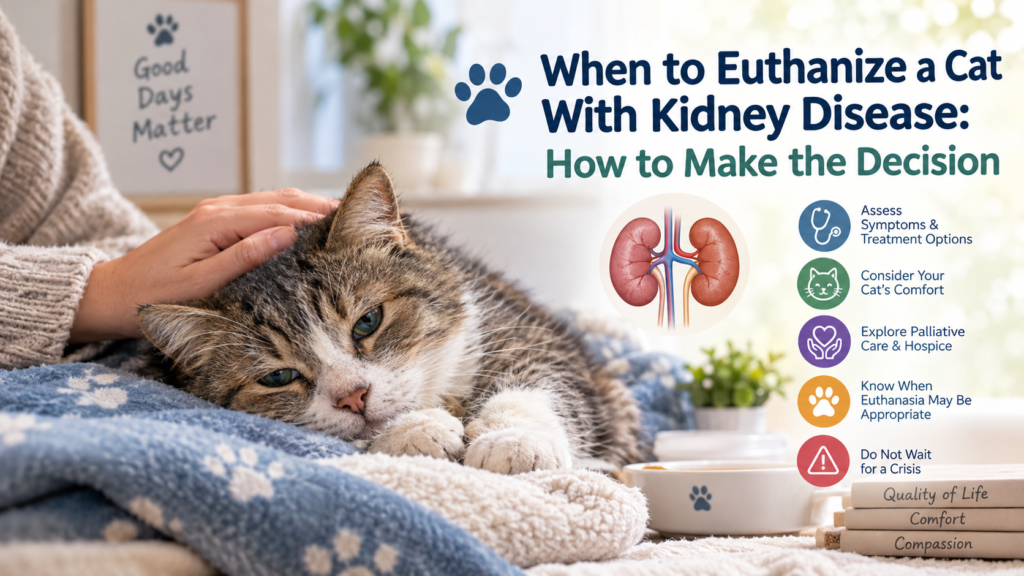
When to Euthanize a Cat With Kidney Disease: How to Make the Decision
Understanding when to euthanize a cat with kidney disease is emotionally difficult because there is rarely one simple sign or test result that determines the right time.
The decision should be based on your cat’s current condition, the severity of suffering, the response to treatment, and the realistic outlook for maintaining comfort.
Assess Whether Symptoms Can Be Managed
Ask your veterinarian which symptoms may still respond to treatment. Nausea, dehydration, high blood pressure, anemia, and other complications may sometimes be managed with appropriate care or when to euthanize a cat with kidney disease.
If treatment offers a realistic chance of restoring comfort, it may be reasonable to explore those options.
If symptoms remain severe despite treatment, ask what further interventions could realistically achieve and whether their burdens would outweigh their benefits or when to euthanize a cat with kidney disease.
Consider Your Cat’s Everyday Comfort
Think about whether your cat can:
- Eat enough to maintain basic nutritional needs.
- Rest peacefully.
- Move to essential resources.
- Use the litter box with reasonable comfort.
- Interact with familiar people when it wishes.
- Enjoy some of its usual activities.
A cat does not need to perform every activity perfectly to have a meaningful life. The overall pattern of comfort, distress, and enjoyment is what matters.
Discuss Palliative Care and Hospice
Palliative care focuses on relieving symptoms and supporting comfort when a disease cannot be cured. Depending on your cat’s condition, it may include nausea management, nutritional support, hydration plans, and environmental adjustments.
Ask your veterinarian what can be done at home, which symptoms require urgent care, and how to recognize when the current plan is no longer working or kidney disease in cats when to euthanize.
Understand When Humane Euthanasia May Be Appropriate
Humane euthanasia may be a compassionate option when a cat experiences persistent suffering that cannot be adequately relieved and its quality of life has become very poor.
You do not have to make this decision alone. Your veterinarian can explain your cat’s prognosis, the likely benefits and burdens of further treatment, and the signs that indicate suffering.
It is also reasonable to discuss end-of-life planning before a crisis develops. Having a plan can reduce uncertainty and help you focus on your cat’s comfort.
Do Not Wait for a Crisis
If you notice a sustained decline, arrange a veterinary discussion before your cat reaches an emergency situation.
However, if your cat collapses, cannot stand, has difficulty breathing, or experiences repeated vomiting with marked weakness, seek urgent veterinary care immediately.
Remember: Kidney disease alone does not determine when euthanasia is appropriate. The most important considerations are your cat’s suffering, quality of life, and the realistic possibility of maintaining comfort or kidney disease in cats when to euthanize.
How to Evaluate Your Cat’s Quality of Life
When considering kidney disease in cats when to euthanize, quality of life is often more useful than focusing only on a diagnosis or life expectancy or when to euthanize a cat with kidney disease.
Ask yourself whether your cat can still enjoy daily activities, remain comfortable, and experience moments of happiness.
Appetite and Nutrition
Notice whether your cat eats voluntarily and maintains a reasonably stable weight.
A cat with kidney disease may experience nausea, reduced appetite, or food aversion. Your veterinarian may suggest an appropriate kidney-support diet, anti-nausea medication, or appetite support when suitable.
If your cat consistently refuses food despite treatment, contact your veterinarian promptly. Prolonged inadequate food intake can cause serious complications or kidney disease in cats when to euthanize.
Hydration and Physical Comfort
Cats with kidney disease may drink and urinate more than usual. As the condition progresses, they may become dehydrated or uncomfortable.
Watch for signs such as:
- Dry or sticky gums
- Increasing weakness
- Repeated vomiting
- Reduced urination or unusual changes in urination
- Restlessness or difficulty settling comfortably
These symptoms deserve veterinary attention. Some can be managed, so they should not automatically be interpreted as a sign that euthanasia is necessary or when to euthanize a cat with kidney disease.
Mobility and Personal Hygiene
Consider whether your cat can get up, walk to the litter box, and reach food and water without significant difficulty.
Cats that are extremely weak may struggle to maintain their usual hygiene. They might soil themselves, stop grooming, or remain in one position for long periods.
You can make daily life easier by placing food, water, and a low-sided litter box nearby and providing soft, accessible bedding or kidney disease in cats when to euthanize.
However, if your cat can no longer move comfortably or repeatedly experiences distress despite treatment, discuss the situation honestly with your veterinarian.
Happiness and Social Interaction
Your cat’s emotional well-being is important, too.
Look for signs of enjoyment, such as:
- Seeking affection or familiar companionship
- Responding to your voice
- Showing interest in favorite toys or activities
- Relaxing in a familiar resting place
- Enjoying gentle petting when comfortable
A sick cat may sleep more or become less social. One change does not necessarily mean that the cat is suffering unbearably. What matters is the overall pattern and whether your cat still experiences moments of comfort and enjoyment.
Good Days Versus Bad Days
Keeping a simple daily record can help you make a clearer decision.
Write down whether your cat ate, drank, moved comfortably, used the litter box, interacted with family members, and appeared relaxed.
If your cat has more comfortable days than difficult ones, continued supportive care may be reasonable. If painful, nauseated, or distressed days consistently outnumber the good days, it may be time to discuss end-of-life options with your veterinarian.
There is no perfect score that makes the decision for you. A quality-of-life checklist is a tool to support a veterinary conversation, not a replacement for one.
Treatment and Palliative Care Before Considering Euthanasia
Before deciding when to euthanize a cat with kidney disease, ask your veterinarian whether any remaining symptoms can be relieved.
Although chronic kidney disease generally cannot be reversed, treatment may help control symptoms and maintain comfort.
Kidney-Support Diet
A veterinarian may recommend a therapeutic renal diet designed to support cats with chronic kidney disease. These diets typically manage phosphorus and adjust protein and other nutrients to meet the needs of affected cats or kidney disease in cats when to euthanize.
However, eating enough is also essential. If your cat refuses the prescribed food, tell your veterinarian rather than allowing prolonged food refusal. Your vet can help find a suitable alternative or kidney disease in cats when to euthanize.
Fluids and Hydration Support
Some cats benefit from fluid therapy to correct dehydration or support hydration. Depending on the cat’s condition, fluids may be given intravenously at a clinic or subcutaneously under veterinary guidance.
Not every cat needs the same fluid plan. Giving excessive fluids can be dangerous, particularly for cats with certain heart conditions, so follow your veterinarian’s instructions carefully.
Medication for Nausea and Other Symptoms
Your veterinarian may prescribe medication to manage nausea, vomiting, appetite problems, high blood pressure, or other complications.
Never give human medications or change your cat’s prescribed doses without veterinary advice. Some common human medicines can be toxic to cats or when to euthanize a cat with kidney disease.
Comfortable Home Care
Small changes can make your cat’s daily life easier:
- Keep fresh water available in several accessible locations.
- Place food and litter boxes close to your cat’s resting area.
- Provide a quiet, warm, comfortable place to sleep.
- Avoid forcing interaction when your cat wants to rest.
- Follow your veterinarian’s medication and monitoring plan.
- Arrange follow-up appointments to review symptoms and treatment effectiveness.
Palliative care focuses on relieving discomfort and protecting quality of life. It can be appropriate even when a cure is not possible.
If symptoms remain severe despite reasonable treatment, ask your veterinarian whether further care is likely to improve comfort or mainly prolong suffering.
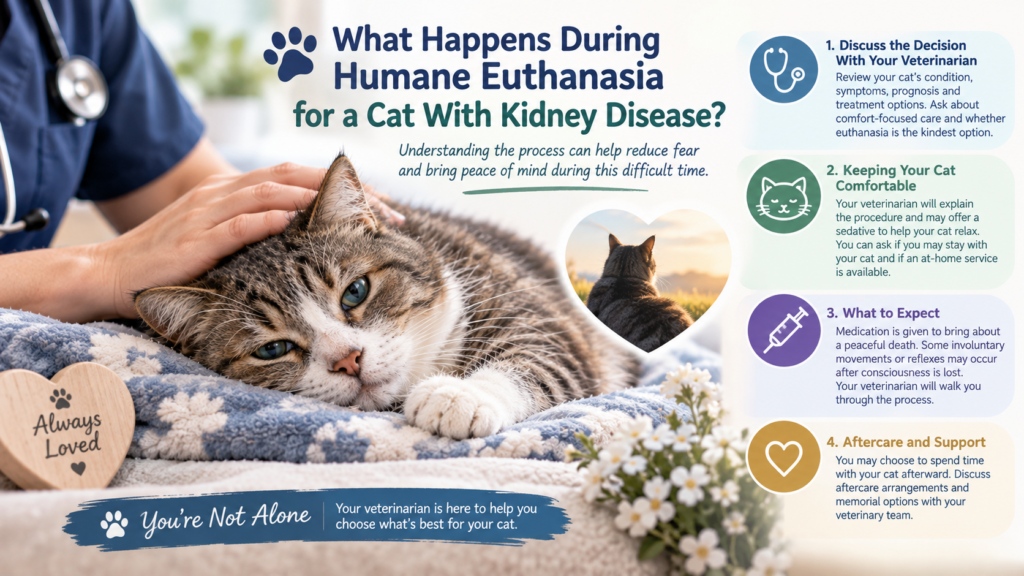
What Happens During Humane Euthanasia for a Cat With Kidney Disease?
Choosing euthanasia for a beloved cat is emotionally difficult. Understanding the process may help reduce some of the fear surrounding this decision or when to euthanize a cat with kidney disease or kidney disease in cats when to euthanize.
Humane euthanasia is a veterinary procedure intended to prevent further suffering when a cat’s quality of life has become unacceptable and the available treatment options are no longer providing adequate relief.
Discussing the Decision With Your Veterinarian
Your veterinarian will review your cat’s condition, symptoms, prognosis, and treatment options. You can ask whether additional symptom management could provide meaningful comfort or whether euthanasia is the kindest option.
You do not need to make this decision based on a single blood test or the disease stage alone.
Keeping Your Cat Comfortable
The veterinarian will explain the procedure and discuss ways to minimize fear and discomfort. Depending on the circumstances, a sedative may be offered to help your cat relax.
You can ask whether you may stay with your cat during the procedure and whether an at-home service is available in your area.
What to Expect
The veterinarian administers medication intended to bring about a peaceful death. The exact process depends on the medication and the cat’s condition or kidney disease in cats when to euthanize.
Occasionally, involuntary movements, a deep breath, or other reflexes may occur after consciousness has been lost. The veterinarian can explain what to expect and help you understand these responses.
You may choose to spend time with your cat afterward. You can also discuss aftercare arrangements and memorial options with the veterinary team.
There is no need to feel that you must make this decision alone. Your veterinarian can help you assess whether continued treatment is offering genuine comfort or whether your cat is experiencing persistent suffering.
Common Mistakes to Avoid When Deciding When to Euthanize a Cat With Kidney Disease
When emotions are high, it can be difficult to judge what is best for your cat. Avoiding a few common mistakes can help you make a more informed decision.
Making the Decision Based Only on the Disease Stage
Stage 3 kidney disease does not automatically mean that a cat is dying soon. Some cats respond well to treatment and continue to have enjoyable days.
Consider the whole picture, including symptoms, laboratory findings, other illnesses, and quality of life.
Waiting Until a Crisis Occurs
Some owners wait until their cat is unable to stand, repeatedly vomits, or experiences severe distress before discussing euthanasia.
Although it can be hard to recognize when the time has come, arranging a quality-of-life discussion early can help you prepare before an emergency develops.
Seek urgent veterinary care if your cat collapses, struggles to breathe, cannot stand, repeatedly vomits, or becomes profoundly weak.
Assuming Every Symptom Is Untreatable
Poor appetite, nausea, dehydration, and some other complications may improve with treatment. Ask your veterinarian which symptoms are potentially manageable before concluding that nothing more can be done.
At the same time, do not continue treatments indefinitely if they are no longer providing meaningful relief or are causing significant distress.
Ignoring Your Cat’s Daily Experience
Blood tests and medical assessments are important, but they do not fully describe how your cat feels at home.
Pay attention to comfort, appetite, mobility, hygiene, interaction, and whether your cat still enjoys familiar activities.
Blaming Yourself for a Difficult Decision
Many loving owners wonder whether they are choosing too early or waiting too long. These feelings are common, and there may not be a single moment that makes the answer obvious or when to euthanize a cat with kidney disease.
Use your observations, discuss your concerns openly with your veterinarian, and focus on preventing unnecessary suffering. Choosing euthanasia when comfort can no longer be maintained can be an act of compassion, not a failure.
Frequently Asked Questions About Kidney Disease in Cats When to Euthanize
When to Euthanize a Cat With Kidney Disease?
Euthanasia may be appropriate when a cat experiences persistent suffering, severe appetite loss, uncontrolled nausea or vomiting, profound weakness, or an inability to enjoy daily life despite reasonable treatment.
The decision should be made with your veterinarian after reviewing your cat’s quality of life, prognosis, and available options.
How Long Can a Cat Live With Stage 3 Kidney Disease?
There is no reliable lifespan that applies to every cat with stage 3 chronic kidney disease. Some cats live for months or longer with treatment, while others decline more quickly because of complications or other medical conditions.
Your veterinarian can give a more individualized estimate using your cat’s test results, symptoms, and response to treatment.
Should I Euthanize My Cat If It Stops Eating?
Not necessarily after one missed meal, but persistent refusal to eat is a serious concern, especially in a cat with kidney disease or kidney disease in cats when to euthanize.
Contact your veterinarian promptly to investigate nausea, dehydration, pain, or other possible causes. If appetite cannot be restored and your cat’s overall quality of life continues to decline, discuss whether euthanasia may be appropriate.
Can a Cat With Kidney Disease Still Have a Good Quality of Life?
Yes. Some cats with chronic kidney disease continue to eat, interact with their families, rest comfortably, and enjoy their usual routines with appropriate care.
The key is to monitor symptoms and adjust treatment as the disease progresses.
What Are the Signs That a Cat With Kidney Disease Is Suffering?
Possible warning signs include persistent refusal to eat, repeated vomiting, severe weakness, difficulty moving, dehydration, hiding, reduced grooming, and loss of interest in normal activities.
These signs can have different causes and do not all mean that euthanasia is necessary. A veterinarian should assess symptoms that persist or worsen.
Is It Cruel to Choose Euthanasia for a Cat With Kidney Disease?
No. When a cat’s suffering cannot be adequately relieved and quality of life has become very poor, humane euthanasia may be a compassionate choice or kidney disease in cats when to euthanize.
However, kidney disease alone does not make euthanasia necessary. The decision should be based on the individual cat’s condition and the realistic benefits of further treatment or when to euthanize a cat with kidney disease.
Conclusion: Making a Compassionate Decision for Your Cat
Understanding kidney disease in cats when to euthanize can help you recognize when your cat needs more support and when end-of-life care may need to be considered.
The five important warning signs are persistent appetite loss, severe weakness, uncontrolled nausea or vomiting, withdrawal from normal activities, and poor quality of life despite treatment. These signs deserve careful attention, but none should be interpreted in isolation.
The outlook for stage 3 kidney disease cats life expectancy varies, and many cats can still enjoy meaningful time with supportive veterinary care. Monitor your cat’s daily comfort, keep track of good and bad days, and ask your veterinarian about treatment and palliative care options or when to euthanize a cat with kidney disease.
Most importantly, remember that you do not have to make this difficult decision alone. Focus on your cat’s comfort, seek professional guidance, and make the most compassionate choice possible for your beloved companion.
Add a stronger medical safety disclaimerClarify the five warning signs