

 By
By How to Take Care of Cats Teeth: 9 Dental Health Tips Guide
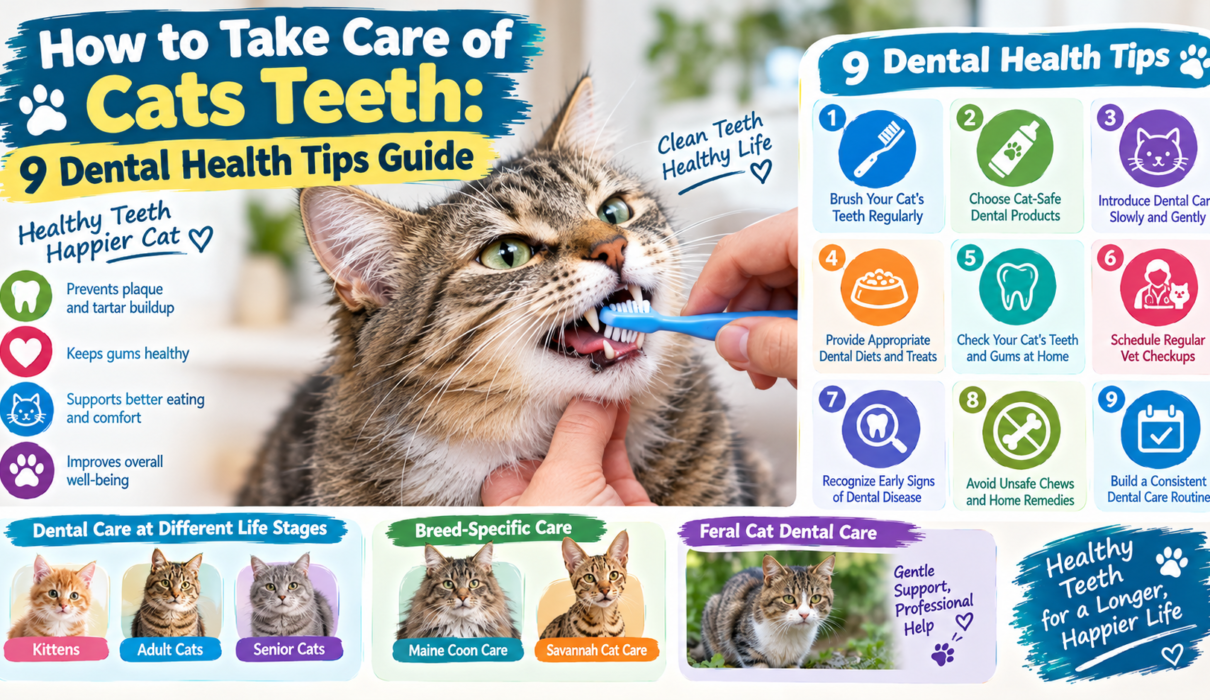
Keeping your cat’s teeth healthy is an important part of responsible pet ownership. Dental problems can cause discomfort, bad breath, gum inflammation, and difficulty eating. Unfortunately, cats often hide pain, so oral health issues may go unnoticed until they become more serious. Learning how to take care of cats teeth can help you build a simple routine that supports your cat’s comfort and overall well-being.
In this first part, we will explain why dental health matters, share the first five practical dental care tips, and discuss how kittens, adult cats, and senior cats may need different approaches. With patience and consistency, you can help your cat become more comfortable with regular mouth care.
How to Take Care of Cats Teeth: Why Dental Health Matters
A cat’s teeth are designed for catching, holding, and tearing food. Healthy teeth and gums help cats eat comfortably and maintain their normal daily activities. However, food debris and bacteria can accumulate on the teeth, forming plaque. If plaque remains on the teeth, it can harden into tartar, which is more difficult to remove at home or how to take care of cats teeth.
Over time, plaque and tartar can contribute to gingivitis, an inflammation of the gums. More advanced dental disease may damage the tissues supporting the teeth and cause significant oral pain. Some cats also develop tooth resorption, a painful condition in which parts of a tooth gradually break down or how to take care of cats teeth.
Common Signs of Dental Problems in Cats
Recognizing early warning signs can help you seek veterinary care before a problem becomes more severe. Watch for:
- Persistent bad breath.
- Red, swollen, or bleeding gums.
- Yellow or brown buildup on the teeth.
- Drooling more than usual.
- Dropping food while eating.
- Chewing slowly or favoring one side of the mouth.
- Pawing at the mouth or rubbing the face.
- Reduced appetite or reluctance to eat hard food.
Some cats continue eating even when their mouths hurt. Therefore, a normal appetite does not always mean that a cat has healthy teeth.
Why Regular Dental Care Is Important
Regular dental care helps control plaque and allows you to notice changes in your cat’s mouth. It can also help your veterinarian identify problems that may not be visible during a quick home inspection or how to take care of cats teeth.
Home dental care does not replace professional examinations or treatment. If your cat has inflamed gums, loose teeth, visible pain, or heavy tartar buildup, arrange a veterinary appointment rather than trying to remove the deposits yourself.
9 Dental Health Tips for Cats
Developing a dental care routine does not have to happen all at once. Start with small steps and give your cat time to become comfortable. The following first five tips explain how to make oral care safer and easier.
Brush Your Cat’s Teeth Regularly
Brushing is one of the most effective ways to control plaque on a cat’s teeth. Regular brushing helps remove plaque before it hardens into tartar. Daily brushing is ideal when your cat tolerates it, but even a gradual introduction is a useful starting point or how to take care of cats teeth.
How to Brush Your Cat’s Teeth
Follow these steps to make the process easier:
- Choose a calm time: Pick a moment when your cat is relaxed and comfortable.
- Introduce mouth handling: Gently touch your cat’s cheeks and lips for a few seconds, then reward calm behavior.
- Let your cat taste the toothpaste: Use toothpaste specifically formulated for cats.
- Start with a few teeth: Gently lift the lip and brush the outer surfaces of a few teeth.
- Keep sessions short: Gradually increase the time as your cat becomes more comfortable.
- Reward your cat: Offer praise or a small suitable reward after each session.
Use a soft-bristled cat toothbrush or an appropriately sized pet toothbrush. Focus on the outer surfaces of the teeth, where plaque commonly accumulates. Never force brushing if your cat becomes highly distressed or appears to be in pain.
If your cat has painful gums or suspected dental disease, ask your veterinarian to examine the mouth before starting a brushing routine.
Choose Cat-Safe Dental Products
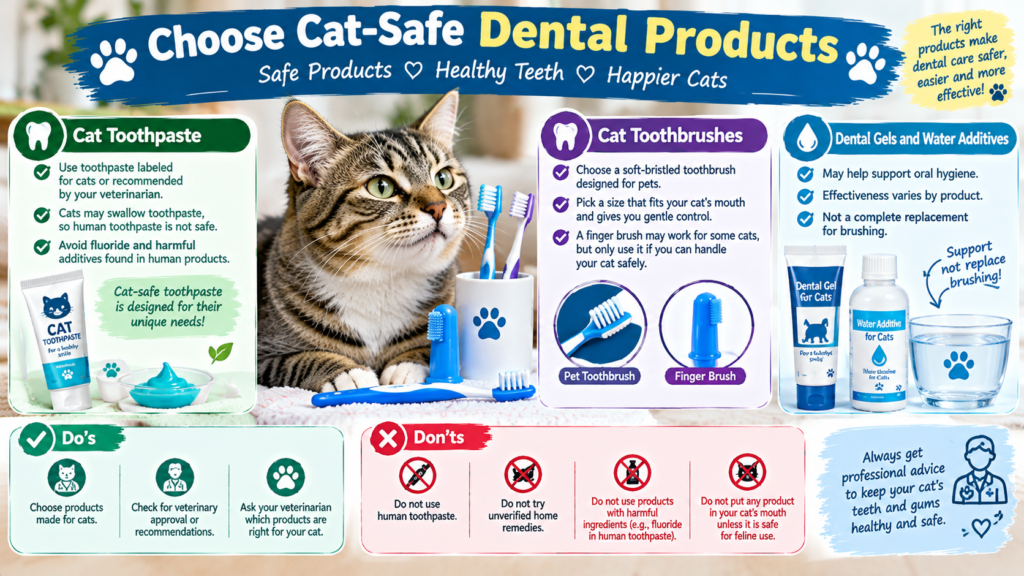
Choosing the right products is another important part of learning how to take care of cats teeth. Products designed specifically for cats are generally the safest starting point because they are intended for feline use.
Cat Toothpaste
Use toothpaste labeled for cats or recommended by your veterinarian. Cats may swallow toothpaste rather than spit it out, so products intended for humans are not appropriate. Human toothpaste may contain ingredients that are unsafe for cats, including fluoride in amounts unsuitable for ingestion and, in some formulations, other potentially harmful additives or how to take care of cats teeth.
Cat Toothbrushes
A soft-bristled toothbrush designed for pets can help you reach the outer surfaces of the teeth. Choose a brush that fits your cat’s mouth comfortably and allows gentle control. A finger brush may suit some cats, although it should only be used when you can handle your cat safely without risking a bite.
Dental Gels and Water Additives
Some veterinary dental gels, rinses, and water additives may help support oral hygiene. Their effectiveness varies by product, and they should not be considered a complete replacement for brushing when brushing is possible.
Look for products accepted by recognized veterinary dental organizations where available, and ask your veterinarian whether a particular product is suitable for your cat. Avoid unverified home remedies and never put products into your cat’s mouth unless they are safe for feline use or how to take care of cats teeth.
Introduce Dental Care Slowly and Gently
Many cats dislike having their mouths handled at first. Trying to brush all their teeth immediately may frighten them and make future attempts more difficult. A gradual approach helps build familiarity and trust or how to take care of cats teeth.
Make Dental Care a Positive Experience
Start by sitting beside your cat in a quiet place. Allow your cat to approach you, and gently stroke the cheeks or chin if the cat enjoys being touched. Reward calm behavior with praise or a small treat.
Over several sessions, gradually introduce the following steps:
- Let your cat sniff the toothbrush.
- Touch the lips briefly without opening the mouth.
- Gently lift the lip for a moment.
- Touch a tooth with your finger or a soft brush.
- Brush one or two teeth before stopping.
The goal is to keep each session comfortable rather than completing everything in one attempt. If your cat pulls away, growls, struggles, or becomes distressed, pause and try again later with an easier step.
Never pin your cat down or force the mouth open for routine brushing. If your cat consistently resists, ask a veterinarian about alternative dental products and safe handling techniques.
Provide Appropriate Dental Diets and Treats
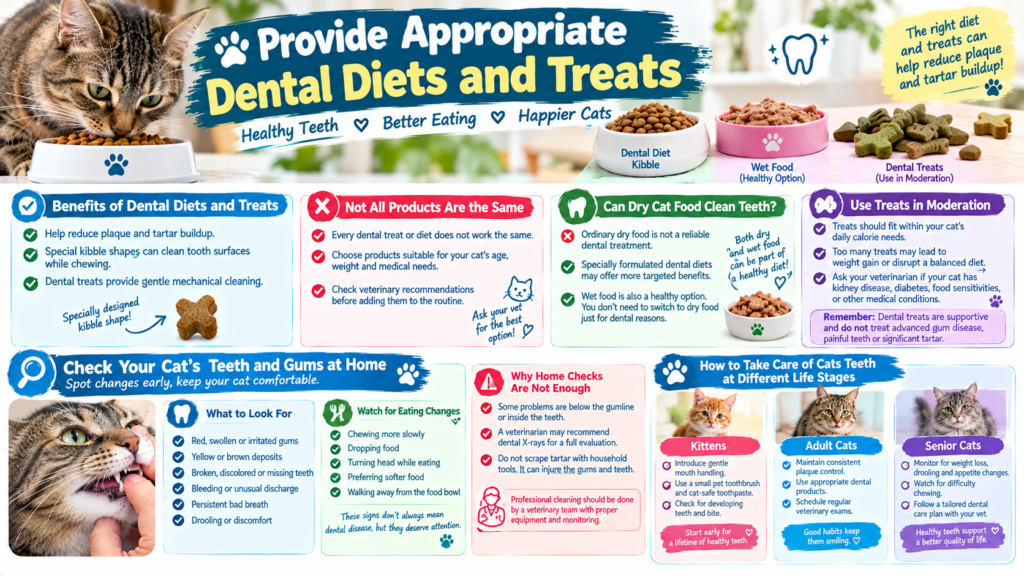
Certain specially formulated dental diets and treats can help reduce plaque or tartar buildup. Some dental foods are designed with a particular kibble structure that helps clean tooth surfaces during chewing. Dental treats may also provide a degree of mechanical cleaning, depending on their design.
However, not every product labeled as a dental treat has the same benefits. Choose products appropriate for your cat’s age, weight, and medical needs, and check veterinary recommendations before adding them to the routine.
Can Dry Cat Food Clean Teeth?
Ordinary dry food should not automatically be considered a dental treatment. Many standard kibbles break apart quickly without providing meaningful cleaning across the teeth. Specially formulated dental diets may offer more targeted benefits, but their performance depends on the product or how to take care of cats teeth.
Wet food can also be part of a healthy diet. You do not need to switch a cat from wet food to ordinary dry food solely for dental reasons.
Use Dental Treats in Moderation
Treats should fit within your cat’s overall daily calorie needs. Too many treats may contribute to weight gain or disrupt a balanced diet. If your cat has kidney disease, diabetes, food sensitivities, or another medical condition, ask your veterinarian before choosing dental diets or treats.
Remember that dental diets and treats are supportive options. They do not treat advanced gum disease, painful teeth, or significant tartar that requires professional care.
Check Your Cat’s Teeth and Gums at Home
Regularly observing your cat’s mouth can help you notice changes early. Home checks should be gentle and brief, and they should only be attempted when your cat is comfortable with handling or how to take care of cats teeth.
What Should You Look For?
When your cat is relaxed, gently lift the lip if it is safe to do so. Look for:
- Gums that appear red, swollen, or irritated.
- Yellow or brown deposits near the gumline.
- Broken, discolored, or missing teeth.
- Bleeding or unusual discharge.
- Persistent unpleasant breath.
- Drooling or signs of discomfort around the mouth.
You do not need to force the mouth open or inspect every tooth. If your cat resists, stop and ask your veterinarian to perform the examination.
Pay Attention to Changes in Eating Behavior
Changes in eating habits can be an important clue. Your cat may chew more slowly, drop food, turn its head while eating, prefer softer food, or approach the food bowl and then walk away or how to take care of cats teeth.
These signs do not always mean dental disease, but they deserve attention, especially when they occur alongside bad breath, drooling, or mouth sensitivity. Cats that suddenly stop eating or show significant pain should be assessed promptly by a veterinarian or how to take care of cats teeth.
Why Home Checks Are Not Enough
Some dental problems occur below the gumline or inside the teeth, where they cannot be seen during a home check. A veterinarian may recommend a more detailed oral examination and dental X-rays to identify hidden disease.
Do not attempt to scrape tartar off your cat’s teeth with household tools. This can injure the gums and damage tooth surfaces. Professional cleaning, when needed, should be performed by a veterinary team using appropriate equipment and monitoring.
How to Take Care of Cats Teeth at Different Life Stages
Cats need appropriate oral care throughout their lives, but the best approach may change with age. Establishing a routine early can make future dental care easier.
Dental Care for Kittens
Kittens are often easier to introduce to gentle mouth handling because they are still learning what to expect. Begin by briefly touching the cheeks and lips, then gradually introduce a small pet toothbrush and cat-safe toothpaste.
Kittens have baby teeth that are eventually replaced by adult teeth. During this period, observe for persistent discomfort, difficulty eating, or unusual problems as the adult teeth emerge. Your veterinarian can check whether the teeth and bite are developing normally.
The aim is not to brush aggressively but to help the kitten become familiar with a routine that can continue into adulthood.
Dental Care for Adult Cats
Adult cats benefit from consistent plaque control, appropriate dental products, and routine veterinary examinations. Brushing the teeth regularly, monitoring the gums, and watching for changes in eating behavior are useful habits or how to take care of cats teeth.
If you adopt an adult cat that has never had its teeth brushed, begin slowly rather than assuming it will tolerate the process immediately. A veterinary oral examination is a sensible first step if the cat has bad breath, visible tartar, or an unknown dental history.
Dental Care for Senior Cats
Older cats may be more likely to have accumulated dental disease or other conditions that affect oral health. Monitor them closely for weight loss, drooling, changes in appetite, and difficulty chewing or how to take care of cats teeth.
Do not assume that missing teeth or bad breath is simply a normal part of aging. These signs may indicate a condition that can be treated or managed. Your veterinarian can recommend an appropriate examination schedule and discuss the safest dental care plan based on your cat’s overall health.
Schedule Regular Veterinary Dental Checkups
Regular veterinary dental examinations are an important part of maintaining healthy teeth and gums. Even if your cat eats normally and does not show obvious discomfort, dental disease may still be developing beneath the gumline.
During an oral examination, your veterinarian can look for inflammation, tartar, damaged teeth, loose teeth, and other signs of disease. The recommended frequency of checkups depends on your cat’s age, medical history, and existing dental problems.
Why Professional Dental Cleaning May Be Necessary
Brushing helps control plaque, but it cannot remove all hardened tartar. When significant tartar or dental disease is present, your veterinarian may recommend professional dental cleaning.
A comprehensive veterinary dental procedure commonly involves:
- Examining the teeth, gums, and oral tissues.
- Removing plaque and tartar from appropriate tooth surfaces.
- Assessing the areas below the gumline.
- Taking dental X-rays when needed to identify hidden problems.
- Treating diseased or damaged teeth when necessary.
Professional cleaning is generally performed under anesthesia so the veterinary team can examine and clean the mouth thoroughly while protecting the cat’s comfort and safety. Your veterinarian will assess the risks and benefits for your individual cat.
Do Not Try to Remove Tartar at Home
Scraping tartar with sharp tools or attempting to clean painful teeth yourself can injure the gums and damage the teeth. Visible tartar may also be accompanied by disease beneath the gumline that cannot be treated with surface scraping.
If you notice heavy buildup, bleeding gums, or signs of pain, arrange a veterinary examination instead of trying to remove the deposits yourself.
Recognize the Early Signs of Dental Disease
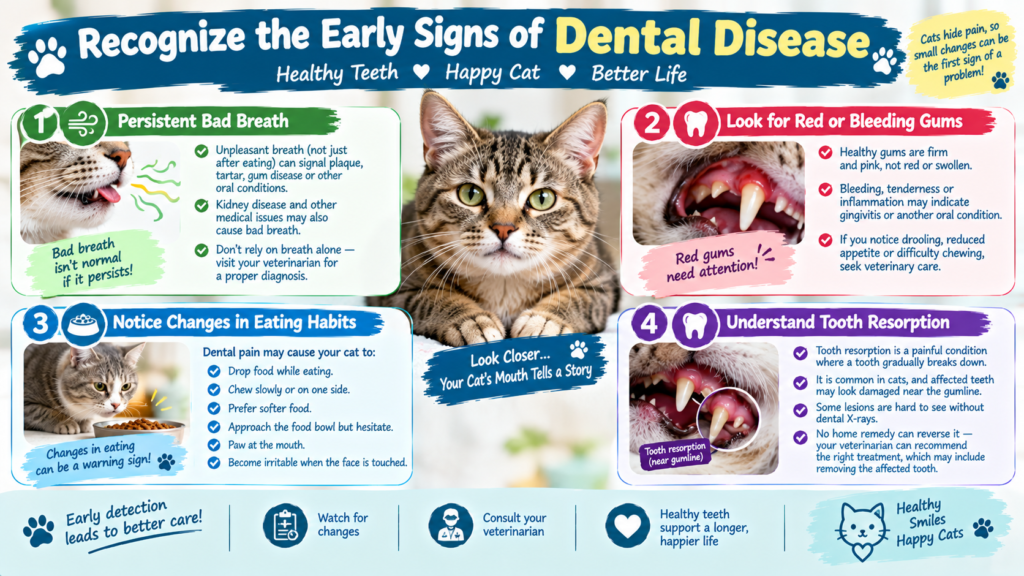
Recognizing dental problems early is another essential part of learning how to take care of cats teeth. Cats are skilled at hiding discomfort, so small changes in behavior may be the first indication that something is wrong.
Watch for Persistent Bad Breath
A cat’s breath may have a mild odor after eating, but persistent, unusually unpleasant breath deserves attention. It can be associated with plaque, tartar, gum disease, or other oral conditions. Kidney disease and some other medical problems may also cause changes in breath odor.
Do not rely on breath alone to determine the cause. A veterinary examination can help identify the underlying problem.
Look for Red or Bleeding Gums
Healthy gums are generally firm and do not bleed easily. Redness, swelling, bleeding, or tenderness around the teeth may indicate gingivitis or another oral condition or how to take care of cats teeth.
Gum inflammation should not be ignored, especially if it occurs with drooling, reduced appetite, or difficulty chewing.
Notice Changes in Eating Habits
Dental pain may cause a cat to:
- Drop food while eating.
- Chew slowly or on one side.
- Prefer softer food.
- Approach the food bowl but hesitate to eat.
- Paw at the mouth.
- Become unusually irritable when the face is touched.
Some cats continue eating despite significant dental discomfort. A cat that suddenly refuses food, appears to be in severe pain, or has facial swelling needs prompt veterinary assessment or how to take care of cats teeth.
Understand Tooth Resorption
Tooth resorption is a painful condition in which a tooth gradually breaks down. It is relatively common in cats, and affected teeth may look damaged near the gumline. However, some lesions are difficult to see without a veterinary examination and dental X-rays.
There is no reliable home remedy that reverses tooth resorption. Your veterinarian can determine the appropriate treatment, which may involve removing an affected tooth.
Avoid Unsafe Chews and Home Remedies
Not every product advertised for dental care is suitable for cats. Some items may damage teeth, irritate the mouth, or expose cats to harmful ingredients or how to take care of cats teeth.
Avoid Extremely Hard Chews
Hard bones, antlers, and other rigid objects can fracture teeth. Cats do not need to chew extremely hard objects to maintain healthy mouths.
Choose dental treats and products designed specifically for cats, and follow the manufacturer’s instructions. Ask your veterinarian whether a product is appropriate for your cat’s age and health.
Never Use Human Toothpaste
Human toothpaste is not formulated for cats to swallow. Some ingredients may be unsafe for pets, so use only toothpaste specifically made for cats or recommended by your veterinarian orhow to take care of cats teeth.
Do not use human mouthwash, whitening products, or unapproved oral gels on your cat.
Be Careful With Home Remedies
Natural ingredients are not automatically safe for cats. Oils, herbal mixtures, household powders, and other unverified remedies may irritate the mouth or cause harm if swallowed.
Avoid applying substances to your cat’s teeth or gums unless a veterinarian confirms they are appropriate. Home remedies should never delay treatment for painful teeth, bleeding gums, or suspected infection.
Choose Dental Products Carefully
When selecting dental products, consider:
- Whether the product is intended specifically for cats.
- Whether it has reliable evidence supporting its dental benefits.
- Whether it suits your cat’s age, diet, and medical needs.
- Whether your veterinarian recommends it.
Dental treats and water additives may provide additional support, but they do not replace professional treatment or brushing when brushing is appropriate and tolerated.
Build a Consistent Cat Dental Care Routine
Consistency makes dental care easier to maintain. A simple routine that fits your schedule is more useful than an elaborate plan that is rarely followed or how to take care of cats teeth.
Create a Practical Schedule
You can organize your cat’s dental care around a few regular activities:
Daily: Brush your cat’s teeth if tolerated, ideally using a cat-specific toothbrush and toothpaste. Check for obvious changes in eating behavior or signs of oral discomfort.
Weekly: Briefly observe the teeth and gums if your cat accepts gentle handling. Look for redness, visible tartar, damaged teeth, or unusual drooling.
Regularly: Attend veterinary examinations and follow the dental care schedule recommended for your cat. Some cats need more frequent professional assessments than others.
These are general guidelines rather than a substitute for individualized veterinary advice or how to take care of cats teeth.
Make Dental Care Easier to Maintain
Keep your toothbrush and cat toothpaste in a convenient place. Introduce brushing gradually, use positive reinforcement, and stop if your cat becomes distressed. If brushing is not possible, ask your veterinarian about suitable alternatives.
It can also help to record changes in your cat’s breath, gum appearance, appetite, and chewing behavior. These observations may help your veterinarian identify a problem more quickly.
The goal is not to achieve perfect-looking teeth at home. It is to reduce plaque where possible, identify problems early, and ensure your cat receives professional care when needed.
How to Take Care of Cats Teeth in Different Breeds
All cats need appropriate dental care, regardless of breed. However, an individual cat’s temperament, health, age, and willingness to accept handling may affect how you establish a routine or how to take care of cats teeth.
Maine Coon Cat Care
Maine Coons are large cats known for their long coats and substantial build. Their size does not eliminate the need for routine dental care.
As part of Maine Coon cat care, introduce tooth brushing gradually and use a toothbrush that allows you to reach the outer surfaces of the teeth comfortably. Check the gums when your cat is relaxed, and arrange regular veterinary examinations.
Do not assume that a large cat needs a different dental routine simply because of its size. The most appropriate approach depends on the individual cat’s mouth, health, and tolerance of handling.
If your Maine Coon develops persistent bad breath, drooling, or difficulty chewing, arrange a veterinary assessment instead of relying only on home care.
Savannah Cat Care
Savannah cats may be active and curious, but individual personalities vary. Some tolerate handling easily, while others need more time to become comfortable with a toothbrush.
For Savannah cat care, begin with short, positive sessions. Allow your cat to investigate the toothbrush, gently introduce lip handling, and gradually work toward brushing if tolerated.
Use products intended for cats and discuss dental diets or treats with your veterinarian. Do not assume that activity level, breed, or a seemingly healthy appearance means dental disease is absent.
Regular observation and veterinary examinations remain important for Savannah cats, just as they do for other breeds.
How to Take Care of a Feral Cat’s Teeth
Caring for a feral cat presents different challenges because the cat may not be comfortable with human contact. Attempting to handle the mouth of a frightened or unsocialized cat can cause serious stress and may result in bites or scratches or how to take care of cats teeth.
If you are wondering how to take care of a feral cat, prioritize safety and professional assistance rather than attempting to brush its teeth yourself.
Do Not Force Mouth Handling
A feral cat may interpret close handling as a threat. Do not try to restrain the cat, force its mouth open, or insert a toothbrush into its mouth.
Instead, observe the cat from a safe distance. Signs that may suggest an oral problem include:
- Difficulty eating or dropping food.
- Excessive drooling.
- Visible facial swelling.
- Blood around the mouth.
- Weight loss or declining body condition.
These signs do not confirm dental disease, but they can indicate that veterinary attention is needed.
Contact a Veterinarian or TNR Organization
A veterinarian experienced with community cats or a trap-neuter-return (TNR) organization can help arrange safe handling and medical assessment. Depending on the situation, the cat may need a humane trapping plan for veterinary care.
During a veterinary examination, the team can assess oral health and determine whether treatment is necessary. Professional treatment may be particularly important if the cat has painful teeth, infection, or difficulty eating.
Support the Cat Without Increasing Stress
If you provide food and water for a community cat, keep the feeding area clean and offer an appropriate, balanced cat food. Monitor changes in eating behavior, and seek assistance if the cat appears unwell.
Food choice alone cannot treat established dental disease. Avoid trying to administer oral medications or dental products to a feral cat unless a veterinarian has provided a safe plan or how to take care of cats teeth or how to take care of cats teeth.
Do Cats Care for Their Owners? Understanding Trust During Dental Care
Many owners wonder, do cats care for their owners? Cats can form strong social bonds with people, although they express attachment differently. Some seek attention, follow their owners, rest nearby, or greet them when they return home.
Dental care can become another familiar interaction when introduced gently. However, a cat’s willingness to accept tooth brushing is not a reliable measure of affection or trust.
Build Trust Through Positive Experiences
If you want to make dental care more comfortable, try the following:
- Choose a quiet time when your cat is relaxed.
- Let your cat approach rather than immediately restraining it.
- Begin with brief touches around the cheeks and lips.
- Reward calm behavior with praise or an appropriate treat.
- Stop before your cat becomes overwhelmed.
Repeated positive experiences can help some cats become more comfortable with handling. Others may never tolerate full brushing, and that does not mean they have a poor relationship with their owner or how to take care of cats teeth.
If brushing is consistently stressful, ask your veterinarian about alternative dental care options.
Frequently Asked Questions About Cat Dental Care
How often should you brush a cat’s teeth?
Daily brushing is ideal for controlling plaque when your cat tolerates it. Introduce brushing gradually and use toothpaste designed specifically for cats. If daily brushing is not possible, ask your veterinarian about a realistic routine and additional dental products.
Can I use human toothpaste on my cat?
No. Human toothpaste is not designed to be swallowed by cats and may contain ingredients unsuitable for them. Use a feline toothpaste or a product recommended by your veterinarian.
What are the first signs of dental disease in cats?
Early signs can include red gums, persistent bad breath, visible tartar, drooling, and changes in chewing behavior. Some cats show very few signs, so regular veterinary dental examinations are important or how to take care of cats teeth.
Do cats need professional teeth cleaning?
Some cats need professional dental cleaning to remove hardened tartar and assess disease below the gumline. Your veterinarian can determine whether cleaning is necessary and discuss the safest approach for your cat or how to take care of cats teeth.
Can dental treats replace tooth brushing?
Dental treats may provide additional support when they are appropriately formulated, but they do not necessarily remove plaque from all tooth surfaces. They should not be considered a complete replacement for brushing or veterinary treatment.
What should I do if my cat refuses tooth brushing?
Do not force your cat to accept brushing. Start with gradual handling if it is safe, or ask your veterinarian about alternatives such as suitable dental diets, treats, or other feline dental products. If your cat resists because of possible pain, arrange an examination.
Is bad breath normal in cats?
Persistent or unusually strong bad breath should not be dismissed as normal. It may indicate dental disease or another medical problem. Arrange a veterinary examination to determine the cause or how to take care of cats teeth.
Conclusion: How to Take Care of Cats Teeth for Long-Term Health
Learning how to take care of cats teeth is an important part of keeping your cat comfortable and supporting long-term health. Brushing regularly, using cat-safe dental products, choosing suitable dental treats, checking for warning signs, and attending veterinary examinations can all contribute to better oral hygiene.
Remember that cats may hide dental pain, and problems such as tooth resorption or disease beneath the gumline may not be obvious at home. Avoid unsafe chews, human toothpaste, and unverified remedies. If your cat has bleeding gums, facial swelling, difficulty eating, or signs of significant pain, seek veterinary care promptly or how to take care of cats teeth.
Whether you care for a kitten, an adult cat, a senior pet, a Maine Coon, a Savannah cat, or a community cat, the best approach is one that prioritizes safety, consistency, and professional guidance. Small, positive steps can help make dental care a more manageable part of your cat’s everyday routine.