

 By
By Introduction
Home grooming will not only be cost-effective but also help strengthen the bond between you and your furry friend. Rather than taking your dog out of his comfort zone, exposing him to strangers, and putting him in stressful situations, you can have him groomed at home, so he feels at ease and in his own picturesque world.
And, in case you are new to this, there is nothing to worry about. This manual simplifies it all to easy steps to follow. Whether your dog is short-haired, long-haired or sensitive-skinned, you will learn practical and effective dog grooming steps that you can follow effectively.
In the first section, we are going to discuss why grooming is important, the tools you will need to groom your dog, and the frequency of grooming. And once you have these fundamentals under your belt, you can proceed with the step-by-step grooming process.
Why Dog Grooming at Home is important.
Health Benefits
Another benefit of grooming sessions is that you have the opportunity to check yourself for early signs of health issues. You may also notice skin infections, ticks, fleas, lumps, or other bumps that would not otherwise be noticed. By detecting them early, you can avoid costly vet visits later.
Proper bathing of your dog also helps get rid of bacteria and unpleasant smells, helping maintain better hygiene for your pet and your home.
Emotional & Behavioral Benefits
It is also good to strengthen your relationship. Grooming is a bonding experience, not a stressful one. Treats, positive reinforcement, and patience can even help nervous dogs to learn to enjoy grooming sessions.
Financial Benefits
After spending money on a simple of dog grooming tools list, the bulk of the ongoing expenses is gone. All you will have to do is refill supplies like shampoo from time to time, and this is a very cost-effective solution.
Dog grooming tools list that are required.
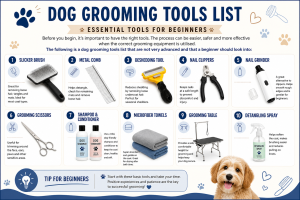
The following is a dog grooming tools list that are not very advanced and that a beginner should look into:
Dog Brush
There are various types of coats that need different types of brushes:
• Slicker brush to take the tangles out.
• Bristle brush to evenly apply coats.
• Deshedding devices for heavy shedders.
Dog Shampoo
It is always best to use shampoo specifically formulated for dogs. The shampoo used by humans can irritate their skin due to varying pH levels.
Nail Clippers or Grinder.
Having nails trimmed will avoid pain and posture problems. Clippers are cheap, whereas grinders provide a smoother finish.
Comb
A comb will help eliminate smaller tangles, and hair will brush smoothly after use.
Towels
You must have absorbent towels to dry your dog after bathing.
Helpful Tools, which are optional.
• Hair dryer that is dog-friendly (or low-heat human dryer)
• Ear cleaning solution
• Toothbrush and toothpaste (dogs).
The tools are not required, but they may enhance the overall grooming process.
Selecting the correct tools.
When you have a budget, you can start with the bare minimum and gradually add to your kit. The initial cost of buying quality tools can also help save money in the long run.
Frequency of Grooming Your Dog.
General Grooming Frequency
• Bathing: Every 3–6 weeks
• Nail trimming: After every 3-4 weeks.
• Ear cleaning: Weekly examinations.
Consistency is key. Regular grooming prevents problems from accumulating over time.
Bathing Frequency
Most dogs have a good balance of being bathed once a month. However:
• Active dogs might require a more regular bath.
• Dogs that have skin problems might require special timetables.
• The number of baths that indoor dogs need is normally lower.
Brushing Routine
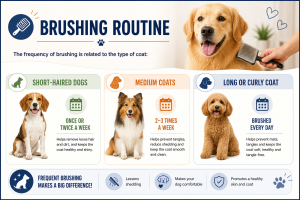
• Short-haired dogs: once or twice a week.
Medium coats: 2-3 times a week.
Long or curly coat: brushed every day.
Frequent brushing lessens shedding and makes your dog comfortable.
Nail Trimming and Ear Care
Step-by-Step Dog Grooming Process to Become A Dog Groomer.
Note, patience is important. You have to take your time, remain calm and use treats to reward your dog along the way. Grooming will become a habit you get used to, and your dog will, too, and even enjoy it.
Step 1: Coat-brushing.
Begin by massaging your dog’s fur to help remove dirt, loose hair, and tangles. If your dog has long or thick hair, break it down into small sections to prevent pulling. It is always advisable to brush in the direction of hair growth, as brushing against it may be uncomfortable.
In the case of dogs with mats (snarls of fur), do not attempt to tear them out. Rather, spray them with a detangling spray or painstakingly separate them with a comb. Matting-down can be severe, and may need to be trimmed.
Frequent brushing not only keeps the coat clean but also improves blood flow and distributes natural oils throughout the coat, giving your dog a natural shine.
Pro Tip:
To avoid painful tangles, make brushing a daily routine for long-haired dogs.
Step 2: Washing your Dog.
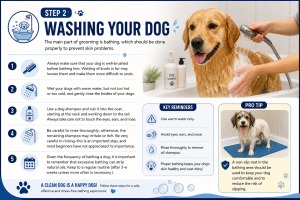
Always make sure that your dog is well-brushed before bathing him. Wetting of knots in fur may loosen them and make them more difficult to undo.
Wet your dogs with warm water, but not too hot or too cold, and gently rinse the bodies of your dogs. Use a dog shampoo and rub it into the coat, starting at the neck and working down to the tail. Always take care not to touch the eyes, ears, and nose.
Be careful to rinse thoroughly; otherwise, the remaining shampoo may irritate or itch. Be very careful in rinsing–this is an important step, and most beginners have not appreciated its importance.
Given the frequency of bathing a dog, it is important to remember that excessive bathing can strip natural oils. Keep to a regular routine (after 3-6 weeks unless more often is necessary).
Pro Tip:
A non-slip mat in the bathing area should be used to keep your dog comfortable and to reduce the risk of slipping.
Step 3: Drying your Dog.
Begin by towel-drying your dog to remove excess water. Do not rub too hard on long-haired dogs, as this may cause tangles.
With a dog that can withstand it, you may use a hair dryer on the low heat option. Do not place the dryer too close, and move it regularly to avoid overheating a single area.
Some dogs fear dryers; as such, it is best to introduce the sound gradually. Towel drying could be sufficient to calm your dog down.
Pro Tip:
Always make sure your dog is absolutely dry, especially during the cold seasons.
Step 4: Nail Trimming
Get your dog’s paw and feel its nails. When your dog has light-coloured nails, you will see a pink pulp, which is called the quick. Cuts should be avoided in this, as they can lead to bleeding and pain.
Cut a small slice of the nail at a time rather than large ones. When in doubt, it is preferable to cut less and re-cut later.
With dogs that have dark toenails and the quick is not visible, take extra care and cut slowly.
And when you cut too deep, you need not be all in a tizzy; use some styptic powder to stem the flow.
Alternative Option:
A nail grinder may be safer for beginners, as it files nails gradually rather than cutting them.
Step 5: Cleaning Ears.
Clean your dog’s ears if they are dirty, full of wax, or have an unpleasant smell. Ears that are healthy must be clean and not smelly.
When cleaning ears with a cottonball: Pour a cottonball with a vet-approved ear-cleaning solution (never pour it into the ear). Gently wipe the outer ear area. It is advisable not to insert anything deeply into the ear canal, as this may cause damage.
In case of redness, swelling or strong odour, see a vet rather than trying to clean it.
Pro Tip:
Consider ear checks a routine weekly, though cleaning is not necessary in all cases.
Step 6: Brushing Teeth
Apply dog toothbrush and toothpaste- never apply human toothpaste, which is potentially harmful to dogs.
Begin by introducing your dog to the toothpaste by letting it lick the paste. Then very lightly brush their teeth in circular motions, focusing on the outer surfaces where plaque accumulates.
The first thing is that if your dog is initially resistant, do not force it. Gradually add on the time spent brushing in a series of sessions.
Brushing your teeth regularly will prevent bad breath, gum disease and expensive dental procedures.
Pro Tip:
Goal: To brush the teeth of your dog at least 2-3 times a week.
Step 7: Last Minute (Eyes, Paws, and Coat Check)
Eye Cleaning
Wipe around your dog’s eyes with a damp cloth, removing any discharge or dirt. Be careful not to touch the eye directly.
Paw Care
Examine your dog’s paws and make sure they are not dirty or have any cuts or debris. Wipe the paw pads and remove any excess fur.
Final Coat Check
Brush your dog one last time so the coat is sleek and free of tangles. This also helps you see anything you might have missed during grooming.
Turning Grooming into a Pleasant Situation.
• Frequently use treats and praise.
• Short sessions in the initial stages.
• Be cool and patient.
• Quit when your dog becomes overly stressed.
Gradually, your dog will learn to associate grooming with comfort and rewards other than fear.
Dog grooming steps
By now, you’ve learned the complete dog grooming steps and how to confidently handle grooming at home. But to truly master how to groom a dog at home for beginners, it’s just as important to understand what not to do and how to adapt grooming based on your dog’s specific needs.
With the best intentions, beginners often do small things that can result in discomfort and health problems for their dog. Knowing these will help you avoid unnecessary trouble.
Overbathing Your Dog
Among the most prevalent errors is washing your dog more than once a week. Although it may seem that the more baths you give your dog, the better hygienic it is, you may be over-bathing it and removing the natural oils that naturally lie on your dog’s skin.
This may cause drying, itching and irritation. The most important thing is to understand how often you need to bathe a dog. On the one hand, most dogs do not need to be bathed more than once every 36 weeks, even though they are extremely dirty and need to be washed quite frequently.
Using Human Shampoo
Human shampoos cannot be applied to dogs, as they interfere with the dogs’ natural pH levels. This may be irritating and can even cause allergic reactions.
It is important to make sure the shampoo you apply to your dog is specially designed for your dog, particularly its sensitive skin.
Skipping Regular Brushing
Others do not brush their dogs between baths, which results in tangles, matting, and excessive shedding.
Not only essential to have a healthy coat, but brushing is one of the most important steps in grooming dogs.
Nails that are too short.
Excessively trimmed nails may cut into the quick, causing pain and bleeding. This may cause your dog to be afraid of subsequent grooming.
Never cut large portions, and always take your time, particularly if you are a novice.
Disregarding Ear and Dental Care.
Most owners are concerned with bathing and brushing the fur, but ignore the ears and teeth. This may cause infections, foul breath, and long-term health problems.
Ear checks and dental care should always be a part of a complete grooming routine.
Rushing the Process
There should never be a rush when grooming. Being in a hurry might stress your dog and increase the risk of errors.
Remember to take your time, particularly when , how to groom a dog at home for beginners.
Grooming Advice on various types of dogs.
Short-Haired Dogs
• Brush one or twice a week.
• Use soft-bristle brushes
• Pay attention to eliminating loose hair and dirt.
Although they do not easily get entangled, they shed and require frequent servicing.
Long-Haired Dogs
• It is suggested to brush every day.
• Apply detangling sprays to get groomed easily.
• Be more alert to such places as behind the ears or under the legs.
Long fur is prone to matting and can be uncomfortable without frequent care.
Thick-Coated or Curly Dogs.
• Apply slicker brushes and combs.
• Fur should be trimmed on a regular basis so that it does not grow too long.
• Know of complex cuts: bear in mind occasional professional grooming.
Dogs that have Sensitive Skin.
• Use hypoallergenic shampoos
• Avoid frequent bathing
• Wipe off completely to avoid any problem with moisture.
It is always important to monitor your dog’s response to grooming products and make adjustments.
Low-Cost Dog Grooming Advice.
Start with Basic Tools
You do not have to spend a lot of money on equipment at this time. Start with a basic list of dog grooming tools -brush, shampoo, nail clippers, and towels- and upgrade over time.
Choose Multi-Purpose Products
Find grooming products that serve multiple functions, such as combined brush-and-comb products or shampoos with conditioning properties.
Groom every now and then, to save on larger expenses.
Regular grooming also helps avoid problems such as severe matting or infection, which may require a costly visit to the vet or groomer.
Homemade Grooming Station.
Make your own basic grooming station using items you already have, such as a non-slip mat, old towels, and a handheld shower. This will eliminate costly installations.
Compare Costs with Professional Grooming.
The cost of professional grooming sessions can be very high, particularly for breeds with long hair. Home grooming saves a great deal on frequent costs.
Frequently Asked Questions (FAQs).
how to groom a dog at home for beginners?
How many times a day must I bathe my dog?
Most dogs are supposed to be bathed every 3-6 weeks. This, however, depends on their level of activity, the type of their coat, and their skin condition. To conserve natural oils, avoid excessively bathing.
What equipment will I require to groom the dog?
An essential dog grooming tools list would consist of:
• Brush
• Dog shampoo
• Nail clippers
• Comb
• Towels
The routine may be enhanced with optional tools such as ear cleaners and toothbrushes.
Will I be able to groom my dog without professional assistance?
Yes, absolutely. Most of the grooming procedures can be performed at home with the right knowledge and tools. Nevertheless, with more complicated haircutting or critical matting, even professional assistance can be handy.
What if my dog is fearful of grooming?
Gradual start and positive reinforcement. Always present tools one at a time, keep the sessions short and reward your dog with treats. In the course of time, your dog will feel more at ease.
Final Conclusion
Now that you know the tools to use to keep the dog clean, healthy, and happy, it is time to master the whole grooming process, ensuring the dog stays clean, healthy, and happy in the comfort of your own home.
Consistency is the key. The more frequently you groom your dog, the easier and quicker the task will be performed. Also, the time you take to groom them enhances the connection and breeds trust in your pet.
Everything should start small, be patient, and enjoy the process, because a well-groomed dog is not only about appearance but also about love, care, and responsibility.