

 By
Complete Guide to Breeding Savannah Cats: Getting Started
Breeding Savannah cats is a serious responsibility that requires careful planning, knowledge, experience, and a strong commitment to animal welfare. Savannah cats are known for their striking appearance, athletic bodies, spotted coats, and active personalities. Their hybrid ancestry also makes it especially important for breeders to understand the breed before starting a breeding program.
Responsible breeding Savannah cats involves much more than selecting two cats and producing kittens. A breeder should understand the breed’s ancestry, health considerations, temperament, genetics, legal requirements, and long-term responsibilities.
Savannah cats are often discussed among hybrid cat breeds because of their ancestry. However, this also means that potential breeders should carefully research the breed and understand the rules and responsibilities that may apply in their location.
This first part of the guide explains the important foundations of breeding Savannah cats, including understanding the breed, legal considerations, selecting healthy breeding cats, health planning, genetics, and choosing a suitable breeding pair.
What You Should Know Before Breeding Savannah Cats
Before starting breeding Savannah cats, it is important to understand the level of responsibility involved. Breeding cats requires time, financial resources, suitable facilities, veterinary support, and a long-term commitment to the health and welfare of both adult cats and kittens.
A responsible breeder should be prepared for routine expenses as well as unexpected situations. Veterinary care, appropriate housing, nutrition, health evaluations, and kitten care can all require significant planning.
Before beginning a breeding program, consider the following questions:
Do you fully understand the Savannah cat breed?
Do you have enough time to care for adult cats and kittens?
Do you have access to appropriate veterinary support?
Can you provide a safe and suitable environment?
Are you prepared for unexpected expenses?
Do you understand the legal requirements in your area?
Can you responsibly screen future kitten owners?
Responsible breeding should always focus on the welfare of the animals rather than appearance, popularity, or financial gain.
Understanding the Savannah Cat Breed
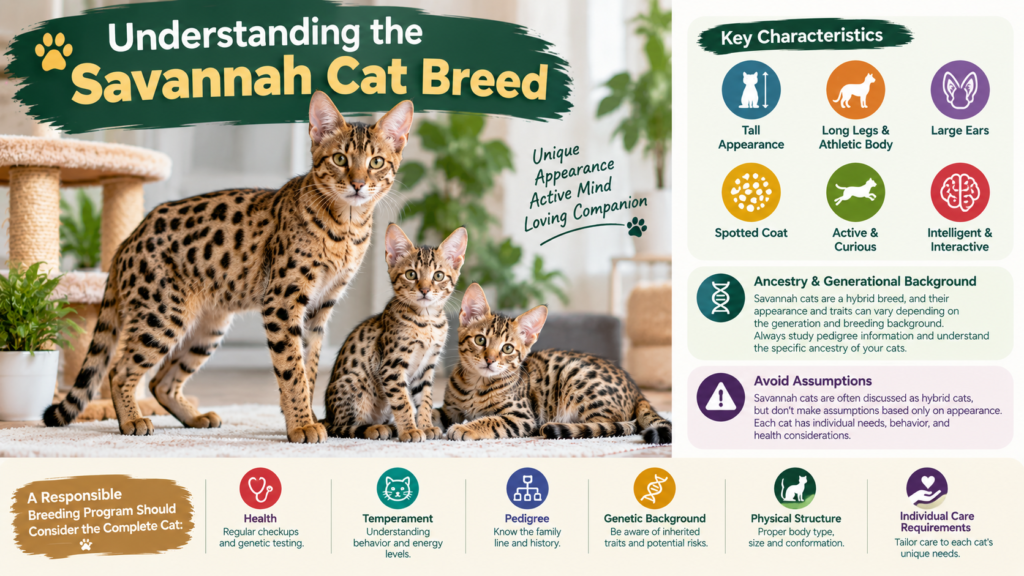
Understanding the breed is one of the first steps in responsible breeding Savannah cats.
Savannah cats are known for their tall appearance, long legs, athletic bodies, large ears, and distinctive spotted coats. They are generally active and curious cats that may require more physical and mental enrichment than some other domestic cat breeds.
Individual personality can vary, but Savannah cats are often described as intelligent, energetic, and highly interactive.
An important part of understanding the breed is learning about its ancestry and generational background. Savannah cats may differ depending on their generation and breeding background.
For this reason, breeders should carefully study pedigree information and understand the specific ancestry of their cats.
Savannah cats are often included in discussions about hybrid cat breeds, but breeders should avoid making assumptions based only on appearance. Each cat can have individual needs, behavior, and health considerations.
A responsible breeding program should consider the complete cat, including:
Health
Temperament
Pedigree
Genetic background
Physical structure
Individual care requirements
Why Breeding Savannah Cats Requires Special Knowledge
Breeding Savannah cats requires special knowledge because of the breed’s ancestry and the additional responsibilities that may be associated with hybrid breeding.
A breeder should understand the history and background of each cat included in the breeding program. Pedigree research can help provide information about ancestry and family relationships.
Breeders should also understand that Savannah cats may not all have identical characteristics. Factors such as ancestry, generation, genetics, and individual temperament can influence a cat’s physical and behavioral traits.
Knowledgeable breeders continue learning about:
Breed history
Genetics
Health considerations
Pedigree research
Animal welfare
Appropriate housing and enrichment
Responsible kitten placement
The more knowledge a breeder has before making decisions, the better prepared they may be to prioritize the welfare of their cats.
Because cat hybrids breeds can involve complex ancestry, breeders should take extra care to research reliable breed-specific information rather than relying only on general information about domestic cats.
Legal Considerations Before Breeding Savannah Cats
Legal research is an important part of breeding Savannah cats.
Rules concerning Savannah cats and other hybrid cat breeds can vary depending on the country, state, province, city, and even local jurisdiction. Some locations may have restrictions based on a cat’s generation or ancestry, while others may have registration, licensing, housing, or ownership requirements.
Before starting a breeding program, breeders should carefully check the current laws and regulations that apply to their location.
Important areas to research may include:
Ownership laws
Breeding restrictions
Generation-specific regulations
Registration requirements
Import and transport rules
Animal welfare regulations
Local housing requirements
Laws can change over time, so responsible breeders should avoid relying on outdated information.
A breeder should always ensure that their activities comply with applicable laws and animal welfare standards.
Choosing Healthy Cats for Breeding Savannah Cats
Selecting healthy cats is one of the most important parts of breeding Savannah cats.
A breeding cat should never be selected only because it has an attractive spotted coat, large ears, or a particularly exotic appearance.
Health, temperament, and genetic background are equally important.
Before selecting a breeding cat, responsible breeders should carefully review:
General health
Veterinary history
Family health history
Pedigree information
Temperament
Physical condition
Genetic background
Responsible breeders should seek appropriate professional guidance when making decisions about the health and suitability of breeding cats.
Accurate records can also help breeders make informed decisions. Health information, pedigree records, veterinary history, and breeding history should be carefully maintained.
A well-organized breeding program focuses on long-term health and welfare rather than simply producing kittens with desirable physical characteristics.
Health Testing Before Breeding Savannah Cats
Health planning is an essential part of responsible breeding Savannah cats.
Before breeding, cats should receive appropriate veterinary care and evaluations based on their individual history and current veterinary recommendations.
The specific health evaluations that may be appropriate can depend on the cat, its ancestry, family health history, and professional veterinary guidance.
Responsible breeders may need to consider:
General veterinary examinations
Appropriate health screening
Family health history
Breed-specific health considerations
Genetic testing where appropriate
Vaccination planning
Parasite prevention and control
Health care should not be viewed as a single step that is completed once.
Responsible breeders should continue monitoring the health and welfare of their cats throughout their lives.
Maintaining detailed records can also help breeders track health information and make more responsible long-term decisions.
Understanding Genetics in Breeding Savannah Cats
Genetics is an important subject for anyone interested in breeding Savannah cats.
A basic understanding of genetics can help breeders better understand inherited traits, family relationships, ancestry, and potential health considerations.
Savannah cats may have complex ancestry compared with many traditional domestic cat breeds. Because of this, breeders should carefully understand pedigree information and the generations represented in their breeding program.
Genetics can influence:
Physical appearance
Coat pattern
Body structure
Certain inherited traits
Health risks
Individual characteristics
However, genetics is more complex than simply selecting two cats with attractive traits.
Responsible breeders should avoid making breeding decisions based only on appearance. A striking spotted coat or wild-looking appearance should never be the only reason for selecting a breeding cat.
Genetic diversity and responsible pedigree management are important considerations for long-term breeding programs.
Because cat hybrids breeds can have different ancestry and breeding backgrounds, professional guidance may be valuable when breeders need help understanding complex genetic or health information.
Understanding Generations and Ancestry
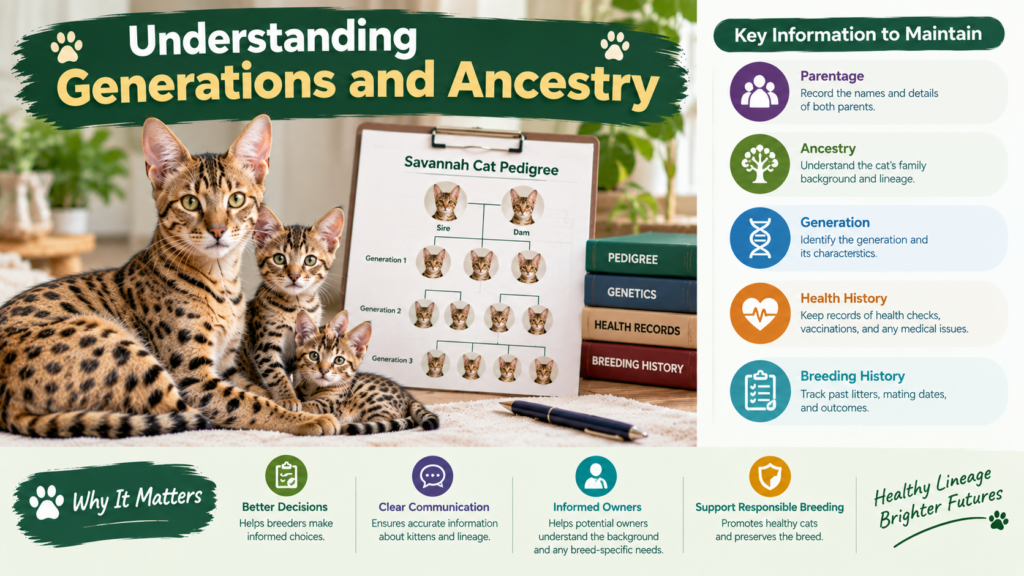
When discussing Savannah cats, understanding generations and ancestry is especially important.
A cat’s pedigree can provide information about its family background and breeding history.
Different generations may have different characteristics and may also be treated differently under certain local regulations.
For responsible breeding Savannah cats, accurate pedigree records are extremely important.
Breeders should carefully maintain information about:
Parentage
Ancestry
Generation
Health history
Breeding history
Understanding ancestry can help breeders make more informed decisions and communicate accurately about their kittens.
It can also help potential owners understand the background of a kitten and any breed-specific considerations they may need to research.
Selecting the Right Pair for Breeding Savannah Cats
Selecting a suitable breeding pair requires careful planning.
Responsible breeding Savannah cats should consider much more than whether two cats have attractive appearances.
Important factors may include:
General health
Veterinary history
Temperament
Pedigree
Genetic background
Family health information
Physical characteristics
Genetic diversity
A responsible breeder should consider whether a potential breeding pair is suitable based on the overall health and welfare of both cats and their potential offspring.
Temperament should also be considered. Savannah cats are often active and intelligent, and individual behavior can vary significantly.
Breeders should avoid selecting cats only because they have a popular appearance.
The goal of a responsible breeding program should be to make thoughtful decisions that prioritize health, welfare, and responsible long-term care.
The Importance of Responsible Record Keeping
Good record keeping is an important part of a responsible breeding program.
Breeders should maintain organized information about their adult cats and kittens.
Useful records may include:
Pedigree information
Veterinary history
Health evaluations
Vaccination records
Breeding history
Kitten development information
Accurate records can help breeders better understand the history of their cats and make informed decisions in the future.
They can also support transparency when communicating with veterinarians, experienced breeders, and future kitten owners.
Responsible Breeding and Animal Welfare
Animal welfare should always be the foundation of breeding Savannah cats.
Savannah cats are visually distinctive and are sometimes included among popular hybrid cat breeds, but responsible breeding should never be driven only by appearance or demand.
Breeders have a responsibility to provide appropriate care, safe housing, enrichment, veterinary support, and long-term planning for the cats in their care.
A responsible breeder should also be prepared to take responsibility for kittens until they are placed in suitable homes.
Ethical breeding requires patience and a willingness to make difficult decisions when the welfare of a cat should come before a breeding goal.
Conclusion: Preparing for Responsible Breeding Savannah Cats
Breeding Savannah cats requires knowledge, preparation, and a serious commitment to animal welfare.
Before beginning a breeding program, it is important to understand the Savannah cat breed, research applicable laws, select healthy cats, maintain proper health records, learn about genetics, understand ancestry, and carefully consider breeding pairs.
Savannah cats are among the best-known hybrid cat breeds, and their ancestry can make responsible research and preparation especially important.
Breeders should never focus only on producing kittens with a particular wild-looking appearance. Health, temperament, genetic responsibility, legal compliance, and animal welfare should always remain the highest priorities.
Breeding Savannah Cats: Pregnancy, Kitten Care and Responsible Practices
After understanding the preparation, health planning, genetics, ancestry, and legal considerations involved in breeding Savannah cats, the next stage is providing responsible care throughout pregnancy, kitten birth, early development, and placement in suitable homes.
Responsible breeding does not end after selecting a suitable breeding pair. Breeders have an ongoing responsibility to protect the welfare of the mother, monitor the development of the kittens, provide appropriate veterinary care, and carefully consider the long-term needs of every kitten.
Savannah cats are among the best-known hybrid cat breeds because of their distinctive ancestry and wild-looking appearance. Their care and breeding responsibilities require careful research, responsible planning, and a strong commitment to animal welfare.
This second part of the guide explains pregnancy care, preparing for kitten birth, raising and socializing kittens, understanding other cat hybrids breeds, responsible ownership, costs, and finding suitable homes.
Preparing for Breeding Savannah Cats
Proper preparation remains important throughout breeding Savannah cats.
Before the breeding process progresses, breeders should ensure that their cats have access to a clean, secure, and appropriate living environment. The environment should support the physical and emotional well-being of the cats.
Responsible preparation may include:
Maintaining clean and secure housing
Providing appropriate enrichment
Reducing unnecessary stress
Keeping accurate health records
Following veterinary recommendations
Preparing for unexpected situations
Breeders should also have a clear plan for veterinary support. Unexpected health concerns can occur, and having access to qualified veterinary professionals is an important part of responsible breeding.
A well-prepared breeder thinks about the welfare of the cats before, during, and after the arrival of kittens.
Pregnancy Care When Breeding Savannah Cats
Pregnancy is an important stage in breeding Savannah cats.
Once pregnancy is confirmed, the health and comfort of the queen should become a major priority. She should have access to a calm, clean, and comfortable environment.
Responsible breeders should monitor the queen’s general condition and follow appropriate veterinary guidance.
Important areas to observe include:
Appetite
General behavior
Body condition
Activity level
Signs of discomfort
Overall health
The pregnant cat should be protected from unnecessary stress. Sudden changes to her environment should be avoided whenever possible.
Appropriate nutrition and veterinary care are also important. Any changes to feeding or health care should be discussed with a qualified veterinary professional.
If the queen shows unusual signs of illness, discomfort, or distress, the breeder should seek professional veterinary advice promptly.
Preparing for Savannah Kitten Birth
Preparing for kitten birth is an important responsibility when breeding Savannah cats.
Before the expected birth, breeders should prepare a quiet, clean, warm, and secure nesting area.
The mother should have a comfortable place where she feels safe and is protected from unnecessary disturbances.
A suitable preparation plan may include:
A clean nesting area
Comfortable and clean bedding
A quiet environment
Appropriate warmth
Easy access to fresh water
Veterinary contact information
Breeders should monitor the mother without causing unnecessary stress.
Although it is important to remain observant, excessive interference can disturb the queen. The goal should be to provide a safe environment while allowing the mother appropriate privacy.
If the mother or kittens show signs of distress, professional veterinary assistance should be sought.
Raising Healthy Savannah Kittens
Raising healthy kittens is one of the most important responsibilities involved in breeding Savannah cats.
During their earliest stages of development, kittens depend heavily on their mother and need a clean, warm, and safe environment.
Breeders should carefully monitor:
Growth
General development
Feeding behavior
Activity
Overall health
Regular observation can help identify concerns early.
If a kitten appears weak, is not developing normally, or shows signs of illness, veterinary guidance should be obtained.
Responsible breeders should also maintain accurate records of each kitten’s development and health care.
Good record keeping may include information about:
Birth details
Growth milestones
Veterinary visits
Health observations
Vaccinations and preventive care
Each kitten develops at its own pace, and breeders should avoid comparing kittens in a way that ignores individual differences.
The main goal should always be to support healthy development and provide appropriate care.
Socializing Savannah Kittens
Early socialization is an important part of raising well-adjusted kittens.
Savannah kittens may grow into active and intelligent cats, making positive and appropriate experiences especially important.
As kittens develop, responsible breeders can gradually provide safe and gentle exposure to normal household experiences.
Appropriate socialization may include:
Gentle interaction with people
Safe and age-appropriate handling
Exposure to normal household sounds
Suitable toys and enrichment
Gradual exploration of safe environments
Socialization should never involve forcing a kitten into stressful situations.
Each kitten has an individual personality, and responsible breeders should observe how each kitten responds to new experiences.
Positive, gradual, and age-appropriate socialization can help prepare kittens for the transition into suitable new homes.
Savannah Cats and Other Hybrid Cat Breeds
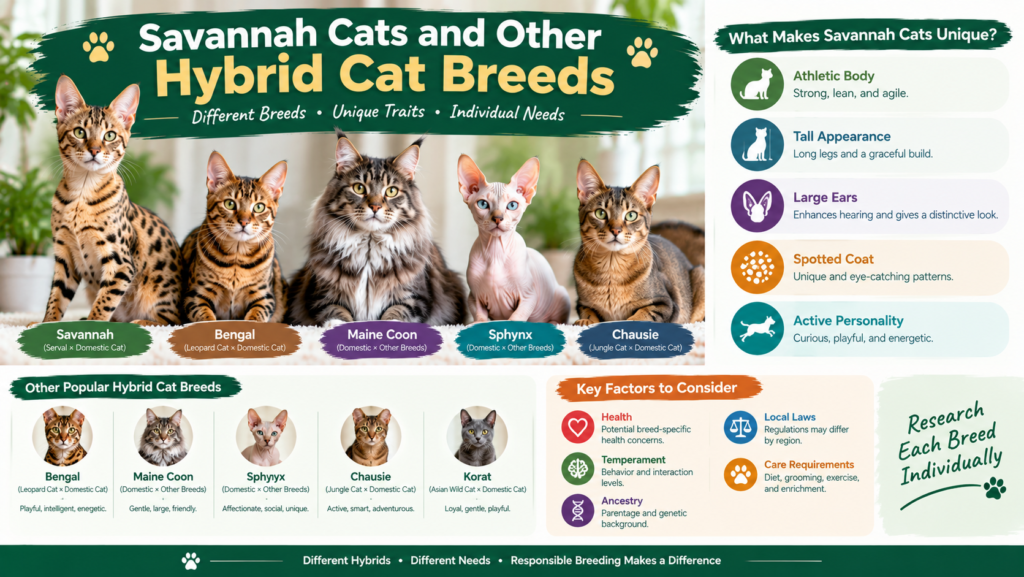
Savannah cats are often discussed alongside other hybrid cat breeds.
Hybrid cats can have different ancestry, physical characteristics, and behavioral traits. For this reason, it is important to research each breed individually.
Savannah cats are known for their:
Athletic body
Tall appearance
Large ears
Spotted coat
Active personality
However, other hybrid cat breeds may have very different characteristics.
A responsible breeder should never assume that all hybrid cats have identical needs simply because they are described as hybrids.
Understanding breed-specific information is important for making responsible breeding and ownership decisions.
Health, temperament, ancestry, local laws, and care requirements can all vary.
Understanding Cat Hybrids Breeds and Responsible Breeding
The phrase cat hybrids breeds is often used when discussing domestic cats with hybrid ancestry.
These breeds can have unique backgrounds and characteristics, making responsible research especially important.
Before working with any hybrid breed, breeders should understand:
The breed’s ancestry
Applicable laws
Health considerations
Housing requirements
Enrichment needs
Veterinary support
Long-term welfare responsibilities
Responsible breeding should never focus only on creating cats with a wild or exotic appearance.
The welfare of the animals should always come first.
Breeders should carefully research their specific breed and follow applicable laws and professional guidance.
Are Savannah Cats Among the Expensive Cat Breeds?
Savannah cats are sometimes included in discussions about expensive cat breeds.
However, the price of a kitten should never be the main reason for entering a breeding program.
Responsible breeding can involve significant costs, including:
Veterinary care
Appropriate housing
Nutrition
Health evaluations
Record keeping
Kitten care
Enrichment
Unexpected medical expenses
The cost of maintaining a responsible breeding program can be substantial.
For this reason, breeders should avoid viewing breeding as an easy way to make money.
A responsible breeding program should focus on health, welfare, and long-term responsibility rather than profit.
Potential owners should also understand that the purchase price of a cat is only one part of the overall cost of ownership.
Food, veterinary care, enrichment, safe housing, and other long-term expenses should also be considered.
Common Mistakes to Avoid When Breeding Savannah Cats
Responsible breeders should understand common mistakes that can negatively affect adult cats and kittens.
Breeding Without Enough Knowledge
Starting breeding Savannah cats without understanding the breed, genetics, ancestry, and legal responsibilities can create serious problems.
Breeders should spend time learning and preparing before making breeding decisions.
Ignoring Local Laws
Because regulations concerning hybrid cats can vary, failing to research current local requirements can lead to serious complications.
Breeders should regularly check the laws that apply to their location and activities.
Focusing Only on Appearance
The wild-looking appearance of Savannah cats is one of the reasons the breed attracts attention.
However, breeding decisions should never be based only on coat pattern, ear size, body shape, or popularity.
Health and temperament should remain major priorities.
Poor Health Planning
Ignoring veterinary guidance or failing to maintain health records can make responsible breeding more difficult.
Breeders should keep organized health information and seek professional advice when needed.
Poor Record Keeping
Accurate records are important for understanding ancestry, health history, breeding history, and kitten development.
Incomplete records can create difficulties for breeders and future owners.
Inadequate Kitten Socialization
Kittens need positive and age-appropriate experiences as they grow.
A lack of proper socialization may make it more difficult for a kitten to adjust to a new environment.
Finding Homes Without Proper Screening
Not every potential owner may be prepared for the needs of a Savannah cat.
Responsible breeders should take time to communicate with potential owners and discuss whether the breed is suitable for their lifestyle and environment.
Finding Responsible Homes for Savannah Kittens
Finding suitable homes is an important final stage of breeding Savannah cats.
Breeders should carefully communicate with potential owners and provide accurate information about the kitten and the breed.
Potential owners should understand that Savannah cats may require significant time, interaction, enrichment, and responsible care.
Important topics to discuss may include:
General personality and activity level
Enrichment needs
Veterinary responsibilities
Nutrition
Safe housing
Time and attention requirements
Local legal requirements
Responsible breeders should also provide accurate information about the kitten’s health care and background.
Careful communication and appropriate screening can help breeders place kittens in homes that are better prepared for long-term ownership.
Is Breeding Savannah Cats Right for You?
Before beginning or continuing breeding Savannah cats, it is important to consider whether you are prepared for the responsibility.
A love for cats alone is not enough to operate a responsible breeding program.
Potential breeders should consider:
Their level of knowledge and experience
Available time
Financial resources
Suitable housing
Access to veterinary care
Understanding of genetics
Legal responsibilities
Ability to care for kittens
Long-term commitment to animal welfare
Unexpected situations can occur, and responsible breeders must be prepared to respond appropriately.
The welfare of the cats should always be more important than popularity or potential profit.
Frequently Asked Questions About Breeding Savannah Cats
Is Breeding Savannah Cats Difficult?
Breeding Savannah cats requires knowledge, careful planning, veterinary support, understanding of genetics and ancestry, and a strong long-term commitment to animal welfare.
Are Savannah Cats Hybrid Cat Breeds?
Savannah cats are commonly discussed among hybrid cat breeds because of their ancestry. However, individual cats can have different generational backgrounds, and breeders should understand the specific pedigree and ancestry of their cats.
Are There Special Laws About Breeding Savannah Cats?
Laws can vary depending on the country, state, province, city, and local jurisdiction. Some areas may have rules or restrictions related to hybrid ancestry or specific generations. Breeders should always check current local laws before breeding or owning Savannah cats.
What Health Checks Should Be Considered Before Breeding Savannah Cats?
The appropriate health evaluations can depend on the individual cat, family history, ancestry, and veterinary recommendations. Responsible breeders should work with qualified veterinary professionals to determine appropriate health care and screening.
How Are Savannah Cats Different From Other Cat Hybrids Breeds?
Savannah cats have their own ancestry, physical characteristics, personality traits, and care considerations. Other cat hybrids breeds may have different backgrounds and needs, so each breed should be researched individually.
Are Savannah Cats Among Expensive Cat Breeds?
Savannah cats are sometimes included in discussions about expensive cat breeds. However, the cost of a kitten can vary depending on many factors, including ancestry, breeding practices, location, veterinary care, and other expenses.