

 By
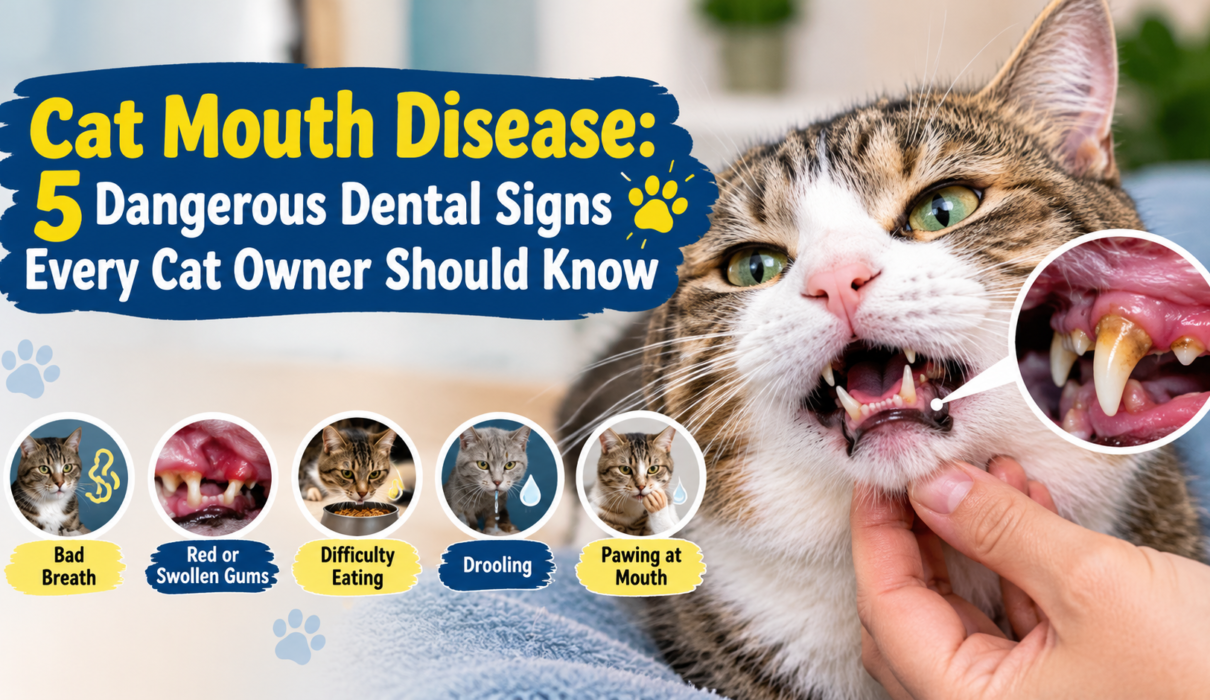
Cat Mouth Disease: 5 Dangerous Dental Signs Every Cat Owner Should Know
Introduction: Understanding Cat Mouth Disease
Cat mouth disease is a common health concern that can affect a cat’s teeth, gums, tongue, and other tissues inside the mouth. Although many cat owners focus on their pets’ diet, vaccinations, and general health, dental care is sometimes overlooked. Unfortunately, untreated dental problems can cause significant pain, difficulty eating, and damage to the tissues that support the teeth.
Cats are naturally good at hiding discomfort. A cat with dental disease may continue playing, sleeping, and interacting with family members even when its mouth hurts. As a result, owners may not recognize a problem until it becomes more serious.
Some early warning signs include persistent bad breath, red or swollen gums, excessive drooling, difficulty chewing, and changes in eating habits. These symptoms may indicate gingivitis, periodontal disease, tooth resorption, or another oral condition that requires veterinary attention.
Understanding the signs of dental disease in cats can help you recognize potential problems before they progress. This guide explains five dangerous dental signs, why they occur, and when your cat should be examined by a veterinarian.
What Is Cat Mouth Disease and Why Is It Dangerous?
Cat mouth disease refers to different conditions that affect the mouth and surrounding dental structures. These conditions range from mild gum inflammation to painful diseases that damage teeth and the tissues supporting them.
Some oral problems develop gradually, while others can cause sudden discomfort. Because cats cannot tell us when something hurts, observing their behavior and oral health is essential.
Common Types of Cat Mouth Disease
Several dental and oral conditions can affect cats.
Gingivitis: Gingivitis is inflammation of the gums, often associated with plaque buildup along the gumline. The gums may appear red, swollen, or irritated. Early gingivitis may be reversible with appropriate professional treatment and dental care.
Periodontal disease: Cat periodontal disease develops when inflammation and infection affect the tissues supporting the teeth. In advanced cases, these tissues and the surrounding bone may be damaged, causing teeth to loosen or fall out.
Tooth resorption: Tooth resorption occurs when a cat’s body gradually breaks down the structure of a tooth. It can be extremely painful, and some affected teeth may appear normal until a veterinarian examines them closely.
Feline stomatitis: This condition involves severe inflammation inside the mouth, sometimes affecting the gums and tissues toward the back of the mouth. Cats may experience significant pain, drooling, and difficulty eating.
Oral infections and dental abscesses: Infections involving damaged teeth or their roots can cause pain, swelling, and other symptoms. These problems generally require professional diagnosis and treatment.
Why Untreated Cat Mouth Disease Can Be Serious
Dental disease is not simply a cosmetic problem. Plaque accumulation can contribute to gum inflammation, while advanced periodontal disease can permanently damage the structures supporting the teeth.
A cat experiencing oral pain may eat less, avoid hard food, drop food while chewing, or stop grooming normally. If the cat cannot eat or drink adequately, dehydration and other health complications may develop.
Some oral conditions also cause persistent inflammation and require specialized treatment. The appropriate treatment depends on the underlying cause, which is why a veterinary examination is important.
Important: If your cat has difficulty breathing or swallowing, uncontrolled bleeding, or significant facial swelling, seek urgent veterinary care.
Cat Mouth Disease: 5 Dangerous Dental Signs to Watch For
Recognizing the warning signs of cat mouth disease is one of the best ways to protect your pet’s oral health. The following five symptoms deserve particular attention or cat mouth disease.
Bad Breath as an Early Sign of Cat Mouth Disease
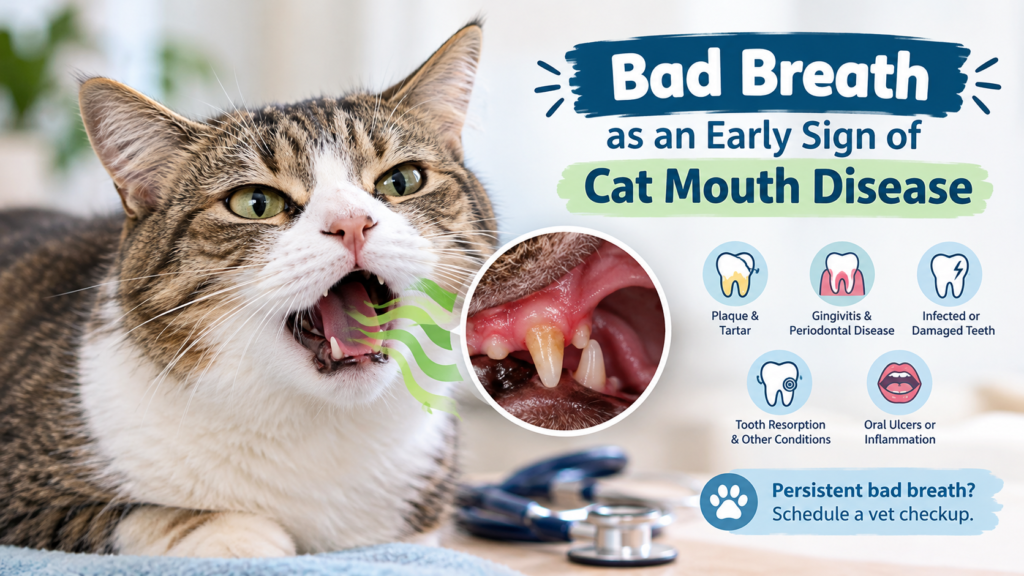
A cat’s breath may not always smell pleasant, but persistent, unusually strong, or foul-smelling breath should not be ignored.
Bad breath, also called halitosis, is commonly associated with dental problems. Bacteria can accumulate in plaque around the teeth and gumline, producing unpleasant odors. As dental disease progresses, inflammation, infected tissues, or damaged teeth may make the smell more noticeable.
Common Causes of Bad Breath in Cats
Several conditions may contribute to persistent bad breath, including:
- Plaque and tartar accumulation.
- Gingivitis and periodontal disease.
- Infected or damaged teeth.
- Tooth resorption and other painful oral conditions.
- Oral ulcers or inflammation.
The smell alone cannot identify the exact cause. A veterinarian must examine the cat to determine whether dental disease or another health problem is responsible.
Other Symptoms to Watch For
Bad breath becomes more concerning when it occurs alongside other changes, such as:
- Red or swollen gums.
- Drooling more than usual.
- Difficulty chewing food.
- Pawing at the mouth.
- Reduced appetite.
- Visible discomfort when eating.
Even if your cat continues eating normally, persistent bad breath deserves a veterinary dental examination.
What Should You Do?
Arrange a veterinary appointment if your cat develops persistent foul breath. Your veterinarian may examine the gums and teeth and recommend dental X-rays or professional cleaning if necessary.
Do not use human toothpaste, mouthwash, or breath-freshening products on your cat unless a veterinarian specifically confirms that a product is safe for feline use.
Red, Swollen, or Bleeding Gums
Healthy cat gums are generally pink, although natural pigmentation can cause some cats to have darker areas. Redness, swelling, tenderness, or bleeding around the teeth can indicate inflammation or dental disease.
One common cause is gingivitis, which often develops when plaque accumulates along the gumline. Plaque contains bacteria that can irritate the surrounding tissues. If plaque hardens into tartar, professional dental treatment may be necessary to remove it or cat mouth disease.
How to Recognize Gum Problems
Watch for the following signs:
- Redness where the teeth meet the gums.
- Swollen or irritated gum tissue.
- Bleeding during eating or toothbrushing.
- Discomfort when the face or mouth is touched.
- Persistent bad breath.
- Changes in chewing behavior.
Some cats may resist having their mouths examined because the area is painful. Never force your cat’s mouth open if doing so causes distress.
The Connection Between Gum Inflammation and Cat Periodontal Disease Stages
Gingivitis can be an early warning sign of dental disease. At this stage, inflammation is limited to the gums and may be reversible with appropriate treatment.
However, if the condition progresses to periodontitis, the tissues that hold the teeth in place can become damaged. This damage may eventually lead to loose teeth, gum recession, and tooth loss.
Recognizing gum inflammation early is important because treatment can help prevent further progression. Only a veterinary examination, sometimes including dental X-rays, can establish how much damage has occurred below the gumline.
How Are Inflamed Gums Treated?
Treatment depends on the severity and cause of the inflammation. A veterinarian may recommend professional dental cleaning, removal of plaque and tartar, treatment of affected teeth, and a suitable home dental-care routine.
If your cat has bleeding gums, severe redness, or signs of oral pain, arrange a veterinary examination rather than waiting for the symptoms to disappear.
Difficulty Chewing or Refusing Food
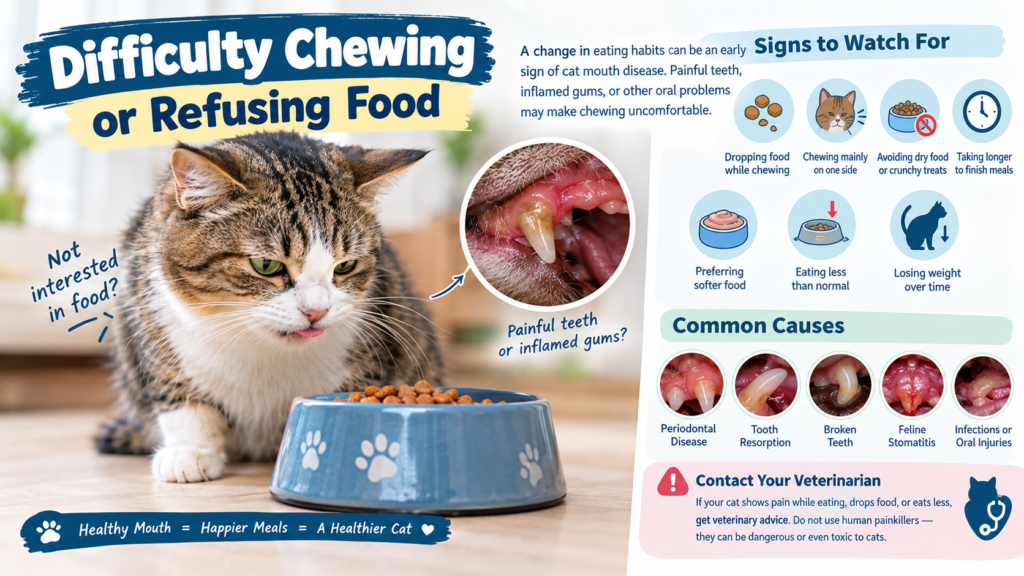
A change in eating habits is another important sign of cat mouth disease. Cats with painful teeth or inflamed gums may want to eat but find chewing uncomfortable.
Some cats approach their food bowl, sniff the food, and walk away. Others may begin eating and then suddenly stop. These behaviors can be mistaken for picky eating, but they may indicate a dental problem.
Signs Your Cat May Have Dental Pain
Look for these changes:
- Dropping pieces of food while chewing.
- Chewing mainly on one side of the mouth.
- Avoiding dry food or crunchy treats.
- Taking longer than usual to finish meals.
- Preferring softer food.
- Eating less than normal.
- Losing weight over time.
Not every cat with dental disease shows all these symptoms. Some continue eating despite considerable discomfort, so normal appetite does not completely rule out an oral problem.
What Can Cause Pain While Eating?
Difficulty chewing may be associated with several conditions, including:
Periodontal disease: Inflammation and damage around the teeth can make chewing painful.
Tooth resorption: Affected teeth may become highly sensitive and painful.
Broken teeth: Fractures can expose sensitive inner tooth structures and cause discomfort.
Feline stomatitis: Severe inflammation inside the mouth may make eating difficult.
Oral injuries or infections: Wounds, ulcers, and infected tissues can also interfere with eating.
A veterinary examination is needed to distinguish dental disease from other causes, including nausea, digestive problems, and illnesses that reduce appetite.
When Should You Contact a Veterinarian?
Contact your veterinarian promptly if your cat shows pain while eating, repeatedly drops food, or develops a noticeable reduction in appetite.
If your cat stops eating altogether, seek veterinary advice the same day. Cats that go without adequate food can develop serious complications, particularly when they are overweight or already unwell.
Do not attempt to treat suspected dental pain with human painkillers. Medications such as acetaminophen are highly toxic to cats, and other human medicines may also be dangerous.
Excessive Drooling and Pawing at the Mouth
A small amount of saliva may be normal in some relaxed cats, but sudden or persistent excessive drooling can indicate a medical problem.
When drooling occurs alongside pawing at the mouth, difficulty eating, or unusual behavior, oral pain should be considered. These signs may be associated with tooth resorption, severe gum inflammation, stomatitis, oral injuries, or dental infections.
However, drooling is not always caused by dental disease. Nausea, exposure to irritating or toxic substances, and other medical conditions can also cause excessive saliva.
Warning Signs Associated With Drooling
Pay attention if your cat:
- Has saliva dripping from the mouth.
- Develops unusually wet fur around the chin.
- Repeatedly paws or rubs its face.
- Shakes its head or avoids having its mouth touched.
- Has blood in its saliva.
- Shows difficulty swallowing.
- Becomes reluctant to eat or groom.
Blood in the saliva, sudden severe drooling, or obvious pain should be assessed promptly by a veterinarian.
Why Can Cat Mouth Disease Cause Drooling?
Inflamed or damaged oral tissues can make swallowing uncomfortable. Some cats produce more saliva when they experience pain, irritation, or nausea or cat mouth disease.
In feline stomatitis, inflammation may be so severe that even opening the mouth or attempting to eat causes distress. Tooth resorption can also produce significant pain, even when the affected tooth does not look obviously damaged.
If drooling starts suddenly after your cat may have chewed a plant, encountered a chemical, or swallowed an unfamiliar substance, treat it as a possible poisoning or exposure emergency. Do not induce vomiting or give home remedies without veterinary instructions.
How Is Excessive Drooling Treated?
Treatment depends on the underlying cause. A veterinarian may examine the mouth, evaluate the teeth and gums, and recommend further tests.
Depending on the diagnosis, treatment may include professional dental care, extraction of severely affected teeth, appropriate pain relief, or treatment for another medical condition.
Seek urgent care if drooling is accompanied by difficulty breathing or swallowing, collapse, severe weakness, or suspected toxin exposure or cat mouth disease.
Loose Teeth, Facial Swelling, or Visible Oral Pain
Loose teeth, facial swelling, and obvious mouth pain can indicate advanced dental disease or another significant oral problem.
Adult cats should not routinely lose their permanent teeth. Although kittens normally lose baby teeth as they grow, loose teeth in an adult cat require veterinary assessment.
Periodontal disease can damage the tissues and bone that support teeth. Other causes of tooth mobility or oral pain include tooth resorption, fractures, infections, and injuries.
Signs of Advanced Cat Mouth Disease
Look for symptoms such as:
- A visibly loose or damaged tooth.
- Swelling around the cheek, jaw, or face.
- Bleeding from the mouth.
- Severe bad breath.
- Difficulty opening the mouth.
- Reluctance to eat or groom.
- Hiding or withdrawing from normal activities.
- Flinching when the face is touched.
Facial swelling can sometimes indicate a tooth-root infection or abscess, but other conditions can produce similar signs. A veterinarian must identify the cause.
Why Facial Swelling Should Not Be Ignored
A dental infection may cause pain and swelling in the tissues around an affected tooth. Without appropriate treatment, the problem can worsen and interfere with eating and general well-being.
Facial swelling is not proof of a dental abscess, and it should not be squeezed or punctured at home. Swelling can have other causes that require different treatments.
If your cat develops facial swelling, visible oral pain, or a loose adult tooth, arrange prompt veterinary care. Seek emergency treatment if the swelling is severe, bleeding cannot be controlled, or breathing or swallowing becomes difficult.
What Treatment May Be Necessary?
Treatment depends on the examination findings. A veterinarian may recommend dental X-rays, professional cleaning, extraction of a severely damaged tooth, drainage or other treatment for an infection, and suitable pain management.
Some cats with advanced periodontal disease require the removal of affected teeth to relieve pain and control disease. With appropriate treatment and follow-up care, many cats can remain comfortable and enjoy a good quality of life.
Cat Periodontal Disease Stages: From Gingivitis to Advanced Damage
Understanding the cat periodontal disease stages can help cat owners recognize how dental problems may progress over time. Periodontal disease affects the tissues that support the teeth, including the gums, periodontal ligament, and surrounding bone. It often begins with plaque accumulation and gum inflammation but can eventually cause permanent damage if left untreated or cat mouth disease.
Cats may continue eating and behaving normally even when periodontal disease is present. This makes regular veterinary dental examinations especially important.
Periodontal disease is not the same as gingivitis. Gingivitis affects the gums and may be reversible with appropriate treatment, while periodontitis involves damage to the supporting structures around the teeth.
Stage 1: Early Gingivitis
Early gingivitis is the initial stage of gum inflammation. It commonly develops when plaque accumulates along the gumline and irritates the surrounding tissues.
Common signs include:
- Slight redness along the gumline.
- Mild gum swelling.
- Persistent bad breath.
- Early plaque accumulation.
- Occasional discomfort when the mouth is touched.
At this stage, the supporting structures of the teeth have not been damaged by periodontitis. With appropriate professional cleaning and consistent dental care, gingivitis can often be reversed or cat mouth disease.
Cat owners should not assume that mild redness is harmless. Early treatment can help prevent the condition from progressing.
Stage 2: Early Periodontitis
Early periodontitis develops when inflammation begins damaging the tissues supporting the teeth. The gums may start separating from the teeth, creating pockets where bacteria can accumulate.
Possible signs include:
- More noticeable gum inflammation.
- Persistent bad breath.
- Increased plaque and tartar.
- Gum pockets detected during a veterinary examination.
- Subtle discomfort while chewing.
Damage to the supporting tissues is not necessarily reversible, although appropriate treatment can help control the disease and prevent further deterioration.
A veterinarian may recommend a professional dental cleaning under anesthesia and dental X-rays to assess the structures beneath the gumline.
Stage 3: Moderate Periodontitis
Moderate periodontitis involves more substantial damage to the tissues supporting the teeth. Gum recession and bone loss may become more apparent during a professional dental examination.
Possible warning signs include:
- Noticeable gum recession.
- Persistent or worsening bad breath.
- Increased discomfort while eating.
- Gum pockets containing bacteria.
- Early tooth mobility in affected areas.
Some cats may begin dropping food or avoiding crunchy food. However, the absence of these symptoms does not rule out significant dental disease.
Treatment depends on the severity of the damage. Professional cleaning and treatment below the gumline may be necessary, and some teeth may require extraction if they cannot be preserved comfortably.
Stage 4: Advanced Periodontitis
Advanced periodontitis involves substantial damage to the structures supporting the teeth. Affected teeth may become loose, and some may eventually fall out or cat mouth disease.
Possible signs include:
- Severe gum recession.
- Loose or damaged teeth.
- Significant oral discomfort.
- Persistent foul breath.
- Difficulty chewing.
- Reduced appetite.
- Bleeding or inflamed gum tissue.
Cats with advanced periodontal disease need prompt veterinary dental care. Depending on the findings, severely affected teeth may need to be extracted to relieve pain and control the disease.
The damage caused by advanced periodontitis is generally permanent. However, appropriate treatment can improve comfort and help cats maintain a good quality of life.
Important note: Veterinary dental grading systems can vary. The four sections above are a simplified educational overview, not a substitute for a professional diagnosis. A veterinarian must examine the mouth and may need dental X-rays to determine the extent of periodontal damage.
Other Common Types of Cat Mouth Disease
Periodontal disease is only one possible cause of oral discomfort. Several other conditions can affect a cat’s teeth, gums, tongue, and surrounding tissues.
Recognizing these conditions can help owners understand why different cats may develop different symptoms.
Gingivitis in Cats
Gingivitis is inflammation of the gums, often associated with plaque accumulation. The gum tissue may appear red, swollen, or irritated.
Some cats have mild symptoms, while others experience more noticeable discomfort. If gingivitis is not treated appropriately, it may coexist with or contribute to more serious dental problems.
Veterinary treatment may include professional cleaning and recommendations for ongoing oral hygiene. If inflammation persists despite appropriate care, the veterinarian may investigate other contributing conditions.
Cat Periodontal Disease
Cat periodontal disease affects the tissues that hold the teeth in place. It develops when inflammation progresses beyond the gums and damages supporting structures.
Plaque contains bacteria that can irritate the gumline. When plaque hardens into tartar, professional removal is usually necessary. Tartar cannot be safely or effectively removed by simply brushing the visible tooth surface.
Common signs include bad breath, gum inflammation, chewing changes, and loose teeth in advanced cases.
Regular veterinary dental examinations and appropriate home care can help manage periodontal disease. Once supporting tissues have been damaged, treatment aims to control the disease, relieve discomfort, and preserve or remove teeth as appropriate.
Tooth Resorption in Cats
Tooth resorption is a common and often painful feline dental condition in which the tooth structure is gradually broken down.
Some affected teeth develop lesions near the gumline. Other lesions remain hidden beneath the gums or are difficult to identify during an ordinary visual examination.
Possible signs include:
- Difficulty eating.
- Jaw chattering when the affected area is touched.
- Dropping food.
- Oral sensitivity.
- Changes in eating habits.
Some cats show few obvious signs despite having painful lesions.
Dental X-rays are important for diagnosing tooth resorption and determining the appropriate treatment. Affected teeth often require extraction or another specific veterinary procedure based on the type and extent of resorption.
Feline Stomatitis
Feline stomatitis is a severe inflammatory condition affecting tissues inside the mouth. In some cats, inflammation extends beyond the gumline and causes substantial pain.
Possible symptoms include:
- Excessive drooling.
- Difficulty eating.
- Pawing at the mouth.
- Blood-tinged saliva.
- Weight loss.
- Reduced grooming.
- Irritability or hiding.
Stomatitis may be associated with an abnormal inflammatory response, and its exact cause is not always straightforward. It is not simply another name for routine gingivitis or cat mouth disease.
Treatment can involve pain management, treatment of associated dental disease, and extraction of some or many teeth in cases where this is recommended by a veterinary specialist. Some cats need ongoing medical management.
Oral Infections and Dental Abscesses
An oral infection may develop around a damaged tooth or its root. A dental abscess can cause significant pain and swelling, sometimes affecting the face.
Possible signs include:
- Facial swelling.
- Pain when chewing.
- Foul breath.
- Reduced appetite.
- Sensitivity around the mouth.
Facial swelling is not always caused by a dental abscess, so veterinary assessment is essential. Treatment may involve addressing the affected tooth, draining an infection when appropriate, and providing suitable medication.
Do not squeeze a swelling, attempt to drain it, or give antibiotics without veterinary guidance.
What Causes Cat Mouth Disease?
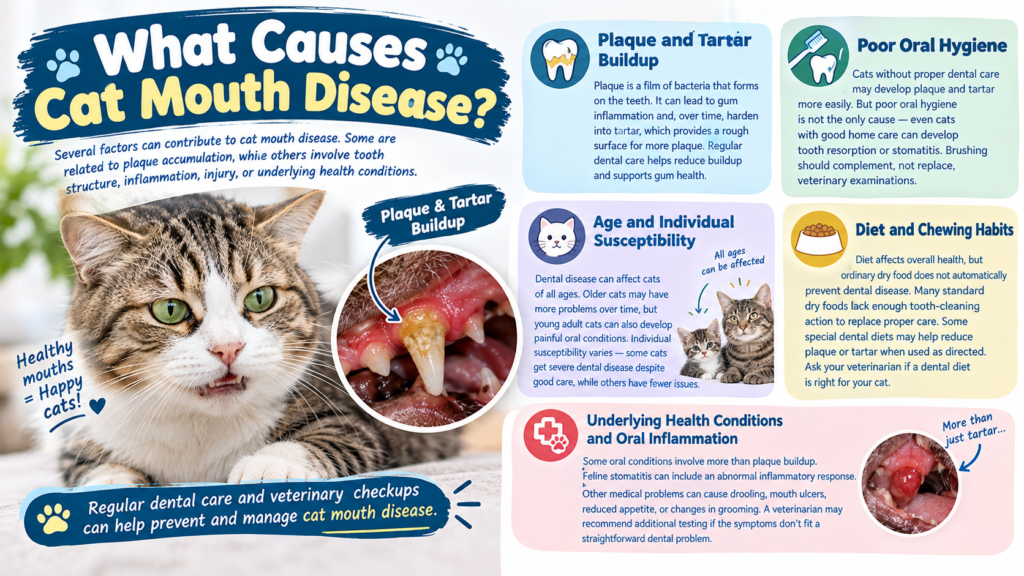
Several factors can contribute to cat mouth disease. Some are related to plaque accumulation, while others involve tooth structure, inflammation, injury, or underlying health conditions.
Plaque and Tartar Buildup
Plaque is a film containing bacteria that forms on the teeth. When it accumulates along the gumline, it can contribute to gum inflammation or cat mouth disease.
Over time, plaque can harden into tartar. Tartar provides a rough surface where additional plaque may accumulate and is difficult to remove through home brushing alone.
Regular dental care can help reduce plaque accumulation and support gum health.
Poor Oral Hygiene
Cats that do not receive appropriate dental care may develop plaque and tartar more readily. However, poor oral hygiene is not the only explanation for feline dental disease.
Even cats receiving attentive home care can develop conditions such as tooth resorption or stomatitis. This is why brushing should complement, rather than replace, veterinary examinations.
Age and Individual Susceptibility
Dental disease can affect cats of different ages. Older cats may have accumulated more dental problems over time, but young adult cats can also develop painful oral conditions.
Individual susceptibility varies. Some cats develop substantial dental disease despite apparently good care, while others show fewer problems.
Diet and Chewing Habits
Diet influences overall health, but ordinary dry food does not automatically prevent dental disease. Many standard dry foods do not provide enough tooth-cleaning action to replace proper dental care.
Some specially formulated dental diets have been designed to help reduce plaque or tartar when used as directed. Ask your veterinarian whether an appropriate dental diet is suitable for your cat.
Underlying Health Conditions and Oral Inflammation
Some oral conditions involve more than plaque accumulation. Feline stomatitis, for example, can involve an abnormal inflammatory response.
Other medical problems can also cause drooling, mouth ulcers, reduced appetite, or changes in grooming. A veterinarian may recommend additional testing if the symptoms do not fit a straightforward dental problem.
How Veterinarians Diagnose Cat Mouth Disease
A veterinary examination helps identify the cause of oral symptoms and determine how severe the problem may be.
Because some dental damage occurs beneath the gumline, looking at the visible teeth alone is not always enough.
Physical Examination of the Mouth
The veterinarian may assess:
- Gum color and inflammation.
- Visible plaque and tartar.
- Broken, loose, or damaged teeth.
- Oral ulcers and abnormal growths.
- Signs of pain or swelling.
- Changes affecting the tongue and other oral tissues.
If a cat is painful or frightened, a complete examination may require sedation or anesthesia under veterinary supervision.
Dental X-Rays
Dental X-rays allow veterinarians to assess structures that cannot be seen clearly during an ordinary oral examination.
They can help identify problems such as tooth-root disease, tooth resorption, and bone loss associated with periodontal disease.
Dental imaging is particularly useful when a tooth appears normal externally but the cat shows signs of oral pain.
Professional Dental Examination and Cleaning
A comprehensive dental procedure may involve examining the teeth individually, measuring periodontal pockets, removing plaque and tartar, and evaluating areas beneath the gumline.
Professional dental cleaning is generally performed under anesthesia so the veterinary team can examine and clean the teeth thoroughly and safely.
Additional tests may be recommended depending on the cat’s age, general health, and suspected condition.
Cat Mouth Disease Treatment Options
Treatment depends on the specific diagnosis, the severity of the condition, and the cat’s overall health. There is no single treatment that works for every type of feline oral disease.
Professional Dental Cleaning
Professional cleaning removes plaque and tartar from the teeth and gumline. It can help manage gingivitis and is often part of treatment for periodontal disease.
Cleaning alone may not be sufficient when teeth are severely damaged or infection is present beneath the gumline.
Tooth Extraction
Extraction may be recommended when a tooth is severely damaged, affected by advanced periodontal disease, or painful because of tooth resorption.
Although tooth removal may sound worrying, it can significantly improve comfort when diseased teeth are causing persistent pain. Cats can often adapt well after appropriate dental treatment.
Veterinary-Prescribed Pain Relief
Pain management is important for cats with inflamed gums, damaged teeth, stomatitis, or oral infections.
Only medications specifically selected by a veterinarian should be given. Human painkillers can be toxic to cats, even in small amounts or cat mouth disease.
Treatment for Infections and Inflammatory Conditions
The veterinarian may recommend specific treatment for an infection or an inflammatory oral condition.
Antibiotics are not necessary for every dental problem and should only be used when clinically indicated. Severe stomatitis may require a longer-term treatment plan, including dental procedures and follow-up care.
Follow-Up Examinations
Dental treatment does not eliminate the need for future care. Cats may require repeat examinations, continued home hygiene, and additional treatment depending on the underlying condition.
Follow your veterinarian’s instructions about feeding after dental procedures, medication, and the timing of follow-up appointments.
How to Prevent Cat Mouth Disease at Home
Although not every oral condition can be prevented, consistent dental care can help reduce plaque accumulation and make it easier to recognize problems early.
Brush Your Cat’s Teeth Regularly
Brushing is one of the most useful ways to reduce plaque when performed correctly and consistently.
To introduce brushing:
- Let your cat become comfortable with gentle handling around the face.
- Gradually introduce a cat-safe toothbrush or finger brush.
- Use toothpaste formulated specifically for cats.
- Start with short sessions and reward calm behavior.
- Increase the duration gradually as your cat becomes comfortable.
Never use human toothpaste because its ingredients may be unsafe for cats.
If your cat has painful gums or suspected dental disease, ask your veterinarian before beginning brushing.
Use Veterinarian-Recommended Dental Products
Dental diets, treats, and oral-care products may help support dental hygiene when they are appropriately selected.
Look for products specifically designed for feline dental health, and consult your veterinarian about suitability. Dental products should complement regular veterinary care rather than replace it.
Schedule Regular Veterinary Dental Checkups
Regular examinations allow a veterinarian to identify plaque, gum inflammation, damaged teeth, and other abnormalities.
The appropriate examination frequency depends on your cat’s age, dental history, and individual risk factors. Some cats need more frequent assessments than others.
Monitor Eating and Grooming Behavior
Changes in daily behavior can provide useful clues about oral health.
Pay attention to bad breath, drooling, dropping food, reluctance to chew, and reduced grooming. If you notice a persistent change, arrange a veterinary examination rather than waiting for more severe symptoms.
Avoid Unsafe Home Remedies
Do not scrape tartar off your cat’s teeth with household tools. This can injure the gums and damage tooth surfaces.
Avoid essential oils, human mouthwash, unprescribed medications, and online remedies that have not been confirmed as safe by a veterinarian.
Signs of Dental Disease in Cats: Early vs. Advanced Symptoms
The signs of dental disease in cats can vary depending on the affected teeth, the severity of inflammation, and the individual cat. Some cats show obvious changes, while others hide their discomfort.
Knowing the difference between early warning signs and more serious symptoms can help you decide when to arrange veterinary care.
Early Signs of Cat Mouth Disease
Early signs may include:
- Mild but persistent bad breath.
- Slight redness along the gumline.
- Visible plaque or tartar.
- Subtle changes in chewing.
- Mild reluctance to have the mouth touched.
Early gingivitis may be reversible with appropriate veterinary treatment and ongoing dental care. Plaque and tartar should not be ignored, even if the cat appears comfortable.
Advanced Signs of Cat Mouth Disease
More serious warning signs may include:
- Markedly inflamed or bleeding gums.
- Persistent drooling or blood-tinged saliva.
- Repeatedly dropping food.
- Refusing food because of mouth pain.
- Loose teeth or tooth loss.
- Facial swelling.
- Significant weight loss or reduced grooming.
These signs may indicate advanced dental disease or another serious condition. They require prompt veterinary assessment.
Early vs. Advanced Dental Symptoms
| Early warning signs | More serious warning signs |
| Mild bad breath | Persistent foul-smelling breath |
| Slight gum redness | Marked inflammation or bleeding |
| Plaque accumulation | Loose or damaged teeth |
| Occasional chewing changes | Refusal to eat or severe pain |
| Subtle mouth discomfort | Facial swelling or persistent drooling |
This comparison is a general guide, not a diagnostic tool. A cat can have significant dental disease without showing dramatic symptoms, and the severity cannot reliably be determined by appearance alone.
How to Monitor Your Cat’s Oral Health
Observe your cat’s eating habits, grooming behavior, and general activity. If your cat comfortably allows it, briefly look at the visible teeth and gums without forcing the mouth open or cat mouth disease.
Watch for changes in breath, gum color, drooling, and chewing. Keep track of when symptoms began and whether they are becoming more frequent.
Regular veterinary examinations are important because disease may develop below the gumline, where it cannot be seen during a home check. Your veterinarian can determine whether a professional dental examination, cleaning, or dental X-rays are needed.
Remember: Cats often hide pain. Do not wait for a loose tooth or refusal to eat before seeking help for persistent bad breath, gum inflammation, or other oral changes.
Cat Mouth Disease: 5 Dangerous Dental Signs Guide (Part 2)
When Is Cat Mouth Disease an Emergency?
Some oral symptoms require urgent veterinary attention because they may indicate severe pain, infection, injury, or another medical emergency.
Seek Emergency Veterinary Care If Your Cat Has:
- Difficulty breathing.
- Severe difficulty swallowing.
- Uncontrolled oral bleeding.
- Rapidly developing or severe facial swelling.
- Collapse or profound weakness.
- Suspected exposure to a toxic substance.
Difficulty breathing is an emergency regardless of whether dental disease is suspected.
Contact a Veterinarian Promptly for These Signs
- Refusing food.
- Persistent excessive drooling.
- Blood in the saliva.
- A loose adult tooth.
- Pain when chewing.
- Persistent foul breath accompanied by other symptoms.
- Noticeable weight loss or reduced grooming.
If your cat stops eating, contact a veterinarian the same day for guidance. Do not wait several days to see whether the problem resolves on its own.
Frequently Asked Questions About Cat Mouth Disease
1. What Are the First Signs of Cat Mouth Disease?
Early signs may include persistent bad breath, red gums, plaque accumulation, and subtle changes in chewing. Some cats continue eating normally even when dental disease is present, so regular veterinary examinations are important.
2. What Are the Most Common Signs of Dental Disease in Cats?
Common signs include bad breath, inflamed or bleeding gums, drooling, difficulty chewing, dropping food, and reduced appetite. Loose teeth and facial swelling may indicate a more serious problem that requires prompt veterinary attention.
3. What Are the Cat Periodontal Disease Stages?
Periodontal disease progresses from inflammation of the gums to damage involving the tissues supporting the teeth. A simplified progression includes early gingivitis, early periodontitis, moderate periodontitis, and advanced periodontitis. Veterinary grading systems can vary, and dental examinations and X-rays may be needed to assess severity.
4. Can Cat Mouth Disease Cause Bad Breath?
Yes. Plaque, tartar, gum inflammation, damaged teeth, and oral infections can contribute to persistent bad breath. If your cat develops unusually foul breath, arrange a veterinary dental examination to identify the cause or cat mouth disease.
5. Can Cats Recover From Periodontal Disease?
Cats can improve significantly with appropriate treatment. Gingivitis may be reversible, but damage to the supporting tissues caused by periodontitis is generally permanent. Veterinary treatment can help control the disease, relieve discomfort, and prevent further deterioration or cat mouth disease.
6. How Can I Tell If My Cat Has Dental Pain?
Signs may include dropping food, chewing on one side, drooling, pawing at the mouth, hiding, reduced grooming, and changes in appetite. Some cats show few outward signs, so a veterinary examination is the most reliable way to investigate suspected dental pain.
7. How Often Should Cats Have Dental Checkups?
Cats should have their mouths assessed during routine veterinary examinations. The need for a more detailed dental examination depends on the cat’s age, oral health, and medical history. Your veterinarian can recommend an appropriate schedule.
8. Can Cat Mouth Disease Go Away on Its Own?
Some mild irritation may improve, but established dental disease generally needs appropriate assessment and treatment. Periodontal damage, tooth resorption, and dental infections should not be left untreated. Early veterinary care can help prevent avoidable pain and complications.
Conclusion: Protect Your Cat From Cat Mouth Disease
Cat mouth disease can affect a cat’s comfort, eating habits, and overall quality of life. Problems such as gingivitis, periodontal disease, tooth resorption, stomatitis, and dental infections may cause symptoms ranging from mild bad breath to severe oral pain.
The most important warning signs include persistent bad breath, red or bleeding gums, difficulty chewing, excessive drooling, and loose teeth or facial swelling. Recognizing the signs of dental disease in cats early can help you seek appropriate veterinary care before a problem becomes more severe.
Understanding the cat periodontal disease stages also explains why early treatment matters. While gingivitis may be reversible, advanced periodontal disease can cause permanent damage to the tissues supporting the teeth.
You can support your cat’s oral health by introducing cat-safe toothbrushing, using appropriate dental products, monitoring eating behavior, and arranging regular veterinary examinations.
If your cat develops persistent oral symptoms, difficulty eating, or visible pain, do not rely on home remedies. Consult a veterinarian for an accurate diagnosis and a suitable treatment plan or cat mouth disease.
Your cat depends on you to recognize signs of discomfort. Regular dental care and timely veterinary attention can help keep your feline companion healthier and more comfortable.