

 By
Cat Car Seat Covers: 5 Ultimate Protection Guide
Introduction: Why Cat Car Seat Covers Are Essential
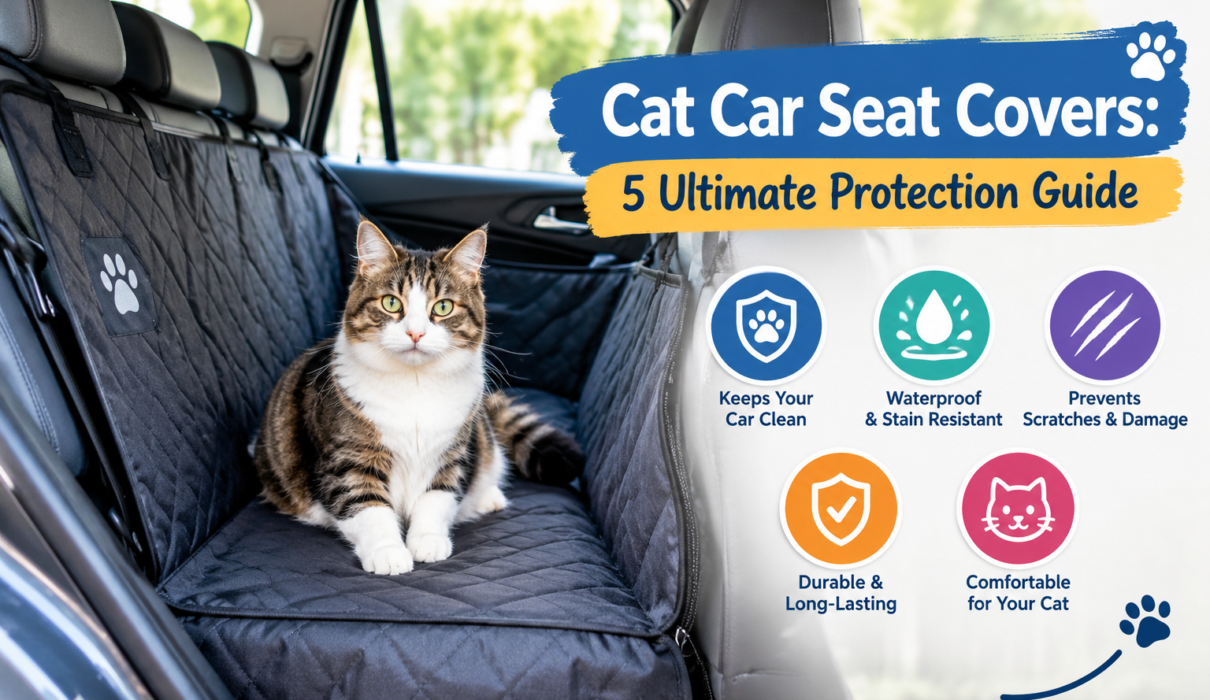
Traveling with a cat can be a wonderful experience, whether you are visiting a veterinarian, moving to a new home, or taking a longer road trip. However, cats can leave fur, dirt, muddy paw prints, and scratches on your vehicle’s upholstery. Choosing the right cat car seat covers can help protect your car’s interior while making cleaning easier after every journey.
Cats have different behaviors when traveling. Some remain calm inside their carriers, while others move around, shed fur, or scratch nearby surfaces when they feel nervous. Without proper protection, your car seats may become dirty or damaged over time. A suitable seat cover creates a protective barrier between your cat and the original upholstery.
The best cat car seat covers are durable, easy to clean, comfortable, and designed to fit your vehicle securely. Some models offer waterproof layers, nonslip backing, and openings for seat belts. These features can be especially useful for cat owners who travel frequently with their pets.
However, seat covers alone do not guarantee safe transportation. Cats should generally travel in a secure carrier that is appropriately restrained according to the carrier and vehicle manufacturers’ instructions. Seat covers should never interfere with seat belts, airbags, or other safety systems or cat car seat covers.
In this guide, you will learn how to choose suitable materials, protect your vehicle during travel, understand the difference between interior and exterior car covers, and use appropriate toys and scratching accessories. These practical tips can help you keep your car cleaner while making journeys more comfortable for your feline companion.
Cat Car Seat Covers: Choose the Right Material
Choosing the right material is one of the most important steps when shopping for cat car seat covers. The material affects durability, cleaning requirements, resistance to moisture, and overall comfort.
Before purchasing a cover, consider your cat’s shedding habits, the type of upholstery in your vehicle, and how frequently you travel together.
Waterproof and Water-Resistant Materials
Waterproof and water-resistant covers can help protect vehicle seats from spilled water, muddy paws, and minor accidents.
A waterproof cover typically includes a barrier designed to prevent liquid from passing through under the conditions specified by the manufacturer. A water-resistant cover can repel some moisture but may allow liquid to seep through if exposed to enough water or pressure.
If your cat frequently travels after outdoor activities or tends to spill water from a travel bowl, a waterproof design may be a practical choice.
Look for a cover with sealed or reinforced seams, especially if moisture protection is a priority. Remember that no cover should be assumed completely waterproof unless the product specifications support that claim.
Durable Fabrics for Everyday Use
Cats may knead upholstery with their paws, shed fur, or scratch when they feel anxious. A durable fabric can help protect seats from everyday wear.
Common options include:
- Quilted polyester: Often lightweight, practical, and relatively easy to clean.
- Oxford fabric: Frequently used in protective covers because of its durable woven construction.
- Padded fabric: Provides a cushioned surface and may improve comfort during stationary rest.
- Multilayer materials: Combine different fabrics or coatings to provide several protective features.
Material quality varies between products, so examine the stitching, fabric thickness, and manufacturer’s specifications rather than relying on the material name alone.
Although durable fabrics can reduce everyday wear, they cannot guarantee complete protection against sharp claws.
Nonslip Backing and Secure Attachments
A seat cover that slides around can become uncomfortable and may interfere with your cat’s carrier or other travel equipment.
Look for nonslip backing, adjustable straps, and attachment points that keep the cover in place. The cover should fit the seat without bunching excessively or blocking access to seat belts.
Check the manufacturer’s instructions before installation. Avoid covers or attachments that interfere with side airbags, seat-belt buckles, or other vehicle safety features.
If your vehicle has side airbags integrated into the seats, confirm that the cover is specifically compatible with that seat design.
Easy Cleaning and Maintenance
Cat hair can become embedded in textured fabrics, while muddy paw prints and spills may leave stains. Selecting a cover that is easy to clean can save time.
Consider products that offer:
- Machine washing when permitted by the care label.
- Smooth surfaces that release loose fur easily.
- Removable designs for convenient cleaning.
- Materials that dry relatively quickly.
- Instructions for removing stains without damaging protective coatings.
Before buying, check whether the entire cover is washable or whether only certain sections can be cleaned with water.
Choose a Cover for Your Seat Type
Different vehicles have different seat shapes, headrest arrangements, and upholstery materials. A cover designed for a standard rear bench may not fit individual bucket seats properly.
Measure the seat width, length, and relevant headrest positions before purchasing. If you have leather seats, choose a product whose backing is suitable for leather and will not transfer color or leave marks.
For fabric seats, look for a cover that stays securely in place without excessive friction.
Best tip: Prioritize a secure fit, easy cleaning, and compatibility with your vehicle’s safety systems over appearance alone.
Cat Car Seat Covers for Maximum Protection During Travel
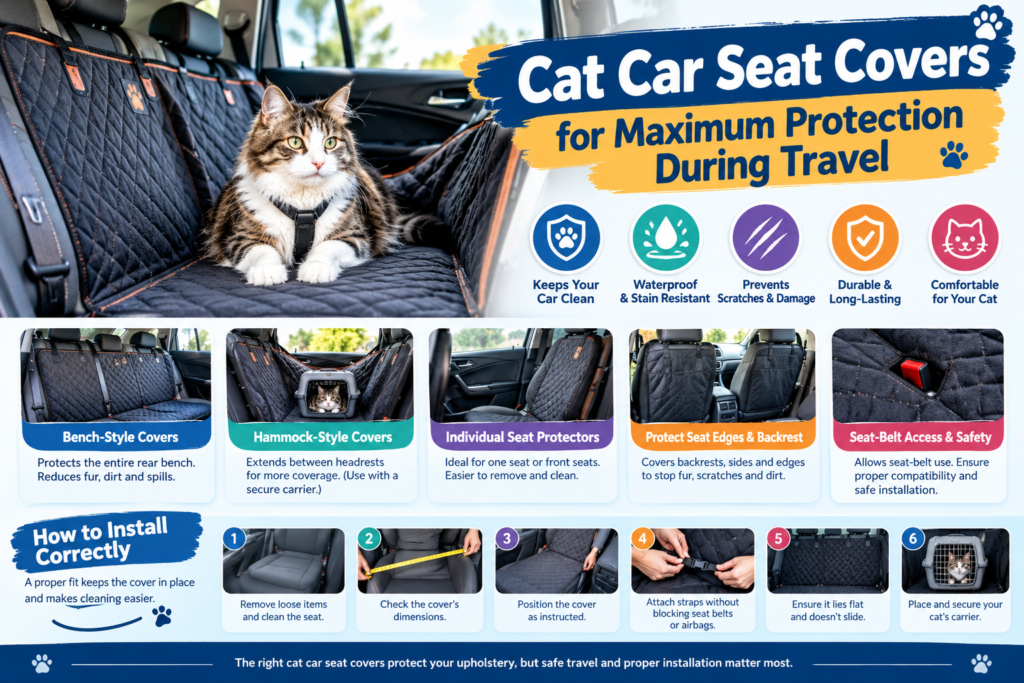
Once you have selected a suitable material, the next step is choosing a cover that offers appropriate protection for your vehicle. Different designs protect different areas, so the best option depends on where your cat will travel and how you transport them.
Bench-Style Cat Car Seat Covers
Bench-style covers are designed to protect the seating surface of a rear bench. They are useful for households that want to reduce fur, dirt, and minor spills on the back seat.
Many designs include adjustable headrest straps and a protective layer beneath the fabric. Some also have openings for seat belts, allowing passengers to use the seating area when the cover is installed correctly.
Before purchasing, make sure the cover fits your rear seat dimensions. A poorly fitted cover may shift during entry and exit or bunch up underneath a carrier or cat car seat covers.
Hammock-Style Covers
Hammock-style covers extend between the front and rear headrests, creating a barrier across part of the rear seating area.
These products are often marketed for dogs, but certain models may also provide surface protection when transporting a cat in a suitable carrier. However, the hammock is not a substitute for a secure carrier or an approved restraint.
If you choose this style, check that it does not interfere with the carrier’s stable placement, seat belts, or vehicle safety systems.
A hammock-style design may be useful for protecting more of the seat area, but compatibility and safe installation should always come first or cat car seat covers.
Individual Seat Protectors
Individual seat covers are useful when your cat’s carrier occupies one particular seat or when you want to protect a front passenger seat while the vehicle is parked.
These covers may be easier to remove and clean than larger bench-style models. However, the carrier must remain properly secured, and the cover must not obstruct the vehicle’s seat belt or interfere with airbags.
Never place a carrier on a seat in a way that makes it unstable. Follow both the vehicle manufacturer’s and carrier manufacturer’s guidance for safe placement.
Protect the Seat Edges and Backrest
Cats may leave fur and paw prints not only on the seating surface but also on the backrest and nearby areas. Some covers provide extended panels that protect the back of the front seats or the sides of the seating area.
If your cat frequently sheds or becomes restless when traveling, consider a design that protects the areas most likely to become dirty.
Avoid allowing your cat to roam freely around the cabin to prevent scratches. A secure carrier is generally the safer choice for transportation.
Check Seat-Belt Access and Safety Compatibility
A good cover should provide access to the seat-belt buckles when necessary. However, simply having a seat-belt opening does not mean that the cover or carrier is crash-tested.
Choose a cover that is compatible with your vehicle, and secure your cat’s carrier according to its instructions. Keep the driver area clear so the cat cannot interfere with steering, pedals, or visibility.
Never modify the cover in a way that compromises the vehicle’s safety systems.
How to Install Cat Car Seat Covers Correctly
Proper installation helps the cover stay in place and makes it easier to clean after travel.
Follow these basic steps:
- Remove loose items and clean the seat surface.
- Check the cover’s dimensions against your vehicle’s seat.
- Position the cover according to the manufacturer’s instructions.
- Attach the provided straps without obstructing seat belts or airbags.
- Check that the cover lies flat and does not slide excessively.
- Place the cat’s secure carrier in its designated position and restrain it as instructed.
After installation, inspect the arrangement before every trip. Adjust or remove the cover if it shifts, obstructs a buckle, or creates an unsafe surface for the carrier.
The right cat car seat covers can help protect your upholstery from everyday mess, but proper installation and safe cat transportation are equally important.
Car Cover for Cats: How to Keep Your Vehicle Clean
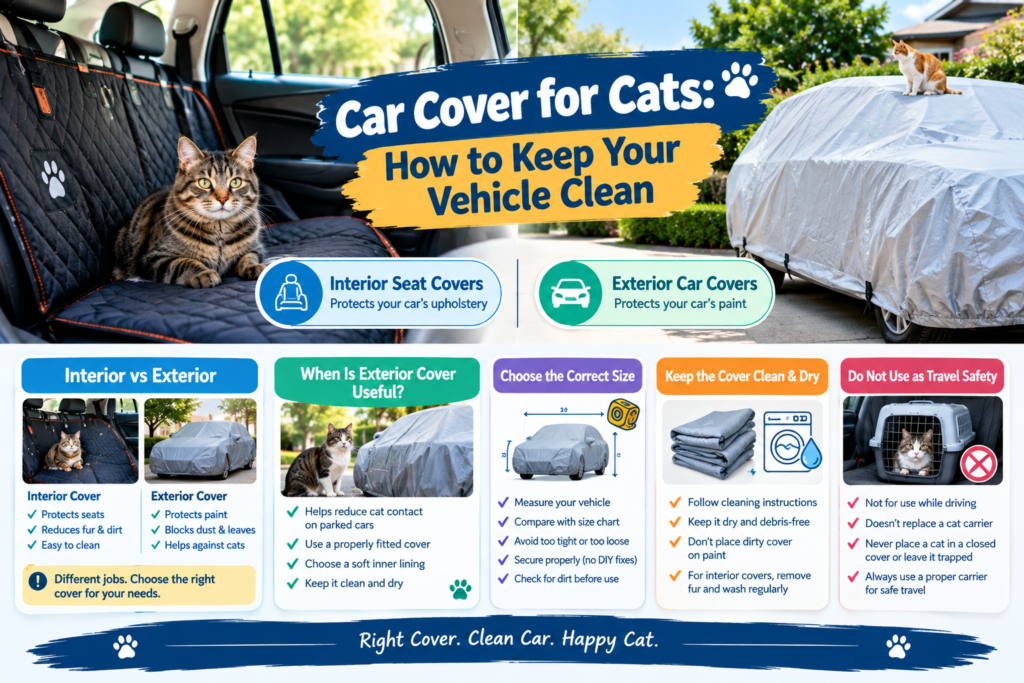
The phrase car cover for cats can refer to a protective cover intended for a cat traveling inside a vehicle or, in some contexts, an exterior cover used to protect a parked car from cats climbing on it. These products serve different purposes, so it is important to understand which type you need.
Interior Seat Covers Versus Exterior Car Covers
Interior seat covers protect the upholstery inside your vehicle. They are designed to reduce the accumulation of fur, dirt, paw prints, and minor spills during travel.
Exterior car covers fit over the outside of a parked vehicle. They may help protect the paint from dust, leaves, bird droppings, and some contact from visiting cats.
An interior seat cover will not protect the exterior paint, while an exterior cover will not protect the seats inside the car. Choose the product according to the problem you want to solve.
When Is an Exterior Car Cover Useful?
If neighborhood cats regularly climb onto your parked vehicle, an appropriately fitted exterior car cover may help reduce direct contact with the paint.
Look for a cover designed for your vehicle’s dimensions, with a soft inner lining and secure fastening. The product should be suitable for the weather conditions where you park.
Keep the cover and vehicle surface clean. Dirt trapped beneath the fabric can rub against the paint and create fine scratches when the cover moves.
An exterior cover may discourage some cats, but it cannot guarantee that they will stop climbing onto the vehicle.
Choose the Correct Size
A cover that is too small may leave the bumper, roof, or other sections exposed. An oversized cover may flap in the wind and rub against the paint.
Measure the vehicle and compare those measurements with the manufacturer’s sizing chart. Secure the cover according to the instructions without using improvised fasteners that could damage the finish.
Before removing or installing an exterior cover, inspect it for trapped dirt and debris.
Keep the Cover Clean and Dry
Moisture and debris trapped under an exterior cover may affect the vehicle’s finish, depending on the conditions and materials involved.
Follow the manufacturer’s instructions for cleaning, drying, and storage. Do not place a dirty cover against the vehicle’s paint.
For interior covers, remove fur and debris regularly and wash the fabric as directed. Allow the cover to dry thoroughly before reinstalling it.
Do Not Use a Cover as a Substitute for Travel Safety
An exterior car cover is meant for a parked vehicle, not for covering a car while driving. An interior seat protector also does not replace a suitable cat carrier.
If you are transporting your cat, use an appropriate carrier secured according to the manufacturer’s instructions. Never place a cat inside a closed exterior vehicle cover or leave an animal trapped beneath a cover.
Key takeaway: Choose an interior seat protector for upholstery and an exterior vehicle cover for parked-car protection. Both can be useful, but they serve different purposes.
Cat Car Scratcher and Cat Car Toy: Keep Your Cat Comfortable
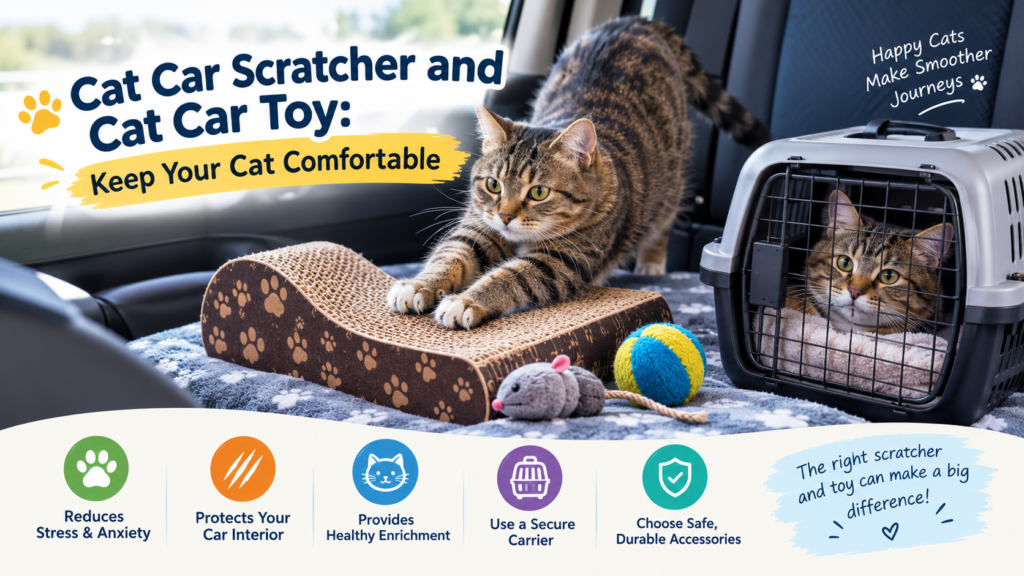
Cats naturally scratch surfaces to maintain their claws, stretch their bodies, and mark familiar areas. During travel, an unfamiliar environment may make some cats restless or more likely to paw at nearby materials.
Using an appropriate cat car scratcher and a familiar cat car toy can support enrichment before and after a journey. These accessories should never interfere with safe transportation.
Why Cats Scratch During Travel
Some cats scratch when they feel anxious, while others scratch because the texture resembles a familiar scratching surface.
Car upholstery may attract their attention because it provides resistance under their claws. Unfortunately, repeated scratching can damage fabric and leather.
A seat cover can provide a protective barrier, but it is not guaranteed to stop a determined cat from scratching.
Instead of allowing your cat to roam freely, transport them in a secure carrier and provide appropriate scratching opportunities when the vehicle is parked and the cat can be supervised safely.
Choose an Appropriate Cat Car Scratcher
A portable scratching pad can provide an alternative surface for your cat to use at home or during a supervised break in a safe location.
Consider the following features:
- A stable design that does not tip easily.
- Materials suitable for your cat’s scratching preferences.
- A size that allows comfortable stretching.
- Durable construction without loose parts.
- Easy cleaning and storage.
Introduce a new scratcher before travel so your cat can become familiar with it.
Do not place a loose scratching board where it could slide around in a moving vehicle or interfere with the driver. A scratcher is an enrichment accessory, not a travel restraint.
Use a Familiar Cat Car Toy
A familiar toy may help some cats feel more comfortable before entering their carrier. Soft toys and other appropriate enrichment items can provide stimulation during supervised play.
Choose toys without loose strings, detachable pieces, or small parts that could be swallowed. Check the toy regularly for damage.
Never use a toy to distract the driver or encourage a cat to move around the cabin while the vehicle is moving.
Help Your Cat Become Comfortable With the Carrier
Cats may become stressed when a carrier appears only before an unfamiliar or unpleasant trip. Gradual introduction can help some cats become more comfortable with it.
Leave the carrier open in a familiar room and allow your cat to explore it at their own pace. Place familiar bedding inside if it is safe and appropriate for your cat.
You can offer a favorite toy or treat near the carrier to create a positive association. For particularly anxious cats, ask a veterinarian for advice about preparing for travel.
Keep Toys Secure During the Journey
Loose objects can move around when a vehicle brakes or turns. They may distract the driver or create hazards for the cat.
Store toys securely during travel. If your cat needs a familiar comfort item, choose one that is suitable for the carrier and cannot easily become tangled or swallowed.
A calm environment, suitable carrier, and careful preparation are more important than purchasing multiple accessories.
By combining cat car seat covers with appropriate scratching surfaces and safe enrichment, you can protect your upholstery while helping your cat have a more comfortable travel experience.
Cat Car Seat Covers: Easy Cleaning and Long-Term Care
Keeping your vehicle clean is easier when you choose the right cat car seat covers and maintain them regularly. Cats can leave fur, muddy paw prints, dirt, and occasional spills on car seats. Without proper care, these materials may build up and become difficult to remove.
Regular cleaning helps maintain the appearance of your vehicle, extends the useful life of your seat covers, and creates a cleaner environment for your cat during travel.
Remove Cat Hair From Seat Covers
Cat hair is one of the most common problems for pet owners who travel with their cats. Loose fur can collect in fabric fibers, around seams, and along the edges of seat covers.
To remove cat hair effectively, try these methods:
- Vacuum regularly: Use a suitable upholstery attachment to remove loose fur and dust.
- Use a lint roller: A lint roller can pick up hair from many smooth fabric surfaces.
- Try a pet-hair brush: Choose a brush designed for upholstery and follow the manufacturer’s guidance.
- Clean the seams: Fur often collects around stitching and corners, so inspect these areas carefully.
Avoid using sharp objects or abrasive tools that could tear the fabric or damage the protective coating.
If your cat sheds heavily, cleaning the cover after each trip can prevent fur from accumulating.
Wash Cat Car Seat Covers Properly
Many cat car seat covers are designed to be removable and washable. However, not every cover is suitable for machine washing.
Always check the manufacturer’s care label before cleaning. Some covers may require gentle hand washing, while others can be machine washed on a specific cycle.
Before washing, remove loose hair and debris. Use an appropriate detergent and avoid harsh chemicals that could damage waterproof layers, nonslip backing, or fabric coatings.
If the cover has straps, buckles, or other attachments, follow the manufacturer’s instructions to prevent damage.
Allow the cover to dry completely before reinstalling it. Damp fabric may develop unpleasant odors and can trap moisture against the upholstery.
Remove Muddy Paw Prints and Minor Spills
Cats may bring dirt into the vehicle after spending time outdoors. Water spills and small accidents can also leave marks on seat covers.
For minor dirt, gently blot the affected area with a clean cloth. Use a fabric-safe cleaning product when appropriate and test it on a small, inconspicuous area first.
Avoid rubbing muddy dirt aggressively into the fabric, as this can spread the stain or damage the material.
For larger spills, remove the cover if possible and follow the manufacturer’s cleaning instructions. If liquid has reached the original upholstery, clean the seat using a product suitable for that material.
Inspect Straps, Seams, and Backing
Even durable covers can wear out over time. Regular inspections help you identify problems before the cover becomes difficult to use.
Check for:
- Loose or damaged stitching.
- Torn fabric and worn corners.
- Broken buckles or adjustment straps.
- Damaged nonslip backing.
- Peeling or deteriorating waterproof layers.
Replace a cover if it no longer fits securely or has damage that could interfere with safe transportation.
Remember that a protective cover should never obstruct seat belts, seat-belt buckles, or airbags.
Store Seat Covers Correctly
If you remove your cover between trips, clean it and allow it to dry completely before storing it.
Fold the cover according to its design and keep it in a dry place away from direct heat and sharp objects. Avoid storing it while damp or covered in fur and dirt.
Good maintenance can help your cat car seat covers remain useful for longer while reducing the time you spend cleaning your vehicle.
Tell Your Cat I Said Pspspsps Car Sticker: A Fun Accessory for Cat Lovers
Cat owners often enjoy decorating their vehicles with accessories that reflect their love for cats. One playful option is a tell your cat i said pspspsps car sticker, a humorous design inspired by the familiar sound people make when trying to attract a cat’s attention.
Unlike seat protectors, these stickers are decorative accessories. They can add personality to your vehicle, but they do not provide protection against fur, scratches, or spills.
What Does the Sticker Phrase Mean?
The expression “pspspsps” imitates a sound commonly used to get a cat’s attention. Many cat lovers recognize it as a playful way to greet or call a curious feline.
A sticker featuring this phrase may appeal to people who enjoy cat humor or want to share their interest in cats with other drivers.
Designs can include simple text, cartoon cats, paw prints, or colorful illustrations. Choose a style that suits your personal taste without distracting other road users.
Choose Weather-Resistant Materials
If you want to place the sticker on the outside of your vehicle, look for a product designed for automotive use.
Weather-resistant vinyl is commonly used for vehicle decals because it can be designed to withstand outdoor conditions. However, quality and durability vary by product.
Before purchasing, check whether the sticker is intended for exterior paint, glass, or interior window placement.
Follow the manufacturer’s instructions for application and removal to reduce the risk of residue or damage.
Choose a Safe Sticker Location
Sticker placement matters because decorations should not obstruct the driver’s view.
Suitable locations may include an appropriate area of the rear window or another permitted surface that does not interfere with visibility, lights, license plates, or vehicle identification markings.
Check local regulations before adding stickers to vehicle windows or exterior panels.
Avoid placing large designs where they could block your view when reversing or changing lanes.
How to Apply a Car Sticker
For the best results, follow the sticker manufacturer’s directions. A typical application process includes these steps:
- Clean the intended surface with a suitable product.
- Allow the surface to dry completely.
- Position the sticker before removing its backing.
- Apply it slowly, smoothing out air bubbles as directed.
- Follow the manufacturer’s instructions for curing or setting.
Avoid applying stickers to hot surfaces or in unsuitable weather conditions if the manufacturer advises against it.
Do Car Stickers Protect Your Vehicle?
No. A cat-themed sticker is primarily decorative. It will not prevent cats from climbing onto your car or protect the upholstery from claws and fur or cat car seat covers.
If your goal is vehicle protection, prioritize suitable cat car seat covers, an appropriate exterior car cover when parked, and humane methods that discourage cats from climbing onto the vehicle.
You can still enjoy a fun cat sticker while using practical products to keep your vehicle clean and comfortable.
How to Travel Safely With Cat Car Seat Covers
Protecting your vehicle is important, but your cat’s safety should always come first. Even the best cat car seat covers cannot replace appropriate travel equipment and careful preparation.
Cats may become frightened by unfamiliar sounds, sudden braking, or movement during a journey. A secure carrier and a calm travel environment can help reduce these risks.
Use a Secure Cat Carrier
For most car journeys, a sturdy, appropriately sized carrier is a practical way to transport a cat.
The carrier should allow your cat to stand, turn around, and lie down comfortably, while being designed to contain the animal safely during travel.
Choose a carrier suitable for vehicle transportation and secure it according to the carrier and vehicle manufacturers’ instructions.
Do not assume that placing a carrier on top of a soft seat cover makes it secure. Check that the carrier remains stable and that the cover does not slide beneath it.
Keep Seat Belts and Airbags Unobstructed
Seat covers can sometimes interfere with buckles, restraints, or seat-mounted airbags if they are poorly designed or installed incorrectly.
Before travelling, confirm that the cover is compatible with your vehicle and that all relevant safety features remain unobstructed.
Do not place a carrier where it could interfere with the driver’s movement, pedals, or visibility. Follow your vehicle manufacturer’s instructions regarding passenger airbags and approved carrier placement.
Prepare Your Cat Before the Journey
Some cats become anxious when placed in a carrier or transported in a moving vehicle. Gradual preparation may help them become more comfortable.
Allow your cat to explore the carrier at home before the trip. Familiar bedding may help if it is appropriate for the carrier and will not compromise safety.
For cats that experience severe travel anxiety or motion sickness, ask a veterinarian for individualized advice. Never give human medication to a cat unless a veterinarian specifically directs you to do so.
Take Appropriate Breaks on Longer Trips
Long journeys require planning. Consider your cat’s age, health, temperament, and individual needs when preparing for travel.
Keep the vehicle at a comfortable temperature and ensure that your cat cannot escape when doors or windows are opened.
If you stop during the journey, check the environment before opening the carrier. Cats can become frightened and attempt to escape in unfamiliar places.
Follow veterinary guidance regarding water, food, toileting, and breaks for your particular cat.
Never Leave a Cat in a Dangerously Hot or Cold Vehicle
A parked car can reach unsafe temperatures, even when the weather outside does not seem extreme.
Never leave your cat unattended in a vehicle where heat or cold could threaten its safety. Opening a window slightly does not guarantee a safe temperature.
If you need to stop somewhere that does not permit pets, arrange a safe alternative rather than leaving your cat in a potentially dangerous vehicle.
Keep the Driver Focused
A cat moving freely around a vehicle can distract the driver and interfere with steering or braking.
Use a suitable carrier instead of allowing your cat to sit on the driver’s lap, climb onto the dashboard, or move between the front and rear seats.
Secure loose accessories, including toys and scratching pads, so they cannot become hazards during sudden stops.
By combining well-fitted cat car seat covers with appropriate travel equipment, you can protect your upholstery without compromising safety.
Frequently Asked Questions (FAQs)
What Are Cat Car Seat Covers Used For?
Cat car seat covers help protect vehicle upholstery from loose fur, dirt, muddy paws, minor spills, and some everyday wear. Depending on the material and design, they may also help reduce direct contact between claws and the original seats.
They are useful for cat owners who regularly travel with their pets, but they do not replace a secure carrier.
Are Cat Car Seat Covers Waterproof?
Some cat car seat covers are waterproof, while others are only water-resistant. Waterproof designs aim to prevent liquid from passing through under specified conditions, whereas water-resistant materials provide more limited protection.
Check the manufacturer’s product specifications, including seam construction and cleaning instructions, before purchasing.
What Is the Best Car Cover for Cats?
The best option depends on your needs. An interior seat cover is suitable for protecting upholstery during travel, while an exterior car cover can help protect a parked vehicle from dirt and paw prints or cat car seat covers.
Choose the correct product type, size, and material for your vehicle and intended use.
Can a Cat Car Scratcher Prevent Seat Damage?
A suitable scratching pad may provide an alternative surface for a cat to scratch, particularly during supervised play outside the moving vehicle.
However, a scratcher cannot guarantee that upholstery will remain undamaged. A seat cover and secure carrier provide more practical protection during car travel.
Are Cat Car Toys Safe During Travel?
Appropriate toys can help enrich your cat’s environment, but loose toys may move around or become hazards during sudden braking.
Keep toys secured and choose designs without dangerous strings, loose parts, or pieces that can be swallowed. Transport your cat in a suitable carrier.
How Do I Clean Cat Car Seat Covers?
Remove loose hair with a vacuum or lint roller, then clean the cover according to its care label.
For stains, use an appropriate fabric-safe product and avoid harsh chemicals that could damage protective coatings. Let the cover dry thoroughly before reinstalling it.
What Does “Tell Your Cat I Said Pspspsps” Mean on a Car Sticker?
It is a humorous phrase based on the sound people commonly make to attract a cat’s attention.
Cat lovers may use it on vehicle stickers to express their affection for cats. The sticker is decorative and does not provide meaningful protection against scratches or dirt.
Can Cats Travel Safely on a Car Seat Without a Carrier?
Allowing a cat to move freely on a car seat is generally not recommended because the animal can distract the driver or be injured during sudden braking.
A secure, appropriately sized carrier is generally the safer choice. Follow the vehicle and carrier manufacturers’ instructions for safe positioning and restraint.
Conclusion: Choose the Best Cat Car Seat Covers for Ultimate Protection
Choosing the right cat car seat covers can make travelling with your feline companion easier by reducing fur, dirt, minor spills, and everyday wear on your vehicle’s upholstery. The best covers combine durable materials, a secure fit, easy cleaning, and compatibility with your vehicle’s safety systems.
Remember that interior seat covers and exterior car covers serve different purposes. Interior protectors help keep seats clean during journeys, while exterior covers may help protect parked vehicles from dirt and paw prints. Cat scratchers and toys can provide enrichment when used appropriately, and decorative accessories such as a “tell your cat i said pspspsps car sticker” can add a fun personal touch or cat car seat covers.
Most importantly, protect your cat as well as your vehicle. Use a suitable carrier, keep seat belts and airbags unobstructed, and never leave your cat in a dangerously hot or cold parked car.
With the right preparation, practical accessories, and regular maintenance, you can keep your vehicle cleaner and make car journeys safer and more comfortable for your cat.