

 By
Can Cats Have Lyme Disease? 5 Surprising Facts
Introduction: Can Cats Have Lyme Disease?
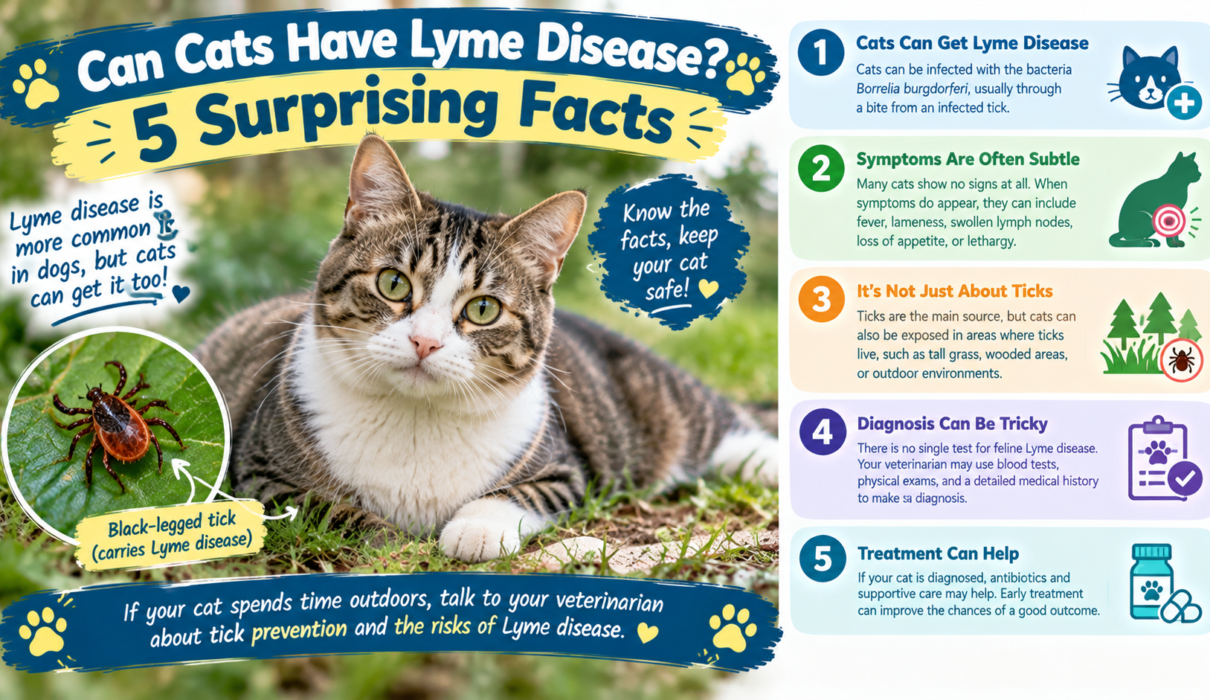
Many cat owners worry about tick bites and the diseases they can spread to pets. One common question is, can cats have Lyme disease? Lyme disease is a tick-borne illness caused by a bacterium called Borrelia burgdorferi. It is commonly associated with dogs and humans, but cats can also be exposed to the bacteria through infected ticks.
However, cats appear less likely than dogs to develop recognizable signs of Lyme disease, and the effects of natural infection in cats are not fully understood. This does not mean cat owners should ignore ticks or possible symptoms. Tick exposure can still put cats at risk of other tick-borne problems.
Understanding how Lyme disease spreads, recognizing possible warning signs, and using safe tick prevention can help protect your cat. In this guide, we will explore five surprising facts about Lyme disease in cats, explain how cats may encounter infected ticks, and discuss the symptoms owners should watch for.
Can Cats Have Lyme Disease? Understanding the Basics
Yes, cats can be exposed to the bacteria responsible for Lyme disease through infected tick bites. However, confirmed clinical Lyme disease in cats appears uncommon compared with the disease in dogs and humans.
Lyme disease is associated with Borrelia burgdorferi, a bacterium transmitted primarily by infected blacklegged ticks in North America. These ticks are also known as deer ticks. The risk varies depending on the geographic region and the types of ticks found there or can cats have lyme disease.
When an infected tick attaches to an animal and feeds, it may transmit bacteria. Not every tick carries Lyme bacteria, and not every bite from an infected tick results in illness.
Cats that spend time outdoors may encounter ticks in grassy areas, gardens, wooded environments, and places where wildlife travels. Indoor cats can also encounter ticks that enter the home on clothing, other pets, or outdoor equipment.
It is important to understand the difference between exposure and disease. A cat may encounter an infected tick without developing noticeable symptoms. A positive antibody test may indicate exposure to the bacteria, but it does not automatically prove that the cat has active Lyme disease.
If your cat develops unexplained limping, fever, reduced appetite, or unusual tiredness after possible tick exposure, contact a veterinarian for an appropriate examination.
5 Surprising Facts About Lyme Disease in Cats
Can Cats Get Lymes Disease From Infected Ticks?
Yes, cats can be exposed to Lyme disease bacteria through infected tick bites. The phrase can cats get lymes disease is a common search query among pet owners who want to understand whether their cats face the same risks as dogs.
Blacklegged ticks can carry Borrelia burgdorferi and transmit the bacteria while feeding. These ticks are typically found in environments with suitable vegetation, wildlife, and humidity. Cats that explore outdoor spaces may encounter them while walking through grass, bushes, or leaf litter.
However, several important factors affect the risk:
- Tick species: Not all ticks can transmit Lyme disease.
- Infection status: A tick must carry the relevant bacteria to transmit Lyme disease.
- Attachment and feeding: Transmission risk depends partly on how long an infected tick remains attached.
- Location: Lyme disease risk varies significantly by region.
- Individual response: Exposure does not necessarily lead to recognizable illness.
After your cat comes indoors, check its fur and skin carefully, especially around the ears, head, neck, and between the toes. Ticks may be difficult to see because they can hide beneath thick fur.
If you discover an attached tick, remove it promptly with an appropriate tick-removal tool or fine-tipped tweezers. Grasp it close to the skin and pull steadily without crushing the tick. Avoid applying petroleum jelly, alcohol, or heat to force it to detach.
Contact your veterinarian if you are unsure how to remove the tick, if the attachment site becomes swollen, or if your cat develops unusual symptoms. Your veterinarian can also recommend a suitable tick-prevention product.
Why Don’t Cats Get Lyme Disease as Commonly as Dogs?
One of the most interesting questions is why don’t cats get lyme disease as often as dogs appear to. The answer is not completely understood, and it is important not to assume that cats are naturally immune.
Cats and dogs can have different responses to infections. Researchers have found that cats may be exposed to Lyme bacteria, but naturally occurring clinical disease in cats is less clearly documented than in dogs. Scientists are still learning about how often infected cats develop illness and which factors influence their responses or can cats have lyme disease.
Several points help explain the difference in recognized cases or can cats have lyme disease.
Cats may show fewer recognizable signs
Cats often hide discomfort and may change their behavior subtly when they feel unwell. A cat that becomes less active, sleeps more, or avoids jumping may not immediately appear seriously ill.
These changes can make it harder for owners to identify a potential problem and can complicate the recognition of diseases that cause nonspecific symptoms.
Exposure does not always mean illness
A cat can be bitten by a tick without becoming infected. Even when exposure to Lyme bacteria occurs, a cat may not develop noticeable clinical signs or can cats have lyme disease.
This is why finding a tick does not automatically mean your cat has Lyme disease.
The evidence about feline Lyme disease is limited
Lyme disease is much better characterized in dogs than in cats. More research is needed to establish how often naturally infected cats develop clinical disease and which symptoms are directly attributable to the infection.
Other tick-borne diseases are also important
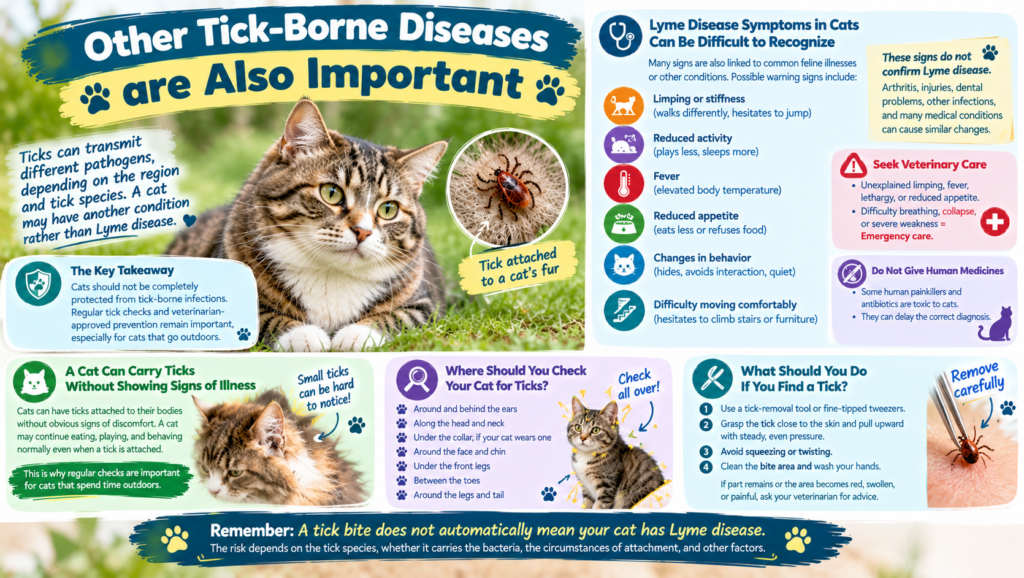
Ticks can transmit different pathogens, depending on the region and tick species. Therefore, a cat that becomes ill after a tick bite may have another condition rather than Lyme disease.
The key takeaway is that cats should not be considered completely protected from tick-borne infections. Regular tick checks and veterinarian-approved prevention remain important, especially for cats that go outdoors.
Lyme Disease Symptoms in Cats Can Be Difficult to Recognize
Recognizing possible Lyme disease symptoms in cats can be challenging because there is limited evidence about the typical presentation of naturally occurring clinical disease in felines. Many signs that might raise concern are also associated with common feline illnesses or can cats have lyme disease.
Possible warning signs that deserve veterinary attention include:
- Limping or stiffness: Your cat may walk differently, hesitate before jumping, or appear uncomfortable when moving.
- Reduced activity: Your cat may play less, sleep more, or avoid normal activities.
- Fever: An elevated body temperature may occur with many infections and inflammatory conditions.
- Reduced appetite: Your cat may eat less than usual or refuse food.
- Changes in behavior: Your cat may hide, avoid interaction, or become unusually quiet.
- Difficulty moving comfortably: Your cat may hesitate to climb stairs, jump onto furniture, or use its usual resting places.
These signs do not confirm Lyme disease. Arthritis, injuries, dental problems, other infections, and numerous medical conditions can cause similar changes.
For example, if your cat suddenly begins limping after spending time outdoors, a tick-borne illness is only one possibility. A paw injury, bite wound, sprain, or joint problem may be responsible.
Pay attention to when the symptoms began, whether they are getting worse, and whether you have found ticks on your cat. Share this information with your veterinarian or can cats have lyme disease.
Seek prompt veterinary advice if your cat develops unexplained limping, fever, persistent lethargy, or reduced appetite. If your cat has difficulty breathing, collapses, or experiences severe weakness, seek emergency veterinary care.
Do not give human painkillers or leftover antibiotics to your cat. Some common human medicines are highly toxic to cats, and inappropriate antibiotic use can delay the correct diagnosis.
A Cat Can Carry Ticks Without Showing Signs of Illness
Another surprising fact is that cats can have ticks attached to their bodies without showing obvious signs of discomfort.
Ticks are small parasites that attach to an animal’s skin and feed on blood. Their size can vary depending on their life stage and how much blood they have consumed. A small tick may be difficult to notice, particularly on a long-haired cat or a cat with dark fur or can cats have lyme disease.
A cat may continue eating, playing, and behaving normally even when a tick is attached. This is one reason regular checks are important for cats that spend time outdoors or can cats have lyme disease.
Where should you check your cat for ticks?
Pay particular attention to the following areas:
- Around and behind the ears
- Along the head and neck
- Under the collar, if your cat wears one
- Around the face and chin
- Under the front legs
- Between the toes
- Around the legs and tail
Use your fingers to gently part the fur and examine the skin. Be careful around sensitive areas, and stop if your cat becomes distressed.
What should you do if you find a tick?
Use a tick-removal tool or fine-tipped tweezers. Grasp the tick as close to the skin as possible and pull upward with steady, even pressure. Avoid squeezing its body or twisting forcefully. Clean the bite area afterward, and wash your hands.
If part of the tick remains embedded, avoid digging deeply into the skin. Ask your veterinarian for advice if you cannot remove it safely or if the area becomes increasingly red, swollen, or painful.
Remember that a tick bite does not automatically mean your cat has Lyme disease. The risk depends on the tick species, whether it carries the bacteria, the circumstances of attachment, and other factors.
If your cat develops symptoms after a tick bite, your veterinarian can determine whether testing or additional treatment is appropriate or can cats have lyme disease.
Preventing Tick Bites Is the Best Protection
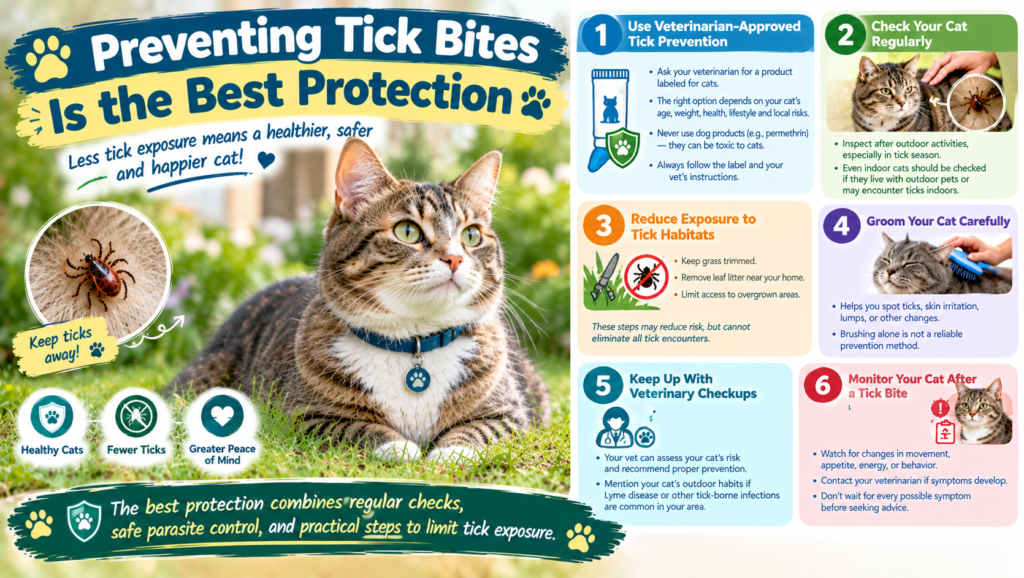
Because Lyme disease is associated with infected tick bites, reducing tick exposure is an important part of protecting your cat. Prevention is especially valuable for cats that roam outdoors or live in areas where ticks are common.
Even if cats are less likely than dogs to develop recognizable Lyme disease, they can still encounter ticks and other tick-borne pathogens.
Here are practical ways to reduce your cat’s risk.
Use veterinarian-approved tick prevention
Ask your veterinarian to recommend a tick-prevention product specifically labeled for cats. The right option depends on your cat’s age, weight, health, lifestyle, and local parasite risks or can cats have lyme disease.
Never assume a product made for dogs is safe for cats. Some dog flea and tick treatments contain permethrin, which can cause severe poisoning in cats. Exposure may occur if a product is applied directly or if a cat comes into close contact with a recently treated dog.
Always follow the product label and your veterinarian’s instructions.
Check your cat regularly
Inspect your cat’s fur and skin after outdoor activities, especially during seasons when ticks are active. Even indoor cats should be checked if they live with outdoor pets or may encounter ticks brought inside.
Reduce exposure to tick habitats
Where practical, keep grass trimmed, remove accumulated leaf litter near the home, and limit access to heavily overgrown areas. These measures may reduce some tick encounters, although they cannot eliminate all risk.
Groom your cat carefully
Regular grooming can help you notice ticks, skin irritation, unusual lumps, or other changes. However, brushing alone is not a reliable method of preventing tick-borne disease.
Keep up with veterinary checkups
Your veterinarian can assess your cat’s individual risk and recommend appropriate parasite prevention. If you live in an area where Lyme disease or other tick-borne infections are common, mention your cat’s outdoor habits during the appointment.
Monitor your cat after a tick bite
Watch for changes in movement, appetite, energy, or behavior. Contact your veterinarian if concerning symptoms develop. Do not wait for every possible symptom to appear before seeking advice or can cats have lyme disease.
The most effective prevention plan combines regular checks, safe parasite control, and practical steps to limit tick exposure.
How Is Lyme Disease Diagnosed in Cats?
If you suspect your cat may have been exposed to infected ticks, you may wonder how a veterinarian can determine whether Lyme disease is responsible for its symptoms. Diagnosing Lyme disease in cats can be challenging because clinical illness appears uncommon and many possible symptoms overlap with other conditions.
A veterinarian will consider your cat’s medical history, symptoms, outdoor activities, and possible tick exposure before recommending appropriate tests.
Physical Examination
The first step is usually a complete physical examination. Your veterinarian may check your cat’s temperature, hydration, appetite history, movement, joints, and general condition or can cats have lyme disease.
If your cat is limping or appears stiff, the veterinarian may examine the affected legs and joints to look for pain, swelling, injuries, or other abnormalities.
Be sure to mention whether you have recently found a tick on your cat, whether your cat goes outdoors, and when the symptoms began. This information can help the veterinarian evaluate possible causes.
Blood Tests for Lyme Disease
Veterinarians may use blood tests that detect antibodies against Borrelia burgdorferi. Antibodies are produced by the immune system after exposure to certain bacteria or can cats have lyme disease.
However, a positive antibody result does not necessarily mean that a cat has active Lyme disease. It may indicate previous exposure, and the result must be interpreted alongside the cat’s symptoms and medical history.
Testing decisions in cats require particular care because the relationship between antibody positivity and naturally occurring clinical illness is not as well established as it is in dogs.
Additional Diagnostic Tests
Depending on the symptoms, your veterinarian may recommend other tests to investigate possible causes of illness. These could include routine blood work, urine testing, imaging, or tests for other infections.
For example, a cat with a fever and limping may have an injury, an abscess, joint disease, or another infection rather than Lyme disease.
Why Early Veterinary Assessment Matters
If your cat develops unexplained limping, fever, reduced appetite, or persistent tiredness after possible tick exposure, seek veterinary advice promptly or can cats have lyme disease.
Do not attempt to diagnose Lyme disease at home based only on symptoms or the presence of a tick. Professional assessment helps identify the actual problem and prevents unnecessary medication.
Treatment for Lyme Disease in Cats

Treatment depends on the veterinarian’s findings and whether there is convincing evidence that Lyme disease is contributing to your cat’s illness. Because confirmed clinical Lyme disease in cats is not well characterized, treatment decisions should be made individually.
Antibiotics Prescribed by a Veterinarian
When a veterinarian suspects or identifies a bacterial infection that warrants treatment, antibiotics may be prescribed. Doxycycline is one antibiotic used for certain tick-borne infections, but it is not appropriate for every situation.
Never give your cat antibiotics without veterinary guidance. The correct medicine, dose, and duration depend on the diagnosis and your cat’s individual circumstances.
Some medications, including doxycycline tablets or capsules, can irritate a cat’s esophagus if given improperly. Follow your veterinarian’s instructions about how to administer any prescribed medicine.
Supportive Care
If your cat is unwell, supportive care may be recommended alongside treatment of the underlying condition.
Depending on the problem, supportive care may include:
- Encouraging appropriate food and water intake.
- Providing a quiet, comfortable resting place.
- Monitoring appetite, activity, and mobility.
- Following the veterinarian’s instructions for prescribed medicines.
- Attending recommended follow-up appointments.
Never force-feed a sick cat or give human painkillers without veterinary advice. Some human medicines, including acetaminophen, are highly toxic to cats.
Monitoring Recovery
Observe your cat’s symptoms throughout treatment. Contact your veterinarian if your cat’s condition worsens, it refuses food, or new symptoms develop.
Do not stop a prescribed antibiotic early or extend treatment without discussing it with your veterinarian.
It is also important to remember that not every cat with a positive Lyme antibody test requires antibiotics. The decision depends on the full clinical picture, not a test result alone.
How to Prevent Lyme Disease in Cats
Preventing tick bites is an important part of protecting cats from Lyme disease and other tick-borne infections. Although it is impossible to eliminate every potential tick encounter, several practical steps can reduce the risk or can cats have lyme disease or can cats have lyme disease.
Choose Cat-Safe Tick Prevention
Ask your veterinarian to recommend a product specifically approved for cats. Different products protect against different parasites, and not every flea treatment also prevents ticks.
Choose a product appropriate for your cat’s age, weight, health, and lifestyle. Follow the label and veterinary instructions carefully.
Important safety warning: Never apply a dog-only flea or tick product to a cat. Some dog products contain permethrin, which can cause severe and potentially fatal poisoning in cats. Keep cats away from recently treated dogs until the product label and your veterinarian indicate that contact is safe.
Check Your Cat for Ticks Regularly
After your cat spends time outdoors, gently inspect its fur and skin. Pay particular attention to:
- Around the ears and head.
- The neck and under the chin.
- Under the front legs.
- Between the toes.
- Around the legs and tail.
Ticks can be difficult to see, especially on long-haired cats. Use your fingers to part the fur and check the skin carefully.
Remove Attached Ticks Promptly
If you find an attached tick, use a suitable tick-removal tool or fine-tipped tweezers. Grasp the tick close to the skin and pull steadily without crushing its body or can cats have lyme disease.
Avoid burning the tick or applying petroleum jelly, nail polish, or other substances to make it detach. These methods are not recommended or can cats have lyme disease.
If you cannot remove the tick safely, ask your veterinarian for assistance. Contact the clinic if the attachment site becomes increasingly swollen or painful.
Reduce Tick Exposure Around Your Home
Where practical, keep grass trimmed, remove accumulated leaf litter, and limit access to heavily overgrown areas where ticks may be present.
These steps may help reduce exposure but cannot guarantee a tick-free environment. Ticks can also enter homes on people, clothing, and other animals.
Keep Up With Veterinary Checkups
Regular veterinary visits provide an opportunity to discuss parasite prevention and your cat’s individual risk.
Tell your veterinarian if your cat hunts outdoors, roams through wooded areas, or lives in a region where Lyme disease or other tick-borne infections occur or can cats have lyme disease.
A prevention plan tailored to your location and cat’s lifestyle is more useful than relying on a single product or occasional tick checks.
How Do Cats Get Lyme Disease?
Cats may be exposed to Lyme disease bacteria when an infected tick attaches to their skin and feeds. The blacklegged tick is an important vector of Lyme disease in parts of North America, although the distribution of ticks and disease risk differs by region.
Ticks may encounter cats while they explore grass, shrubs, woodland edges, gardens, or other outdoor environments. A tick can also enter the home on clothing, outdoor equipment, or another animal before attaching to a cat.
Once a tick attaches, it may remain hidden in the fur, making regular checks useful. However, not every tick carries Lyme bacteria, and not every bite leads to infection.
Lyme disease is not generally spread directly from one cat to another through ordinary social contact. Cats also do not ordinarily transmit Lyme disease directly to humans through petting, cuddling, or sharing a home. Infected ticks are the main concern.
If you find a tick on your cat, remove it safely and ask your veterinarian whether further action is needed. The appropriate response depends on your location, the tick involved, your cat’s health, and any symptoms that develop.
Common Signs and Symptoms of Lyme Disease in Cats
The signs associated with possible Lyme disease in cats can overlap with those of many other conditions. Owners should avoid diagnosing Lyme disease based on symptoms alone or can cats have lyme disease.
Physical Symptoms to Watch For
Limping and stiffness: Your cat may favor one leg, move less comfortably, or hesitate before jumping. Joint or muscle problems can also cause these signs.
Fever: Fever can indicate infection or inflammation. A veterinarian can check your cat’s temperature and investigate the cause.
Reduced appetite: Eating less than usual may occur with pain, fever, nausea, or other illnesses. Contact your veterinarian if your cat stops eating or has a significant change in appetite.
Low energy: A cat that seems unusually tired or stops engaging in normal activities may be unwell.
Changes in movement: Hesitation when climbing, jumping, or walking should not be ignored, particularly when it develops suddenly or persists.
Behavioral Changes That May Indicate Illness
Some cats show subtle changes before more obvious physical symptoms develop. You may notice that your cat hides more often, sleeps more than usual, avoids play, grooms less, or becomes less interested in interacting with family members.
These changes are not specific to Lyme disease. They may indicate pain, stress, dental disease, infection, or another medical problem or can cats have lyme disease.
Keep track of when the changes started and whether they are becoming more pronounced. If your cat has possible tick exposure and develops unusual symptoms, arrange a veterinary assessment rather than assuming Lyme disease is the cause.
Important reminder: The presence of a tick does not confirm Lyme disease, and the absence of obvious symptoms does not establish whether exposure occurred. A veterinarian can evaluate your cat and decide whether testing or treatment is appropriate.
When Should You Take Your Cat to the Vet?
Knowing when to seek veterinary care can help you respond appropriately if your cat has encountered a tick or develops signs of illness or can cats have lyme disease.
Arrange a veterinary appointment if your cat experiences:
- Unexplained limping or stiffness.
- Fever or unusual tiredness.
- Reduced appetite or a significant change in eating habits.
- Persistent changes in behavior or activity.
- Swelling, redness, or pain around a tick bite.
- New symptoms after possible tick exposure.
These symptoms do not necessarily indicate Lyme disease. A veterinarian can assess other possible causes and decide whether further testing is appropriate.
Signs That Require Urgent Veterinary Care
Seek emergency veterinary care if your cat experiences difficulty breathing, collapse, severe weakness, seizures, or another sudden, serious change in condition.
If you suspect your cat has been exposed to a toxic flea or tick product, contact a veterinarian or animal poison service immediately. Do not wait for symptoms to appear or can cats have lyme disease.
What Information Should You Give Your Veterinarian?
To help your veterinarian assess your cat, provide details about:
- When you noticed the tick or possible exposure.
- Whether the tick was attached and, if known, how long it may have been there.
- Any changes in appetite, movement, or behavior.
- Any flea or tick products recently used on your cat or other pets.
- Any medicines or supplements your cat has received.
This information can help guide the examination and determine whether testing or treatment is needed.
Frequently Asked Questions About Can Cats Have Lyme Disease?
Can Cats Have Lyme Disease Even If They Stay Indoors?
Yes, indoor cats can still encounter ticks. Ticks may enter a home on clothing, outdoor equipment, dogs, or other animals.
Indoor cats generally have fewer opportunities to encounter ticks than cats that roam outdoors, but their risk is not necessarily zero. Regular checks and veterinarian-approved parasite prevention may still be appropriate.
Can Cats Get Lymes Disease From a Tick Bite?
Cats can be exposed to Lyme disease bacteria through bites from infected ticks. However, not every tick carries the bacteria, and not every bite causes infection or recognizable illness or can cats have lyme disease.
If you find a tick attached to your cat, remove it safely and contact your veterinarian if you are concerned about exposure or notice symptoms.
Why Don’t Cats Get Lyme Disease as Often as Dogs?
Cats appear less likely than dogs to develop recognized clinical Lyme disease, but researchers do not fully understand why.
Differences in how infections develop, the limited evidence on naturally occurring feline disease, and the difficulty of recognizing subtle symptoms may all contribute to the difference in reported cases.
Cats should not be considered immune to Lyme disease or other tick-borne infections.
Can Lyme Disease in Cats Be Cured?
When a veterinarian determines that a cat has a bacterial infection requiring treatment, appropriate antibiotics may help treat it. However, the diagnosis and treatment plan depend on the clinical evidence.
A positive antibody test alone does not prove active disease or automatically mean that antibiotics are necessary. Follow your veterinarian’s recommendations and arrange follow-up care if requested or can cats have lyme disease.
Can Humans Catch Lyme Disease Directly From Cats?
Lyme disease is primarily transmitted through the bite of an infected tick. Ordinary contact with a cat, including petting, cuddling, or sharing a home, is not considered a usual route of transmission.
However, ticks carried into the home by pets can potentially bite people. Checking pets for ticks and using appropriate prevention can help protect both animals and household members or can cats have lyme disease.
Should I Worry If I Find a Tick on My Cat?
Finding a tick does not automatically mean your cat has Lyme disease. The risk depends on the tick species, whether it is infected, the circumstances of the bite, and the local prevalence of the disease.
Remove the tick safely, inspect your cat for other ticks, and monitor for unusual symptoms. Your veterinarian can advise whether any additional action is necessary.
Can Cats With Lyme Disease Pass It to Other Cats?
Lyme disease is not generally spread directly between cats through normal social contact. The main route of transmission is through infected ticks.
If several pets in your household encounter ticks, discuss a suitable parasite-prevention plan with your veterinarian.
Conclusion: Can Cats Have Lyme Disease?
So, can cats have Lyme disease? Cats can be exposed to Borrelia burgdorferi through infected tick bites, but recognizable clinical Lyme disease appears uncommon in cats, and important questions about natural infection remain unanswered.
The five key facts to remember are that infected ticks can expose cats to Lyme bacteria, cats appear less likely than dogs to develop recognized illness, possible symptoms can be difficult to interpret, ticks may remain hidden in a cat’s fur, and prevention is essential or can cats have lyme disease.
If your cat develops unexplained limping, fever, reduced appetite, or unusual tiredness after possible tick exposure, consult a veterinarian. Do not rely on symptoms alone or assume that every tick bite causes Lyme disease.
Regular tick checks, safe tick removal, veterinarian-approved prevention, and timely medical care can help protect your cat from tick-related health problems.
The best approach is to stay informed, watch for changes in your cat’s health, and work with your veterinarian to choose a prevention plan suited to your pet’s needs.