

 By
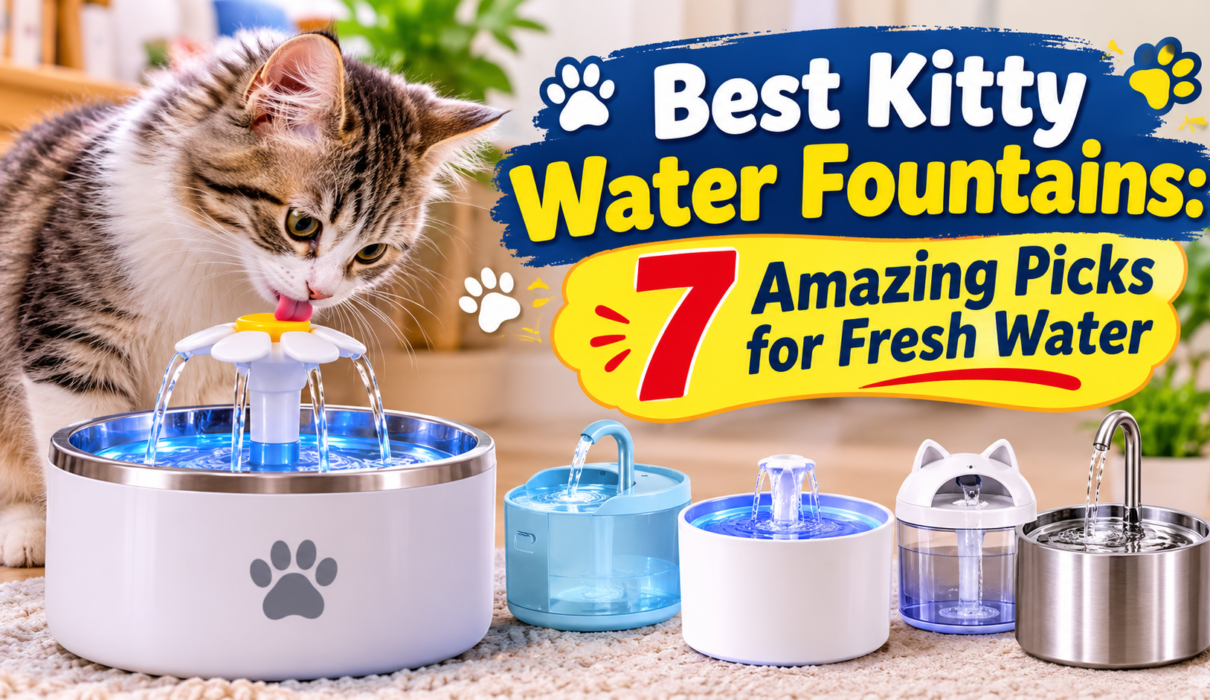
Choosing a fountain can feel confusing because models vary in material, capacity, and design. Some focus on quiet operation, while others offer cordless placement or larger reservoirs. The best kitty water fountains should match your household instead of offering features you will never use. The following options cover different needs. Each product has its own design and features. Compare them carefully instead of assuming one model will suit every cat.
1. Catit Flower Fountain: Best Overall Cat Water Fountain
The Catit Flower Fountain has a recognizable flower-shaped top. Its design offers different drinking styles, depending on the flower attachment. Water moves through the unit and collects in the drinking area. Its commonly listed capacity is around three liters, although buyers should confirm the specifications of their chosen version.
This model may suit owners who want a straightforward fountain for everyday use. Its compact shape can fit into many indoor spaces. The lightweight plastic construction also makes moving it easier. However, plastic surfaces can develop scratches over time. Inspect the fountain during cleaning and replace damaged parts when necessary.
The filtration system helps catch debris during circulation. A cat water fountain with a filter can support routine water maintenance. However, filtration does not remove the need for regular washing. Hair and residue can still collect inside the reservoir and pump.
2. Pioneer Pet Raindrop – Best Stainless Steel Cat Water Fountain
The Pioneer Pet Raindrop Stainless Steel Fountain has a smooth metal drinking surface. Its simple raindrop shape gives it a clean appearance. The model is commonly listed with a capacity of about 1.8 liters. However, specifications may differ between versions and sellers.
Stainless steel is nonporous and generally straightforward to wash. This can make it useful for owners who prefer metal drinking surfaces. Its lower profile may also provide comfortable access for many cats. The design is relatively simple, which may appeal to owners who dislike complicated accessories.
The fountain uses charcoal filtration to help reduce certain tastes and odors. Filters still need replacement according to the manufacturer’s instructions. The reservoir and pump also require routine cleaning. Do not assume that a metal surface makes the entire fountain maintenance-free.
Why consider it?
- Stainless steel drinking surface.
- Simple and practical design.
- Replaceable charcoal filtration.
- Useful capacity for some smaller households.
- Metal surface that is generally easy to wash.
3. PetSafe Drinkwell Pagoda – Best Ceramic Cat Water Fountain
The PetSafe Drinkwell Pagoda offers a ceramic design with two drinking areas. Water flows from the upper section into the lower basin. This creates movement between the two levels. The design may appeal to cats that enjoy drinking from different heights.
Ceramic can feel substantial and stable when placed on a flat surface. Its glazed finish is smooth when undamaged. Owners who prefer ceramic products may also like its appearance. Petsafe Drinkwell Pagoda can look different from ordinary plastic pet accessories.
However, ceramic needs careful handling. A fall or hard impact can chip or crack the surface. Inspect it during every wash. Damaged areas may become harder to clean thoroughly. Follow the manufacturer’s instructions for washing and drying.
Why consider it?
- Ceramic construction with a glazed surface.
- Two drinking levels.
- Stable design on a flat surface.
- Replaceable filtration components.
- Suitable for owners who prefer ceramic products.
Things to consider: Ceramic is heavier than many plastic models. Handle it carefully during cleaning and avoid placing it where it can fall.
4. PetSafe Seaside Stainless Steel Fountain – Best Quiet Cat Water Fountain
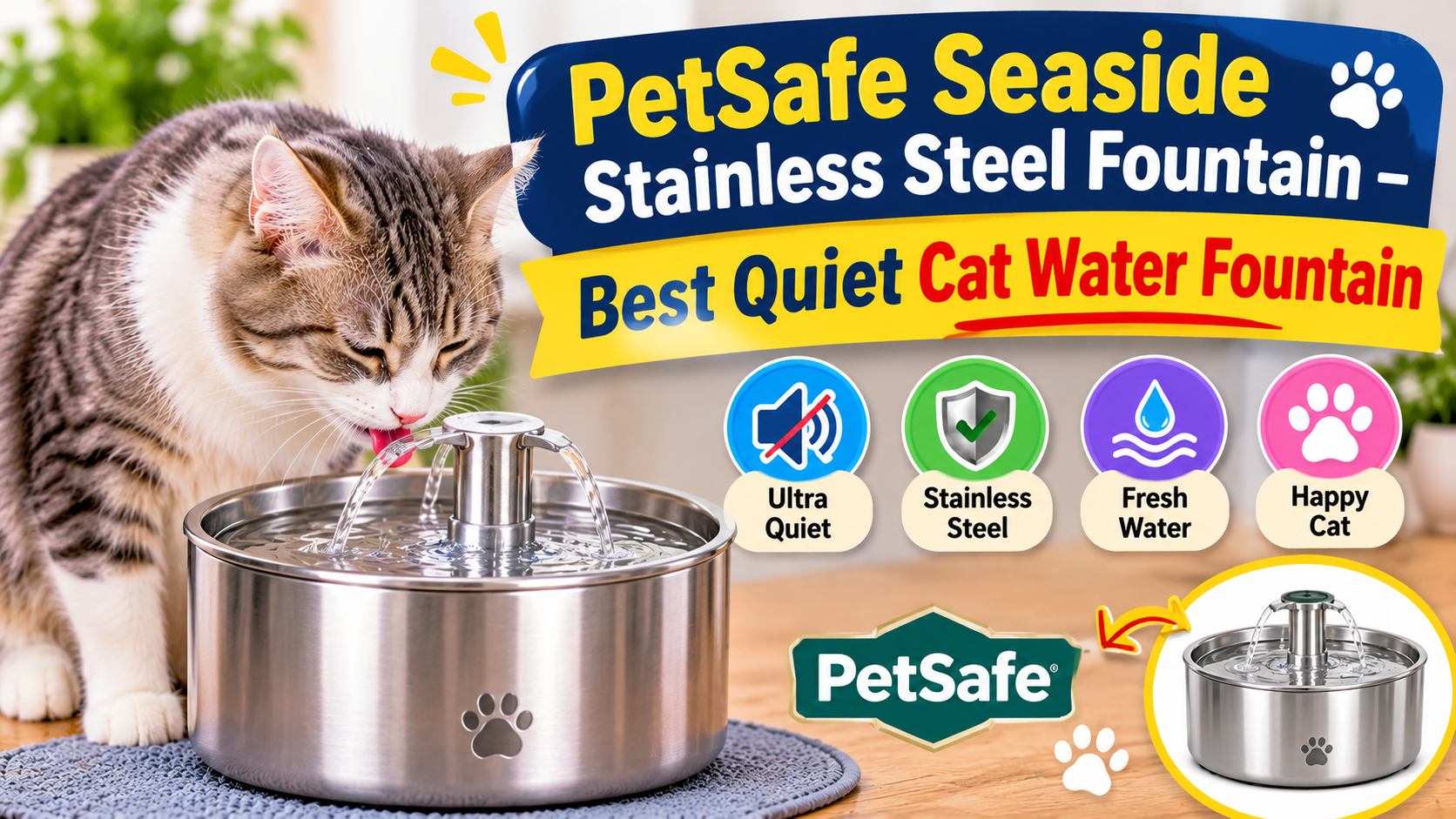
The PetSafe Seaside Stainless Steel Fountain is designed for owners who want a gentle water experience. Its stainless steel drinking surface is practical for routine washing. The water movement may appeal to cats that enjoy a mild flow. Check the current product listing for exact capacity and included components.
Noise is worth considering when choosing a fountain. A quiet cat water fountain may feel more comfortable in a bedroom or calm living space. However, no electric pump is guaranteed to remain silent in every situation. Pump condition, water level, and placement can all affect sound.
Low water levels, trapped hair, or dirt around the pump may make a fountain louder. Set it on a stable, level surface. Follow the maintenance instructions and keep the reservoir filled correctly. If the noise changes suddenly, inspect the pump before assuming the motor has failed.
5. PETLIBRO Dockstream 2 – Best Wireless Cat Water Fountain
The PETLIBRO Dockstream 2 is a cordless-style option. It offers more flexibility when choosing a location. Depending on the version, it may include rechargeable power, a removable wireless pump, and a stainless steel drinking tray.
Some versions may also offer app-connected features. However, specifications can differ between product versions. Check the precise model name and current details before purchasing. Review the charging instructions and battery information as well.
A cordless design can help owners avoid placing the fountain beside an outlet. It may also reduce visible cables around the drinking area. However, rechargeable models need charging according to their instructions. Keep another clean water source available while the fountain charges.
Why consider it?
- Cordless placement on supported versions.
- Rechargeable power system.
- Wireless pump design.
- Stainless steel drinking tray on listed versions.
- Smart features on certain models.
Things to consider: Battery performance depends on the model and operating mode. Confirm charging requirements and replacement-part availability before ordering.
6. PetSafe Drinkwell 360 – Best Cat Water Fountain for Multiple Cats
The PetSafe Drinkwell 360 has a circular design. It can provide drinking access from several sides. This may be useful in homes where more than one cat shares a water station. Different drinking positions may also help reduce crowding around one side.
Some versions have a stated capacity of approximately 128 ounces. However, materials and features may vary. Confirm the exact product listing before buying. A larger reservoir can reduce frequent refilling, but it does not remove the need for regular cleaning.
Consider your available floor space before choosing this model. A larger fountain may not fit comfortably in a small room. You should also observe how your cats share the drinking area. Some pets prefer separate water stations even when a large fountain is available.
Why consider it?
- Circular design with access from different sides.
- Large stated capacity on certain versions.
- Useful for some multi-cat households.
- Filtration components for routine water maintenance.
- Multiple drinking positions.
Things to consider: It needs enough floor space and regular cleaning. Provide additional drinking spots if your cats do not share comfortably.
7. PETKIT Eversweet Solo 2 – Best Easy-to-Clean Cat Water Fountain
The PETKIT Eversweet Solo 2 is a compact option that focuses on everyday convenience. Its design is intended to support straightforward assembly and cleaning. Product descriptions also mention filtration and quiet operation. Check the current manual for exact component details.
An easy-to-clean design matters because every fountain needs regular attention. Removable pieces can make it easier to reach areas where hair and debris collect. Owners should still inspect the pump and filter during routine care. Do not assume that circulating water keeps the device clean automatically.
The compact design may suit homes with limited space. However, you should check its dimensions before ordering. Also review the manufacturer’s instructions for cleaning each component. Some parts may need hand washing rather than machine washing.
Why consider it?
- Compact indoor design.
- Filtration system.
- Quiet operating mode described for the model.
- Convenient assembly and routine maintenance.
- Design intended to support easier cleaning.
Things to consider: Check filter availability and the cleaning instructions. Make sure the reservoir capacity suits your cat’s daily needs.
When comparing the best kitty water fountains, focus on features that make daily care easier. Appearance should not be your only deciding factor. Choose a model that suits your cat and your cleaning routine.
2. What to Look for When Buying a Cat Water Fountain
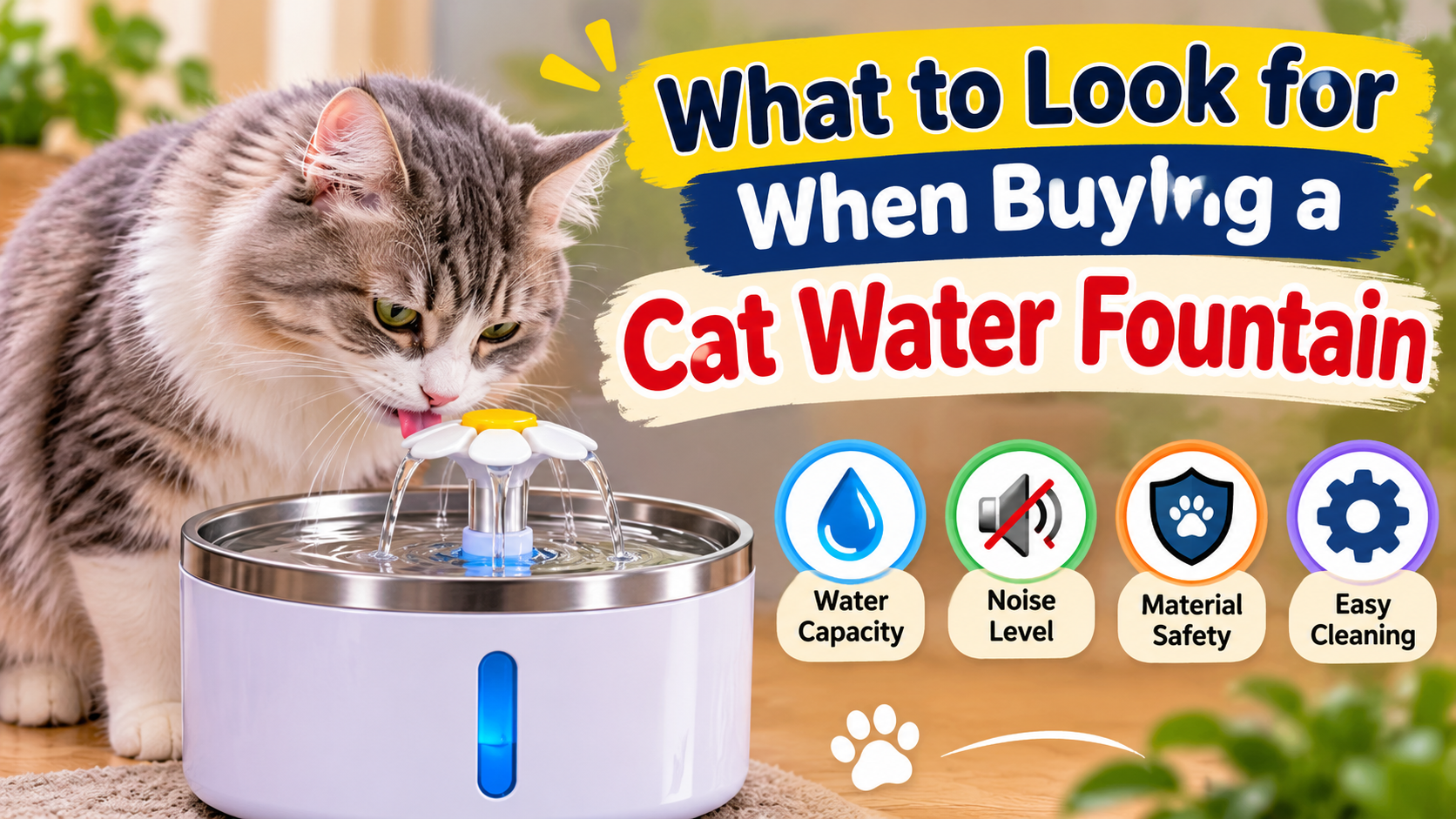
A good purchase starts with your cat’s habits and your home’s practical needs. The best kitty water fountains balance capacity, material, filtration, noise, and cleaning. Extra features are useful only when they solve a real problem for your household.
Material and Build Quality
Most fountains use plastic, stainless steel, ceramic, or a combination of materials. Plastic models are often lightweight and easy to move. However, scratches can develop over time. Inspect the surface during routine washing.
Stainless steel is nonporous and generally easy to clean. Ceramic has a smooth glazed surface when intact. However, it can chip if dropped. Choose a material that suits your cleaning habits and handling preferences.
Check which parts touch the drinking water. Some fountains combine a metal tray with a plastic reservoir. This is not automatically a problem, but every part needs suitable cleaning. Look for smooth surfaces and components that are easy to remove.
Water Capacity and Household Size
Capacity matters when several pets share one fountain. A smaller model may suit one cat. A larger reservoir may be more convenient for multiple cats. However, do not choose a large model without checking its dimensions.
Consider how often you can refill the reservoir. A larger capacity may reduce daily refilling, but water still needs regular replacement and cleaning. Also check whether the drinking area provides enough room for your cat.
If you have several cats, observe their behavior around shared water stations. Some cats drink comfortably together. Others prefer separate locations. Providing more than one drinking spot can help reduce competition.
Filtration System
Many fountains use a prefilter to catch hair and larger particles. Some also use activated carbon to reduce certain tastes and odors. Other models combine several filter materials. Their designs and performance differ, so read the manufacturer’s explanation.
A cat water fountain with a filter can support the fountain’s intended filtration process. However, filters do not make dirty water safe. They also do not replace cleaning the reservoir, pump, or drinking surface.
Filters gradually collect debris during everyday use. Replace them according to the recommended schedule. Check whether compatible replacements are easy to find. Ongoing filter costs should be part of your budget.
Noise Level
Pump noise can affect both pets and people. Some cats investigate gentle bubbling. Others avoid a humming motor. A quiet cat water fountain may be helpful in a bedroom or calm living space.
Read product information and customer feedback before purchasing. Remember that noise can change with maintenance. Low water, trapped debris, or an incorrectly placed pump may create extra sound. Check these factors if the fountain becomes louder.
Power Source and Cord Safety
Traditional fountains plug into an electrical outlet. They can circulate water while connected to power, but their placement depends on cable access. Keep cords secured and away from chewing pets. Never place electrical connections where water can reach them.
An automatic cat water fountain uses a pump to circulate water. Some models operate through a power cable. Others use rechargeable batteries or cordless systems. Check charging instructions and operating modes before purchasing.
Always follow the manufacturer’s safety guidance. Keep the fountain away from areas where cables may become wet. A backup water bowl is useful during cleaning or power interruptions.
Ease of Cleaning and Replacement Parts
A fountain should come apart without unnecessary effort. Look for accessible pump compartments, removable trays, and smooth corners. These features can make routine washing easier.
Some parts may be dishwasher-safe, while others require hand washing. Always check the manual before putting any component in a dishwasher. Also confirm that replacement pumps and cat fountain replacement filters are available.
Consider the ongoing cost of these parts. A fountain may look affordable at first but become expensive if replacements cost more than expected. Check the manufacturer’s support information before making a final decision.
3. How to Clean a Cat Water Fountain
Regular cleaning helps remove hair, saliva, food particles, and buildup. Moving water does not mean the fountain cleans itself. Dirt can collect inside the reservoir, drinking area, filter compartment, and pump.
A simple cleaning routine can make maintenance easier. Follow the manufacturer’s instructions because materials and designs differ. Some parts may need hand washing, while others may be suitable for a dishwasher.
Step 1: Switch Off and Disassemble
Unplug the fountain before touching its components. Remove the remaining water and separate the parts that the manual identifies as removable.
Keep small pieces together so they do not get lost. Do not pull wires or force stuck components. Take care around electrical parts and follow the instructions for removing the pump.
Step 2: Wash the Reservoir and Drinking Area
Use warm water and suitable mild dish soap if the manufacturer permits it. A soft sponge can remove ordinary dirt without scratching surfaces.
Avoid rough scrubbers on plastic. Handle ceramic carefully to prevent chips. Rinse every washed part thoroughly so no soap remains. Check corners where residue may collect.
Step 3: Clean the Pump
Hair and small particles can collect around the pump intake. Remove the pump according to the manual. Open its cover only if the design allows it.
Use a small brush to remove debris from washable sections. Do not immerse electrical components unless the instructions specifically permit it. Check the pump for visible damage before putting it back.
Step 4: Replace the Filter
Filter replacement schedules differ by model. Follow the instructions supplied with your fountain. Some filters need rinsing before installation, while others should be replaced directly.
Use compatible cat fountain replacement filters. Check that each filter sits correctly before reassembling the fountain. Never force a filter into a compartment that does not match its shape.
Step 5: Refill With Fresh Water
Rinse all washable parts and check for soap residue. Install the filter and pump correctly. Add fresh drinking water to the recommended level.
Do not overfill the reservoir. Turn the fountain on and check that water flows normally. Look for leaks around the base and connections. Make sure the pump operates as described in the manual.
Step 6: Check the Fountain After Cleaning
Observe the fountain after switching it on. Check whether water flows smoothly through the drinking area. Listen for unusual sounds and inspect the base for leaks.
If the fountain makes unexpected noise, check the water level and pump placement. Switch it off before inspecting electrical components. Follow the manual if the issue continues.
The best kitty water fountains need regular care, fresh water, and a clean backup bowl. These habits help maintain a comfortable drinking area for your cat.
4. Cat Hydration Tips to Encourage More Drinking
A fountain may encourage some cats to investigate water, but it is only one option. You can make drinking easier by offering clean water in comfortable places. Watch your cat’s routine and make gradual changes.
Place the Fountain in a Comfortable Location
Choose a calm area away from busy walkways and loud appliances. Keep the fountain separate from the litter box. Make sure your cat can approach it without squeezing behind furniture.
Leave enough space around the unit for refilling and cleaning. Avoid placing it near areas where food or litter may fall into the water.
Keep Fresh Water Available
Check the water level every day. Refill the reservoir when needed and replace water if it looks dirty. Filters do not keep water fresh forever.
Wash the fountain according to its maintenance schedule. Keep a separate bowl available during cleaning. This ensures your cat always has another drinking option.
Offer More Than One Drinking Spot
Some cats prefer separate water stations. Place clean bowls in different quiet areas. This gives your pet more choice throughout the day.
A cat drinking fountain can be one of these drinking spots. Keep a normal bowl available as well. Never force your cat to use a particular device.
Consider Food Moisture
Food can contribute to a cat’s daily moisture intake. Wet food generally contains more water than dry food. When comparing cat foods, consider moisture content and nutritional completeness.
Read the product label before choosing a food. Different products contain different ingredients and moisture levels. Some are designed for specific life stages. Ask a veterinarian before making major dietary changes, especially when health concerns exist.
Observe Your Cat’s Drinking Habits
Watch how often your cat visits the water station. Notice sudden changes in drinking behavior. A cat drinking fountain may attract some pets, but it does not guarantee increased water intake.
Keep an eye on the water level and your cat’s normal routine. Contact a veterinarian if your cat’s thirst changes noticeably. Good hydration involves fresh water, suitable food, and regular observation.
5. Common Mistakes to Avoid When Using a Cat Water Fountain
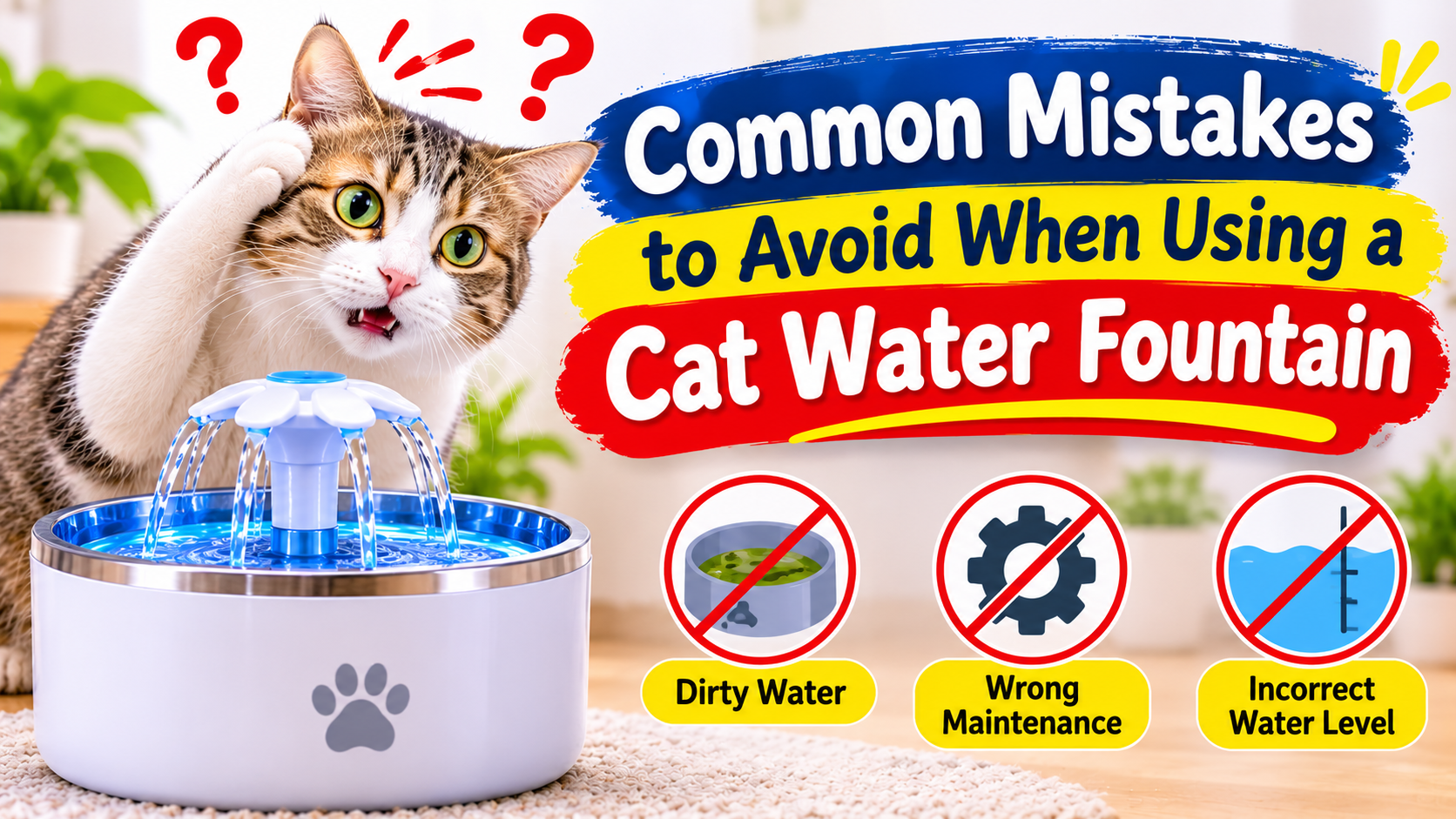
A fountain can be useful, but poor maintenance can make it less convenient. Avoid these common mistakes to support a clean drinking area.
Ignoring Regular Cleaning
Circulating water does not remove every particle. Hair, saliva, and residue can collect inside the unit. Wash removable parts according to the manufacturer’s instructions.
Do not wait until the fountain looks dirty. Some buildup may collect inside the pump or reservoir. Regular cleaning helps you notice problems earlier.
Forgetting Filter Replacement
Filters gradually collect particles. An overdue filter may affect water flow or filtration performance. Follow the manufacturer’s schedule and use compatible replacements.
Keep replacement filters for your cat fountain on hand when possible. This can help you avoid delaying routine maintenance. Check the filter compartment during each cleaning session.
Placing the Fountain in a Noisy or Busy Area
A loud room may discourage a nervous cat from approaching. Choose a quiet location away from appliances and busy walkways.
A quiet cat water fountain may help reduce pump noise. However, check the water level and pump condition if the sound changes. Placement and maintenance can affect the overall experience.
Ignoring Ongoing Costs
The purchase price is not the only expense. Some models need regular filters or replacement pumps. Compare the cost and availability of cat fountain replacement filters before choosing a product.
Check whether the manufacturer sells compatible parts. This can help you avoid problems when routine replacements become necessary.
Frequently Asked Questions
Are Cat Water Fountains Better Than Regular Bowls?
Neither option is best for every cat. Some cats enjoy moving water, while others prefer a regular bowl. Both need fresh water and regular cleaning.
How Often Should I Clean a Cat Water Fountain?
Cleaning frequency depends on the model and its instructions. Many owners establish a regular weekly washing routine. However, check the manufacturer’s guidance for your specific fountain.
Do Cats Actually Prefer Moving Water?
Some cats show interest in flowing water, while others do not. A fountain may attract a curious cat, but it does not guarantee increased drinking.
How Often Should Cat Fountain Filters Be Replaced?
The schedule depends on the fountain and filter type. Follow the manufacturer’s instructions. Replace a filter sooner if it becomes damaged or heavily dirty.
Are Stainless Steel Fountains Better Than Plastic Ones?
Both materials can work when cleaned properly. Stainless steel is nonporous and generally easy to wash. Plastic is lightweight but may develop scratches over time.
Conclusion
The best kitty water fountains offer different features for different homes. Some focus on stainless steel construction. Others provide ceramic designs, cordless operation, or larger capacity. The right choice depends on your cat’s preferences and your household needs. Consider material, pump noise, filter costs, and cleaning requirements before purchasing. Always provide fresh water, even when your cat uses a fountain. A fountain can support convenient daily water access.