


 By
Cat Door Training: 5 Easy Steps to Give Your Cat More Freedom
Introduction: How to Train a Cat to Use a Cat Door Successfully
A cat door can give your cat greater independence by allowing access between designated indoor and outdoor spaces. It can also make daily routines easier for pet owners. However, some cats may feel nervous about walking through a small opening, pushing a moving flap, or hearing unfamiliar noises.
Learning how to train a cat to use a cat door requires patience, encouragement, and a safe training environment. Cats learn at different speeds, so it is important to let your pet explore the door without pressure.
With positive reinforcement, favorite treats, and gradual practice, many cats can become comfortable using a cat door. Whether you have a young kitten, an adult cat, or a nervous rescue cat, a step-by-step approach can help build confidence.
In this guide, you will learn the first three steps to introduce a cat door, encourage your cat to explore it, and reward progress toward independent use or how to train a cat to use a cat door.
Prepare Your Cat Door for Easy Training
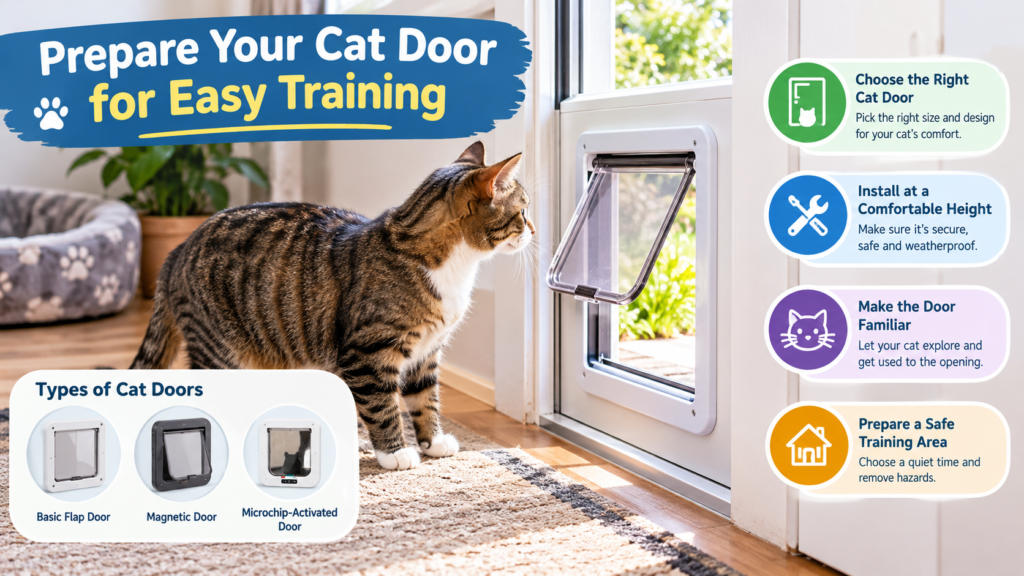
The first step in learning how to train a cat to use a cat door is choosing and preparing the right door. A comfortable, properly installed door makes training easier and helps prevent fear or frustration.
Choose the Right Cat Door
Cat doors come in different sizes and designs, including basic flap doors, magnetic doors, and microchip-activated models.
Choose a door that allows your cat to pass through comfortably without squeezing or crouching excessively. If your cat is older, has mobility problems, or is larger than average, consider a wider opening and an easy-to-push flap.
A microchip-activated door may be useful if you want to restrict access to your own cat. However, your cat will still need to learn how to push through the flap or how to train a cat to use a cat door.
Install the Door at a Comfortable Height
The bottom of the opening should be low enough for your cat to step through naturally. Follow the manufacturer’s installation instructions and make sure the door is securely fitted.
Check for sharp edges, loose parts, and heavy flaps that might frighten your cat. If the door is installed in an exterior door or wall, ensure the installation is secure and weatherproof.
For older cats or cats with joint problems, a low threshold can make passing through easier. If you are unsure about the correct height or installation, consult the door manufacturer or a qualified installer.
Make the Door Familiar
Before starting formal training, allow your cat to investigate the door while it is stationary. Let your cat sniff the frame, inspect the opening, and explore the surrounding area.
If the flap can be safely held open, secure it according to the manufacturer’s instructions. This allows your cat to see the opening without needing to push anything or how to train a cat to use a cat door.
Never leave an unstable prop in place if it could fall, trap your cat, or create another hazard.
Prepare a Safe Training Area
Choose a quiet time when your cat is relaxed and the household is not busy. Remove distractions and make sure the area around the door is free from objects that could cause your cat to trip.
If the door leads outside, begin training with the outdoor area securely enclosed or otherwise controlled. Avoid allowing your cat to wander into an unfamiliar or unsafe outdoor environment during training.
Introduce Your Cat to the Cat Door Gradually
An unfamiliar cat door can seem intimidating, especially if the flap moves unexpectedly or makes a noise. Gradual introduction helps your cat become familiar with the door without creating unnecessary stress.
Let Your Cat Explore at Its Own Pace
Start by allowing your cat to approach the door voluntarily. Sit nearby and speak in a calm voice, but avoid picking up your cat and pushing it through the opening.
Some cats investigate immediately, while others need several short sessions before approaching confidently. Both responses are normal.
Keep the surrounding area quiet and give your cat enough space to move away whenever it wants. Allowing your cat to control the pace of training helps build trust or how to train a cat to use a cat door.
Use Treats and Toys to Build Confidence
Place a favorite treat near the door, then gradually move treats closer to the opening as your cat becomes comfortable.
You can also use a favorite toy to encourage your cat to approach. Reward small steps, such as sniffing the frame, standing near the opening, or looking through the doorway.
Do not withhold meals to force your cat to use the door. Food should be a positive reward rather than a source of pressure.
Introduce the Flap Slowly
Once your cat is comfortable with the open doorway, begin introducing the flap. Move it gently so your cat can observe the motion and hear the sound.
Allow your cat to touch the flap voluntarily. Reward calm investigation, and stop if your cat becomes frightened.
If the flap seems too heavy or noisy, check whether the door is suitable for your cat. You may need a lighter model or a slower introduction.
The goal is to help your cat understand that the door is safe and that it can move through the opening without being forced.
Watch for Signs of Fear
Your cat may flatten its ears, crouch, retreat, hide, or refuse treats when feeling uncomfortable. If you notice these signs, pause the session and allow your cat to relax.
Return to an easier step, such as exploring the stationary doorway. Avoid repeatedly moving the flap toward your cat’s face or blocking its escape route.
Progress may be gradual, but a calm and confident cat is more likely to learn successfully.
Use Treats and Rewards to Teach Your Cat to Pass Through
Positive reinforcement is one of the most effective ways to encourage a cat to use a new door. When your cat receives a reward for approaching or passing through the opening, it can begin to associate the door with a pleasant experience.
Place Treats Near the Opening
Start by placing a small treat on the floor near one side of the door. Once your cat approaches confidently, move the treat closer to the opening.
Gradually place rewards just beyond the doorway so your cat has a reason to look through or step toward it.
Move slowly and allow your cat to decide when it is ready to progress. If your cat hesitates, return to the previous step rather than increasing the pressure.
Encourage Your Cat With a Favorite Toy
Some cats respond better to toys than treats. You can move a wand toy gently through the opening to encourage your cat to follow it or how to train a cat to use a cat door.
Keep the toy movements slow and predictable. Avoid making your cat jump through the opening or become so excited that it bumps into the door.
Reward your cat after each successful attempt, even if it only passes its head or front paws through initially.
Practice From Both Sides
Once your cat can pass through the open doorway in one direction, repeat the exercise from the opposite side.
For example, encourage your cat to move from the room toward the other side, then switch positions and invite it back. This helps your cat become comfortable approaching the door from either direction.
Keep training sessions short, ending while your cat is still relaxed and interested. Several brief sessions are often more useful than one long session.
Gradually Increase Your Cat’s Confidence
As your cat becomes more comfortable, reward it for taking additional steps through the opening. Start with approaching the doorway, then moving its head through, placing its front paws beyond the threshold, and finally walking through completely.
Avoid rushing from one stage to the next. If your cat stops progressing, return to a step it already understands.
Consistency is important. Try to practice at similar times each day, but skip a session if your cat appears stressed or uninterested.
Important tip: Never push, pull, or trap your cat inside the opening. Allowing your cat to choose when to move forward helps build confidence and trust.
Keep Safety in Mind During Training
If your cat door leads outdoors, make sure your cat is ready for outdoor access before allowing unsupervised use. Consider traffic, predators, local wildlife, weather, and other neighborhood hazards.
Keep vaccinations, identification, and parasite prevention up to date as recommended by your veterinarian. An enclosed catio or secure outdoor run can offer an alternative for cats that enjoy fresh air but face risks outside.
Remember that learning to pass through a cat door does not automatically mean a cat is ready to explore outdoors independently.
Learn How to Train a Cat to Use a Pet Door Independently
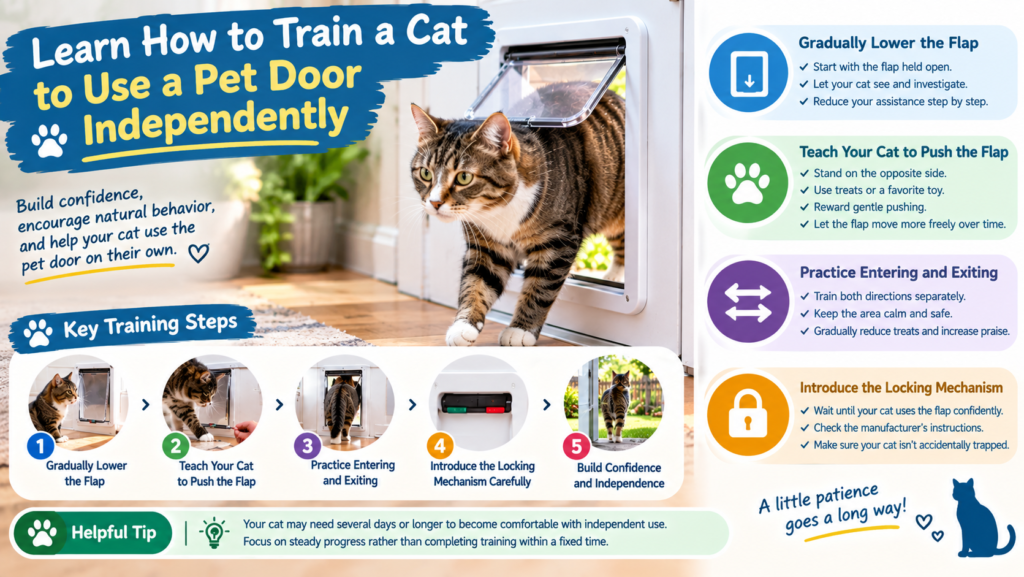
Once your cat feels comfortable approaching the opening and moving through it, the next step is teaching independent use. Learning how to train a cat to use a pet door requires gradual practice, positive reinforcement, and a flap that your cat can push without difficulty.
Avoid rushing the process. Your cat should feel confident moving through the door in both directions before you expect it to use the door regularly.
Gradually Lower the Cat Door Flap
If you started training with the flap held open, begin lowering it a little at a time once your cat is comfortable passing through the opening or how to train a cat to use a cat door.
Allow your cat to see and investigate the movement. Reward calm behavior and let your cat touch the flap voluntarily.
At first, you may need to hold the flap partially open while your cat passes through. Gradually reduce your assistance as your cat learns to push it independently.
Never allow the flap to fall suddenly onto your cat’s back or head. If the flap is too heavy, stiff, or noisy, consider adjusting it according to the manufacturer’s instructions or choosing a more suitable model.
Teach Your Cat to Push the Flap
Some cats understand the movement immediately, while others need additional encouragement.
Try these simple steps:
- Stand on the opposite side of the door where your cat can see you.
- Hold the flap open slightly, if it is safe to do so.
- Use a treat or favorite toy to encourage your cat to approach.
- Reward your cat for touching or gently pushing the flap.
- Gradually allow the flap to move more freely as your cat gains confidence.
Keep the rewards consistent and avoid forcing your cat’s head against the flap. Your cat should learn the movement voluntarily.
Practice Entering and Exiting
A cat may learn to pass through the door in one direction but hesitate when returning. Practice both directions separately.
Encourage your cat through the doorway, reward it, and then repeat the process from the other side. Keep the training area calm and make sure your cat always has a safe place to retreat.
Once your cat can use the door independently, reduce the frequency of treats gradually while continuing to praise successful behavior or how to train a cat to use a cat door.
Introduce the Locking Mechanism Carefully
Some pet doors have locking settings that control entry, exit, or both. Introduce these features only after your cat understands how to use the flap.
Check the manufacturer’s instructions and make sure your cat is not accidentally trapped outside or prevented from reaching essential resources.
If you use a microchip-activated door, follow the setup instructions and test the locking mechanism before relying on it.
Helpful tip: Your cat may need several days or longer to become comfortable with independent use. Focus on steady progress rather than completing training within a fixed time.
Troubleshoot Cat Door Training Problems and Build Confidence
Not every cat learns to use a cat door immediately. Some cats are cautious about unfamiliar objects, while others dislike the sound or feel of the flap or how to train a cat to use a cat door.
If your cat refuses to pass through the door, identify what makes the experience uncomfortable and adjust your approach.
Understand Why Your Cat Refuses to Use the Door
Common reasons include:
- Fear of the flap: The movement or sound may startle your cat.
- An uncomfortable opening: The door may be too small or positioned too high.
- Unfamiliar surroundings: Your cat may feel uncertain about what is on the other side.
- Negative experiences: A previous attempt may have frightened or trapped your cat.
- Stress from other pets: A dog or another cat may make the doorway feel unsafe.
Return to an earlier training step if your cat becomes nervous. Check the door for mechanical problems and ensure the opening is comfortable for your pet or how to train a cat to use a cat door.
How to Train a Feral Cat to Use a Cat Door
Learning how to train a feral cat can require extra patience because a feral cat may be wary of people and unfamiliar surroundings.
Start by establishing a quiet, predictable environment. If the cat already visits a feeding station, place food at a comfortable distance from the door and gradually move it closer as the cat becomes relaxed.
Do not rush toward the cat, attempt to grab it, or force it through the opening. Allow the cat to explore voluntarily.
If the cat lives in a managed colony or uses a shelter, consider whether the door will provide safe access to food, water, and protected resting areas. A door should not be used in a way that traps cats, separates dependent kittens from their mother, or blocks access to essential resources.
For a fearful or unsocialized cat, a qualified feline behavior professional or experienced rescue organization may help develop an appropriate plan or how to train a cat to use a cat door.
Use Food Rewards Without Rushing the Process
The phrase feed the cats speed training may refer to using food rewards to encourage quicker learning. However, feeding should never be used to pressure a cat into doing something it fears.
Instead, use small portions of your cat’s normal food or favorite treats as rewards for voluntary progress.
For example, reward your cat for approaching the door, investigating the flap, or passing through the opening. Increase the difficulty gradually and allow breaks whenever the cat loses interest or how to train a cat to use a cat door.
Avoid placing food so far through the door that your cat feels compelled to squeeze through an uncomfortable opening. The aim is to build confidence, not simply to make the cat move faster.
Keep Dogs Away if They Make Your Cat Nervous
In homes with multiple pets, dog training for cats is a separate but sometimes related concern. A dog that barks at, chases, or blocks a cat near the doorway can make cat door training much more difficult.
Keep dogs away from the training area until your cat is comfortable. Use secure barriers where necessary, and reward calm behavior from the dog at a safe distance or how to train a cat to use a cat door.
Never allow a dog to wait on the other side of the cat door in a way that frightens or corners the cat. The doorway should remain a safe route for the cat.
Know When to Seek Professional Advice
If your cat shows persistent fear, stops eating normally, hides excessively, or becomes distressed during training, pause and reassess the situation.
Consult a veterinarian if your cat appears to have pain, mobility difficulties, or a sudden change in behavior. A qualified feline behavior professional may help if fear continues despite gradual, positive training or how to train a cat to use a cat door.
Remember that some cats may never enjoy using a flap door. An alternative entrance or supervised access may be more appropriate for their needs.
Frequently Asked Questions About Cat Door Training
How Long Does It Take to Train a Cat to Use a Cat Door?
The time varies according to your cat’s age, temperament, confidence, and previous experiences. Some cats learn within a few days, while others need several weeks or longer.
Short, positive sessions are generally preferable to lengthy attempts. Avoid progressing to the next step until your cat is comfortable with the current one or how to train a cat to use a cat door.
How Do You Train a Cat to Use a Pet Door With a Flap?
Start by securing the flap open if the manufacturer allows it. Encourage your cat to approach with treats or toys, then gradually introduce the movement of the flap.
Reward voluntary attempts to push through and practice from both sides. Never force your cat through the opening.
Can an Older Cat Learn to Use a Cat Door?
Yes, many older cats can learn to use a cat door. Choose a model with an appropriate opening, a low threshold, and a flap that is easy to push or how to train a cat to use a cat door.
If your older cat has arthritis, reduced vision, or other mobility concerns, consult your veterinarian and consider whether a different access method would be more comfortable.
How Do You Train a Feral Cat to Use a Cat Door?
Provide a quiet environment, maintain a predictable routine, and use food rewards to encourage voluntary exploration. Avoid forced handling or trapping the cat in the opening.
If the cat lives outdoors or belongs to a managed colony, make sure the door provides safe access to shelter and does not interfere with feeding or caregiving routines or how to train a cat to use a cat door.
Should I Let My Cat Outside After Learning to Use a Cat Door?
Learning to use a cat door does not automatically mean your cat is ready for unrestricted outdoor access.
Consider local traffic, predators, disease exposure, parasites, weather, and wildlife risks. Make sure your cat has suitable identification and veterinary preventive care or how to train a cat to use a cat door.
A secure catio or enclosed outdoor space can provide fresh air and stimulation with fewer risks. You can also choose a door that gives access only to a safe indoor area.
Conclusion: Master How to Train a Cat to Use a Cat Door With Patience
Learning how to train a cat to use a cat door is a gradual process that depends on comfort, trust, and consistent positive reinforcement.
The five essential steps are:
- Prepare a safe, appropriately sized cat door.
- Introduce the opening gradually.
- Use treats and toys to reward progress.
- Teach your cat to push the flap and pass through independently.
- Troubleshoot problems without rushing or forcing your cat.
Every cat learns at a different pace. Some become comfortable within days, while others need more time or may prefer an alternative entrance or how to train a cat to use a cat door.
Focus on your cat’s safety and confidence rather than speed. With patience and a suitable training setup, you can help your cat learn a useful new skill while maintaining a safe and comfortable home environment.