

 By
Introduction
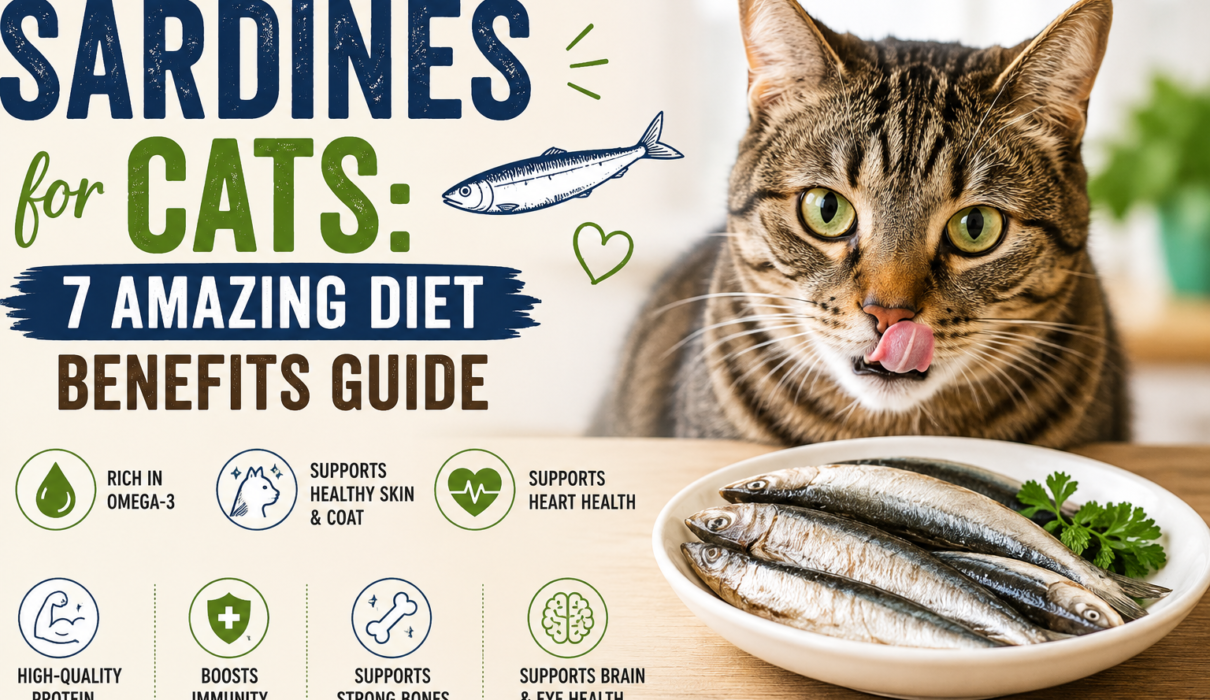
Many cats enjoy the taste and smell of fish, which makes sardines an interesting occasional addition to their diet. Sardines for cats can provide protein, healthy fats, and several nutrients that may support overall wellness when offered in appropriate amounts.
Sardines are particularly known for their omega-3 fatty acids. These fats are commonly included in quality fish cat food because they can play a role in supporting healthy skin, coat, and other aspects of cat health.
However, sardines should not replace a complete and balanced cat food. Instead, they can be used as an occasional treat or meal topper when prepared properly. Before introducing any new food, consider your cat’s individual dietary needs and consult a veterinarian if your cat has a medical condition or follows a special diet.
1. Are Sardines Safe for Cats?
Yes, plain sardines can generally be an appropriate occasional food for many cats. They contain animal-based protein and beneficial fats, making them nutritionally interesting. However, the way sardines are prepared matters.
Plain cooked or properly prepared canned sardines are preferable to products containing added ingredients. Avoid sardines prepared with onions, garlic, spicy seasonings, sauces, or excessive amounts of salt, as these ingredients may be unsuitable for cats.
It is also important to consider bones. Small fish bones can sometimes be soft enough to eat, particularly in properly processed canned sardines, but owners should still be cautious about bones and preparation.
When introducing sardines for cats, start with a small amount and observe how your cat responds. If your cat develops digestive problems or other unusual symptoms after eating a new food, stop offering it and speak with a veterinarian.
2. Sardines Provide Omega-3 Fatty Acids
One of the main reasons sardines attract attention as a cat food addition is their omega-3 fatty acid content. Omega 3 for cats is often discussed because these essential fats have important roles in normal body function.
Sardines naturally contain omega-3 fatty acids, including EPA and DHA. These nutrients are also commonly found in fish-based diets and fish cat food.
Including appropriate sources of omega-3 fatty acids in a cat’s overall diet may support normal skin and coat condition and contribute to general wellness. However, the amount a cat needs depends on its overall diet and individual nutritional requirements.
For this reason, feeding a small amount of sardine is not necessarily better than choosing a nutritionally complete cat food that already provides appropriate nutrients. Sardines should generally be viewed as an occasional addition rather than a substitute for balanced nutrition.
3. May Support Healthy Skin and Coat
A cat’s skin and coat can reflect its overall nutrition. Healthy fats, including omega-3 fatty acids, can be part of a balanced diet that supports normal skin function and coat condition.
Because sardines contain beneficial fats, small portions may complement a cat’s regular diet. This is one reason fish ingredients are sometimes included in commercial cat foods.
However, coat quality depends on many factors, including genetics, age, grooming habits, overall nutrition, and general health. Sardines alone cannot solve every skin or coat concern.
If your cat suddenly develops excessive scratching, hair loss, irritated skin, or major changes in its coat, it is better to consult a veterinarian rather than relying on dietary changes alone.
4. May Support Heart and Overall Cat Health
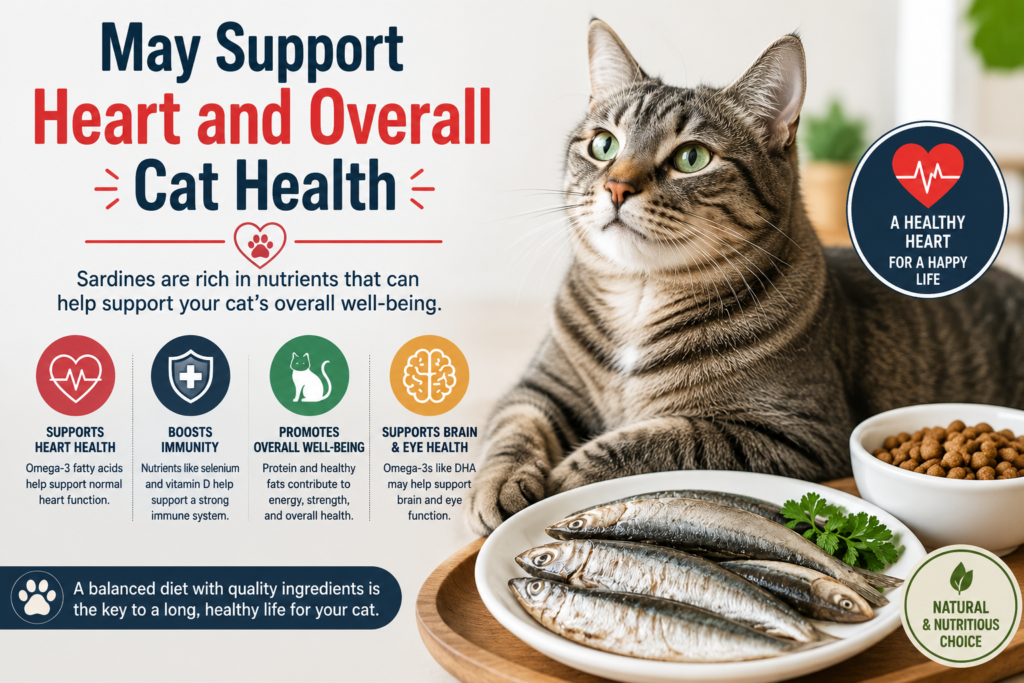
Good nutrition is an important part of maintaining overall cat health. Sardines contain protein, fats, and other nutrients that can contribute to a varied diet when offered appropriately.
Their omega-3 content is particularly noteworthy. Omega-3 fatty acids have several biological roles in the body, making them valuable nutrients in a cat’s overall nutritional plan.
Still, feeding sardines does not automatically make a cat healthier. A cat needs a complete diet that provides the right balance of protein, fats, vitamins, minerals, and other essential nutrients.
Think of sardines as an occasional nutritional addition rather than a complete meal. The foundation of your cat’s diet should remain a nutritionally complete food appropriate for its age and needs.
5. Sardines Provide High-Quality Protein
Cats are obligate carnivores, meaning animal-based nutrients are an important part of their nutritional requirements. Protein helps support normal body functions and the maintenance of tissues.
Sardines provide animal-based protein, which makes them a useful occasional food for cats that tolerate fish well. Adding a small amount to a regular meal can provide extra protein while also introducing the natural flavor of fish.
However, sardines should not be used as the primary source of nutrition. Even foods that are rich in protein may not provide every nutrient a cat needs in the correct proportions.
When selecting the best food for cats, look for a complete and balanced diet designed specifically for feline nutritional needs. Sardines can then be considered an occasional treat or topper rather than a replacement for the main diet.
6. May Make Meals More Appealing
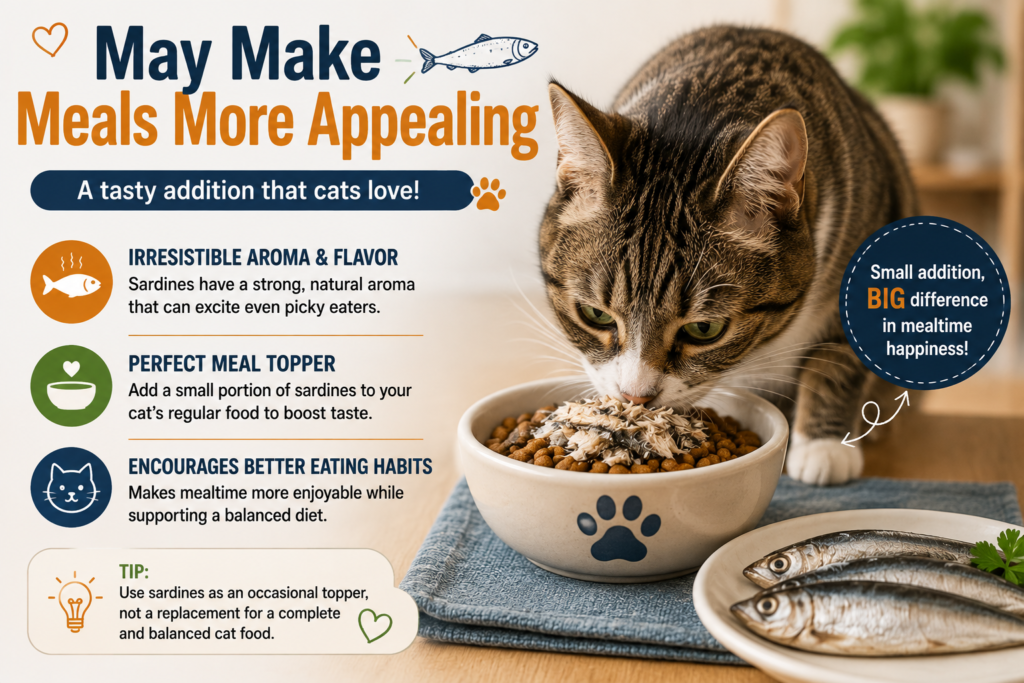
Some cats are naturally attracted to the smell and taste of fish. Because sardines have a strong natural aroma, a small amount may make a regular meal more appealing to a cat that enjoys fish.
You can use sardines for cats as an occasional meal topper rather than serving them as a complete meal. A small portion mixed with regular cat food can add variety without replacing the nutrients your cat gets from its balanced diet.
However, it is important not to rely too heavily on tasty additions. If a cat regularly receives highly appealing treats or toppers, it may become less interested in its regular food. Keep sardines occasional and continue offering a complete and balanced diet.
7. Sardines Provide Additional Nutrients
In addition to protein and omega-3 fatty acids, sardines contain other nutrients that can contribute to a varied diet. Depending on how they are prepared and processed, sardines may provide nutrients such as vitamin D, vitamin B12, selenium, and calcium.
These nutrients have different roles in normal body function. For example, protein supports tissues, while vitamins and minerals help support various biological processes.
However, the nutritional value of sardines does not mean they contain everything a cat needs. This is why they should be considered an addition to a complete diet rather than a replacement for the best food for cats.
A quality commercial cat food is formulated to provide a balanced combination of essential nutrients. Sardines can simply add variety when your cat tolerates them well.
How to Safely Feed Sardines to Cats
If you decide to introduce sardines for cats, preparation is one of the most important considerations.
Choose plain sardines without added spices, sauces, or unnecessary ingredients. Avoid products containing onion or garlic, as these can be harmful to cats. Sardines packed with excessive salt are also not a good choice for regular feeding.
Canned sardines can be convenient, but check the ingredient label before offering them. Sardines packed in water without added salt are generally a simpler option than heavily seasoned or sauced varieties.
Start with a very small amount when introducing sardines for the first time. This gives you an opportunity to see whether your cat tolerates the food without digestive problems.
If your cat has a specific health condition, food sensitivity, or prescribed diet, ask your veterinarian before adding sardines or other new foods.
How Much Sardine Can a Cat Eat?
The appropriate amount depends on several factors, including your cat’s size, age, activity level, overall diet, and individual health needs.
Sardines should generally remain a small part of the diet rather than becoming a major source of daily calories. Treats and food toppers should not displace the complete nutrition provided by your cat’s regular food.
A practical approach is to begin with a small portion and monitor your cat’s response. If your cat tolerates it well, sardines can remain an occasional treat rather than an everyday staple.
For cats with special nutritional requirements, it is best to ask a veterinarian about an appropriate portion and frequency.
Sardines vs. Fish Cat Food: Which Is Better?
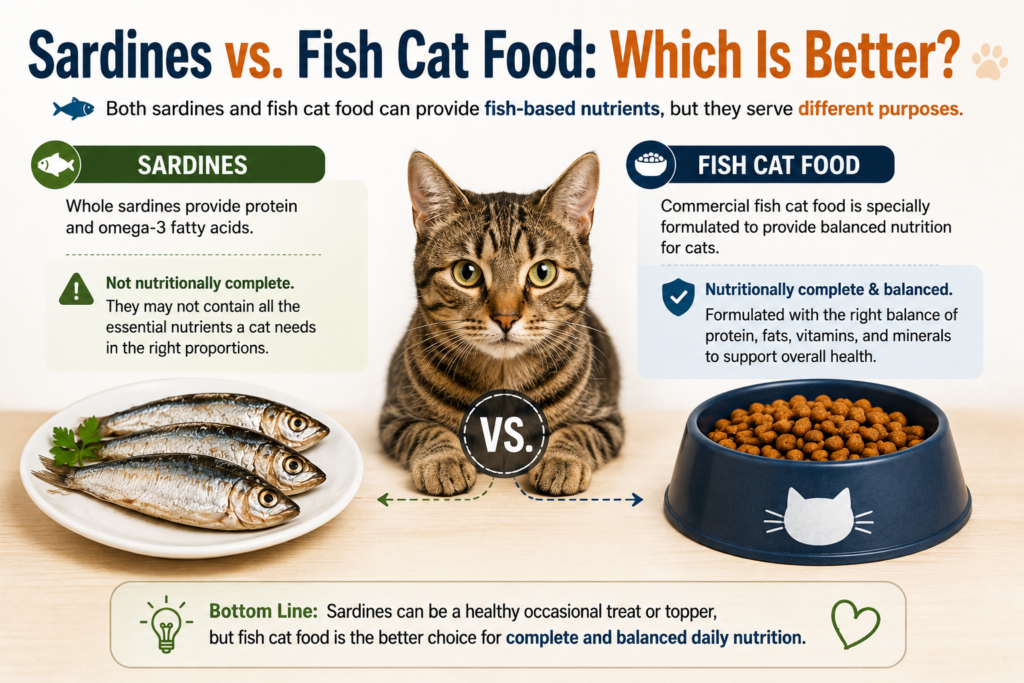
Both sardines and fish cat food can provide fish-based nutrients, but they serve different purposes.
Commercial cat food is specifically formulated to provide a balanced combination of nutrients required by cats. Depending on the product, fish-based cat food may contain ingredients such as salmon, sardines, tuna, or other fish.
Whole sardines, on the other hand, are not automatically nutritionally complete. Even though they provide protein and omega-3 fatty acids, they may not contain all the essential nutrients a cat needs in the right proportions.
When choosing the best food for cats, focus on a complete and balanced diet that is appropriate for your cat’s life stage. Sardines can then be used as an occasional topper or treat if they fit your cat’s nutritional needs.
When Should Cats Avoid Sardines?
Although plain sardines may be suitable for many cats, they are not appropriate for every cat.
A cat may need to avoid sardines if it has a known sensitivity to fish or if a veterinarian has recommended a diet that excludes certain ingredients. Cats with specific medical or nutritional requirements may also need carefully controlled diets.
Salt and added ingredients are another concern. Sardines prepared with sauces, seasonings, or excessive salt should not be treated the same as plain sardines.
If your cat experiences digestive issues or other unusual reactions after eating sardines, stop offering them and speak with your veterinarian.
Your cat’s individual cat health needs should always come before adding a particular food simply because it has nutritional benefits.
Conclusion
Sardines for cats can be a nutritious occasional addition to a cat’s diet. They provide animal-based protein, omega-3 fatty acids, and several other nutrients that may complement a balanced nutritional plan.
The key is moderation and proper preparation. Choose plain sardines, avoid unnecessary salt and seasonings, introduce them gradually, and keep portions small.
Most importantly, sardines should not replace a complete and balanced cat food. Whether you choose traditional cat food or fish cat food, your cat’s main diet should provide the nutrients it needs for its age and lifestyle.
If you are unsure whether sardines are appropriate for your cat, particularly if your cat has specific dietary requirements, consult a veterinarian before making them a regular part of the diet.
Frequently Asked Questions About Sardines for Cats
1. Can cats eat sardines?
Yes, many cats can eat small amounts of plain, properly prepared sardines as an occasional treat. Avoid sardines containing excessive salt, sauces, spices, onion, or garlic.
2. Are sardines good for cats?
Sardines can provide animal-based protein, omega-3 fatty acids, and other nutrients. However, they should be an occasional addition rather than a replacement for complete and balanced cat food.
3. Are sardines a good source of omega 3 for cats?
Yes. Sardines naturally contain omega-3 fatty acids, including EPA and DHA, which can contribute to a cat’s overall nutritional intake.
4. Can cats eat canned sardines?
Cats can eat some types of canned sardines, provided they are plain and do not contain excessive salt, sauces, spices, onion, or garlic. Check the ingredient label before feeding them.
5. How often can cats eat sardines?
Sardines should generally be offered occasionally and in small portions. The appropriate amount can vary based on your cat’s size, diet, age, and individual health needs.
6. Can kittens eat sardines?
Kittens need a nutritionally complete diet designed for growth. Sardines should not replace kitten food, and it is best to ask a veterinarian before adding them regularly to a kitten’s diet.
7. Are sardines better than fish cat food?
Not necessarily. Complete fish cat food is formulated to provide balanced nutrition, while sardines are better used as an occasional treat or topper.
8. Can sardines help support cat health?
Sardines contain protein and omega-3 fatty acids that can complement a balanced diet. However, overall cat health depends on complete nutrition, proper care, and other factors.
9. Can cats eat sardines every day?
It is generally better to keep sardines as an occasional addition rather than a daily staple. Too many extras can add unnecessary calories and may interfere with a balanced diet.
10. What are the best sardines for cats?
Plain sardines with minimal added ingredients are the simplest option. Avoid products with added salt, sauces, spices, onion, garlic, or other ingredients that may be unsuitable for cats.