

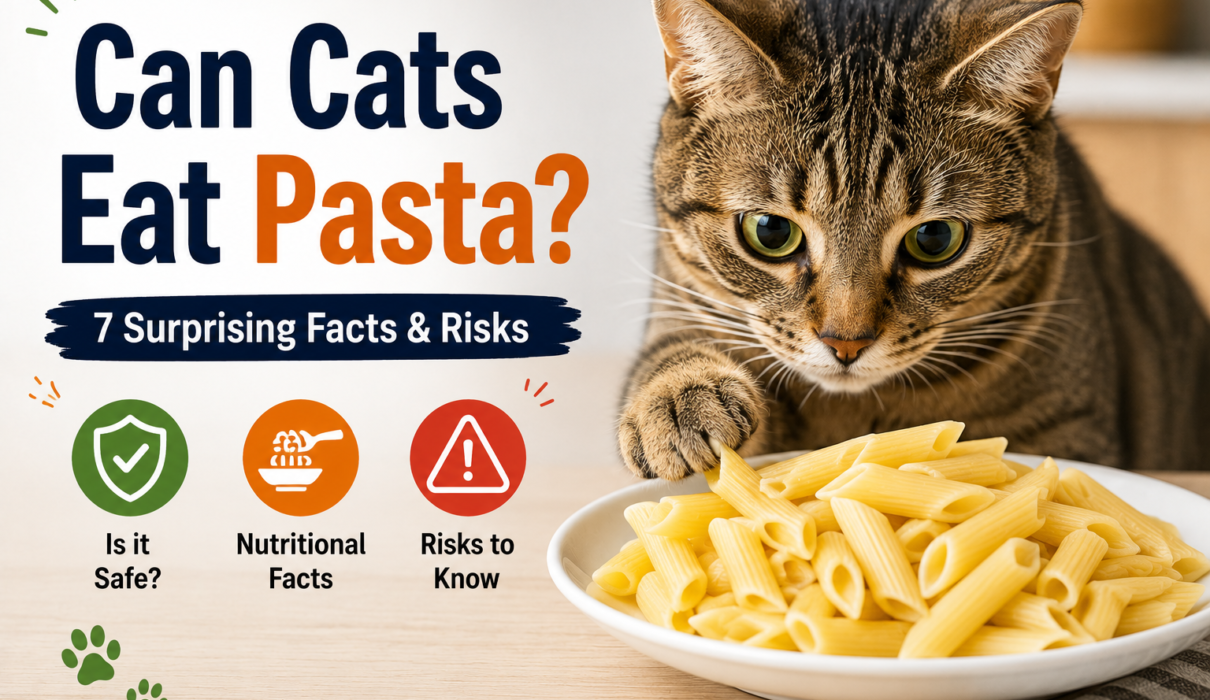
 By
By Can Cats Eat Pasta?
If you’re wondering, can cats eat pasta, the short answer is yes, cats can usually eat a small amount of plain, fully cooked pasta, but it should only be an occasional treat. Pasta isn’t toxic to cats by itself, but it also doesn’t provide the essential nutrition cats need as part of their regular diet.
Cats are obligate carnivores, meaning their bodies are adapted to obtain important nutrients primarily from animal-based foods. A complete and balanced cat food is designed to provide those nutrients in the right amounts, while plain pasta mainly provides carbohydrates.
The bigger concern is often what is added to the pasta. Sauces, seasonings, garlic, onion, excessive salt, butter, and other ingredients can make a simple pasta dish unsuitable or potentially harmful for cats.
Can Cats Eat Pasta Safely?
For most healthy cats, a tiny portion of plain, cooked pasta is unlikely to cause a problem. If you decide to offer some, keep it simple: the pasta should be fully cooked, cooled, and free from sauces, spices, garlic, onion, and other additives.
Portion size matters, too. A cat doesn’t need a bowl of pasta. A small bite or a few pieces offered occasionally is more appropriate than making it a regular part of their meals.
It’s also important to remember that safe doesn’t necessarily mean healthy or necessary. Even if your cat tolerates pasta without any obvious reaction, it doesn’t provide the balanced combination of protein, fats, vitamins, minerals, and other nutrients found in properly formulated cat food.
When it comes to human food safety, ingredients are just as important as the food itself. A plain piece of cooked pasta is very different from a plate of pasta covered in sauce and seasonings.
Fact #1: Plain Cooked Pasta Is Usually Not Toxic to Cats
Plain pasta itself is generally not considered toxic to cats. If your cat steals a small piece of cooked spaghetti or macaroni from your plate, there’s usually no reason to panic if it contains no problematic ingredients.
However, “not toxic” doesn’t mean “nutritionally beneficial.” Pasta doesn’t meet a cat’s nutritional requirements and shouldn’t replace their normal food.
It’s also better to avoid giving cats uncooked pasta. Dry pasta can be hard and difficult to chew or digest, while raw dough presents additional concerns. Pasta that is old, spoiled, or contaminated should obviously never be offered to a pet.
If your cat accidentally eats a small amount of plain cooked pasta, simply keep an eye on them for any unusual signs of digestive upset.
Fact #2: Cats Don’t Need Carbs From Pasta
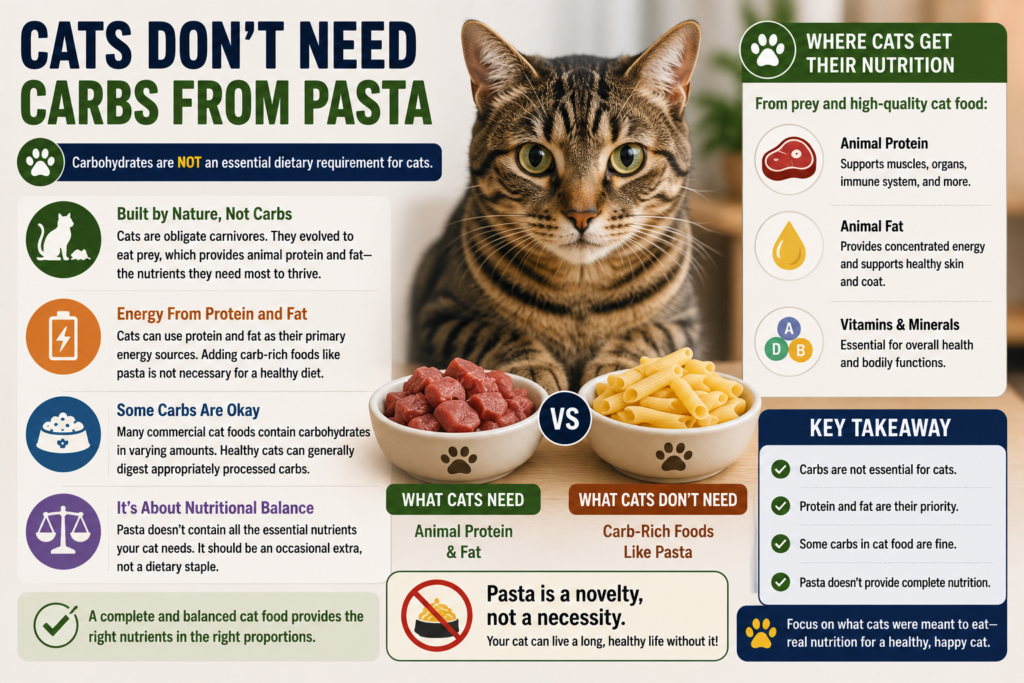
One of the surprising facts about carbs for cats is that carbohydrates aren’t an essential dietary requirement in the same way that certain amino acids, fatty acids, vitamins, and minerals are.
Cats have evolved to obtain much of their nutrition from prey, which naturally provides animal protein and fat. Their bodies can also use other nutrients as energy sources, so adding carbohydrate-rich foods such as pasta isn’t necessary to maintain a healthy diet.
That doesn’t mean cats can never consume carbohydrates. Many commercial cat foods contain carbohydrates in varying amounts, and healthy cats can generally digest appropriately processed carbohydrates.
The key issue is nutritional balance. Pasta doesn’t contain everything your cat needs, so it should be viewed as an occasional extra rather than a dietary staple.
Fact #3: Pasta Sauce Can Be More Dangerous Than Pasta
When asking can cats eat pasta, it’s important not to confuse plain pasta with a typical human pasta meal.
The pasta itself may be relatively harmless, but the sauce and toppings can introduce ingredients that aren’t appropriate for cats. Some recipes contain onion or garlic, which can be harmful to cats. Other dishes may contain excessive amounts of salt, rich fats, spices, or other ingredients that can cause problems.
For example, a small piece of plain cooked spaghetti is very different from spaghetti covered in garlic and onion sauce.
This is why checking ingredients is an important part of human food safety for pets. Don’t assume that because an ingredient is safe for people, it is automatically safe for cats.
If you’re sharing human food with your cat, keeping it plain and avoiding seasoned leftovers is generally the safer approach.
Fact #4: Too Much Pasta Can Upset Cat Digestion
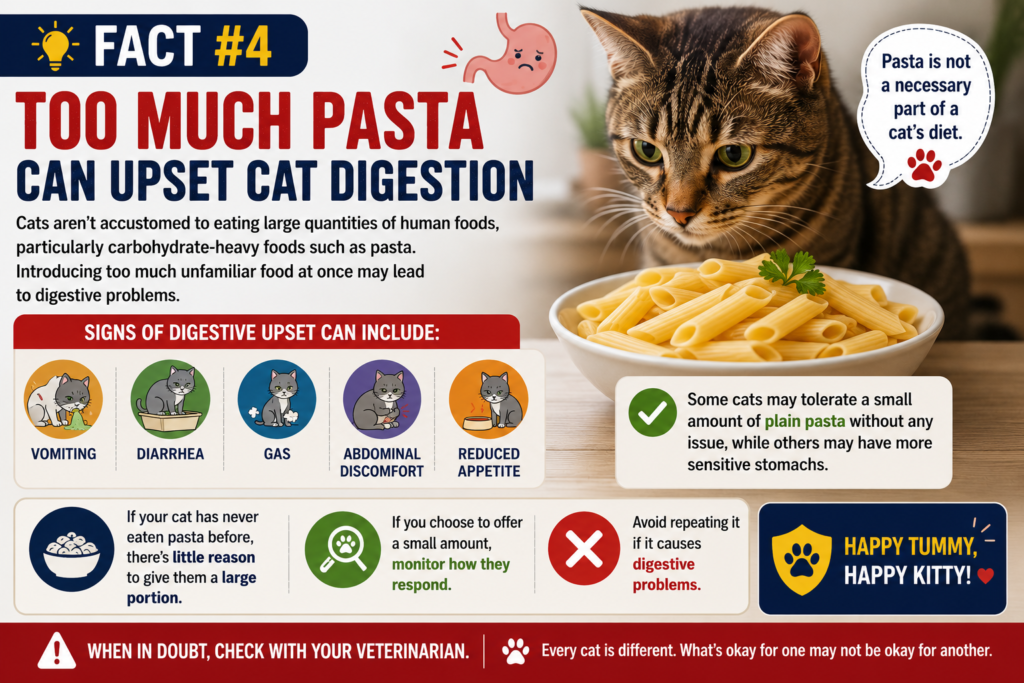
Another consideration is cat digestion. Cats aren’t accustomed to eating large quantities of human foods, particularly carbohydrate-heavy foods such as pasta. Introducing too much unfamiliar food at once may lead to digestive problems.
Depending on the individual cat and the amount consumed, signs of digestive upset can include:
- Vomiting
- Diarrhea
- Gas
- Abdominal discomfort
- Reduced appetite
Some cats may tolerate a small amount of plain pasta without any issue, while others may have more sensitive stomachs.
If your cat has never eaten pasta before, there’s little reason to give them a large portion. If you choose to offer a small amount, monitor how they respond and avoid repeating it if it causes digestive problems.
Fact #5: Pasta Adds Calories Without Providing Complete Nutrition
While a small amount of pasta may not harm a healthy cat, it doesn’t offer the complete nutrition your cat needs. Pasta is primarily a source of carbohydrates and calories, whereas cats require a carefully balanced diet containing animal-based protein, essential amino acids, fatty acids, vitamins, and minerals.
Giving pasta too frequently can also add unnecessary calories to your cat’s diet. Over time, frequent high-calorie treats can contribute to unwanted weight gain, particularly in cats that are already less active.
This is why pasta should remain an occasional treat rather than becoming part of your cat’s regular meals. A complete and balanced cat food should provide the majority of your cat’s daily nutrition.
Fact #6: Some Pasta Ingredients Should Be Avoided
The biggest concern isn’t always the pasta itself—it’s often the ingredients used to prepare it.
A plain serving of cooked pasta is very different from a heavily seasoned pasta dish. Some common ingredients used in human pasta recipes can be unsuitable or harmful to cats.
Ingredients to avoid include:
- Garlic and onion:
These can be harmful to cats and should not be intentionally fed to them.
- Excessive salt:
Too much sodium isn’t appropriate for cats.
- Heavy seasonings:
Spices and seasoning blends may contain ingredients that can upset your cat’s stomach or be unsafe.
- Rich, fatty sauces:
Cream, butter, and other high-fat ingredients can make the meal unnecessarily rich.
- Raw pasta dough:
Uncooked dough isn’t an appropriate food for cats.
If your cat is interested in your dinner, don’t simply assume that a bite is safe because the ingredients are harmless to humans. Checking the ingredients is an important part of human food safety when sharing food with pets.
Fact #7: Portion Size Matters
Even foods that are considered relatively safe foods for cats should be offered in moderation. Cats have much smaller bodies than humans, so a portion that seems tiny to you can represent a significant amount of food for them.
If you choose to give your cat pasta, stick to a small amount of plain, fully cooked pasta as an occasional treat. Avoid turning it into a regular meal or serving it in place of their normal cat food.
It’s also sensible to introduce any unfamiliar human food gradually. Watch your cat afterward for signs such as vomiting, diarrhea, gas, or changes in appetite. If your cat doesn’t tolerate it well, there’s no nutritional reason to keep offering it.
What Kind of Pasta Can Cats Eat?
Not all pasta dishes are equal. Here’s a simple guide:
| Pasta Type | Recommendation | Main Concern |
| Plain cooked pasta | Small amount occasionally | Limited nutritional value |
| Plain spaghetti | Small amount occasionally | Portion size |
| Pasta with tomato sauce | Best avoided or carefully checked | Added ingredients and seasoning |
| Garlic or onion pasta | Avoid | Potentially harmful ingredients |
| Very salty pasta | Avoid | Excess sodium |
| Creamy pasta | Best avoided/limited | High fat and calories |
| Raw pasta or dough | Avoid | Not appropriate for cats |
The safest option, if you decide to share pasta, is simple: plain, cooked, unseasoned, and only a small amount.
What Should Cats Eat Instead?
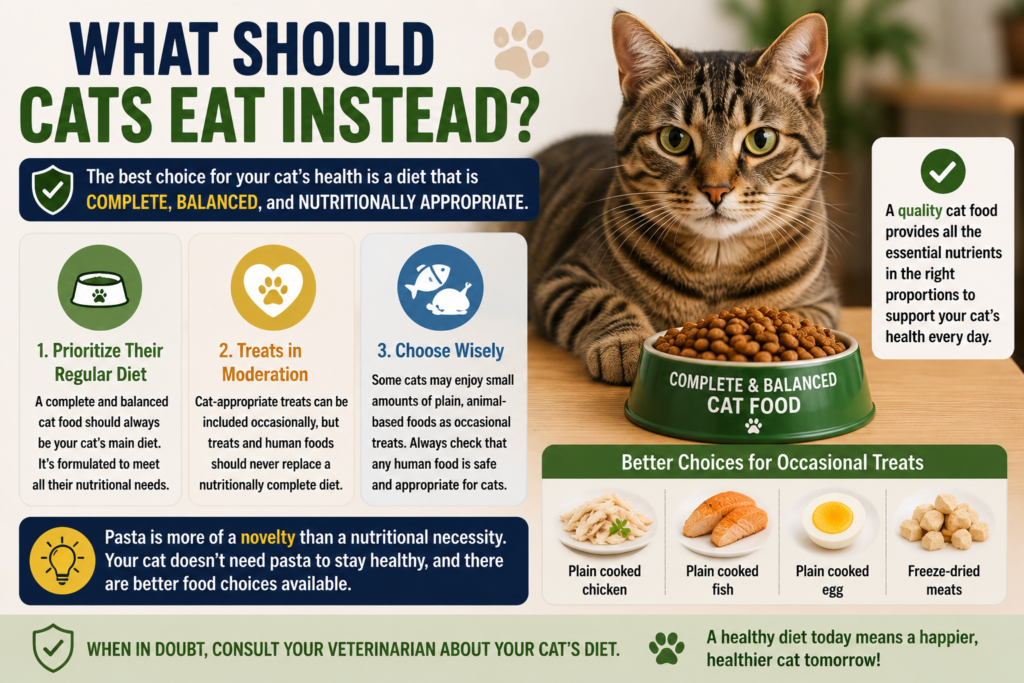
If you’re looking for foods that are healthier for your cat, their regular diet should come first. A quality complete and balanced cat food is formulated to provide the nutrients cats need in appropriate proportions.
Occasional cat-appropriate treats can also be included, but treats and human foods shouldn’t displace a nutritionally complete diet.
Some cats may enjoy small amounts of certain plain animal-based foods as occasional treats, but it’s important to check that any human food is appropriate before offering it.
Ultimately, pasta is more of a novelty than a nutritional necessity. Your cat doesn’t need pasta to stay healthy, and there are better food choices available.
What to Do If Your Cat Ate Pasta With Sauce
If your cat has eaten pasta with sauce, don’t immediately panic. First, determine what was in the dish and approximately how much your cat consumed.
Check the ingredients for potentially harmful foods such as onion or garlic. If your cat consumed a significant amount of a potentially harmful ingredient, or develops concerning symptoms, contact your veterinarian promptly for advice.
Watch for symptoms such as:
- Vomiting
- Diarrhea
- Weakness or unusual behavior
- Loss of appetite
- Other significant changes in your cat’s condition
Don’t attempt to make your cat vomit or give home remedies unless a veterinarian specifically tells you to do so.
Conclusion: Can Cats Eat Pasta?
So, can cats eat pasta? Yes, most healthy cats can generally have a small amount of plain, fully cooked pasta as an occasional treat. However, pasta isn’t necessary for a cat’s diet and shouldn’t replace complete and balanced cat food.
The most important things to remember are ingredients, preparation, portion size, and frequency. Plain pasta in a tiny amount is very different from a plate of pasta loaded with sauce, garlic, onion, salt, or other seasonings.
When it comes to safe foods for cats, moderation and simplicity are key. Your cat may enjoy a little taste of pasta, but their regular food should always provide the nutritional foundation they need.
Frequently Asked Questions About Cats and Pasta
1. Can cats eat pasta?
Yes, cats can generally eat a small amount of plain, fully cooked pasta. However, pasta isn’t nutritionally necessary for cats and should only be given as an occasional treat.
2. Can cats eat pasta every day?
No. Pasta should not be a daily part of a cat’s diet. Frequent servings can add unnecessary calories without providing the balanced nutrients cats need.
3. Can cats eat spaghetti?
Cats can eat a small amount of plain, cooked spaghetti. Avoid spaghetti prepared with garlic, onion, excessive salt, or heavily seasoned sauces.
4. Can cats eat macaroni?
Yes, a small amount of plain cooked macaroni is generally okay for most healthy cats. It should remain an occasional treat rather than a regular food.
5. Can cats eat pasta sauce?
It’s best to avoid giving cats pasta sauce unless you have carefully checked the ingredients. Many sauces contain garlic, onion, salt, spices, or rich ingredients that aren’t suitable for cats.
6. Can cats eat raw pasta?
Raw pasta isn’t recommended for cats. If you offer pasta, choose plain, fully cooked pasta in a small portion.
7. Can kittens eat pasta?
It’s better to prioritize complete and balanced kitten food. Kittens have higher nutritional requirements during growth, and pasta doesn’t provide the nutrients they need.
8. Is pasta good for cats?
Pasta isn’t particularly beneficial for cats. While plain cooked pasta may be safe in small quantities, it provides limited nutritional value compared with complete and balanced cat food.
9. What happens if a cat eats too much pasta?
Eating too much pasta may cause digestive upset, including vomiting, diarrhea, gas, or discomfort. Large amounts also add unnecessary calories to the diet.
10. What should I do if my cat eats pasta with garlic or onion?
Garlic and onion can be harmful to cats. If your cat has eaten pasta containing either ingredient, especially a significant amount, contact your veterinarian promptly for advice rather than attempting home treatment.
Image 1
Title
Can Cats Eat Pasta? 7 Surprising Facts & Risks
Description
A colorful educational featured image showing a curious tabby cat beside a bowl of cooked pasta. The graphic explores whether cats can eat pasta, highlighting key considerations around safety, nutrition, and potential risks.
Caption
Can cats eat pasta? 🐱🍝 Find out whether pasta is safe for cats, what nutritional value it offers, and which risks every cat owner should know.
Alt Text
Tabby cat looking at a bowl of cooked penne pasta beside text reading “Can Cats Eat Pasta? 7 Surprising Facts & Risks,” with icons representing safety, nutrition, and potential risks.
Image 2/4
Title
Fact #4: Too Much Pasta Can Upset Cat Digestion
Caption
Too much pasta may upset a cat’s stomach, causing vomiting, diarrhea, gas, abdominal discomfort, or reduced appetite.
Description
This landscape infographic illustrates how eating too much pasta can affect cat digestion. It highlights common signs of digestive upset, including vomiting, diarrhea, gas, abdominal discomfort, and reduced appetite, while explaining that some cats may tolerate a small amount of plain pasta better than others. The image encourages moderation, careful monitoring, and veterinary advice when digestive problems occur.
Alt Text
Cat beside a bowl of pasta with an infographic showing vomiting, diarrhea, gas, abdominal discomfort, and reduced appetite as possible signs of digestive upset.
Image 3
Title
What Should Cats Eat Instead? Healthy Food Choices for Cats
Caption
A complete and balanced cat food should be the foundation of your cat’s diet, with appropriate treats offered only in moderation.
Description
This landscape infographic explains healthier alternatives to pasta for cats. It highlights the importance of a complete and balanced cat food as the main diet, while showing that small amounts of appropriate plain animal-based foods can sometimes be offered as occasional treats. The image also emphasizes that pasta is unnecessary for feline nutrition and that better, species-appropriate food choices are available.
Alt Text
Tabby cat beside a bowl of complete and balanced cat food with healthy treat options including plain chicken, fish, egg, and freeze-dried meat.
Image 4
Title
Cats Don’t Need Carbs From Pasta: What Their Diet Really Needs
Caption
Cats can digest some carbohydrates, but pasta isn’t an essential part of their diet. Protein, fat, vitamins, and minerals are more important for balanced feline nutrition.
Description
This landscape infographic explains why cats don’t need carbohydrate-rich foods such as pasta as a dietary staple. It highlights the importance of animal-based protein and fat, while explaining that healthy cats can generally digest appropriately processed carbohydrates found in some commercial cat foods. The image emphasizes that pasta lacks complete nutrition and is better treated as an occasional extra rather than a necessary part of a cat’s diet.
Alt Text
Tabby cat beside bowls of meat and pasta, illustrating that cats primarily need animal protein and fat while pasta carbohydrates are not essential to their diet.
1 Comment