

 By
Introduction
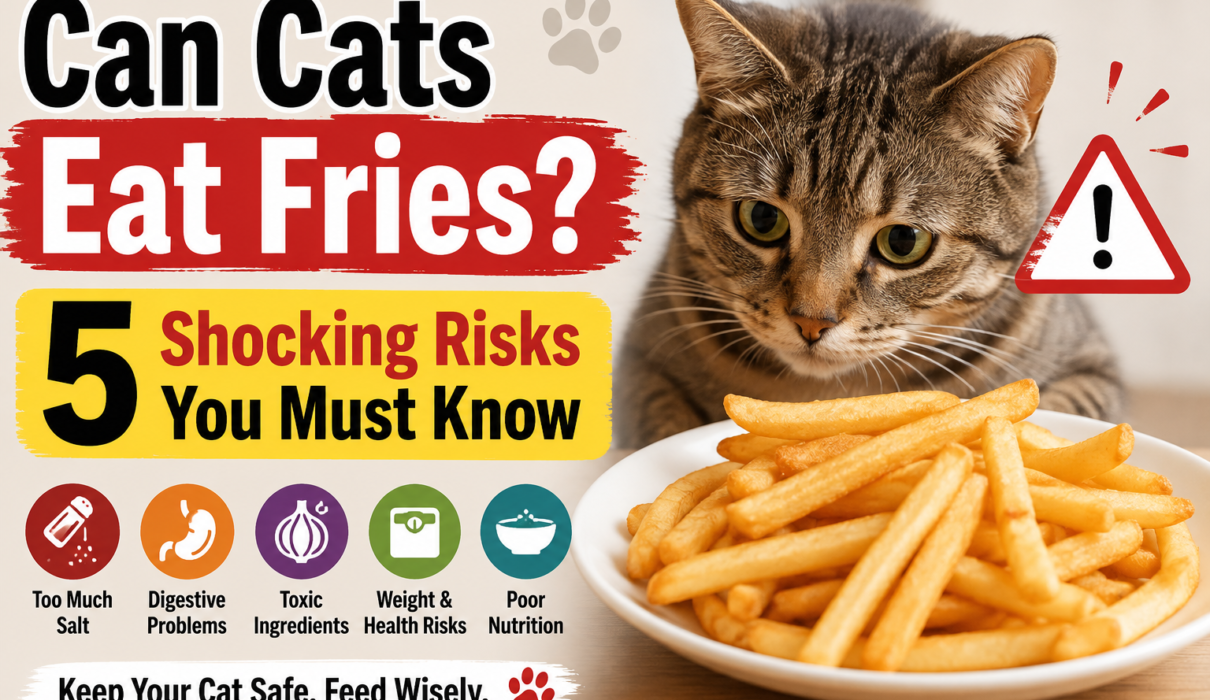
If you’re wondering, can cats eat fries, the short answer is: cats should not eat French fries as a regular treat. A tiny piece of a plain, fully cooked fry is unlikely to cause serious problems in most healthy cats, but fries are not a healthy choice for feline diets.
French fries are usually high in salt and fat, and they may contain seasonings or sauces that are unsafe for cats. Since cats have specific nutritional requirements, regularly sharing human snacks can contribute to unhealthy eating habits and other cat diet risks.
Let’s look at the five important reasons why fries are best kept off your cat’s menu.
Can Cats Eat Fries Safely?
So, can cats eat fries safely? It depends on how much they eat and what’s in the fries.
A small bite of a plain fry that contains only cooked potato, oil, and a modest amount of salt is generally less concerning than a large serving of heavily seasoned fries. However, that doesn’t mean fries are a good food for cats.
Cats are obligate carnivores, meaning their bodies are adapted to obtain essential nutrients primarily from animal-based foods. A complete and balanced cat food is formulated to provide the protein, vitamins, minerals, and other nutrients they need.
Fries, on the other hand, provide little nutritional value for cats while adding unnecessary calories, fat, and sodium.
This is why human food for cats should generally be limited to appropriate, veterinarian-approved treats or small portions of suitable foods. A food that is harmless to humans isn’t automatically appropriate for cats.
It’s also important to distinguish between food that is toxic and food that is simply unhealthy. Fries aren’t necessarily poisonous just because they’re French fries, but certain ingredients used in fries can be dangerous to cats.
Risk #1: Too Much Salt Can Harm Cats
One of the biggest concerns with French fries is their salt content.
Cats need sodium in their diet, but they only require it in appropriate amounts. Fries prepared for humans can contain much more salt than a cat needs, particularly when they are heavily salted or served with salty sauces.
Eating excessive amounts of salty food can cause problems such as increased thirst and digestive upset. In severe situations, excessive sodium intake can become a serious medical concern.
This is one reason salty snacks shouldn’t become part of your cat’s regular diet.
If your cat grabs a tiny piece of fry from your plate, don’t automatically panic. The amount matters. However, deliberately giving your cat several fries or allowing it to eat salty snacks regularly is a poor dietary choice.
Instead, choose treats specifically formulated for cats. These are designed with feline nutritional needs in mind and are generally a much better option than salty human snacks.
Risk #2: Fat and Oil Can Cause Digestive Problems
French fries are typically cooked in oil, which makes them much higher in fat than plain cooked potatoes.
A cat’s digestive system isn’t designed around eating greasy human foods. A small amount may not cause an obvious reaction, but larger quantities or repeated exposure can lead to digestive problems.
After eating fatty foods, some cats may experience:
- Vomiting
- Diarrhea
- Stomach discomfort
- Reduced appetite
- Lethargy
High-fat foods can also add a significant number of unnecessary calories to a cat’s diet.
This matters because unhealthy cat food choices don’t always cause an immediate problem. Feeding calorie-dense human snacks repeatedly can gradually contribute to weight gain and poor overall nutrition.
If your cat already eats a complete and balanced diet, there is little nutritional benefit to adding greasy fries to its meals or treats.
Risk #3: Seasonings May Contain Toxic Ingredients
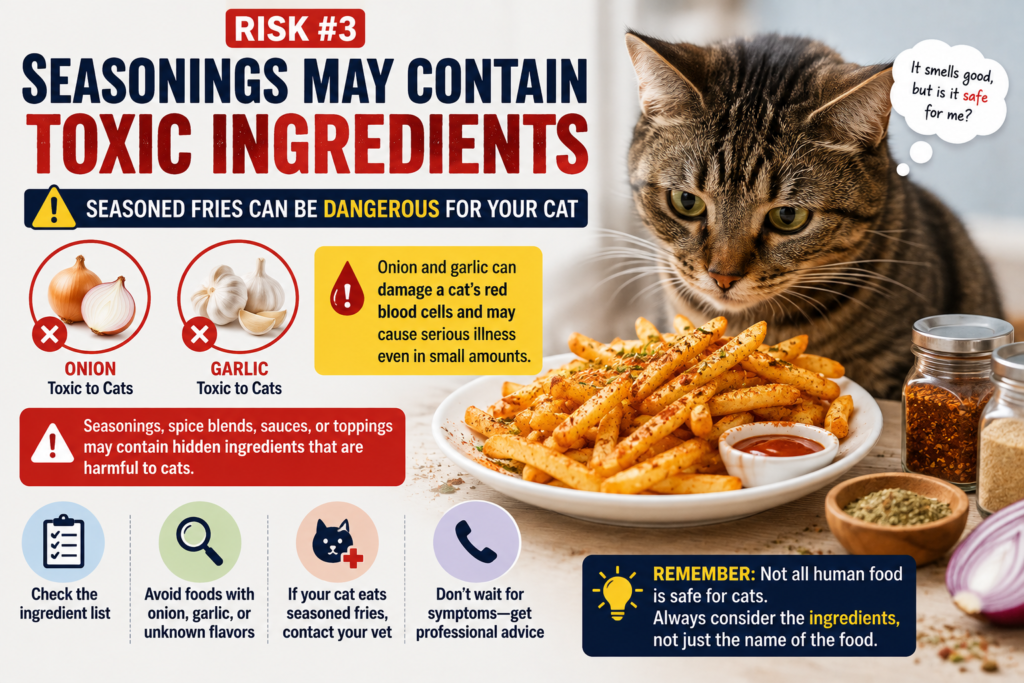
Plain fries are one concern. Seasoned fries can be much more problematic.
Some fries contain flavorings, spice blends, sauces, or toppings that include ingredients cats should never consume. In particular, onion and garlic are toxic foods for cats.
These ingredients can damage a cat’s red blood cells and potentially cause serious illness. They may appear in powdered form, which means you might not immediately realize they’re present in a seasoning blend.
Other flavored fries may contain additional ingredients that aren’t suitable for cats.
Before allowing your cat to eat any human food, consider checking the ingredient list. Don’t assume that a small amount is safe simply because the food is safe for people.
If your cat has eaten fries containing onion, garlic, or another potentially toxic ingredient, it’s important to take the situation seriously. Contact a veterinarian for advice rather than waiting for symptoms to develop.
The same principle applies to other human food for cats: always consider the ingredients, not just the name of the food.
Risk #4: Fries Offer Little Nutritional Value for Cats
Another important reason to avoid fries is that they simply don’t provide what cats need from their diet.
Cats are obligate carnivores. Their nutritional needs include high-quality animal-based protein and specific nutrients that are essential for maintaining normal body functions.
French fries are primarily a source of carbohydrates and fat. They don’t provide the balanced nutrition found in a properly formulated cat food.
This becomes especially important when treats and table scraps make up a significant part of a cat’s daily calorie intake.
For example, if a cat regularly fills up on fries or other human snacks, it may have less appetite for the nutritionally complete food it actually needs.
Over time, this can contribute to poor dietary habits and increase cat diet risks.
Treats aren’t necessarily bad. The key is choosing appropriate treats and keeping them as a small part of an otherwise balanced diet.
Risk #5: Fries May Contribute to Weight and Health Problems
The final concern is the effect that regular consumption of fries can have on a cat’s weight and overall health.
French fries are calorie-dense, particularly because they are fried in oil. Giving a cat small portions repeatedly may seem harmless, but those extra calories can add up.
Excess weight can put additional stress on a cat’s body and increase the risk of various health problems.
This is why owners should think about the entire diet rather than focusing only on whether a particular food is technically poisonous.
A food doesn’t have to be toxic to be a bad choice.
Regularly feeding fries, chips, processed meats, or other high-calorie human snacks can create unhealthy eating patterns. These foods may also contain excessive salt, fat, or additives that don’t belong in a balanced feline diet.
Instead of using leftovers as treats, consider offering small portions of cat-specific treats or other veterinarian-approved options.
What Happens If a Cat Eats a French Fry?
If your cat grabs a single French fry, the first thing to do is stay calm. Check what the fry contained and consider how much your cat consumed.
A tiny piece of a plain, cooked fry is generally less concerning than a large serving of salty, seasoned, or flavored fries.
Pay attention to factors such as:
- How many fries your cat ate
- Whether the fries were heavily salted
- Whether they contained onion or garlic
- Whether sauces or seasonings were added
- Whether your cat shows any unusual symptoms
Some cats may experience mild digestive upset after eating greasy foods. Watch for signs such as vomiting, diarrhea, loss of appetite, unusual tiredness, or changes in normal behavior.
If the fries contained potentially toxic ingredients, your cat ate a large quantity, or your cat develops concerning symptoms, contact a veterinarian promptly for guidance.
Don’t try to make your cat vomit unless a veterinary professional specifically tells you to do so.
Are Plain Potatoes Safe for Cats?
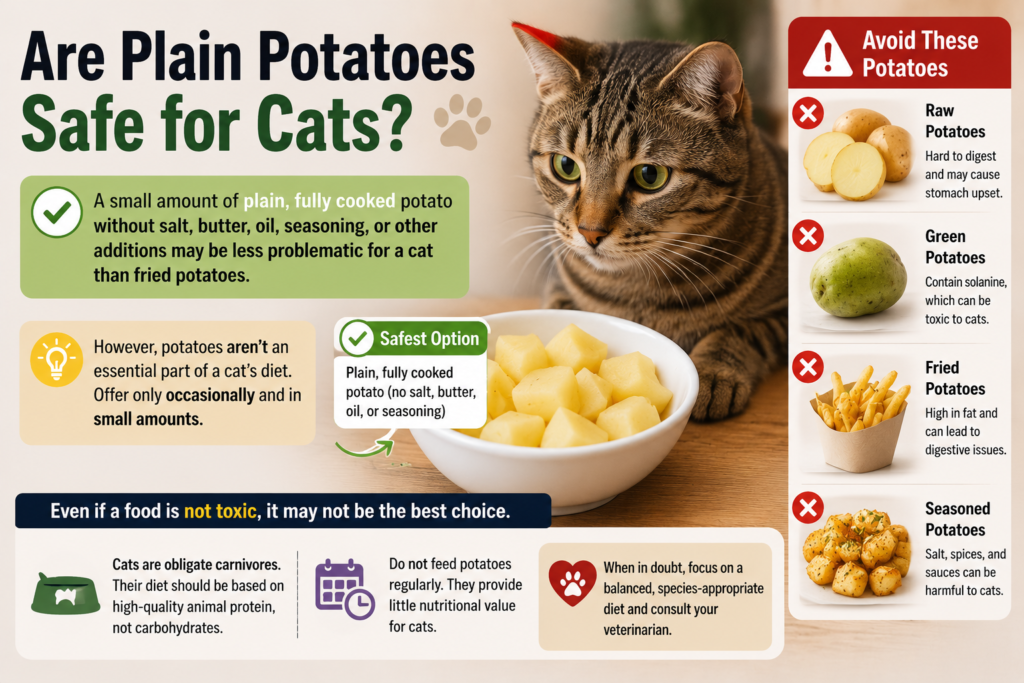
Plain potatoes are different from French fries.
A small amount of plain, fully cooked potato without salt, butter, oil, seasoning, or other additions may be less problematic for a cat than fried potatoes. However, potatoes aren’t an essential part of a cat’s diet.
Preparation is particularly important. Avoid giving cats raw potatoes, green potatoes, fried potatoes, or potatoes covered in seasonings and sauces.
Even when a food isn’t considered one of the toxic foods for cats, it doesn’t necessarily mean it should become a regular part of their diet.
Your cat’s primary food should be complete and balanced for its nutritional needs. Occasional treats should complement that diet rather than replace it.
What Human Foods Can Cats Eat?
Many cat owners wonder which types of human food for cats are reasonable as occasional treats.
Some plain, properly prepared foods can be suitable in small quantities. Examples may include:
- Plain cooked chicken
- Plain cooked turkey
- Certain veterinarian-approved foods or treats
- Small amounts of properly prepared fish
- Meat should be cooked thoroughly and served without salt, garlic, onion, spicy seasonings, sauces, or other potentially harmful ingredients.
- Portion size also matters. Even a food that is appropriate as an occasional treat can contribute unnecessary calories if given too frequently.
- When introducing any new food, give only a small amount and monitor your cat for digestive problems or other unusual reactions.
- If your cat has specific nutritional requirements, allergies, or health concerns, ask your veterinarian before adding human foods to its diet.
Toxic Foods for Cats You Should Never Share
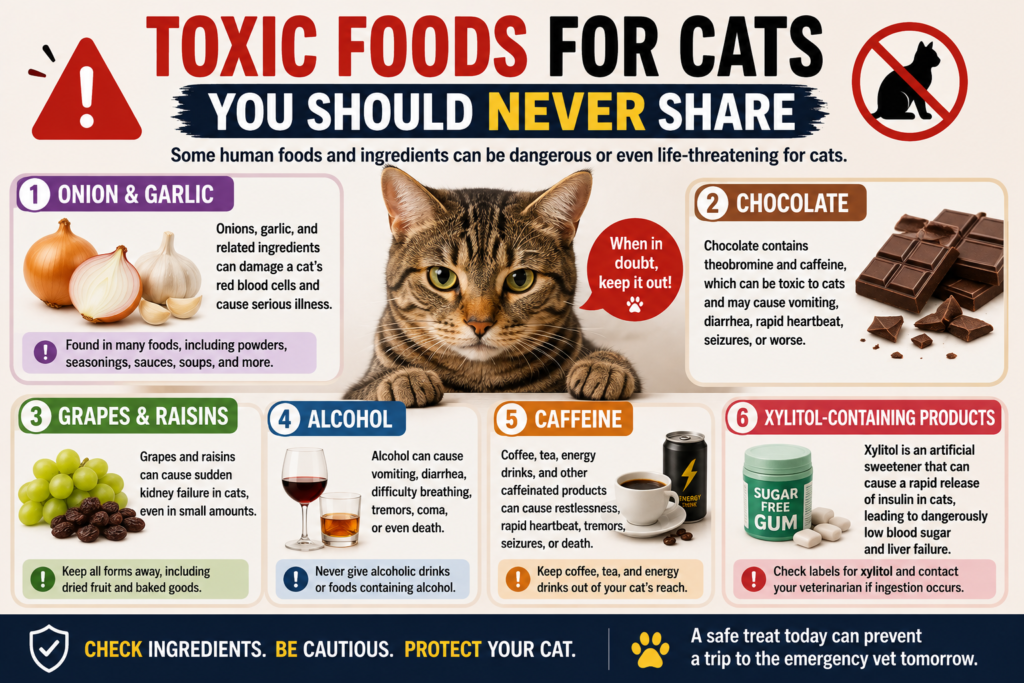
While fries themselves aren’t necessarily toxic, some ingredients commonly found in human foods can be dangerous.
Some important toxic foods for cats and substances to keep away from them include:
Onion and Garlic
Onions, garlic, and related ingredients can be harmful to cats, including when they are present in powdered or concentrated forms.
This is particularly relevant to seasoned fries, sauces, soups, and other processed foods.
Chocolate
Chocolate contains substances that can be toxic to cats. Keep chocolate and chocolate-containing foods away from your pet.
Grapes and Raisins
Grapes and raisins should not be intentionally given to cats because they may cause serious health problems.
Alcohol
Alcohol can be dangerous for cats, even in relatively small amounts. Never give alcoholic drinks or foods containing alcohol to your cat.
Caffeine
Coffee, tea, energy drinks, and other caffeinated products should be kept away from cats.
Xylitol-Containing Products
Xylitol is an artificial sweetener found in some human products. Because ingredient formulations vary, keep products containing xylitol away from pets and contact a veterinarian if accidental ingestion occurs.
The safest habit is to check the ingredients before sharing any human food with your cat.
Healthier Alternatives to Fries for Cats
If your cat begs whenever you eat fries, you don’t necessarily have to ignore the desire for a special treat. Instead, offer something made specifically for cats.
Cat-specific treats are generally a better choice because they are formulated with feline dietary needs in mind.
You can also ask your veterinarian whether small portions of plain cooked meat are appropriate for your cat.
Good treat habits include:
- Avoid heavily salted or seasoned foods.
- Avoid foods containing onion or garlic.
- Keep portions small.
- Don’t use human snacks as meal replacements.
- Make sure treats don’t interfere with your cat’s normal balanced diet.
- Remember that treats should remain a small part of your cat’s overall calorie intake.
- Choose cat-specific treats when possible.
How to Prevent Cat Diet Risks
Preventing cat diet risks is often easier than dealing with dietary problems later.
Start by keeping tempting human snacks away from your cat. Curious cats may jump onto counters or tables when they smell food, so don’t leave fries, chips, sauces, or other snacks unattended.
It’s also helpful to establish clear household rules. If one family member regularly feeds table scraps while another avoids them, your cat may end up consuming more human food than expected.
Here are some simple habits that can help:
Keep Human Snacks Out of Reach
Store fries, chips, sweets, and other snacks where your cat cannot access them.
Check Ingredient Labels
Before giving your cat a bite of any human food, check for onion, garlic, excessive salt, and other unsuitable ingredients.
Stick to a Balanced Cat Diet
Most of your cat’s nutrition should come from an appropriate complete and balanced cat food.
Control Treat Portions
Treats should not make up a large portion of your cat’s daily calories.
Avoid Making Table Scraps a Routine
Giving food from your plate can quickly become a habit. Instead, use appropriate cat treats when you want to reward your pet.
Ask Your Veterinarian When Unsure
If you’re uncertain whether a food is safe, especially after accidental ingestion, your veterinarian can provide advice based on your cat’s individual situation.
Conclusion: Should Cats Eat Fries?
So, can cats eat fries? While a tiny bite of a plain fry may not be an emergency for most healthy cats, French fries are not a healthy or necessary part of a feline diet.
The biggest concerns include excessive salt, fat and oil, potentially harmful seasonings, low nutritional value, and unnecessary calories.
Instead of sharing fries from your plate, choose appropriate cat treats or small portions of veterinarian-approved foods. Being careful about human food for cats can help reduce unnecessary cat diet risks and keep your pet’s diet healthier.
When in doubt—especially if your cat has eaten seasoned fries containing onion or garlic—it’s better to contact a veterinarian than to guess.
Here are SEO-friendly FAQs for your article, naturally targeting the focus keyword “can cats eat fries” and related keywords.
Frequently Asked Questions
- Can cats eat fries?
Cats can technically eat a tiny piece of plain French fry, but fries are not recommended as a regular treat. They are often high in salt and fat and provide little nutritional value for cats. - Can cats eat one French fry?
A single small piece of plain French fry is unlikely to cause serious problems in most healthy cats. However, avoid making fries a regular part of your cat’s diet. - Can cats eat salted fries?
It is best to avoid salted fries. Cats need sodium in their diet, but excessive salt can be harmful, especially when consumed in larger quantities. - Can cats eat seasoned fries?
Cats should not eat seasoned fries because some seasonings may contain onion or garlic, which are potentially toxic to cats. Spicy ingredients, sauces, and flavorings may also cause digestive problems. - Can cats eat McDonald’s fries?
McDonald’s fries and similar fast-food fries are not a good choice for cats. They can contain significant amounts of salt and fat and may contain ingredients that aren’t appropriate for feline diets. - What happens if my cat eats fries?
If your cat eats a small piece of plain fry, monitor it for signs of digestive upset. If your cat eats a large amount or fries containing onion, garlic, or other potentially harmful ingredients, contact a veterinarian for advice. - What human food can cats eat safely?
Some plain, properly cooked foods, such as small portions of unseasoned chicken, turkey, or certain fish, may be suitable as occasional treats. Avoid foods containing toxic ingredients and don’t replace balanced cat food with human food. - What are the most common toxic foods for cats?
Important foods and substances to keep away from cats include onion, garlic, chocolate, alcohol, caffeine, and grapes or raisins. If you suspect your cat has eaten a potentially toxic substance, contact a veterinarian promptly. - Are potatoes safe for cats?
Small amounts of plain, fully cooked potato may be less concerning than fries, but potatoes aren’t necessary for a cat’s diet. Avoid raw, green, fried, salted, or seasoned potatoes. - What are healthier alternatives to fries for cats?
Cat-specific treats are a better option. Small amounts of plain cooked chicken or turkey may also be appropriate for some cats, provided they are unseasoned and given in moderation.
1 Comment