

 By
By Understanding Cat Drooling
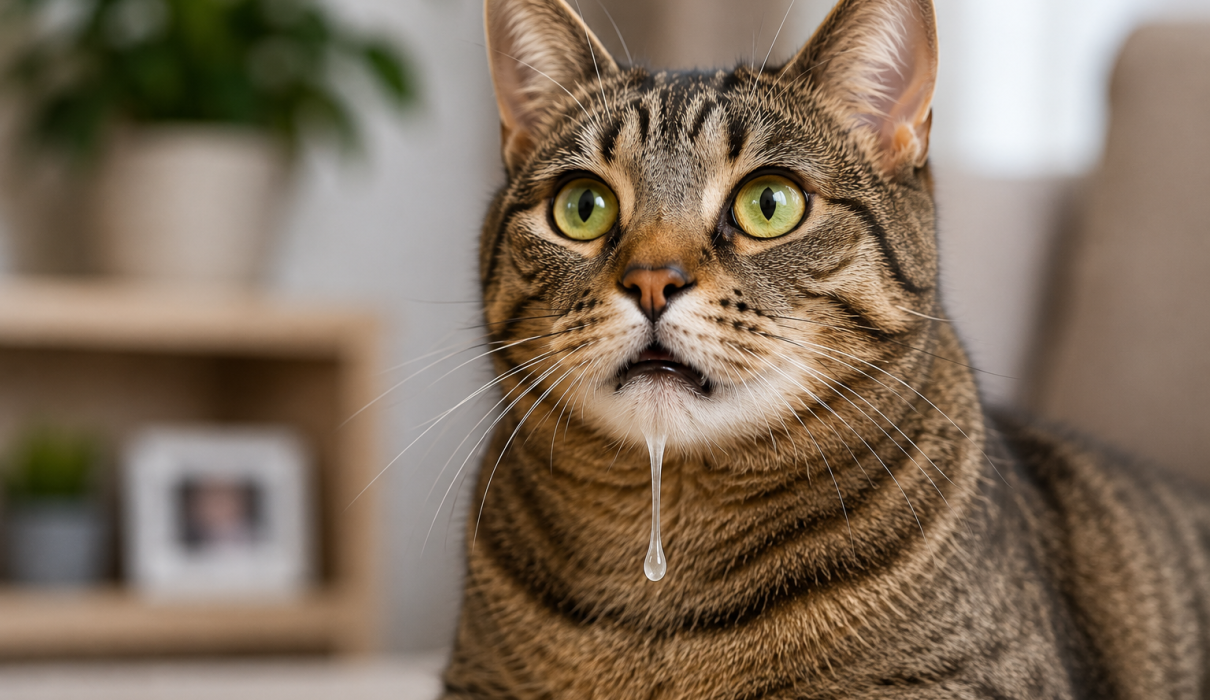
Many cat owners feel concerned when they notice saliva dripping from their cat’s mouth. A drooling cat can surprise owners because cats usually keep their mouths dry. Seeing wet fur around the mouth often raises immediate concern. However, drooling does not always mean illness. Some situations cause harmless drooling in cats. Other situations may indicate health problems. Understanding the cause helps owners respond calmly. Many people search online asking a simple question.
Why is my cat drooling suddenly? The answer depends on the situation. Some cats drool when they feel relaxed and safe. Other cats drool because of pain or illness. Cats drooling can occur for several reasons. Dental disease often causes excessive drooling.
Digestive upset can also cause drooling. Certain toxins may trigger heavy saliva production. Heat stress sometimes leads to drooling.
Stress may also produce mild drooling.
Observing your cat helps identify the cause. Careful observation often reveals helpful clues.
Learning about drooling helps owners feel confident. Early attention can prevent serious problems. Understanding your cat’s behavior improves daily care. Healthy cats rarely drool continuously. Occasional drooling may appear during relaxation. Persistent drooling deserves careful attention.
Do Cats Drool Naturally?
Many cat owners ask an important question. Do cats drool naturally sometimes? Yes, some cats drool occasionally. This behavior surprises many new cat owners. A cat drooling while sleeping may simply feel relaxed. Deep sleep relaxes mouth muscles completely. Small amounts of saliva may escape the mouth. Another situation involves affection. Some cats drool during cuddling sessions.
Owners often notice this while petting their cat. This leads to another common question. Why does my cat drool when I pet her?
Petting often creates emotional comfort.
Cats feel safe near trusted people. Relaxation sometimes activates saliva glands. This produces mild drooling. Another related question appears often. Why does my cat drool when she purrs? Purring signals happiness and comfort.
When cats feel calm, their bodies relax deeply. Saliva glands sometimes produce extra moisture. This results in light drooling. Cat drooling while purring often shows trust.
Your cat feels secure near you. Cats drool when happy because relaxation increases saliva. This behavior sometimes connects to kitten memories. Kittens drool while nursing their mother. Adult cats repeat this comfort behavior occasionally. However, drooling should remain mild. Constant drooling may indicate illness.
Why Is My Cat Drooling Suddenly?
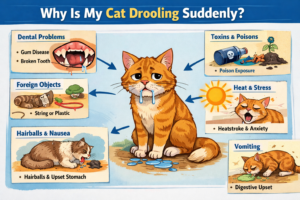
Sudden drooling often worries cat owners. They frequently search for explanations online. Why is my cat drooling suddenly today? Sudden drooling often indicates mouth irritation. Dental disease remains a common cause. Plaque slowly forms on teeth after meals. Bacteria grow along the gum line. Over time gums become inflamed. Inflamed gums cause discomfort during eating.
Cats drool because saliva helps soothe irritation. Broken teeth may also cause drooling. Sharp edges irritate mouth tissues. Foreign objects sometimes cause mouth irritation. Cats often chew strings or plastic. These objects may become stuck between teeth. Saliva production increases quickly. Digestive upset my also cause drooling. Cats often drool before vomiting.
Hairballs sometimes trigger nausea. Long haired cats experience hairballs more often. Certain toxins may also cause drooling. Poison exposure sometimes produces thick saliva. Heat stress sometimes causes drooling. Cats struggle during extreme temperatures. Stress may also create mild drooling. Fear activates body responses. Understanding these causes helps owners respond calmly.
Cat Drooling a Lot: Possible Causes
Cat drooling a lot often signals discomfort. Persistent drooling rarely appears without reason. Dental disease remains the most common cause. Inflamed gums produce excessive saliva. Cats with dental pain chew slowly. Some cats avoid hard food completely. Food sometimes falls from their mouths.
Bad breath often accompanies dental infections. Owners may notice strong odors. Nausea represents another possible cause. Digestive illness may irritate the stomach.
Hairballs sometimes trigger nausea. Drooling may appear before vomiting hairballs. Toxic plants may also cause drooling. Lilies are extremely dangerous for cats. Household chemicals may irritate mouth tissues. Cats sometimes lick treated surfaces. Heatstroke may cause severe drooling.
The body attempts to cool itself. Stress may also produce drooling. Loud noises sometimes frighten sensitive cats. Travel sometimes causes anxiety. Fear activates certain body responses. Each cause requires careful observation. Understanding these causes helps protect your cat.
Symptoms That Often Appear With Cat Drooling
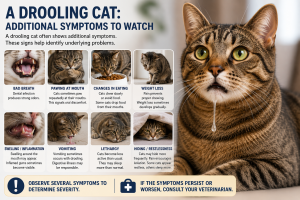
A drooling cat often shows additional symptoms. These signs help identify underlying problems.
Bad breath remains a common symptom. Dental infection produces strong odors. Cats sometimes paw repeatedly at their mouths. This behavior signals oral discomfort. Eating habits often change during mouth pain. Cats chew slowly or avoid food. Some cats drop food from their mouths.
Pain prevents proper chewing. Weight loss sometimes develops gradually. Reduced appetite causes this problem. Swelling around the mouth may appear. Inflamed gums sometimes become visible. Vomiting sometimes occurs with drooling. Digestive illness may be responsible.
Lethargy sometimes appears during illness. Cats become less active than usual. Cats may hide more frequently. Pain encourages isolation. Some cats appear restless. Others sleep more than usual. Observing several symptoms helps determine severity.
Veterinary Diagnosis for Cat Drooling
Veterinary exams help determine the exact cause. Diagnosis begins with careful observation. The veterinarian examines your cat’s mouth closely. Teeth and gums receive detailed inspection. Broken teeth sometimes appear immediately. Inflamed gums appear red and swollen.
Foreign objects sometimes appear inside the mouth. Threads may wrap around teeth. Veterinarians also check the tongue carefully. Ulcers sometimes appear on mouth tissues. The throat also receives examination.
Swallowing problems may appear during illness. Blood tests sometimes evaluate organ health. Kidney disease sometimes causes nausea. Liver disease may also cause drooling.
Blood tests help detect these conditions.
X rays sometimes reveal hidden dental infections.
Bone damage may appear on images. Ultrasound may examine digestive organs. Internal illness sometimes affects saliva production. Accurate diagnosis guides proper treatment.
Treatment for Cat Drooling
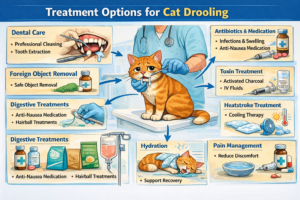
Treatment depends on the underlying cause. Different problems require different treatments. Dental disease often requires professional cleaning. Veterinarians remove plaque buildup. Severely damaged teeth sometimes require extraction. Removing painful teeth improves comfort.
Antibiotics sometimes treat infections. Medication reduces swelling. Foreign objects require careful removal. Veterinarians remove objects safely.
Digestive illness may require anti nausea medication. These drugs reduce vomiting. Hairball treatments sometimes help digestion. Special diets may reduce hairballs. Poison exposure requires emergency treatment. Activated charcoal may absorb toxins. Intravenous fluids support recovery.
Hydration helps remove harmful substances. Pain medication improves comfort. Cats recover faster with proper care.
Heatstroke treatment includes cooling therapy. Veterinarians stabilize body temperature.
Each treatment plan depends on diagnosis.
Detailed FAQ About Cat Drooling
Why does my cat drool when I pet her?
Many cats drool during affection. Petting creates emotional comfort.
Cats feel safe near trusted people. Relaxation activates saliva glands. This produces mild drooling. This behavior connects to kitten memories. Kittens drool while nursing their mother.
Adult cats repeat this comfort behavior. Cat drooling and purring often occur together.
This usually indicates trust.
Why does my cat drool when she purrs?
Purring signals happiness and relaxation. When cats feel calm, their bodies relax deeply. Saliva glands sometimes produce extra moisture. This leads to light drooling. Cat drooling while purring usually remains harmless. Many cats drool when happy. This behavior often appears during cuddling.
Why would my cat be drooling suddenly?
Sudden drooling may indicate dental pain. Broken teeth sometimes cause immediate discomfort.
Foreign objects may irritate the mouth. Cats chew many unusual objects. Nausea sometimes causes sudden drooling. Digestive upset may trigger this response. Poison exposure requires emergency veterinary care.
Is it normal for cats to drool?
Occasional drooling may be normal. Some cats drool during relaxation or sleep. Cat drooling while purring often indicates happiness. This behavior usually remains harmless. However continuous drooling may indicate illness.
Why is my cat drooling thick saliva?
Thick saliva often signals mouth irritation. Dental infections commonly cause sticky drool. Inflamed gums produce thick saliva. Foreign objects sometimes irritate mouth tissues. Poison exposure may also cause thick drool. Veterinary care helps identify the cause.
Final Thoughts
Cat drooling happens for many different reasons. Some causes remain harmless and temporary. Other causes may signal discomfort or illness in your cat. Understanding the symptoms helps cat owners respond quickly and calmly. A cat drooling while purring may simply feel relaxed and safe.
Many cats drool when they feel happy during cuddling or petting. This type of drooling usually appears in small amounts. However, cat drooling a lot may require closer attention. Sudden drooling can sometimes indicate dental problems or nausea.
Foreign objects inside the mouth may also cause drooling. Toxic plants and chemicals sometimes trigger excessive saliva. ecause of this, observation becomes very important.
Watch your cat’s behavior carefully when drooling appears. Notice changes in eating habits or activity levels. Check if your cat seems uncomfortable while chewing food. Look for additional signs like bad breath or swelling.
Cats often hide pain, so small changes matter. Paying attention to these changes helps detect problems early. at owners usually know their pets very well. Daily interaction helps you recognize unusual behavior quickly.
Trusting your instincts can help protect your cat’s health. If drooling continues or becomes excessive, veterinary care is important. A veterinarian can examine your cat and find the real cause.
Early treatment often leads to faster recovery. Ignoring symptoms sometimes allows problems to worsen. Regular veterinary checkups also help prevent many health issues. Dental care plays an important role in preventing drooling problems.
Healthy teeth and gums reduce the risk of mouth infections. Providing safe food and toys also protects your cat. Removing toxic plants from the home improves safety.
Clean water and balanced nutrition support overall health. A calm environment helps reduce stress in sensitive cats. Stress reduction sometimes prevents mild drooling episodes. Routine care keeps cats healthy and comfortable. Most drooling problems become manageable with proper attention. Healthy cats live longer and happier lives with good care. Staying informed helps owners protect their pets every day.