

 By
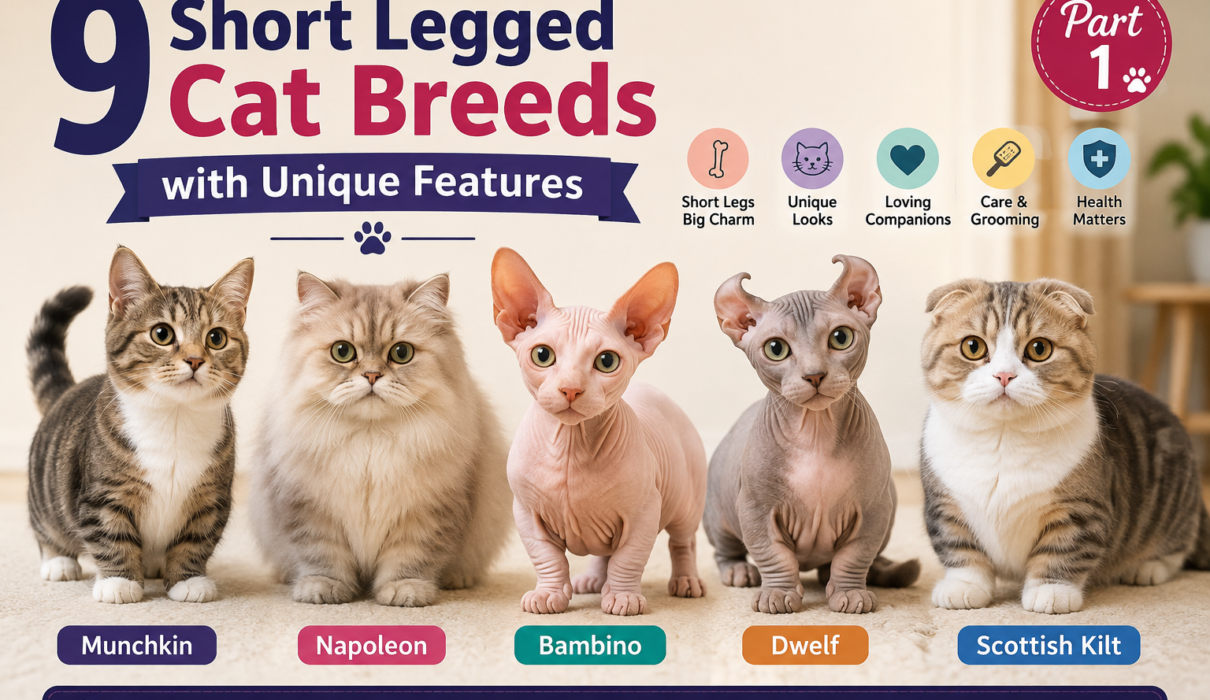
9 Short Legged Cat Breeds with Unique Features
Short-legged cats have a distinctive appearance that makes them easy to recognize. Their small legs, compact bodies, and often unusual facial or ear features give them a charming look that many cat lovers find irresistible. However, appearance is only one part of choosing a cat. Each breed can have different personality traits, grooming needs, activity levels, and health considerations.
In this guide, we’ll explore short legged cat breeds and the unique features that make each one special. In Part 1, we’ll look at the first five breeds: Munchkin, Napoleon, Bambino, Dwelf, and Scottish Kilt.
What Are Short Legged Cat Breeds?
Short legged cat breeds are cats that have noticeably shorter legs compared with the length and size of their bodies. In several of these breeds, the short-leg trait is associated with a genetic mutation that affects the development of the limbs.
The best-known example is the Munchkin, which has become the foundation for several newer breeds. Breeders have combined the Munchkin’s short legs with other distinctive traits, such as curly ears, hairless coats, folded ears, or curly fur.
Although their legs are short, these cats can still be playful, curious, and active. Their individual personality depends on the breed and the particular cat.
When considering one of these cats, potential owners should look beyond appearance. Grooming requirements, temperament, exercise needs, and breed-specific health considerations are all important factors.
Munchkin
The Munchkin is probably the most recognizable of all short legged cat breeds s. Its defining characteristic is its unusually short legs, which contrast with its relatively long body.
Munchkins can have short, medium, or long coats and come in a wide range of colors and patterns. Their appearance may vary considerably, but their short legs remain their most noticeable feature.
Personality
Munchkins are generally known for being curious, playful, and social. Many enjoy interactive games and spending time with their human companions. Their short legs do not necessarily prevent them from running and playing.
They may also be quite adventurous. A Munchkin can enjoy exploring its surroundings, playing with toys, and interacting with other household pets.
What Makes the Munchkin Unique?
The combination of a normal-sized body with noticeably short legs gives the Munchkin its distinctive appearance. This unusual body shape has also made the breed an important foundation for several other short-legged cat breeds.
Owners should still provide appropriate opportunities for exercise and play while considering the cat’s individual physical abilities.
Napoleon (Minuet)
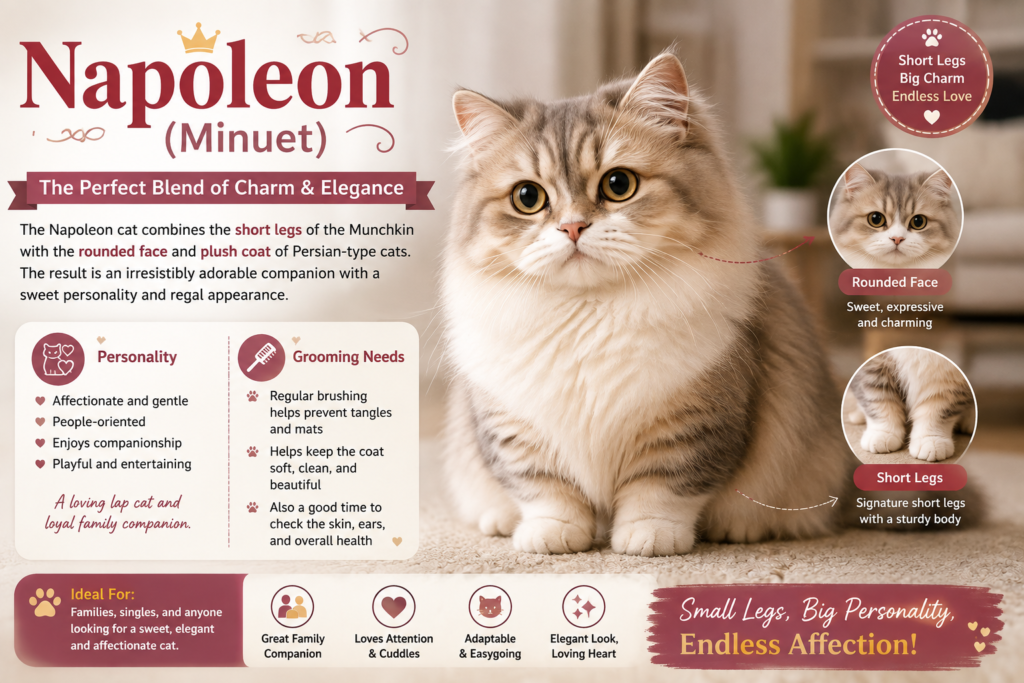
The Napoleon, also known as the Minuet, combines the short-legged appearance associated with the Munchkin with the rounded features and luxurious coat often associated with Persian-type cats.
This gives the breed a distinctive appearance, with short legs, a rounded face, and a plush coat. Some individuals may have a flatter facial appearance, while others have a more moderate profile.
Personality
Minuets are often described as affectionate, gentle, and people-oriented. They can enjoy spending time with their families and may be happy to follow their owners around the home.
Their playful side can also make them entertaining companions. Like other cats, however, individual personalities can vary.
Grooming Needs
The coat type is an important consideration with this breed. Cats with longer or thicker coats may require regular brushing to reduce tangles and prevent mats.
Regular grooming can also provide an opportunity to check the skin, ears, and overall condition of the cat.
What Makes the Napoleon Unique?
Its combination of short legs and a rounded, plush appearance makes the Napoleon stand out among short legged cat breeds. It can be an appealing choice for people who like both the compact appearance of short-legged cats and the luxurious look of long-haired cats.
Bambino
The Bambino has one of the most unusual appearances among short legged cat breeds. It combines short legs with a largely hairless body, creating a distinctive look that immediately sets it apart from many other cats.
The breed also has relatively large ears and expressive eyes, giving it an alert and curious appearance.
Personality
Bambinos are often playful, energetic, and affectionate. They may enjoy interactive toys, games, and attention from their owners.
Because they can be highly social, they may prefer having regular interaction rather than being left alone for long periods.
Special Care
The lack of a traditional fur coat means Bambinos can require special attention to their skin. Without a thick layer of fur, the skin is more exposed to environmental conditions.
Owners should discuss appropriate skin care with a veterinarian and take sensible precautions around excessive sunlight, cold temperatures, and other environmental factors.
What Makes the Bambino Unique?
The combination of short legs, a hairless body, large ears, and prominent eyes gives the Bambino a particularly unusual appearance. It is a good example of how breeders have combined different physical traits to create distinctive cat varieties.
Dwelf
The Dwelf is another highly distinctive member of the short legged cat breeds group. Its appearance combines several unusual characteristics, including short legs, a hairless body, and curled ears.
These features give the Dwelf an almost fantasy-like appearance that makes it very different from the average domestic cat.
Personality
Dwelfs are often described as social, playful, and affectionate. They can be curious and may enjoy exploring their environment.
Interactive toys and regular play sessions can help provide both physical activity and mental stimulation.
Care Requirements
Like other hairless cats, Dwelfs may require additional skin care because they do not have a normal fur coat to provide protection.
Their unusual ears should also be handled gently and checked regularly. A veterinarian can provide appropriate guidance on ear and skin care.
What Makes the Dwelf Unique?
The Dwelf’s combination of short legs, curled ears, and a hairless body makes it one of the most visually unusual short-legged cats.
It may appeal to people who are interested in cats with rare or distinctive physical characteristics, but its special care requirements should be considered before bringing one home.
Scottish Kilt
The Scottish Kilt is known for combining short legs with the distinctive folded ears associated with Scottish Fold-type cats.
This combination gives the breed a compact and unusual appearance. The folded ears can make the face look especially rounded and expressive.
Personality
Scottish Kilts are often described as friendly, affectionate, and relatively easygoing. Many enjoy being around people and can adapt well to a family environment when properly socialized.
As with any breed, individual temperament can vary, so prospective owners should consider the personality of the specific cat rather than relying only on breed descriptions.
Grooming
Grooming requirements depend on the cat’s coat length. Short-haired individuals may need less brushing, while longer-haired cats can require more regular grooming.
The ears should also receive appropriate attention. Owners should avoid excessive cleaning or manipulating the folded ears and should seek veterinary advice if they notice redness, discharge, odor, or signs of discomfort.
What Makes the Scottish Kilt Unique?
The most noticeable combination is its short legs and folded ears. This gives the Scottish Kilt a distinctive appearance that separates it from many other short legged cat breeds.
Final Thoughts on part 1
The first five breeds show just how varied short legged cat breeds can be. The Munchkin is famous for its short legs, while the Napoleon combines short legs with a plush, rounded appearance. The Bambino and Dwelf add hairless coats and unusual ears, while the Scottish Kilt combines short legs with folded ears.
While these unique features can be appealing, appearance should not be the only factor when choosing a cat. Temperament, grooming, activity level, health considerations, and the care needs of the individual cat are equally important.
9 Short Legged Cat Breeds with Unique Features
Kinkalow
The Kinkalow is a small cat known for its short legs and distinctive curled ears. Its unusual appearance comes from combining traits associated with the Munchkin and American Curl.
The breed can have a relatively long body compared with its short legs, while its curled ears give its face an especially expressive appearance.
Personality
Kinkalows are generally described as playful, curious, and social. They may enjoy interactive games and spending time with their owners.
Their small size does not necessarily mean they have a quiet personality. Many can be active and entertaining companions that enjoy exploring their surroundings.
Care and Grooming
Grooming depends on the individual cat’s coat length. Regular brushing can help keep longer coats clean and free from tangles.
Because the ears have an unusual curled shape, owners should be gentle when handling them. Routine veterinary checks can help monitor ear health and overall well-being.
What Makes the Kinkalow Unique?
The combination of short legs and curled ears is the Kinkalow’s defining feature. Its unusual ears also make it interesting for people who enjoy distinctive-looking cats.
Minskin
The Minskin is another unusual member of the short legged cat breeds group. It is known for its short legs and distinctive coat, which can be sparse in certain areas of the body.
Minskins can also have relatively large ears, giving them an alert and expressive appearance. Their facial features can make them particularly appealing to people interested in cat breeds with big ears.
Personality
Minskins are often described as friendly, affectionate, and curious. They can enjoy human companionship and may form strong bonds with their families.
Their playful nature means they can benefit from interactive toys, climbing opportunities that are appropriate for their abilities, and regular mental stimulation.
Grooming and Skin Care
Because the coat can be sparse, Minskins may need different grooming and skin-care considerations from heavily coated cats.
Owners should pay attention to changes in the skin and consult a veterinarian about appropriate care, especially if the cat has particularly little hair.
What Makes the Minskin Unique?
The Minskin stands out because of its combination of short legs, unusual coat, and large ears. These characteristics give it a very different appearance from traditional domestic cats.
Skookum
The Skookum is a short-legged cat with another unusual feature: a curly coat. Its short legs are combined with soft, curly fur, creating a compact and distinctive appearance.
The coat can make the Skookum look somewhat like a miniature curly-haired cat.
Personality
Skookums are often described as playful, affectionate, and friendly. They can enjoy spending time with people and may remain active and curious throughout the day.
Interactive play is a good way to provide both exercise and mental stimulation.
Grooming Needs
Curly coats can require regular grooming to keep the fur in good condition. The exact grooming routine depends on the individual cat’s coat texture and length.
Owners should brush gently and regularly check the skin underneath the coat.
What Makes the Skookum Unique?
Its combination of short legs and curly fur makes the Skookum especially recognizable. While many short-legged cats are known mainly for their body shape, the Skookum adds a distinctive coat texture to the mix.
Genetta
The Genetta is known for its short legs, long body, and spotted coat pattern. Its markings are designed to give it a wild-cat-inspired appearance while remaining a domestic cat.
Some Genettas can also have relatively large ears, making them another interesting option for people researching cat breeds with big ears.
Personality
Genettas are often described as curious, active, and playful. Their energetic nature means they can benefit from regular play sessions and plenty of opportunities to explore safely.
Puzzle toys and interactive activities can also help keep a curious cat mentally engaged.
Coat and Appearance
The spotted coat is one of the Genetta’s most noticeable characteristics. Combined with its short legs and elongated body, the pattern can give the cat an unusual, wild-looking appearance.
What Makes the Genetta Unique?
The Genetta combines several eye-catching features: short legs, a long body, large ears, and a spotted coat. This makes it one of the more unusual cats included in this list.
Unique Features to Look for in Short-Legged Cats
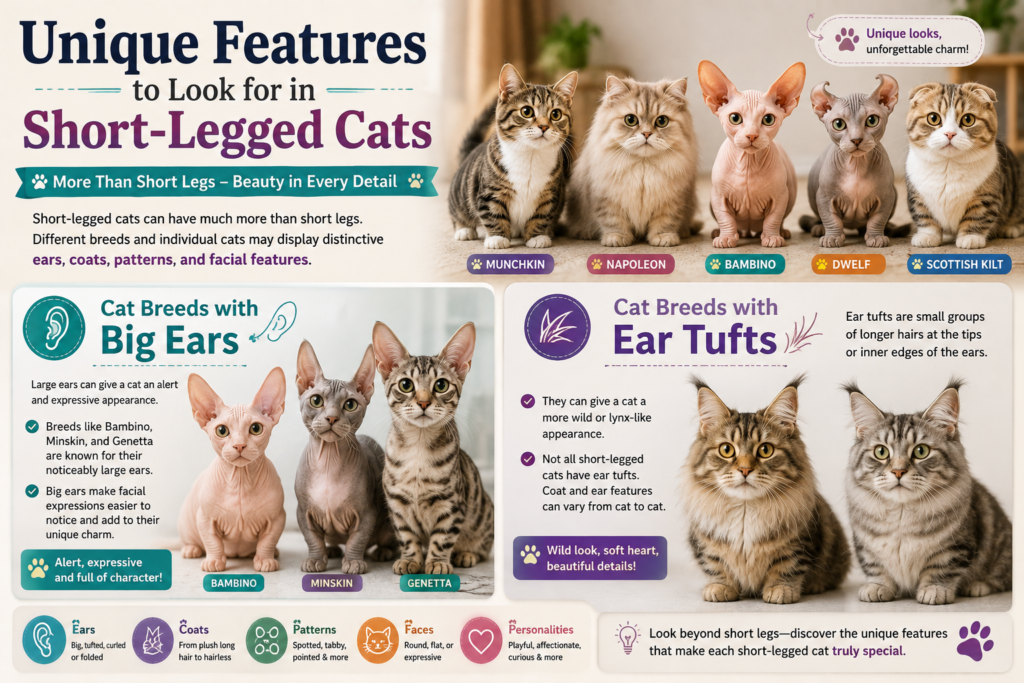
Short-legged cats can have much more than short legs. Different breeds and individual cats may display distinctive ears, coats, patterns, and facial features.
Cat Breeds with Big Ears
Large ears can give a cat an alert and expressive appearance. Among short-legged cats, breeds such as the Bambino, Minskin, and Genetta may be especially interesting to people searching for cat breeds with big ears.
Large ears can also make facial expressions easier to notice, adding to the cat’s unique appearance.
Cat Breeds with Ear Tufts
Ear tufts are small groups of longer hairs that extend from the tips or inner edges of a cat’s ears. They can give a cat a more wild or lynx-like appearance.
Not every short-legged breed has prominent ear tufts. If ear tufts are an important feature for you, look at the individual cat as well as the breed because coat and ear characteristics can vary.
Curled and Folded Ears
Some short-legged cats are recognized for unusual ear shapes. Kinkalows have curled ears, while Scottish Kilt cats can have folded ears.
These features contribute significantly to their appearance, but unusual ears also mean owners should pay attention to ear health and handle them gently.
Curly Coats
The Skookum demonstrates how a curly coat can create another layer of uniqueness. Instead of focusing only on body shape, potential owners may also want to consider coat texture and grooming requirements.
Hairless and Sparse Coats
Bambinos, Dwelfs, and Minskins can have little or no traditional fur. These cats may require additional attention to their skin and protection from environmental conditions.
Anyone considering a hairless or sparsely coated cat should research its specific care requirements before making a decision.
Are Short Legged Cats Good Family Pets?
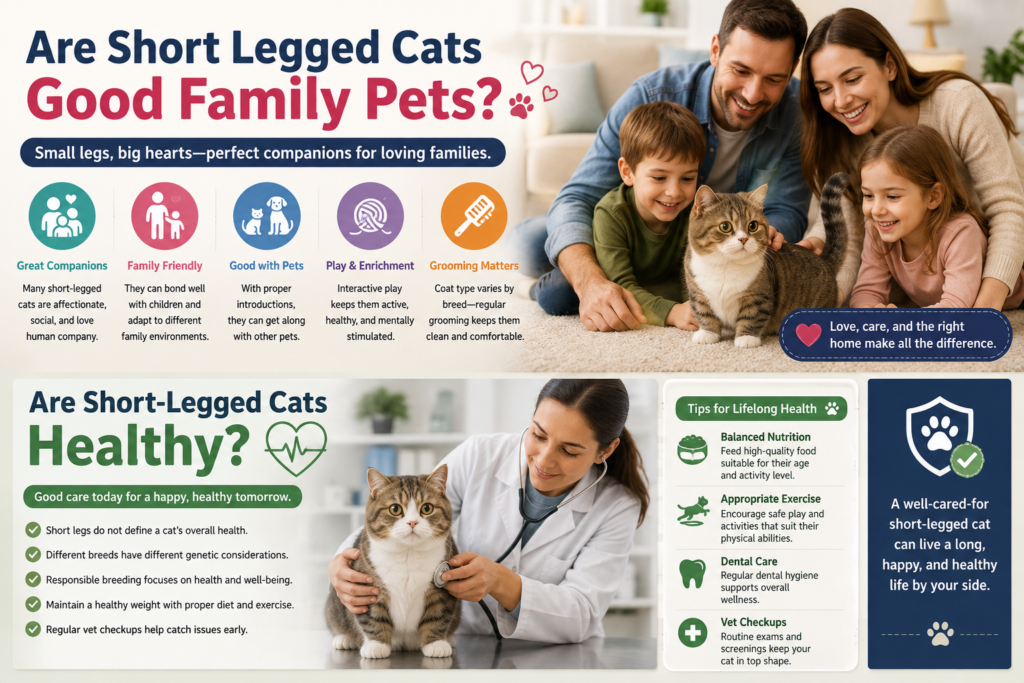
A short-legged cat can make a wonderful companion, but the right choice depends on the individual cat and your household.
Some are highly social and affectionate, while others may be more independent. Families should consider the cat’s temperament, activity level, grooming requirements, and compatibility with children or other pets.
Interactive play is important for many cats. Even cats with short legs need opportunities to exercise and explore, although activities should be appropriate for the individual cat’s physical abilities.
Before choosing a cat, spend time learning about the breed and meeting the individual animal when possible.
Are Short-Legged Cats Healthy?
Short legs themselves do not tell you everything about a cat’s health. Different breeds can have different genetic characteristics and health considerations.
Responsible breeding practices are important because breeders should consider the overall health and welfare of their cats rather than focusing only on unusual physical traits.
Keeping a cat at a healthy weight is also important. Regular veterinary examinations can help identify potential problems early and provide advice about nutrition, exercise, dental care, and other aspects of health.
If you are considering a particular breed, ask a veterinarian about breed-specific concerns and what health screening may be appropriate.
Are Short-Legged Cats Intelligent?
Leg length has no direct relationship with intelligence. A short-legged cat can be just as curious, trainable, and mentally active as other cats.
Some individual short-legged cats may enjoy learning simple behaviors, playing puzzle games, or responding to interactive toys. Personality varies from one cat to another.
People searching for the smartest cat breeds should look at traits such as curiosity, problem-solving ability, trainability, and interaction with humans rather than focusing on physical appearance.
Providing puzzle feeders, interactive toys, climbing areas that are safe for the individual cat, and regular play can help keep a cat mentally stimulated.
How to Choose the Right Short-Legged Cat Breed
Choosing among short legged cat breeds should involve more than deciding which cat looks the cutest.
Consider these factors before making a decision:
Grooming
Long, curly, or dense coats may require more grooming than short coats. Hairless and sparsely coated cats can have different skin-care requirements.
Activity Level
Some cats are highly energetic and need plenty of play, while others may prefer a calmer lifestyle.
Personality
Think about whether you want a highly social companion, an independent cat, or something in between.
Household Environment
Consider children, other pets, available space, and how much time you can spend interacting with your cat.
Health and Responsible Breeding
Research the breed’s known health considerations and choose responsible sources that prioritize the welfare and health of their cats.
Frequently Asked Questions
What is the most popular short-legged cat breed?
The Munchkin is one of the best-known and most recognizable short legged cat breeds.
Which short-legged cat has big ears?
Several short-legged cats can have noticeably large ears. The Bambino, Minskin, and Genetta are examples that may appeal to people looking for cat breeds with big ears.
Are short-legged cats easy to care for?
Care requirements vary by breed. Some need regular brushing, while hairless or sparsely coated cats may need additional skin care. Temperament and activity levels can also differ.
Do short-legged cats have health problems?
Health considerations vary between breeds and individual cats. Responsible breeding, healthy weight management, regular veterinary care, and appropriate nutrition are important for every cat.
Are Munchkin cats intelligent?
Munchkin cats can be curious, playful, and interactive. However, intelligence varies between individual cats, and short legs do not determine how smart a cat is.
Which cat breeds have big ears?
Many cat breeds are known for relatively large ears. Among short-legged cats, the Bambino, Minskin, and Genetta are examples worth researching.
Which cat breeds have ear tufts?
Ear tufts occur in several cat breeds, but they are not a defining feature of every short-legged breed. If prominent ear tufts are important to you, examine the specific breed and individual cat carefully.
Conclusion
The world of short legged cat breeds includes much more variety than short legs alone. Munchkins are famous for their distinctive body shape, while Kinkalows are known for curled ears, Minskins for unusual coats and large ears, Skookums for curly fur, and Genettas for spotted, wild-looking patterns.
These cats can be charming and affectionate companions, but their appearance should not be the only consideration. Before choosing a short-legged cat, learn about its temperament, grooming requirements, activity level, health considerations, and everyday care needs.
Whether you are attracted to cat breeds with big ears, cats with unusual coats, cat breeds with ear tufts, or simply curious and playful companions, taking the time to understand each breed can help you find a cat that fits your lifestyle.
Frequently Asked Questions About Short Legged Cat Breeds
1. What is the most popular short-legged cat breed?
The Munchkin is one of the most well-known short legged cat breeds. It is recognized for its unusually short legs, long body, playful personality, and curious nature.
2. Are short-legged cats good pets?
Yes, many short legged cat breeds can make affectionate and playful pets. However, their temperament and care requirements vary by breed, so it is important to choose a cat that matches your lifestyle.
3. Which short-legged cat breeds have big ears?
The Bambino, Minskin, and Genetta are examples of short-legged cats that can have noticeably large ears. These features give them an alert and distinctive appearance.
4. Are there short-legged cat breeds with ear tufts?
Some short-legged cats may have small ear tufts depending on their breed and individual coat characteristics. However, prominent ear tufts are not a defining feature of most short-legged breeds.
5. Are Munchkin cats intelligent?
Munchkin cats can be curious, playful, and responsive to interactive games and training. Intelligence varies from cat to cat, so short legs do not determine how smart a Munchkin is.
6. Are short-legged cats healthy?
Health varies between breeds and individual cats. Responsible breeding, a healthy weight, regular veterinary examinations, proper nutrition, and appropriate exercise can all contribute to a cat’s overall well-being.
7. Do short-legged cats need special care?
Some do. Grooming, skin care, ear care, exercise, and general health needs depend on the breed. Hairless or sparsely coated breeds may require more attention to their skin, while long-haired breeds may need frequent brushing.
8. Can short-legged cats run and play normally?
Many short-legged cats can run, play, jump, and explore. However, their physical abilities can vary, so owners should provide safe play opportunities that suit the individual cat.
9. Which short-legged cat breed has a curly coat?
The Skookum is known for combining short legs with a curly coat. Its unusual fur texture makes it particularly distinctive among short legged cat breeds.
10. Which short-legged cats are hairless?
The Bambino and Dwelf are examples of short-legged cats associated with hairless coats. Minskins can also have sparse hair. These cats may need additional skin care compared with cats with full coats.
11. Are short-legged cats part of the smartest cat breeds?
Short legs do not determine intelligence. Some individual short-legged cats can be highly curious, playful, and trainable, but the smartest cat breeds are generally evaluated based on traits such as problem-solving, curiosity, and trainability.
12. What should I consider before getting a short-legged cat?
Consider the cat’s temperament, grooming needs, activity level, health considerations, and compatibility with your household. It is also important to research the breed and choose a responsible breeder or consider adoption where appropriate
1 Comment