

 By
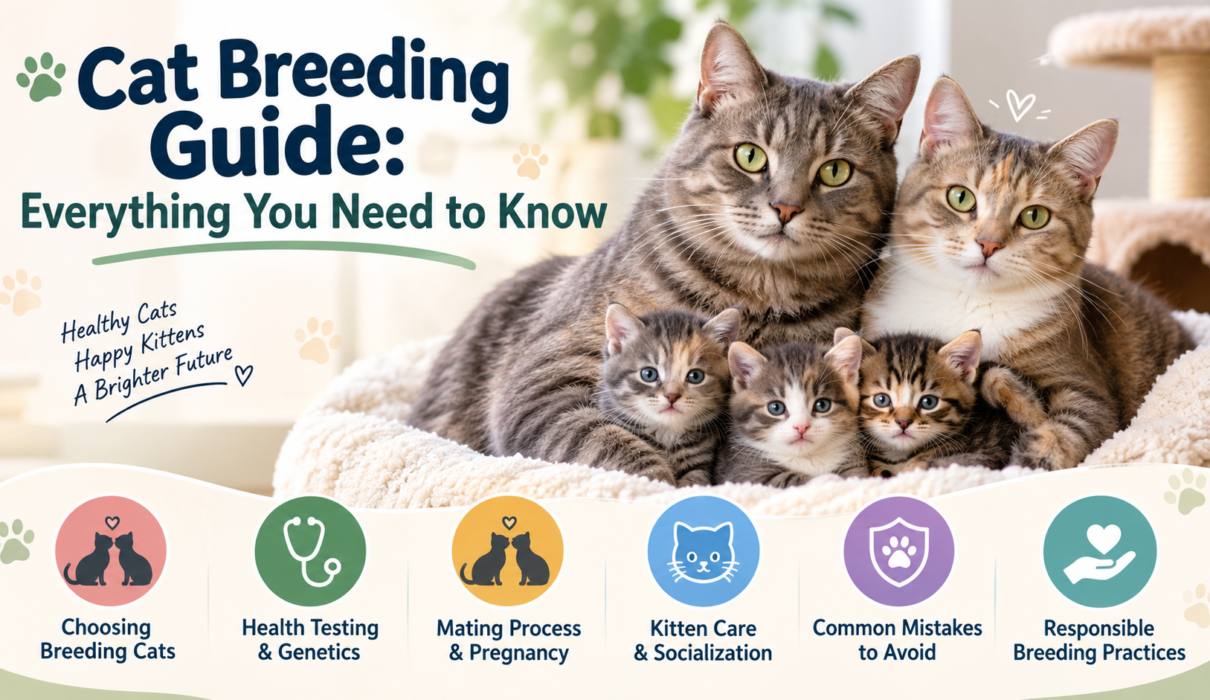
Cat Breeding Guide: Everything You Need to Know
Breeding cats is a responsibility that requires proper planning, knowledge, and attention to animal health. Responsible breeding cats is not simply about producing kittens. It involves selecting healthy cats, understanding genetics, providing appropriate veterinary care, and making sure both the mother and kittens receive proper care.
Whether you are learning about cat breeding for the first time or considering becoming a breeder, understanding the basics can help you make safer and more responsible decisions.
In this first part of our guide, we will cover choosing breeding cats, health testing, genetics, selective breeding, and preparation before mating.
Introduction to Breeding Cats
Breeding cats means intentionally mating cats to produce kittens with desirable characteristics while maintaining their health and welfare. Responsible breeders consider much more than appearance when selecting cats.
Good breeding practices focus on:
Overall health
Genetic background
Temperament
Breed characteristics
Genetic diversity
Proper veterinary care
The welfare of the mother and kittens
Before starting cat breeding, it is important to understand that breeding involves long-term responsibilities. A breeder may need to provide veterinary care before and during pregnancy, support the mother during birth, care for newborn kittens, and find suitable homes for the kittens.
What You Should Know Before Breeding Cats
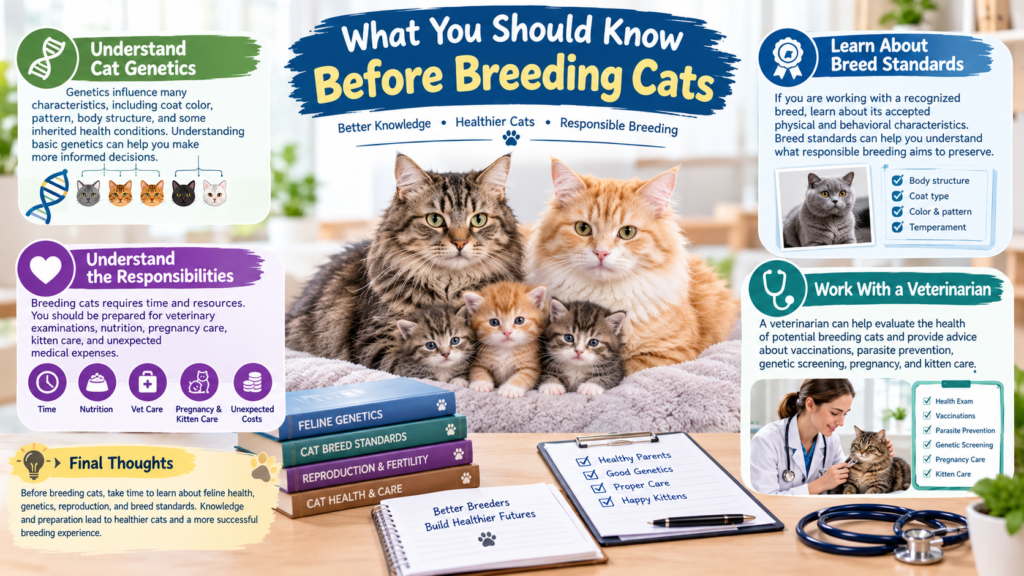
Before breeding cats, take time to learn about feline health, genetics, reproduction, and breed standards. Beginners should avoid making breeding decisions based only on color, size, or appearance.
Understand Cat Genetics
Genetics influence many characteristics, including coat color, pattern, body structure, and some inherited health conditions. Understanding basic genetics can help breeders make more informed decisions.
Learn About Breed Standards
If you are working with a recognized breed, learn about its accepted physical and behavioral characteristics. Breed standards can help you understand what responsible breeding aims to preserve.
Understand the Responsibilities
Breeding cats requires time and resources. You should be prepared for veterinary examinations, nutrition, pregnancy care, kitten care, and unexpected medical expenses.
Work With a Veterinarian
A veterinarian can help evaluate the health of potential breeding cats and provide advice about vaccinations, parasite prevention, genetic screening, pregnancy, and kitten care.
Choosing Cats for Breeding
Choosing suitable cats is one of the most important steps in breeding cats. Healthy parents have a better opportunity to produce healthy kittens, although no breeding program can guarantee that every kitten will be completely free of health problems.
When choosing breeding cats, consider several factors.
Overall Health
Potential breeding cats should be in good physical condition. They should receive appropriate veterinary examinations before breeding.
Temperament
Personality is also important. Breeders should avoid intentionally reproducing cats with serious behavioral problems when those traits may have a genetic or environmental component.
Age and Physical Condition
Cats should be physically mature and healthy before being considered for breeding. The appropriate breeding age can vary depending on the individual cat and breed, so veterinary guidance is valuable.
Pedigree and Family History
A pedigree can provide information about a cat’s ancestry. Knowing the health history of related cats can help identify possible inherited problems.
Genetic Diversity
Responsible cat breeding should avoid unnecessary inbreeding. Maintaining appropriate genetic diversity can be important for long-term population health.
Breeding Cats and Health Testing
Health testing is an important part of responsible breeding cats. A visually healthy cat may still carry an inherited condition, so breeders should learn about health concerns associated with the particular breed.
Health preparation may include:
Physical examination
Vaccination review
Parasite screening and prevention
Genetic testing when appropriate
Screening for breed-specific conditions
Reviewing family health history
The exact tests needed depend on the breed, location, and individual cats. A veterinarian can recommend appropriate screening before breeding.
Why Health Testing Matters
Health testing can help breeders make better pairing decisions. It may also reduce the likelihood of knowingly passing certain inherited conditions to kittens.
Responsible breeders should keep health records and use available information when planning future litters.
Breeding Cats and the Healthiest Cat Breeds
People often search for the healthiest cat breeds when researching breeding programs. However, there is no single breed that is guaranteed to be the healthiest for every situation.
Individual health, genetics, breeding practices, nutrition, veterinary care, and genetic diversity all matter.
When considering the healthiest cat breeds, look beyond popularity and appearance. Ask:
Are there known inherited conditions in the breed?
What health screening is recommended?
Does the breeding line have a good health history?
Is genetic diversity being maintained?
Are the parents physically healthy?
Does the breeder prioritize welfare over appearance?
The goal of responsible breeding cats should be to improve or maintain health while preserving appropriate breed characteristics.
Selective Breeding Cat Species: How It Works
Selective breeding cat species involves choosing particular animals to reproduce based on specific characteristics. In domestic cats, breeders may select traits such as coat pattern, body type, temperament, or other breed characteristics.
Selective breeding can help establish and maintain recognizable breeds, but it must be approached carefully.
Selecting Desirable Traits
Breeders may select cats with desirable physical or behavioral traits. However, selecting one trait repeatedly without considering overall health can create problems.
Maintaining Breed Characteristics
Responsible breeders try to preserve breed characteristics while also considering health and temperament.
Understanding Genetic Diversity
Genetic diversity is an important consideration in breeding programs. A narrow gene pool can increase the chance that certain inherited problems become more common.
Avoiding Extreme Traits
Breeding only for exaggerated physical characteristics can sometimes create welfare concerns. Health and normal function should remain important priorities.
Understanding Cat Breeding Genetics
Genetics play a major role in breeding cats. Even basic knowledge can help breeders understand why kittens may inherit different traits from their parents.
Dominant and Recessive Traits
Some genetic traits can be dominant, while others may be recessive. A cat can sometimes carry a recessive trait without showing it.
This is one reason why family history and appropriate genetic testing can be useful.
Coat Colors and Patterns
Cat coat colors and patterns are influenced by genetics. Breeders should understand that combining certain colors or patterns can have different outcomes depending on the parents’ genetic makeup.
Physical Characteristics
Body size, coat type, ear shape, and other characteristics may have genetic components. Responsible breeding should prioritize healthy structure rather than extreme appearance.
Inherited Health Conditions
Some genetic mutations can increase the risk of particular diseases or health problems. Breed-specific testing can help identify certain risks before cats are paired.
Preparing for Breeding Cats
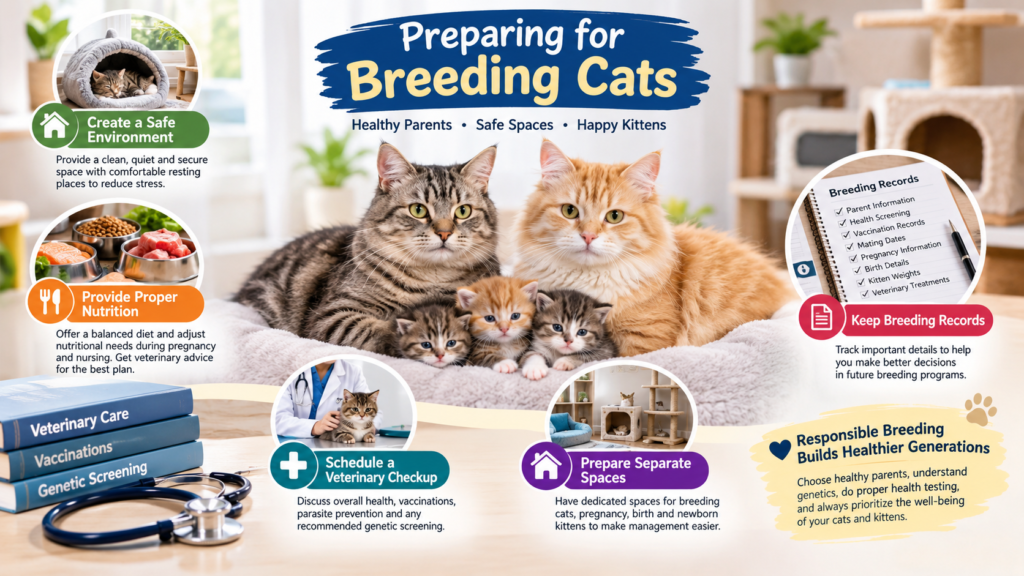
Proper preparation can make the breeding cats process safer and more organized.
Create a Safe Environment
Breeding cats should have access to a clean, quiet, and secure environment. Cats should also have places where they can rest without unnecessary stress.
Provide Proper Nutrition
Cats being considered for breeding need an appropriate, balanced diet. Nutritional needs can change during pregnancy and nursing, so veterinary advice is useful.
Schedule a Veterinary Checkup
Before breeding, arrange a veterinary examination to discuss overall health, vaccinations, parasite prevention, and any recommended genetic screening.
Prepare Separate Spaces
Having appropriate spaces available can make it easier to manage breeding cats, pregnancy, birth, and newborn kittens.
Keep Breeding Records
Good records can include:
Parent information
Health screening results
Vaccination records
Mating dates
Pregnancy information
Birth details
Kitten weights
Veterinary treatments
Accurate records can help you make better decisions in future breeding programs.
Final Thoughts on Breeding Cats
Responsible breeding cats requires preparation, knowledge, and a strong commitment to animal welfare. Choosing healthy parents, understanding genetics, performing appropriate health testing, and maintaining good breeding records are all important steps.
The concept of selective breeding cat species should always be approached with care. Breeders should avoid focusing exclusively on appearance and instead consider health, temperament, genetic diversity, and overall quality of life
Cat Breeding and the Mating Process
The mating process is an important stage of breeding cats. Before allowing cats to mate, breeders should make sure both animals are healthy, mature, and suitable for breeding.
Recognizing a Female Cat in Heat
A female cat in heat may become more affectionate, vocal, restless, or display changes in body posture and behavior. These signs can vary between individual cats.
If you are unsure whether a female is ready for breeding, consult a veterinarian rather than relying only on behavior.
Introducing Breeding Cats Safely
Cats should be introduced carefully and monitored for signs of excessive stress or aggression. They should have enough space to move away from each other when necessary.
Never force cats to mate. The safety and welfare of both animals should remain the priority.
Understanding Mating Behavior
Cats may mate multiple times during a breeding period. Their behavior can sometimes look aggressive, so breeders should understand normal feline mating behavior while continuing to monitor both animals.
Veterinary Support
Veterinary guidance is especially useful for first-time breeders or cats with known health concerns. A veterinarian can help determine whether breeding is appropriate.
Breeding Cats During Pregnancy
After successful mating, pregnancy becomes the next major stage of breeding cats. Pregnancy requires careful monitoring and appropriate nutrition.
Signs of Pregnancy
A pregnant cat may experience changes in appetite, weight, behavior, and physical appearance. However, these signs alone do not confirm pregnancy.
A veterinarian can use appropriate diagnostic methods to confirm pregnancy and assess the mother’s health.
Providing Proper Nutrition
Pregnant cats need a nutritionally complete diet that supports both the mother and developing kittens. Nutritional requirements can change as pregnancy progresses.
Fresh water should always be available.
Veterinary Monitoring
Regular veterinary care can help monitor the mother’s condition and identify potential problems. Breeders should follow their veterinarian’s recommendations for examinations and care.
Preparing for Birth
Before the expected delivery period, prepare a clean, quiet, and comfortable nesting area. The mother should have enough privacy while still being easy for you to monitor.
Keep essential supplies nearby and have a plan for contacting a veterinarian if an emergency occurs.
Breeding Cats and Kitten Care
Newborn kitten care is one of the most demanding parts of breeding cats. Newborns are vulnerable and require careful observation.
Create a Safe Nesting Area
The mother and kittens should have a warm, clean, quiet area away from unnecessary noise and disturbances.
Monitor Feeding
Newborn kittens need regular access to their mother’s milk. Observe the kittens to make sure they are feeding properly and appearing active.
If a kitten is not nursing or seems weak, contact a veterinarian promptly.
Monitor Kitten Growth
Regular weight monitoring can help identify kittens that may need additional attention. Sudden failure to gain weight can be a warning sign.
Keep the Environment Clean
Good hygiene is important for young kittens. Bedding should be kept clean and changed when necessary without unnecessarily disturbing the mother and kittens.
Early Socialization
As kittens grow, gentle handling and appropriate social experiences can help them become comfortable around people and normal household activities.
Socialization should always be gradual and appropriate for the kittens’ age and development.
Common Mistakes to Avoid When Breeding Cats
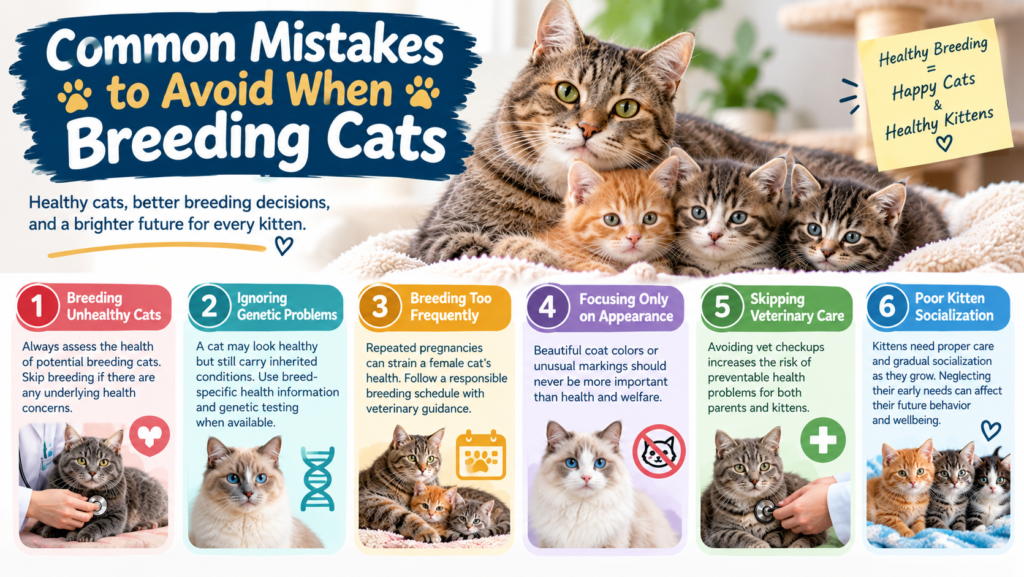
New breeders can make mistakes when they begin breeding cats. Understanding common problems can help prevent unnecessary risks.
Breeding Unhealthy Cats
One of the biggest mistakes is breeding cats without first assessing their health. Potential breeding cats should receive appropriate veterinary evaluation.
Ignoring Genetic Problems
A cat that looks healthy may still carry certain inherited conditions. Breed-specific health information and genetic testing can be useful when available.
Breeding Too Frequently
Repeated pregnancies can place additional demands on a female cat. Breeding schedules should be approached responsibly and with veterinary guidance.
Focusing Only on Appearance
Beautiful coat colors, unusual markings, or extreme physical characteristics should never be more important than health and welfare.
Skipping Veterinary Care
Avoiding veterinary examinations can increase the risk of preventable health problems for both parents and kittens.
Poor Kitten Socialization
Kittens need appropriate care and gradual socialization as they develop. Neglecting their early needs can affect their future behavior and wellbeing.
Responsible Cat Breeding Practices
Responsible cat breeding is based on the welfare of the animals rather than simply producing as many kittens as possible.
Prioritize Health
The health of breeding cats and kittens should come before appearance, profit, or demand for a particular breed.
Maintain Accurate Records
Keep records of:
Parent information
Health tests
Vaccinations
Breeding dates
Pregnancy information
Birth details
Kitten development
Veterinary treatments
These records can help guide future breeding decisions.
Consider Genetic Diversity
Responsible breeding programs should consider genetic diversity and avoid unnecessary close breeding. Maintaining a healthy gene pool can be important for the long-term wellbeing of a breed.
Provide Appropriate Kitten Care
Breeders should be prepared to provide appropriate food, veterinary care, socialization, and a safe environment for kittens.
Find Suitable Homes
Finding responsible homes is an important part of breeding cats. Potential owners should understand the breed’s personality, care requirements, lifespan, and potential health considerations.
Know When Not to Breed
Sometimes the most responsible decision is not to breed a particular cat. Health problems, unsuitable temperament, genetic risks, or other welfare concerns may make breeding inappropriate.
.
Frequently Asked Questions About Breeding Cats
What Is the Best Age for Breeding Cats?
There is no single age that is ideal for every cat. Cats should be physically mature and healthy before breeding, and a veterinarian should help determine whether an individual cat is suitable.
How Often Can Cats Safely Have Kittens?
Breeding frequency should be carefully managed. A female cat needs adequate recovery time between litters, and her overall health should always be considered.
How Do I Choose Cats for Breeding?
Choose cats based on overall health, temperament, genetics, breed characteristics, and family health history rather than appearance alone.
Is Genetic Testing Necessary for Breeding Cats?
Genetic testing can be useful for identifying certain inherited conditions or carrier status, particularly when recommended for a specific breed.
What Are the Healthiest Cat Breeds?
There is no universally guaranteed list of the healthiest cat breeds. Individual genetics, breeding practices, health screening, and veterinary care all influence a cat’s health.
What Is Selective Breeding Cat Species?
Selective breeding cat species refers to intentionally selecting animals with particular traits for reproduction. In domestic cats, responsible selection should balance breed characteristics with health and welfare.
How Can I Become a Responsible Cat Breeder?
Start by learning about feline genetics and reproduction, working with a veterinarian, understanding breed-specific health concerns, keeping accurate records, and putting the welfare of cats and kittens first.
Conclusion: Breeding Cats Responsibly
Breeding cats is a serious responsibility that requires preparation, knowledge, time, and commitment. From selecting healthy parents to caring for pregnant cats and newborn kittens, every stage should be approached carefully.
Responsible cat breeding is about more than producing kittens. It means considering health, genetics, temperament, genetic diversity, and quality of life.
Whether you are interested in a specific breed or learning about selective breeding cat species, always put animal welfare first. Proper health testing, veterinary guidance, responsible breeding decisions, and careful kitten care can help create a safer and healthier breeding program.
The ultimate goal of breeding cats should be to protect the wellbeing of the parents and give every kitten the best possible start in life.