

 By
By If Your Dog Feels Uncomfortable, Let’s Talk Calmly
When your dog feels unwell, you notice it quickly. Small changes in behavior can feel worrying. Maybe your dog keeps licking lips after eating. Maybe there is burping, gagging, or small vomit episodes. Sometimes itchy bumps appear suddenly without warning.
It is normal to feel concerned. Dogs cannot explain what they feel, so you must observe carefully. The good news is that many stomach and skin problems are manageable with the right steps.
In this guide, we will clearly explain reflux dogs treatment in simple words. We will also walk step by step through urticaria in dogs treatment. You will learn what helps at home, what needs veterinary care, and how to prevent future problems.
Let’s go through everything calmly and clearly.
Understanding Reflux in Dogs
Reflux in dogs happens when stomach acid moves in the wrong direction. Normally, acid stays inside the stomach to help break down food. But when the valve between the stomach and throat becomes weak or irritated, acid flows backward. This backward flow is called acid reflux.
When acid touches the food pipe, it causes irritation and burning. The throat lining is sensitive. Even small amounts of acid can cause discomfort. Over time, repeated irritation may lead to inflammation.
Dogs cannot tell you they feel burning in their chest. So they show signs through behavior changes. These signs may seem small at first, but they matter.
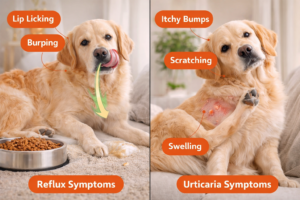
Common symptoms include frequent lip licking and swallowing. Some dogs gulp repeatedly as if something feels stuck. Others burp often after meals. Gagging is also common, especially shortly after eating.
You might see small amounts of yellow or foamy vomit. This often happens early in the morning when the stomach is empty. Nighttime coughing is another clue. Some dogs wake up restless because lying down makes reflux worse.
Loss of appetite can also happen. A dog may walk away from breakfast but eat later in the day. Some dogs eat grass often because they feel throat irritation. Others appear uncomfortable after meals.
Mild reflux may happen once in a while. That is not always serious. However, if these symptoms repeat weekly or daily, the stomach lining may stay irritated. Long-term irritation can worsen without care.
That is when proper reflux dogs treatment becomes important. Early action reduces discomfort and prevents complications. Understanding the signs helps you respond before the problem grows.
Why Reflux Happens in Dogs
Reflux usually develops because of pressure or irritation in the stomach. Large meals stretch the stomach too much. Fast eating traps air inside, which increases pressure.
Fatty food slows digestion. Slow digestion increases acid contact with the stomach lining. Sudden diet changes also upset digestive balance.
Stress is another major factor. When dogs feel anxious, stomach acid production increases. Certain medications may irritate the stomach as well.
Understanding these triggers improves reflux dogs treatment results and prevents repeated flare-ups.
7 Reflux Dogs Treatment Methods That Actually Work
Now let’s go step by step. These strategies are commonly recommended by veterinarians. They are safe starting points for most healthy dogs.
1. Feed Smaller Meals Throughout the Day
Large meals create excessive stomach pressure. That pressure pushes acid upward into the throat. Dividing meals reduces this pressure significantly.
Instead of feeding twice daily, try offering three or four smaller meals. Keep the total daily food amount the same to avoid weight gain. Consistency in feeding times also helps regulate digestion.
This simple adjustment is one of the most effective reflux dogs treatment methods.
2. Slow Down Fast Eating
Fast eating increases air swallowing. That trapped air causes bloating and burping. Over time, it can worsen reflux symptoms.
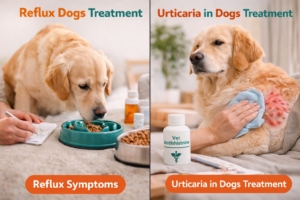
Use a slow feeder bowl to control eating speed. Snuffle mats also help with dry food. For wet food, lick mats encourage slower, calmer eating.
Slower eating improves digestion naturally and strengthens reflux dogs treatment results.
3. Choose Gentle, Low-Fat Food
High-fat meals delay stomach emptying. When food stays longer in the stomach, acid irritation increases. Switching to a low-fat formula may help reduce symptoms.
Ask your veterinarian about sensitive stomach diets. Always transition gradually over seven days. Sudden changes can worsen digestive upset.
Avoid greasy treats and table scraps. Dietary control plays a central role in successful reflux dogs treatment.
4. Keep Your Dog Upright After Meals
Lying down immediately after eating may trigger reflux. Gravity helps keep stomach contents in place.
Allow your dog to sit calmly or take a gentle walk for fifteen minutes after meals. Avoid intense play or running during this time.
Posture control is often overlooked, but it supports reflux dogs treatment significantly.
5. Reduce Stress Around Feeding Time
Stress affects digestion quickly. Dogs who feel anxious may produce more stomach acid.
Feed your dog in a quiet, calm environment. Avoid loud noises or chaos near the food bowl. Keep feeding routines predictable and consistent.
A peaceful setting improves reflux dogs treatment outcomes and supports long-term digestive health.
6. Use Vet-Approved Medication When Necessary
Sometimes lifestyle changes alone are not enough. In moderate or severe cases, veterinarians may prescribe medication.
Common options include acid reducers or stomach protectants. These medications reduce irritation and allow healing.
Never give human medication without veterinary approval. Medication combined with routine adjustments strengthens reflux dogs treatment safely.
7. Track Symptoms and Patterns
Tracking symptoms provides valuable information. Write down meal times, food types, and treat details. Note any vomiting, coughing, or unusual behavior.
Patterns often reveal hidden triggers. This record helps your veterinarian adjust reflux dogs treatment accurately.
Consistent tracking improves both diagnosis and prevention.
When Reflux Needs Immediate Veterinary Attention
Call your veterinarian if vomiting becomes frequent or severe. Seek help if your dog loses weight unexpectedly. Difficulty breathing or extreme weakness also requires urgent care.
If your dog refuses water or shows signs of dehydration, act quickly. Early medical support prevents complications.
Smart reflux dogs treatment includes knowing when home care is not enough.
Understanding Urticaria in Dogs
Urticaria is the medical term for hives. Hives appear as raised, swollen bumps on the skin. They can develop suddenly and spread quickly.
Swelling may occur around the lips, eyelids, or ears. Some dogs scratch intensely. Others appear restless or uncomfortable.
Triggers often include new foods, insect bites, or plant exposure. Certain shampoos or cleaning sprays may also cause reactions.
Recognizing these triggers helps improve urticaria in dogs treatment outcomes.
Urticaria in Dogs Treatment Guide
Now let’s walk through urticaria in dogs treatment step by step.
Step 1: Check Breathing Immediately
Breathing comes first. If your dog struggles to breathe or shows facial swelling, seek emergency care immediately.
Airway swelling can become dangerous quickly. Never wait if breathing appears labored.
Breathing safety is the top priority in urticaria in dogs treatment.
Step 2: Remove the Possible Trigger
Think about recent changes. Did you introduce new food or treats? Did your dog roll in grass or encounter insects?
Stop suspected triggers immediately. Rinse skin gently with lukewarm water if contact exposure occurred. Avoid scented products temporarily.
Removing triggers supports effective urticaria in dogs treatment.
Step 3: Contact Your Veterinarian Before Medication
Some antihistamines are safe for dogs, but doses vary by weight. Never guess medication amounts.
Call your veterinarian and describe symptoms clearly. They will guide you safely.
Professional guidance ensures correct urticaria in dogs treatment and prevents complications.
Step 4: Provide Calm Comfort Care
Keep your dog indoors and relaxed. Use cool compresses on itchy areas for short periods.
Trim nails to prevent skin damage from scratching. Avoid heat exposure, which can worsen swelling.
Comfort care improves urticaria in dogs treatment recovery time.
Step 5: Prevent Future Reactions
Write down everything that happened before the reaction. Patterns often reveal the cause.
If hives repeat, ask your vet about allergy testing or diet trials. Prevention is an important part of long-term urticaria in dogs treatment.
Related Conditions Owners Often Confuse
Some skin and injury issues look similar to hives.
Dog heat rash treatment focuses on keeping skin dry and cool. Heat rash appears during humid weather and usually affects the belly.
Dog foxtail treatment is needed when plant awns become embedded in paws, ears, or nose. Veterinary removal is safest.
Dog eye wound treatment requires immediate care. Eye injuries worsen quickly and should never be treated with human drops.
Understanding differences prevents confusion during reflux dogs treatment and urticaria in dogs treatment.
Daily Habits That Support Long-Term Health
Feed meals at consistent times daily. Avoid fatty table scraps. Use slow feeders if needed.
Maintain flea prevention year-round. Wash bedding weekly to reduce allergens.
Keep stress levels low. Provide regular gentle exercise.
Small daily habits support reflux dogs treatment and reduce the need for emergency urticaria in dogs treatment later.
FAQs
Reflux dogs treatment: What works fastest?
The fastest improvement usually comes from changing feeding habits. Smaller meals reduce stomach pressure immediately. When the stomach is less stretched, acid is less likely to move upward.
Slowing down eating also helps quickly. Fast eating traps air and increases bloating. Using a slow feeder bowl or lick mat can reduce burping within days.
Switching to a low-fat or sensitive stomach diet often reduces irritation. Fatty foods delay digestion and increase acid contact. A gentle diet allows the stomach lining to calm down.
Keeping your dog upright after meals can also bring quick relief. Gravity helps prevent acid from rising into the throat.
However, if symptoms continue for more than a week, you should consult your veterinarian. Some dogs need medication as part of reflux dogs treatment. Fast relief at home is helpful, but professional guidance ensures long-term improvement.
The key is combining diet control, slower feeding, and routine consistency.
Urticaria in dogs treatment: What should I do immediately?
The very first step in urticaria in dogs treatment is checking breathing. If your dog shows difficulty breathing, swelling around the face, or pale gums, seek emergency care right away.
If breathing is normal, look for possible triggers. Think about new foods, treats, insect bites, or plant exposure. Stop anything recently introduced.
Contact your veterinarian before giving any medication. Antihistamines may be safe, but correct dosing depends on your dog’s weight and health history.
Keep your dog calm and indoors. Apply cool compresses to reduce itching. Avoid heat, excitement, and scratching.
Quick, calm action improves safety. Early steps reduce swelling and prevent the reaction from worsening.
Proper urticaria in dogs treatment focuses on breathing safety first, trigger removal second, and veterinary guidance before medication.
Final Thoughts
Your dog depends on your attention. Small changes matter.
Reflux dogs treatment works best when routine, diet, and veterinary guidance combine. Urticaria in dogs treatment works best when triggers are identified early.
Stay calm. Stay observant. Early action protects your dog’s comfort and health.