

 By
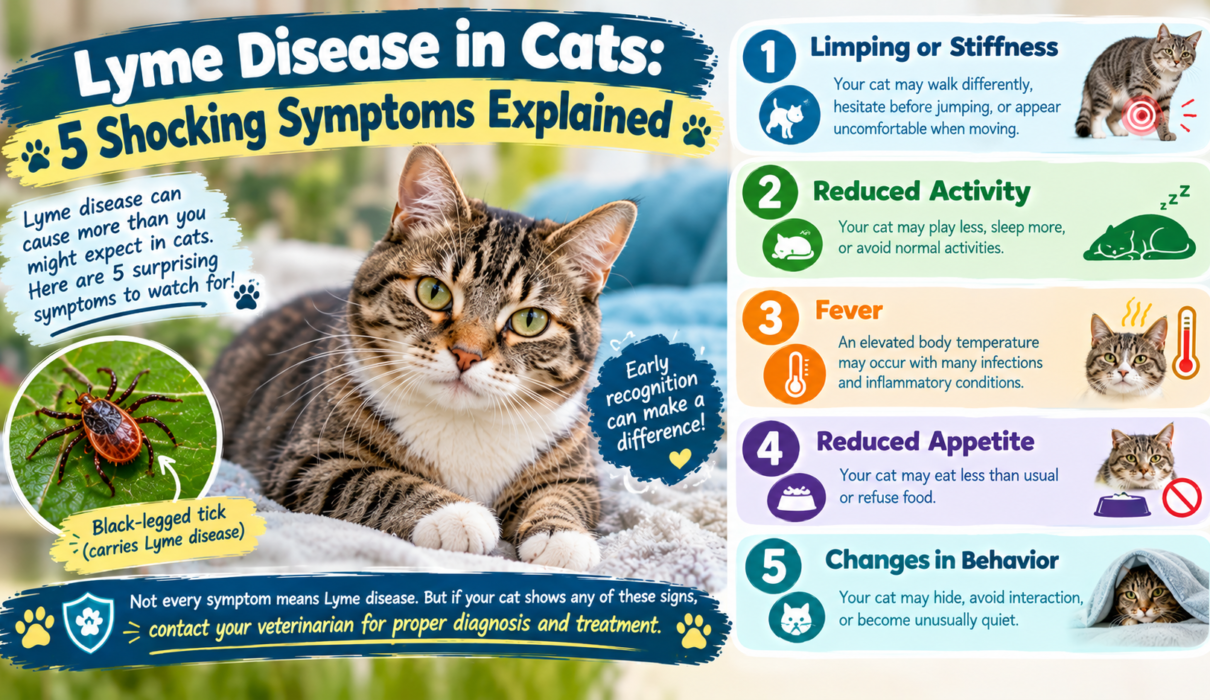
Lyme Disease in Cats: 5 Shocking Symptoms Explained
Introduction to Lyme Disease in Cats
Cats are curious animals that may explore gardens, backyards, grassy areas, and other outdoor environments. During these adventures, they can encounter ticks that carry infectious organisms. One tick-borne illness that cat owners may hear about is Lyme disease in cats.
Lyme disease is caused by bacteria belonging to the Borrelia burgdorferi group and is transmitted through the bite of an infected tick. The disease is well recognized in dogs and humans, but clinically apparent Lyme disease is less commonly documented in cats. Researchers are still learning how frequently infected cats develop illness and which symptoms are directly associated with the infection.
Although Lyme disease is not the most common explanation for illness in cats, understanding possible warning signs can help you recognize when your pet needs veterinary attention. Symptoms such as limping, fever, reduced appetite, and unusual tiredness may indicate a health problem, but they can also occur with many other conditions.
In this guide, we will explain how cats may encounter infected ticks, discuss five potential warning signs, and explore how veterinarians distinguish suspected Lyme disease from other illnesses.
Important: A tick bite or a positive antibody test does not automatically mean your cat has active Lyme disease. If your cat becomes unwell after possible tick exposure, consult a veterinarian for an appropriate examination.
What Is Lyme Disease in Cats and How Do Cats Get It?
Lyme disease in cats refers to a possible illness associated with infection by Borrelia bacteria transmitted through infected ticks. The infection is well established in dogs and humans, but the clinical significance of infection in cats is less clearly understood.
Cats can encounter ticks while exploring outdoor environments or through ticks brought inside on people, dogs, clothing, or other belongings. However, not every tick carries Lyme disease bacteria, and not every tick bite results in infection.
Understanding Lyme Disease in Cats
Lyme disease is a tick-borne infection caused by bacteria in the Borrelia burgdorferi group. In regions where Lyme disease occurs, certain ticks can transmit the bacteria while feeding on a host.
The risk depends on several factors, including the tick species, the local prevalence of infected ticks, and the duration of attachment. Not every tick species can transmit Lyme disease.
In cats, the relationship between exposure, infection, and clinical illness remains less certain than in dogs. Cats may develop antibodies after exposure, but this does not necessarily mean that they have symptoms or require treatment for active disease.
Veterinarians therefore consider the cat’s medical history, possible tick exposure, examination findings, and appropriate laboratory results before deciding whether Lyme disease is a reasonable explanation for the symptoms.
How Infected Ticks Spread Lyme Disease
Lyme disease is transmitted primarily through the bite of an infected tick. In North America, black-legged ticks belonging to the Ixodes group are important carriers of the bacteria responsible for Lyme disease.
Ticks may live in wooded areas, tall grass, leaf litter, and places where wildlife travels. Cats that roam outdoors may encounter ticks while walking through these environments or resting near vegetation.
Possible risk factors include:
- Spending time in grassy or wooded outdoor areas.
- Living in a region where Lyme disease is common.
- Having access to gardens or areas visited by wildlife.
- Living with dogs that may bring ticks into the home.
- Not receiving appropriate tick-prevention protection when recommended by a veterinarian.
Finding a tick on your cat does not automatically mean it is infected with Lyme disease. Similarly, not every tick bite causes an infection.
If you find a tick attached to your cat, remove it safely using an appropriate tick-removal tool or seek veterinary assistance if you are unsure how to proceed. Avoid crushing the tick or applying household chemicals, oils, or heat to make it detach.
Can Cats Get Lyme Disease From Dogs or Humans?
Lyme disease is not generally spread directly from an infected dog or person to a cat through ordinary contact.
The main concern is an infected tick. For example, a dog that visits an area with ticks may carry an attached tick into the house. That tick could later attach to a cat or another host.
People may also transport ticks on their clothing or belongings after spending time outdoors. This is one reason indoor cats can still encounter ticks even when they do not go outside.
If one pet in your household has been exposed to ticks, ask your veterinarian whether other pets should receive tick checks or preventive treatment. Use only products approved for cats, because certain dog tick-control products can be highly toxic to felines.
Are Outdoor Cats at Greater Risk of Lyme Disease?
Outdoor cats generally have more opportunities to encounter ticks than cats that remain indoors. Cats that explore wooded areas, tall grass, gardens, or wildlife habitats may face increased exposure.
However, location is an important factor. Lyme disease risk varies considerably between regions, and a tick that carries another organism may not transmit Lyme disease.
Indoor cats are not completely protected because ticks can enter homes on people, dogs, clothing, and equipment.
A veterinarian can help determine which tick-prevention measures are appropriate based on your location, your cat’s lifestyle, and the local prevalence of tick-borne diseases.
Lyme Disease in Cats Symptoms: 5 Shocking Signs to Watch For
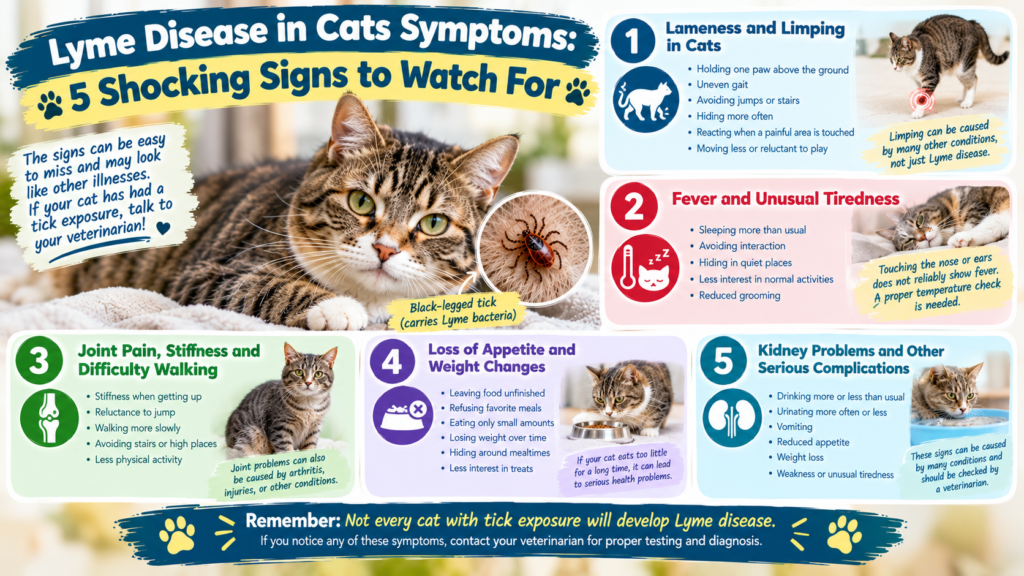
The possible Lyme disease in cats symptoms can be difficult to recognize because they overlap with many other illnesses. In addition, many cats exposed to Borrelia bacteria may not develop obvious signs of disease.
The five signs below are important reasons to seek veterinary advice, particularly if your cat has a history of tick exposure. However, none of these symptoms alone proves that your cat has Lyme disease.
Lameness and Limping in Cats
Limping is one of the most noticeable signs of pain or discomfort in cats. A cat with a painful leg may avoid putting weight on the affected limb, walk more slowly, or refuse to jump onto furniture.
Joint discomfort and lameness are well-recognized signs associated with Lyme disease in dogs. However, the connection between Lyme infection and clinical lameness in cats is less firmly established.
If your cat develops limping after possible tick exposure, a veterinarian should investigate the cause rather than automatically assuming Lyme disease.
Possible signs of a painful limb include:
- Holding one paw above the ground.
- Walking with an uneven gait.
- Avoiding jumps or stairs.
- Hiding more frequently than usual.
- Reacting when a painful area is touched.
- Moving less or appearing reluctant to play.
Limping can also result from an injury, bite wound, broken nail, joint problem, infection, or another medical condition.
If your cat cannot put weight on a leg, appears to be in severe pain, or has a visibly injured limb, seek prompt veterinary attention. Do not give human painkillers, as common medications can be dangerous or even fatal to cats.
Fever and Unusual Tiredness
Fever and reduced energy can occur when a cat is unwell. An affected cat may sleep more than usual, avoid interaction, hide in quiet places, or show less interest in normal activities.
Although fever and tiredness can occur with many infectious diseases, they are not specific indicators of Lyme disease in cats.
You may notice changes such as:
- Reduced interest in play.
- Unusual sleepiness.
- Hiding or avoiding family members.
- Reduced movement around the home.
- A decrease in normal grooming.
- Loss of interest in favorite activities.
Cats often hide signs of illness, so even subtle changes in behavior can be important.
Do not rely on touching your cat’s nose or ears to determine whether it has a fever. These observations are not reliable substitutes for measuring body temperature appropriately.
If your cat appears feverish, remains unusually tired, or shows other symptoms of illness, arrange a veterinary examination. Seek urgent advice if the cat becomes extremely weak, collapses, has difficulty breathing, or is difficult to wake.
Joint Pain, Stiffness, and Difficulty Walking
Joint discomfort can make ordinary movements difficult. A cat may hesitate before jumping, struggle to climb onto a favorite resting place, or move more slowly after lying down.
Although joint inflammation is a familiar feature of Lyme disease in dogs, it should not automatically be attributed to Lyme disease in cats. Other conditions are often responsible for mobility problems.
Possible signs of joint or movement difficulties include:
- Stiffness when getting up.
- Reluctance to jump.
- Walking more slowly than usual.
- Avoiding stairs or elevated surfaces.
- Reduced interest in physical activity.
- Changes in posture or movement.
Arthritis, injuries, muscle problems, and other illnesses may cause similar signs. Older cats, in particular, can develop mobility problems for reasons unrelated to tick-borne infections.
If your cat shows persistent stiffness or difficulty walking, your veterinarian may examine the joints, muscles, and nervous system. Depending on the findings, additional tests may be recommended.
Until your cat has been assessed, provide easy access to food, water, bedding, and a litter tray. Avoid forcing exercise or manipulating painful joints.
Loss of Appetite and Weight Changes
A reduction in appetite can occur when a cat feels unwell. Some cats eat less because of fever, pain, nausea, stress, or another underlying medical condition.
Loss of appetite is not a specific symptom of Lyme disease in cats, but it deserves attention regardless of the cause.
Watch for changes such as:
- Leaving food unfinished.
- Refusing normally preferred meals.
- Eating only small amounts.
- Losing weight over time.
- Hiding around mealtimes.
- Showing reduced interest in treats.
If a cat eats too little for an extended period, it may develop nutritional problems. Cats that stop eating can also develop hepatic lipidosis, a potentially serious condition involving fat accumulation in the liver.
If your cat refuses food or eats substantially less than usual, contact your veterinarian promptly rather than waiting several days. The urgency depends on your cat’s age, medical history, other symptoms, and how long it has been eating poorly.
Do not try to stimulate appetite with human medications or unapproved supplements. Your veterinarian can investigate the cause and recommend appropriate nutritional support.
Kidney Problems and Other Serious Complications
Kidney problems are an important concern whenever a cat develops signs of serious illness. However, the association between Lyme disease and severe kidney complications is much better documented in dogs than in cats.
In cats, kidney disease can occur for many reasons, including age-related changes, other infections, toxins, and unrelated medical conditions. Kidney abnormalities should not automatically be blamed on Lyme disease, even when tick exposure has occurred.
Possible signs of kidney or other systemic problems include:
- Drinking more or less than usual.
- Urinating more frequently or producing less urine.
- Vomiting.
- Reduced appetite.
- Weight loss.
- Weakness or unusual tiredness.
These signs require veterinary investigation because they can indicate a range of potentially serious conditions.
If your cat has repeated vomiting, severe weakness, difficulty urinating, or a sudden reduction in urine production, seek urgent veterinary care. Inability to pass urine is an emergency.
A veterinarian may recommend blood tests and urine testing to evaluate kidney function and hydration. Further testing will depend on the examination findings and your cat’s medical history.
Do not assume that kidney symptoms confirm Lyme disease in cats. Accurate diagnosis is essential to identify the real cause and select the appropriate treatment.
Symptoms of Lyme Disease in Cats vs. Other Tick-Borne Illnesses
The symptoms of Lyme disease in cats can resemble those of other tick-borne infections and many unrelated illnesses. Limping, fever, tiredness, and reduced appetite are general signs that a cat is unwell rather than proof of one specific infection.
Other possible explanations include:
- Injuries and bite wounds.
- Joint inflammation or arthritis.
- Bacterial or viral infections.
- Other tick-borne diseases.
- Kidney or other organ disorders.
- Immune-related conditions.
- Neurological problems.
A cat may also have a tick bite without developing any illness.
Why Symptoms Alone Cannot Confirm Lyme Disease
Veterinarians cannot reliably diagnose Lyme disease by looking at symptoms alone. The signs are too nonspecific, and the disease is less clearly characterized in cats than in dogs.
A veterinarian will consider whether your cat lives in or has visited an area where Lyme disease occurs, whether tick exposure is plausible, and whether the examination suggests another cause.
Laboratory testing may help assess exposure, but test results must be interpreted carefully. A positive antibody result can indicate previous exposure rather than active clinical disease.
How Veterinarians Distinguish Between Possible Causes
The diagnostic approach depends on your cat’s symptoms and medical history. A veterinarian may perform a physical examination, evaluate painful joints, check for ticks, and recommend blood or urine tests.
If a cat has kidney abnormalities, additional testing may be needed to determine the underlying cause. If lameness is the main problem, the veterinarian may investigate injuries, joint disease, or other musculoskeletal conditions.
This process helps avoid unnecessary treatment and reduces the chance of overlooking a different illness.
Lyme Disease in Cats: 5 Shocking Symptoms Explained (Part 2)
How Is Lyme Disease in Cats Diagnosed?
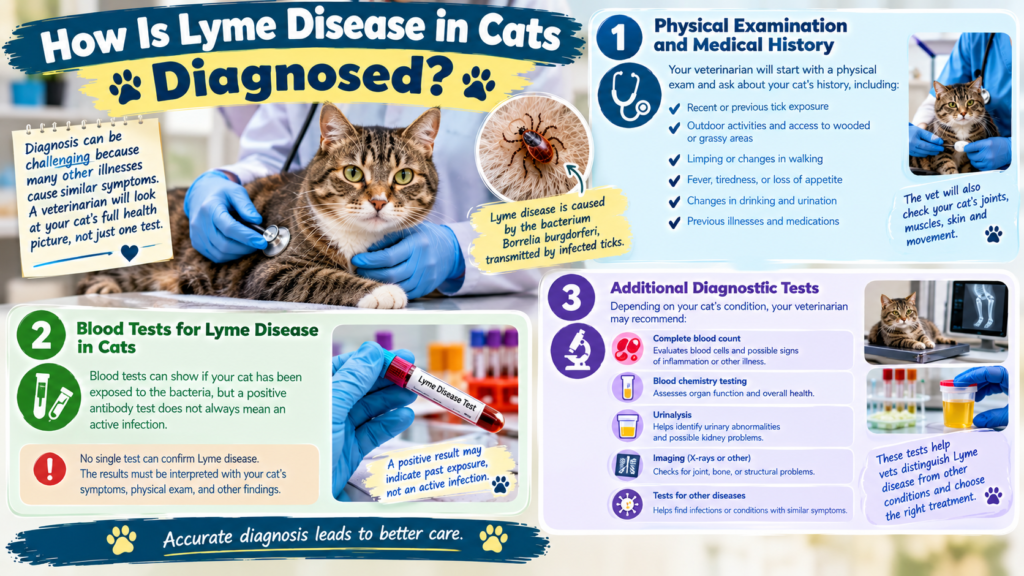
Diagnosing Lyme Disease in Cats can be challenging because its symptoms are similar to those of many other feline illnesses. Limping, fever, tiredness, joint discomfort, and reduced appetite may occur for several reasons, so veterinarians need to evaluate the cat’s overall health and medical history.
Lyme disease is caused by the bacterium Borrelia burgdorferi, which is transmitted by certain infected ticks. However, cats with tick exposure or a positive antibody test do not necessarily have an active Lyme disease infection.
Physical Examination and Medical History
A veterinarian will usually begin with a physical examination and questions about the cat’s symptoms.
They may ask about:
- Recent or previous tick exposure
- Outdoor activities and access to wooded or grassy areas
- Limping or changes in walking
- Fever, tiredness, or loss of appetite
- Changes in drinking and urination
- Previous illnesses and medications
The veterinarian may also examine the cat’s joints, muscles, skin, and general movement to identify possible causes of discomfort.
Blood Tests for Lyme Disease in Cats
Blood tests may help determine whether a cat has been exposed to the bacteria associated with Lyme disease.
However, antibody tests have limitations. A positive result may indicate previous exposure rather than an active illness. The results must be interpreted alongside the cat’s symptoms, physical examination, and other findings.
There is no single test that can always confirm that Lyme disease is responsible for a cat’s symptoms.
Additional Diagnostic Tests
Depending on the cat’s condition, a veterinarian may recommend additional testing, such as:
- Complete blood count: Helps evaluate blood cells and possible signs of inflammation or other illness.
- Blood chemistry testing: Assesses organ function and overall health.
- Urinalysis: Helps identify urinary abnormalities and possible kidney problems.
- Imaging: X-rays or other imaging may be recommended if joint, bone, or other structural problems are suspected.
- Tests for other diseases: Additional tests may help identify infections or conditions that produce similar symptoms.
These investigations help veterinarians distinguish possible Lyme disease from other conditions and select appropriate treatment.
Lyme Disease in Cats Treatment Options
Treatment for suspected Lyme Disease in Cats depends on the cat’s symptoms, test results, and overall health. Because naturally occurring clinical Lyme disease is not well characterized in cats, veterinarians must carefully assess whether the infection is actually responsible for the illness.
Never start antibiotics or other medications without veterinary guidance.
Antibiotics for Lyme Disease in Cats
If a veterinarian determines that treatment for a suspected bacterial infection is appropriate, they may prescribe an antibiotic.
Doxycycline is commonly used to treat Lyme disease in dogs and humans, but treatment decisions for cats require veterinary judgment. The veterinarian will choose the medication, dosage, and duration based on the individual case.
Some medications can cause side effects. For example, doxycycline tablets or capsules can injure a cat’s esophagus if they become lodged there. Follow the veterinarian’s instructions carefully about administering the medication and whether food or water should be given afterward.
Important points to remember:
- Give medication exactly as prescribed.
- Do not use leftover antibiotics from another pet.
- Do not stop or change treatment without consulting the veterinarian.
- Contact the veterinary clinic if your cat develops vomiting, difficulty swallowing, or other concerning side effects.
Supportive Care for Sick Cats
In addition to treating an identified infection, a veterinarian may recommend supportive care to help the cat remain comfortable.
Depending on the symptoms, supportive care may include:
- Providing a quiet, comfortable resting area
- Keeping fresh water readily available
- Offering appropriate food to encourage eating
- Limiting strenuous activity when the cat is uncomfortable
- Monitoring appetite, movement, and bathroom habits
- Providing prescribed pain relief or other supportive medication
Never give cats human painkillers such as ibuprofen or acetaminophen (paracetamol). These medicines can be extremely toxic to cats.
How Long Does Recovery Take?
Recovery depends on the underlying cause of the symptoms and the cat’s overall condition. If a veterinarian identifies a treatable bacterial infection, improvement may occur after appropriate treatment, but the timing varies.
If your cat is not improving, becomes weaker, stops eating, or develops new symptoms, contact your veterinarian. The diagnosis or treatment plan may need to be reassessed.
A positive Lyme antibody test alone does not mean that antibiotics are automatically necessary.
Lyme Disease Prevention for Cats: 6 Helpful Tips

Preventing tick bites is an important way to reduce your cat’s exposure to tick-borne organisms. Although the role of clinically apparent Lyme disease in cats is less clearly established than in dogs, tick prevention remains valuable for feline health.
Here are six practical steps to help protect your cat.
Use Cat-Approved Tick Prevention
Ask your veterinarian to recommend an appropriate tick-prevention product for your cat’s age, weight, health, and lifestyle.
Never apply a dog-only tick treatment to a cat. Products containing permethrin, which is found in some dog flea and tick treatments, can cause severe poisoning in cats and may be fatal.
Always check the product label and follow veterinary instructions.
Check Your Cat for Ticks
If your cat spends time outdoors or lives in an area where ticks are common, check its coat and skin regularly.
Pay particular attention to:
- Around the ears
- Under the chin
- Around the neck
- Between the toes
- Under the front legs
- Around the face and eyelids
Ticks can be small and difficult to notice, especially in cats with thick or long fur.
If you find a tick, use an appropriate tick-removal tool and follow veterinary guidance. Avoid squeezing the tick’s body or applying petroleum jelly, oils, or heat.
Keep Outdoor Areas Well Maintained
If your cat has access to a garden or yard, maintaining the area may help reduce suitable tick habitats.
Consider these measures:
- Keep grass trimmed.
- Remove piles of leaves and garden debris.
- Reduce dense vegetation around frequently used areas.
- Discourage wildlife from gathering close to your home when practical.
These steps cannot eliminate all ticks, but they may help reduce exposure.
Consider Your Cat’s Outdoor Lifestyle
Cats that roam outdoors may encounter ticks more often than cats that remain indoors. Keeping cats indoors or providing a secure outdoor enclosure can reduce contact with tick habitats.
However, indoor cats are not completely protected. Ticks may enter homes on clothing, other pets, or outdoor equipment.
Maintain Regular Veterinary Checkups
Routine veterinary examinations can help identify health problems early and ensure that your cat’s parasite-prevention plan remains appropriate.
Discuss local tick risks with your veterinarian, especially if you live in an area where tick-borne illnesses are common.
Monitor Changes in Your Cat’s Health
Watch for unexplained limping, fever, reduced appetite, unusual tiredness, or changes in drinking and urination.
These signs do not automatically indicate Lyme disease, but they may signal an illness that requires veterinary assessment.
Early attention can help your veterinarian identify the cause and provide appropriate care.
When Should You Contact a Veterinarian?
If you suspect Lyme Disease in Cats, contact your veterinarian when you notice persistent or unexplained symptoms, particularly if your cat has a history of possible tick exposure.
Cats often hide discomfort, so even subtle changes in behavior can be important.
Warning Signs That Need Veterinary Attention
Arrange a veterinary appointment if your cat develops:
- Persistent limping or difficulty walking
- Unusual tiredness or weakness
- Fever or reduced activity
- Loss of appetite
- Joint discomfort or stiffness
- Unexplained weight loss
- Changes in drinking or urination
These symptoms can have many causes, including conditions unrelated to ticks. A veterinarian can help determine what is happening.
Emergency Symptoms You Should Never Ignore
Seek urgent veterinary care if your cat experiences:
- Difficulty breathing
- Collapse or loss of consciousness
- Severe weakness or inability to stand
- Repeated vomiting with marked lethargy
- Inability to urinate or repeated straining without producing urine
- Sudden severe pain or rapid deterioration
These signs may indicate a serious emergency and should not be assumed to be Lyme disease.
What Information Should You Give Your Veterinarian?
Before the appointment, write down when the symptoms started and whether they have become worse.
Tell your veterinarian about any known tick bites, outdoor exposure, medications, changes in appetite, and changes in drinking or urination.
If you found a tick, mention where it was attached and when you discovered it. Do not delay urgent care while trying to gather every detail.
Frequently Asked Questions About Lyme Disease in Cats
Can Cats Get Lyme Disease?
Cats can be exposed to the bacterium associated with Lyme disease through infected ticks. However, naturally occurring clinical Lyme disease is less clearly established in cats than in dogs and humans. A cat’s symptoms and test results must be evaluated carefully before attributing an illness to Lyme disease.
What Are the Most Common Lyme Disease in Cats Symptoms?
Possible signs that may prompt investigation include limping, fever, tiredness, joint discomfort, and reduced appetite. These symptoms are nonspecific and can occur with many other conditions. They should not be used to diagnose Lyme disease at home.
Can Lyme Disease in Cats Be Cured?
If a veterinarian identifies a bacterial infection that warrants treatment, appropriate veterinary care may help the cat recover. The outcome depends on the actual diagnosis, the cat’s health, and whether complications are present. A positive antibody test alone does not establish active disease or the need for antibiotics.
How Do Veterinarians Test for Lyme Disease in Cats?
Veterinarians may use a physical examination, medical history, antibody testing, and additional laboratory tests. Blood and urine tests may help evaluate the cat’s overall health and investigate other possible causes. Test results must be interpreted in context because antibodies can indicate exposure rather than active illness.
Can Indoor Cats Get Lyme Disease?
Yes, indoor cats may still encounter ticks that enter the home on people, other pets, clothing, or equipment. Indoor living can reduce exposure, but veterinarian-recommended tick prevention may still be appropriate depending on local risks and the household’s circumstances.
How Can I Protect My Cat From Lyme Disease?
Use a veterinarian-approved tick-prevention product, check your cat’s coat regularly, maintain outdoor areas, and discuss local tick risks with your veterinarian. Never use dog tick treatments containing permethrin on cats because they can cause severe poisoning.
Can I Treat Lyme Disease in Cats at Home?
You should not try to diagnose or treat suspected Lyme disease at home. Avoid giving human medications or unprescribed antibiotics. Your veterinarian can assess the symptoms, determine whether testing is needed, and recommend treatment based on the findings.
Conclusion: Understanding Lyme Disease in Cats
Lyme Disease in Cats can be difficult to identify because its possible signs overlap with many other feline health problems. Limping, fever, tiredness, joint discomfort, and reduced appetite deserve attention, but none of these symptoms confirms Lyme disease on its own.
Veterinary examination and appropriately interpreted diagnostic tests are important for identifying the cause of your cat’s symptoms. Treatment should be based on the veterinarian’s assessment rather than a positive antibody test alone.
The best practical steps are to use cat-safe tick prevention, check your cat for ticks, monitor changes in behavior, and seek veterinary advice when concerning symptoms appear. Never use dog-only tick treatments or human medications without veterinary guidance.
By taking these precautions and responding promptly to changes in your cat’s health, you can help protect your pet and support its long-term well-being.