


 By
By Quick Summary for New Dog Owners
Getting started with dogs can feel exciting and confusing at the same time. Many first-time dog owners feel nervous in the beginning. This feeling is completely normal. Getting started with dogs is a new experience for many people, and learning the basics takes time. Bringing a new dog home is a big life change. Both the owner and the dog need time to adjust to each other.
Dogs quickly become part of the family. They offer loyalty, comfort, and emotional support. Many people feel happier and less lonely with a dog around. Dogs also enjoy spending time with their owners. They love attention, playtime, and daily routines. Because of this, getting started with dogs is often the beginning of a wonderful relationship between people and pets.
However, caring for a dog requires responsibility and preparation. Dogs depend on their owners for food, shelter, exercise, and health care. Without proper care, dogs may feel stressed or develop behavior problems. Therefore, new owners should learn the basics of dog care before bringing a dog home. Understanding these responsibilities makes getting started with dogs much easier for beginners.
This beginner dog care guide explains the most important steps for new owners. It helps you understand what dogs need to feel safe and comfortable. You will learn how to prepare your home before bringing a dog home. A safe environment helps dogs adjust faster to their new surroundings. These steps make getting started with dogs less stressful and more enjoyable.
You will also learn how to choose dog names that are simple and easy for dogs to recognize. In addition, this guide explains the basics of dog adoption. Understanding the adoption process helps you make responsible decisions when choosing a dog.
Another important topic is dog grooming basics. Grooming helps keep dogs clean and healthy. Simple grooming habits such as brushing and nail trimming improve your dog’s comfort and well-being.
This guide also introduces simple training tips for beginners. Training helps dogs understand household rules and communicate with their owners. Positive training methods help build trust between the dog and the owner.
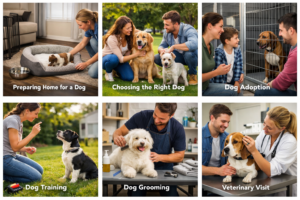
When these steps are followed, new owners feel more confident. Dogs also feel more secure in their new homes. The first week with a dog becomes a positive experience for both the pet and the owner.
With patience, routine, and proper care, getting started with dogs becomes a rewarding journey. Your dog will soon become a loyal companion and an important part of your family.

Tip 3: Create a Simple New Dog Owner Checklist
Creating a simple checklist is very helpful when getting started with dogs. A checklist keeps things organized and ensures your dog has the basic supplies needed for daily care. When people are getting started with dogs, preparing these items in advance makes bringing a dog home much easier.
Start with the most important supplies. You do not need expensive equipment at the beginning. Basic and practical items are enough when getting started with dogs.
Essential dog supplies usually include:
-
Dog leash
-
Collar or harness
-
Identification tag
-
Food and water bowls
-
Comfortable dog bed
-
Dog toys for playtime
-
Grooming brush
A strong leash and collar help keep your dog safe during walks. An identification tag is also very important because it helps others contact you if your dog gets lost.
Many owners also use a crate during training. When introduced properly, a crate becomes a safe and comfortable resting place. Dogs often enjoy having a quiet place where they can relax.
It is also helpful to save your veterinarian’s phone number in your phone. Quick access to this number can help during emergencies or sudden health concerns.
Having a checklist is one of the easiest ways to stay prepared when getting started with dogs. With the right supplies ready, new owners feel more confident and organized.
Tip 4: Choose Dog Names That Are Easy to Learn
Choosing dog names is one of the most exciting moments when getting started with dogs. Many owners enjoy this step because it creates the first connection with their new pet. However, a dog’s name should not only sound nice. It should also be easy for the dog to understand.
Dogs learn names faster when the name is short and simple. Names with one or two syllables usually work best. Clear names help dogs recognize their name quickly, especially when getting started with dogs and early training begins.
For example, names like Max, Bella, Milo, Luna, or Rocky are simple and easy for dogs to recognize. These names have clear sounds that help dogs respond faster.
Avoid names that sound similar to training commands. A name that sounds like “Sit,” “Stay,” or “No” may confuse your dog. Clear sounds make training easier, especially when owners are getting started with dogs.

Try saying the name out loud several times before choosing it. Make sure it feels natural and easy for your family to call. Dogs respond better when owners say their names confidently and consistently.
Some owners choose funny dog names, while others prefer meaningful names based on personality or appearance. Both choices are fine as long as the name remains simple.
Consistency is very important when teaching your dog its name. Always use the same name when calling your dog. Reward your dog with praise or treats when it responds correctly. This helps your dog associate the name with positive attention.
If you need more inspiration while getting started with dogs, explore our Dog Names guide where you can find many creative and popular name ideas.
Tip 5: Understand the Basics of Dog Adoption
Dog adoption is a wonderful step when getting started with dogs. Many dogs in shelters are waiting for safe and loving homes. By choosing adoption, families give these animals a second chance at life. Adoption also helps reduce overcrowding in animal shelters.
However, adoption should always be a thoughtful and responsible decision. When getting started with dogs, owners must remember that dogs need time, attention, and long-term care. A dog may live for many years, so the commitment is important.
Before adopting, speak with the shelter staff about the dog’s background. Ask questions about the dog’s health history and previous living conditions. Understanding these details helps new owners prepare properly when getting started with dogs.
It is also important to learn about the dog’s behavior. Some dogs may appear shy or nervous when entering a new home. This reaction is very common during the early stage of getting started with dogs.
Nervous behavior does not mean the dog is difficult. Many shelter dogs simply need time to trust their new owners. With patience, kindness, and a steady routine, most dogs adjust quickly to their new families.
If you adopt a puppy, be ready for extra training and supervision. Puppies need guidance while learning house rules and daily routines. On the other hand, adult dogs may already know basic commands such as “sit” or “stay.” Many adult dogs adapt very well to new homes.
You should also ask the shelter about vaccinations and medical records. Most shelters provide basic veterinary care before adoption. This helps ensure the dog is healthy when getting started with dogs in a new home.
Understanding the adoption process helps create a smoother transition for both the owner and the dog. For more detailed information, visit our Dog Adoption guide.
Tip 6: Create a Daily Routine from the First Day
Creating a routine is very important when getting started with dogs. Dogs feel safer when their daily schedule is predictable. Regular routines help reduce stress and make it easier for dogs to understand their new environment.
Start by feeding your dog at the same time every day. Consistent feeding times help maintain healthy digestion and balanced energy levels. Most adult dogs eat two meals each day. Puppies usually require three or four smaller meals.
Bathroom breaks should also follow a routine. Take your dog outside after meals, naps, and playtime. Regular bathroom breaks help prevent accidents inside the home. This habit is an important part of getting started with dogs successfully.
Daily walks are also important for physical activity and mental stimulation. Walks allow dogs to explore their surroundings and release energy. During the first few days of getting started with dogs, keep walks short and calm so your dog does not feel overwhelmed.
Choose a consistent sleeping area for your dog. Dogs feel more secure when they know where they can rest each night.
During the early days, try to avoid too many visitors or loud activities. A quiet environment helps dogs feel safe while they adjust to their new home.
A steady routine also supports training. Dogs learn faster when activities happen at the same ti
getting started with dogs
me each day. Over time, your dog will begin to understand the household schedule.
Creating a daily routine from the beginning builds trust and comfort while getting started with dogs.
Tip 7: Start Training with Positive Reinforcement
Training is an essential part of responsible dog ownership. It helps dogs understand how to behave in the home and around people. When getting started with dogs, early training helps prevent many behavior problems.
Positive reinforcement is one of the most effective training methods. This approach rewards good behavior instead of punishing mistakes. Dogs learn faster when training feels positive and encouraging.
Use treats, praise, or toys as rewards. Dogs quickly understand that good behavior leads to positive attention. This method makes training enjoyable while getting started with dogs.
Begin with simple commands such as:
-
Sit
-
Stay
-
Come
-
Down
Training sessions should remain short and focused. Five to ten minutes is usually enough for most dogs. Short sessions help dogs stay engaged and interested.
Practice commands regularly so the dog remembers them. Repetition helps dogs understand expectations more clearly.
Consistency is also very important. Everyone in the household should use the same commands and rules. Mixed signals can confuse dogs.
Training builds trust between the dog and the owner. When done correctly, it strengthens the bond and makes getting started with dogs much easier.
Tip 8: Learn Dog Grooming Basics Early
Dog grooming is an important part of keeping dogs healthy and comfortable. Learning grooming habits early helps owners maintain their dog’s hygiene. This step is also important when getting started with dogs.
Brushing is one of the simplest grooming habits. Regular brushing removes loose hair and prevents tangles. It also helps distribute natural oils that keep the coat healthy.
Different dog breeds require different grooming routines. Long-haired dogs usually need more frequent brushing than short-haired breeds. Understanding your dog’s coat type helps improve grooming results.
Check your dog’s ears regularly. Healthy ears should appear clean and light pink. If you notice strong odors or redness, consult a veterinarian.
Nail trimming is another important grooming task. Long nails may cause discomfort when dogs walk or run.
Bathing should only happen when necessary. Bathing too often may dry out the dog’s skin. Always use dog-safe shampoo during baths.
Dental care is also essential. Brushing your dog’s teeth helps prevent plaque buildup and gum disease.
Learning grooming habits early makes daily care easier. It also helps dogs stay comfortable and healthy while getting started with dogs.
For step-by-step instructions, visit our Dog Grooming guide.
Tip 9: Schedule a Veterinary Visit Early
Veterinary care is an essential part of getting started with dogs. A veterinarian plays a key role in protecting your dog’s health and well-being. Scheduling an early vet visit is one of the smartest decisions new dog owners can make when getting started with dogs.
The first veterinary appointment helps create a medical record for your dog. During this visit, the veterinarian will examine your dog’s overall health. The vet may check the dog’s eyes, ears, teeth, skin, and body condition. These early examinations help detect health concerns before they become serious problems.
Vaccinations are another important topic discussed during the first vet visit. Vaccines protect dogs from dangerous diseases such as rabies, distemper, and parvovirus. Your veterinarian will recommend a vaccination schedule based on your dog’s age and health condition. Following this schedule is an important responsibility when getting started with dogs.
Parasite prevention is also part of early veterinary care. Fleas, ticks, and intestinal worms can cause discomfort and health problems. Preventive medications help protect dogs from these common parasites. Your veterinarian can suggest the safest options for your dog.
Nutrition is another topic you should discuss during the visit. Ask your veterinarian about the right type of food and proper portion sizes. A balanced diet supports healthy growth, strong muscles, and good energy levels. Maintaining a healthy weight is very important when getting started with dogs, because excess weight can lead to joint problems and other health issues.
Regular veterinary checkups allow doctors to detect health problems early. Early diagnosis often makes treatment easier and more effective. Preventive veterinary care helps dogs live longer and healthier lives.
Building a trusted relationship with your veterinarian also gives new dog owners confidence and peace of mind while getting started with dogs.
Tip 10: Make the First Week With a Dog Calm and Positive
The first week with a dog is an important adjustment period when getting started with dogs. During this time, your dog is learning about a completely new environment. New smells, new people, and new routines can feel overwhelming for some dogs.
Keeping your home calm and predictable helps your dog adjust more easily. Avoid loud noises, large gatherings, or too many visitors during the first few days. A peaceful environment makes getting started with dogs less stressful for your pet.
Allow your dog to explore the home slowly. Dogs rely heavily on their senses to understand their surroundings. Give your dog time to walk around and observe different areas at its own pace. This gentle approach helps build confidence while getting started with dogs.
Some dogs may feel shy or nervous in a new home. Do not force interaction if your dog seems unsure. Gentle encouragement and patience help build trust over time. When owners stay calm and supportive, dogs feel safer and more relaxed.
Pay attention to your dog’s daily habits during the first week. Observe eating patterns, drinking habits, and bathroom routines. These small details help you understand your dog’s needs and health. Monitoring these behaviors is an important part of getting started with dogs.
Reward good behavior with praise or small treats. Positive reinforcement helps dogs understand what behaviors are expected. It also strengthens the bond between the owner and the dog.
Accidents may happen during the first few days, especially with puppies. This is normal when dogs are adjusting to a new home. Stay patient and avoid punishment. Calm guidance and consistency work much better.
Kindness, routine, and patience help dogs feel safe and loved. When dogs feel secure, they adjust faster and become confident members of the family. With the right care and attention, getting started with dogs becomes a joyful and rewarding experience for both the owner and the pet.