

 By
Dry Cat Food for Senior Cats: 7 Powerful Tips Guide
Introduction
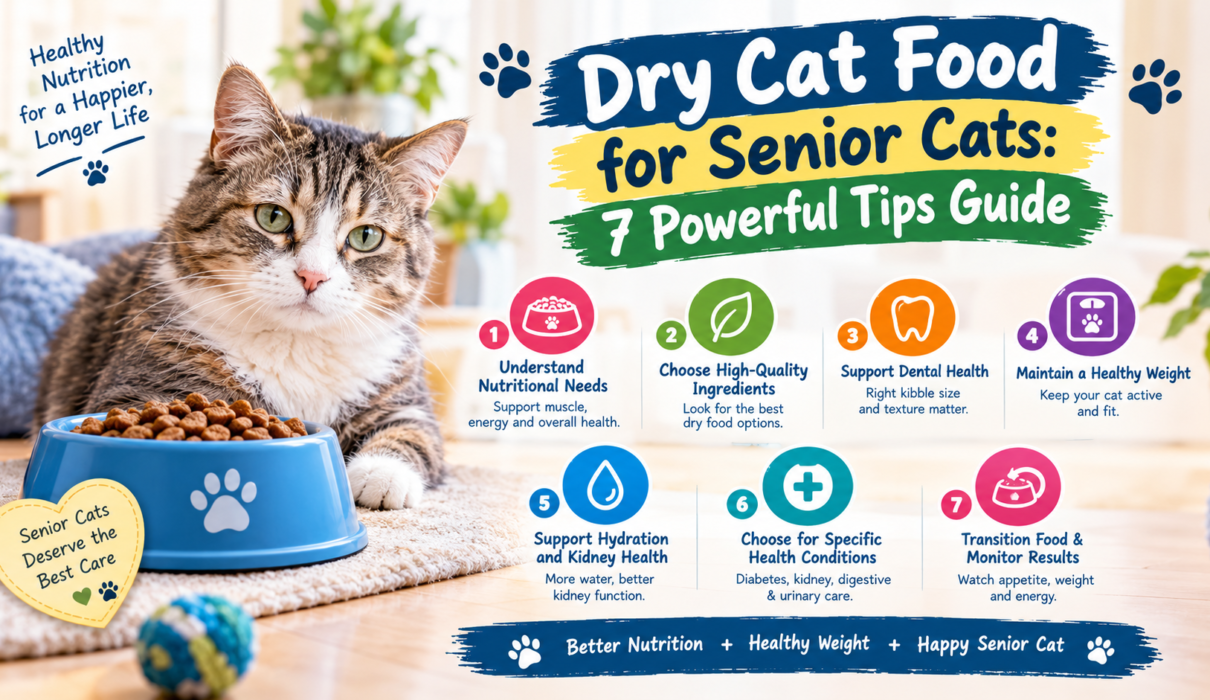
As cats grow older, their nutritional needs and eating habits can change. Senior cats may become less active, experience dental problems, lose muscle mass, or develop health conditions that require special dietary attention. Choosing the right dry cat food for senior cats can help support their overall health, maintain a healthy weight, and provide essential nutrients for aging.
However, not every older cat needs the same type of food. Some senior cats remain active and healthy, while others may require additional nutritional support because of kidney disease, diabetes, digestive sensitivities, or dental discomfort. Understanding your cat’s individual needs is the first step toward making a suitable food choice.
Dry food can be convenient because it is easy to measure, store, and serve. Many formulas also provide complete and balanced nutrition. Nevertheless, dry food contains less moisture than wet food, so hydration and your cat’s ability to chew comfortably should also be considered.
In this guide, you will discover seven practical tips for selecting appropriate food for your aging feline companion. Part 1 focuses on nutritional needs, ingredient quality, dental health, and weight management or dry cat food for senior cats.
Dry Cat Food for Senior Cats: Understand Your Cat’s Nutritional Needs
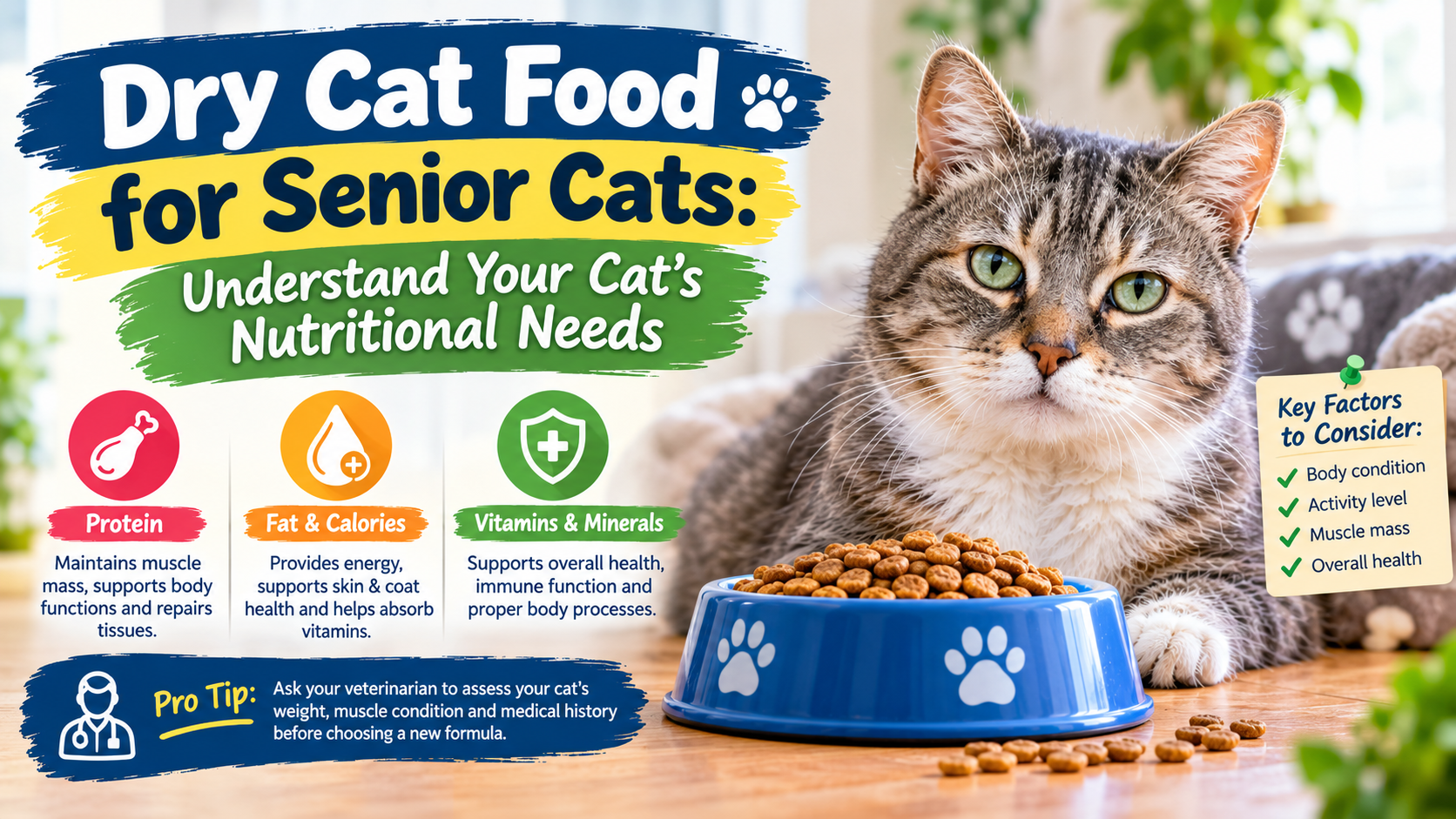
Understanding your cat’s changing nutritional needs is the foundation of choosing an appropriate senior diet. Aging does not automatically mean that every cat needs fewer nutrients. Instead, nutritional requirements depend on body condition, activity level, muscle mass, and overall health.
Some older cats gain weight because they move less, while others lose weight despite eating normally. Your cat’s food should provide enough essential nutrients to maintain healthy body tissues without supplying excessive calories or dry cat food for senior cats.
Prioritize High-Quality Protein
Protein plays an important role in maintaining muscle mass, supporting normal body functions, and repairing tissues. Some senior cats gradually lose muscle as they age, making adequate protein intake particularly important.
Look for a complete and balanced cat food that provides appropriate amounts of digestible protein. Ingredients such as chicken, turkey, fish, or other animal-based proteins may contribute valuable amino acids.
However, the ingredient list alone does not tell you everything about nutritional quality. Consider the food’s nutritional adequacy statement, protein levels, calorie content, and suitability for your cat’s life stage.
Cats with certain medical conditions may need a specially formulated diet. For example, cats with chronic kidney disease may benefit from veterinary-guided nutritional management, which can include adjustments to phosphorus and protein levels depending on the individual case.
Choose Appropriate Fat and Calories
Fat supplies concentrated energy and helps the body absorb fat-soluble vitamins. It also contributes essential fatty acids that support normal skin and coat health.
The correct calorie intake depends on your cat’s weight, body condition, activity, and metabolism. An older cat that spends most of the day sleeping may need fewer calories than an active senior cat.
Avoid assuming that every senior cat should automatically receive low-calorie food. Cats that are underweight or losing muscle may need a different nutritional approach or dry cat food for senior cats.
Look for Essential Vitamins and Minerals
A suitable senior cat diet should provide essential vitamins, minerals, and other nutrients in appropriate amounts. Calcium and phosphorus contribute to normal body functions, while vitamins and antioxidants support various physiological processes.
More supplements are not always better. Adding vitamins or minerals without veterinary guidance can create nutritional imbalances, especially when your cat already eats a complete and balanced commercial diet or dry cat food for senior cats.
Practical tip: Ask your veterinarian to assess your cat’s weight, muscle condition, and medical history before choosing a new formula. These factors are more useful than age alone when deciding which dry food is appropriate.
Dry Cat Food for Senior Cats: Choose High-Quality Ingredients
Ingredient quality is another important consideration when comparing dry cat food for senior cats. Different formulas vary in their protein sources, calorie density, digestibility, and nutritional composition.
Instead of relying entirely on attractive packaging or claims such as “premium” and “natural,” evaluate whether the food provides complete and balanced nutrition for your cat’s needs.
Read the Nutritional Adequacy Statement
Start by checking the label to determine whether the food is formulated to provide complete and balanced nutrition for the appropriate life stage.
Some products are intended for intermittent or supplemental feeding rather than serving as a cat’s primary diet. Unless your veterinarian recommends otherwise, choose a food that meets recognized nutritional standards for your cat’s needs or dry cat food for senior cats.
The Association of American Feed Control Officials (AAFCO) establishes nutritional profiles and related standards used in the United States. A product’s nutritional adequacy statement can help you understand whether it is intended as a complete diet.
Keep in mind that a senior-specific label does not automatically guarantee that a product is better for every older cat. The actual nutritional profile and your cat’s health matter most.
Evaluate Protein Sources and Digestibility
Cats are obligate carnivores, meaning they depend on nutrients naturally associated with animal tissues. Appropriate animal-based ingredients can help supply essential amino acids.
However, a single ingredient should not determine your entire purchasing decision. A food containing a named meat ingredient is not automatically superior to every other formula.
Consider the overall formulation, digestibility, nutritional adequacy, and how well your cat tolerates the food. If your cat experiences repeated vomiting, diarrhea, or poor appetite after eating a particular product, consult your veterinarian or dry cat food for senior cats.
Compare Calories and Feeding Guidelines
Two dry foods can have similar ingredient lists but different calorie concentrations. This means your cat may need different portion sizes depending on the formula or dry cat food for senior cats.
Check the calorie information on the package and use the feeding chart as a starting point. Then adjust the amount according to your cat’s body condition and veterinary recommendations.
Avoid free-feeding unlimited quantities if your cat tends to overeat. Measuring meals can help you control calorie intake and identify changes in appetite.
Avoid Choosing Food Based Only on Marketing
The best dry food is not necessarily the most expensive product or the one with the longest ingredient list. Focus on nutritional adequacy, quality control, suitability for your cat’s age and health, and your cat’s response to the diet.
If your cat has food sensitivities or a diagnosed medical condition, a veterinarian may recommend a specific formulation rather than a standard senior recipe.
Practical tip: Compare two or three suitable products using their nutritional adequacy statements, calorie content, feeding recommendations, and your cat’s individual requirements before making a decision.
Dry Cat Food for Senior Cats: Consider Dental Health and Kibble Size
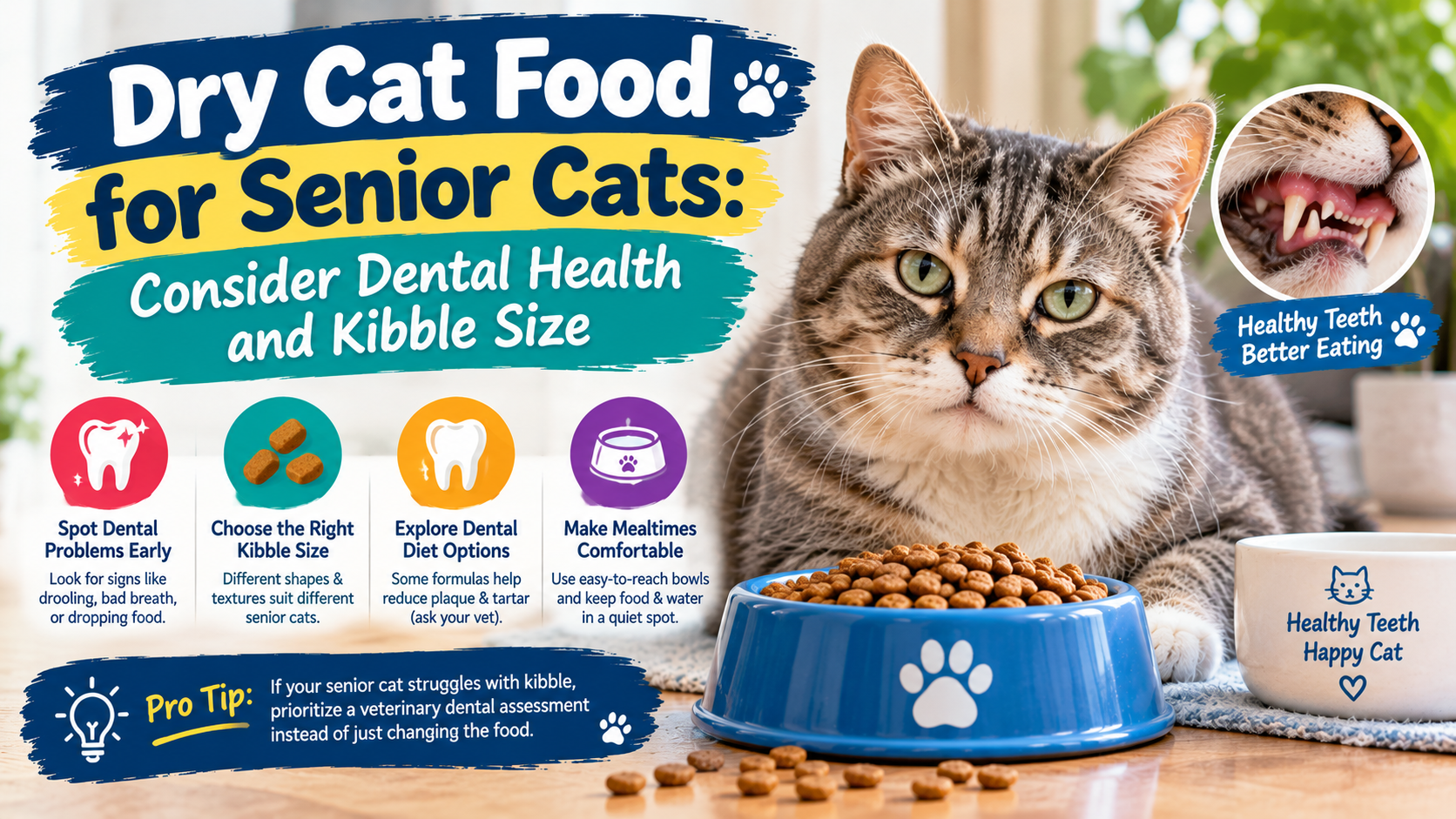
Dental health becomes especially important as cats age. Some senior cats develop gum inflammation, periodontal disease, damaged teeth, or other oral problems that make chewing uncomfortable.
Although dry food is convenient, ordinary kibble should not be considered a substitute for dental examinations and appropriate oral care. A cat may continue approaching its food bowl even when chewing causes pain.
Recognize Signs of Dental Discomfort
Cats often hide discomfort, so dental problems may be difficult to notice. Watch for changes such as:
- Dropping pieces of food while eating.
- Chewing slowly or favoring one side of the mouth.
- Drooling more than usual.
- Pawing at the mouth or resisting facial contact.
- Bad breath or visibly inflamed gums.
- Eating less or losing weight unexpectedly.
If you notice these signs, arrange a veterinary examination. Dental disease may require professional treatment rather than simply switching to smaller kibble.
Choose a Suitable Kibble Size and Texture
Kibble size and hardness can affect how easily a cat picks up and chews its food. Some senior formulas have kibble shapes designed for older cats, but no single size or texture works for every animal.
If your cat eats comfortably, there may be no need to change its current food solely because it has reached a certain age or dry cat food for senior cats.
If chewing appears difficult, speak with your veterinarian about alternative textures or a wet-food option. In some cases, a combination of wet and dry food may be suitable, provided the overall diet remains nutritionally balanced.
Do not assume that adding water or crushing kibble will solve an underlying dental problem. Painful teeth and gums need appropriate assessment.
Does Dry Food Clean a Cat’s Teeth?
Most ordinary dry kibble does not provide reliable dental cleaning simply because it is crunchy. Some specially designed dental diets may help reduce plaque or tartar when used as directed, but their effectiveness depends on the product and its design.
Ask your veterinarian whether a dental diet, toothbrushing, or another oral-care method would benefit your cat. Never force brushing if your cat has painful gums or damaged teeth without first obtaining veterinary advice or dry cat food for senior cats.
Make Mealtimes Comfortable
Place food and water bowls in a quiet, accessible location. Older cats with joint stiffness may benefit from bowls that are easy to reach without climbing or bending uncomfortably.
If your cat has difficulty reaching the bowl, consider adjusting its height and placement based on its mobility. Monitor eating behavior after any changes.
Practical tip: Choose food your cat can comfortably eat while meeting its nutritional requirements. If an older cat suddenly struggles with kibble, prioritize a veterinary dental assessment rather than assuming the food itself is the only problem.
Dry Cat Food for Senior Cats: Maintain a Healthy Weight
Maintaining a healthy weight is an essential part of aging cat care. Both excess weight and unintended weight loss can affect an older cat’s quality of life.
Cats that become less active may gain weight if their calorie intake remains too high. Other cats may lose weight because of reduced appetite, muscle loss, dental disease, or an underlying medical condition.
The goal is not simply to make a senior cat lighter. It is to maintain an appropriate body condition and preserve healthy muscle.
Measure Food Portions Carefully
Feeding guidelines printed on dry cat food packages provide a starting point, but they may not match every cat’s individual calorie requirements.
Measure your cat’s daily portion rather than estimating it by eye. If you provide treats, include their calories when considering the total daily intake.
For households with multiple cats, separate feeding areas may help you determine how much each cat eats. This is particularly useful if one cat tends to steal food or another eats slowly.
Monitor Weight and Muscle Condition
Weigh your cat regularly when practical, using the same scale and similar conditions each time. Keep a record so you can identify gradual changes that might otherwise go unnoticed.
Look beyond the number on the scale. Your veterinarian can assess body condition and muscle mass to determine whether your cat is maintaining an appropriate amount of body tissue.
Contact your veterinarian if your cat loses weight unexpectedly, develops a noticeably reduced appetite, or experiences a persistent increase in hunger or thirst. These changes may signal health problems that require investigation or dry cat food for senior cats.
Avoid Sudden or Extreme Diet Changes
If your senior cat is overweight, gradual weight management is generally safer than severe calorie restriction. Rapid weight loss or inadequate food intake can be dangerous for cats, particularly those with underlying health problems.
Work with your veterinarian to establish a suitable calorie target and feeding plan. If your cat is underweight, the priority may be identifying the cause and providing adequate nutrition rather than restricting calories.
Encourage Appropriate Activity
Food management works best alongside activity suited to your cat’s abilities. Short interactive play sessions, gentle movement, and easy access to favorite resting places can help maintain mobility.
Adapt activities to your cat’s health and comfort. Cats with arthritis or other mobility problems may need gentler play and a home environment that reduces unnecessary jumping.
Practical tip: Combine measured portions, regular weight checks, and veterinary assessments to support healthy aging. The right feeding plan should help your cat maintain appropriate body condition without compromising nutrition.
Dry Cat Food for Senior Cats: Support Hydration and Kidney Health
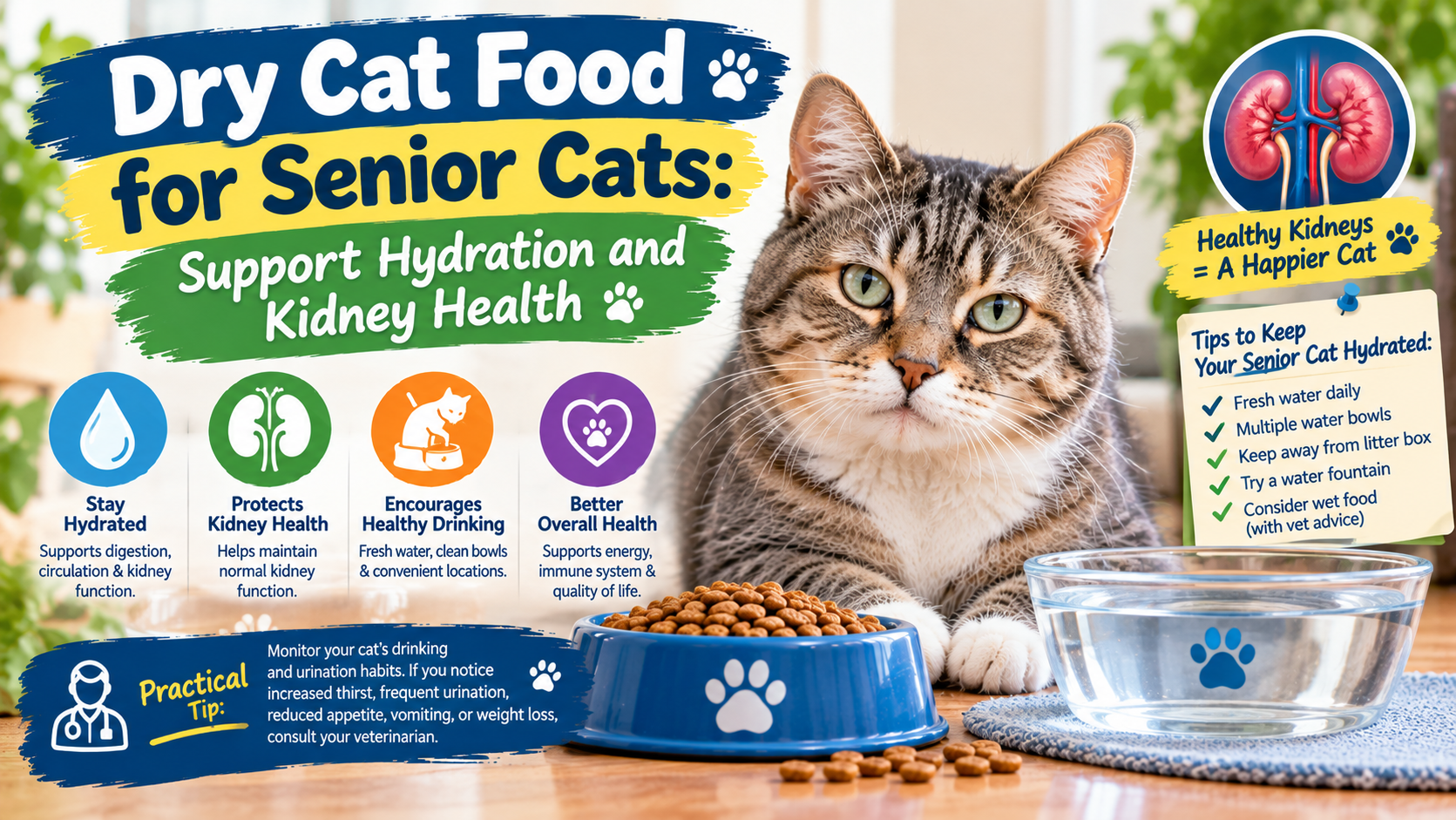
Hydration is an important part of caring for an aging cat. As cats grow older, they may develop health conditions that affect their ability to maintain normal hydration, including kidney disease and certain urinary problems. Choosing suitable dry cat food for senior cats should therefore involve more than checking calories and protein levels. You should also consider how your cat gets enough water throughout the day.
Dry food contains substantially less moisture than wet food. Although many cats can maintain adequate hydration while eating dry food, others may benefit from additional moisture in their diet, especially when advised by a veterinarian.
Why Is Hydration Important for Senior Cats?
Water supports normal digestion, circulation, temperature regulation, and waste removal. Cats obtain water from drinking and from the moisture contained in their food.
Some senior cats do not drink enough to meet their individual needs, particularly if their water bowl is difficult to reach or they dislike its location. Others may have medical conditions that increase water loss or change their drinking habits.
Watch for changes such as increased thirst, frequent urination, reduced drinking, or a noticeable change in litter box habits. These symptoms deserve veterinary attention because they can indicate an underlying health problem.
How to Encourage Your Senior Cat to Drink More Water
You can encourage healthy drinking habits through a few simple adjustments:
- Provide fresh water every day and clean bowls regularly.
- Place water bowls in several quiet, accessible locations.
- Keep water away from the litter box and, if your cat prefers, separate it from food.
- Try a pet water fountain if your cat enjoys moving water.
- Ask your veterinarian whether adding wet food would be beneficial.
Older cats with arthritis or mobility difficulties may appreciate water bowls placed close to their favorite resting areas.
Can Dry Cat Food Affect Kidney Health?
Dry food does not automatically cause kidney disease, and not every senior cat needs a prescription kidney diet. However, hydration and nutrition become especially important when a cat has chronic kidney disease.
Veterinarians may recommend a therapeutic kidney diet for affected cats. These diets commonly manage phosphorus and provide carefully formulated levels of protein and other nutrients to support the cat’s condition.
Do not switch your cat to a low-protein or kidney-support diet without veterinary guidance. The appropriate diet depends on the diagnosis, disease stage, appetite, body condition, and other medical needs.
Practical tip: Continue monitoring your cat’s drinking and urination habits. If you notice increased thirst, frequent urination, reduced appetite, vomiting, or unexplained weight loss, arrange a veterinary examination rather than assuming these changes are simply part of aging.
Dry Cat Food for Senior Cats: Choose Food for Specific Health Conditions
As cats age, they may develop medical conditions that require changes to their feeding routine. The best diet for one senior cat may not be suitable for another, even when both cats are the same age.
When choosing dry cat food for senior cats, consider your pet’s medical history, current symptoms, body condition, and veterinary recommendations. A standard senior formula may be appropriate for a healthy older cat, while another cat may require a specialized therapeutic diet.
Kidney Disease
Chronic kidney disease is relatively common in older cats. Depending on the diagnosis and disease stage, a veterinarian may recommend a therapeutic kidney diet designed to manage phosphorus and other nutrients.
Cats with kidney disease may also experience reduced appetite, nausea, dehydration, and weight loss. Maintaining adequate food intake is important, so dietary changes should be introduced carefully under veterinary supervision.
Do not assume that a food labeled high-protein or low-protein is automatically appropriate for a cat with kidney disease. The overall nutritional formulation and your veterinarian’s assessment matter more than a single nutrient.
Diabetes
Diabetes can affect how a cat processes glucose and uses energy. Nutritional recommendations depend on the cat’s body condition, treatment plan, and individual response.
Some diabetic cats benefit from diets with carefully managed carbohydrate levels, but the ideal formulation should be determined with a veterinarian. Feeding routines may also need to coordinate with insulin treatment.
Never change your cat’s food dramatically or adjust insulin doses without professional guidance. Changes in food intake and carbohydrate content can affect blood glucose levels and treatment requirements or dry cat food for senior cats.
Digestive Sensitivities
Some senior cats experience vomiting, diarrhea, constipation, or changes in appetite. These symptoms can have several causes, including dietary intolerance, dehydration, dental disease, or underlying medical conditions.
A highly digestible diet or a veterinary-recommended food may help in certain cases. However, persistent digestive symptoms should not be treated by repeatedly switching foods without identifying the cause.
Introduce new food gradually when appropriate, and contact your veterinarian if symptoms continue or become severe.
Urinary Problems
Urinary health can also influence diet selection. Cats with certain urinary conditions may require a specific nutritional formulation that helps manage urine composition.
Not every urinary problem requires the same diet. A food designed for one type of urinary condition may not be suitable for another, so veterinary diagnosis is essential.
Seek urgent veterinary care if your cat repeatedly strains to urinate, produces little or no urine, or appears distressed in the litter box. Inability to urinate is a medical emergency, especially in male cats.
How Aging Cat Care Supports Better Nutrition
Good aging cat care involves more than choosing a suitable food. Regular checkups, dental assessments, weight monitoring, fresh water, and observation of appetite changes all help you understand your cat’s needs.
Before selecting a specialized diet, discuss the following with your veterinarian:
- Your cat’s current weight and muscle condition.
- Any diagnosed medical conditions.
- Changes in appetite, thirst, or urination.
- Current medications and supplements.
- Whether a standard senior formula or therapeutic diet is appropriate.
Practical tip: Choose food according to your cat’s individual health needs, not just its age. Veterinary guidance is particularly important when managing kidney disease, diabetes, urinary problems, or persistent digestive symptoms.
Dry Cat Food for Senior Cats: Transition Food and Monitor Results
Even when you find a suitable formula, changing your cat’s food requires patience. Many cats become accustomed to a particular taste, smell, and texture. An abrupt change may cause food refusal or digestive upset, so a gradual transition is usually preferable.
When introducing dry cat food for senior cats, pay attention to your pet’s response rather than assuming that a new product will automatically improve its health.
Introduce New Food Gradually
For a healthy cat, a transition over approximately seven to ten days may work well. Some cats need longer, especially if they are sensitive to changes in taste or digestion.
A general transition schedule might look like this:
- Days 1–3: Offer about 25% new food and 75% old food.
- Days 4–6: Offer approximately 50% new food and 50% old food.
- Days 7–9: Offer about 75% new food and 25% old food.
- Day 10 onward: Serve the new food if your cat is eating comfortably and tolerating the change.
These proportions are a flexible guide rather than a strict rule. Slow the transition if your cat develops mild digestive changes or seems reluctant to eat.
If your veterinarian prescribes a therapeutic diet, follow the recommended transition plan. Some medical situations require an individualized approach.
Monitor Appetite and Digestive Health
During the transition, watch how much your cat eats and whether its normal behavior changes.
Useful things to monitor include:
- Appetite and interest in food.
- Vomiting or diarrhea.
- Stool consistency and frequency.
- Drinking and urination habits.
- Energy level and activity.
- Weight and muscle condition.
A small amount of adjustment may occur when food changes, but repeated vomiting, persistent diarrhea, or significant appetite loss should not be ignored.
Cats that stop eating can develop serious health problems. Contact your veterinarian promptly if your senior cat refuses food or eats substantially less than usual. Do not wait several days to seek advice, especially if your cat is already unwell.
Keep Feeding Times Consistent
Many senior cats benefit from predictable meal times and a quiet feeding environment. Depending on your cat’s needs, you may divide the daily food allowance into several smaller meals.
Measure portions carefully to prevent overfeeding. If several cats share your home, feeding them separately can help you determine whether your senior cat is eating its own food.
Make sure the feeding area is comfortable and easy to reach. Older cats with joint stiffness may struggle with high feeding stations or bowls placed far from their resting areas or dry cat food for senior cats.
Schedule Regular Veterinary Checkups
Food alone cannot prevent every age-related condition. Regular veterinary visits help identify problems that may affect appetite, weight, hydration, and nutritional requirements.
Your veterinarian may recommend periodic weight checks, dental examinations, blood tests, urine tests, or other assessments based on your cat’s age and health.
If your cat loses weight unexpectedly, becomes unusually thirsty, develops persistent vomiting, or shows a major change in eating habits, arrange a checkup instead of assuming that the current food is responsible or dry cat food for senior cats.
Practical tip: A successful diet change should support comfortable eating, stable or appropriate weight, normal digestion, and your cat’s overall health. Monitor these factors and work with your veterinarian if adjustments are needed.
Conclusion: Choose the Right Dry Cat Food for Senior Cats
Choosing the right dry cat food for senior cats requires attention to nutrition, hydration, dental health, body condition, and individual medical needs. Although senior-specific formulas can be convenient, the most appropriate food is the one that provides balanced nutrition and suits your cat’s health or dry cat food for senior cats.
The seven tips in this guide can help you make informed decisions:
- Understand your cat’s nutritional needs.
- Choose food with appropriate ingredients and complete nutrition.
- Consider dental health and kibble texture.
- Maintain a healthy weight and muscle condition.
- Support hydration and monitor kidney health.
- Select diets according to specific medical conditions.
- Introduce new food gradually and monitor your cat’s response.
Remember that aging cats are not all alike. One cat may thrive on a standard senior formula, while another may need wet food, a therapeutic diet, or additional veterinary support.
Monitor your cat’s appetite, drinking habits, weight, and energy level. Consult your veterinarian before making major dietary changes, particularly if your cat has a chronic health condition.
With appropriate nutrition, regular veterinary care, and a comfortable feeding routine, you can help support your senior cat’s health and quality of life.
Frequently Asked Questions (FAQs)
What is the best dry cat food for senior cats?
The best option is a complete and balanced food that suits your cat’s age, body condition, appetite, and health. Look for appropriate protein, calorie content, and nutritional adequacy. Ask your veterinarian for recommendations if your cat has a medical condition.
At what age should cats start eating senior cat food?
Many products are marketed for cats around seven years and older, but there is no single age when every cat must switch. Nutritional needs vary, so consider your cat’s health, activity, weight, and the food’s intended life stage.
Is dry food enough for an older cat?
Dry food can provide complete and balanced nutrition when appropriately formulated. However, it contains less moisture than wet food. Some senior cats benefit from including wet food to support water intake or accommodate dental difficulties.
Should senior cats eat high-protein dry food?
Healthy senior cats generally need adequate high-quality protein to help maintain muscle mass. However, protein requirements should be considered alongside overall health. Cats with kidney disease or other medical conditions may need individualized dietary recommendations from a veterinarian.
Is dry cat food safe for senior cats with kidney disease?
Some dry foods may be appropriate, but cats with chronic kidney disease often benefit from a veterinarian-recommended therapeutic kidney diet. The right choice depends on disease stage, appetite, hydration, and nutritional needs or dry cat food for senior cats.
How often should senior cats eat dry food?
Many senior cats do well with two or more measured meals daily, although the ideal schedule depends on the individual cat. Smaller, more frequent meals may help some cats. Follow your veterinarian’s guidance and ensure your cat eats enough throughout the day.
How can I tell if my senior cat’s food is working?
Look for comfortable eating, a suitable and relatively stable body condition, normal stool, consistent appetite, and good energy for your cat’s age. Regular veterinary checkups can help assess nutritional health. Unexpected weight loss, reduced appetite, increased thirst, or persistent digestive problems warrant veterinary attention.
SEO reminder: Use the focus keyword “dry cat food for senior cats” naturally in your title, introduction, selected headings, and meta description. Include the related terms senior cat diet, aging cat care, best dry food, and cat health tips where relevant. Avoid excessive repetition, and prioritize helpful, accurate information for readers.