

 By
By Introducation
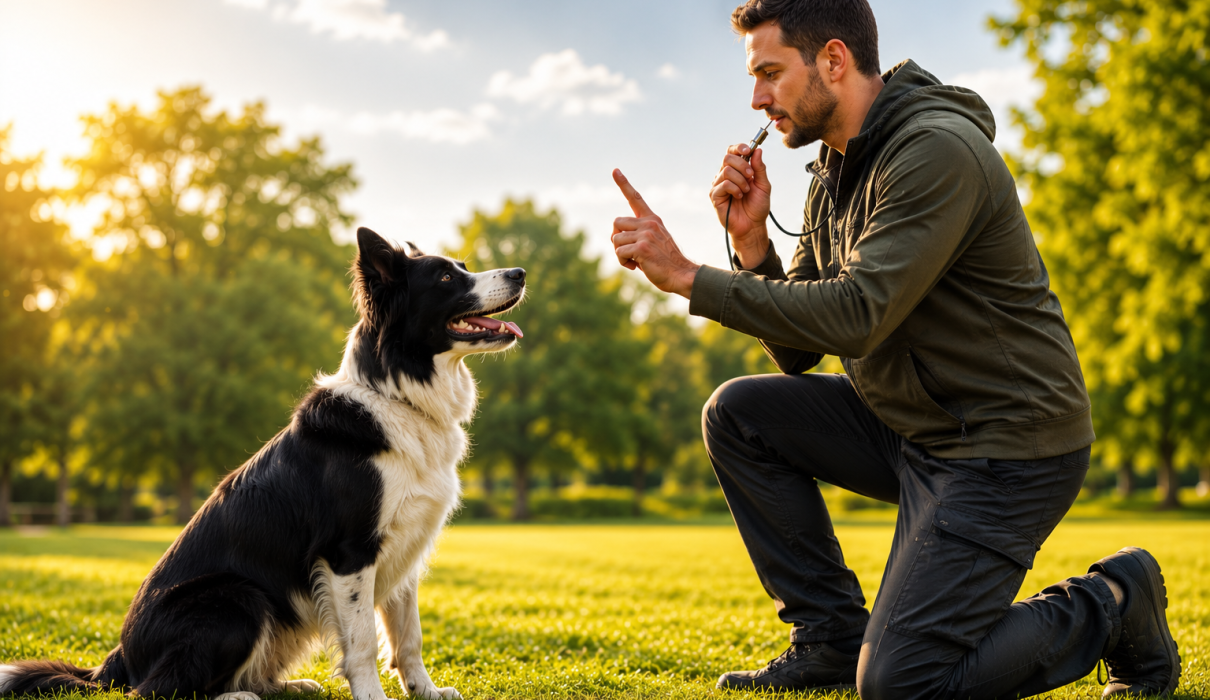
Dog Training Whistle is a simple but very effective tool for communicating with dogs, using consistent sound signals instead of words. The whistle has a clear, steady sound, recognizable and reactable by dogs, unlike the changing tones, pitches and emotions of the human voice. This is a great option for both beginners and seasoned trainers who want better control and quicker results with their dogs.
In recent years, more and more pet owners, professional trainers and hunters have used a whistle in training dogs. The main reason for this growth is the efficiency of improved communication between humans and dogs. Whether whistling in the backyard training your family pet or training a hunting dog in the open fields a whistle will keep your commands uniform and easy to comprehend.
The difference between whistle signals and conventional voice commands is very marked. A change in mood, energy level or surroundings can cause variations in a person’s voice that can confuse dogs. But a whistle’s always consistent . Dogs can learn pretty fast that a certain whistle means a certain action . Whistles travel much farther than the human voice, so they’re great for outdoor training or when your dog is far away.
A Dog Training Whistle is ideal for any user. Owners can use it to train basic commands like sit or stop, recall). In advanced training, professional trainers often use whistles to keep things consistent. Training hunters to whistle also helps them out a lot, as it helps them control their dogs from long distances without alarming the prey.
There are good reasons to use a whistle for dog training. First, it allows for remote communication, so your dog can hear you even when you’re far away. Secondly, it provides uniformity of commands, which is so necessary for effective learning and development of behavior. It also helps with stress reduction in dogs by responding to predictable, familiar sounds rather than unpredictable voice tones.
Adding a whistle to your training arsenal can go a long way toward improving your dog’s responsiveness and behavior in general. More and more people are finding the benefits of using a whistle for dog training and it is proving itself to be a reliable and powerful tool for fast and lasting results.
What is a Dogwhistle?
A Dog Training Whistle is a unique tool that enables dog owners and trainers to communicate with their dogs through consistent sound signals. A whistle is a sharp uniform sound that is the same every time you use it . A verbal command can vary depending on a persons tone , mood , or volume . The consistency helps dogs better understand and respond to commands without getting confused.
Basically a whistle makes a frequency that dogs can hear very well. Dogs have a much better sense of hearing than humans. They can hear sounds that are a long way away and high in pitch. The dog traning whistle is best used in large outdoor areas or noisy places where voice commands may not be heard clearly.
There are different kinds of dog training whistles that you can use for various training purposes. The silent whistle, or ultrasonic whistle, is one of the most popular types. Even though it is called silent , it is not totally silent . Instead it produces a high-frequency sound – mostly outside the range of human hearing but easily heard by dogs. This is the type that owners that want a quieter training experience prefer.
One common type of whistle is the pea whistle, which contains a small ball (or “pea”) inside that rattles when air is blown through it. The motion makes a trilling sound, which can help get a dog’s attention quickly. But it may not be as reliable in wet, cold conditions.
The third type is the pealess whistle, which has no moving parts. It produces a loud clear tone and is dependable in all weather. Many professional trainers prefer this type of whistle when training dogs outside or in demanding environments because of its durability and consistency.
The right whistle for you will depend on your training goals and environment. If you are training a pet in the home, for instance, a simple adjustable whistle might be enough. However, a long-lasting pealess whistle might be the better choice for field work or advanced training.
In conclusion, the Dog Training Whistle is not just a tool, but a reliable form of communication that boosts accuracy, consistency, and training success. Knowing how each whistle works and which one to pick can help tremendously with your dog’s learning process and overall behavior.
Benefits of Whistle Training for Dogs
A Dog Training Whistle has many benefits that make it one of the best tools to teach and control dogs. Add a whistle to your dog training toolbox and communication, consistency, and the end result will be greatly improved for the novice and experienced trainer alike.
One of the biggest benefits is the ability to communicate clearly and consistently. A whistle is a whistle is a whistle but the commands might change depending on your mood, tone or volume. This consistency makes it easier for dogs to learn the meaning of each signal so they are less confused and training can progress more rapidly. Eventually your dog will become more responsive, knowing exactly what you want.
Another big plus is that it can work over long distances. The whistle carries much further than the human voice and is therefore a good tool for outdoor training. Even if your dog is in a park, field or open space, they can still hear and respond to your commands. This is especially useful for things like recall training where you want your dog to come back fast.
A dog training whistle can also be very effective in noisy surroundings. Voice commands can get lost in background noise in busy places like streets, parks or training grounds. A loud, high-pitched whistle cuts through the chaos so your dog can hear you loud and clear even when things are distracting.
It’s also a great way to help
relieve stress in dogs. Dogs are very sensitive to human emotions, and if your voice changes, like yelling or frustration, it can confuse or scare them. A whistle is not an emotional variation, it is a neutral, predictable signal. That means calmer, more comfortable training for your dog and better learning and behaviour.
Whistle training also works very well for working and hunting dogs. Trainers and hunters use whistles in the field to communicate without words. They don’t bark orders that might scare prey away, but they do use whistle signals to successfully guide their dogs. That’s why people search hunting dog training near me to learn professional whistle techniques.
Whistles are also simple to use and easy to carry. light, portable and can be used at anytime with little effort. With practice you and your dog will be at ease with this method of training in no time.
The benefits of using a whistle to train your dog go far beyond simple convenience. Training made easier, faster and more effective with a Dog Training Whistle. It enhances communication, offers consistency, allows remote control and reduces stress.
How dogs respond to whistle training
How dogs respond to whistle training is important to using a Dog Training Whistle successfully. Dogs are not born knowing what whistle sounds mean . They can be taught to associate certain sounds with certain actions through repetition and positive reinforcement . This learning process is called conditioning and is a very important part of dog training with a whistle.
One of the main reasons why whistle training is so effective is a dog’s ability to hear so well. Dogs have a much broader range of hearing than humans, especially higher-pitched noises. This allows them to hear whistle signals clearly even when they are very far away or in a noisy environment. This natural ability is exploited by a training dog whistle . It accelerates communication and makes it more reliable.
It may take some time for your dog to respond when you first introduce a whistle. That’s very normal. The idea is to make the sound of the whistle mean a particular command. If you use a short whistle for “come”, you have to use the same sound every time you want your dog to come back to you. To help build this link, reward your dog with treats, praise or play after each correct answer.
The secret to this process is repetition and consistency. The dogs learn best if you use the same signal, the same way, again and again. The wrong whistle pattern or inconsistent commands will confuse your dog and slow your progress. When training your dog with a whistle it is important to use a set number of signals.
Another factor that is important is positive reinforcement. Dogs respond much better to reward than to punishment. Whistle command and reward immediately if dog responds correctly. This creates a good feeling and makes your dog want to do this behavior again in the future. In time your dog will respond quickly and confidently to whistle signals without needing to be rewarded all the time.
Importantly, training in a low distraction environment also. Begin indoors or in a quiet area so your dog can concentrate on the tone of the whistle. Once your dog has mastered the basics, then you can start taking him to more challenging locations such as a park or open field.
In summary, dogs respond to whistle training because of their innate hearing ability, consistent signals and reward-based learning. A Dog Training Whistle is a powerful communication tool that allows your dog to learn faster and respond more reliably to any situation through repetition, clarity and positive reinforcement.
The best dog training whistle is found by
It is very important to choose the right Dog traning Whistle and it can adversely affect the outcome of your training. Whistles seem simple, but the different types and features can make a big difference to your dog, your environment and your training goals. A good whistle for training dogs is clear in its communication, consistent, and reliable in the long term.
Well first of all you have to consider the sound level and frequency. Some whistles have a high pitched sound that carries out far while others are softer and better suited to close range training. If you plan to train a dog with a whistle in open areas or for recall commands, a louder, sharper whistle is usually more effective. But for practice in your home or backyard, a softer whistle might be okay.
Another important feature is the adjustability. Some whistles have a range of frequencies that you can change to suit your dog’s hearing range. This can be particularly useful if your dog is more reactive to certain tones. Add versatility with adjustable pitch whistles so you can find the best sound for your training.
Another important consideration is durability. If you’re training your dog in the outdoors or in changing weather conditions, you’ll want a whistle that can withstand moisture, dirt and rough use. In such cases pealess whistles are preferable because they have no moving parts and will work reliably in rain or cold weather. Therefore they are a popular choice for professional trainers and field workers.
Remember to think about comfort and ease of use. A good whistle should be comfortable to hold, light and easy to use for long periods. Many whistles come with a neck lanyard for quick access during training. It’s especially handy when you need fast answers.
Experience Level: Another thing to think about when you are choosing a Dog Training Whistle is your experience level. A beginner may want a simple, user-friendly whistle that produces a consistent sound, while a veteran trainer may want more advanced features like variable tones or specific designs. Budget can be a factor too but even cheap whistles can be very effective if used properly
Finally, think about what you’ve been trained for. A simple whistle is normally sufficient for training a family pet. But if you work with hunting or working dogs, you will be better off buying a quality whistle made for long-range communications.
In a nutshell, finding the right dog training whistle comes down to finding the right combination of sound quality, durability, comfort and purpose. Using a whistle for dog training can be more effective, fun and successful for you and your dog if you have the right whistle for your needs.
Basic Dog Whistle Commands You Should Know
Teaching your dog basic commands with a Dog Training Whistle is the basis of successful and reliable training. These commands help to improve obedience, safety and communication especially when your dog is away. When you are using a whistle to train your dog it is important to keep your signals simple and consistent and easy for your dog to recognize.
Remember (Come Back)
One of the most important skills you can teach your dog is recall. It means when you call your dog he comes right back.
Whistle Pattern: One long steady blast
Teaching How To:
Start in a quiet place. Blow the whistle and immediately reward your dog for coming to you with treats or a happy tone. If your dog does come to you, reward him with treats or praise.
Objective:
Your dog should immediately respond to the whistle, even at a distance.
🪑 2. Sit Command 1.
The sit command is a basic obedience command that can help you get your dog under control in a variety of situations.
Whistle Pattern: Short, sharp puff
How to Teach
Blow the whistle and guide your dog to a sit. When the dog sits down, reward him. Keep repeating until your dog makes the connection.
Objective.
Each time your dog hears the signal it sits quietly.
✋ 3. Command Stop
This command is also important for safety, especially if your dog is running towards danger or you need to stop them right away.
Whistle Pattern: Two quick short blasts.
How to teach it:
Use the whistle cue when your dog is moving and stop him with a hand signal if needed. Reward your dog immediately when he stops. Work at it regularly to develop a good response.
Objectives:
Your dog will stop or pause immediately when he hears the whistle.
↔️ 4. Left/Right Directional Commands
Direction commands are especially useful in advanced training and outdoor activities.
Whistle Design:
1 long + 1 short blow (left hand)
Right: Two heavy thumps
How to learn: 1.
Begin with the whistle and hand signals. “Guide your dog in the right direction and reward him when he gets it right. Slowly increase the reliance on the whistle itself.
OBJECTIVES:
Your dog is responsive to directional cues.
🎯 Tips for Remembering Training
Use the same whistle pattern for each command
Keep sessions short and positive.
Reward immediately after correct behaviour
Practice regularly in different conditions
To sum up, learning these basic commands with a Dog Training Whistle offers a good foundation to move on to further training. Whistles are very efficient and effective training tools for dogs. A consistent whistle makes your pet learn the commands quickly and respond reliably.
9 Tips To Get Results Fast
How Effective is a Dog Training Whistle and How Quickly Will it Work? Whistles are great tools but you need to have the right technique and be consistent and have patience to be successful. These proven tips will help you train smarter, and see results faster, if you are serious about training your dog with a whistle.
Tip 1: Start With the Fundamentals
Start with basic commands like sit or recall (come). Don’t overload your dog with signals at once. A simple start will help your dog to connect the whistle sound with the action.
Tip 2: Whistle signals must be consistent.
Consistency is key always. Always use the same pattern of whistling for the same command. If you continue to change signals your dog will get confused and learning will slow down. The steady whistle in training dogs builds good habits in a short time.
Tip 3 : Positive Reinforcements
Always reward your dog for the right answer. Treats, praise, playtime work well. The positive reinforcement will help your dog repeat the behavior, and will make a strong association with the sound of the whistle.
Tip 4: Short trainsionsing ses
Dogs learn best in short spurts. Keep your dog’s attention! Try to do 10 to 15 minutes at a stretch. Long sessions can be boring and less effective.
Tip 5: Practice every day
“Success is a matter of regular practice.” A few minutes a day of training can make a big difference. Repetition helps your dog learn to remember commands and respond more quickly as time goes on.
6 Tip: Don’t whistle too much
Quit blowing the whistle for no reason. Repeated use of the sound can make your dog tune the sound out. Use it as needed to keep it meaningful and effective.
Tip 7: Use voice and whistle to start
First, include both voice commands and whistle signals. This way your dog learns what the sound is about. As your dog gets used to the whistle, reduce the voice commands.
Tip 8: Try it in Different Environments
Begin your training in a quiet environment, then gradually add distractions such as parks or open spaces. Using a whistle in dog training allows your dog to learn to obey in real life circumstances.
Tip 9. 9. Be Patient & Stay Calm
Every dog learns at his own rate. Be patient and calm in the process. Don’t get annoyed. That will only put your dog down and lower his confidence.
Final Thought
By following these tips you will get the most out of your Dog Training Whistle, and will lead to faster and more reliable results. A good training whistle for dogs will not only help improve your dog’s obedience but also the bond between you and your dog.
Error to Avoid
A Dog Training Whistle is a powerful and effective tool but many people make simple mistakes which can slow down the progress or confuse their dog. Knowing these common mistakes will help you get better results when using a whistle for dog training and make sure your effort does not go to waste.
Inconsistent whistles
One of the biggest mistakes is altering the whistle patterns for the same command. If you use different sounds for ‘come’ or ‘sit’ your dog will have difficulty understanding what you want. signal: use the same signal for each command for clarity and consistency.
Not Using Incentives
Dogs respond best to positive reinforcement. If you do not reward your dog when he does what you want, he may stop listening to commands. Reward good behavior with treats, praise or playtime when training dogs with a whistle.
Time-Consuming Training
Long training sessions can tire your dog or make him bored. This reduces the ability to concentrate and learn. Keep it fun and do short sessions (10-15 mins) to keep your dog interested and energized.
Too many whistles
If you blow the whistle again and again for nothing, your dog will just ignore it. If you use the whistle too much, or without a particular meaning, it stops working. Use it only if you are positive, and give the command or act immediately.
Looking for Fast Results
It’s a matter of patience and time and repetition. Some folks expect their dog to get it right away and that’s not realistic. Be patient and consistent as each dog learns at his or her own pace.
Skipping Basic Training Steps
But skipping the basics and jumping right into the advanced commands might confuse your dog. Begin with simple commands like recall and progress to more complex training. If you don’t have a good base, you can’t train a dog successfully with a whistle.
Training in Distracting Environments Early
Training in a noisy or busy area may be too much for your dog. Start in a quiet, controlled area and gradually add distractions as your dog progresses.
Mixing voice commands incorrectly
It’s fine to start with a combination of voice and whistle, but if you’re inconsistent, you’re going to confuse your dog. If you start with both, gradually wean yourself away from voice commands, using the whistle more and more as time goes by.
Expressing Frustration / Anger
Dogs are sensitive to your feelings. “If you get frustrated, or get angry, it can create fear and prevent you from learning well. “Be calm, patient and positive for every training session.
Final Thought:
Avoid these common mistakes and your training will be more effective and proceed more smoothly. A Dog Training Whistle can produce great results when used properly but only when it is used with patience, consistency and the right approach. Keeping these mistakes in mind will ensure that using a whistle for dog training will be a rewarding and positive experience for you and your dog.
Dog Whistle Training for Hunting
One of the most sophisticated and practical applications of a Dog Training Whistle is training hunting dogs. Whistle commands are vastly more effective than voice commands in field environments where silence, distance control and precision matter. Many professionals rely on the use of a whistle for dog training for hunting and working dogs in particular.
The Importance of Whistle Training for Hunting Dogs
Hunting dogs work away from their handler, often over fields, woods or rough terrain. You can’t go barking orders in situations like this. A training dog whistle produces a sharp, clear signal that can be heard at great distances without disturbing the environment or alarming wildlife.
It allows handlers to retain control without seeing the dog which is important for tracking or retrieving jobs.
Better Long Range Remote Control
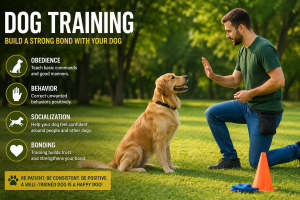
Long range communication is one of the biggest advantages of whistle training. A well-trained hunting dog should be able to:
Call back immediately when called
Freeze stop by order.
Change course with signal
Keep on topic
That is why the Dog Training Whistle is such a useful tool for performance in the field.
Silent & Non-Disruptive Messaging
Whistles don’t have the emotional tone or changes in volume of voice commands. This helps to keep communication calm and controlled. It is especially useful for hunting because loud shouting will scare animals off, lowering your chances of success.
A whistle lets you control quietly, which is why professional trainers love it so much.
Fast Learning in Working Dogs
Hunting dogs are smart and are susceptible to systematic training. When training a dog with a whistle dogs learn quickly that certain sounds are associated with things such as:
End.
Back Return
Turn left. Turn right.
Search or Recover
Repeated training with rewards develops them as automatic responses.
Training in Real Life Conditions
Hunting dogs should not be trained only in a home or back yard. It takes time to find out:
Open spaces without much noise
Locate places with low distraction.
Practice (full field conditions)
This trains the dog for real hunting conditions and makes him more reliable.”
📍 Seek Professional Assistance
If you are a beginner in advanced training, then you may look for experts or programs that offer hunting dog training near your area. Professional training to learn the whistle patterns and get your dog to perform better in the field, faster
🎯 The key takeaway
Whistle training is a game changer for the hunting dogs. A dog training whistle is best used to control distance, discipline and accuracy of response. A dog training whistle for hunting situations will enhance communication and result in more successful results in the field – whether you are a beginning or advanced handler.
When To Ask For Help From Professional Trainers
A Dog Training Whistle is very useful in training at home, but there are times when you need to get professional help. Not all dogs learn at the same rate and some may need expert guidance, especially in advanced obedience or field work. In such cases, dog training with a whistle with the help of a professional can improve the results greatly.
When You Need a Dog Trainer Professional
Consider getting professional help if:
Your dog is not dependable to the whistle
Training is not moving forward or has stalled
Your dog is easily distracted outdoors
You are planning special training such as hunting or field work
You don’t know the right way to whistle
These signs suggest that training can be made more effective with structure.
🎯 Benefits of Training Your Dog Professionally
Professional trainers have experience, structure and proven techniques. They can:
Teach correct whistle patterns and timing.
Correct your methodology of training
Increase your dog’s focus and discipline
Structured sessions to speed up learning
This is very useful when training dogs in complex environments with a whistle.
Ideal For Working & Hunting Dogs
For hunting dogs or high performance working dogs, professional training is often recommended. Experts know how to build strong recall, stop and directional commands with a Dog Training Whistle.
They also train dogs in real field conditions, which is hard to do at home.
📍 Locating Training Services
If you’re looking locally, you can search for programs or experts that offer hunting dog training near you. There are many trainers that specialize in:
Training ( obedience )
Training on the field
Behavior modification
Advanced techniques in whistle training
Choosing the right trainer will vastly improve your dog’s confidence and responsiveness.
🧠Self Help Vs Professional Help
Self-training works well for basic commands and household obedience. But it is better with professional help when:
You want quicker results
You are training for certain jobs
You have to fix your technique
Your dog has complex behavioral problems
Sometimes the best result comes from combining both methods.
Bottom Line
While a Dog Training Whistle is a powerful tool, expert guidance can take your training to the next level. The use of a whistle for dog training with professional support is suitable for beginners and also for advanced skills, offering a better structure, faster progress and more reliable results.