

 By
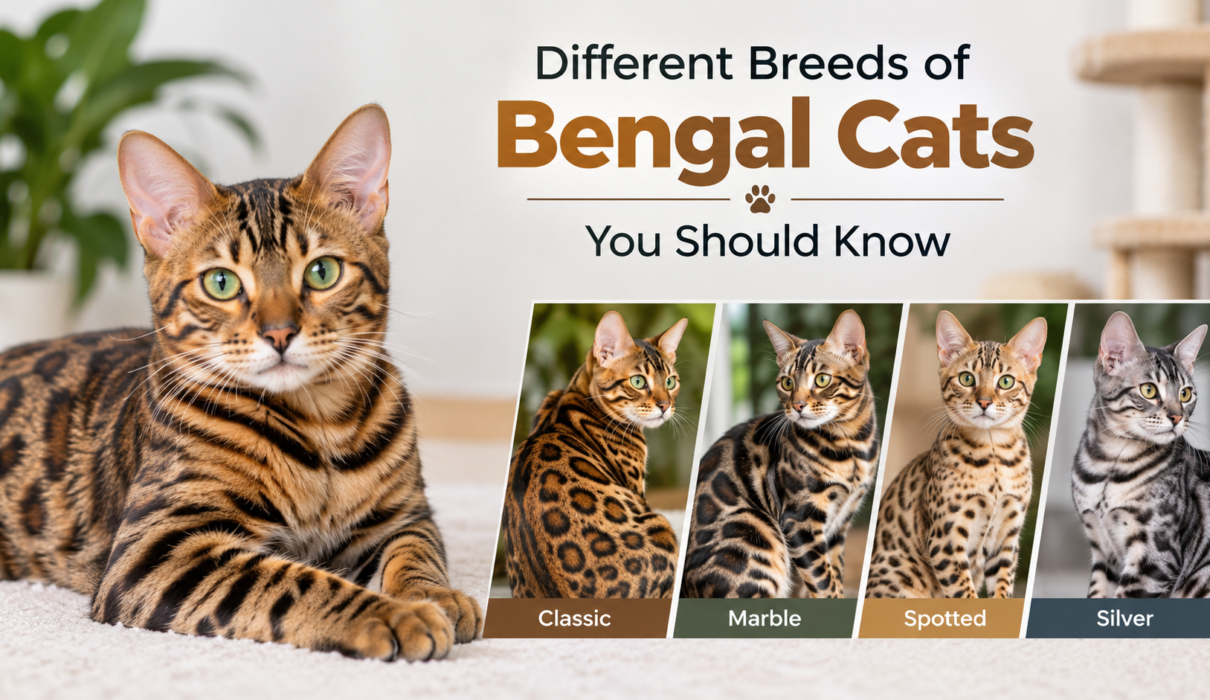
By Different Breeds of Bengal Cats You Should Know
Bengal cats are known for their beautiful wild-looking appearance, active personalities, and distinctive spotted or marbled coats. Their leopard-like markings make them one of the most recognizable domestic cat breeds.
When people search for different breeds of Bengal cats, they are often looking for information about Bengal coat colors, patterns, and variations. While these cats belong to the Bengal breed, they can have several recognized color and pattern variations.
Understanding these differences can help potential owners choose a Bengal that matches their preferences and lifestyle. It is also useful to understand how genetics and responsible cat breeding influence coat colors and patterns.
What Are Bengal Cats?
Bengal cats are a domestic cat breed developed through selective breeding. The breed is known for its athletic body, short and soft coat, distinctive markings, and energetic personality.
One of the most interesting features of Bengal cats is their wild appearance. Their coats can feature spots, rosettes, or marble-like patterns that resemble markings seen in wild cats.
Despite their exotic appearance, Bengal cats are domestic companions. Their personalities can vary from one individual to another, but many are active, curious, intelligent, and playful.
Because of their high energy levels, Bengal cats usually benefit from interactive toys, climbing spaces, and regular playtime.
Different Breeds of Bengal Cats You Should Know
There is technically one Bengal cat breed, but Bengals are available in several recognized colors and patterns. These variations are often what people mean when they search for different breeds of Bengal cats.
The following are some of the most commonly discussed Bengal color and pattern variations.
Brown Spotted Bengal
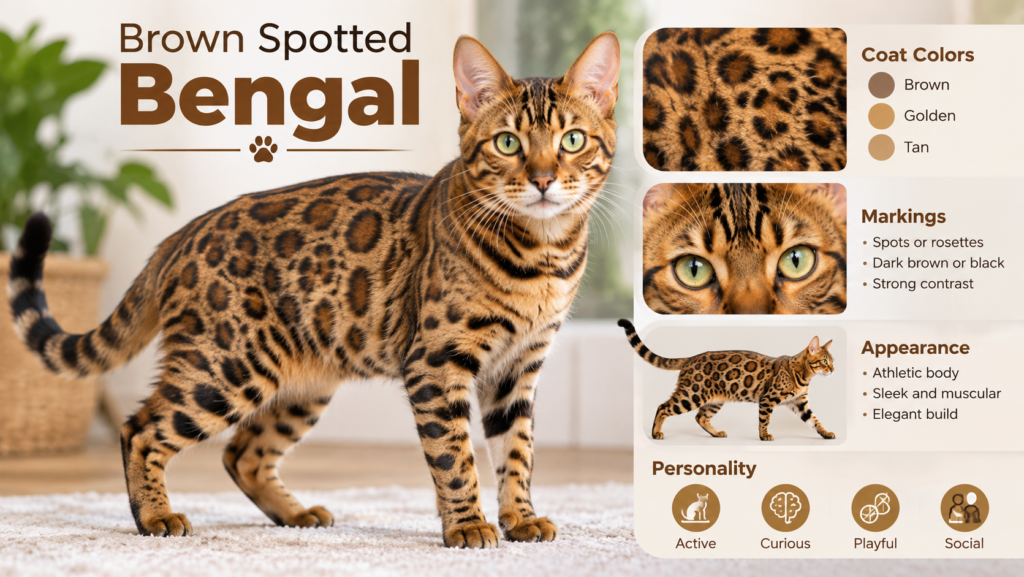
The Brown Spotted Bengal is one of the most recognizable Bengal varieties. It has a warm brown, golden, or tan background with darker spots or rosettes.
The markings can vary considerably between individual cats. Some Bengals have simple spots, while others have more complex rosettes that create a stronger wild-cat appearance.
Brown Bengal Appearance
Brown Bengals may have:
- Brown, golden, or tan backgrounds
- Dark brown or black markings
- Spotted or rosetted patterns
- Strong contrast between the coat and markings
- Athletic body structure
Their combination of a warm coat and dark markings gives them the classic Bengal appearance many people associate with the breed.
Brown Bengal Personality
Brown Bengals are generally active and curious. They often enjoy climbing, chasing toys, exploring their surroundings, and interacting with their owners.
However, personality is not determined by coat color alone. Individual temperament depends on genetics, socialization, environment, and the cat’s own personality.
Snow Bengal
Snow Bengals are known for their light-colored coats and contrasting markings. Their appearance can range from very pale cream or ivory to a warmer off-white color.
Snow Bengals are commonly discussed in three genetic categories: Seal Lynx Point, Seal Mink, and Seal Sepia.
Seal Lynx Point Bengal
Seal Lynx Point Bengals generally have a very light coat with darker markings. Their blue eyes are one of their most noticeable features.
Their coloring is associated with colorpoint genetics, giving them an appearance that differs significantly from traditional brown Bengals.
Seal Mink Bengal
Seal Mink Bengals usually have a warmer ivory or cream-colored background with darker markings. Their eye color can vary and may include aqua or blue-green shades.
Seal Sepia Bengal
Seal Sepia Bengals generally have a warmer and darker appearance than Seal Lynx Point Bengals. Their background color may range from cream to light brown, with darker markings.
Snow Bengals can be particularly appealing to owners who prefer a lighter-colored cat with distinctive markings.
Silver Bengal
Silver Bengals have a cool silver or grayish background with darker markings. The contrast between the pale background and dark spots or rosettes can make their coat look especially striking.
The silver appearance is associated with specific genetic characteristics that reduce warm pigmentation in the coat.
Silver Bengal Appearance
Silver Bengals may feature:
- Silver or gray background
- Black or dark gray markings
- Spotted or rosetted patterns
- High contrast between the background and markings
- Short, sleek coat
The quality of the markings can vary from cat to cat.
Silver Bengal Personality
Like other Bengals, Silver Bengals can be energetic, intelligent, and playful. Their coat color does not automatically determine whether a particular cat will be affectionate, independent, or highly active.
Owners should consider the individual cat’s behavior rather than choosing a pet based only on appearance.
Blue Bengal
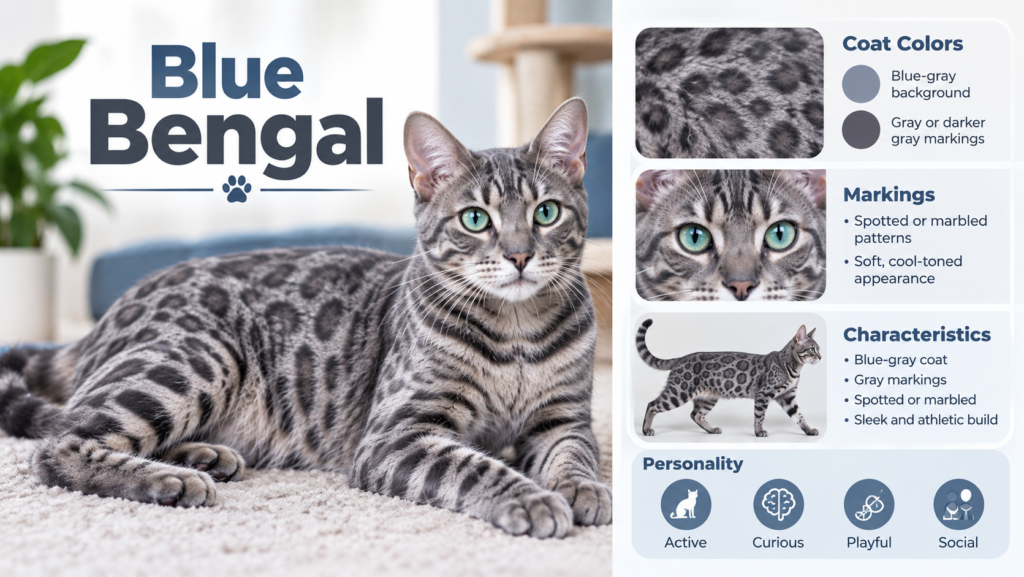
Blue Bengals are a less common color variation. Their coats have a blue-gray or cool gray appearance, often combined with darker gray markings.
Instead of the warmer colors seen in traditional Brown Bengals, Blue Bengals have a more muted and cool-toned appearance.
Blue Bengal Characteristics
Blue Bengals may have:
- Blue-gray background
- Gray or darker blue-gray markings
- Spotted or marbled patterns
- Soft, cool-toned appearance
Because this color is less common, people interested in Blue Bengals should pay attention to the breeder’s health practices and documentation rather than focusing only on rarity.
Charcoal Bengal
Charcoal Bengals have a noticeably darker appearance and may show a dark facial mask. Their coat can have a smoky or charcoal background with darker markings.
The charcoal appearance can be seen in different Bengal patterns, including spotted and rosetted coats.
Charcoal Bengal Appearance
Common features may include:
- Dark charcoal background
- Strong facial markings
- Darker back and body
- Spotted or rosetted patterns
- Wild-looking appearance
The intensity of the charcoal appearance can vary between individual cats.
Breeds of Bengal Cats by Coat Color
When comparing different breeds of Bengal cats, coat color is one of the easiest characteristics to notice.
Common Bengal color variations include:
- Brown
- Snow
- Silver
- Blue
- Charcoal
Each color can have different shades and levels of contrast. Genetics plays an important role in determining the appearance of a Bengal kitten.
It is important to remember that these are color variations within the Bengal breed rather than completely separate cat breeds.
Breeds of Bengal Cats and Their Temperament
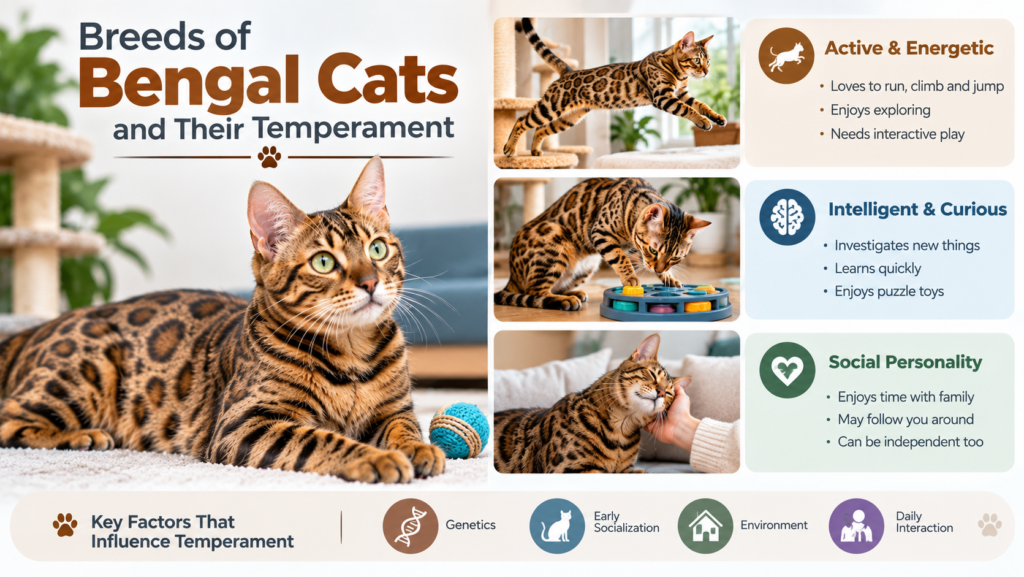
Bengal cats are generally known for being active, curious, intelligent, and playful. However, temperament can vary significantly between individual cats.
A Bengal’s personality can be influenced by genetics, early socialization, environment, and daily interaction with its family.
Active and Energetic Nature
Bengals often have high energy levels and enjoy activities that allow them to run, climb, jump, and explore.
Interactive toys, climbing trees, puzzle feeders, and regular play sessions can help keep them physically and mentally engaged.
Intelligent and Curious Behavior
Many Bengal cats are highly curious and enjoy investigating new objects and environments. Some can learn to open doors, play with puzzle toys, or respond to training.
Providing mental stimulation is particularly important for an active Bengal.
Social Personality
Some Bengals enjoy spending a lot of time with their owners and may follow people around the home. Others may be more independent.
Because every cat is different, prospective owners should consider the individual cat’s behavior instead of relying entirely on breed descriptions.
Breeding Cats: How Bengal Traits Are Developed
Responsible breeding cats requires careful attention to health, genetics, temperament, and breed standards.
Bengal coat colors and patterns are influenced by genetics. Breeders can use knowledge of inherited traits when planning pairings, but genetic outcomes cannot always be predicted with complete certainty.
Genetics and Coat Color
Genes influence whether a Bengal has a brown, silver, snow, blue, or charcoal appearance.
The same genetic principles also contribute to differences in coat patterns and markings.
Genetics and Coat Pattern
Spotted, rosetted, and marbled patterns can vary between kittens. Even kittens from the same litter may have noticeably different markings.
This natural variation is one of the reasons Bengal cats have such diverse appearances.
Health and Temperament in Breeding Cats
Responsible breeders should consider more than appearance when selecting cats for breeding.
Important considerations can include:
- Overall health
- Veterinary examinations
- Appropriate genetic testing
- Temperament
- Pedigree information
- Genetic diversity
- Proper care of breeding cats and kittens
Breeding primarily for unusual appearance without considering health can create unnecessary risks.
Cat Breeding and Bengal Generations
Bengal cats are sometimes described by generations such as F1, F2, F3, and later generations.
These labels refer to a cat’s generation relative to its wild Asian Leopard Cat ancestry.
F1 Bengal
An F1 Bengal is a first-generation Bengal descended directly from an Asian Leopard Cat and a domestic cat.
These cats can have more pronounced wild ancestry and may have different needs and characteristics from later-generation Bengals.
F2 Bengal
An F2 Bengal is one generation further removed from the Asian Leopard Cat.
Its characteristics can vary, and ownership considerations may differ depending on location and individual circumstances.
Later-Generation Bengals
Later-generation Bengals have more domestic ancestry. Many pet Bengals available to families are several generations removed from their wild ancestor.
Anyone considering a Bengal should research the specific generation and local regulations before bringing one home.
How to Choose Between Different Breeds of Bengal Cats
When choosing between different breeds of Bengal cats, it is helpful to look beyond coat appearance.
Consider Coat Color
You may prefer a traditional Brown Bengal, a light Snow Bengal, a contrasting Silver Bengal, or another recognized color variation.
Color is primarily a matter of personal preference.
Consider Coat Pattern
Spotted, rosetted, and marbled coats can have very different visual appearances.
Look at the individual kitten rather than assuming every Bengal with the same pattern will look identical.
Consider Activity Level
Bengals are generally active cats. Make sure your home has enough space and enrichment for an energetic companion.
If you prefer a quiet and low-energy cat, consider whether the Bengal’s typical activity level matches your lifestyle.
Consider Personality
Spend time observing the cat before making a decision.
Look at how the kitten interacts with people, toys, other cats, and its surroundings. Individual temperament can be more useful than coat color when choosing a companion.
Bengal Cat Care and Daily Needs
Bengal cats need regular care to remain healthy and active.
Nutrition
Provide a balanced diet appropriate for the cat’s age, health, and activity level. Fresh drinking water should always be available.
A veterinarian can help determine an appropriate feeding plan.
Exercise and Play
Daily exercise is important for active Bengal cats.
Useful forms of enrichment include:
- Interactive toys
- Wand toys
- Cat trees
- Climbing shelves
- Puzzle feeders
- Supervised games
Regular play can help reduce boredom and provide healthy physical activity.
Mental Stimulation
Bengals are often curious and intelligent, so mental enrichment is just as important as physical exercise.
Rotating toys, introducing food puzzles, and providing safe areas to explore can make their environment more interesting.
Grooming
Bengal cats generally have short coats that are relatively easy to maintain.
Regular brushing can help remove loose hair and provides an opportunity to check the skin and coat.
Routine nail care and dental care are also important parts of general cat care.
Are All Breeds of Bengal Cats the Same?
Although people commonly discuss different breeds of Bengal cats, Brown, Snow, Silver, Blue, and Charcoal Bengals are color variations within the Bengal breed.
They can also have different coat patterns, including spotted, rosetted, and marbled.
However, appearance does not guarantee personality.
Two Bengals with very similar coats can have completely different temperaments. One may be highly social and affectionate, while another may prefer more independence.
This is why individual personality, socialization, and environment should be considered when choosing a Bengal cat.
Breeds of Bengal Cats by Coat Pattern
Bengal cats are also recognized for their distinctive coat patterns. The most commonly discussed patterns are spotted, rosetted, and marbled.
Spotted Bengal
Spotted Bengals have individual spots distributed across the body. The spots can vary in size, shape, and color.
Some cats have relatively simple spots, while others have more complex markings.
Rosetted Bengal
Rosetted Bengals have markings that form more complex shapes resembling the rosettes seen on some wild cats.
Rosettes can have different forms and appearances. Some may look like paw prints, while others can appear as doughnut-shaped or cloud-like markings.
The contrast and definition of the rosettes can contribute significantly to the overall appearance of the cat.
Marbled Bengal
Marbled Bengals have flowing patterns that create a marble-like appearance across the body.
Instead of separate spots, the markings form larger swirls and interconnected shapes.
Marbled Bengals can have highly distinctive coats, and no two cats necessarily have exactly the same pattern.
How Genetics Affects Bengal Coat Colors and Patterns
Genetics plays an important role in the appearance of Bengal cats. Different combinations of genes can influence coat color, pattern, contrast, and other physical characteristics.
This is one reason responsible breeding cats requires knowledge of genetics and careful selection.
Ethical breeders should prioritize the health and well-being of their cats rather than breeding solely for unusual or rare appearances.
Health screening, appropriate veterinary care, good nutrition, and responsible breeding practices are important parts of maintaining healthy Bengal cats.
Choosing Between Different Breeds of Bengal Cats
When choosing among different breeds of Bengal cats, remember that you are generally choosing between color and pattern variations of the same breed.
Your decision can be based on:
- Preferred coat color
- Spotted, rosetted, or marbled pattern
- Activity level
- Personality
- Living environment
- Grooming needs
- Breeder’s health practices
Appearance is only one part of choosing a Bengal cat. A healthy, well-socialized kitten with a suitable temperament can be a better match than a kitten chosen only because of its rare coat color.
Final Thoughts on Different Breeds of Bengal Cats
Bengal cats offer a fascinating range of coat colors and patterns. Brown, Snow, Silver, Blue, and Charcoal Bengals can all have unique appearances, while spotted, rosetted, and marbled patterns create even more variety.
Although people often search for different breeds of Bengal cats, these are primarily variations within the Bengal breed rather than completely separate breeds.
Understanding genetics, temperament, health, and responsible cat breeding can help future owners make informed choices. In Part 2, we will explore Bengal temperament, generations, responsible breeding cats practices, care needs, and how to choose the right Bengal for your home.
Responsible Cat Breeding: What Buyers Should Know
Anyone purchasing a Bengal kitten should learn about responsible cat breeding and choose a breeder who prioritizes animal welfare.
Check Health Information
Ask the breeder about veterinary care, health records, vaccinations, and relevant genetic testing.
Ask About the Parents
Information about the kitten’s parents can help you understand its pedigree, health background, and expected characteristics.
Observe the Living Conditions
Responsible breeders should provide clean, safe, and appropriate environments for their cats and kittens.
Ask About Socialization
Young kittens benefit from positive interaction with people and exposure to normal household experiences.
A well-socialized kitten may find it easier to adjust to its new home.
Avoid Choosing Only for Rarity
Rare coat colors or unusual markings can be attractive, but health and temperament should remain important considerations.
Responsible breeding cats should focus on producing healthy, well-adjusted animals rather than simply maximizing unusual physical traits.
Frequently Asked Questions About Breeds of Bengal Cats
What are the different breeds of Bengal cats?
There is one Bengal cat breed, but Bengals have several recognized color and pattern variations. Common examples include Brown, Snow, Silver, Blue, and Charcoal Bengals.
What is the rarest Bengal cat color?
Some Bengal color variations are less commonly seen than others. Availability can vary by breeder, location, and genetics.
Are Snow Bengal cats different from Brown Bengals?
Yes. Snow and Brown Bengals have different coat colors and genetic characteristics, but both are Bengal cats.
What is the difference between spotted and marbled Bengal cats?
Spotted Bengals have individual spots or rosettes, while Marbled Bengals have larger flowing patterns that create a marble-like appearance.
What should I know about Bengal cat breeding?
Responsible Bengal cat breeding should prioritize health, genetics, temperament, proper veterinary care, and the welfare of both parents and kittens.
Are Bengal cats good family pets?
Bengal cats can be suitable for families that can provide adequate exercise, enrichment, interaction, and care. Their active nature means they may not be ideal for every household.
Do Bengal cats require a lot of exercise?
Bengals are generally energetic cats and benefit from daily physical activity and mental stimulation.
Conclusion
The different breeds of Bengal cats people commonly search for are mainly color and pattern variations within the Bengal breed. Brown, Snow, Silver, Blue, and Charcoal Bengals each offer distinctive appearances, while spotted, rosetted, and marbled patterns provide additional variety.
Choosing a Bengal should involve more than selecting the most attractive coat. Health, temperament, activity level, generation, and living environment are all important factors.
For anyone interested in breeding cats, responsible practices, genetic knowledge, veterinary care, and animal welfare should be priorities. For pet owners, selecting a healthy and well-socialized Bengal can help create a positive long-term relationship with their companion.
2 Comments