

 By
Can Cats Eat Bugs? 5 Surprising Facts You Should Know
Introduction
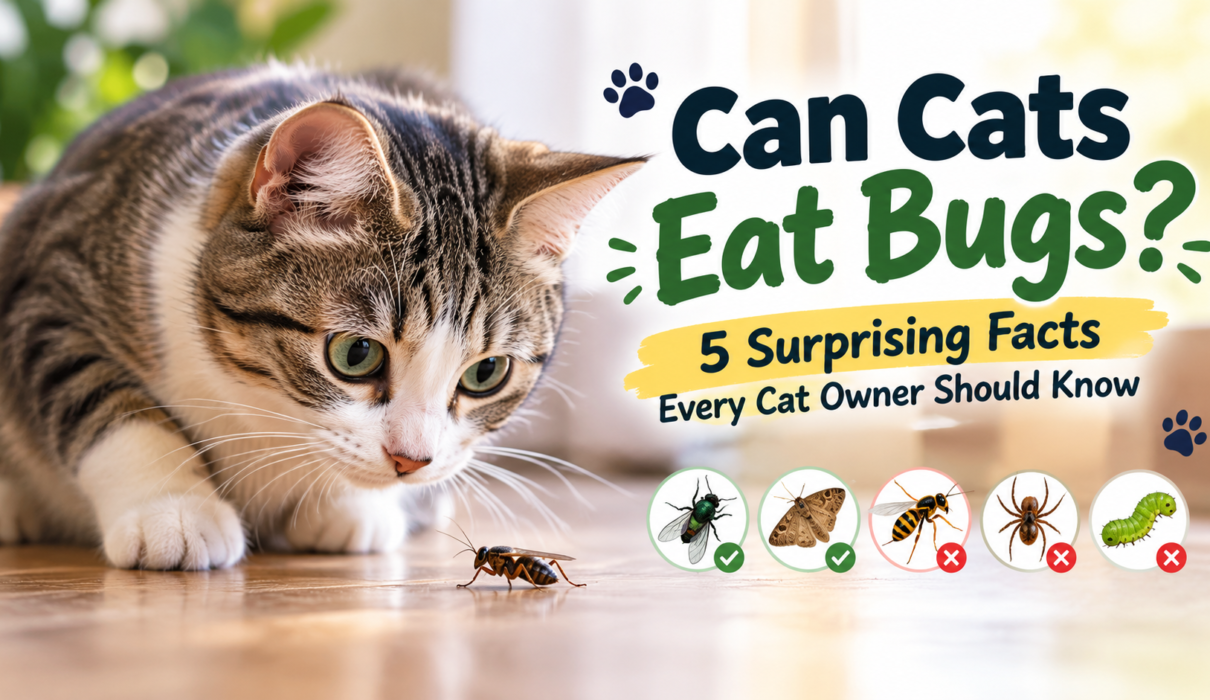
If you have ever watched your cat chase a fly, pounce on a cricket, or play with a moth, you may wonder whether this behavior is safe. Many cat owners ask, can cats eat bugs without getting sick? The answer depends on the type of insect, whether it has been exposed to chemicals, and how your cat reacts after eating it.
Cats are natural hunters, and chasing insects is a common part of their everyday behavior. Even well-fed indoor cats may stalk and catch bugs because movement triggers their natural predatory instincts. Some insects pass through a cat’s digestive system without causing problems, while others can cause irritation, poisoning, allergic reactions, or injuries.
Understanding which insects are less concerning and which ones pose serious risks can help you protect your feline companion. In this guide, we will explore the first three surprising facts about cats eating bugs, including their natural behavior, potentially safe insects, and dangerous species that every cat owner should recognize.
Can Cats Eat Bugs? Understanding Their Natural Behavior
To understand why cats eat insects, it helps to look at their natural behavior. Cats are predators by nature, and their instincts encourage them to notice, chase, catch, and sometimes eat small moving creatures.
Even when a cat receives nutritious meals every day, it may still hunt insects around the house. This behavior does not necessarily mean your cat is hungry or missing nutrients. Instead, it is often a normal expression of feline curiosity and hunting instincts.
Why Do Cats Chase and Eat Bugs?
Cats are highly responsive to movement. A fly buzzing near a window or a small insect crawling across the floor can quickly attract their attention.
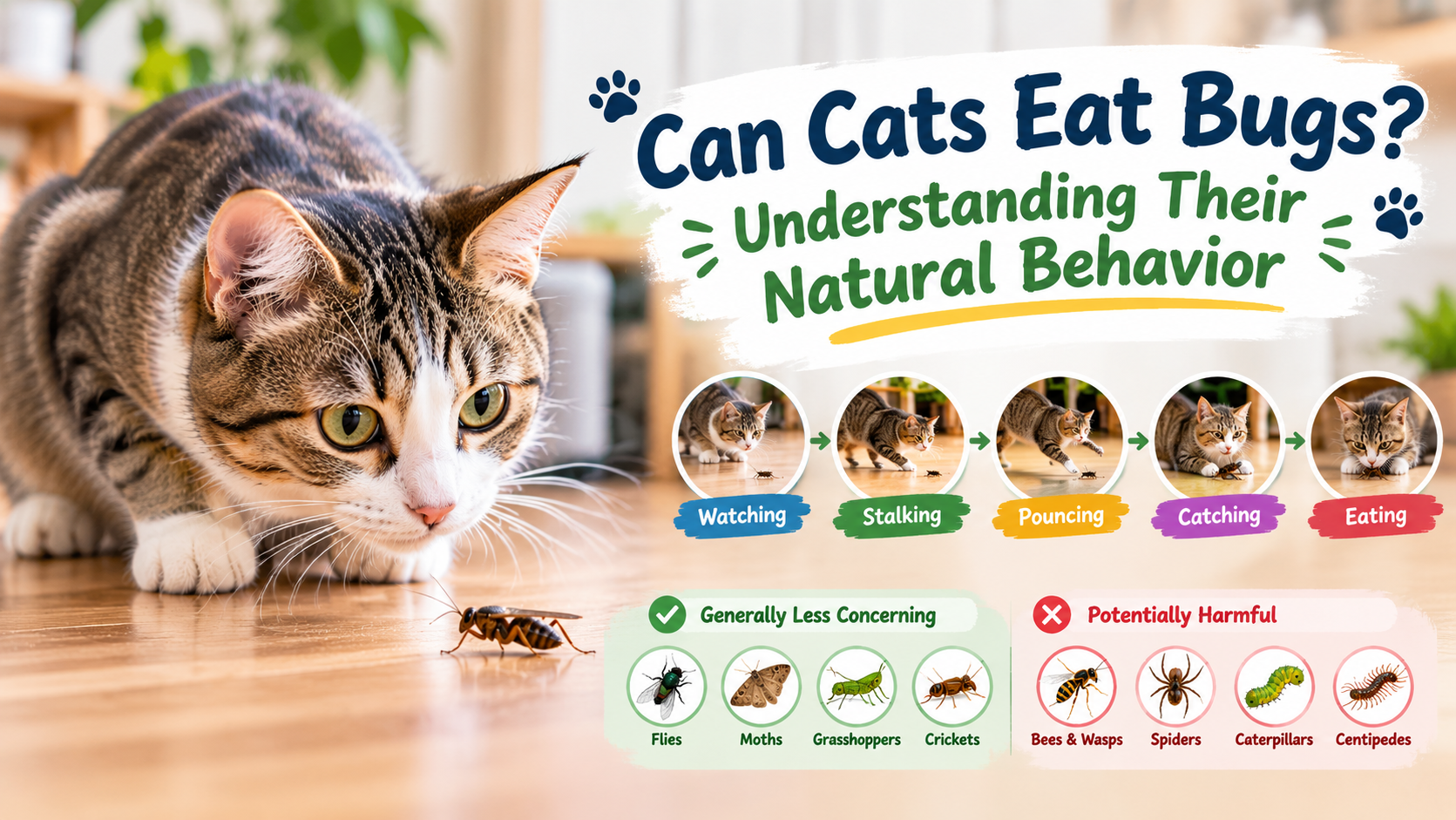
When a cat notices an insect, it may follow a familiar hunting sequence:
- Watching: The cat carefully observes the insect’s movements.
- Stalking: It approaches slowly while keeping its body low.
- Pouncing: It suddenly jumps toward the insect.
- Catching: It uses its paws, claws, or mouth to capture the target.
- Eating: Some cats swallow the insect, while others release it or continue playing.
This sequence reflects the cat’s natural predatory behavior. Small insects provide an easy target for practicing these skills, particularly for kittens and energetic indoor cats.
Does Eating Bugs Mean Your Cat Is Hungry?
Not necessarily. A cat may hunt insects shortly after finishing a meal. The behavior is often driven by instinct, curiosity, and stimulation rather than a need for additional food.
However, if your cat suddenly develops an unusually strong appetite, loses weight despite eating normally, or begins eating non-food objects, consult your veterinarian. These changes may indicate an underlying health or behavioral issue.
Why Do Indoor Cats Hunt Insects?
Indoor cats retain their hunting instincts even when they never go outside. Flies may enter through open windows, moths may gather near lights, and small insects may appear around houseplants or doors.
Cats may also find insect hunting mentally stimulating. Watching, chasing, and catching moving objects provides activity that can help prevent boredom.
You can support this natural behavior safely by offering feather wands, toy mice, interactive toys, and food puzzles. These activities allow your cat to practice hunting movements without needing to catch potentially dangerous insects.
Key takeaway: Chasing bugs is usually a normal part of feline behavior. However, whether a cat should eat a particular insect depends on the species and its possible exposure to harmful substances.
Can Cats Eat Bugs? Discover Which Insects Are Usually Safe
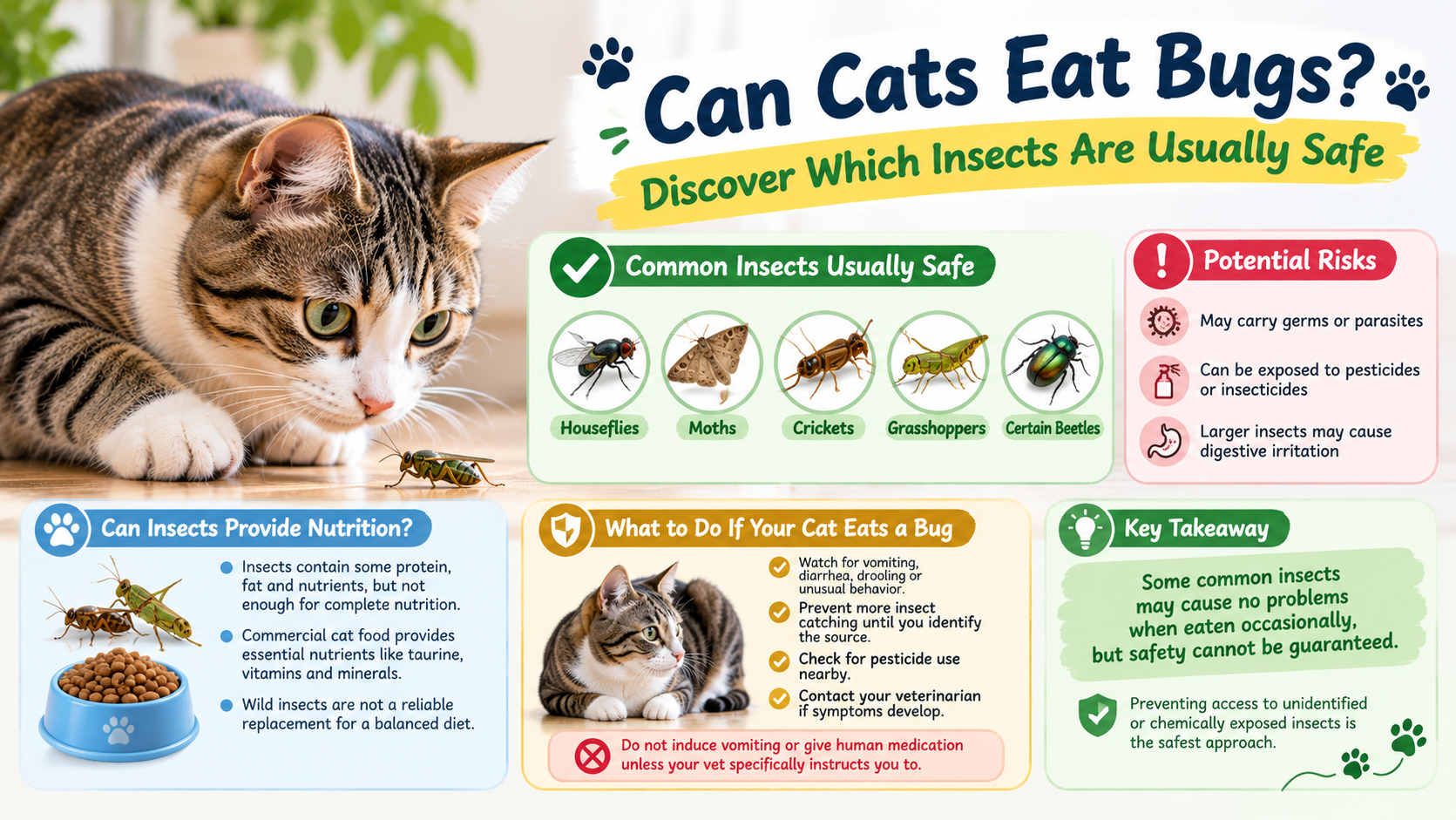
Another important question is which insects cats can eat without experiencing health problems. Some common insects are generally less concerning when a cat catches and eats one accidentally. Nevertheless, no insect should automatically be considered completely safe because its identity and exposure history may be unknown.
The risks depend on the insect species, the amount swallowed, and whether it carries parasites or has contacted insecticides.
Common Insects Cats May Catch
The following insects are frequently encountered by household cats.
- Houseflies
A cat may catch and swallow a common housefly while playing near a window or door. A single fly is unlikely to cause serious problems in most healthy cats, but flies can carry germs from contaminated surfaces. Repeatedly eating insects should not be encouraged.
- Moths
Moths often attract cats because they flutter unpredictably. Eating an ordinary moth may cause no noticeable symptoms, although the risk can vary depending on the species and any chemical exposure.
- Crickets
Crickets are another common target because they jump suddenly and trigger a cat’s chase response. Swallowing one may cause no problems, but a cat could experience digestive irritation. Wild insects may also carry parasites or have been exposed to pesticides.
- Small Grasshoppers
Grasshoppers can attract cats that have access to gardens or outdoor spaces. An occasional grasshopper may pass through the digestive tract without complications, but large insects or insects contaminated with chemicals can pose additional risks.
- Certain Beetles
Some beetles may be harmless, while others can release irritating or toxic substances. Because beetles vary considerably by species, avoid assuming that an unfamiliar beetle is safe for your cat to eat.
Can Insects Provide Nutrition for Cats?
Insects contain varying amounts of protein, fat, and other nutrients. However, a few wild insects cannot provide the balanced nutrition cats need.
Commercial cat foods are formulated to provide essential nutrients, including adequate protein, taurine, vitamins, minerals, and appropriate amounts of fat. Insects caught around the home are not a reliable replacement for a complete and balanced feline diet.
Although specially processed insect protein is used in some pet foods, that does not mean wild insects are equivalent to carefully formulated ingredients.
What Should You Do If Your Cat Eats a Bug?
If your cat swallows an ordinary insect and appears completely normal, you can usually monitor it closely rather than immediately assuming something is wrong.
Follow these precautions:
- Observe your cat for vomiting, diarrhea, excessive drooling, or unusual behavior.
- Prevent your cat from catching more insects until you can identify the potential source.
- Consider whether insect sprays, bait stations, or garden chemicals have been used nearby.
- Contact your veterinarian if symptoms develop or you suspect the insect was toxic or contaminated.
Do not induce vomiting or give human medication unless a veterinarian specifically instructs you to do so.
Key takeaway: Some common insects may cause no problems when eaten occasionally, but safety cannot be guaranteed. Preventing access to unidentified or chemically exposed insects is the safest approach.
Can Cats Eat Bugs? Learn About Dangerous Insects
While some insects may pose relatively little risk, others can seriously harm cats. Knowing which insects deserve extra caution is an important part of responsible pet care.
The greatest concerns include painful stings, toxic secretions, allergic reactions, and exposure to insecticides. A cat may also experience digestive irritation after swallowing an unfamiliar insect.
Bees and Wasps
Bees and wasps can sting a cat that tries to catch them with its mouth or paws. A sting around the face, tongue, or throat can be particularly concerning because swelling may interfere with breathing or swallowing.
Possible warning signs include:
- Sudden pain or pawing at the mouth.
- Swelling around the face or muzzle.
- Excessive drooling.
- Vomiting or weakness.
- Difficulty breathing or collapse.
Seek emergency veterinary care if your cat develops breathing difficulty, significant facial or throat swelling, collapse, or signs of a severe allergic reaction. Do not wait to see whether these symptoms disappear.
Spiders
Spider-related risks depend on the species and whether the spider bites the cat. Many spider encounters do not result in serious injury, but some species can cause medically significant reactions.
If you suspect your cat has been bitten by a potentially dangerous spider, contact a veterinarian promptly. Watch for increasing pain, swelling, unusual weakness, muscle tremors, or other abnormal symptoms.
Do not attempt to identify a dangerous spider by encouraging your cat to approach it. If it is safe to do so, a photograph taken from a distance may help with identification.
Caterpillars and Other Irritating Insects
Some caterpillars have irritating hairs or defensive chemicals that can affect the mouth, skin, or eyes. Other insects produce substances that can be harmful if swallowed.
Because these risks vary by species and location, keep your cat away from unfamiliar caterpillars and brightly colored insects rather than allowing it to investigate them with its mouth.
If your cat chews an unfamiliar insect and develops mouth irritation, swelling, excessive drooling, or vomiting, seek veterinary advice.
The Hidden Danger of Insecticides
One of the most important risks associated with insects for cats is chemical contamination. A bug that appears harmless may have crawled through insecticide residue or contacted a recently treated surface.
Cats can also be exposed directly to sprays, powders, bait products, and other pest-control chemicals. Some insecticides are highly toxic to cats, and the severity depends on the specific product and amount of exposure.
To reduce this risk:
- Follow the product label and veterinary guidance when using pest-control products.
- Keep cats away from treated areas for the period specified on the label.
- Store insecticides and bait products securely.
- Avoid spraying chemicals near food bowls, water bowls, bedding, and toys.
- Contact a veterinarian immediately if you suspect your cat has ingested a toxic product or contaminated insect.
If exposure occurs, keep the product packaging available so the veterinarian can identify the active ingredients. Do not induce vomiting or use home remedies unless instructed by a veterinary professional.
When Should You Contact a Veterinarian?
Some concerning symptoms can develop quickly. Seek emergency care for difficulty breathing, collapse, seizures, severe swelling, or rapidly worsening symptoms.
Contact your veterinarian or an animal poison-control service promptly if you suspect exposure to a toxic insect or pesticide, even if your cat initially appears normal. Do not wait for symptoms to become severe.
Key takeaway: Not all insects pose the same risk. Stinging insects, potentially toxic species, and bugs exposed to pesticides deserve particular caution.
End of Part 1
Part 2 will cover:
- 4. Can Cats Eat Bugs? How Insects Affect Cat Eating Habits
- 5. Can Cats Eat Bugs? Understanding Your Cat’s Hunting Instinct
- Conclusion
- Frequently Asked Questions (FAQs)
Can Cats Eat Bugs? How Insects Affect Cat Eating Habits
Understanding your cat’s eating habits can help you determine whether catching insects is harmless curiosity or a behavior that needs attention. Cats may chase and swallow bugs even when they receive regular meals, because hunting is a natural part of feline behavior.
Although some insects contain protein and fat, they should not replace a complete and balanced cat food diet. The nutritional value of wild insects is unpredictable, and their potential risks depend on the species and environment.
Do Bugs Provide Nutritional Benefits for Cats?
Some insects contain nutrients that cats can digest, including protein and fat. However, the nutritional contribution of a random insect is generally small and inconsistent.
Your cat needs a balanced diet that supplies essential nutrients such as taurine, appropriate levels of protein, fatty acids, vitamins, and minerals. A few flies or crickets cannot reliably meet these requirements.
Commercial foods formulated with insect protein are different from wild-caught bugs. These products use selected ingredients and are formulated to provide appropriate nutrition when labeled as complete and balanced for the relevant life stage.
If your cat regularly hunts insects, continue offering its usual nutritionally complete food and fresh water. Never deliberately replace meals with wild insects.
Can Eating Too Many Bugs Upset a Cat’s Stomach?
Yes, eating insects can sometimes cause digestive discomfort. The likelihood depends on the insect, the number swallowed, and your cat’s individual sensitivity.
Possible symptoms include:
- Vomiting or retching.
- Diarrhea or loose stools.
- Reduced appetite.
- Excessive drooling.
- Abdominal discomfort or unusual behavior.
Some cats may swallow an occasional insect without showing any symptoms. Others may react differently, particularly if they eat several insects or swallow one with irritating body parts or defensive chemicals.
If your cat vomits repeatedly, becomes unusually weak, refuses food, or develops persistent digestive symptoms, contact your veterinarian. Seek urgent care if symptoms are severe or your cat may have been exposed to a toxic substance.
How Do Indoor and Outdoor Cats Differ?
Indoor and outdoor cats can both hunt insects, but they may encounter different risks.
Indoor cats: These cats may chase flies, moths, spiders, and insects that enter through windows or doors. Their exposure can increase if household insecticides or pest-control products are used.
Outdoor cats: These cats may encounter a wider variety of insects, including stinging species and unfamiliar beetles or caterpillars. They may also come into contact with pesticides used on lawns and gardens.
Kittens: Young cats often explore objects with their mouths and may be especially enthusiastic about moving insects. Supervision and safe play are particularly important during this stage.
Regardless of where your cat lives, access to fresh water, balanced food, regular veterinary care, and safe enrichment activities remains essential.
How to Manage Cat Eating Habits Safely
You do not necessarily need to eliminate every opportunity for your cat to observe an insect. Instead, focus on reducing dangerous encounters and providing safer alternatives.
- Install suitable window screens to limit insect entry.
- Keep food preparation areas clean to discourage flies.
- Use pest-control products carefully and follow their safety instructions.
- Provide interactive toys that encourage chasing and pouncing.
- Monitor your cat if it repeatedly catches and swallows insects.
Key takeaway: Occasional insect eating may not cause problems, but wild bugs are not a dependable food source. Healthy cat eating habits should center on a balanced diet, clean water, and safe opportunities for play.
Can Cats Eat Bugs? Understanding Your Cat’s Hunting Instinct
A cat’s hunting instinct helps explain why insects are so fascinating. Even cats that have never needed to hunt for food may instinctively track, chase, and catch small moving creatures.
This behavior is a normal part of feline development. However, allowing cats to satisfy their hunting instincts safely can reduce their exposure to potentially dangerous insects.
Why Is Your Cat Obsessed With Chasing Bugs?
Cats use their senses to notice small movements, sounds, and changes in their surroundings. A fluttering moth or crawling beetle can activate their attention almost immediately.
Several factors may encourage this behavior:
- Movement: Fast or unpredictable movements attract a cat’s attention.
- Curiosity: New objects and creatures encourage investigation.
- Mental stimulation: Tracking and chasing provide an engaging activity.
- Predatory behavior: Cats instinctively practice hunting movements even when they are not hungry.
These behaviors are not automatically signs of a nutritional deficiency or a behavioral problem. In many cases, your cat is simply responding to its natural instincts.
How to Satisfy Your Cat’s Hunting Instinct Safely
If your cat frequently hunts bugs, provide safe activities that recreate the movement and challenge of hunting.
- Use Interactive Wand Toys
Move a feather or toy along the floor to imitate the movement of prey. Allow your cat to stalk, chase, and occasionally catch the toy.
- Introduce Toy Mice and Balls
Small toys can encourage pouncing and batting. Choose products that are appropriately sized and do not contain loose pieces your cat could swallow.
- Try Food Puzzles
Food puzzles encourage cats to work for portions of their regular food. Start with an easy puzzle and increase the difficulty as your cat becomes comfortable.
- Schedule Short Play Sessions
Several short sessions throughout the day may help satisfy an energetic cat’s need for activity. Adjust the routine to your cat’s age, health, and energy level.
- Reward Appropriate Play
Offer praise, attention, or a small portion of your cat’s usual food after play. Avoid punishing your cat for chasing insects, as punishment does not teach a safe alternative effectively.
How to Reduce Dangerous Insect Encounters at Home
You can make your home safer without preventing your cat from exploring its environment.
- Repair damaged window screens and seal gaps where insects enter.
- Keep household waste covered and clean up food spills promptly.
- Remove standing water and other conditions that attract insects.
- Inspect indoor plants for unfamiliar insects before allowing your cat to investigate them.
- Store pesticides and insect baits in places your cat cannot access.
- Use pest-control treatments only according to their labels and any relevant veterinary guidance.
If your home has a persistent insect problem, consider professional pest control that takes pet safety into account.
What to Do If Your Cat Eats an Unknown Bug
If you notice your cat swallowing an unfamiliar insect, try to identify it without handling it directly.
- Observe your cat for changes in behavior or physical symptoms.
- If possible, take a photograph of the insect from a safe distance.
- Consider whether pesticides, insect baits, or chemical treatments were used nearby.
- Contact your veterinarian if the insect may be dangerous or your cat develops symptoms.
Do not wait for symptoms if you suspect pesticide exposure, a dangerous sting, or contact with a potentially toxic species. Breathing difficulties, collapse, seizures, and severe swelling require emergency veterinary care.
Key takeaway: Your cat does not need to eat bugs to satisfy its hunting instinct. Interactive toys, food puzzles, and a stimulating home environment can provide safer ways to practice natural predatory behaviors.
Conclusion: Can Cats Eat Bugs Safely?
So, can cats eat bugs without getting sick? In many cases, an occasional common insect may pass through a cat’s digestive system without causing noticeable problems. However, the risks vary considerably depending on the insect species, chemical exposure, and your cat’s individual response.
The most important points to remember are:
- Some common insects, such as ordinary flies and moths, may cause no problems when eaten occasionally.
- Bees, wasps, potentially toxic insects, and unfamiliar species can pose greater risks.
- Insects exposed to pesticides may be dangerous even if the insect itself is not toxic.
- Wild insects should never replace a nutritionally complete cat food diet.
- Interactive toys and safe enrichment can satisfy your cat’s hunting instinct without encouraging it to eat bugs.
By understanding your cat’s natural behavior, monitoring its insect encounters, and keeping hazardous chemicals out of reach, you can help your feline companion explore its environment more safely. If you suspect poisoning or notice concerning symptoms after your cat eats a bug, contact a veterinarian promptly.
Frequently Asked Questions (FAQs)
1. Can cats eat bugs without getting sick?
Some cats can eat an occasional common insect without developing symptoms. However, no wild insect is guaranteed to be safe. The species, possible pesticide exposure, and amount swallowed all influence the risk.
2. Is it normal for cats to eat insects?
Yes. Chasing and sometimes eating insects is a common expression of a cat’s natural hunting instinct. It does not necessarily mean the cat is hungry. Nevertheless, owners should discourage encounters with dangerous or chemically contaminated insects.
3. What bugs are poisonous to cats?
The risks depend on the species. Certain insects have irritating or toxic defensive chemicals, while bees and wasps can cause dangerous stings and allergic reactions. Insecticides and poisoned insects are additional hazards. Contact a veterinarian if you suspect your cat has encountered a toxic insect.
4. Can indoor cats get sick from eating flies?
Yes, although eating one ordinary housefly does not necessarily cause illness. Flies may carry germs, and insects can also be exposed to chemicals. Monitor your cat for symptoms and contact your veterinarian if it becomes unwell or chemical exposure is possible.
5. Should I stop my cat from hunting bugs?
It is sensible to prevent your cat from eating potentially dangerous insects, especially stinging species and bugs exposed to pesticides. You can redirect its attention toward interactive toys, toy mice, and food puzzles instead of punishing normal hunting behavior.
SEO tip: Use the focus keyword “can cats eat bugs” naturally in the article title, introduction, relevant headings, and meta description. Include the LSI keywords natural behavior, hunting instinct, insects for cats, and cat eating habits where they fit the content. Avoid adding the focus keyword to every paragraph just to increase keyword density.