

 By
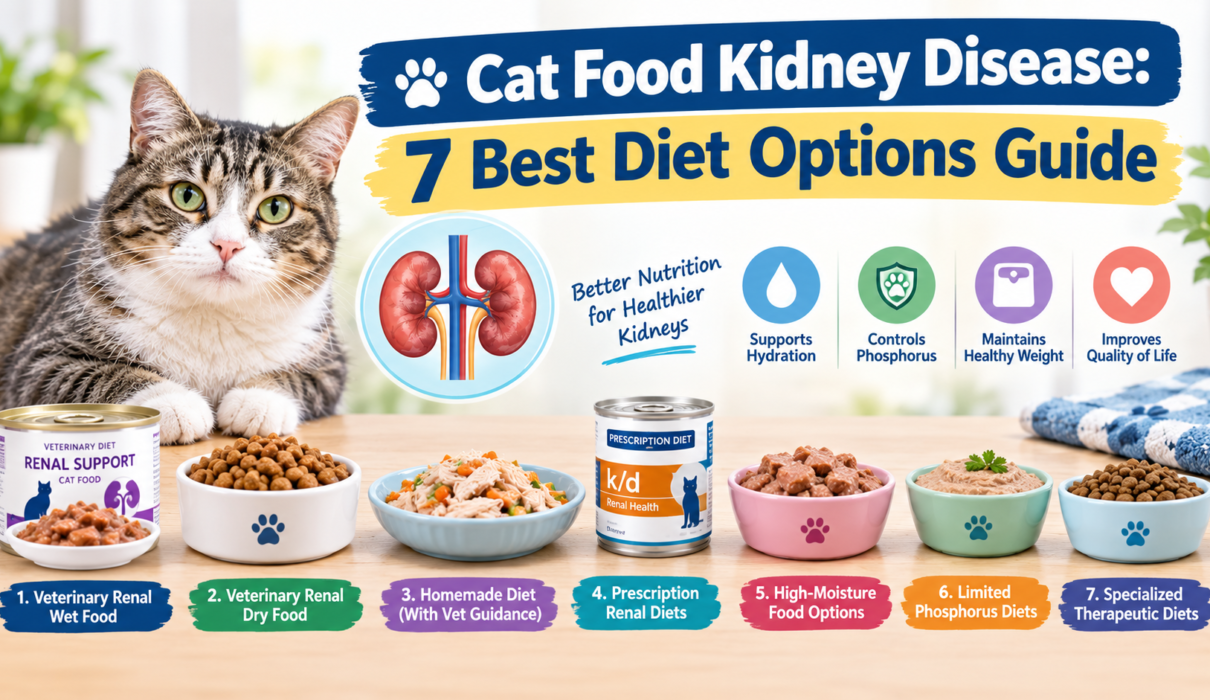
Cat Food Kidney Disease: 7 Best Diet Options Guide
Introduction: Understanding Cat Food Kidney Disease Needs
Choosing the right cat food kidney disease diet is an important part of caring for a cat diagnosed with chronic kidney disease (CKD). The kidneys help remove waste products from the blood, maintain fluid balance, and regulate essential minerals. When kidney function declines, these processes become less efficient, making proper nutrition especially important.
Cats with kidney disease may experience reduced appetite, nausea, vomiting, increased thirst, and gradual weight loss. Some cats also lose muscle mass because they do not consume enough calories or cannot maintain their normal nutritional balance or cat food kidney disease.
A suitable diet can help manage certain complications of kidney disease and support your cat’s overall well-being. Veterinary kidney diets are commonly formulated with controlled phosphorus levels, adjusted protein content, adequate calories, and other nutrients designed for cats with impaired kidney function.
Some owners consider canned cat food for kidney disease because wet food contains more moisture than dry food. Others look for low protein cat food for kidney disease because protein levels may need adjustment in cats with chronic kidney problems. However, not every low-protein food is suitable, and the best choice depends on your cat’s individual condition.
In this guide, we will explore seven diet options, explain what to look for when choosing cat food, and discuss practical ways to encourage cats with kidney disease to eat well.
Why Choosing the Right Cat Food Kidney Disease Diet Matters
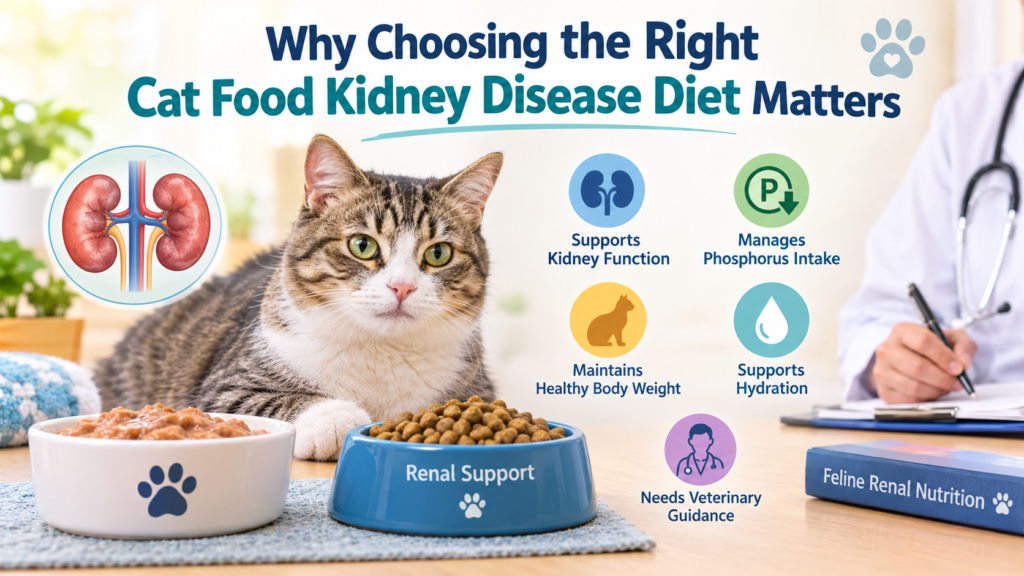
A carefully selected cat food kidney disease diet can help address several nutritional challenges associated with declining kidney function. Although food cannot cure chronic kidney disease, appropriate nutrition can help manage the condition and support quality of life.
Supporting Kidney Function
Healthy kidneys filter waste products from the bloodstream and help regulate water and electrolyte balance. When kidney function decreases, waste products may accumulate, and the body may struggle to maintain its normal internal balance.
Veterinary renal diets are designed to address some of these problems. They commonly contain controlled phosphorus levels and carefully formulated amounts of protein, calories, and other nutrients.
Following your veterinarian’s dietary recommendations can help you choose food that suits your cat’s stage of kidney disease and overall health.
Managing Phosphorus Intake
Phosphorus management is an important consideration for cats with chronic kidney disease. As kidney function declines, the body may have difficulty maintaining normal phosphorus levels.
Excess phosphorus can contribute to complications associated with kidney disease. Many veterinary renal diets therefore contain reduced phosphorus levels compared with standard maintenance foods.
When comparing cat foods, do not assume that a product marketed as natural, premium, or low-protein is automatically suitable for kidney disease. Check whether the food is specifically formulated for renal support and discuss its nutritional profile with your veterinarian or cat food kidney disease.
Maintaining Healthy Body Weight
Cats with kidney disease may eat less because of nausea, changes in taste, dehydration, or other symptoms. If reduced food intake continues, they can lose body weight and muscle mass.
Providing enough calories is essential. A cat that refuses a recommended renal diet may need help finding an acceptable alternative rather than being allowed to go without adequate food.
Your veterinarian can assess your cat’s body condition, appetite, and weight to determine whether dietary changes or additional treatment are needed.
Supporting Hydration
Many cats with chronic kidney disease produce larger amounts of urine and may need more opportunities to drink water.
Wet food can contribute to daily water intake because it contains substantially more moisture than dry kibble. Fresh drinking water should always be available, and some cats may drink more readily from a water fountain or several bowls placed around the home.
However, food alone may not correct dehydration. A veterinarian should determine whether additional hydration support is necessary.
Why Veterinary Guidance Is Important
Kidney disease varies from cat to cat. Some cats have early disease with few symptoms, while others experience more advanced problems involving appetite, phosphorus levels, blood pressure, or muscle loss.
A veterinarian can use examination findings and appropriate laboratory tests to help select a suitable diet. This is particularly important when considering a homemade diet, supplements, or a major reduction in protein.
Cat Food Kidney Disease: 7 Best Diet Options for Cats
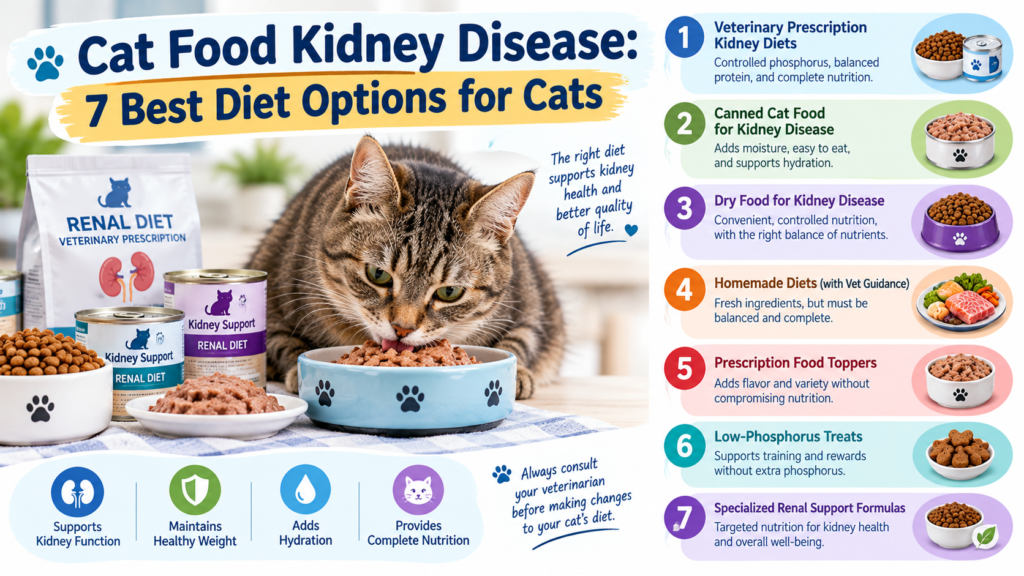
There is no single food that works best for every cat with kidney disease. The following seven options explain the main dietary approaches owners can discuss with their veterinarians.
Veterinary Prescription Kidney Diets
Veterinary prescription renal diets are often a preferred nutritional option for cats with chronic kidney disease. They are formulated to address important nutritional needs associated with reduced kidney function.
These diets commonly provide controlled phosphorus levels, adjusted protein content, adequate energy, and other nutrients intended to support cats with kidney disease or canned cat food for kidney disease.
Potential benefits include:
- Controlled phosphorus intake.
- Carefully adjusted protein levels.
- Nutritional support for maintaining body weight.
- Formulations designed specifically for cats with kidney disease.
- Wet and dry varieties from some manufacturers.
Prescription renal diets may be available in different flavors and textures. If your cat refuses one variety, ask your veterinarian whether another formulation is appropriate.
Introduce a new food gradually when possible. Mixing small amounts of the new food with the familiar diet may help some cats adjust. However, if your cat is already eating very little, contact your veterinarian instead of allowing prolonged food refusal while trying to complete a transition.
Canned Cat Food for Kidney Disease
Canned cat food for kidney disease can be a useful option, especially for cats that need additional moisture in their diets.
Wet cat food generally contains much more water than dry food. Because cats with kidney disease may lose more water through urination, moisture-rich food can contribute to their overall fluid intake.
Nevertheless, ordinary canned cat food is not necessarily a renal diet. Its phosphorus content, protein profile, calorie density, and nutritional balance still matter or canned cat food for kidney disease.
Benefits of suitable canned renal food:
- Provides additional dietary moisture.
- May be easier for some cats to chew.
- Comes in different textures, including pâté and gravy-style varieties.
- May appeal to cats that prefer strong aromas and soft textures.
- Can help increase total water intake when eaten regularly.
How to Choose Canned Cat Food for Kidney Disease
Look for a canned food specifically formulated for cats with kidney disease or one your veterinarian has recommended. Compare the nutritional information where available, paying particular attention to phosphorus, protein, calories, and whether the product is complete and balanced.
You can make wet food more appealing by serving a small fresh portion at room temperature or gently warming it. Avoid overheating the food, and discard uneaten portions according to the manufacturer’s storage instructions.
If your cat has difficulty chewing, drops food from the mouth, or appears uncomfortable while eating, arrange a veterinary examination because dental disease may also be contributing to reduced appetite.
Low Protein Cat Food for Kidney Disease
Low protein cat food for kidney disease is often discussed because protein metabolism produces waste products that the kidneys must help eliminate. Some veterinary renal diets therefore contain adjusted protein levels.
However, reducing protein too much can be harmful. Cats require adequate protein to maintain muscles and other body tissues. Cats with chronic kidney disease are already at risk of weight and muscle loss, particularly when their appetite is poor or cat food kidney disease.
For this reason, the goal is not simply to choose the food with the lowest protein content. Instead, the diet should provide appropriate amounts of high-quality protein while addressing phosphorus intake and other nutritional requirements.
What to Consider Before Choosing Low-Protein Food
Before changing your cat’s diet, consider these points:
- Protein quality: Cats need essential amino acids from suitable protein sources.
- Muscle maintenance: Excessive restriction may contribute to muscle loss.
- Calorie intake: Your cat needs enough energy to maintain a healthy body condition.
- Kidney disease stage: Nutritional requirements and treatment plans may differ.
- Veterinary monitoring: Weight, appetite, laboratory results, and muscle condition help guide dietary decisions.
Ordinary low-protein food is not automatically suitable for kidney disease. A veterinarian can help determine whether a renal diet with adjusted protein levels is appropriate for your cat.
Low-Phosphorus Cat Food Options
Low-phosphorus food is another important consideration when selecting a cat food kidney disease diet. Because reduced kidney function can interfere with phosphorus regulation, many veterinary renal diets are formulated to limit phosphorus intake.
Choosing an appropriate phosphorus level may help manage complications associated with chronic kidney disease. Your veterinarian can use blood test results and other clinical findings to determine whether additional phosphorus control is needed.
What to Check on the Food Label
When comparing products, consider the following:
- Whether the food is specifically designed for renal support.
- The stated phosphorus content, if available.
- The protein and calorie content.
- Whether the product is complete and balanced.
- Whether the food suits your cat’s appetite and medical needs.
Phosphorus values can be difficult to compare when one label reports nutrients on an as-fed basis and another uses dry matter. Ask your veterinarian to help interpret the information when necessary.
Avoid adding mineral supplements or phosphorus binders without veterinary advice. The appropriate amount depends on your cat’s diet, test results, and treatment plan.
Moisture-Rich Renal Diets
Moisture-rich renal diets combine kidney-support nutrition with the additional water provided by wet food. They may be particularly helpful for cats that prefer soft food or do not drink much water independently.
These diets are available in different textures and flavors, depending on the manufacturer. Some cats prefer smooth pâté, while others eat shredded or gravy-style food more readily or cat food kidney disease.
Tips for Feeding Moisture-Rich Renal Diets
- Offer fresh food in clean bowls.
- Try different approved textures if your cat refuses one variety.
- Provide several clean water bowls in quiet locations.
- Consider a pet water fountain if your cat enjoys moving water.
- Monitor appetite and body weight regularly.
- Ask your veterinarian about persistent signs of dehydration.
Adding a little water to wet food may be acceptable for some cats, provided it does not make the food less appealing. Avoid forcing water into your cat’s mouth because this can cause distress and may lead to aspiration.
Remember that moisture-rich food supports water intake but does not replace veterinary treatment when dehydration or other complications develop.
Kidney-Friendly Food for Picky Eaters
Cats with kidney disease may become selective about food, especially when nausea, weakness, or other symptoms affect their appetite. A cat that previously enjoyed a particular meal may suddenly refuse it.
The priority is to address the reason for reduced appetite and ensure that your cat receives adequate nutrition. Simply waiting for a hungry cat to accept an unfamiliar food may be unsafe when kidney disease is involved.
Ways to Encourage Eating
- Try different textures: Your cat may prefer pâté, minced food, or another texture available in an appropriate renal formula.
- Serve small, frequent meals: Smaller portions may be more manageable than one large meal.
- Warm the food slightly: Gentle warming can enhance its aroma and may encourage some cats to eat.
- Use a quiet feeding area: Reduce noise, disturbances, and competition from other pets.
- Keep food fresh: Offer fresh portions and clean bowls regularly.
- Ask about nausea treatment: A veterinarian can assess whether nausea, pain, constipation, or another medical problem is affecting appetite.
Do not force-feed your cat or make prolonged food refusal part of a dietary transition without veterinary guidance. Cats that eat very little can develop serious nutritional complications, so prompt advice is important when appetite declines.
Veterinarian-Approved Alternatives When Renal Food Is Refused
Some cats refuse prescription kidney diets despite repeated attempts to introduce them. This can be frustrating for owners, particularly when they want to provide the best possible care.
If your cat will not eat the recommended food, contact your veterinarian to discuss alternatives. The veterinarian may suggest another renal formula, a different texture, or a carefully selected complete and balanced diet that your cat is willing to eat.
The best practical plan must consider both nutritional suitability and how much your cat actually eats. A theoretically ideal diet cannot provide its intended benefits if your cat consistently refuses it.
What to Do If Your Cat Rejects Kidney Food
- Offer another veterinarian-approved renal formula if available.
- Try an alternative texture or serving temperature.
- Ask whether a temporary alternative diet is appropriate.
- Discuss treatment for nausea, pain, or other appetite-related problems.
- Monitor food intake, weight, and muscle condition.
- Follow up with your veterinarian about longer-term nutrition.
Do not assume that homemade chicken, meat alone, or ordinary low-protein food will meet all your cat’s needs. Cats require a carefully balanced combination of essential nutrients, and kidney disease can make nutritional planning more complicated.
If your cat stops eating or eats substantially less than usual, contact your veterinarian promptly rather than waiting several days for a preferred food to be accepted.
How to Choose the Best Cat Food Kidney Disease Formula
Selecting the right cat food kidney disease formula involves more than comparing brands or choosing a food with a particular ingredient. A suitable diet must match your cat’s nutritional needs, medical condition, and eating preferences.
Check Phosphorus Content
Phosphorus management is a major consideration for many cats with chronic kidney disease. Ask your veterinarian which phosphorus level is appropriate and whether the food you are considering meets that recommendation.
Evaluate Protein and Calories
Choose a diet that provides appropriate protein without unnecessarily compromising muscle maintenance. Adequate calorie intake is equally important, especially for cats that have lost weight.
Consider Moisture Content
Wet food can help increase water intake, but dry food may still have a role when a cat strongly prefers it. The overall nutritional composition and the cat’s willingness to eat should guide the decision.
Look for Complete and Balanced Nutrition
A suitable long-term diet must provide essential vitamins, minerals, amino acids, and other nutrients. Homemade recipes and foods designed only as treats may not provide everything a cat needs.
Match the Diet to Your Cat’s Condition
Your veterinarian may consider kidney disease stage, blood test results, body weight, appetite, blood pressure, and other medical conditions when recommending a diet.
Reassess the feeding plan if your cat develops reduced appetite, repeated vomiting, weight loss, or other new symptoms.
Canned Cat Food for Kidney Disease: Wet Food vs. Dry Food
Both wet and dry food can be relevant when planning nutrition for a cat with kidney disease. The most appropriate choice depends on nutritional content, moisture intake, eating preferences, and veterinary recommendations.
Wet Cat Food
Wet food typically contains more moisture than dry kibble. It may be a useful choice for cats that enjoy soft textures or need more water through their diet or cat food kidney disease.
However, not all canned foods have the controlled phosphorus levels and nutrient balance of a veterinary renal formula.
Dry Cat Food
Dry food may be more convenient to store and serve. Some cats also prefer its texture and may eat it more consistently than wet food.
Its lower moisture content is an important consideration for cats that lose substantial amounts of water through urination. Fresh water should always be available.
Can You Combine Wet and Dry Food?
In some cases, a veterinarian may recommend combining wet and dry renal foods or using another feeding approach to improve acceptance and calorie intake.
Make sure the combined diet remains nutritionally appropriate. Mixing different foods can change the overall nutrient balance, so ask your veterinarian before combining renal food with ordinary cat food.
Which Option Is Better?
Neither wet nor dry food is automatically best for every cat with kidney disease. A nutritionally appropriate renal diet that your cat eats reliably is generally a more useful choice than a theoretically suitable food that your cat refuses.
Discuss the options with your veterinarian, and monitor your cat’s appetite, hydration, body weight, and overall condition.
Low Protein Cat Food for Kidney Disease: Is It Always Better?
When choosing low protein cat food for kidney disease, many cat owners assume that reducing protein as much as possible will protect their pet’s kidneys. However, feline nutrition is more complicated than simply choosing the food with the lowest protein percentage.
Cats are obligate carnivores, meaning they need specific nutrients commonly obtained from animal-based foods. Protein supplies essential amino acids that help maintain muscles, repair tissues, and support normal body functions.
Cats with chronic kidney disease (CKD) may experience reduced appetite and gradual muscle loss. Excessive protein restriction can make maintaining muscle mass more difficult, especially when a cat is already losing weight.
Why Protein Levels Matter
Protein metabolism produces waste products that healthy kidneys help eliminate. Veterinary renal diets often contain adjusted protein levels alongside phosphorus restriction and other nutritional modifications.
The goal is to provide an appropriate amount of high-quality protein without unnecessarily compromising your cat’s nutritional condition.
A veterinarian may recommend a renal diet based on the cat’s kidney disease stage, body condition, laboratory results, and other health concerns.
Signs Your Cat May Not Be Getting Enough Nutrition
Watch for the following changes:
- Gradual weight loss.
- Noticeable reduction in muscle around the back and hips.
- Reduced appetite or frequent refusal of meals.
- Lower energy levels.
- Difficulty maintaining a healthy body condition.
These signs can have several causes, including kidney disease itself, nausea, dental problems, or other medical conditions. They do not automatically mean that protein intake is too low.
Contact your veterinarian if your cat develops these symptoms.
How to Choose the Right Low-Protein Diet
When comparing low protein cat food for kidney disease, consider more than the protein percentage printed on the label.
Look for a food that:
- Provides adequate calories.
- Contains an appropriate amount of high-quality protein.
- Offers suitable phosphorus control.
- Is complete and balanced for its intended use.
- Is acceptable to your cat and can be eaten consistently.
Remember that ordinary low-protein food is not necessarily a kidney-support diet. A veterinarian should help you select the most appropriate food for your cat’s individual nutritional requirements.
Foods to Limit or Avoid for Cats With Kidney Disease
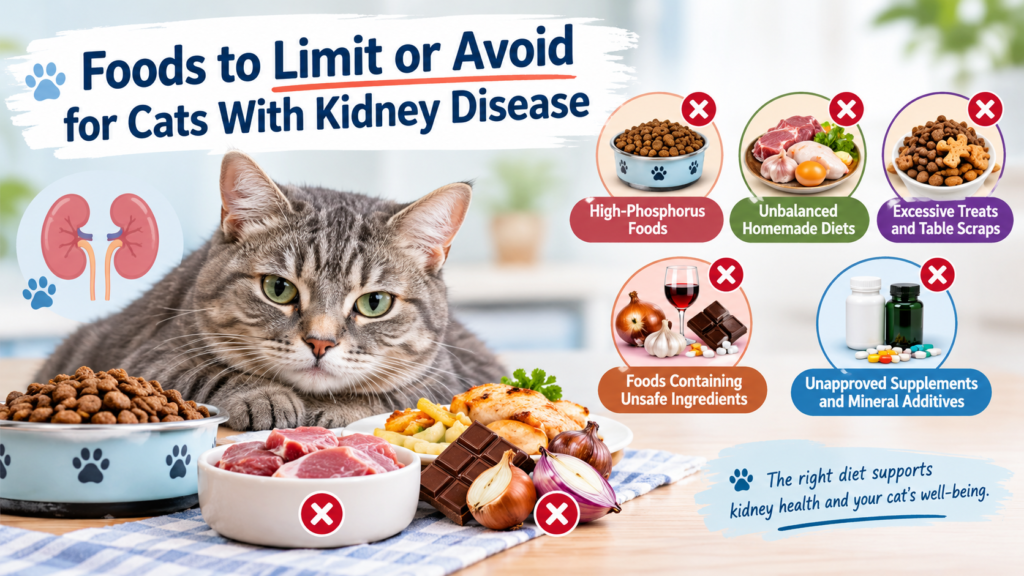
Choosing the right cat food kidney disease diet also means understanding which foods may be inappropriate. Not every food that is safe for a healthy cat is suitable as a major part of a kidney-support feeding plan.
The aim is to maintain balanced nutrition, manage phosphorus intake when necessary, and prevent additional problems caused by unsuitable foods.
High-Phosphorus Foods
Cats with chronic kidney disease may need dietary phosphorus restriction. Some ordinary cat foods contain more phosphorus than veterinary renal diets.
The amount of phosphorus in a food cannot always be judged by its appearance or ingredient list. Ask your veterinarian to help compare products and determine whether a particular food meets your cat’s needs.
Do not eliminate important nutrients without professional guidance.
Unbalanced Homemade Diets
Homemade meals may seem appealing because you can control the ingredients. However, feeding plain meat, chicken, or fish alone does not provide all the nutrients a cat needs.
An unbalanced homemade diet may lack essential vitamins, minerals, fatty acids, or amino acids. Kidney disease makes careful nutrient management particularly important.
If you prefer preparing food at home, work with a veterinarian or board-certified veterinary nutritionist to develop an appropriate recipe.
Excessive Treats and Table Scraps
Treats can contribute extra calories and nutrients that may interfere with a carefully planned renal diet.
Avoid making treats or human foods a large proportion of your cat’s daily intake. Ask your veterinarian which treats are suitable and how much is appropriate or cat food kidney disease.
Treats should not replace complete and balanced meals.
Foods Containing Unsafe Ingredients
Some human foods are toxic to cats, regardless of whether they have kidney disease.
Avoid giving your cat foods containing ingredients such as onions, garlic, chocolate, alcohol, or products containing xylitol. Do not assume that a food is safe simply because it is natural or homemade.
If your cat consumes a potentially toxic substance, contact a veterinarian promptly.
Unapproved Supplements and Mineral Additives
Supplements marketed for kidney support are not automatically necessary or safe for every cat. Certain minerals and supplements can interfere with the nutritional balance of a renal diet.
Never add phosphorus binders, potassium supplements, or other mineral products without veterinary advice. Their use should depend on your cat’s diet, test results, and treatment plan.
Tips for Feeding a Cat With Kidney Disease
Feeding a cat with kidney disease can be challenging, particularly when appetite changes or the cat refuses a recommended diet. A consistent feeding routine can make meals more manageable or cat food kidney disease.
Introduce New Food Gradually
When your cat is eating normally, gradually introducing a new food may improve acceptance. Start with a small amount of the recommended food and increase it as tolerated or canned cat food for kidney disease.
However, if your cat is already eating very little, do not delay veterinary care while trying to complete a slow transition.
Offer Small, Frequent Meals
Some cats tolerate several small meals better than one or two large meals.
Try dividing the recommended daily food amount into smaller portions throughout the day. Keep track of how much your cat actually consumes rather than simply how much you serve.
Make Food More Appealing
Cats may respond positively to changes in texture, aroma, and serving temperature.
You can try:
- Gently warming wet food to enhance its aroma.
- Offering fresh portions in clean bowls.
- Trying another veterinarian-approved texture.
- Feeding your cat in a quiet, comfortable location.
- Keeping food away from noisy appliances and busy areas.
Avoid overheating food, and check its temperature before serving.
Encourage Water Intake
Cats with kidney disease may lose more water through urine than healthy cats.
To encourage drinking:
- Keep fresh water available throughout the day.
- Place water bowls in several accessible locations.
- Clean bowls regularly.
- Consider a pet fountain if your cat prefers moving water.
- Ask whether moisture-rich food is appropriate.
Wet food can contribute to water intake, but it does not replace veterinary treatment for dehydration.
Monitor Weight and Appetite
Regular monitoring helps you identify problems before they become more serious.
Keep a record of your cat’s food intake, body weight, drinking habits, and any vomiting or changes in behavior. Share these observations with your veterinarian during follow-up appointments or cat food kidney disease.
If your cat stops eating, eats substantially less than usual, or develops repeated vomiting, seek veterinary advice promptly.
Homemade Cat Food for Kidney Disease: Is It Safe?
Homemade food may be an option for some cats with kidney disease, especially when they refuse commercial renal diets. However, preparing a nutritionally complete kidney-support diet requires careful planning or cat food kidney disease.
A recipe that works for a healthy cat may not provide the correct nutrient balance for a cat with impaired kidney function.
Potential Benefits of Homemade Diets
A properly formulated homemade diet may offer advantages for cats with specific food preferences or difficulty accepting commercial products.
Potential benefits include:
- Greater control over ingredients.
- The ability to adjust texture and preparation methods.
- Opportunities to accommodate certain dietary preferences.
- A possible alternative when commercial options are consistently refused.
These benefits depend on using a professionally formulated recipe rather than combining ingredients without nutritional guidance.
Risks of Unbalanced Homemade Food
Feeding only boiled chicken, plain fish, or other individual ingredients can result in nutritional deficiencies over time.
Cats need appropriate quantities of essential amino acids, vitamins, minerals, fatty acids, and other nutrients. The correct balance can be especially important when phosphorus or other minerals must be controlled.
Do not assume that removing bones, avoiding all phosphorus-containing foods, or drastically reducing protein will automatically produce a healthy kidney diet or canned cat food for kidney disease.
How to Prepare a Safer Homemade Diet
If you want to prepare food at home, consult a veterinarian or board-certified veterinary nutritionist.
They can formulate a recipe based on your cat’s weight, medical condition, laboratory findings, appetite, and nutritional requirements.
Follow the recipe carefully, including its specified supplements and preparation instructions. Substituting ingredients without professional advice can change the nutritional balance.
Is Homemade Food Better Than Canned Cat Food for Kidney Disease?
Not necessarily. A properly formulated commercial renal diet is often more convenient and provides a consistent nutritional profile.
Canned cat food for kidney disease may also provide useful dietary moisture when your cat accepts an appropriate renal formula.
Homemade food may be considered when there is a specific reason, but it should be nutritionally complete and professionally formulated. The best choice is the diet that meets your cat’s medical and nutritional needs while providing adequate food intake or canned cat food for kidney disease.
Signs Your Cat’s Kidney Disease Diet May Need Adjustment
Even after choosing an appropriate cat food kidney disease diet, your cat’s nutritional needs may change over time.
Monitoring appetite, body condition, and symptoms helps you and your veterinarian determine whether the feeding plan remains suitable.
Reduced Appetite or Refusing Food
A cat that suddenly refuses meals may be experiencing nausea, dental pain, stress, or another medical problem.
Do not assume that the cat is simply being picky. Contact your veterinarian if your cat stops eating or eats substantially less than usual.
Unintentional Weight Loss
Gradual weight loss may indicate that your cat is not consuming enough calories or that the underlying disease is progressing.
Your veterinarian can assess body condition, muscle mass, and food intake to determine whether the diet or treatment plan needs adjustment or cat food kidney disease.
Vomiting or Persistent Nausea
Vomiting and nausea can interfere with food intake and hydration. Although these signs can occur in cats with kidney disease, they may also indicate another medical problem.
Repeated vomiting, marked weakness, or an inability to keep food or water down warrants prompt veterinary assessment.
Changes in Drinking and Urination
Increased thirst and urination are common signs associated with chronic kidney disease. However, a noticeable change in these habits can also reflect changes in health or hydration.
Record unusual changes and discuss them with your veterinarian.
Reduced Energy or Muscle Loss
A cat that becomes less active or develops visible muscle loss may need a nutritional and medical reassessment.
The veterinarian may review calorie intake, protein needs, laboratory results, and other conditions that could affect your cat’s strength and appetite.
When to Seek Veterinary Care
Seek prompt veterinary advice if your cat has persistent appetite loss, repeated vomiting, worsening weakness, or noticeable weight loss.
Difficulty breathing, collapse, seizures, or suspected poisoning requires emergency veterinary attention.
Diet is an important part of managing kidney disease, but it cannot replace medical evaluation and treatment.
Frequently Asked Questions About Cat Food Kidney Disease
What Is the Best Cat Food for Kidney Disease?
Veterinary prescription renal diets are commonly recommended because they are formulated with controlled phosphorus and carefully adjusted nutrients. The best option depends on your cat’s disease stage, appetite, body condition, and other medical needs.
Is Canned Cat Food for Kidney Disease Better Than Dry Food?
Canned food generally contains more moisture and may help increase water intake. However, not every canned food is suitable for kidney disease. A nutritionally appropriate renal diet that your cat eats reliably is usually more important than whether the food is wet or dry.
Does Low Protein Cat Food for Kidney Disease Help Every Cat?
No. Some renal diets contain adjusted protein levels, but excessive protein restriction may contribute to muscle loss and poor nutritional status. Your veterinarian should determine the appropriate protein level for your cat.
What Ingredients Should Cats With Kidney Disease Avoid?
Cats may need to limit phosphorus depending on their condition and treatment plan. They should also avoid toxic ingredients such as onions, garlic, chocolate, and alcohol. Ask your veterinarian which foods and treats are suitable for your individual cat.
Can Cats With Kidney Disease Eat Regular Cat Food?
Some cats may need a temporary or longer-term alternative when they refuse a renal diet, but the choice should be discussed with a veterinarian. Regular food may not provide the phosphorus control and nutritional profile needed for kidney support.
How Can I Get My Cat to Eat Prescription Kidney Food?
Try a different approved flavor or texture, serve small fresh portions, and gently warm wet food. If your cat continues to refuse food, consult your veterinarian about nausea, pain, or alternative diets. Do not allow prolonged food refusal while attempting to change diets or cat food kidney disease.
Can Homemade Food Help a Cat With Kidney Disease?
It may be appropriate for selected cats, but the recipe must be complete and balanced. Work with a veterinary nutritionist rather than relying on plain meat or an unverified internet recipe.
How Much Water Should a Cat With Kidney Disease Drink?
Water requirements vary with body weight, diet, kidney function, and other medical conditions. Provide continuous access to fresh water and ask your veterinarian whether your cat needs additional hydration support. Do not force water into your cat’s mouth.
Conclusion: Choosing the Best Cat Food Kidney Disease Diet
Choosing the right cat food kidney disease diet is an important step in supporting a cat with chronic kidney disease. Appropriate nutrition can help manage phosphorus intake, maintain adequate calorie consumption, support hydration, and preserve muscle mass or cat food kidney disease.
Veterinary prescription renal diets are often a useful starting point. Canned cat food for kidney disease may help increase moisture intake, while low protein cat food for kidney disease should be selected carefully to avoid unnecessary nutritional restrictions.
There is no single diet that is ideal for every cat. Your cat’s kidney disease stage, appetite, body weight, laboratory results, and food preferences all influence the best feeding plan.
Monitor your cat’s eating habits and overall condition, and work closely with your veterinarian when choosing or changing food. With appropriate nutritional support and regular medical care, you can help your cat maintain a better quality of life.
1 Comment