

 By
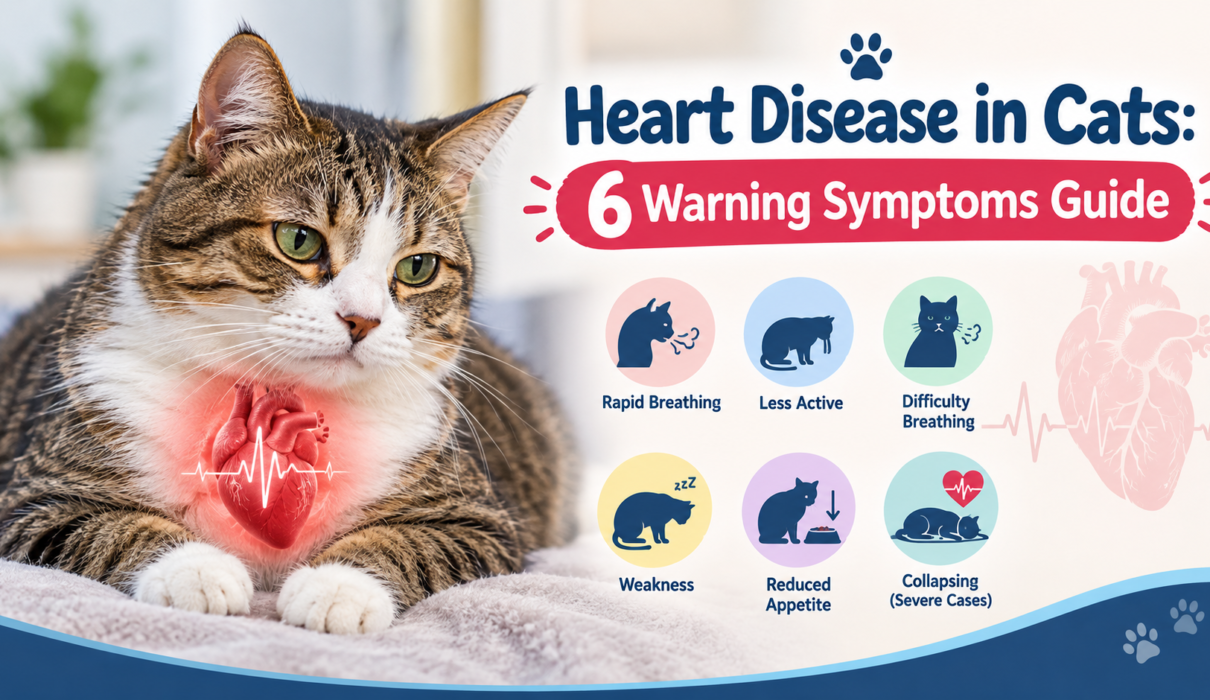
Heart Disease in Cats: 6 Warning Symptoms Guide
Introduction to Heart Disease in Cats
Heart disease in cats is a serious health concern that can affect a cat’s ability to pump blood and deliver oxygen throughout the body. Some cats may develop heart problems without showing obvious symptoms, making early detection challenging for pet owners.
Unlike dogs, cats often hide signs of discomfort. A cat with an underlying heart condition may continue eating, sleeping, and behaving normally until the disease becomes more advanced. This is why understanding the warning signs is important for every cat owner.
The most concerning heart disease in cats symptoms include rapid or difficult breathing, unusual weakness, reduced appetite, fainting, pale or bluish gums, and sudden hind-leg pain or paralysis. These symptoms do not always mean a cat has heart disease, but they should never be ignored.
Some heart conditions develop because of changes in the heart muscle, while others may be associated with high blood pressure, thyroid disease, or congenital abnormalities. The specific cause determines the diagnosis, treatment, and long-term outlook or heart disease in cats.
In this first part, we will explain what heart disease in cats is, explore six important warning symptoms, and discuss common causes and risk factors. Understanding these signs can help you recognize when your cat needs veterinary attention.
What Is Heart Disease in Cats?
Heart disease in cats refers to conditions that affect the structure or function of the heart. These problems may involve the heart muscle, valves, electrical system, or other structures responsible for maintaining normal circulation.
A healthy feline heart pumps blood throughout the body, supplying organs and tissues with oxygen and nutrients. When the heart cannot function properly, fluid may accumulate in or around the lungs, circulation may become impaired, or blood clots may develop.
Some cats have heart disease for years without showing noticeable symptoms. Others may develop serious complications, including congestive heart failure or blood clots that block blood flow to the hind legs.
Hypertrophic Cardiomyopathy (HCM)
Hypertrophic cardiomyopathy, commonly called HCM, is one of the most frequently diagnosed heart diseases in cats.
This condition causes the muscular walls of the heart, particularly the left ventricle, to become abnormally thick. As the walls thicken, the heart may have difficulty relaxing and filling with blood normally or heart disease in cats.
Possible consequences include:
- Reduced efficiency of blood circulation
- Enlargement of the left atrium
- Fluid accumulation in or around the lungs
- Increased risk of blood clot formation in some cats
Some cats with HCM never develop obvious clinical signs, while others may experience serious complications. Certain breeds, including Maine Coons and Ragdolls, have recognized genetic associations with HCM, although cats of any breed can be affected.
Dilated Cardiomyopathy (DCM)
Dilated cardiomyopathy is a condition in which the heart chambers become enlarged and the heart muscle contracts less effectively.
DCM is less common in cats than it was historically because commercial cat foods are generally formulated to meet feline taurine requirements. Taurine deficiency can cause DCM, and supplementation may improve heart function when the deficiency is responsible.
However, not every case of DCM is caused by taurine deficiency. Veterinary testing is necessary to determine the underlying problem and appropriate treatment or heart disease in cats.
Restrictive Cardiomyopathy (RCM)
Restrictive cardiomyopathy affects the heart’s ability to relax and fill properly. The heart muscle may become stiff, limiting the amount of blood that enters the heart between contractions.
Cats with this condition may develop enlargement of the atria, congestive heart failure, or other circulation problems.
The symptoms can resemble those of other heart conditions, so specialized veterinary testing is often necessary.
Congenital Heart Defects
Some cats are born with structural abnormalities of the heart. These congenital defects may affect the heart chambers, valves, or major blood vessels.
The severity varies considerably. Some defects cause few problems, while others may interfere with normal circulation and require specialized treatment.
A veterinarian may identify a congenital problem during a routine examination or investigate it after symptoms appear.
Heart Disease Caused by Other Medical Conditions
Not every heart problem begins in the heart itself. Conditions such as high blood pressure and hyperthyroidism can place additional strain on the cardiovascular system.
For example, high blood pressure may develop in cats with kidney disease or hyperthyroidism. If left unmanaged, it can damage several organs and contribute to cardiovascular complications.
Treating an underlying condition may help reduce the strain on the heart, although the treatment plan depends on the individual cat.
Heart Disease in Cats Symptoms: 6 Warning Signs to Watch For
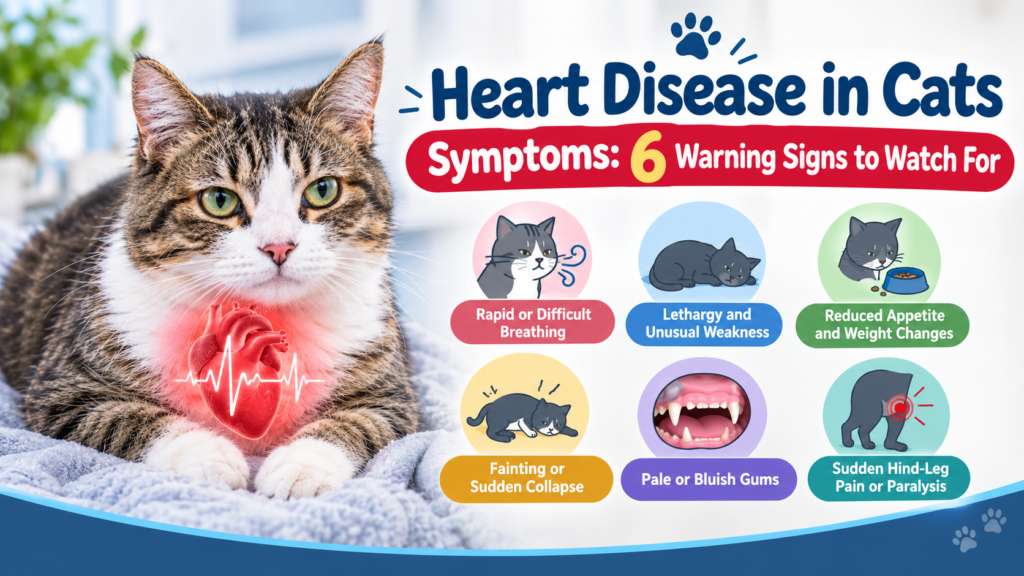
Recognizing heart disease in cats symptoms can help you identify potential problems earlier. However, these signs are not specific to heart disease and may also occur with respiratory illness, anemia, pain, kidney disease, and other conditions.
A veterinarian must evaluate your cat to determine the actual cause.
Rapid or Difficult Breathing: An Important Sign of Heart Disease in Cats
Changes in breathing are among the most important warning signs to recognize. Some cats with heart disease develop fluid accumulation in or around the lungs, making normal breathing difficult or heart disease in cats.
You may notice that your cat’s breathing becomes faster than usual while resting or sleeping. Your cat may also appear uncomfortable, avoid lying in its usual position, or use extra effort to breathe.
Possible warning signs include:
- Rapid breathing while resting
- Noticeable movement of the abdomen with each breath
- Flared nostrils or increased breathing effort
- An inability to settle comfortably
- Open-mouth breathing
Open-mouth breathing or obvious difficulty breathing in a cat should be treated as an emergency. Seek immediate veterinary care rather than waiting for the symptoms to improve or heart disease in cats.
How to Check Your Cat’s Resting Breathing Rate
When your cat is asleep or resting peacefully, watch the chest rise and fall. One complete rise and fall counts as one breath.
Count the breaths for 30 seconds and multiply the result by two to estimate the breathing rate per minute.
Many healthy resting cats breathe approximately 20–30 times per minute, although individual readings can vary. A consistently elevated resting rate, particularly above 30 breaths per minute during sleep, is worth discussing with your veterinarian. A rate persistently above 40, or any visible breathing difficulty, warrants urgent veterinary advice.
Do not delay emergency care to count breaths if your cat is struggling to breathe.
Lethargy and Unusual Weakness
Lethargy is another possible sign of heart disease in cats. When the heart cannot maintain effective circulation, the body may receive less oxygen-rich blood than it needs during activity.
A cat that once enjoyed running, jumping, or playing may become noticeably less active. It may sleep more, avoid climbing onto furniture, or stop engaging in favorite activities.
Watch for changes such as:
- Sleeping more than usual
- Reduced interest in toys or interaction
- Avoiding stairs or jumping
- Becoming tired after minimal activity
- Unusual weakness or difficulty moving normally
These symptoms are not exclusive to heart disease. Pain, arthritis, anemia, infections, and many other health conditions can also cause low energy.
If your cat becomes persistently less active or develops unexplained weakness, arrange a veterinary examination.
Sudden severe weakness, collapse, or an inability to stand requires urgent veterinary care.
Reduced Appetite and Unexpected Weight Changes
Some cats with heart disease may eat less than usual, especially when they develop complications that make them feel unwell or heart disease in cats.
Reduced appetite may occur alongside tiredness, breathing changes, or other symptoms. In some cases, an underlying medical condition such as hyperthyroidism or kidney disease may contribute to both cardiovascular problems and changes in eating habits.
Possible signs include:
- Leaving food unfinished
- Refusing familiar meals
- Eating smaller portions
- Gradual weight loss
- Reduced interest in treats
Weight loss is not a specific sign of heart disease. It can occur with dental disease, digestive problems, kidney disease, hyperthyroidism, and other conditions.
Keep track of your cat’s eating habits and body weight if possible. Contact your veterinarian if appetite changes persist, your cat loses weight unexpectedly, or other symptoms develop orheart disease in cats.
Cats that stop eating can become seriously ill, so do not wait several days to seek advice. If your cat has eaten little or nothing for about 24 hours, contact a veterinarian promptly; kittens and cats with existing medical conditions may need help sooner.
Fainting or Sudden Collapse
Fainting or sudden collapse can be a serious warning sign of a cardiovascular problem. When the brain temporarily receives insufficient blood flow, a cat may lose consciousness or suddenly fall.
Possible signs include:
- Sudden loss of balance
- Brief loss of consciousness
- Falling over unexpectedly
- Severe weakness after activity
- Unusual disorientation following an episode
Heart rhythm abnormalities and certain structural heart problems may contribute to fainting. However, seizures, low blood sugar, neurological disorders, and other conditions can produce similar episodes.
If your cat collapses, seek urgent veterinary assessment even if it appears to recover quickly. Record what happened and how long the episode lasted if you can do so safely, but do not delay getting help or heart disease in cats.
Repeated fainting, collapse accompanied by breathing difficulty, or prolonged unresponsiveness requires emergency care.
Pale or Bluish Gums
A cat’s gum color can sometimes provide useful information about circulation and oxygen delivery.
Healthy gums are generally pink, although normal pigmentation varies among cats. Gums that become unusually pale may indicate anemia, poor circulation, or another medical problem.
Bluish or gray gums can indicate inadequate oxygenation and require immediate emergency attention.
Warning signs may include:
- Gums that appear much paler than usual
- Blue or gray discoloration of the gums or tongue
- Weakness alongside abnormal gum color
- Rapid or difficult breathing
- Sudden collapse
Heart disease may contribute to circulation problems, but gum discoloration is not specific to a heart condition. Other serious illnesses can produce similar changes.
If your cat has blue, gray, or very pale gums, seek immediate veterinary care. Do not wait to see whether the color returns to normal.
Sudden Hind-Leg Pain or Paralysis
One of the most frightening complications associated with certain feline heart diseases is a blood clot that blocks blood flow to the hind legs.
This condition is called aortic thromboembolism. It can occur when a blood clot forms in the heart, travels through the bloodstream, and becomes lodged where blood vessels supply the back legs or heart disease in cats.
Aortic thromboembolism is strongly associated with some forms of feline heart disease, including cardiomyopathy.
Possible signs include:
- Sudden inability to use one or both hind legs
- Severe pain or crying
- Dragging the back legs
- Cold hind paws
- Weakness or absent movement in the affected legs
- Rapid breathing or distress
The onset is often sudden, and the condition is extremely painful. Affected cats need immediate emergency veterinary care.
Do not massage the legs, force your cat to walk, or give human painkillers. Keep your cat as calm and comfortable as possible while arranging emergency transport or heart disease in cats.
Although sudden hind-leg paralysis can be associated with heart disease, other neurological or vascular problems may also cause it. Prompt examination is essential to determine the cause.
Signs of Heart Disease in Cats: Early Signs vs. Advanced Symptoms
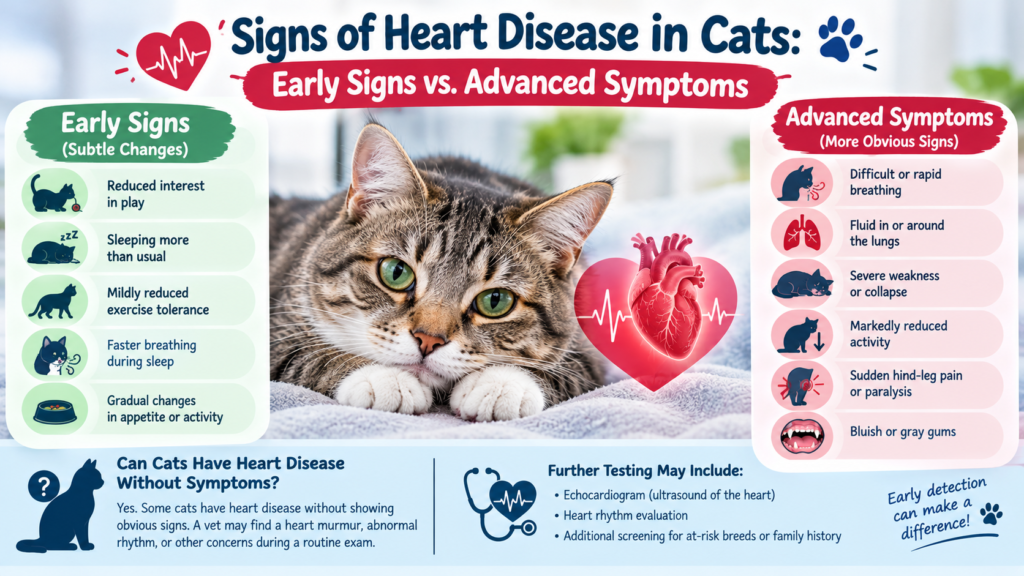
Understanding the difference between subtle and severe symptoms can help cat owners recognize when veterinary care is needed.
However, heart disease does not always progress in a predictable way. Some cats remain outwardly healthy despite having a significant heart condition, while others develop serious complications with little warning.
Early Signs of Heart Disease in Cats
Early heart disease may cause no noticeable symptoms at home. In other cats, owners may observe subtle changes in normal behavior.
Possible changes include:
- Reduced interest in play
- Sleeping more than usual
- Mildly reduced exercise tolerance
- Consistently faster breathing during sleep
- Gradual changes in appetite or activity
These changes can have many causes. Their presence does not confirm heart disease, but persistent or unexplained changes deserve veterinary attention.
Advanced Signs of Heart Disease in Cats
When heart disease causes complications, symptoms may become more obvious.
These can include:
- Difficult or rapid breathing
- Fluid accumulation in or around the lungs
- Severe weakness or collapse
- Markedly reduced activity
- Sudden painful hind-leg weakness or paralysis
- Bluish or gray gums
Some of these signs are emergencies. A cat with open-mouth breathing, significant breathing effort, collapse, or sudden hind-leg paralysis should receive immediate veterinary attention.
Can Cats Have Heart Disease Without Symptoms?
Yes. Cats can have heart disease without showing obvious outward signs.
A veterinarian may discover a heart murmur, abnormal rhythm, or other concern during a routine examination. However, some cats with cardiomyopathy have no detectable murmur, so a normal-sounding heartbeat does not rule out every heart condition.
For cats with a known family history, a breed-associated risk, or other clinical concerns, a veterinarian may recommend additional screening.
An echocardiogram, which uses ultrasound to examine the heart’s structure and function, is an important diagnostic tool when heart disease is suspected.
What Causes Heart Disease in Cats?
There is no single cause of feline heart disease. Different conditions may develop because of inherited factors, structural abnormalities, nutritional deficiencies, or other medical problems or heart disease in cats.
In many cats with cardiomyopathy, the exact cause remains unknown.
Genetics and Inherited Risk
Genetics plays a role in some forms of heart disease. Certain Maine Coon and Ragdoll family lines, for example, have known associations with hypertrophic cardiomyopathy.
However, not every cat of these breeds develops heart disease, and cats without a known breed-related risk can also be affected.
Responsible breeding programs may use veterinary screening and appropriate genetic testing where available, but no single test identifies every possible case of feline cardiomyopathy or heart disease in cats.
Hypertrophic Cardiomyopathy
HCM involves thickening of the heart muscle, which can interfere with normal filling and circulation.
It is one of the most important forms of feline heart disease because affected cats may develop congestive heart failure or blood clots.
The condition can vary from mild to severe, and symptoms alone cannot determine how significantly the heart is affected.
High Blood Pressure and Hyperthyroidism
High blood pressure can place additional strain on the heart. In cats, it may be associated with kidney disease, hyperthyroidism, or other medical problems.
Hyperthyroidism, which involves excessive thyroid hormone production, can increase heart rate and workload. Over time, these changes may contribute to cardiovascular complications.
Veterinarians may recommend blood pressure measurement, blood tests, and other investigations when these conditions are suspected.
Nutritional Factors
Taurine is an essential nutrient for cats. Severe taurine deficiency can cause dilated cardiomyopathy, although this is now less common in cats eating complete and balanced commercial diets formulated for their life stage.
Feeding an incomplete homemade diet or an improperly balanced diet can create nutritional risks.
Do not give taurine supplements or change your cat’s diet to treat suspected heart disease without consulting a veterinarian.
Congenital Abnormalities and Unknown Causes
Some cats are born with heart defects that affect normal blood flow. The effects depend on the type and severity of the abnormality.
In other cases, diagnostic testing may identify a heart condition without revealing a clear underlying cause.
Regardless of the cause, early veterinary assessment can help determine the diagnosis and guide monitoring or treatment.
Which Cats Are at Higher Risk of Heart Disease?
Heart disease can affect cats of any age, sex, or breed. Nevertheless, some cats have specific risk factors that make screening or closer monitoring worth discussing with a veterinarian.
Cats With a Family History of Cardiomyopathy
A family history of heart disease may increase concern, particularly in breeds with known genetic associations.
If a cat’s parents or close relatives have been diagnosed with cardiomyopathy, inform your veterinarian. They can advise whether screening is appropriate and when it should be performed.
Maine Coons and Ragdolls
Maine Coons and Ragdolls have recognized associations with certain inherited forms of hypertrophic cardiomyopathy.
Other breeds may also be affected, and breed alone cannot determine whether an individual cat has heart disease.
Genetic testing may be useful for particular variants in selected breeds, but a negative genetic result does not rule out all forms of cardiomyopathy or heart disease in cats.
Cats With High Blood Pressure or Hyperthyroidism
Cats diagnosed with high blood pressure or hyperthyroidism may need monitoring for cardiovascular changes.
Managing the underlying condition is important for overall health and may reduce additional strain on the heart.
Follow your veterinarian’s recommendations for blood pressure checks, laboratory testing, and follow-up visits.
Cats With Unexplained Symptoms
Any cat with persistent breathing changes, unexplained weakness, fainting, or other concerning symptoms may need assessment for heart disease, regardless of age or breed.
Routine examinations can identify some abnormalities, but additional testing may be needed even when no obvious heart murmur is present or heart disease in cats.
How Is Heart Disease in Cats Diagnosed?
Diagnosing heart disease in cats requires a veterinary examination and, in many cases, specialized tests. Some cats show clear symptoms, such as rapid breathing or weakness, while others may have heart disease without any noticeable changes in their daily behavior.
A veterinarian will consider your cat’s medical history, physical examination, symptoms, and test results before making a diagnosis. Because several other conditions can cause similar symptoms, testing is important to identify the underlying problem.
Physical Examination and Heart Sounds
The veterinarian will begin by examining your cat and listening to its heart and lungs with a stethoscope.
During the examination, the veterinarian may check for:
- A heart murmur caused by turbulent blood flow
- An abnormal or irregular heartbeat
- Changes in breathing rate or effort
- Signs of fluid accumulation
- Unusual weakness or poor circulation
A heart murmur can indicate a cardiovascular problem, but it does not automatically mean a cat has heart disease. Some healthy cats have murmurs, while some cats with cardiomyopathy have no detectable murmur.
Additional testing may be recommended if the examination raises concerns.
Echocardiography: Heart Ultrasound
Echocardiography is one of the most useful tests for diagnosing heart disease in cats. It uses ultrasound to create images of the heart and assess its structure and function.
This test can help a veterinarian evaluate:
- The thickness of the heart walls
- The size of the heart chambers
- How well the heart fills and pumps blood
- The movement of the heart valves
- Blood flow through different parts of the heart
Echocardiography is particularly important when hypertrophic cardiomyopathy or another form of cardiomyopathy is suspected.
The results help determine the type and severity of the condition and whether treatment or continued monitoring is appropriate.
Chest X-Rays
Chest X-rays may be recommended when a cat has breathing difficulties or when the veterinarian suspects congestive heart failure.
They can help identify an enlarged heart silhouette, fluid in the lungs, or fluid around the lungs.
However, chest X-rays cannot reliably identify every type of heart disease. They are often used alongside other tests to understand the cat’s condition.
If a cat is struggling to breathe, the veterinary team may stabilize the cat before performing imaging or other procedures.
Electrocardiogram (ECG)
An electrocardiogram records the electrical activity of the heart. It can help detect abnormal heart rhythms that may contribute to weakness, fainting, or collapse.
An ECG does not show the heart’s internal structure as clearly as an echocardiogram, so the tests serve different purposes.
Your veterinarian may recommend an ECG if an irregular heartbeat or rhythm disturbance is suspected.
Blood Tests and Blood Pressure Measurement
Blood tests may help identify medical conditions that can affect the heart or cause similar symptoms.
Depending on the case, testing may include:
- Thyroid hormone measurements
- Kidney function tests
- Electrolyte measurements
- Other tests based on the cat’s symptoms
Blood pressure measurement is also important because high blood pressure can place additional strain on the heart and damage other organs.
A veterinarian may recommend an NT-proBNP blood test in selected cases. This test can provide information about stress on the heart, but it does not replace echocardiography or a complete clinical assessment.
Heart Disease in Cats Treatment Options
Treatment for heart disease in cats depends on the specific diagnosis, severity of the condition, and whether complications are present.
Not every cat with heart disease needs medication immediately. Some cats may require periodic monitoring, while others need treatment for congestive heart failure, abnormal heart rhythms, or an increased risk of blood clots.
Never give your cat heart medication without veterinary guidance.
Medications for Heart Disease in Cats
Veterinarians may prescribe different medications depending on the type of heart condition.
Possible treatments include:
- Diuretics: These medicines help remove excess fluid and may be used when congestive heart failure causes fluid accumulation.
- Heart-rate or rhythm medications: Certain drugs may be recommended for specific abnormal heart rhythms or other diagnosed problems.
- Blood-clot prevention medication: Selected cats at increased risk of blood clots may benefit from antiplatelet or other prescribed treatment.
- Medication for underlying conditions: Cats with high blood pressure or hyperthyroidism may need treatment for those conditions.
Not every medication is appropriate for every cat. The veterinarian will consider kidney function, blood pressure, heart findings, and other medical factors before choosing a treatment plan.
Treatment for Congestive Heart Failure
Congestive heart failure can develop when the heart condition causes fluid to accumulate in or around the lungs.
Affected cats may breathe rapidly, struggle to breathe, or become unusually weak.
Treatment often requires urgent veterinary care. Depending on the severity, the veterinary team may provide oxygen, medications to remove excess fluid, and other supportive treatment.
A cat with significant breathing difficulty should be taken to an emergency veterinary clinic immediately. Do not try to manage suspected heart failure at home.
Treatment for Blood Clots
Some cats with heart disease develop blood clots that block blood flow, often affecting the hind legs.
This condition, called aortic thromboembolism, can cause sudden severe pain, cold hind paws, and partial or complete loss of movement in the affected legs.
Treatment may involve pain management, supportive care, and medications selected by the veterinarian. The outlook varies depending on the severity of the clot and the cat’s overall condition.
Sudden hind-leg paralysis or severe pain is an emergency. Immediate veterinary assessment is essential.
Regular Monitoring and Follow-Up Care
Heart disease may change over time, so follow-up examinations are important even when a cat appears to be doing well.
Depending on the diagnosis, monitoring may include:
- Repeat physical examinations
- Echocardiography when indicated
- Blood pressure checks
- Blood tests to monitor medication effects
- Assessment of breathing rate and clinical signs
Do not change medication doses or discontinue treatment because your cat seems better. Always discuss changes with your veterinarian.
How to Care for a Cat With Heart Disease
Home care can help support a cat living with heart disease, but it does not replace veterinary treatment. The best approach is to follow the treatment plan and monitor changes in your cat’s normal behavior.
Monitor Your Cat’s Resting Breathing Rate
Tracking your cat’s breathing while asleep can help you recognize changes that may require veterinary attention.
To measure the rate, watch your cat’s chest rise and fall while it is resting peacefully. Count each complete rise and fall as one breath or heart disease in cats.
Count for 30 seconds and multiply by two to estimate the breaths per minute.
Many healthy resting cats breathe approximately 20–30 times per minute. If your cat’s sleeping breathing rate is repeatedly above 30, contact your veterinarian for advice, especially if the rate is increasing. A persistent rate above 40 warrants urgent veterinary advice, while obvious breathing difficulty requires immediate emergency care regardless of the number.
Keep a written record of your cat’s breathing rate if your veterinarian recommends monitoring it.
Provide a Comfortable, Low-Stress Environment
Cats with heart disease may benefit from a quiet, comfortable home environment.
You can help by:
- Providing a warm, comfortable resting area
- Keeping food, water, and litter boxes easy to reach
- Avoiding unnecessary stressful handling
- Allowing your cat to rest when it wants to
- Maintaining a predictable daily routine
Do not force a cat with breathing difficulties or weakness to exercise. Ask your veterinarian about appropriate activity levels for your cat’s particular condition.
Feed a Balanced Diet
Good nutrition supports overall health, but no single diet cures every type of feline heart disease.
Feed a complete and balanced cat food appropriate for your pet’s age and health needs. If your veterinarian identifies a nutritional deficiency or another condition requiring dietary changes, follow their recommendations.
Avoid giving supplements, high-salt foods, or homemade diets intended to treat heart disease without veterinary guidance.
Taurine is essential for cats, and deficiency can cause certain heart problems. However, supplementation is not a substitute for diagnosing the underlying condition.
Keep Track of Symptoms and Medication
If your cat has been diagnosed with heart disease, maintain a simple health record.
You may want to record:
- Resting breathing rate
- Appetite and water intake
- Activity and energy levels
- Body weight, if practical
- Medication doses and administration times
- New or worsening symptoms
This information can help your veterinarian assess whether your cat’s condition is stable or whether treatment needs adjustment.
If your cat develops new breathing difficulties, collapse, or sudden hind-leg weakness, seek emergency care rather than waiting for a routine appointment or heart disease in cats.
Can Heart Disease in Cats Be Prevented?
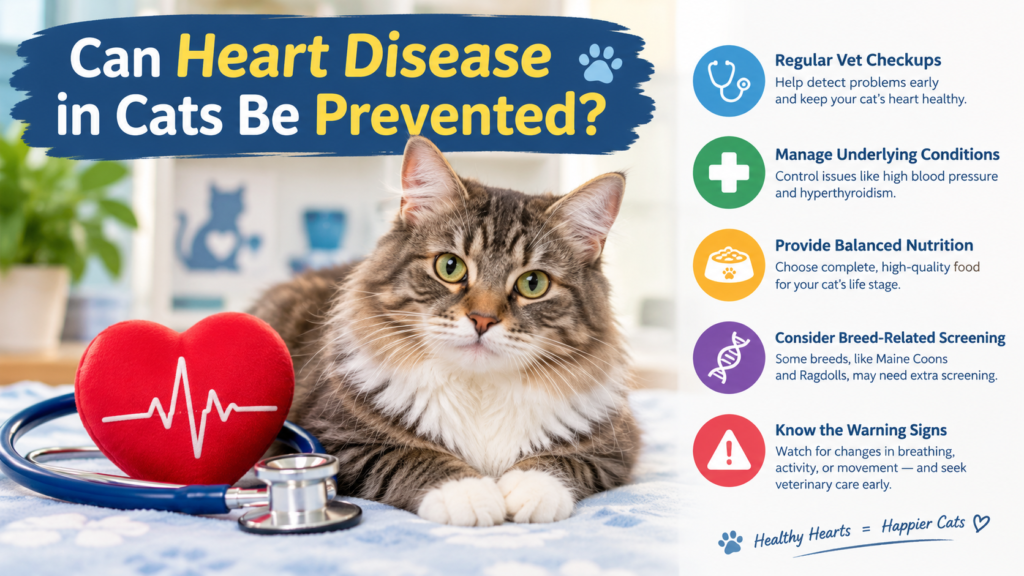
Not all cases of heart disease in cats can be prevented. Some forms, particularly inherited cardiomyopathies, may develop even in cats that receive excellent care.
Nevertheless, several practical steps can support heart health and help identify associated conditions earlier.
Schedule Regular Veterinary Examinations
Routine veterinary checkups give your veterinarian opportunities to listen to your cat’s heart, assess overall health, and identify possible concerns.
A normal examination does not rule out every form of heart disease, but regular visits can help determine whether additional screening is appropriate.
The recommended frequency depends on your cat’s age, health, and risk factors.
Identify and Manage Underlying Conditions
Conditions such as high blood pressure and hyperthyroidism can affect cardiovascular health.
If your cat has been diagnosed with one of these conditions, follow the prescribed treatment plan and attend recommended follow-up appointments or heart disease in cats.
Managing the underlying problem may reduce cardiovascular strain and protect other organs.
Choose Complete and Balanced Cat Food
A nutritionally complete diet helps prevent deficiencies that can contribute to certain health problems.
Choose food formulated to meet recognized feline nutritional standards and appropriate for your cat’s life stage.
If you prepare homemade food, consult a veterinary nutrition professional to ensure that the diet meets your cat’s nutritional requirements.
Discuss Breed-Related Screening
If your cat belongs to a breed with a recognized association with hypertrophic cardiomyopathy, ask your veterinarian whether screening is appropriate.
Maine Coons and Ragdolls are examples of breeds with known genetic associations. However, heart disease can affect cats of any breed, and screening recommendations should be based on the individual cat.
Learn the Warning Signs of Heart Disease in Cats
Understanding the possible signs of heart disease can help you seek care promptly.
Watch for rapid breathing during sleep, reduced activity, fainting, unexplained weakness, and sudden changes in movement.
Remember that cats can have heart disease without obvious symptoms. Do not rely on behavior alone to determine whether a cat’s heart is healthy or heart disease in cats.
When to Contact a Veterinarian About Heart Disease in Cats
Knowing when to seek veterinary care is an important part of protecting your cat.
Some symptoms allow time to arrange a prompt appointment, while others require immediate emergency treatment.
Symptoms That Need a Veterinary Appointment
Contact your veterinarian if your cat develops:
- Persistent changes in resting breathing rate
- Reduced activity or unusual tiredness
- Reduced appetite or unexplained weight loss
- Repeated weakness or possible fainting
- A newly detected heart murmur
- Other unexplained changes in behavior or physical condition
These symptoms do not automatically indicate heart disease, but a veterinary examination can help identify their cause.
Emergency Signs You Should Never Ignore
Seek immediate emergency veterinary care if your cat has:
- Open-mouth breathing or obvious difficulty breathing
- Blue or gray gums or tongue
- Sudden collapse or loss of consciousness
- Sudden painful hind-leg weakness or paralysis
- Severe weakness or rapid deterioration
Keep your cat calm and minimize handling while arranging transport. Do not force food, water, or medication into a cat that is struggling to breathe.
What Information Should You Share With Your Veterinarian?
Before a routine appointment, note when the symptoms began and whether they are getting worse.
Tell your veterinarian about any changes in breathing, appetite, activity, medications, and known medical conditions. If you have been monitoring your cat’s sleeping breathing rate, bring those readings with you.
If emergency symptoms occur, prioritize getting veterinary help rather than delaying to collect information.
Frequently Asked Questions About Heart Disease in Cats
What Are the Most Common Heart Disease in Cats Symptoms?
Possible symptoms include rapid or difficult breathing, lethargy, reduced appetite, fainting, pale or bluish gums, and sudden hind-leg pain or paralysis. Some cats have no obvious symptoms. These signs can also be caused by other illnesses, so veterinary assessment is necessary.
What Are the Early Signs of Heart Disease in Cats?
Early heart disease may cause subtle changes, such as reduced activity or faster breathing during sleep, but many cats show no visible signs. A veterinarian may identify an abnormality during an examination or recommend an echocardiogram when appropriate or heart disease in cats.
Can Cats Have Heart Disease Without Symptoms?
Yes. Some cats with cardiomyopathy appear healthy and behave normally. A lack of symptoms or a normal-sounding heartbeat does not rule out every heart condition.
How Do Veterinarians Test for Heart Disease in Cats?
Testing may include a physical examination, echocardiography, chest X-rays, an electrocardiogram, blood pressure measurement, and blood tests. The tests selected depend on the cat’s symptoms and suspected condition.
Can Heart Disease in Cats Be Cured?
Some underlying causes may be treatable, but many forms of feline cardiomyopathy are managed rather than cured. Treatment may reduce complications and improve quality of life. The outlook depends on the specific condition and its severity.
How Long Can a Cat Live With Heart Disease?
Life expectancy varies widely. Some cats with mild disease remain stable for years, while others develop complications that significantly affect their outlook. Your veterinarian can provide a more individualized assessment after evaluating your cat’s diagnosis and condition.
Can Heart Disease in Cats Cause Sudden Death?
Severe heart disease can sometimes lead to sudden life-threatening complications. However, sudden collapse or death can also result from other medical conditions. Emergency symptoms should always be taken seriously.
Which Cat Breeds Are More Prone to Heart Disease?
Maine Coons and Ragdolls have recognized associations with inherited hypertrophic cardiomyopathy. Other breeds and mixed-breed cats can also develop heart disease, so breed alone cannot determine an individual cat’s risk.
Conclusion: Recognizing Heart Disease in Cats Early
Heart disease in cats can be difficult to recognize because some cats show few or no symptoms until complications develop. Understanding the warning signs—including breathing changes, lethargy, appetite changes, fainting, abnormal gum color, and sudden hind-leg pain or paralysis—can help owners recognize when their pets need medical attention.
Veterinary examinations and appropriate diagnostic tests are essential for identifying the specific heart condition and determining the best treatment plan. Depending on the diagnosis, care may include medication, monitoring, treatment of underlying conditions, and adjustments to the cat’s home routine.
Although not every form of heart disease can be prevented, routine veterinary care, appropriate nutrition, and attention to unusual symptoms can support your cat’s overall health or heart disease in cats.
Most importantly, seek immediate veterinary care for open-mouth breathing, severe breathing difficulty, collapse, bluish gums, or sudden painful hind-leg paralysis. Early assessment and appropriate treatment can make an important difference to your cat’s comfort and well-being.
2 Comments